
Reviewed · FULL-DAY
Full-Day Accessible Tour of Tokyo for Wheelchair Users
Tokyo feels simpler with the right plan. This private, wheelchair-focused day lays out a practical route through classic sights and modern neighborhoods, with accessible pacing built in. You also get train tickets included, so you spend less time figuring out systems and more time seeing Tokyo.
I especially like the calm, no-rush way the day runs with guides such as Machiko, Michiko, Kaori, and Fumiko. You’ll get private attention and real flexibility, including help navigating crowded areas like Asakusa, plus support moving through the train network.
One consideration: food and drinks aren’t included, so you’ll want to plan for your own breaks during the day.
In This Review
- Key highlights worth knowing before you go
- A 7-hour accessible circuit you can actually manage
- Where you meet: Asakusa Culture Tourist Information Center at Kaminarimon
- Asakusa Temple morning: Kengo Kuma, Nakamise, and Senso-ji
- Sumida Park: River views and a calmer breath
- Shibuya Crossing and Cat Street: iconic scenes with crowd strategy
- Meiji Jingu Shrine: a nature break by Harajuku Station
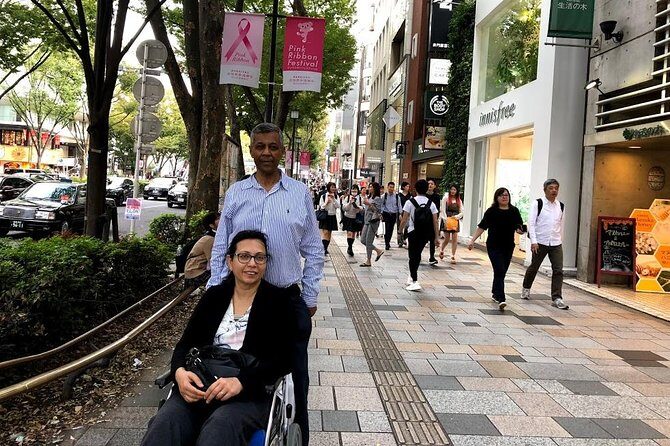
- Omotesando: the tree-lined boulevard between Shibuya and Minato
- Trains and transfers: why the logistics matter as much as the sights
- Price and value: what $191.08 buys you
- Who this tour fits best (and who should think twice)
- Should you book this wheelchair-friendly Tokyo day?
- FAQ
- How long is the Full-Day Accessible Tour of Tokyo for Wheelchair Users?
- What time does the tour start, and where does it meet?
- Do I get hotel pickup and drop-off?
- Are train tickets included?
- Is this a private tour?
- Are food and drinks included?
- Is the tour wheelchair accessible, and are service animals allowed?
- What fitness level do I need?
- Is there a minimum age or minimum group size?
- Is free cancellation available?
Key highlights worth knowing before you go
- Wheelchair-first routing across multiple neighborhoods, not just one “main stop”
- Train tickets included to reduce the toughest parts of Tokyo logistics
- Hotel pickup and drop-off within Tokyo’s 23 wards, if you’re in-range
- A private group only for you, with undivided attention from your guide
- Guides adapt on the spot, including mobility-friendly routing choices
- A full, sightseeing-heavy day (about 7 hours) with short visits that add up
Worth weighing up alongside this Tokyo pick:
- From Tokyo: Mount Fuji Full-Day Sightseeing Trip★ 4.5 · 4,970 reviews
- Mount Fuji Full-Day Private Tour from Tokyo (Customizable)★ 4.9 · 1,470 reviews
- Tokyo Private Full-Day Tour by Car or Van★ 5.0 · 684 reviews
A 7-hour accessible circuit you can actually manage
The biggest value here is that the route was built for wheelchair users from the start. That means you’re not stitching together your own day and hoping every transfer works out. Instead, you follow a guided flow that connects Asakusa, Sumida Park, Shibuya, Meiji Jingu, and Omotesando with time to ask questions and adjust.
The tour runs for about 7 hours and starts at 9:30am. It ends back at the meeting point, though you may also have hotel pickup and drop-off included when you’re within Tokyo’s 23 wards. So either way, the day is structured to keep you from bouncing around with separate tickets, separate transportation, and separate “plan B” headaches.
This is also a true private tour (only your group participates). In practice, that matters for mobility. You can ask your guide to slow down, repeat instructions, or spend extra time somewhere that clicks, without feeling like the whole schedule will collapse.
Where you meet: Asakusa Culture Tourist Information Center at Kaminarimon
Your day kicks off near Kaminarimon, at the Asakusa Culture Tourist Information Center in Taito City. The tour notes a starting address at 2-chōme-18-9, Kaminarimon, Asakusa Culture Tourist Information Center, and that it ends back at the meeting point.
This is a smart place to start because Asakusa is easy to anchor to. The area is famous, busy, and tourist-heavy, but you’re beginning at a dedicated hub rather than searching street by street for your first stop.
One extra detail I like: the tourist center is described as an 8-story building designed by Kengo Kuma, and the stop is free. Even if you move slowly, it’s a clean “landing zone” before you step into Temple + shopping street energy.
Asakusa Temple morning: Kengo Kuma, Nakamise, and Senso-ji
The itinerary starts with a short visit to the Asakusa Culture Tourist Information Center, then moves into the Asakusa experience at street level.
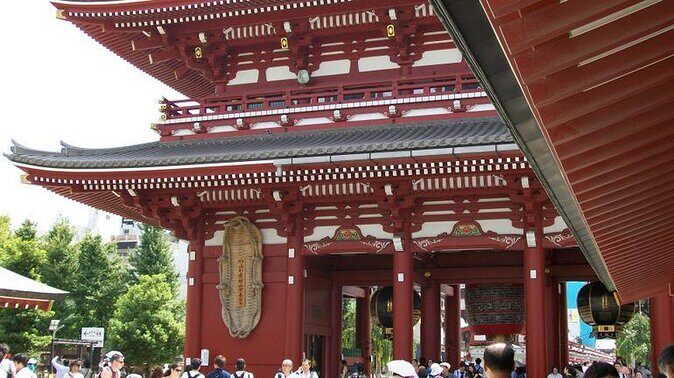
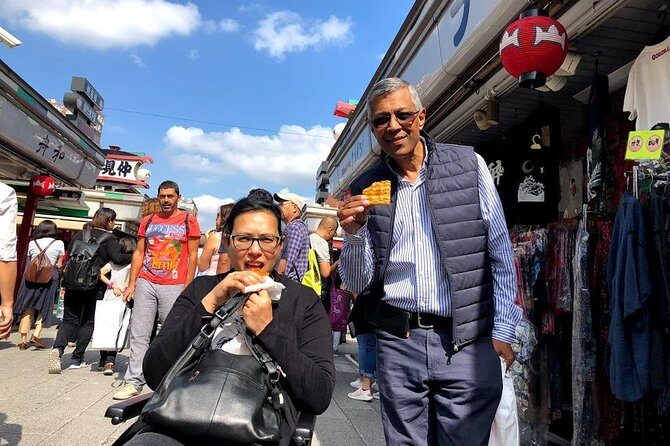
First comes Nakamise Shopping Street (leading toward Kaminarimon). This is the classic approach people take when visiting Senso-ji. It’s also where planning helps. Crowds can be dense, and the “shop-by-shop” vibe can tempt you to wander longer than your energy allows. A good guide can help you keep the main landmarks in view while you pace the shopping and photo stops.
Then you reach Senso-ji Temple, one of Tokyo’s best-known Buddhist temples. The stop is relatively short, but it’s long enough to take in the temple grounds and absorb the atmosphere without feeling rushed. The value here is not just ticking off a name—it’s experiencing how Asakusa feels when Tokyo’s older identity is right in front of you.
A practical tip: if your mobility plan includes breaks, ask early. Guides can often sequence the day so you’re not stuck power-walking at the exact moment you’d prefer a rest.
Sumida Park: River views and a calmer breath
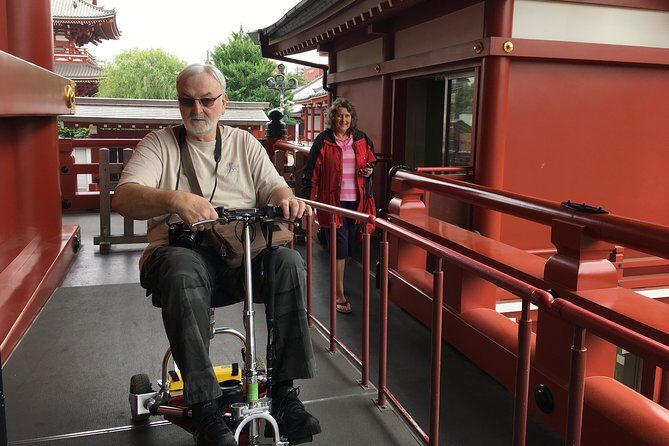
Next is Sumida Park, near Asakusa Station and along the Sumida River. This is one of those “real Tokyo” spots: you get open space after the density of temple approaches and shopping streets.
The timing is short, but the views are the point. It’s also a good place to look toward major landmarks such as Tokyo Skytree (visible from the area). If you’re visiting during cherry blossom season, you’ll find the park is especially scenic. Even outside that season, this is where the day’s visual rhythm slows down.
For wheelchair users, parks can be easier because you’re not constantly threading around storefront crowds or negotiating tight entryways. Still, it’s smart to bring water and plan your shade breaks—comfort matters on a 7-hour loop.





Shibuya Crossing and Cat Street: iconic scenes with crowd strategy
After Asakusa and the river, the tour pivots to modern Tokyo with Shibuya Crossing. This is the famous intersection near Shibuya Station, known for moving huge crowds through a signal cycle. The stop is about 20 minutes, which is enough time to see what makes it iconic without spending your whole day staring at the traffic light.
The real win for a mobility-friendly tour is that someone helps you watch the scene safely and effectively. In big crowds, it’s easy to lose your orientation. A strong guide helps keep the group together and makes sure you’re positioned where you can see without needing to keep shifting your wheelchair around suddenly.
Then you head to Shibuya Cat Street, a fashion-adjacent pedestrian strip between Harajuku and Shibuya. It’s described as being lined with stores for trend-focused shoppers, and the stop is longer than you’d expect for a side street—about 25 minutes. That length is useful. You can enjoy the atmosphere, browse lightly, and still keep the schedule under control.
Meiji Jingu Shrine: a nature break by Harajuku Station
After Shibuya, the tour moves to Meiji Jingu Shrine. This stop is one of the best “reset buttons” in Tokyo. You’re walking from busy urban motion into a shrine setting, and the contrast can feel dramatic—in a good way.
Meiji Jingu is dedicated to the deified spirits of Emperor Meiji and Empress Shōken. The stop is about 50 minutes, which gives you time to actually experience the grounds rather than just photograph and leave.
The shrine is noted as being right beside the JR Yamanote Line near busy Harajuku Station. That proximity matters because Tokyo doesn’t really do “separate worlds.” Even as you enter the shrine area, you can feel the city’s gravitational pull nearby.
If you’re traveling with limited stamina, this is also one of the easiest stops to manage because it offers an opportunity to slow down. Ask your guide where you’ll have the smoothest paths for your mobility needs.
Omotesando: the tree-lined boulevard between Shibuya and Minato
The final sightseeing stretch is Omotesando, a sloping tree-lined boulevard in Tokyo’s Aoyama district. The tour frames it as going through parts of Shibuya and Minato wards, and it’s often linked in people’s minds to Harajuku-adjacent style.
This stop is shorter (about 20 minutes), but it pairs well with Meiji Jingu. After a quieter shrine area, you get design-forward Tokyo streets where you can enjoy architecture and street life without needing to “shop for hours.”
Also, you finish close to where you started—your day ends back at the meeting point—so the tour is designed to keep the loop tidy.
Trains and transfers: why the logistics matter as much as the sights
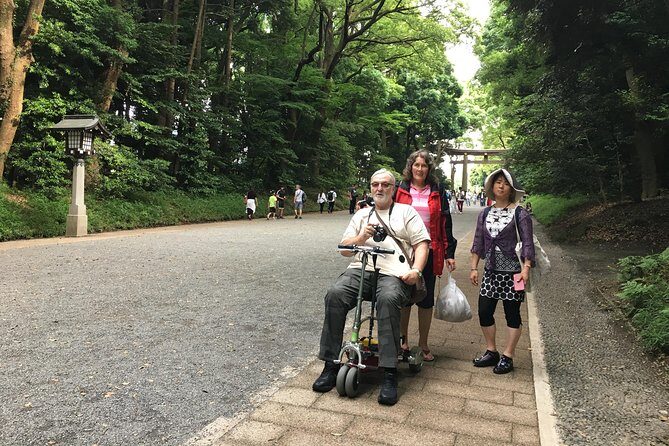
Tokyo’s rail system can feel like a puzzle. The best part of this tour is that you don’t have to solve it while also trying to enjoy your day.
This experience includes train tickets and a guide who helps with the route and navigation. Several guide stories from the group highlight how much that support helps in practice—especially when it comes to meeting up, handling tickets, and keeping everyone together through busy stations.
There’s also a strong theme in past experiences: station staff often provide help such as slope ramps at stations when needed. You can’t assume every station will work the exact same way on every day, but you can go in with confidence that you can ask for assistance and get support.
A small but important detail: private transport like taxis or cars/buses isn’t included. If you’re dealing with tight mobility windows, you may want to budget for additional help outside the included route.
Price and value: what $191.08 buys you
At $191.08 per person, you’re paying for a lot more than “someone to point things out.” Here’s what’s included:
- a professional guide
- private tour (your group only)
- hotel pickup and drop-off within Tokyo’s 23 wards
- train tickets included
- local taxes
- mobile ticket
What’s not included:
- food and drinks
- taxis or private car/bus (available for an extra fee)
For wheelchair travelers, the highest-value part is often the planning plus the execution. Getting train tickets handled, choosing workable routes, and having a guide who can adjust when mobility needs change tends to save energy and time. It also reduces stress, which matters more than most people expect on a full day.
If you and your travel partner are comfortable using public transit alone, the price might feel steep. But if you want a smoother day with fewer moving parts, this pricing can feel reasonable—especially because it’s a true full-day sightseeing plan.
Who this tour fits best (and who should think twice)
This is a good fit if you:
- use a wheelchair or similar mobility support and want a route built around that reality
- want an easy day with train tickets included
- prefer a flexible schedule where your guide can answer questions and adjust pacing
- like classic sights paired with modern neighborhoods (temples, crossings, shrine grounds, fashion streets)
It might be less ideal if you:
- don’t want to handle your own meals and drinks during the day
- expect zero walking at all (even if you’re primarily in a wheelchair, any transfer paths and short off-vehicle areas can add up)
The tour lists moderate physical fitness as the expectation, and that lines up with a reality of full-day city movement—even with accessibility support.
Should you book this wheelchair-friendly Tokyo day?
I’d book it if your priority is a smooth, accessible route that links Tokyo highlights without you wrestling trains, crowds, and changing plans all day. The combination of hotel pickup (within the 23 wards), train tickets included, and a private guide is exactly what makes this type of tour worth it.
I’d hesitate only if you’re very sensitive to meal timing and you don’t want to plan your own food breaks. If you’re comfortable with that, this tour is set up for an enjoyable, structured day that still leaves room for you to breathe, ask questions, and move at your pace.
FAQ
How long is the Full-Day Accessible Tour of Tokyo for Wheelchair Users?
The tour lasts about 7 hours.
What time does the tour start, and where does it meet?
The start time is 9:30am. The meeting point is the Asakusa Culture Tourist Information Center area at Kaminarimon.
Do I get hotel pickup and drop-off?
Yes, hotel pickup and drop-off are included within Tokyo’s 23 wards.
Are train tickets included?
Yes. Train tickets are included as part of the tour.
Is this a private tour?
Yes. It’s private, and only your group participates.
Are food and drinks included?
No. Food and drinks are not included.
Is the tour wheelchair accessible, and are service animals allowed?
Yes, it’s designed for wheelchair users and service animals are allowed.
What fitness level do I need?
The tour notes a moderate physical fitness level.
Is there a minimum age or minimum group size?
The minimum age is 6 years. A minimum of 2 people (including caregivers) is required per booking.
Is free cancellation available?
Yes. Free cancellation is available up to 24 hours in advance for a full refund.
If you want, tell me your travel month and whether you’re using a manual wheelchair, power chair, or rollator setup. I can suggest how to plan pacing and where you’ll likely appreciate the most time during this route.
More Full-Day in Tokyo

More Tours in Tokyo

More Tour Reviews in Tokyo



Fresh reviews from around Tokyo






Full-Day, compared.
 ★ 4.5From Tokyo: Mount Fuji Full-Day Sightseeing TripFrom $684,970 reviews
 ★ 4.9Mount Fuji Full-Day Private Tour from Tokyo (Customizable)From $3931,470 reviews
 ★ 5.0Tokyo Private Full-Day Tour by Car or VanFrom $321684 reviews
 ★ 4.7From Tokyo: Must-Visit Mount Fuji Highlight Full-Day TourFrom $69532 reviews
 ★ 4.5Mt. Fuji, Hakone Full-Day Private Tour with English Driver GuideFrom $495458 reviews
 ★ 4.8From Tokyo: Mount Fuji Full-Day Customizable Private TourFrom $483451 reviews
 ★ 5.0Nikko Full-Day Private Tour with Government-Licensed GuideFrom $155259 reviews
Mount Fuji Full Day Sightseeing Tour from TokyoFrom $67243 reviews
★ 5.0Nikko Full-Day Private Tour with Government-Licensed GuideFrom $155259 reviews
Mount Fuji Full Day Sightseeing Tour from TokyoFrom $67243 reviews