
Reviewed · FULL-DAY
From Tokyo to Kyoto and Nara: A Captivating Full-Day Private Tour
One day, two ancient capitals, zero ticket stress. This private tour strings together Nara and Kyoto, with your guide meeting you at the station so you can jump straight into sightseeing instead of hunting through Japanese websites.
I also love the pacing and the control you get. You’re not stuck in a loud group herd, and you can adjust the flow based on what you care about most. The only real drawback: bullet train tickets (about ¥28,000 per person) and other extras like lunch and temple entry are not included, and the whole day runs about 10 hours.
In This Review
- Key highlights worth your attention
- A 10-hour plan that turns Tokyo time into Kyoto memories
- How the transport works: bullet-train booking help, tickets are extra
- Nara Park deer walk and Todaiji scale: where the day starts gently
- Kinkaku-ji Golden Pavilion in one hour: big impact, tight schedule
- Kyoto Station Porta Dining lunch break: eat close, keep your schedule
- Gion for an hour: machiya lanes and the real feel of the district
- Fushimi Inari-taisha shrine: torii gates, forest paths, and pacing yourself
- Price and value: what $490 covers and what you still pay
- Guide style and private pacing: why one person can change the day
- Who this tour fits best (and who should pick something else)
- Should you book this Tokyo to Kyoto and Nara private day trip?
- FAQ
- Does the tour include the bullet train tickets?
- What entrance fees should I budget for?
- Is lunch included?
- Is this a private tour, and how many people can be in a group?
- Do I need to pay for transportation separately?
- What are the weather and cancellation rules?
Key highlights worth your attention
- Station meeting cuts the waiting time so you can get moving fast once you arrive in Kyoto.
- Two cities in one day: deer in Nara, then Kyoto’s top temple and shrine hits.
- Private guide = real flexibility for changing priorities on the fly.
- Iconic Kyoto sights, each with a focused time block rather than rushing past everything.
- Photo-and-story stops that help you understand what you’re seeing beyond the postcard view.
More private options with your own guide
- Tokyo 6hr Private Tour with Government-Licensed Guide★ 5.0 · 3,902 reviews
- Private Tour to Mt. Fuji and Hakone (Fully Licenced Operator)★ 5.0 · 1,910 reviews
- Tokyo Customized Private Tour (Must See Places in 1 Day)★ 5.0 · 1,499 reviews
A 10-hour plan that turns Tokyo time into Kyoto memories
If you only have one day and you want Nara plus Kyoto, this kind of private day trip is a smart move. Japan’s fast trains are great, but the real pain is the planning. This tour removes a chunk of that stress and keeps you pointed at the right places.
The structure is also practical. You get a guide, a set route across both cities, and enough time at each major stop to actually experience it. No, you won’t see every street corner of Kyoto. But you’ll cover the classics that make people fall in love with the region.
How the transport works: bullet-train booking help, tickets are extra
Here’s the deal up front: the tour helps with bullet train booking, but the train ticket cost is not included. The estimate given is about ¥28,000 per person, depending on the ticket type you choose.
Why this matters for value: you’re still paying for the train, but you’re buying time and peace of mind. If you’ve ever tried to sort out train types, seat choices, and confirmation pages right before a departure, you’ll understand why this is worth something.
Also note that the tour doesn’t include the local transportation cost. You pay that separately in cash: ¥100,000 per booking (the listing states up to 5 travelers), and then it says for more than 5 travelers to let them know, with ¥100,000.00 mentioned again.
If you want a pickup at Tokyo Station, there’s an extra ¥60,000 cash guide fee listed for that option. If you’re already set up to travel independently to the station you depart from, you may prefer to keep it simple and avoid optional add-ons.
One more small but useful detail: you get a mobile ticket, which helps on the day itself.
Nara Park deer walk and Todaiji scale: where the day starts gently
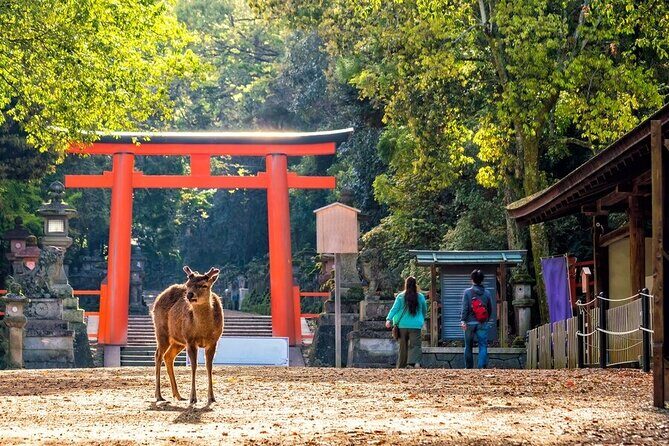
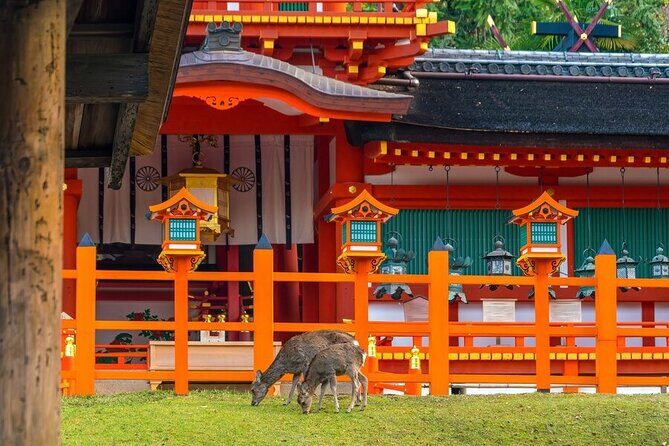
Most people think Nara equals deer. That’s true, but this stop is more than cute animals. Nara Park gives you a slow start after the Tokyo-to-Kyoto travel push, with deer roaming through a big public space. You can wander at an easy pace and settle into the calmer mood that Nara is known for.
Timing is key here: you get about 1 hour. Use that hour for a real stroll, not just a quick photo sprint. If you want interaction, follow your guide’s cues and keep your hands close to your body. Deer are bold and fast, and the fun drops fast if you’re trying to do your own thing without guidance.
Then you head to Todaiji Temple Cultural Center, with Todaiji Temple and Kasuga Shrine in the mix. This is where the day jumps in scale. At Todaiji, you’ll see the Great Buddha Hall, home to one of the world’s largest bronze Buddha statues. That size is the point. Even if you know the basics, the physical presence can still hit you in the chest a little.
The practical downside: the stop is about 1 hour, and entrance fees apply. The listing says entrance isn’t included for Todaiji, with ¥1,300 per person. So you’ll want to plan to see the main sights thoroughly, but you won’t have time for every side pathway.
Kinkaku-ji Golden Pavilion in one hour: big impact, tight schedule
After Nara, you get a Kyoto highlight that’s almost impossible to forget: Kinkaku-ji, the Golden Pavilion. In a one-hour slot, this is the right kind of stop because it’s visually dominant. The “golden” look and the pond setting do most of the work for you.
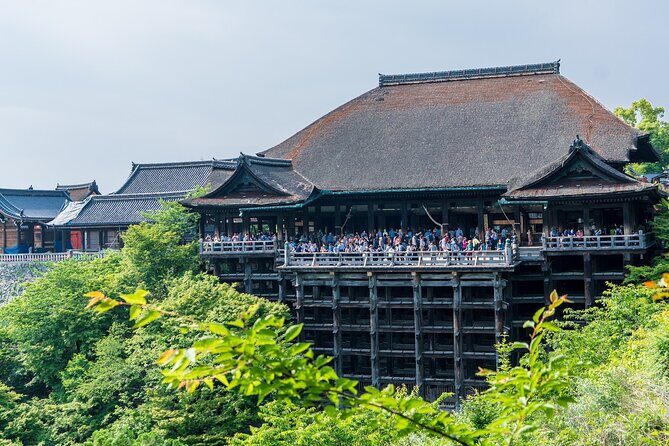
You’ll get about 1 hour here. That’s enough to walk through the key gardens and see the pavilion from the main viewpoints. If you’re the type who likes to linger, treat this as a “choose your moments” stop: pick the best angles, step in, enjoy, then move before you run out of daylight time and still have more shrines to hit.
Entrance fees are also not included for Kinkaku-ji, again ¥1,300 per person according to the listing. It’s a straightforward budget item, and I think it’s worth it because this place is designed to be photographed and experienced. It’s not a “stand outside and hope” temple.
Worth weighing up alongside this Tokyo pick:

Kyoto Station Porta Dining lunch break: eat close, keep your schedule
Between temples and shrines, you get a 1-hour lunch break at Porta Dining, located under Kyoto Station. This is a very practical choice for a day trip. You’re not traveling far to find lunch, and you’re not gambling on whether your schedule will survive a long search.
Lunch itself is not included, so you’re paying for what you choose. The listing notes it offers a variety of Japanese dishes, and that variety is exactly what you want when you’re with a guide keeping you on a tight timeline.
My advice: pick something that’s fast and filling. You’re about to walk more, especially at the shrine later. Also, don’t treat this as the meal you’ll brag about online. Treat it as the meal that keeps you moving.
One small bonus: Kyoto Station is a natural reset point. Even if the day has been a blur, you can regroup, use the bathrooms, and get your bearings before Gion and Fushimi Inari.
Gion for an hour: machiya lanes and the real feel of the district
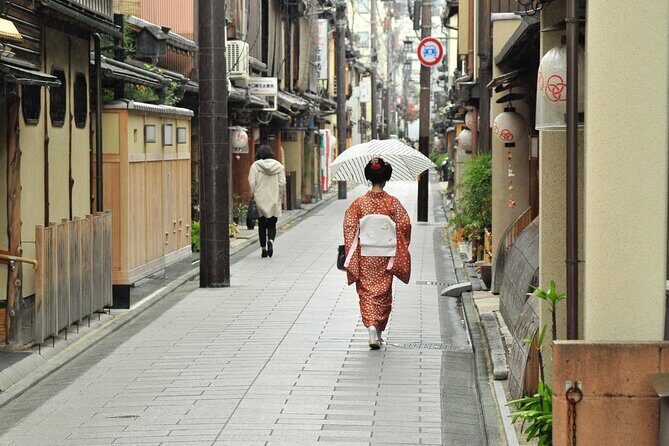
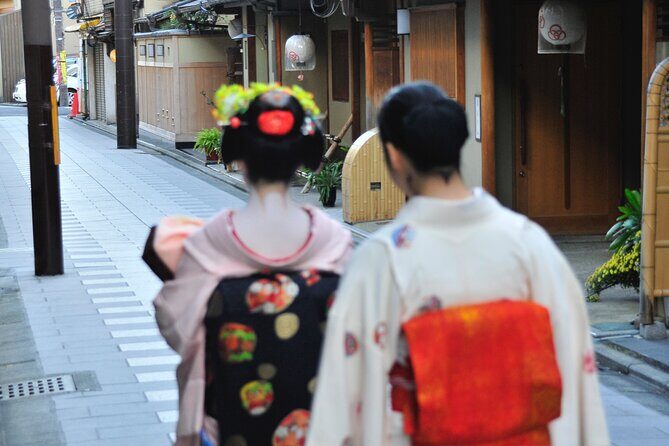
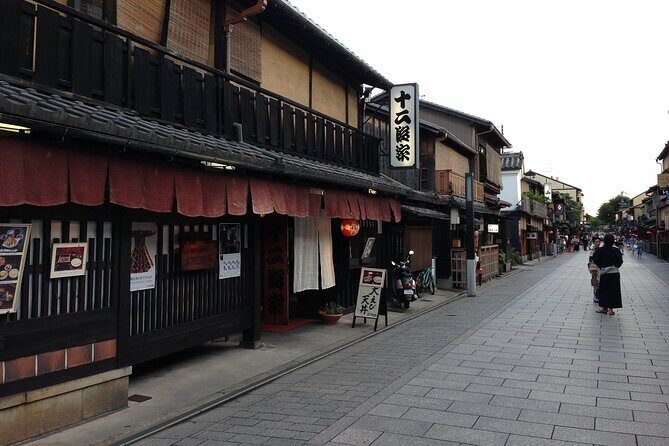
Then comes Gion, Kyoto’s famous geisha district. The tour’s stop is about 1 hour, which means this is best as a guided walk rather than a “deep explore every lane” mission.
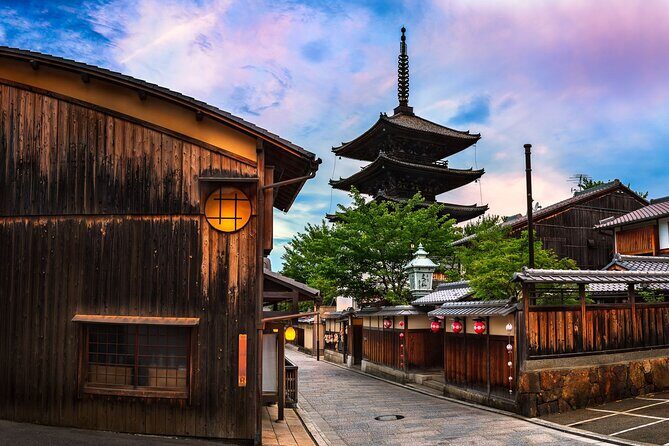
In that hour, you’ll see traditional machiya (wooden townhouses) and the streets that people associate with old Kyoto culture. What you’ll get from having a guide is simple: context. Instead of just walking through a pretty area, you’ll know what you’re looking at and why it matters.
The drawback for realism: Gion can feel busy around peak times, and you’re on a set itinerary. If you’re hoping for long wandering time, you’ll probably feel a little pinch. But if you want the flavor of Gion without losing the rest of the day, this stop is a good fit.
Entrance for this segment is listed as free, so you’re only paying with time and energy.
Fushimi Inari-taisha shrine: torii gates, forest paths, and pacing yourself
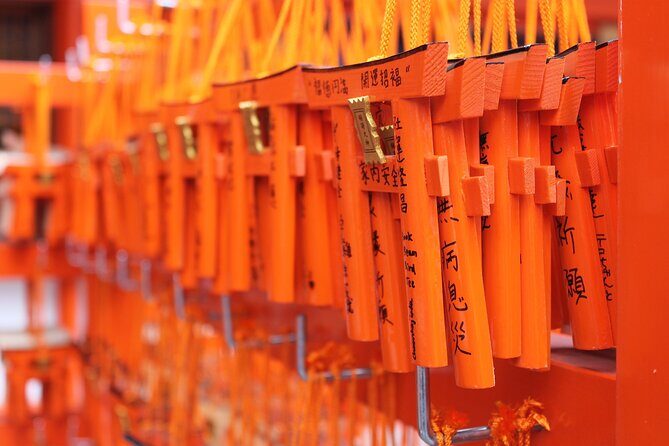
The finale is Fushimi Inari-taisha, famous for its thousands of red torii gates forming paths through forest trails. This is one of Kyoto’s most recognizable experiences, and it’s also the one where your mindset matters most.
You only get about 1 hour here. That means pacing is everything. Go in ready to walk steadily and decide early how far up you want to go. You don’t want to sprint past the gates at the bottom and then realize you’ve used up your time without reaching the viewpoint you cared about.
The other practical point: this shrine is active. People are moving, taking photos, and forming small clusters. If you’re traveling with a guide, you’ll benefit from advice on where to stand, where not to block others, and how to keep your route flowing.
The listing says this stop’s admission is free. So your main extra cost is time and shoes.
Price and value: what $490 covers and what you still pay
The headline price is $490 per group, up to 10 people. That’s a per-group fee, so the value jumps when you’re traveling with friends or family. But the day trip has separate, predictable extras.
Here’s what to budget based on the provided costs:
- Bullet train tickets: not included, estimated ¥28,000 per person (Tokyo to Kyoto and back).
- Local transportation: cash ¥100,000 per booking (and noted again for groups over 5).
- Guide cost for Tokyo Station pickup: ¥60,000 per booking if you choose that.
- Lunch: not included.
- Temple entrances: Todaiji Temple and Kinkaku-ji together listed at ¥1,300 per person.
- Gratuities: appreciated but never expected.
What you’re really paying for with the $490 group price is not the train itself. It’s the stress relief and the expert time management: avoiding hours of ticket-hunting and cutting down on the mental load of moving across two cities with language barriers.
If you’re traveling solo or as a couple, you may feel the extra train cost more. But if you’re splitting the per-group price across a small group, it can work out well—especially because you’re not spending your day trying to figure out logistics.
Another value detail: the tour is often booked around 57 days in advance on average. So if your dates are fixed, don’t wait too long.
Guide style and private pacing: why one person can change the day
This is a private tour, so your guide’s approach has an outsized impact. When you get stuck in a schedule, a good guide helps you turn the schedule into a story. That shows up in the way guides explain what you’re seeing and adjust timing when plans wobble.
Names that come up in the experience feedback include Ahmed Abu Tayeh, Yuka, Moto, Midori-san, Kento, and Yuji Hino. The point isn’t celebrity. The point is that multiple guides are praised for clear storytelling and practical help, including helping families and handling on-the-go changes when schedules shift.
If you’re traveling with a child, this style matters. One of the guides (Moto) is specifically noted for working well with a 5-year-old. That’s exactly the kind of situation where private pacing can save your whole day.
For first-timers in Japan, the simplest win is confidence. You follow the guide, you ask questions, you stop worrying about signs and translations for each transfer.
Who this tour fits best (and who should pick something else)
This is a strong match if you want a high-impact day and you don’t want to spend that day managing logistics. It’s also ideal if you like structure. Temples in Nara and Kyoto and a shrine finale is a logical arc for first-time visitors.
It also works well if you care about context. Todaiji and Fushimi Inari aren’t just scenic—they have symbolism and layout. Having a guide can help you understand what you’re looking at beyond the obvious.
The main limitation is the pace. You’ll be walking and moving across multiple major stops, with about 1 hour per sight. The listing asks for moderate physical fitness. If you know you need longer breaks, or you hate crowds and want total freedom, you might feel this day trip is too structured.
Weather is another factor. The experience requires good weather, and the tour can be canceled if conditions are poor, with an alternative date or refund offered.
Should you book this Tokyo to Kyoto and Nara private day trip?
I’d book it if you’re trying to do the big Kyoto hits while keeping your mental energy intact. The $490 per group makes it especially attractive for small groups, and the guide-led route helps you see more than you could easily manage alone in one day.
I’d hesitate if you already have train logistics handled and you’re the type who wants long, slow wandering with no schedule. In that case, you might prefer a self-guided approach and accept the ticket hassles for more freedom.
If your goal is one great day with Nara deer, the Great Buddha at Todaiji, the Golden Pavilion, a calm lunch reset near Kyoto Station, a Gion walk, and a torii-gate finale at Fushimi Inari, this private format is a very practical way to make it happen.
FAQ
Does the tour include the bullet train tickets?
No. Bullet train ticket costs are not included. The listing estimates the bullet train cost from Tokyo to Kyoto and back at about ¥28,000 per person, depending on the ticket type.
What entrance fees should I budget for?
Entrance fees for Todaiji Temple and Kinkaku-ji are not included. The listing states ¥1,300 per person for these two entrances.
Is lunch included?
Lunch is not included. You’ll have a lunch break at Porta Dining under Kyoto Station for about 1 hour.
Is this a private tour, and how many people can be in a group?
Yes, it’s private. Only your group participates, and the price is listed per group of up to 10 people.
Do I need to pay for transportation separately?
Yes. Transportation cost is not included. The listing states a cash amount of ¥100,000 for up to 5 travelers (and notes ¥100,000 for more than 5; you should confirm the exact arrangement). If you choose Tokyo Station pickup, there is also a ¥60,000 cash guide fee per booking.
What are the weather and cancellation rules?
Free cancellation is available up to 24 hours before the experience start time for a full refund. The tour requires good weather, and if it’s canceled due to poor weather, you’ll be offered a different date or a full refund.
Just Your Group: Private Options

More Tours in Tokyo




More Tour Reviews in Tokyo




Fresh reviews from around Tokyo






Full-Day, compared.
 ★ 4.5From Tokyo: Mount Fuji Full-Day Sightseeing TripFrom $684,970 reviews
 ★ 4.9Mount Fuji Full-Day Private Tour from Tokyo (Customizable)From $3931,470 reviews
 ★ 5.0Tokyo Private Full-Day Tour by Car or VanFrom $321684 reviews
 ★ 4.7From Tokyo: Must-Visit Mount Fuji Highlight Full-Day TourFrom $69532 reviews
 ★ 4.5Mt. Fuji, Hakone Full-Day Private Tour with English Driver GuideFrom $495458 reviews
 ★ 4.8From Tokyo: Mount Fuji Full-Day Customizable Private TourFrom $483451 reviews
 ★ 5.0Nikko Full-Day Private Tour with Government-Licensed GuideFrom $155259 reviews
Mount Fuji Full Day Sightseeing Tour from TokyoFrom $67243 reviews
★ 5.0Nikko Full-Day Private Tour with Government-Licensed GuideFrom $155259 reviews
Mount Fuji Full Day Sightseeing Tour from TokyoFrom $67243 reviews