
Reviewed · SUMO SHOWS
Complete Sumo Experience in Tokyo
Sumo, right where it happens. In Tokyo’s Kitanoumi-beya (a real sumo stable), you’re not stuck behind ropes. This 2-hour tour mixes a quick sumo crash course with close training, actual matches, and a real Q&A and photo moment.
I love the up-close stable look—you get to see the working space and routines, not just the spectacle.
I also like the challenge-and-question format, where you get hands-on interaction and learn the thinking behind what you’re watching. The only caution: the audience-participation part can run a bit long, so if you’re not into public games, you’ll want to stay patient and play it by ear.
In This Review
- Key things that make this sumo tour work
- Sumo at Kitanoumi-beya: seeing the stable where work happens
- The 2-hour flow: crash course to training and matches you can follow
- Chanko-nabe meal options: 11AM or 7PM with food, 3PM without
- With chanko-nabe (11AM and 7PM starts)
- Without chanko-nabe (3PM start)
- Up close Q&A: asking questions that make technique click
- Challenging wrestlers: participation with real attitude (and humor)
- Photo sessions that help you remember, not just snap
- Where the value really comes from (not just the price)
- Timing, seating, and how to get the most out of a short visit
- Who this tour suits best in Tokyo
- Should you book the Complete Sumo Experience?
- FAQ
- How long is the Complete Sumo Experience in Tokyo?
- Where do I meet for the tour?
- What’s included in the tour besides watching sumo?
- Is there a chanko-nabe meal?
- What time options are available?
- Does the tour provide hotel pickup and drop-off?
- What if I need to cancel?
- Is it a large group tour?
Key things that make this sumo tour work
- Real stable access at Kitanoumi-beya, not just arena viewing
- Crash course first, so training and combat make sense fast
- Training and matches up close during the same session
- Q&A plus photo time with the wrestlers
- Challenge moments that turn watching into participation
- Optional chanko-nabe meal when you pick the 11AM or 7PM start
More chances to sit ringside
- Tokyo: Sumo Show and Dining Experience★ 4.8 · 2,742 reviews
- the SUMO show★ 5.0 · 1,960 reviews
- Tokyo Shinjuku Sumo Show & Experience with Photo★ 5.0 · 1,750 reviews
Sumo at Kitanoumi-beya: seeing the stable where work happens
If you’ve only seen sumo on TV, this is the fix. You come to a functioning stable—Kitanoumi-beya in Koto City—and you get the rare feeling that sumo is a job, not a show. The setting matters here: a stable has that compact, practical energy, where routines happen in the same space you’ll be watching and asking questions.
I like that the tour is built around understanding the place. You’re guided through how the stable operates, then you watch training and matches in a way that feels immediate. With a group size capped at 30, you’re less likely to feel lost in a crowd, and the action stays close enough to notice details.
One practical note: there’s no hotel pickup. You’ll head to the meeting point yourself at Kiyosumi 2-chōme, 10-11 (Kitanoumi-beya area), and the experience ends back there. That’s not a drawback—just plan your timing so you don’t arrive rushed.
The 2-hour flow: crash course to training and matches you can follow
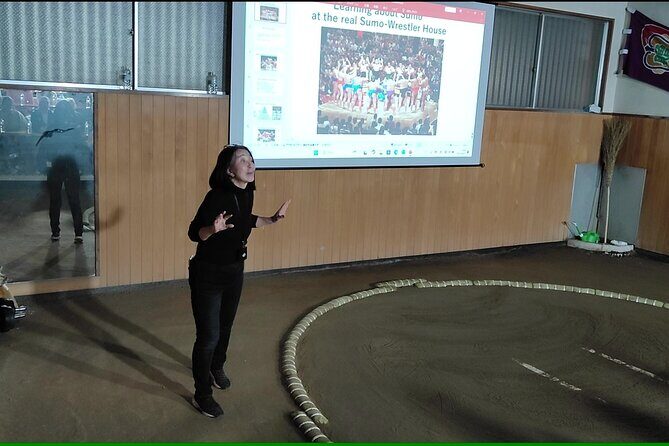
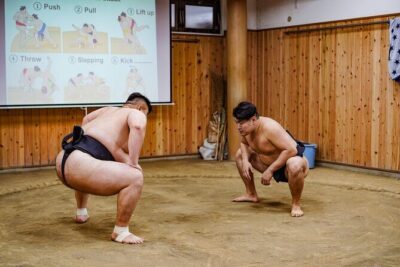
This tour is tightly packed—about 2 hours total—so the order of events is part of the value. You start with an expert crash course in sumo, which gives you the basic vocabulary and the logic of what you’re seeing. That step is huge for first-timers. Without it, sumo can look like fast chaos. With it, you start spotting patterns and technique.
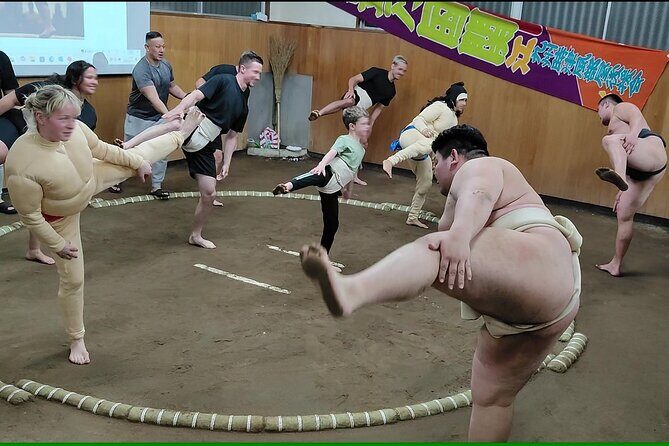
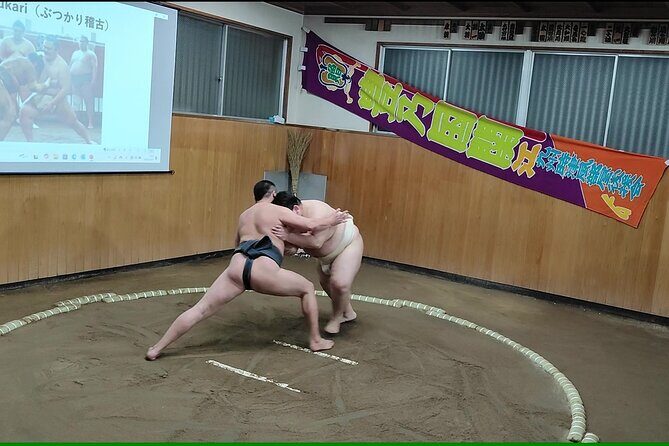
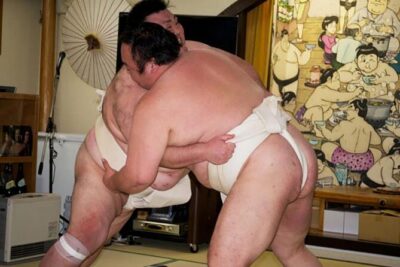
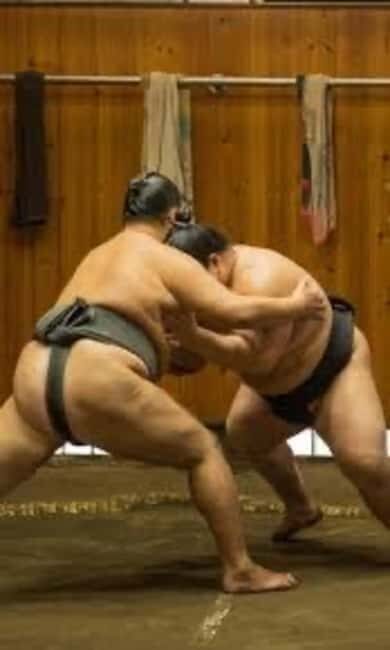
Then the action moves into training and matches led by sumo wrestlers. Since this is close-up, you’ll notice things you miss from far away: how wrestlers position their bodies, how they move in short bursts, and how training builds into actual combat. The tour structure makes it easier to connect the explanations to the visuals in real time.
One thing I appreciate is that you’re not only watching the highlight moments. You get the rhythm—practice first, then the match behavior—so the experience feels like learning rather than simply consuming entertainment.
Chanko-nabe meal options: 11AM or 7PM with food, 3PM without
You get two ways to experience the show. Pick the option that matches your day and your appetite.
With chanko-nabe (11AM and 7PM starts)
If you choose the chanko-nabe meal, the show happens over that meal. Chanko-nabe is the dish sumo wrestlers eat to build muscle and body strength, so it’s not just a random dinner stop. It adds context: you’re eating what the sport’s lifestyle includes, while watching the training culture that goes with it.
The reviews emphasize the food being tasty and the overall evening atmosphere being upbeat. I’d treat the meal option as the more complete experience, especially if you want sumo to feel like a full slice of life.





Without chanko-nabe (3PM start)
If you don’t want the meal component, the 3PM option runs without it. This is a good choice when you have other plans later or you’re traveling light with snacks already handled. You still get training, matches, Q&A, and photos—the core experience doesn’t disappear.
Up close Q&A: asking questions that make technique click
A big part of what makes this tour memorable is the chance to talk. You get a Q&A session with sumo wrestlers, which changes everything from a normal viewing. Instead of guessing why a wrestler does something, you get a direct line to the mindset behind it.
The Q&A also helps you learn the cultural side of sumo. The tour is designed to cover the origin, history, and culture of sumo—so you can place what you’re watching in a bigger picture. In a stable setting, those explanations land better than they do in a lecture hall. The people you’re asking are the ones doing the work.
I also like that the format encourages curiosity rather than passivity. If you’ve ever wondered how wrestlers think about balance, timing, or posture, this is your moment to ask in a way you just can’t at an arena.
Challenging wrestlers: participation with real attitude (and humor)
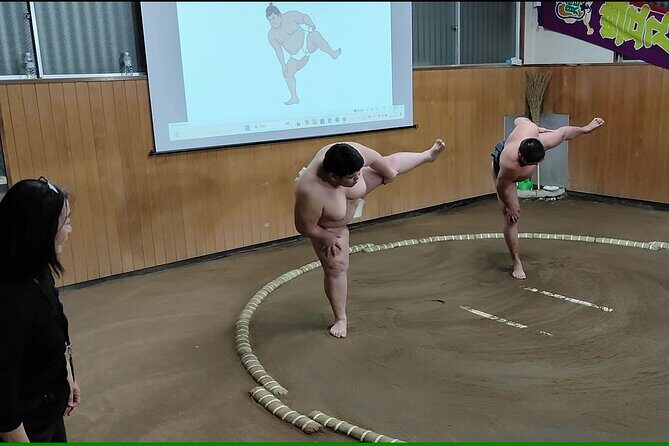
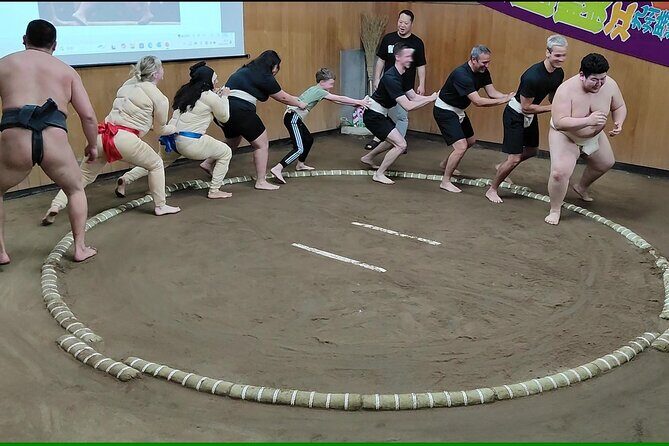
This is one of the standout reasons to book. You’re not only watching sumo; you’re also challenging the wrestlers. The exact nature of the challenge isn’t spelled out here, but the tour description is clear that you’ll get a chance to participate directly.
Why this matters: sumo isn’t only strength. It’s technique, footwork, leverage, and positioning. When you do a challenge moment, even briefly, you start feeling what the wrestlers must be managing constantly. That makes your later observations smarter—even if you don’t become a sumo expert in two hours.
Reviews also highlight humor and a lively vibe during the participation parts. One caution comes from the same theme: if your personality hates public games, you may find the participation segment runs long. If you’re the type who likes laughs and interaction, this will likely feel like the best part of your evening.
Photo sessions that help you remember, not just snap
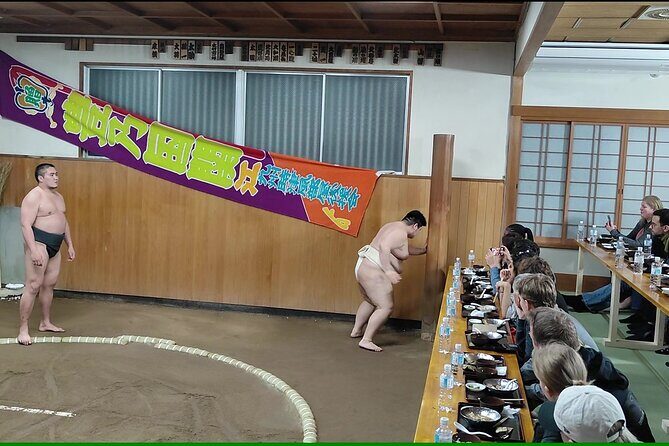
Yes, you’ll take photo sessions with sumo wrestlers. And that’s more valuable than it sounds. A good photo moment works best when you’re not just standing there while everything happens around you. Here, the structure includes dedicated time, so you’re not fighting for a view while the action moves on.
Practical tip: show up early so you can get comfortable positioning. One review specifically notes arriving early helps you get the best seat. Even if your tour has a set plan, arriving a few minutes ahead tends to reduce stress, and stress ruins photos.
Also, keep your phone ready but your hands calm. In a close-stable environment, crowded movement can be awkward. Wait for the cue, take the shots, then let the wrestlers move on to the next step.
Where the value really comes from (not just the price)
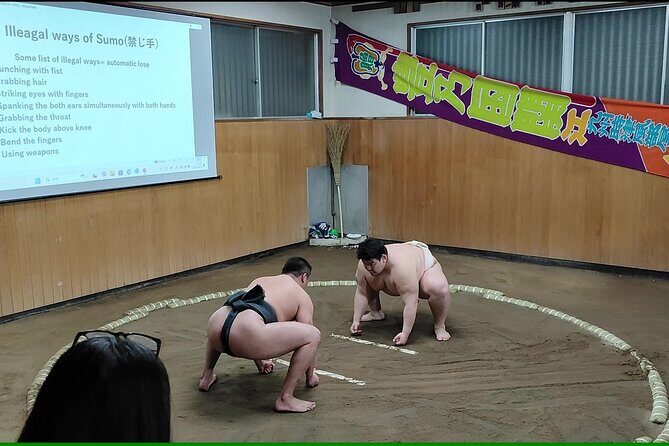
The price is $138.52 per person, and it’s booked on average 57 days in advance. Duration is around 2 hours, and you get a mobile ticket. At first glance, it’s not a low-cost activity. But here’s what you’re actually paying for:
- Expert guidance (a crash course so you understand what you’re seeing)
- Up-close training and matches in a stable environment
- Interaction time including Q&A and a challenge moment
- Photos with wrestlers
Most sumo-related options either show the sport on a bigger stage with less interaction, or they’re more “observe and learn” with fewer hands-on pieces. This tour sells access plus explanation plus participation in one package. That’s the reason the reviews are so positive about it being worth the investment.
If you’re the kind of person who likes cultural experiences with real people, this is the sweet spot. If you only want passive viewing and nothing else, you might wonder if it’s too much. But if you want a story you can tell later—this one is built for that.
Timing, seating, and how to get the most out of a short visit
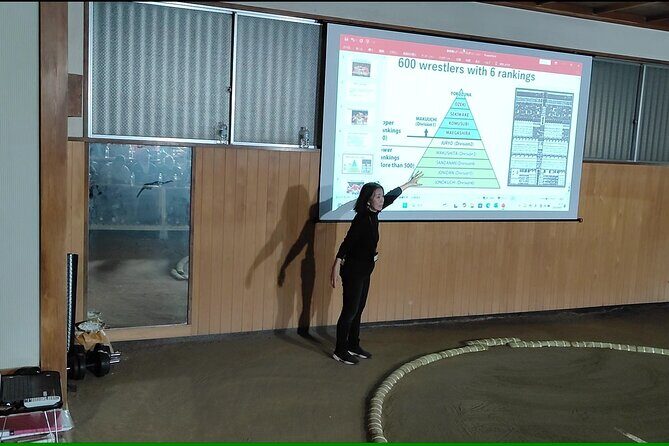
Because the experience is about 2 hours, you’ll want your brain in “ready mode” from the start. The meeting point is in Kiyosumi (Koto City) near public transportation, and you’ll return back there at the end. No hotel pickup means you should plan your arrival so you’re not rushing at the last minute.
For the best experience, I’d do two simple things:
1) Arrive early enough to settle and see what’s going on around you.
2) Listen closely during the crash course so you can follow the training and matches without translating in your head.
If you’re choosing between time slots, think about your energy. 11AM and 7PM with chanko-nabe suits you if you want a fuller, meal-included flow. The 3PM option is cleaner and lighter if you prefer to keep the afternoon open.
And because the group size is capped at 30, the tour should feel more human than mass-market. Still, it’s a stable environment, so expect a compact setup.
Who this tour suits best in Tokyo
This experience fits best if you want sumo to feel like a living culture, not just a ticketed event. It’s a strong match for:
- First-time sumo fans who need a quick guide to understand technique
- People who enjoy interactive parts of tours (Q&A, challenges, photos)
- Food-and-culture travelers who like the lifestyle angle of chanko-nabe
- Anyone traveling in a small group who doesn’t want to get swallowed by a large crowd
If you’re sensitive to longer audience-participation moments, keep that in mind. It’s part of the “up close” style of the experience, and it may not be your favorite segment.
Should you book the Complete Sumo Experience?
I’d book it if you want more than watching. This tour is designed to connect: stable setting → technique basics → training and matches → conversation → participation → photos. That chain is what makes it feel like real value, not just entertainment.
Skip it only if you prefer quiet, no-interaction viewing. The challenge and public participation parts are core to the concept, and they’re part of why people rate it highly.
If you’re in Tokyo and want one sumo experience that feels hands-on and explainable, the Complete Sumo Experience is a great choice.
FAQ
How long is the Complete Sumo Experience in Tokyo?
The tour is about 2 hours (approx.).
Where do I meet for the tour?
You meet at Japan, 135-0024 Tokyo, Koto City, Kiyosumi, 2-chōme 10-11 (Kitanoumi-beya area / 北の湖部屋). The experience ends back at the meeting point.
What’s included in the tour besides watching sumo?
It includes a crash course in sumo by an expert, training and matches by sumo wrestlers, a Q&A session, and photo sessions with the wrestlers. You also get the opportunity to challenge the wrestlers.
Is there a chanko-nabe meal?
Yes, you can choose an option with or without the chanko-nabe meal. The meal option is tied to the 11AM and 7PM start times, and the no-meal option is for the 3PM start time.
What time options are available?
There are two main meal-included start times (11AM and 7PM) and one without meal start time (3PM).
Does the tour provide hotel pickup and drop-off?
No. Hotel pickup and drop-off are not included.
What if I need to cancel?
You can cancel for a full refund up to 24 hours in advance of the experience’s start time. Free cancellation is available under that rule.
Is it a large group tour?
The tour has a maximum of 30 travelers, and it’s near public transportation. Most travelers can participate.
More Tour Reviews in Tokyo



More Mornings with the Wrestlers
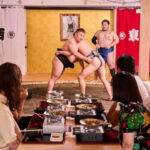
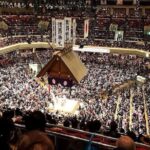
Fresh reviews from around Tokyo






Sumo Shows, compared.
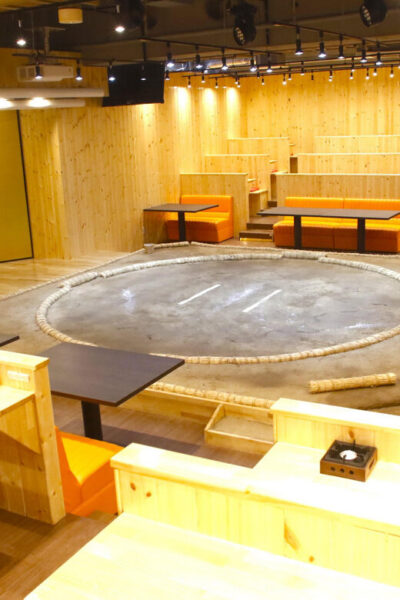 ★ 4.8Sumo Show Experience with Chicken Hot Pot and a PhotoFrom $1036,678 reviews
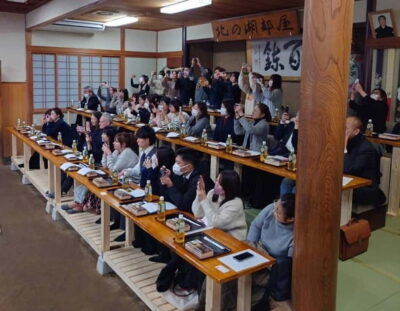 ★ 4.8Sumo Show and Dining ExperienceFrom $792,742 reviews
 ★ 5.0the SUMO showFrom $891,960 reviews
 ★ 5.0Tokyo Shinjuku Sumo Show & Experience with PhotoFrom $791,750 reviews
 ★ 4.8Sumo Show and Experience in ShinjukuFrom $691,001 reviews
 ★ 5.0Authentic Sumo Experience in Tokyo: Enter the SanctuaryFrom $171603 reviews
 ★ 4.8Tokyo Sumo Experience: Chanko & Mochi with a Former ProFrom $103567 reviews
 ★ 5.0Ultimate Sumo Tournament: Tokyo, Osaka, Nagoya, FukuokaFrom $184468 reviews
Browse the lists this tour appears in