
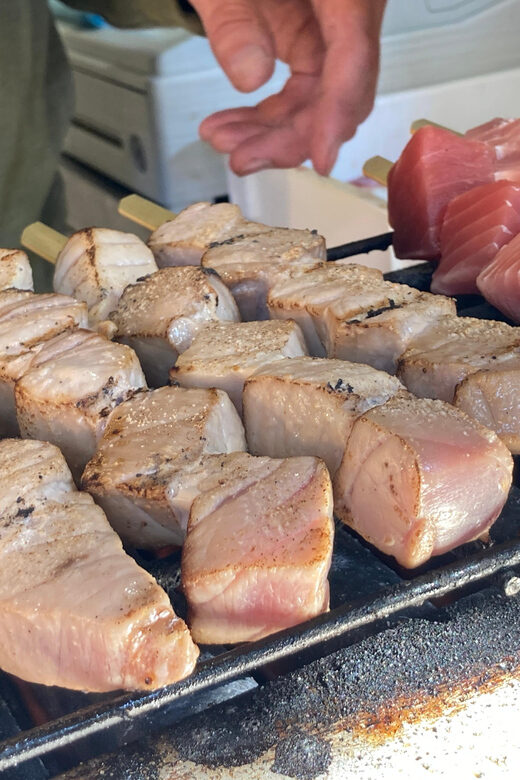
Reviewed · TSUKIJI FISH MARKET TOURS
Tsukiji Fish Market Culture Walking and Food Tour
Tsukiji has a way of making history taste real. This 2–3 hour culture and food walk pairs Tsukiji’s market heritage with two very different spiritual stops: a Jodo Shinshu-style Buddhist temple and a Shinto shrine. You’re not just eating; you’re learning how people marked daily life here—then you get to sample the flavors that grew out of it.
I especially love how this tour builds momentum in a logical order. You start at Tsukiji Hongan-ji, then you shift into the Outer Market for tastings and lunch, and you end with a high viewpoint that helps you understand where the former market fit into the city.
One drawback to plan around: this is not a vegan or vegetarian-friendly tour. It’s built around seafood tasting and a lunch with options like sushi or seafood bowls, so come hungry for fish and shellfish.
In This Review
- Key things to know before you go
- Tsukiji’s temple-to-market rhythm (and why it works)
- Starting at Tsukiji Hongan-ji: Jodo Shinshu in the neighborhood
- Outer Market: street foods first, then lunch you’ll actually enjoy
- Namiyoke Inari Jinja: Shinto beliefs right at the edge of commerce
- Former Tsukiji fish market area: getting your bearings fast
- The skyscraper viewpoint: Tokyo makes more sense from above
- Food expectations: what’s included and how to handle it comfortably
- Price and value: is $22 reasonable for this much structure?
- Who this tour is best for (and who should skip it)
- Should you book the Tsukiji Fish Market Culture Walking and Food Tour?
- FAQ
- How long is the Tsukiji Fish Market Culture Walking and Food Tour?
- Where does the tour start?
- What food is included in the tour?
- What religions or cultural sites do you visit?
- Is the tour only for food, or also culture?
- What languages are the guides?
- Is this tour suitable for vegans or vegetarians?
Key things to know before you go
- Small group (up to 10): easier questions, smoother pacing, less feeling like you’re being herded.
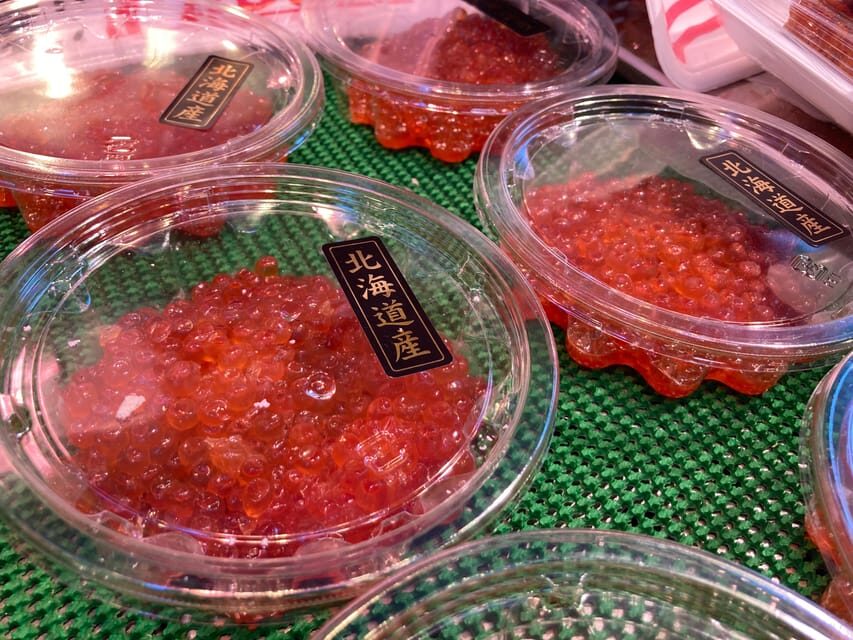
- Three food moments: 3–4 street foods plus a proper market-area lunch.
- Two religion stops with a purpose: Jodo Shinshu at Tsukiji Hongan-ji and Shinto at Namiyoke Inari Jinja.
- Former Tsukiji market context: you’ll walk around the area so the history connects to what you see today.
- A viewpoint stop in a skyscraper: helps you connect street level to the bigger layout of the neighborhood.
Still hungry? More Tsukiji breakfasts and market walks
- Tokyo: Tsukiji Fish Market food Tour★ 4.8 · 7 reviews
Tsukiji’s temple-to-market rhythm (and why it works)
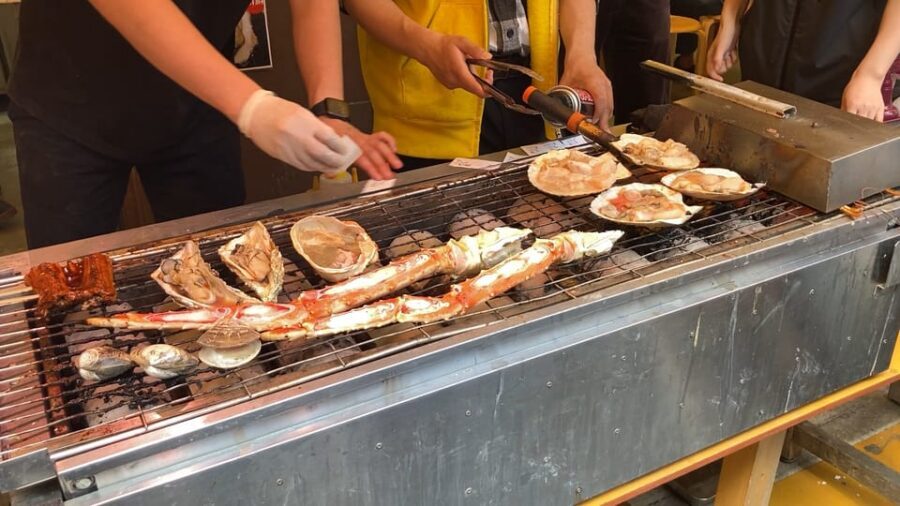
A lot of Tokyo food tours focus on calories. This one focuses on context. Starting with a temple and shrine matters because Tsukiji wasn’t only about trade—it was also about routine, respect, and ritual. Even if you’ve never thought much about Japanese religions before, the structure of the walk makes it easy to learn without turning it into a classroom.
You’ll also get a helpful mix of sights: traditional religious buildings, old-market lanes, and then a modern skyline viewpoint. That contrast is one of the reasons the tour feels satisfying. It’s not random snack hopping; it’s a story told in real places.
And the pace is built for a short visit. At 2–3 hours, you don’t need half a day to feel like you did something meaningful here.
Starting at Tsukiji Hongan-ji: Jodo Shinshu in the neighborhood
Your meeting point is at Tsukiji Hongan-ji Temple, in front of the main gate. The guide will be holding a sign for Fantasy Travel, so it’s straightforward to spot the group and get going quickly.
The first stop is Tsukiji Hongan-ji, with a guided visit of about 30 minutes. This matters because Jodo Shinshu is one of the major styles within Buddhism, and the temple gives you a window into how communities organize life around belief and practice. The tour keeps the focus practical: you’ll learn what you’re seeing as you’re walking past it, not after you’ve already moved on.
I like how this opening frames the market as part of a real neighborhood, not a theme park. Once you understand the temple context, the food stops feel more grounded.
If your guide is especially chatty (I’ve heard great things about guides such as Yuka for staying informative), you’ll likely get extra explanations along the way without the tour feeling slow.
Outer Market: street foods first, then lunch you’ll actually enjoy
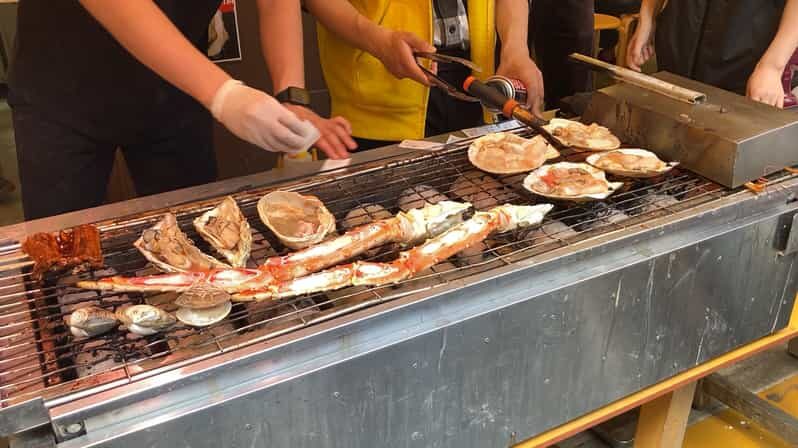
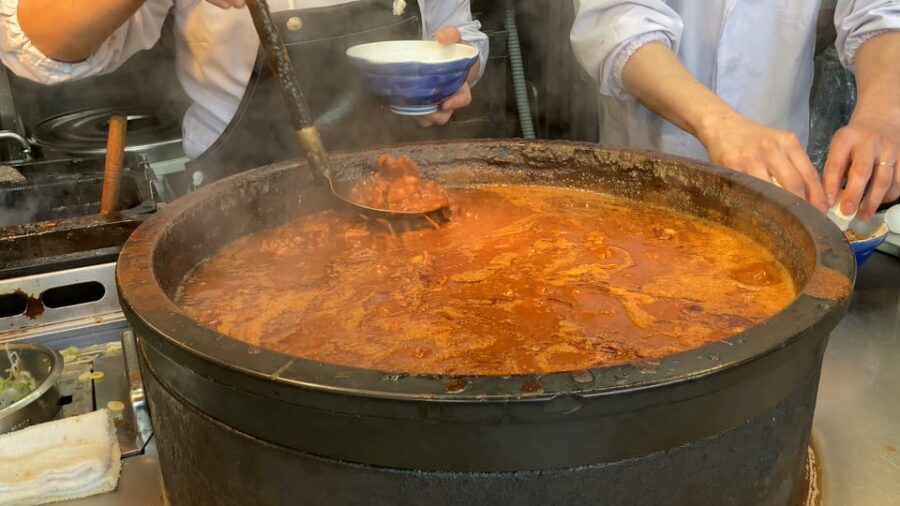
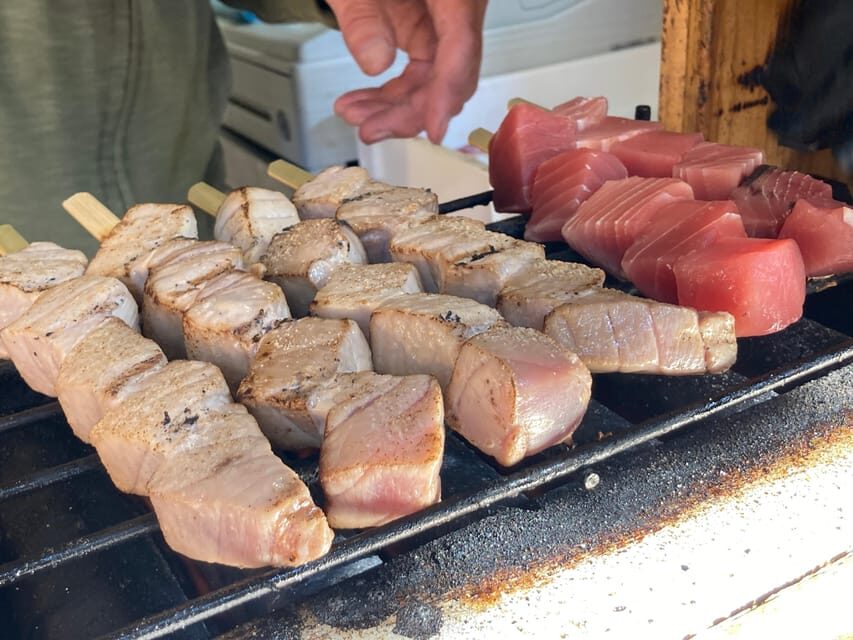
Then you head to the Tsukiji Outer Market for roughly 2 hours. This is where the tour turns into a true food walk. You’ll sample 3–4 street foods, and you’ll get a guided path so you know what to look for and why certain stalls are worth stopping at.
The big value here is variety. Instead of eating one item repeatedly, you get multiple bites that make Tsukiji’s flavors easier to understand in a short time. And because the group is capped at 10, guides can manage tastings without leaving people behind.
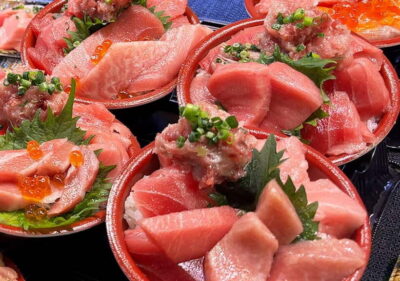
Lunch happens inside the market area at a restaurant, and the choices are seafood-forward: sushi, kaisendon, or other seafood dishes. That lineup is useful because it lets you match your preference on the spot if options are presented during the meal. If seafood isn’t your thing, this is where you’ll want to think twice.
A small practical tip: eat with intention. Street foods are included, so you don’t need to plan extra purchases unless you truly want them. If you start ordering too early, lunch can feel heavy.
Also, the tour includes tour photos, which is a nice bonus in a place where good angles are everywhere and time is short.
Namiyoke Inari Jinja: Shinto beliefs right at the edge of commerce
Next is Namiyoke Inari Jinja for about 30 minutes. This is the Shinto counterpart to the earlier Buddhist stop, and it’s a smart pivot. You’re seeing how different traditions show up in a daily, working-area setting.
Inari shrines are commonly associated with the everyday needs of communities—think protection and prosperity—so it’s a natural fit for a market district. Even if you don’t memorize terminology, you’ll come away with a clearer idea of how spiritual sites function alongside commerce.
This stop also helps you reset your brain between food moments. After tasting and walking through market stalls, the shrine gives you a calmer beat—still guided, still meaningful, but less about snacking and more about understanding.
Former Tsukiji fish market area: getting your bearings fast
After the Outer Market, the tour shifts to the area connected to the former Tsukiji fish market. The point isn’t to treat it like an archaeology museum. It’s to help you understand the scale and layout of what used to be there, and how the neighborhood changed around it.
I like this part because it fixes a common problem in Tokyo. When you only see the present-day stalls, you can miss how the place became famous in the first place. A short walk here makes the market feel less random and more historical.
The guide also helps you connect the dots with what you just ate and what you’re about to see next—especially the final viewpoint.
The skyscraper viewpoint: Tokyo makes more sense from above
The tour ends with a visit to a skyscraper viewpoint where you can look around the town and the former Tsukiji fish market area. This isn’t just a photo stop. It’s one of those simple moves that makes all the street-level effort worth it.
From above, you can spot how the neighborhood sits in relation to wider Tokyo. That makes future exploring easier, too. Even if you don’t plan to come back immediately, you’ll leave with better mental mapping.
If you’re the type who likes orientation—where things are relative to each other—this ending will feel like a payoff instead of a last-minute rush.
Food expectations: what’s included and how to handle it comfortably
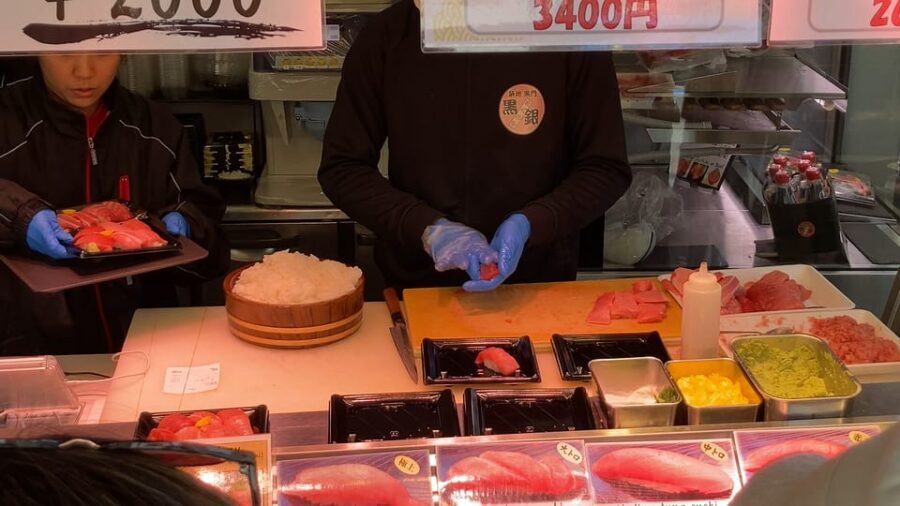
This is a food tour with culture attached. The included food is clearly defined: 3–4 street foods (for the food tour format) plus lunch in the market area (sushi, kaisendon, or seafood dishes). That’s a lot for 2–3 hours, and it’s exactly why you should come with an empty stomach.
You’ll also want to be honest with yourself about your diet. This tour is not suitable for vegans or vegetarians. Seafood is central, and even if you can find an occasional non-seafood snack at the market, the tour’s structure is built around seafood tasting and lunch.
Another practical note: this is a walking experience. Even with a guided pace, you’ll spend a good chunk of your time on your feet, so comfy shoes matter.
Price and value: is $22 reasonable for this much structure?
For $22 per person, the value comes from the combination of things you don’t easily DIY:
- a guided temple and shrine intro (about 30 minutes each),
- a guided Outer Market path (about 2 hours),
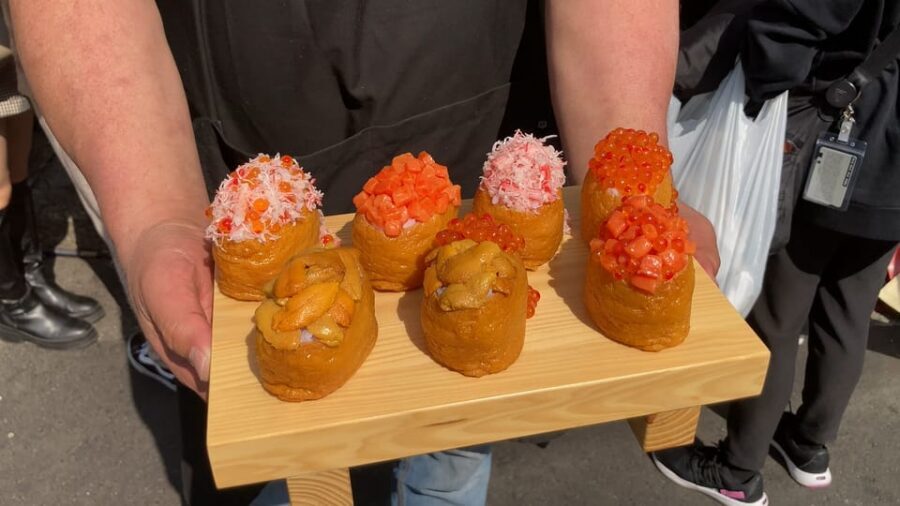
- multiple tastings plus a lunch meal,
- and a viewpoint stop to tie it all together.
Food tours can get expensive fast when you’re paying for the guide and the food. Here, the included food load is what keeps the price grounded. You’re essentially paying for a short, guided itinerary that includes both eating and learning without making you figure out where to go on your own.
One more value point: the group limit (up to 10) supports a smoother experience. When the group is small, you can ask questions about what you’re seeing—especially at the spiritual sites where it’s easy to feel lost without guidance.
Who this tour is best for (and who should skip it)
This tour fits you if you want:
- a short plan that still feels like more than eating,
- market culture plus religion context (Buddhism and Shinto),
- and a manageable group size.
It’s also a great choice if you like guides who are enthusiastic and organized around tastings. I’ve seen examples where guides were described as energetic and strong at pairing the right food moments with explanations (including guide names like Inok and Yuka).
You might skip it if:
- you’re vegan or vegetarian,
- you hate seafood,
- or you want a long, unstructured market shopping session rather than a focused walk.
Should you book the Tsukiji Fish Market Culture Walking and Food Tour?
I’d book it if you want Tsukiji in one compact package: temples, tastings, lunch, and a viewpoint that helps everything make sense. The price is reasonable for the amount of food and guided stops you get, and the small group size makes it feel more personal than a big-market sprint.
I’d think twice if seafood is a hard no for you. Otherwise, this is a smart way to spend a Tokyo morning or early afternoon while learning how this place works—spiritually and socially—alongside the food.
FAQ
How long is the Tsukiji Fish Market Culture Walking and Food Tour?
The tour lasts about 2 to 3 hours.
Where does the tour start?
The meeting point is at Tsukiji Hongan-ji Temple, in front of the main gate, at 3 Chome-15-1 Tsukiji, Chuo City, Tokyo 104-8435.
What food is included in the tour?
If it’s the food tour format, you’ll have 3 or 4 street foods and lunch in the Tsukiji Fish Market area. Lunch is listed as sushi, kaisendon, or seafood dishes.
What religions or cultural sites do you visit?
You’ll visit Tsukiji Hongan-ji (Jodo Shinshu-style Buddhism) and Namiyoke Inari Jinja (Shinto). There’s also a stop to look at the former Tsukiji fish market area.
Is the tour only for food, or also culture?
It’s both. You’ll do a walking culture tour that includes temple and shrine visits, plus street food tastings and a seafood lunch.
What languages are the guides?
The tour offers live guides in English and Japanese.
Is this tour suitable for vegans or vegetarians?
No. It’s listed as not suitable for vegans and vegetarians.
More Tours in Chuo City
More Tour Reviews in Chuo City
Back to the Market: More Tsukiji Tours
Fresh reviews from around Chuo City
Tsukiji Fish Market Tours, compared.
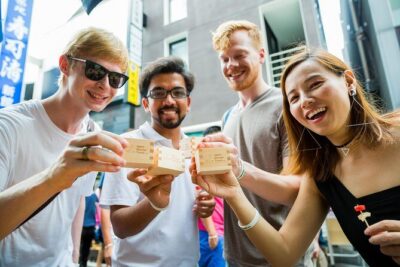 ★ 5.0Tokyo Tsukiji Fish Market Food and Culture Walking TourFrom $993,184 reviews
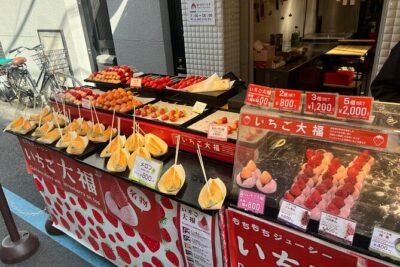 ★ 5.0Tsukiji Fish Market Food and Walking tourFrom $301,724 reviews
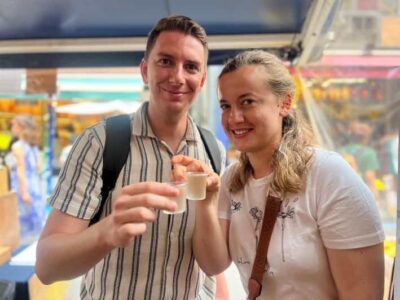 ★ 4.9Tsukiji Fish Market Guided Walking TourFrom $221,397 reviews
 ★ 5.0Tokyo Sushi Making Class in Tsukiji with Professional ChefFrom $491,177 reviews
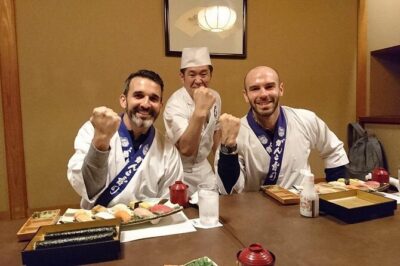 ★ 5.0Tsukiji Fish Market Guided Tour and Sushi Making with Pro ChefFrom $104775 reviews
★ 4.7Tsukiji Fish Market Food and Culture Walking TourFrom $96757 reviews
★ 5.0Tsukiji Fish Market Guided Tour and Sushi Making with Pro ChefFrom $104775 reviews
★ 4.7Tsukiji Fish Market Food and Culture Walking TourFrom $96757 reviews
 ★ 5.0Tsukiji Fish Market: Street Food & Culture Walking TourFrom $33669 reviews
 ★ 5.0Tsukiji Fish Market Small-Group Food Walking TourFrom $87621 reviews
Browse the lists this tour appears in