Reviewed · TOKYO
Tokyo: Sushi Making with Pro Chef & Tsukiji Fish Market Tour
Tsukiji plus sushi class is a smart one-two punch. I especially love the Tsukiji market context before you touch any ingredients, and I really like that you learn the craft from a real sushi chef step by step. One possible drawback: this is a hands-on workshop, so if you’re sensitive to fish or need special diets, you may run into limits.
I also like the small-group feel (capped at 8), which makes it easier to ask questions and actually get coaching. The guides you might meet have been described as kind and entertaining, including names like Kate, Yuko, Matsayo, and sometimes Yusei, Take, or Tadashi (Tad) in past experiences. The trade-off is that you’ll be walking—there’s a classroom climb involved—and the timing matters.
In This Review
- Key Highlights You’ll Care About
- Why Tsukiji and Sushi Class Works So Well in 4 Hours
- Meeting at Tsukiji Honganji-Temple: A Fast, Clear Start
- Tsukiji Fish Market Tour: Seeing the Supply Chain Up Close
- Days the Market May Be Closed
- The Kitchen of Tokyo Stops: Food Culture Beyond the Rice
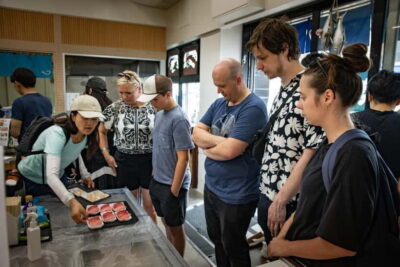
- Hands-On With a Pro Chef: Nigiri and a Maki Roll in Your Own Hands
- What You’re Learning (More Than Just Shaping Sushi)
- Lunch Is What You Make
- Price and Value: Why $101 Can Actually Be a Good Deal
- Practical Stuff That Can Make or Break Your Day
- Who Should Book This Sushi Making + Tsukiji Tour
- Who Should Skip It (Or Choose Another Option)
- Should You Book This Tour?
- FAQ
- Where do I meet for the Tokyo sushi making and Tsukiji fish market tour?
- How long is the tour?
- Is the tour in English?
- What dietary restrictions can you accommodate?
- Can I change sushi toppings on the day of the workshop?
- Is this tour suitable for wheelchair users or people with mobility impairments?
Key Highlights You’ll Care About
- Tsukiji Fish Market walkthrough with a local guide so you understand what you’re seeing, not just where to stand for photos.
- Pro-chef sushi workshop with step-by-step instruction for nigiri and a maki roll.
- You eat what you make (lunch is the sushi from the class).
- Market-to-table storytelling about where fish and ingredients come from and why sushi works the way it does.
- Small group size (max 8) for better pacing and more attention during hands-on parts.
Before you commit, see how this one stacks up against a few Chuo City favourites:
- Tokyo: Sushi Making with Pro Chef & Tsukiji Fish Market Tour★ 4.6 · 49 reviews
- Tokyo: Tsukiji Fish Market food Tour★ 4.8 · 7 reviews
- Tsukiji Fish Market Culture Walking and Food Tour★ 5.0 · 7 reviews
Why Tsukiji and Sushi Class Works So Well in 4 Hours
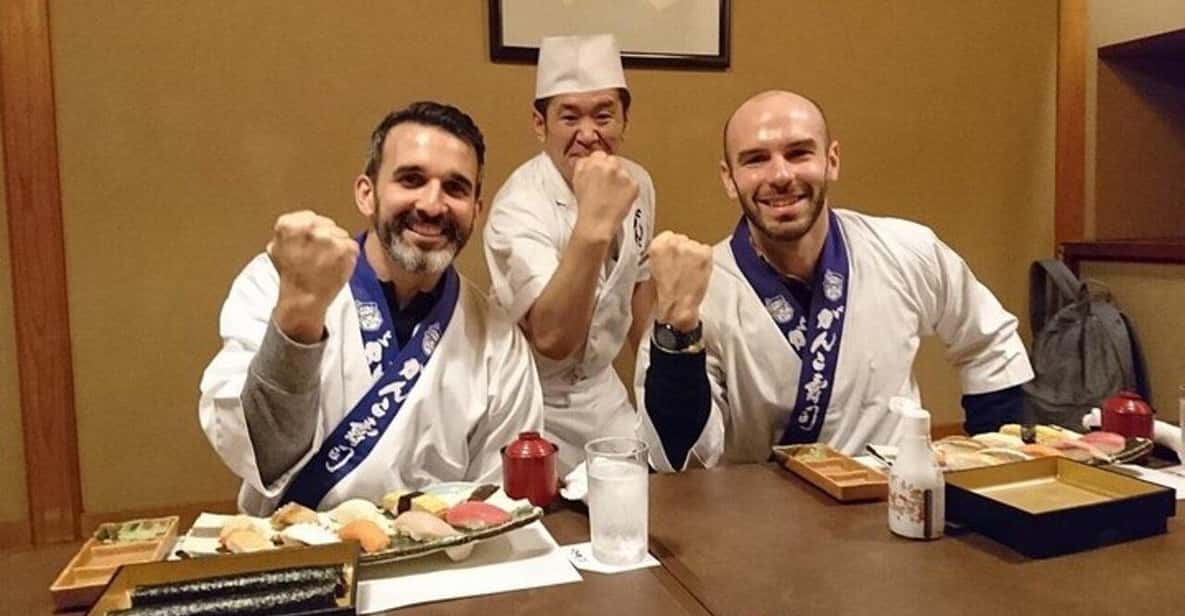
This tour is built around a simple idea: you learn sushi faster when you first see where the ingredients are sourced. You start in the Tsukiji area with a guide who helps connect the sensory chaos of the market to the tidy routines of Japanese food culture.
The 4-hour length also makes it realistic. You’re not committing to an all-day event, but you still get a guided market experience plus a full workshop where you practice.
Meeting at Tsukiji Honganji-Temple: A Fast, Clear Start
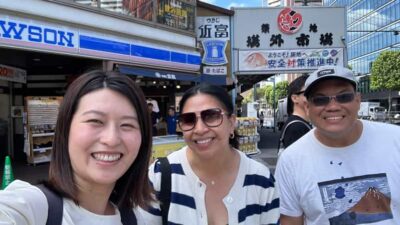
You meet at the main gate of Tsukiji Honganji-Temple, at the front of the temple. One small but important detail: Google Maps may try to route you to the back of the temple, so follow the main gate directions instead.
You’ll also be doing some walking right away. This is a “comfortable shoes” kind of day, not a “flip-flops and vibes” kind of day. If you’re arriving late, the tour can’t be extended, so aim to be there early and unhurried.
Tsukiji Fish Market Tour: Seeing the Supply Chain Up Close
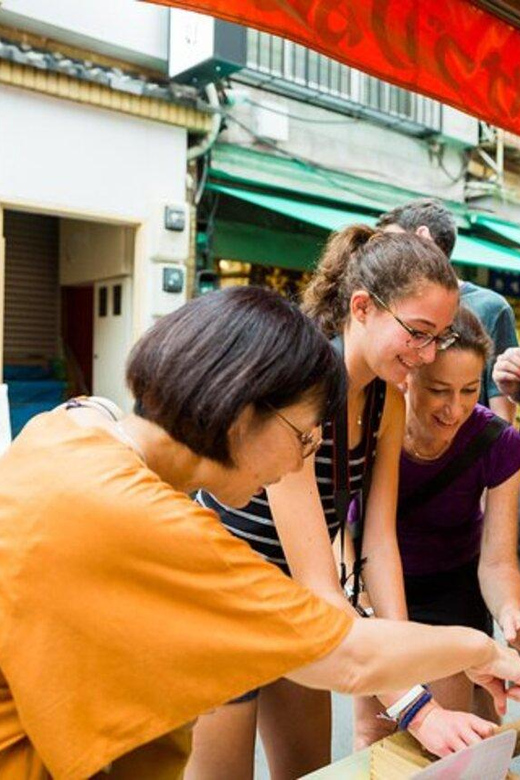
Tsukiji is famous, but the real value here is what your guide helps you notice while you walk. You’ll get a feel for how professionals operate, what they look for, and how the day-to-day market flow feeds the restaurants people brag about.
This tour is focused on the Uogashi wholesaler market portion of the area, and it matters because it’s a work environment. Your group isn’t just wandering—it’s learning how ingredients make their way from suppliers to sushi counters.
A nice bonus from past groups: there can be food sampling along the way, and some experiences have included unusual items like whale meat. The exact samples aren’t guaranteed for every schedule, but the general idea is that the guide points out what’s culturally important and worth trying.
Days the Market May Be Closed
Plan around the fact that the fish market (Uogashi wholesaler market) is closed on Wednesdays, Sundays, and other closed market days. If you’re traveling during one of those periods, double-check availability for your specific date.
The Kitchen of Tokyo Stops: Food Culture Beyond the Rice
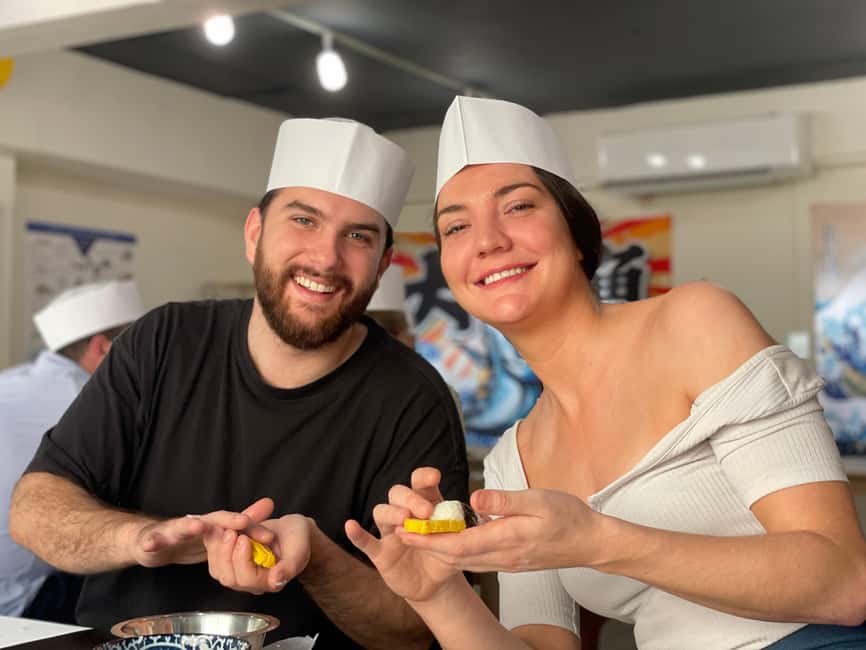
Right before you make sushi, the tour pivots from the market to the mindset behind Japanese food. You’ll learn the foundation of Japanese culinary culture at The Kitchen of Tokyo, which helps sushi click as more than a dish.
This part is especially useful if you’re new to Japan. Sushi can seem simple—just rice and fish—but the “why” matters: technique, seasonality, texture, and how sushi is meant to be eaten. You also get context about the history and significance of sushi while you’re still in that market learning mode.
Hands-On With a Pro Chef: Nigiri and a Maki Roll in Your Own Hands
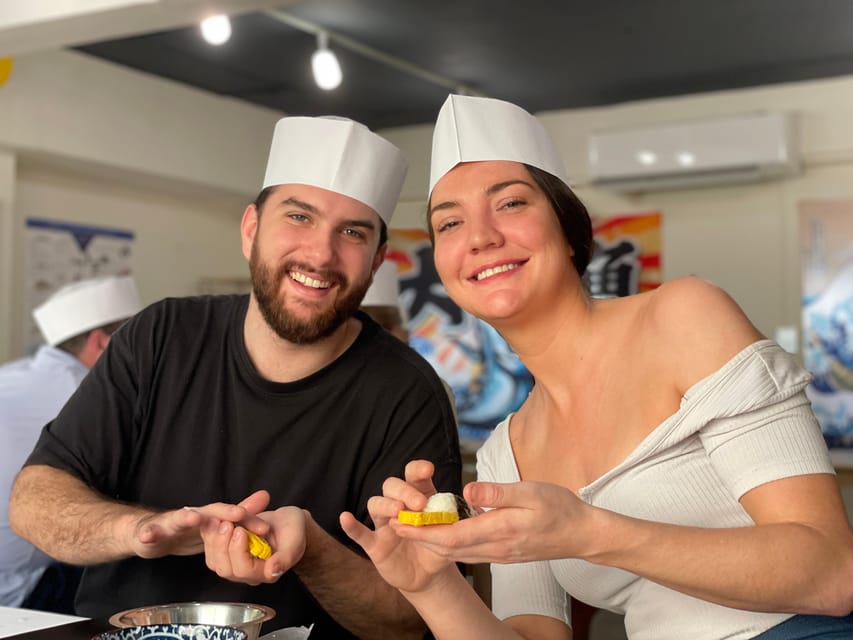
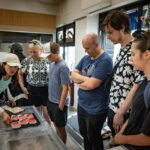
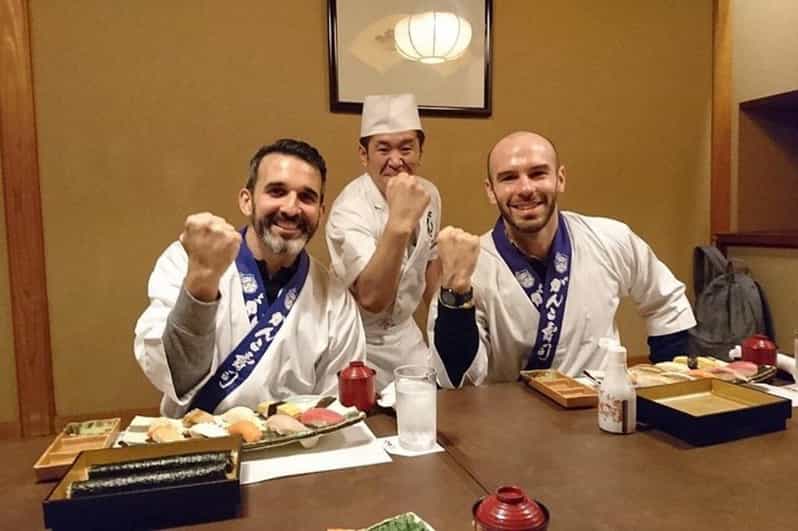
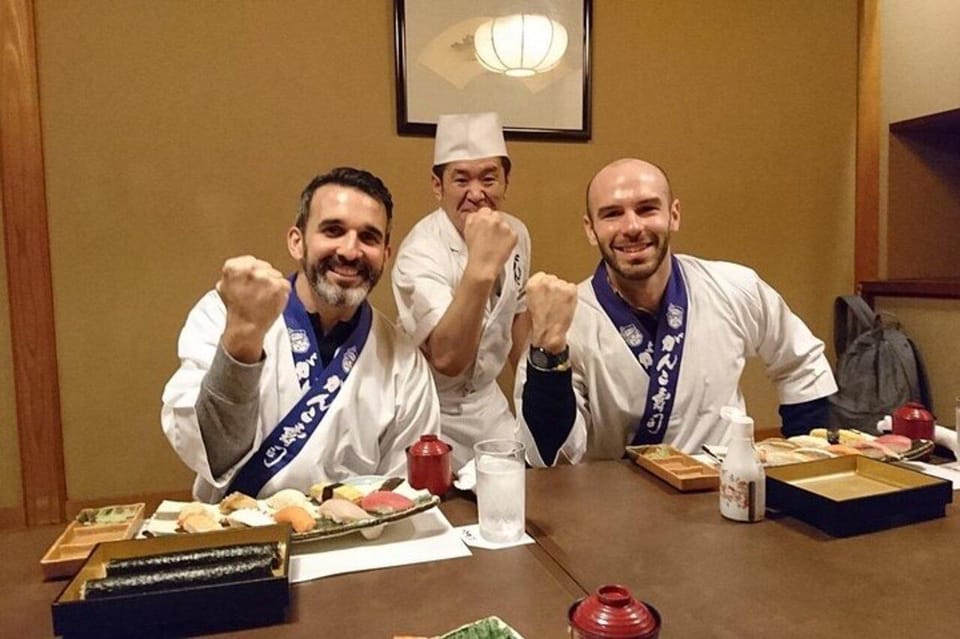
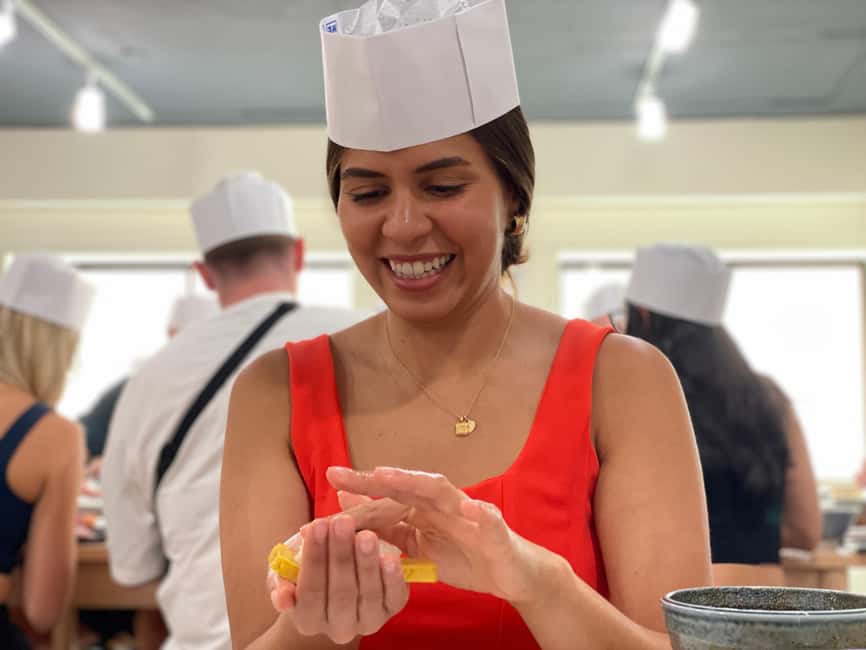
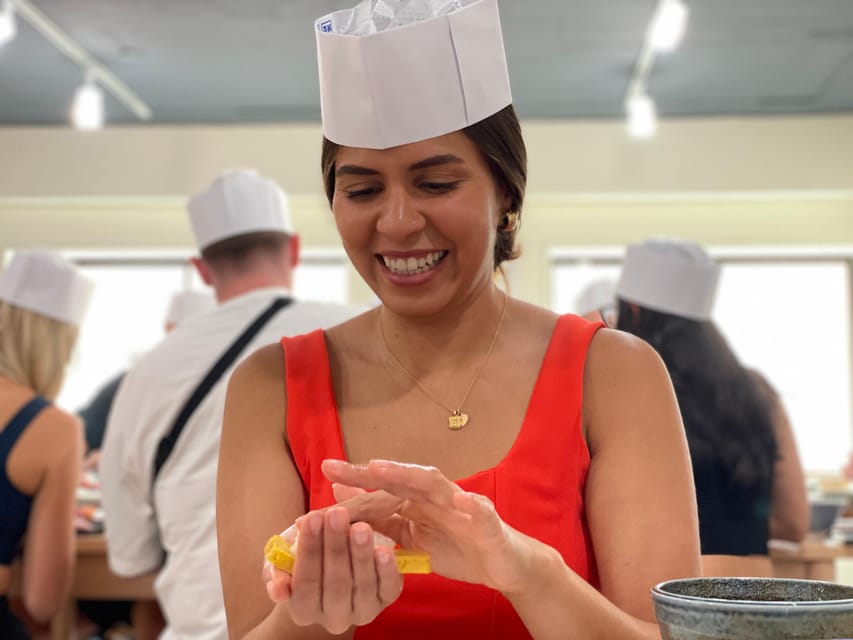
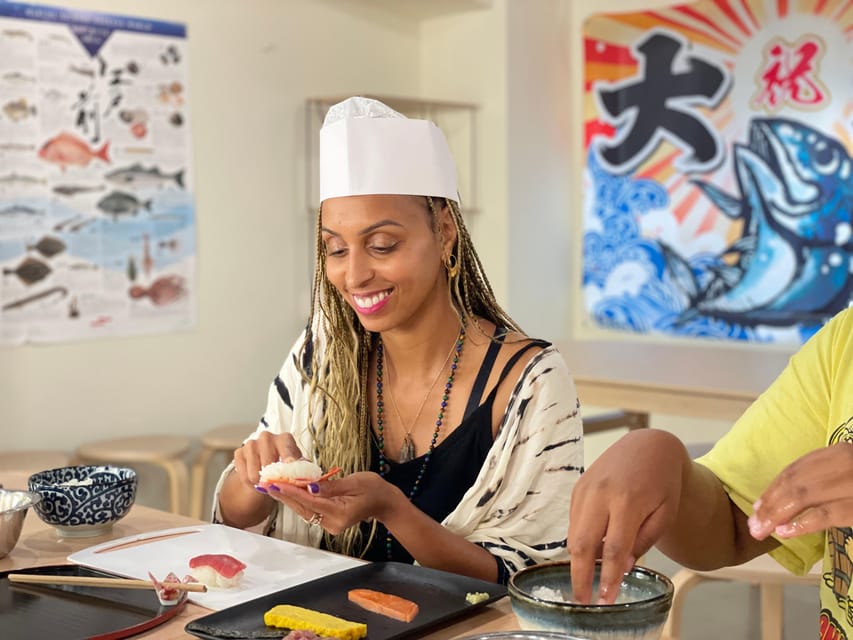
Now for the part most people book for: the sushi workshop with a professional chef. You get step-by-step guidance, and you’re not left to guess. Even if you’re not a confident cook, the structure is there to help you succeed.
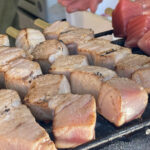
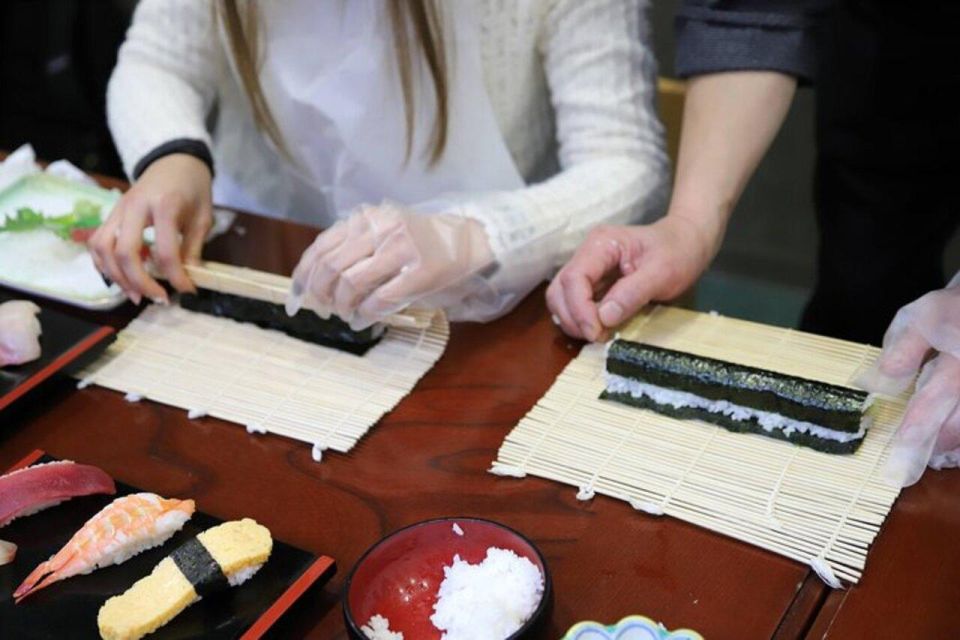
From past experiences, the class often results in you making five nigiri and a maki roll. That’s a good amount of practice in a short session, and it gives you a feel for how rice handling changes depending on the style.
What You’re Learning (More Than Just Shaping Sushi)
This isn’t only about forming bites. You get instruction that tends to include:
- How to prepare and handle ingredients properly
- How to work with the fish and the basics of carving or prep
- How to assemble sushi correctly so it holds together
People also note that they learned a lot about different types of fish, including what to look for and how to approach each one in the sushi context. The pro-chef instruction is the main reason this tour feels more “real” than a casual cooking demo.
Lunch Is What You Make
Lunch is included, and it’s the sushi you prepare in the workshop. Translation: you won’t just smell great food—you’ll sit down and eat your own work.
One small note: sushi toppings can’t be changed on the day of the event. If you have food restrictions or allergies, you’ll need to let the organizers know by 5:00 P.M. JST on the day before your tour.
Price and Value: Why $101 Can Actually Be a Good Deal
At $101 per person for 4 hours, this is not a budget street-food stroll. You’re paying for three main things: guided market access, a small-group format, and a hands-on workshop led by a professional chef with lunch included.
In practical terms, you’re getting value because:
- Lunch is part of the cost (you eat what you make)
- You’re not just watching sushi being made—you’re being coached through it
- The market guide helps you understand what you’re seeing (which makes the whole day more satisfying)
If you’re already excited about sushi and you want something more meaningful than a tasting, this price can make sense. If you’re mainly after scenery and photos, you might feel the cost more than the payoff.
Practical Stuff That Can Make or Break Your Day
Bring comfortable shoes. You’ll be moving between the temple area, market areas, and the classroom space.
You’ll also need to walk upstairs to reach the 3rd-floor classroom. If stairs are a problem, this isn’t the right fit.
Here’s where you should read carefully and decide early:
- The tour is in English with a live guide.
- It’s small group (limited to 8).
- Sushi topping changes aren’t available day-of, so communicate allergies or restrictions ahead of time.
- Vegetarian, vegan, and halal requests aren’t accommodated (and gluten-free requests also aren’t accommodated).
Who Should Book This Sushi Making + Tsukiji Tour
This works best if you want a Tokyo experience that connects the dots. You’ll enjoy it if you like:
- Food tours that explain what you’re eating and why
- Hands-on cooking lessons
- Learning the “rules” of sushi—rice, fish, technique, and how to eat it properly
It’s also a solid choice for first-time Japan visitors who want a high-impact taste of Japanese food culture in one organized block.
Who Should Skip It (Or Choose Another Option)
Skip it if you need mobility accommodations, because it involves walking and stairs (including the walk to the 3rd-floor classroom). Also skip it if you’re vegan, vegetarian, or need halal—those requests aren’t accommodated here.
If you’re gluten-free, halal, or vegetarian for dietary reasons, you’ll likely be happier with a different tour type. And if you’re very late to the start, you can’t expect the tour to stretch longer to catch up.
Should You Book This Tour?
I’d book it if you want a market-to-table day that ends with a meal you made yourself, and if you’re excited about learning sushi from a professional chef rather than doing a quick demo.
I’d hesitate if fish is a problem for you, if dietary needs don’t match what’s supported, or if stairs and walking are issues. The tour is well-structured, but it’s still a real-world market + workshop format.
If you’re the kind of traveler who likes to learn the craft behind famous food, this is one of the more satisfying ways to spend a half-day in Tokyo.
FAQ
Where do I meet for the Tokyo sushi making and Tsukiji fish market tour?
Meet at the main gate of Tsukiji Honganji-Temple, at the front of the temple. Google Maps may route you to the back—ignore that and use the main gate directions.
How long is the tour?
The duration is 4 hours.
Is the tour in English?
Yes. The tour includes a live English-speaking guide.
What dietary restrictions can you accommodate?
The tour does not accommodate vegetarian, vegan, halal, or gluten-free requests. The organizers say they will try to accommodate allergy-related requests, but it may not be possible.
Can I change sushi toppings on the day of the workshop?
No. Sushi topping cannot be changed on the day of the event. If you have allergies or restrictions, you need to notify them by 5:00 P.M. JST on the day before your tour.
Is this tour suitable for wheelchair users or people with mobility impairments?
No. It is not suitable for people with mobility impairments or wheelchair users. It also involves walking and stairs to the 3rd-floor classroom.