
Reviewed · SHOW
Traditional Japanese Music ZAKURO SHOW in Tokyo
One hour, and you hear Japan differently. The Traditional Japanese Music ZAKURO SHOW brings world-class players and their instruments right to the front of your seat, with clear dialogue and English translation in Tokyo’s Omotesando area.
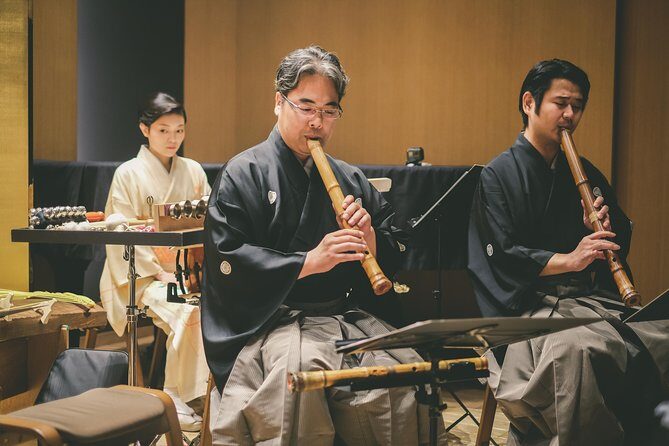
I really like the instrument variety packed into a short show: taiko, koto, shamisen, shakuhachi, and more, with each piece placed in context. I also love that the music isn’t just performed but explained, so you walk out knowing what you heard and why it matters.
The main trade-off is the time limit. At about 1 hour, it’s the kind of show that leaves you wishing it ran longer.
In This Review
- Key Things to Know Before You Go
- Why Zakuro’s Traditional Music Show Works in Tokyo
- Omotesando Setting: Cozy, Close, and Easy to Reach
- What You’ll Hear: Taiko, Koto, Shamisen, Shakuhachi, and More
- The Flow of the Performance: Music, History, and Friendly Translation
- Pricing and Value: Is $39.64 Worth It for One Hour?
- Who This Fits Best (and Who Might Want to Skip It)
- Quick Pre-Show Tips for a Smooth Night
- Should You Book the ZAKURO Traditional Japanese Music Show?
- FAQ
- How long is the Traditional Japanese Music ZAKURO SHOW?
- Where in Tokyo does the show take place?
- How much does it cost?
- Does the show include a ticket, or do I need to buy admission separately?
- Is there an English translation during the show?
- What traditional instruments are featured?
- Is there a mobile ticket?
- How early should I book?
- What is the cancellation policy?
- Is the show suitable for most travelers?
Key Things to Know Before You Go
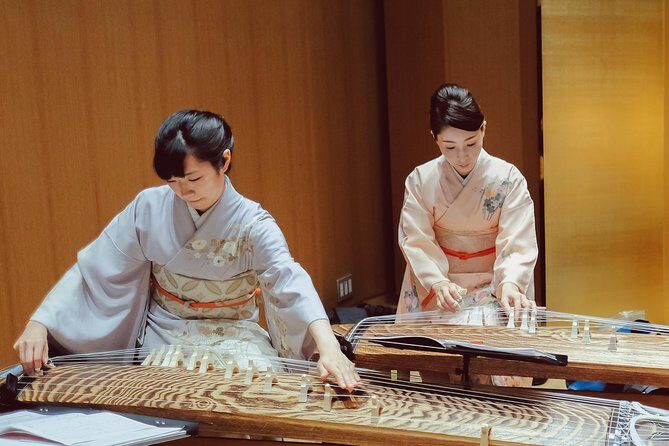
- Close-up wagakki performance: musicians and instruments feel immediate, not distant.
- English commentary between pieces: explanations keep the concert easy to follow.
- A mix of old and new: the program spans ancient-to-modern traditional sounds.
- Traditional + pop crossover: you may even hear a cover of a western hit on Japanese instruments.
- Kimono musicians at the front: the style, presence, and storytelling are part of the show.
- Fits into almost any Tokyo plan: one hour is simple to schedule in a busy day.
Worth weighing up alongside this Tokyo pick:
- Mt Fuji & Hakone Cruise, Drum Show Bullet Train 1 Day from Tokyo★ 4.0 · 7,413 reviews
- Tokyo: Sumo Show and Dining Experience★ 4.8 · 2,742 reviews
- the SUMO show★ 5.0 · 1,960 reviews
Why Zakuro’s Traditional Music Show Works in Tokyo
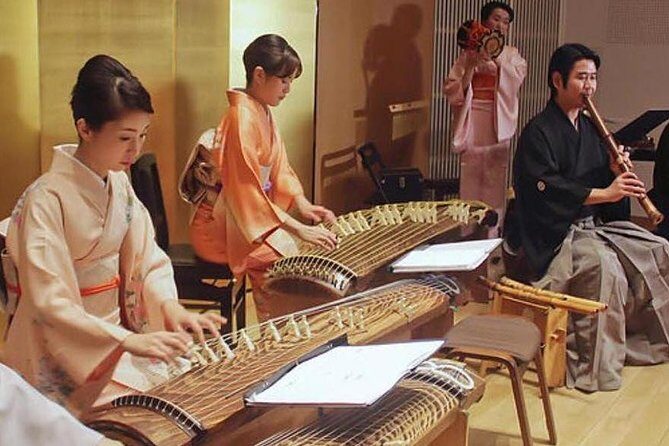
Tokyo can be loud, fast, and packed. This show cuts through that with something calmer and more focused: live traditional Japanese music, performed right in front of you, with explanations that make the sounds click.
What I like most is how the show is designed for people who don’t have a background in Japanese music. Between musical numbers, you get talking points about technique, meaning, and musical history. That matters because a lot of performances are either pure spectacle or pure lecture. Here, you get both, timed so the concert never drags.
And because it’s in Omotesando, you’re not forced into some far-flung detour. You can pair it with shopping streets and cafés nearby, then return to something cultural and quiet without changing your whole itinerary.
Omotesando Setting: Cozy, Close, and Easy to Reach
This isn’t a giant auditorium setup. The show is held in a beautiful and cozy venue, and the vibe is intimate. That “cozy” part isn’t fluff. When musicians are right in front of you, you can hear the instrument details more clearly, and the explanations land better because you’re not looking across a hall.
You’ll also appreciate the practical side. It’s near public transportation, and the timing is only about one hour, which makes it easier to slot in when Tokyo days start to blur together.
One more note: you’re given a mobile ticket. That’s one less thing to worry about when you’re moving around the city with transit lines, phone chargers, and the general chaos of travel days.
What You’ll Hear: Taiko, Koto, Shamisen, Shakuhachi, and More
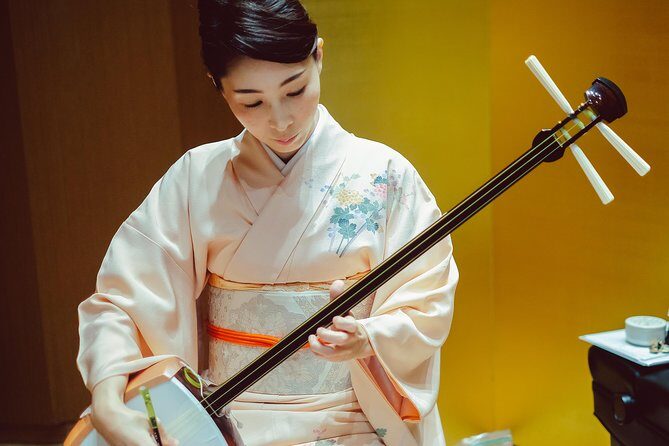
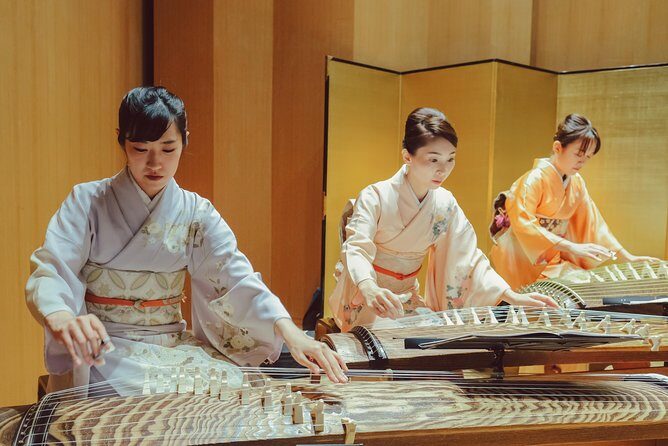
The ZAKURO show centers on wagakki, traditional Japanese instruments. The program isn’t limited to one sound or one region. You’ll hear a range that gives you a quick overview of how different instruments create different textures.
Here’s what the show highlights:
- Taiko drums: big rhythm energy, often a strong emotional anchor.
- Koto: a plucked string sound that can feel both delicate and precise.
- Shamisen: more bite and expression, with a string sound that can sound both elegant and powerful.
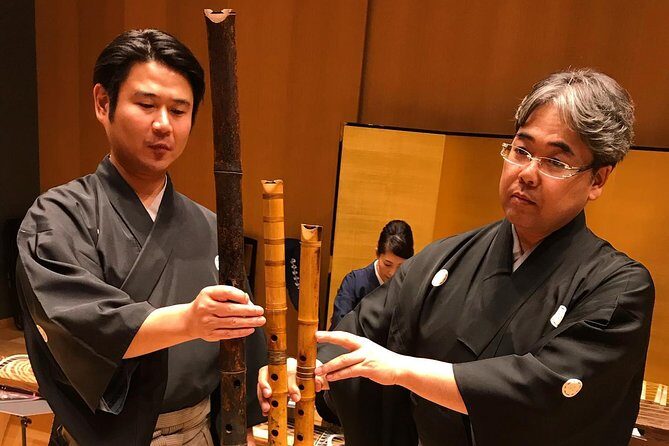
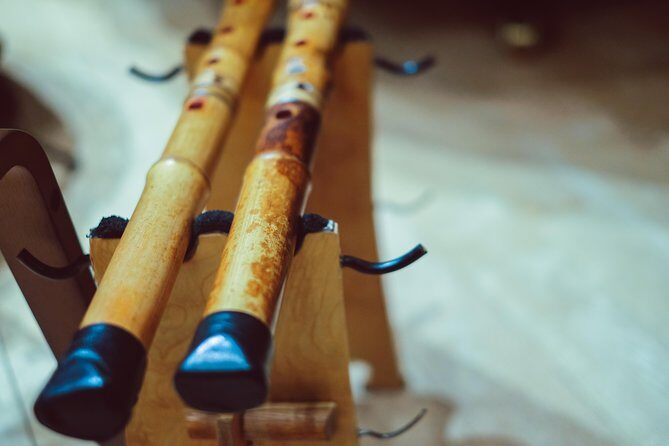
- Shakuhachi: the bamboo flute, known for breathy tone and expressive phrasing.
- Plus additional instrument variety as part of the ensemble.
What makes this more than a “watch-and-guess” concert is that the instruments are explained between songs. When you learn what a player is doing—how the sound is produced, what makes the instrument distinct—you start listening differently. Instead of only hearing melody, you notice rhythm shifts, articulation, and tone changes.
One of the clever parts of the program is that it includes a cover of a western hit. A review specifically mentioned a Nirvana song version. That kind of crossover helps a first-time listener connect immediately, and then the show turns around and shows how the same musical idea can feel totally different on traditional instruments.
The Flow of the Performance: Music, History, and Friendly Translation
If you’re worried that a cultural show will be confusing without Japanese language skills, this is the part that should put you at ease.
The concert includes live commentary by performers wearing colorful kimono, with English translations during the show. That means you’re not stuck reading a program while the music plays. You can follow along in real time, and the story of each piece becomes part of what you hear.
From what you can expect in the performance format:
- The musicians talk about the secrets of their craft—how they think about playing and shaping sound.
- There’s historical context, so the music isn’t floating in a vacuum.
- The tunes are selected with context in mind, including both ancient and modern traditional music.
- The host and musicians also interact with the audience, which helps turn a concert into a shared experience rather than a one-way show.
This is the ingredient many visitors want but rarely get: context that feels clear, not academic. When the explanations are timed well, you don’t miss music, and you don’t feel like you’re sitting through a lecture.





Pricing and Value: Is $39.64 Worth It for One Hour?
At $39.64 per person for about one hour, you’re not paying for a long cultural day. You’re paying for focus.
Here’s why the value can make sense:
- You’re watching a top-level ensemble in a close, intimate space.
- The price includes the show admission, and you get a performance plus guided explanations.
- Traditional instrument concerts in major cities often cost more than you expect when you factor in venue size and language support. Here, the English translation and dialogue are built into the experience.
- It’s low-friction. One hour is easy to schedule, so you’re buying time efficiency as well as music.
If you’re the type of traveler who likes experiences where you learn something without studying for days first, this kind of show is a smart use of time. It’s also a great option when the weather turns or your legs need a break from walking.
The only value question is personal: if you already know traditional Japanese music and want a deep specialist workshop, you might wish the show went longer. But for most people, one hour hits the sweet spot between entertainment and understanding.
Who This Fits Best (and Who Might Want to Skip It)
This is a strong match if you:
- Want a cultural introduction you can follow easily in English.
- Enjoy live music but don’t want to spend your evening researching terms.
- Prefer smaller, closer experiences over huge venues.
- Like the idea of hearing traditional instruments and also hearing how they can connect to modern familiarity.
It may be less ideal if you:
- Only want long performances where the focus is purely on playing, with minimal talk.
- Are looking for a hands-on workshop or class structure. This is a watch-and-listen concert with explanations.
Still, even if you lean toward the music-only camp, the explanations here are part of the concert’s design—not random interruptions.
Quick Pre-Show Tips for a Smooth Night
With a one-hour show, the biggest risk is just making sure you arrive on time and don’t rush your way there.
A few practical pointers:
- Plan to arrive early enough to settle in and get comfortable. In an intimate venue, a few minutes matters.
- Bring your attention, not your homework. The show explains what you’re hearing as you go.
- If you’re going after a full day in Tokyo, keep expectations realistic. This is a calm, listening-focused hour, not a party atmosphere.
- Since it’s a mobile-ticket experience, make sure your phone battery is healthy.
Also, don’t overthink it. The whole point is that the show is built for international audiences, with English translations and dialogue that make the instruments understandable.
Should You Book the ZAKURO Traditional Japanese Music Show?
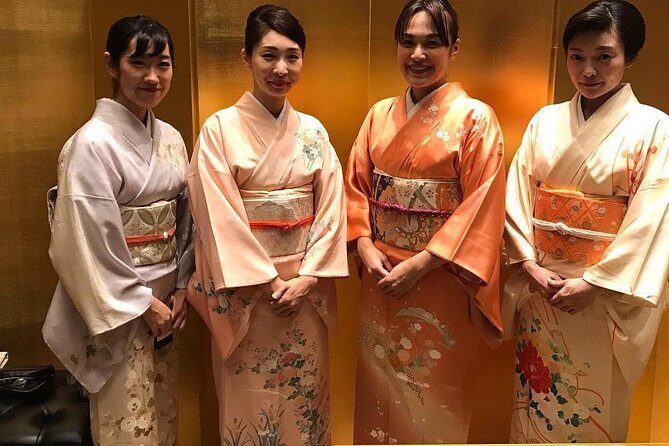
Yes, I’d book it if you want an efficient, high-impact cultural evening. The reasons are straightforward: close-up wagakki performance, clear English explanations, and a program that goes beyond one style or one instrument. It’s a rare thing—traditional music that feels accessible without watering anything down.
Skip it only if you specifically want a longer performance, or if you strongly prefer shows where the only focus is playing with no commentary. Otherwise, for about an hour in Omotesando, you get a lot: instruments, history, and a guided way to listen.
If your Tokyo schedule is tight, this one is an easy win. It’s also a solid choice for travelers who want something different from temples and trains without having to commit to a half-day tour.
FAQ
How long is the Traditional Japanese Music ZAKURO SHOW?
The performance is about 1 hour.
Where in Tokyo does the show take place?
The show is held in Omotesando.
How much does it cost?
The price is $39.64 per person.
Does the show include a ticket, or do I need to buy admission separately?
Admission ticket is included with the experience.
Is there an English translation during the show?
Yes. Performers provide live commentary with English translation, making it tourist-friendly.
What traditional instruments are featured?
The show includes instruments such as taiko drums, koto, shamisen, and shakuhachi flute, along with additional traditional Japanese instruments as part of the ensemble.
Is there a mobile ticket?
Yes, the experience uses a mobile ticket.
How early should I book?
On average, it’s booked about 33 days in advance.
What is the cancellation policy?
Free cancellation is available up to 24 hours in advance of the experience start time.
Is the show suitable for most travelers?
Most travelers can participate, and it’s near public transportation. Confirmation is received at the time of booking.
A Night at a Tokyo Show


More Tour Reviews in Tokyo



Fresh reviews from around Tokyo






Show, compared.
 ★ 4.0Mt Fuji & Hakone Cruise, Drum Show Bullet Train 1 Day from TokyoFrom $1497,413 reviews
 ★ 4.8Sumo Show Experience with Chicken Hot Pot and a PhotoFrom $1036,678 reviews
 ★ 4.8Sumo Show and Dining ExperienceFrom $792,742 reviews
 ★ 5.0the SUMO showFrom $891,960 reviews
 ★ 5.0Tokyo Shinjuku Sumo Show & Experience with PhotoFrom $791,750 reviews
 ★ 4.0Mt Fuji & Hakone Cruise, Drum Show Bus 1 Day from TokyoFrom $1221,287 reviews
 ★ 4.8Sumo Show and Experience in ShinjukuFrom $691,001 reviews
 ★ 4.5Tokyo Bay Yakatabune Dinner/Day Cruise with Japan Show and DrinksFrom $65473 reviews