
Reviewed · TOKYO
Tokyo: Sushi Making Class
Tokyo sushi feels simple here. In a small, friendly studio in Shinjuku, you spend the afternoon with English-speaking instructors like Mika and Yuko, learning sushi basics in a way that feels more local than a restaurant meal. It’s a hands-on cooking lesson, limited to 9 participants, with plenty of time to ask questions as you build your own nigiri and rolls.
I love the focus on the parts that usually trip people up: sushi rice and the flavor logic behind it. You’ll learn how to make miso soup and understand seasonings such as dashi, then move straight into shaping and rolling without being rushed. A possible drawback: the studio sits in a residential area, so finding it takes a minute, and the class uses pre-sliced fish (you won’t learn how to cut raw fish).
In This Review
- Key things I’d pencil into your Tokyo plan
- A Tokyo afternoon that doesn’t feel like a tourist show
- Finding Cooking Sun Tokyo in a residential pocket of Shinjuku
- How the 3 hours actually works (and why the flow matters)
- Dashi, seasonings, and miso soup: the flavor homework you’ll use later
- Tamagoyaki practice: learning the rolled-omelet technique
- Sushi rice: the skill that makes or breaks your future dinner
- Rolling and shaping: nigiri, inari, hosomaki, and California roll
- What you eat at the end: a real meal, not a sample plate
- Price and value: $67 for technique time, ingredients, and recipes
- Dietary needs: substitutions are part of the design
- Who this class suits best (and who should think twice)
- Should you book Cooking Sun Tokyo?
- FAQ
- FAQ
- How long is the Tokyo sushi making class?
- Is the class taught in English?
- How many people are in the class?
- What sushi styles will I learn to make?
- Does the class teach cutting raw fish?
- What’s included in the price?
- Is hotel pickup or transportation included?
- How do I find the studio at the meeting point?
Key things I’d pencil into your Tokyo plan
- English guidance in a real kitchen with a small group size that helps you keep up.
- Sushi rice that you can repeat at home, not just copy a roll.
- Hands-on variety: nigiri, inari, hosomaki (thin rolls), and California roll.
- Tamagoyaki practice so you learn a core Japanese technique, not only sushi.
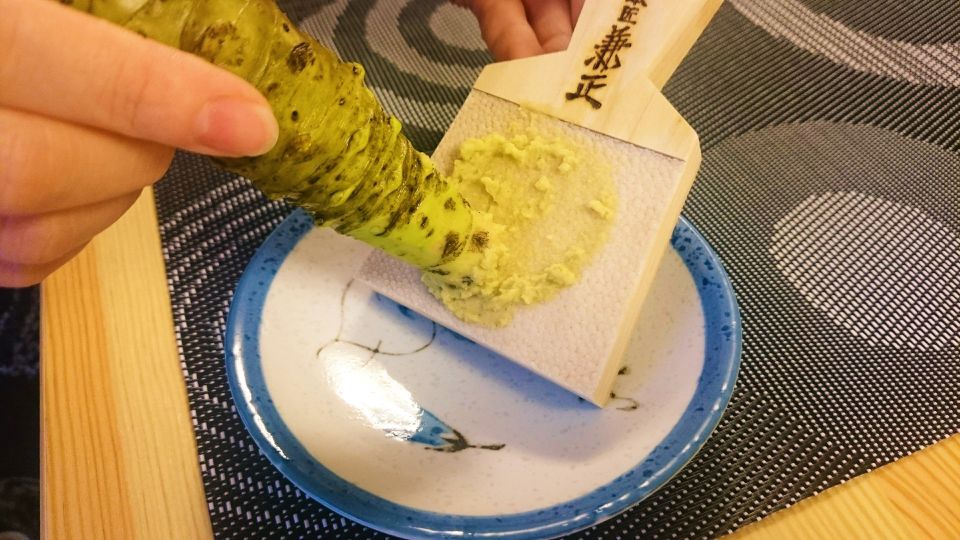
- You eat what you make, with miso soup, wasabi, and pickled ginger.
Before you commit, see how this one stacks up against a few Tokyo favourites:
- Mt Fuji and Hakone 1-Day Bus Tour Return by Bullet Train★ 5.0 · 26,383 reviews
- 1-Day Tokyo Bus Tour★ 5.0 · 14,250 reviews
- Tokyo: teamLab Planets TOKYO Digital Art Museum Entry Ticket★ 4.6 · 9,779 reviews
A Tokyo afternoon that doesn’t feel like a tourist show
This class works because it’s built like a practical skill lesson. You’re not just watching someone assemble sushi. You’re learning the fundamentals—especially rice—then applying them to multiple styles. That’s why it feels useful even if you already like sushi a lot.
There’s also a social, low-pressure vibe. The studio is in a neighborhood setting, and the class is small enough that instructors can spot when your rice pressure is too light (or too firm) and correct it. In feedback, people keep pointing out the calm, patient teaching style—and it matches the class structure: demo first, then hands-on with support.
If you want a Tokyo experience that’s cultural and practical, this is one of those picks. You’ll walk away knowing how to make sushi rice and several common roll/nigiri formats, plus you’ll have recipes to recreate the meal later.
Finding Cooking Sun Tokyo in a residential pocket of Shinjuku
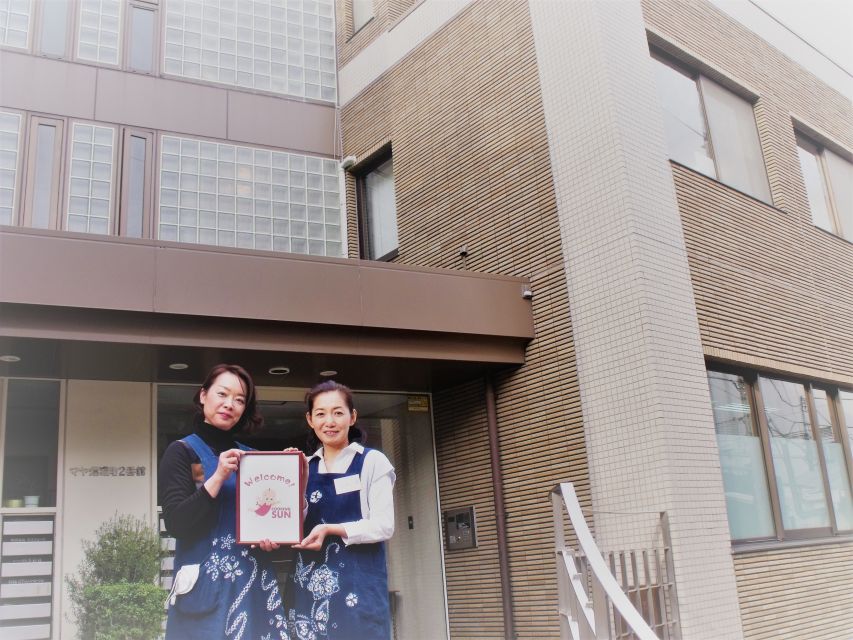
The meeting point is the kind of detail that can make or break your first 15 minutes. The studio is on the 2nd floor of a beige residential building. At the entrance you’ll see two doors; use the right-side door to reach the studio. If you need to call, you’ll press 314 on the intercom.
If you have Wi‑Fi, use Google Maps and search for Cooking Sun Tokyo (Shinanomachi 18-39, Shinjuku-ku, Tokyo). If you don’t have Wi‑Fi, plan ahead and check the detailed directions on the activity website before you leave.
Practical tip: start a little early. Not because the class seems late—it’s set up to run smoothly—but because residential buildings can be confusing the first time you see them.
How the 3 hours actually works (and why the flow matters)
You’ve got 3 hours, and the structure is designed so you’re not stuck waiting while someone explains theory. It moves from Japanese ingredients and core techniques into real sushi-making.
Here’s the rhythm you can expect:
- You begin with Japanese ingredient context (and how flavors work).
- You make tamagoyaki—the rolled Japanese omelet.
- You prep sushi rice and toppings.
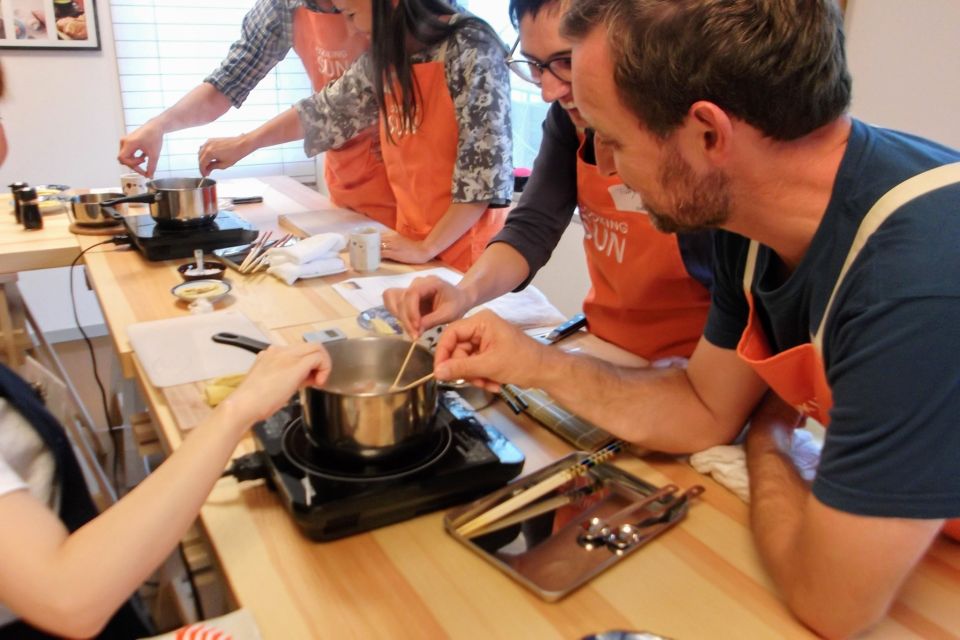
- You roll and shape multiple sushi types with instructor support.
- Then you sit down and eat what you made, with miso soup.
This matters because sushi is about balance. If the rice is off, everything feels off. This class builds that foundation first.
Dashi, seasonings, and miso soup: the flavor homework you’ll use later
Before anyone asks you to roll anything, you’ll get oriented on Japanese flavors. You’ll learn about essential seasonings used in Japanese cooking, including dashi (soup stock). You’ll also make miso soup, which is a great way to understand how salty, savory, and warm flavors fit together.
In feedback, people repeatedly mention that instructors explain ingredients in detail, while still keeping the lesson easy to follow. That’s especially helpful if you don’t cook much. You don’t need to memorize Japanese pantry terms. You just need to understand what each component tastes like and why it’s there.
Also, this part sets expectations. You’re learning a cuisine logic—not only repeating a step-by-step trick.





Tamagoyaki practice: learning the rolled-omelet technique
One of the best parts of the class is that it doesn’t stop at sushi. You’ll make Japanese rolled egg (tamagoyaki) with step-by-step guidance. This is a classic technique, and it teaches hands-on control: timing, heat management (in general terms), and how you build layers.
Even if your sushi rice ends up a little uneven, tamagoyaki gives you a second skill win. It also adds variety, so the afternoon feels like more than one long rolling session.
The class flow also keeps you supported. You’ll see demonstrations, then you’ll try the process yourself without feeling abandoned in the middle.
Sushi rice: the skill that makes or breaks your future dinner
If I had to pick one takeaway that justifies doing this class, it’s the rice method. People often think sushi means raw fish and fancy presentation. In reality, sushi is about the rice—seasoning, texture, and handling.
In this class, you’ll prepare sushi rice and learn techniques for making it tasty. You’ll also learn what you’re aiming for before you shape anything. That’s why the class works even for beginners: you get a target, then you get guided practice.
And since the group is small, the instructor can correct details. Too much pressure? Rice clumps? Rolling gets bulky? These are the kinds of issues that get fixed quickly in a group that’s capped at 9.
A practical note: the class uses pre-sliced fish. That means you won’t be cutting raw fish. The upside is that you focus your time on rice, shaping, and rolling—the stuff you’ll actually want to repeat at home.
Rolling and shaping: nigiri, inari, hosomaki, and California roll
Once the prep is done, you shift into making. You’ll learn and create:
- Nigiri (hand-pressed sushi)
- Inari (sweet tofu pouch sushi)
- Thin roll (hosomaki)
- California roll
This is where the lesson feels most satisfying, because you’re producing multiple styles with different textures and assembly rules. Nigiri teaches how to press and balance. Rolls teach how to distribute filling and roll evenly.
People often comment that the instructors use a ratio of demonstration versus hands-on that makes sense. You can watch a move, try it right away, and get feedback. That’s why beginners tend to feel confident by the end rather than overwhelmed.
One more useful detail: you’ll prep toppings such as shrimp. That helps you understand how components fit together instead of only rolling “mystery filling.”
What you eat at the end: a real meal, not a sample plate
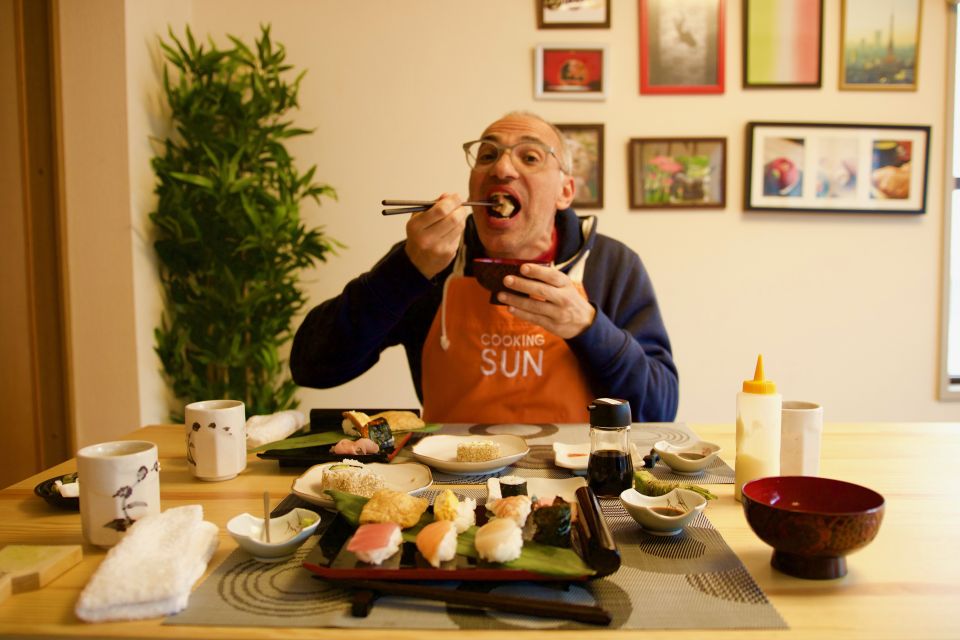
After you cook, you sit down and enjoy your sushi plate with miso soup. Wasabi and pickled ginger are served on the side, so you can taste and adjust.
This part matters because sushi can feel like a snack if you’re not taught portioning and balance. Here, you’re making enough to feel like dinner is handled. Many people specifically note that there’s enough food to skip the next meal.
In short: you’ll leave with a full plate and a clearer sense of what good sushi should taste like, not just how it’s made.
Price and value: $67 for technique time, ingredients, and recipes
At $67 per person for 3 hours, you’re paying for more than ingredients. You’re paying for coached technique, a small-group setup (max 9), and a structured menu that covers rice, miso soup, tamagoyaki, and multiple sushi styles.
Cooking classes in big cities can get expensive fast, especially when you compare them to the cost of eating out. This one gives you two things restaurants don’t:
- A repeatable skill set (rice and shaping)
- A guided path through Japanese flavor basics (dashi, seasonings, miso)
Also included are recipes, all ingredients and utensils, plus towel and apron rental. That’s part of the value: you show up, you cook, and you leave with a blueprint.
One caution on value: you’re not paying for instruction on cutting raw fish. If you want that specific skill, you should know the class is built around pre-sliced fish. The focus stays on rice, rolls, and sushi assembly.
Dietary needs: substitutions are part of the design
If you have dietary requirements, the class can substitute ingredients as needed—for example for food allergies, gluten-free diets, religious dietary restrictions, vegetarian preferences, and more. You just need to inform the instructors when booking.
That’s a big deal in practice. Sushi is full of small ingredient landmines (soy sauce type, seasonings, cross-contact concerns). This class is set up to handle substitutions ahead of time rather than forcing you to guess on the day.
Who this class suits best (and who should think twice)
This class is ideal for:
- Beginner cooks who want clear steps, not vague tips
- Sushi lovers who want to understand rice, seasonings, and structure
- Anyone who wants an English-friendly Japanese food experience in a small group
- Families and groups that appreciate patience and hands-on help (the class is described as family-friendly in feedback)
You might think twice if:
- You specifically want to learn cutting raw fish—this class does not include that instruction
- You hate being in a residential neighborhood location with a self-navigation meeting point
If your goal is to come home able to make sushi rice and several common sushi styles, you’re in the right place.
Should you book Cooking Sun Tokyo?
If you want a Tokyo activity that’s practical, cultural, and genuinely useful, I’d book it. The class covers core sushi fundamentals (especially sushi rice), adds miso soup and tamagoyaki, and gets you making multiple styles like nigiri and California roll instead of repeating just one.
Book it if you’re okay with the studio being a bit tricky to find and you’re fine with pre-sliced fish. That setup lets the class focus where beginners need help most: getting the technique right and enjoying the meal you made.
FAQ
FAQ
How long is the Tokyo sushi making class?
It lasts 3 hours.
Is the class taught in English?
Yes. The instructor provides English instruction.
How many people are in the class?
It’s a small group capped at 9 participants.
What sushi styles will I learn to make?
You’ll learn nigiri, inari, a thin roll (hosomaki), and a California roll. You’ll also make tamagoyaki and miso soup.
Does the class teach cutting raw fish?
No. The class uses pre-sliced fish, and it does not include instruction on how to cut raw fish.
What’s included in the price?
The class includes recipes, all ingredients and utensils, and towel and apron rental.
Is hotel pickup or transportation included?
No. Hotel pickup and transportation are not included.
How do I find the studio at the meeting point?
It’s on the 2nd floor of a beige residential building. Use the right-side door at the entrance, and press 314 on the intercom to call. You can also search for Cooking Sun Tokyo on Google Maps.
More Tour Reviews in Tokyo



Fresh reviews from around Tokyo






Tokyo, compared.
 ★ 5.0Mt Fuji and Hakone 1-Day Bus Tour Return by Bullet TrainFrom $16326,383 reviews
 ★ 5.01-Day Tokyo Bus TourFrom $12914,250 reviews
 ★ 4.6teamLab Planets TOKYO Digital Art Museum Entry TicketFrom $259,779 reviews
 ★ 4.0Mt Fuji & Hakone Cruise, Drum Show Bullet Train 1 Day from TokyoFrom $1497,413 reviews
 ★ 5.0Shinjuku Food Tour (13 Dishes at 4 Local Eateries)From $866,603 reviews
 ★ 4.4Tokyo Mt Fuji 5th St & Hakone Cruise Bus Tour w/Bullet TrainFrom $1545,024 reviews
 ★ 5.0Flagship 2-Hours Official Street Go-Kart Tour – Tokyo Bay ShopFrom $644,974 reviews
 ★ 4.5From Tokyo: Mount Fuji Full-Day Sightseeing TripFrom $684,970 reviews