
Reviewed · TOKYO
Tokyo Imperial Palace with Kagurazaka Alley Tour
Tokyo can feel huge. This tour helps it feel readable. You start at major landmarks, then slip into Kagurazaka’s older side streets, where the Edo-period story is still written into the shape of the lanes. I like that the pace stays laid-back in a small-group format, so you’re not just shuffling with a crowd.
Two things I really like: first, the Imperial Palace area visit is guided with real context, and I’ve seen guides like Sho bring extra detail and enthusiasm even on a chilly morning. Second, the Kagurazaka portion isn’t just “pretty alleys”—you get pointed to specific lanes like the Geisha Alley, Hyogo Yokocho, and Kakurenbo Yokocho, so you leave with a sense of what each space used to be for. Aya’s approach also stood out in one review, with added attention to details people normally miss and even group-photo help.
One drawback to plan for: the palace itself isn’t the star you can step inside, so if you’re chasing grand interior rooms, manage expectations. Also, it’s a walking tour that ends in Kagurazaka, so you’ll want solid shoes and a simple plan for getting back afterward.
In This Review
- Key points that make this tour worth your time
- Getting your bearings: Tokyo Station to the Imperial Palace wall
- Imperial Palace expectations: what you’ll see (and what you won’t)
- A modern stop with a 1964 Tokyo link: Nippon Budokan
- Tokyo Daijingu Shrine: Shinto worship and imperial ties
- Kagurazaka: where Edo-shaped alleys meet old-meets-new Tokyo
- Geisha Alley: narrow lanes and the ghost of a district
- Hyogo Yokocho: small eateries and old-fashioned rhythm
- Kakurenbo Yokocho: a tucked-away bar alley feel
- Ushigome Mitsuke: a gate fragment from the Edo Castle story
- Group size, timing, and how the day feels in real life
- Price and value: is $52.84 a fair deal?
- Who this tour suits best
- Should you book this Tokyo Imperial Palace and Kagurazaka Alley Tour?
- FAQ
- How long is the Tokyo Imperial Palace with Kagurazaka Alley tour?
- How much does the tour cost?
- How big is the group?
- Where do I meet and where does the tour end?
- Is the ticket digital?
- What are the main stops during the walk?
- What is the cancellation policy?
Key points that make this tour worth your time
- Small group (max 8) keeps questions easy and the walking pace comfortable
- Tokyo Station + Imperial Palace route gives you a fast orientation to central Tokyo
- Kagurazaka focus puts you in the old geisha-district web of lanes, not just one photo stop
- Shrine stop at Tokyo Daijingu ties the walk to Shinto worship and imperial traditions
- Guides like Sho and Aya are praised for turning architecture and symbols into understandable stories
- End in Kagurazaka means you can continue exploring on your own right after the tour
Before you commit, see how this one stacks up against a few Tokyo favourites:
- Mt Fuji and Hakone 1-Day Bus Tour Return by Bullet Train★ 5.0 · 26,383 reviews
- 1-Day Tokyo Bus Tour★ 5.0 · 14,250 reviews
- Tokyo: teamLab Planets TOKYO Digital Art Museum Entry Ticket★ 4.6 · 9,779 reviews
Getting your bearings: Tokyo Station to the Imperial Palace wall
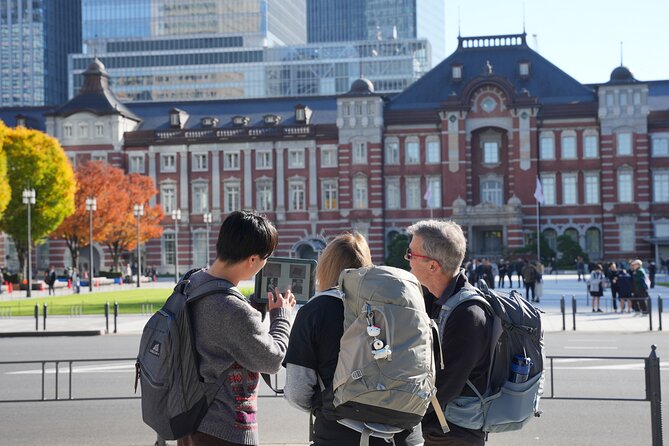
The tour kicks off at Shin-Marunouchi Building in the Marunouchi area, near Tokyo Station. That’s a smart start. Tokyo Station can be confusing even for people who swear they can read maps. Starting there with a guide helps you connect the dots: which direction the city pulls you in, where big transit arteries run, and how Marunouchi functions as a gateway to the older parts of central Tokyo.
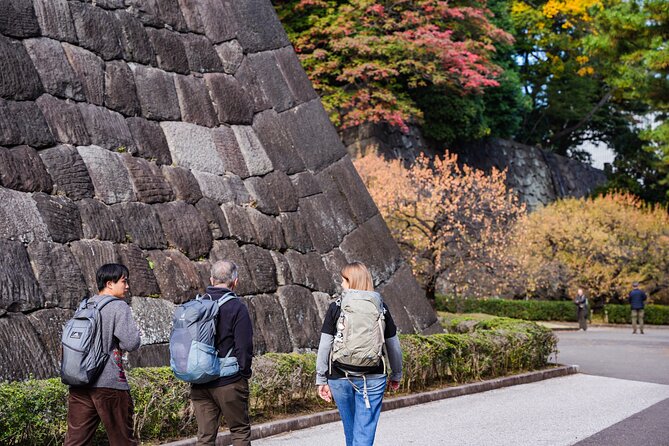
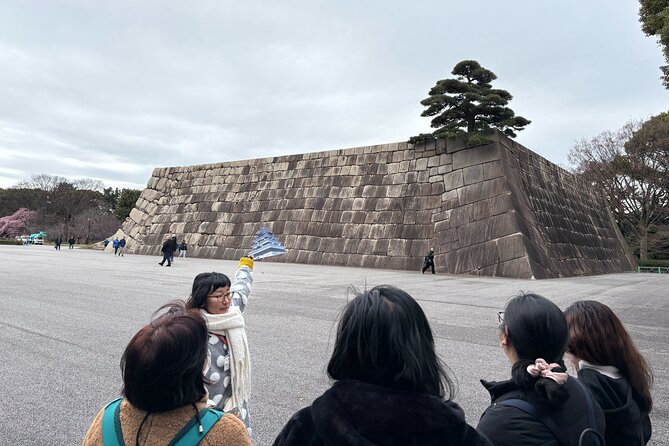
From there, you walk toward the Imperial Palace grounds. The palace is the official residence of the Emperor of Japan. Even when the inner palace areas aren’t open for viewing, the surrounding moat, gardens, and park spaces still give you a sense of how power is expressed through space—measured, planned, and calm. One reason this matters for first-timers is simple: most people rush through the neighborhood on transit. This gives you time to actually look at the city’s “center.”
The tour timing also helps. This is one of the longer segments, about 55 minutes, which is enough to notice the rhythm of the grounds and ask questions about what you’re seeing. In one review, a guide (Sho) also added extra architectural meaning tied to roof ornament details, and that’s the kind of stuff that makes the palace area feel less like a postcard.
Practical note: Tokyo is flat enough for walking, but the ground can still feel long after a few stops. Bring water and expect a slow build—this tour is paced for “look, learn, walk,” not sprint-and-snap.
Imperial Palace expectations: what you’ll see (and what you won’t)
Here’s the part to get right before you book: the Imperial Palace complex is not about museum-style interiors. You get guided access to the areas you can visit, plus context for the palace’s role and surroundings. So if you’re imagining standing inside grand rooms, you’ll be slightly disappointed.
But if you’re after atmosphere and meaning, it’s a good match. You can see how the palace grounds sit within a modern metropolis. You can also connect the “present-day official residence” idea to the broader historical story of Japan’s governance and the Edo-period world that shaped the city’s structure.
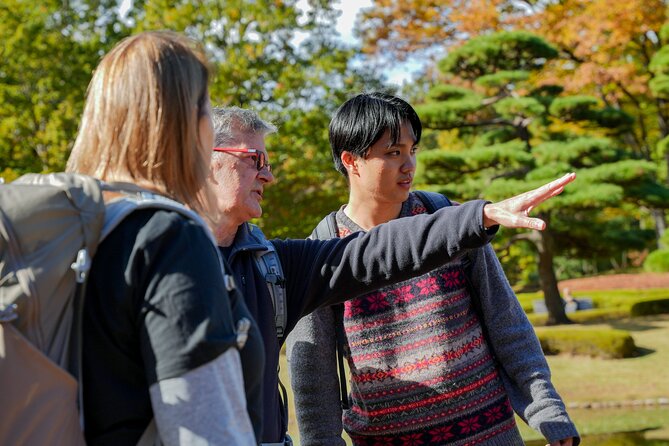
If you enjoy symbolism, this is also where a guide’s job really shows. One review mentioned learning the meaning of a fish motif on the roofs. Even if you don’t focus on that exact detail, the point is that you’re given permission to ask: why is that there, what does it represent, and how does it fit into Japanese design traditions?
A modern stop with a 1964 Tokyo link: Nippon Budokan
After the palace area, the route includes a stop at Nippon Budokan in Kitanomaru Park. This is one of those Tokyo landmarks that often gets treated like a single-purpose building. In reality, it has layered importance.
Nippon Budokan was originally built for the martial arts events during the 1964 Tokyo Olympics. Today it hosts many different events. Including it in a tour like this is useful because it stops the day from becoming only “old Tokyo.” It’s a quick reminder that Japan’s city story is continuous—Edo-era roots, then postwar modern identity, all within the same metropolitan area.
Because the itinerary doesn’t give a long time block for Budokan here, don’t expect a long history lecture. Treat it as a punctuation mark. It helps you shift your brain from palace grounds to an arena built for a global sporting moment.
Tokyo Daijingu Shrine: Shinto worship and imperial ties
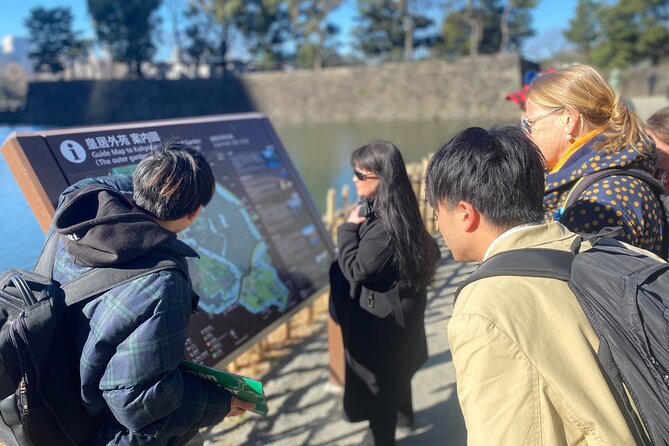
Next comes Tokyo Daijingu (Tokyo Daijingu Shrine) in the Kanda district. This stop is short—about 15 minutes—but it hits an important theme: Japan’s religious life isn’t separate from civic history. It’s part of how people understand the nation.
Tokyo Daijingu was established in 1880 and is dedicated to Amaterasu, the sun goddess, along with the spirits of Japan’s imperial family. If you’re the type who likes meaning, this is a great placement in the day. You’ve been near the imperial residence; now you’re at a shrine tied directly to the mythology and spiritual framing behind imperial tradition.
What makes this stop valuable for your trip is pacing. You don’t have to become a shrine expert in one afternoon. The guide’s role is to help you look at what you’re seeing without turning it into a checklist.





Kagurazaka: where Edo-shaped alleys meet old-meets-new Tokyo
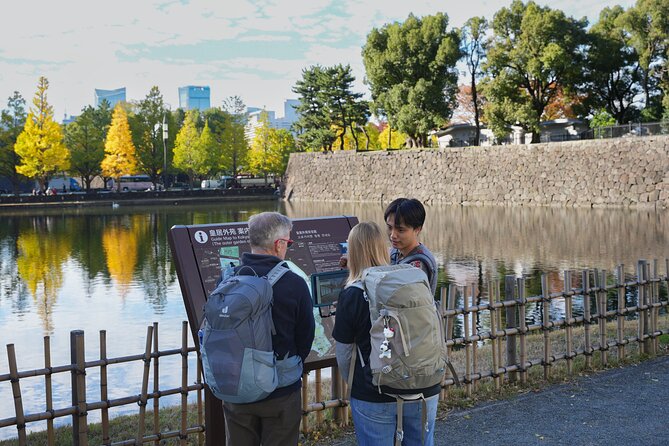
Then you reach Kagurazaka, the star neighborhood people often miss on first visits. The tour spends about 30 minutes here, but Kagurazaka is compact. With the right route, that half hour can feel like a longer wandering session.
Kagurazaka is known for a mix of old and new Japan. It was once a geisha district, and today the narrow cobblestone backstreets are lined with traditional restaurants, stylish cafes, and boutique shops. The point of visiting with a guide is that you don’t just walk through “cute lanes.” You get pointed to the specific alley names and what each one used to be associated with.
Geisha Alley: narrow lanes and the ghost of a district
One alley stop is the Geisha Alley in Kagurazaka. It’s a historic street that keeps a nostalgic atmosphere, with narrow lanes and traditional teahouses. Even if the modern world has changed the businesses, the alley shape—and the feeling of turning down a quieter road inside a busy city—is the thing that sticks with you.
If you’re someone who likes city texture, you’ll appreciate that you’re moving slowly enough to actually read the space.
Hyogo Yokocho: small eateries and old-fashioned rhythm
Next is Hyogo Yokocho, a narrow alley known for old-fashioned charm. It’s lined with small, cozy eateries and traditional shops. The alley is less about one landmark and more about a general vibe: close walls, short distances, and the sense that people come here for a specific type of evening.
This is a strong stop if you’re thinking ahead to where you might want dinner or a late drink after your tour ends. You’ll recognize the area from the inside, not just from street photos.
Kakurenbo Yokocho: a tucked-away bar alley feel
Then there’s Kakurenbo Yokocho, described as a hidden alley with small bars and eateries. That “hidden” part matters. Tokyo has lots of streets that look ordinary at first glance. Kagurazaka gives you the satisfying experience of turning a corner and finding a more intimate world.
One practical tip: if the alley feels crowded when you arrive, don’t fight it. Stand where you can see, then move when the group shifts. This tour’s small-group size helps you do that without feeling like you’re in a traffic jam.
Ushigome Mitsuke: a gate fragment from the Edo Castle story
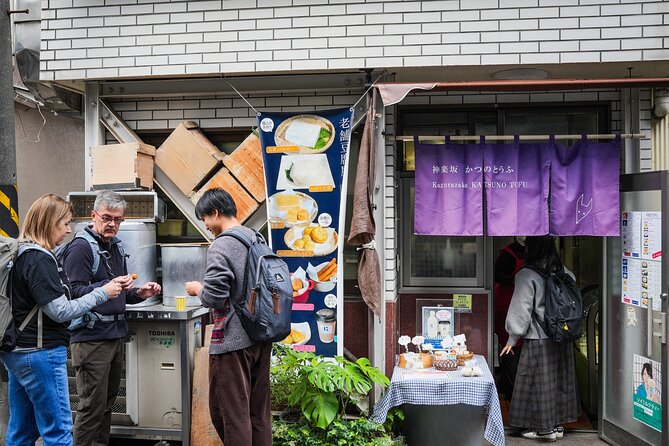
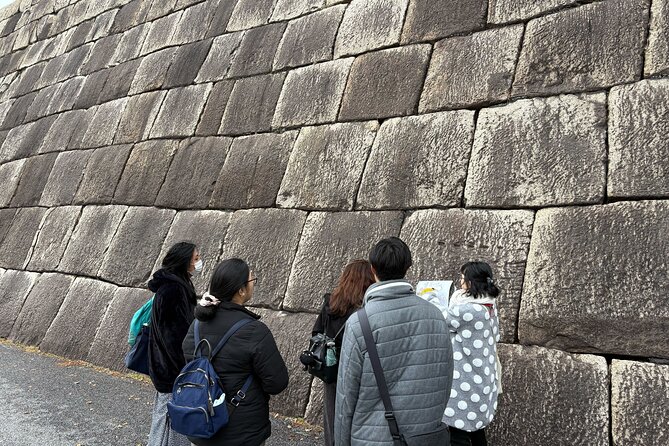
Another key Kagurazaka-adjacent historical stop is Ushigome Mitsuke, one of the gates of Edo Castle. It’s located in the Ushigome area and was part of Edo Castle’s defensive structure. The gate itself no longer exists, but the stop gives you a tangible link to how the Tokugawa shogunate-era city worked.
This is where the “most visitors miss” promise can become real. Modern Tokyo doesn’t always show its medieval layers clearly. When you have a guide pointing out where a gate used to be, history stops being abstract and becomes directional.
It also ties back to why this tour is built the way it is: imperial residence today, religious and imperial symbolism alongside it, and then Edo-era urban patterns you can actually walk through in Kagurazaka’s lanes.
Group size, timing, and how the day feels in real life
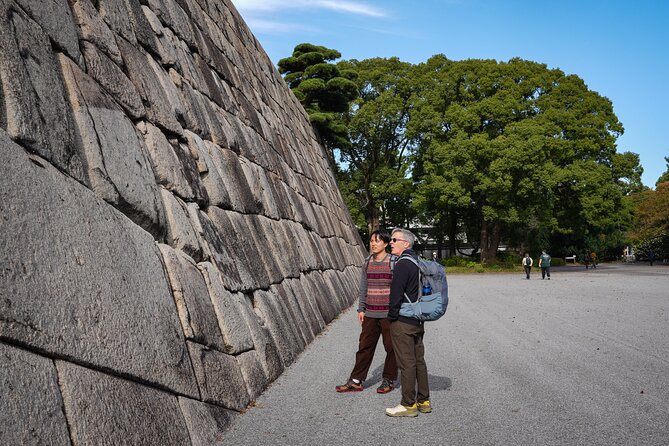
This experience runs for about 3 hours 30 minutes. The start time is 9:00 am, which I recommend for two reasons. First, early hours help you enjoy the palace area with fewer crowds. Second, you still get time after the tour to do something on your own in Kagurazaka without feeling rushed.
Group size is capped at 8 travelers. That’s the sweet spot for a walking tour like this. You get local guidance, but you’re not squeezed into a pack.
You’ll also use a mobile ticket, which is convenient. Tokyo trains and streets run on schedules and apps, so anything that reduces friction on arrival is a plus.
Price and value: is $52.84 a fair deal?
The price is $52.84 per person for roughly 3.5 hours. That sounds modest or steep depending on your travel style. Here’s how I’d judge value using only what this tour includes:
You’re paying for:
- a guided route that connects major landmarks (Tokyo Station, Imperial Palace) with Kagurazaka alleys and a shrine
- small-group attention (max 8), so you can ask questions without feeling ignored
- guide-driven interpretation of architecture and symbols, not just narration
Many major stops here list free admission for the portions where entry is available (Tokyo Station, Imperial Palace grounds, Tokyo Daijingu, and Kagurazaka). That means your money goes less to ticket costs and more to the guided experience and route design.
One more practical value point: the tour ends in Kagurazaka, a neighborhood that rewards follow-on exploring. If you like to build an evening plan around what you’ve already seen, this routing helps.
If you hate walking tours and would rather browse alone, you might feel it’s overpriced. But if you want a guided thread through Tokyo’s history and street-level texture, it’s a fair use of time.
Who this tour suits best
This one fits you well if you:
- like walking tours with context, not just quick photo stops
- want Imperial Palace sights without getting stuck figuring out what you’re looking at
- enjoy side streets and neighborhood history, especially in places like Kagurazaka
- appreciate small-group pacing where questions are welcome
You may not love it if you:
- want long museum-style visits or interiors
- dislike early starts
- prefer to move completely at your own speed with no structure
Should you book this Tokyo Imperial Palace and Kagurazaka Alley Tour?
I’d book it if you’re trying to get more out of a half-day in central Tokyo. The route is smart: it gives you orientation at Tokyo Station, time to take in the Imperial Palace grounds, a quick shrine stop for cultural depth, and then the reason many people return—Kagurazaka’s named alleys and Edo-era feeling.
And the guide element matters here. Reviews highlight energetic, history-focused guiding (including Sho) and careful attention to detail (including Aya), plus extra help like group-photo moments. That’s the difference between seeing Tokyo and learning how to read it as you walk.
If you’re the kind of traveler who likes a plan but still wants freedom right after, this tour earns its place.
FAQ
How long is the Tokyo Imperial Palace with Kagurazaka Alley tour?
It runs for about 3 hours 30 minutes.
How much does the tour cost?
The price is $52.84 per person.
How big is the group?
The maximum group size is 8 travelers.
Where do I meet and where does the tour end?
You meet at Shin-Marunouchi Building, 1-chōme-5-1 Marunouchi, Chiyoda City, Tokyo. The tour ends at 3-chōme-2-202 Kagurazaka, Shinjuku City, Tokyo, near the main street of Kagurazaka.
Is the ticket digital?
Yes, it’s a mobile ticket.
What are the main stops during the walk?
You’ll visit Tokyo Station, the Imperial Palace area, Nippon Budokan, Tokyo Daijingu Shrine, Kagurazaka (including several alleys), and Ushigome Mitsuke.
What is the cancellation policy?
Free cancellation is available if you cancel at least 24 hours before the experience start time for a full refund. If you cancel less than 24 hours before, the amount you paid won’t be refunded.
More Tour Reviews in Tokyo



Fresh reviews from around Tokyo






Tokyo, compared.
 ★ 5.0Mt Fuji and Hakone 1-Day Bus Tour Return by Bullet TrainFrom $16326,383 reviews
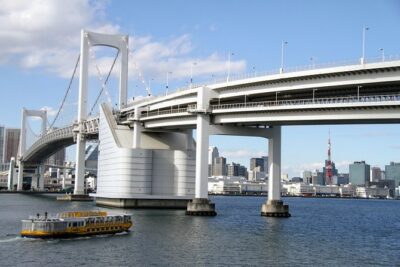 ★ 5.01-Day Tokyo Bus TourFrom $12914,250 reviews
 ★ 4.6teamLab Planets TOKYO Digital Art Museum Entry TicketFrom $259,779 reviews
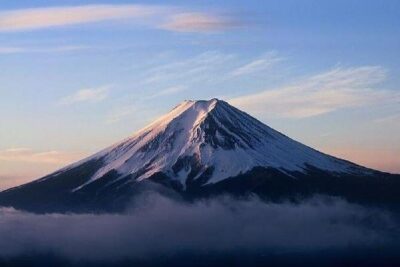 ★ 4.0Mt Fuji & Hakone Cruise, Drum Show Bullet Train 1 Day from TokyoFrom $1497,413 reviews
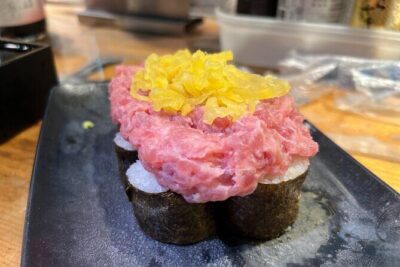 ★ 5.0Shinjuku Food Tour (13 Dishes at 4 Local Eateries)From $866,603 reviews
 ★ 4.4Tokyo Mt Fuji 5th St & Hakone Cruise Bus Tour w/Bullet TrainFrom $1545,024 reviews
 ★ 5.0Flagship 2-Hours Official Street Go-Kart Tour – Tokyo Bay ShopFrom $644,974 reviews
 ★ 4.5From Tokyo: Mount Fuji Full-Day Sightseeing TripFrom $684,970 reviews