
Reviewed · TOKYO
Tokyo: Robot Piloting Attraction Ticket
Tokyo has a real mech lesson.
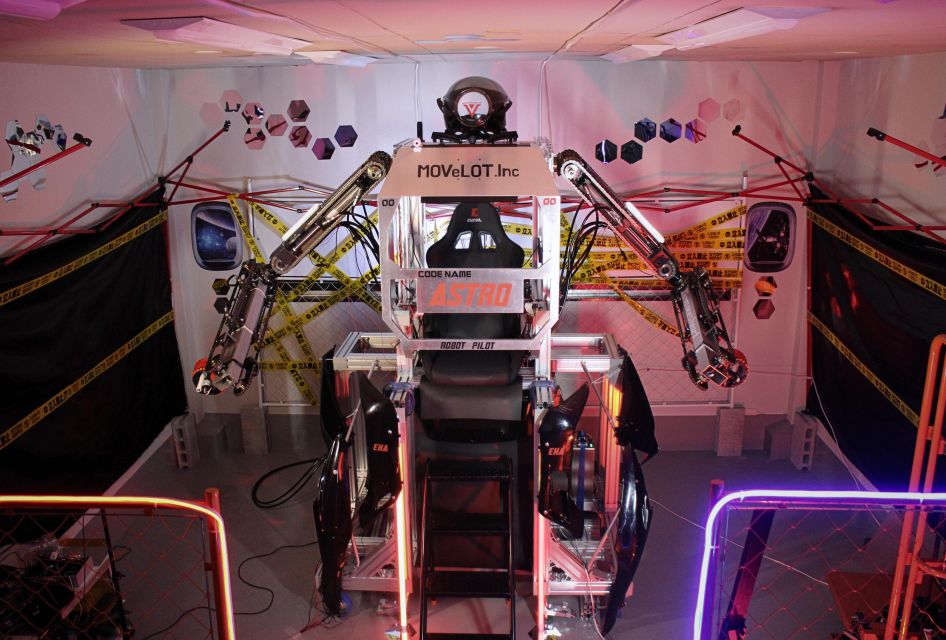
At MOVeLOT’s Robot Base Lab, you follow a story about protecting the base from alien invaders, then take your turn driving a giant robot prototype. It’s one of the few places in Japan where visitors can actually pilot a human-operated robot, not just watch from a distance. I really like the way the session mixes VR shooting with hands-on robot control, and I also love that the hosts share real context about robotics dreams and development. The main catch: this is still a prototype, so you can only move the arms and shoot blasters right now.
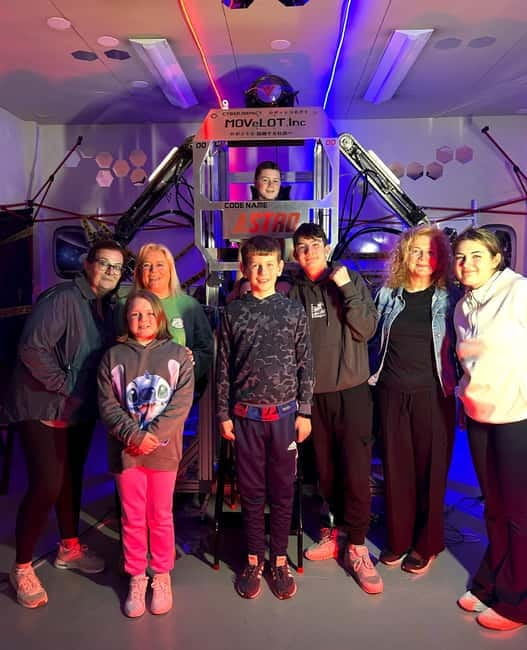
You’ll probably meet friendly hosts such as Tomo and Atsu, who guide you through the sequence step by step. The group stays small (up to 4), so you’re not lost in a crowd. One consideration: the active robot-piloting time is about 10 minutes per person, and it can shrink a bit in busier small groups, so don’t plan to rush and then disappear.
In This Review
- Key Things I’d Not Miss
- First Steps Inside MOVeLOT’s Robot Base Lab
- The Sci-Fi Story That Actually Helps You Understand the Tech
- VR Shooting Games: Warm-Up You Can Use During the Real Pilot Turn
- Programming the Launch: A Maker Moment, Not Just Button Time
- Piloting ASTRO: What You Can Do and What to Expect
- The Hosts: Why This Feels Like a Team, Not a Factory Tour
- Price and Value: Why $32 Can Make Sense in Tokyo
- Who This Is Best For (And Who Should Skip It)
- Making It Work in a Busy Tokyo Day
- Should You Book MOVeLOT’s Robot Pilot Ticket?
- FAQ
- How long is the experience?
- Where is the meeting point?
- What languages are available?
- What’s included in the ticket?
- What parts of the robot can I control?
- How long do I get to pilot the robot?
- Are there age or size limits?
- What should I bring?
- Is transportation included?
- Do I need overseas insurance?
Key Things I’d Not Miss
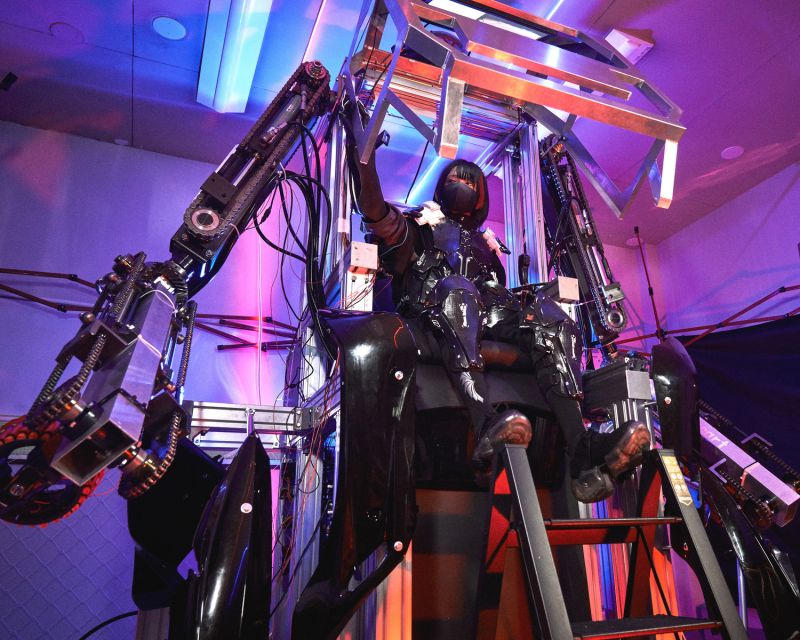
- Human-piloted robot experience: you control a real prototype, not a video game.
- VR blaster games first: you warm up before you touch the robot controls.
- Robot “launch” programming: you work like a maker, not just a button-pusher.
- ASTRO robot focus: the hangar mission centers on a specific prototype you operate.
- Prototype limitations are real: arm movement and blaster shooting are currently the only actions.
Before you commit, see how this one stacks up against a few Tokyo favourites:
- Mt Fuji and Hakone 1-Day Bus Tour Return by Bullet Train★ 5.0 · 26,383 reviews
- 1-Day Tokyo Bus Tour★ 5.0 · 14,250 reviews
- Tokyo: teamLab Planets TOKYO Digital Art Museum Entry Ticket★ 4.6 · 9,779 reviews
First Steps Inside MOVeLOT’s Robot Base Lab
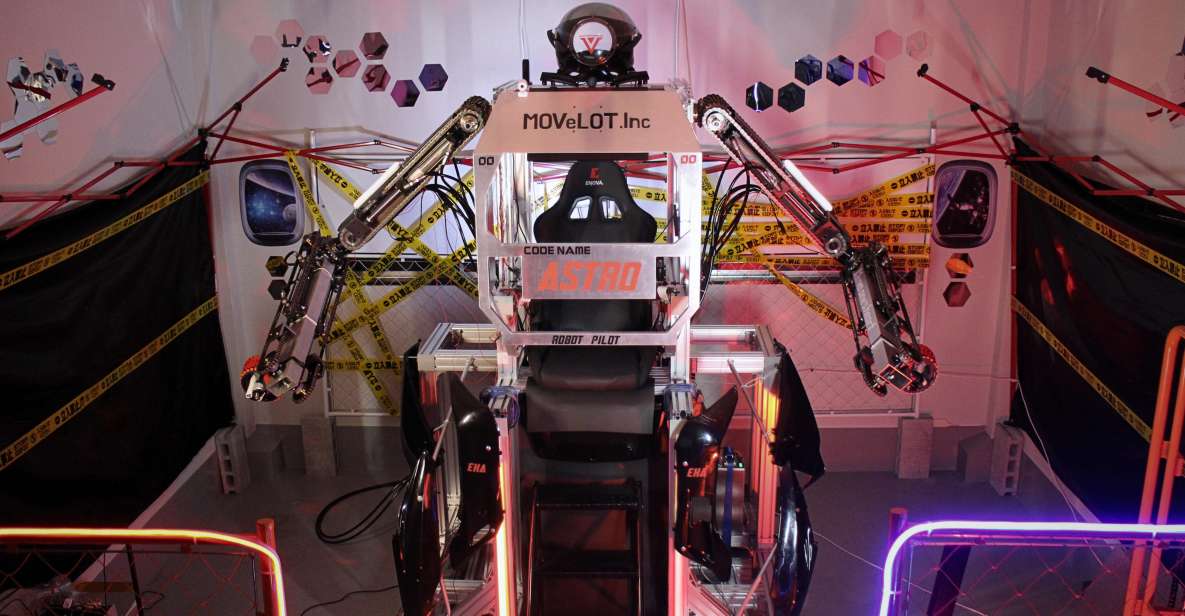
Your session starts at Robot Base / MOVeLOT株式会社, with check-in handled right at the facility. The location is convenient if you’re already in the Ryogoku area: it’s about a 7-minute walk from Toei Ryogoku Station (Oedo Line), A3 exit, and around a 13-minute walk from JR Ryogoku Station. That matters because this is not a “wander in whenever” kind of experience. You’ll want to arrive on time so the schedule doesn’t get pushed.
Before any robot action, you’ll go through a safety briefing and get set up for the story. That’s the tone of the whole experience: it’s playful sci-fi, but the staff treats safety and guidance seriously. You’ll also want to wear comfortable shoes and bring your passport or ID card. Bring drinks too, because you’ll be moving and focusing for the whole ticket window.
One more practical tip: this isn’t set up like a big museum lobby. From what I’ve seen people mention, there isn’t a lot of waiting space. So if you arrive early, plan to grab coffee nearby and come back close to your start time.
The Sci-Fi Story That Actually Helps You Understand the Tech
The storyline is not just decoration. It gives you a mission, then ties each activity to what a robotics team tries to solve: sensing, aiming, control, and reliable operation.
You’re placed in a world where the Robot Base Lab is on another planet and being attacked. Your job begins with preparing the hangar by eliminating unidentified life forms. Then you jump into the robot prototype ASTRO for your pilot mission. The format is very “anime episode meets training lab,” and that storytelling hook is part of why the session feels different from standard VR arcades.
Just keep expectations grounded: this is not a full-scale, ready-for-everything facility. The staff is transparent that the robot you operate is still in its first phase of development. That means the physical movement you get is currently limited to arm controls and shooting blasters.
VR Shooting Games: Warm-Up You Can Use During the Real Pilot Turn
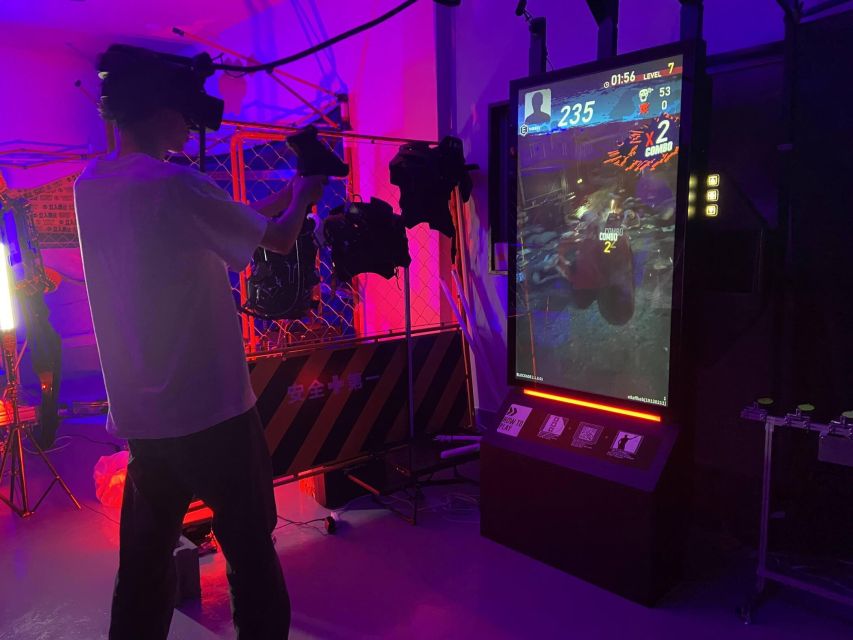
You don’t jump straight into the mech. You start with VR shooting games. For many people, that’s the smartest part of the sequence. It teaches you the rhythm of aiming and reacting in a way that transfers to controlling the robot.
The VR side also helps you get comfortable with the controls and the headset experience, which can be the biggest friction point for visitors. And it’s not just for hardcore gamers. People mention that it’s easy to adapt to even if you don’t play VR often.
In practical terms, the VR segment does three things for you:
- It gets you moving fast without stress.
- It builds confidence in the aiming mechanic.
- It makes the later robot operation feel like an upgrade, not a separate activity.
Programming the Launch: A Maker Moment, Not Just Button Time
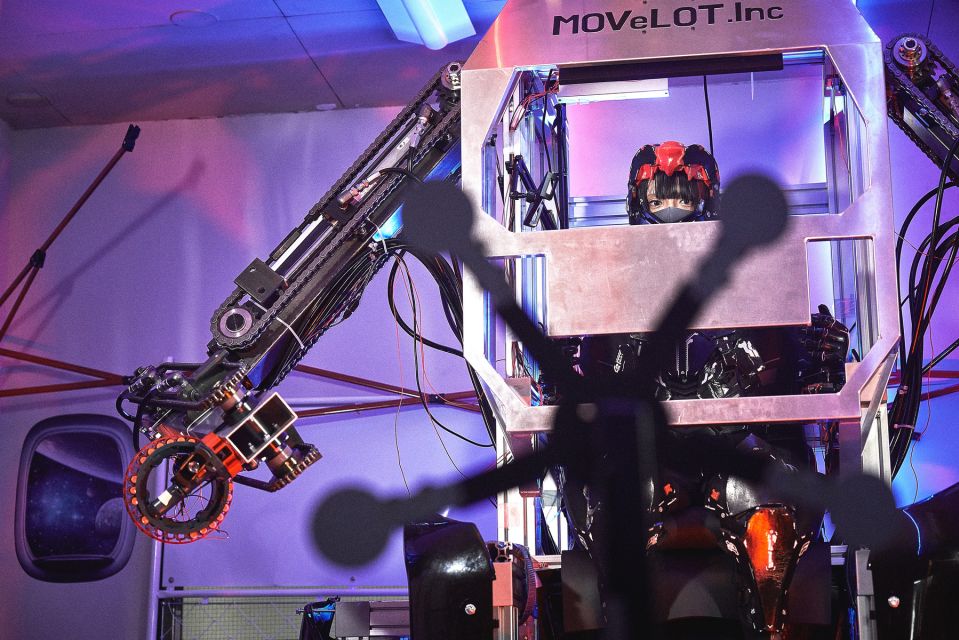
Next comes the “future job” part: you program the launch sequence. This is where the experience shifts from “play” to “build.” You’ll do it via a laptop and follow a structured setup that’s designed to be approachable.
People describe this as a Lego Technik–type mini build where you put the program together yourself. That phrasing is important. It means you’re not just watching someone else do the technical work. You get a taste of how programming choices connect to real-world movement.
For robot fans, this is where the session becomes more than entertainment. You start seeing how robotics development thinking works: you’re learning that control is a chain of decisions, not a single magic button. Even if you don’t know the technical jargon, you’ll understand the logic by doing.





Piloting ASTRO: What You Can Do and What to Expect
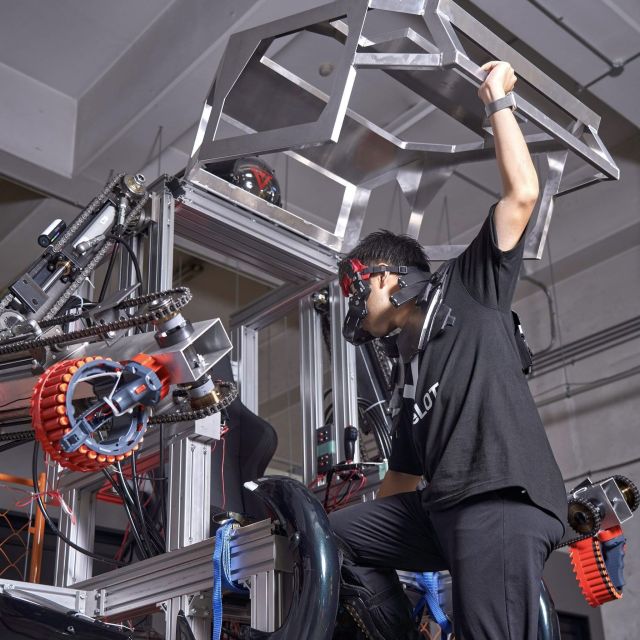
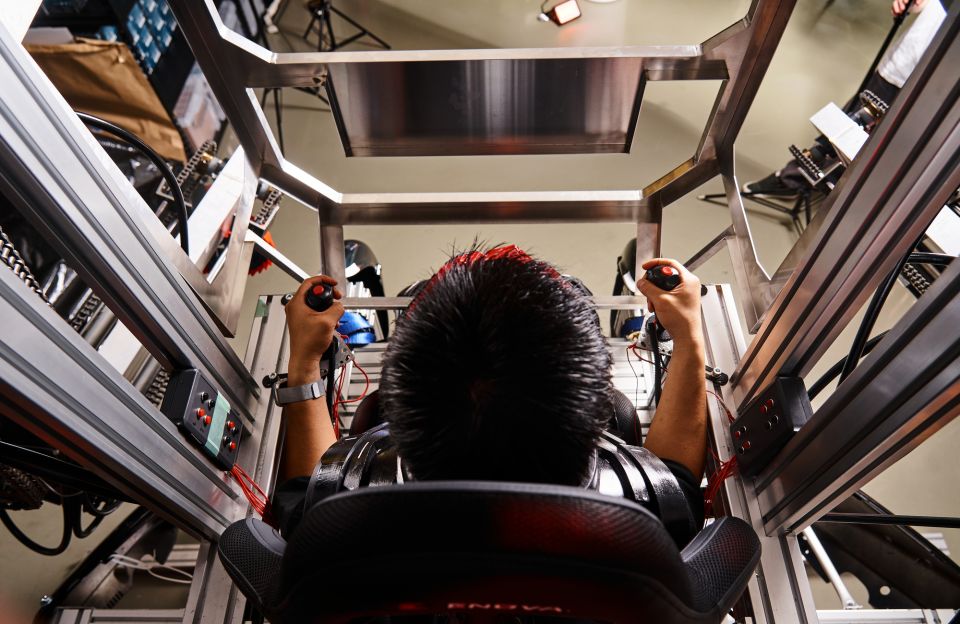
The highlight for most people is the robot pilot experience, and it’s the moment the story comes to life. You enter the hangar mission, then operate the robot prototype ASTRO.
Here’s what you can do right now (and this is the key reality check):
- The robot is a prototype in the first phase of development.
- You can move the arms.
- You can shoot the blasters.
Also, the robot’s legs have been removed to fit inside the lab setup. That means your experience is focused on arm movement and targeting, not full mecha walking. It can sound like a limitation, but it actually helps you get a clear, guided pilot feel without the complexity of locomotion.
Timing is another reality. The piloting experience is about 10 minutes per person. In small groups, that’s enough time to feel like you really did something, not just try it for a minute. Still, note that if your group grows to more than 3 people, your individual pilot time may be shorter. So if robot control is your number one goal, you’ll want a session slot where the group stays truly small.
The Hosts: Why This Feels Like a Team, Not a Factory Tour
A big part of why the experience gets such strong feedback is the tone of the staff. Hosts like Tomo and Atsu tend to be described as upbeat, helpful, and genuinely into what they’re building. That matters because you’re doing something that’s part tech training, part action scene. If the guidance is clear, you feel competent fast.
You’ll also hear explanations in English and Japanese. Even if your Japanese is basic, the English instruction is there, and the staff seems set up to guide you without making you feel slow.
For me, the best sign is how staff passion shows up in the pacing: they don’t rush you through safety or controls, and they keep the experience understandable. That’s what turns “I tried a robot” into “I get why this matters.”
Price and Value: Why $32 Can Make Sense in Tokyo
At $32 per person for a roughly 50-minute session, you’re paying for more than a VR game and a photo op. You’re getting a package that includes:
- VR shooting games
- programming the robot launch sequence
- a real robot pilot experience
In Tokyo, paid activities can run the gamut from cheap and short to pricey and forgettable. This one is priced more like an event than a museum ticket: you’re actively doing multiple things, and the final robot pilot moment is rare.
The value becomes clearest when you think about replacement costs:
- If you only did VR, it might feel like entertainment with no lasting payoff.
- If you only watched a robot demo, you’d miss the reason the facility exists.
- Here, you do both, plus the mini-programming step that gives you context.
So $32 feels fair when you’re the type of person who likes hands-on tech and story-driven activities. If you only want to stand still and observe, the value may not land for you.
Who This Is Best For (And Who Should Skip It)
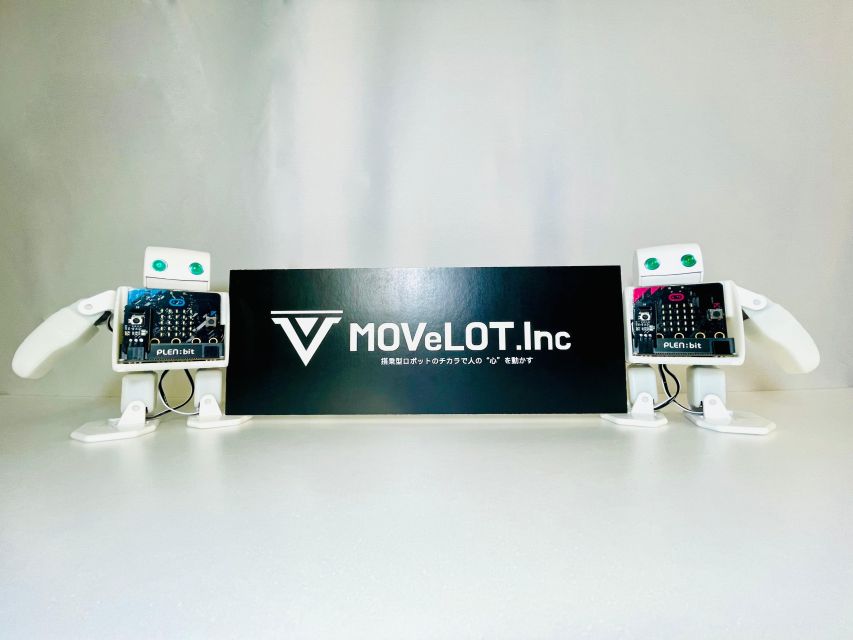
This experience fits a specific kind of curiosity: robotics, VR, and sci-fi-style action.
You’ll probably love it if:
- you’re a Gundam/robot fan
- you enjoy VR and want to see it connected to real control
- you like maker-style tasks where you program a sequence
- you want a Tokyo activity that feels genuinely different from standard sightseeing
On the other hand, the limits are real. The activity is not suitable for:
- children under 11
- people with mobility impairments
- people under 3 ft 6 in (110 cm)
- people over 220 lbs (100 kg)
- pregnant women
If any of those apply, it’s worth planning another plan. The facility is using a prototype setup with a specific physical configuration (like robot legs removed and focused arm control), so it’s not designed for broad physical accessibility.
One more safety point you should take seriously: even with precautions, the staff notes that all visitors must have overseas insurance in case of injury. If you don’t have it, get it before your trip so you’re not stuck at the start line.
Making It Work in a Busy Tokyo Day
Because this is a compact, scheduled experience, it’s easiest to fit into your day when you treat it like a reservation meal: show up ready, focused, and on time.
Plan around:
- arriving a few minutes early to handle check-in
- wearing comfortable shoes and keeping your steps efficient
- bringing ID, plus something to drink
Also, set your expectations on what you’ll remember afterward. You’ll likely leave with:
- a strong sense of how pilot controls translate into arm motion and targeting
- a clear idea of where robotics is heading (human-piloted systems in prototype form)
- a story you can retell, because the mission structure makes it memorable
Should You Book MOVeLOT’s Robot Pilot Ticket?
Yes, I’d book it if you want a Tokyo activity that mixes play + tech + real robot control in a short time.
Book it especially if you:
- want something hands-on rather than passive sightseeing
- are excited by VR and robots, not just one of them
- enjoy story-driven missions that help you learn what you’re doing
Skip or reconsider if:
- you’re looking for full-body mecha piloting (this prototype is arm-focused)
- you don’t meet the height, weight, or suitability limits
- you’re uncomfortable with safety rules and need to avoid anything involving insurance requirements
If those fit you, this is one of the more honest “future tech” experiences in Tokyo: you get to operate a real prototype, not just talk about it.
FAQ
How long is the experience?
The ticket duration is 50 minutes, and the robot piloting time is about 10 minutes per person.
Where is the meeting point?
Check in at MOVeLOT. Inc at Robot Base / MOVeLOT株式会社. It’s about a 7-minute walk from Toei Ryogoku Station A3 exit and about a 13-minute walk from JR Ryogoku Station.
What languages are available?
The instructor provides support in English and Japanese.
What’s included in the ticket?
Your ticket includes a 50-minute robotics facility experience, VR shooting games, programming the launch of the robot, and a robot pilot experience.
What parts of the robot can I control?
The robot is a prototype in the first phase of development, so you can only move the arms and shoot the blasters at this time.
How long do I get to pilot the robot?
The piloting experience lasts about 10 minutes per person, and it might be shorter if there are more than 3 people in the group.
Are there age or size limits?
Yes. It is not suitable for children under 11, people under 110 cm tall, and people over 100 kg.
What should I bring?
Bring your passport or ID card, comfortable shoes, and drinks.
Is transportation included?
No. Transportation is not included.
Do I need overseas insurance?
Yes. Safety measures are taken, but the information notes that all visitors must have overseas insurance in case of injury.
More Tour Reviews in Tokyo



Fresh reviews from around Tokyo






Tokyo, compared.
 ★ 5.0Mt Fuji and Hakone 1-Day Bus Tour Return by Bullet TrainFrom $16326,383 reviews
 ★ 5.01-Day Tokyo Bus TourFrom $12914,250 reviews
 ★ 4.6teamLab Planets TOKYO Digital Art Museum Entry TicketFrom $259,779 reviews
 ★ 4.0Mt Fuji & Hakone Cruise, Drum Show Bullet Train 1 Day from TokyoFrom $1497,413 reviews
 ★ 5.0Shinjuku Food Tour (13 Dishes at 4 Local Eateries)From $866,603 reviews
 ★ 4.4Tokyo Mt Fuji 5th St & Hakone Cruise Bus Tour w/Bullet TrainFrom $1545,024 reviews
 ★ 5.0Flagship 2-Hours Official Street Go-Kart Tour – Tokyo Bay ShopFrom $644,974 reviews
 ★ 4.5From Tokyo: Mount Fuji Full-Day Sightseeing TripFrom $684,970 reviews