
Reviewed · FOOD & DRINK
Tokyo Food Tour: The Past, Present and Future 11+ Tastings
Tokyo food history can be fun. This small-group tour strings together 11+ tastings across four districts, from old-school Nihonbashi snacks to Akihabara’s next-gen marketing. I especially like how the stops are connected to ideas you can taste, and how the route is built for real eating—not museum-style sight-seeing. One thing to consider: it’s a 6.5 km walking route with lots of stairs, and it’s not set up for wheelchair users.
I also like the people-side touches. You’ll eat like Japan’s salarymen under the tracks in Ginza, then shift gears at Tokyo Station with the gift-giving angle. Private tours are available, and small groups cap at 8, which keeps the pace friendly. The only other heads-up is food type: it’s not suitable for vegans or vegetarians.
In This Review
- Key things I’d circle on your map
- The big idea: why this tour works as food + culture
- Nihonbashi: the flavor basics that power Japanese cooking
- Ginza and Yurakucho under the tracks: salarymen style, no fuss
- Tokyo Station: gift culture plus a quick high-speed bite
- Akihabara: the future of snacks through marketing
- What you’re actually buying for the price
- Meeting point, timing, and the walking reality
- Where to meet
- What helps on the ground
- Who this tour suits best
- Should you book this Tokyo Food Tour?
- FAQ
- How many tastings are included?
- What food and drink rules should I know?
- How long is the tour?
- How far will I walk?
- Is it wheelchair friendly?
- Do I need subway tickets during the tour?
- Where do I meet the guide?
- What languages are the tours offered in?
Key things I’d circle on your map
- Past, present, future as a walking storyline, not random bites
- 11+ tastings spread across Nihonbashi, Ginza/Yurakucho, Tokyo Station, and Akihabara
- Small group size (max 8) or private tour if you want more control
- A Japan-only food education angle, including dashi basics and why it matters
- Street-level energy in Ginza, including an izakaya and noodle-stall style meal
- Akihabara snacks explained through marketing, aimed at younger tastes
Other plates worth crossing Tokyo for
- Tokyo: Shinjuku Food Tour (13 Dishes at 4 Local Eateries)★ 5.0 · 6,603 reviews
- Tokyo Tsukiji Fish Market Food and Culture Walking Tour★ 5.0 · 3,184 reviews
- Tokyo: Shinjuku Food Tour (15 Dishes and 4 Eateries)★ 4.9 · 2,033 reviews
The big idea: why this tour works as food + culture
What I like about this experience is the structure. Instead of “here’s a snack, move on,” you get a theme that changes by neighborhood. Nihonbashi covers food building blocks and old ingredients. Ginza and Yurakucho show how people eat today, including the working-dinner rhythm of izakayas and noodle stalls. Tokyo Station ties food to everyday Japan—especially gift culture. Then Akihabara shifts into the future mindset: how traditional snacks get packaged, sold, and talked about so they stay cool for new generations.
That story matters because it turns your shopping list into a food understanding. After a few stops, things start making sense: why kelp and bonito set the base for so many flavors, why certain noodle styles feel “post-war modern,” and why train stations in Japan act like social hubs for buying treats.
Nihonbashi: the flavor basics that power Japanese cooking
Your tour starts in Nihonbashi, a district tied closely to Japan’s food roots. The meal here is built around fundamentals, the stuff you don’t notice when you only eat convenience stores.
You’ll learn what makes dashi taste like dashi: the interplay of katsuobushi (bonito flakes) and kelp (kombu). From there, tastings move into classic forms of preserved, comfort food—ways ingredients are kept flavorful through time.
Some of the snacks you can expect in this area include:
- Kombu tsukudani (simmered kelp)
- Amazake (a sweet fermented rice drink)
- Imo kenpi (sweet potato chips)
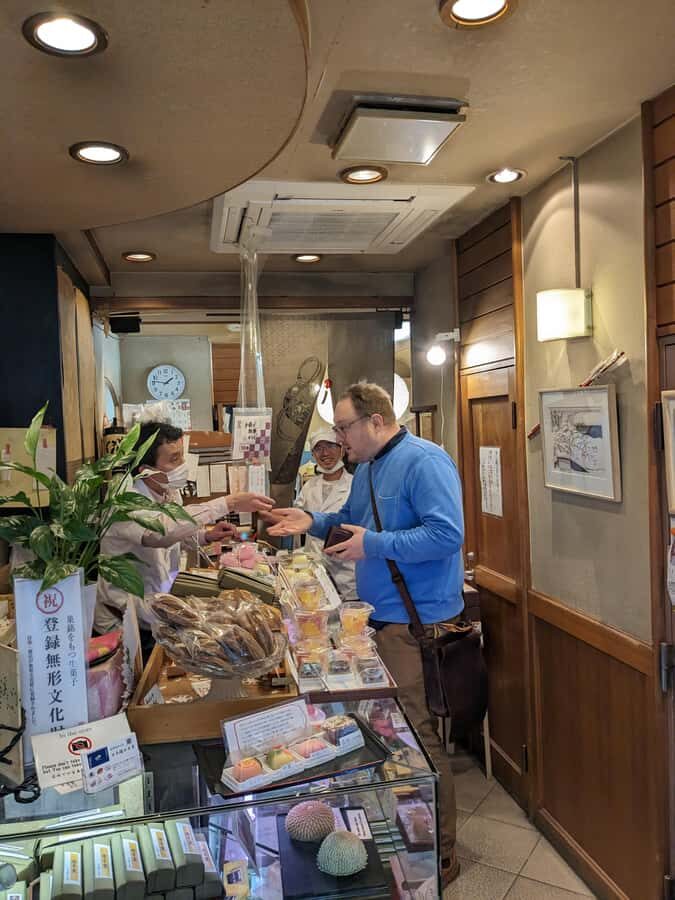
- Daifuku mochi with a sweet filling
- Traditional treats from shops that can go back over a century
This is where you get the “why” behind Japanese flavors. Even if you’ve tried Japanese food before, Nihonbashi usually makes the ingredients feel less mysterious.
Practical note: this part is most enjoyable if you like learning in bite-sized pieces. If you prefer only modern food and skip anything “old-school,” you might find this section slower than later stops—but it still sets you up for everything else.
Ginza and Yurakucho under the tracks: salarymen style, no fuss
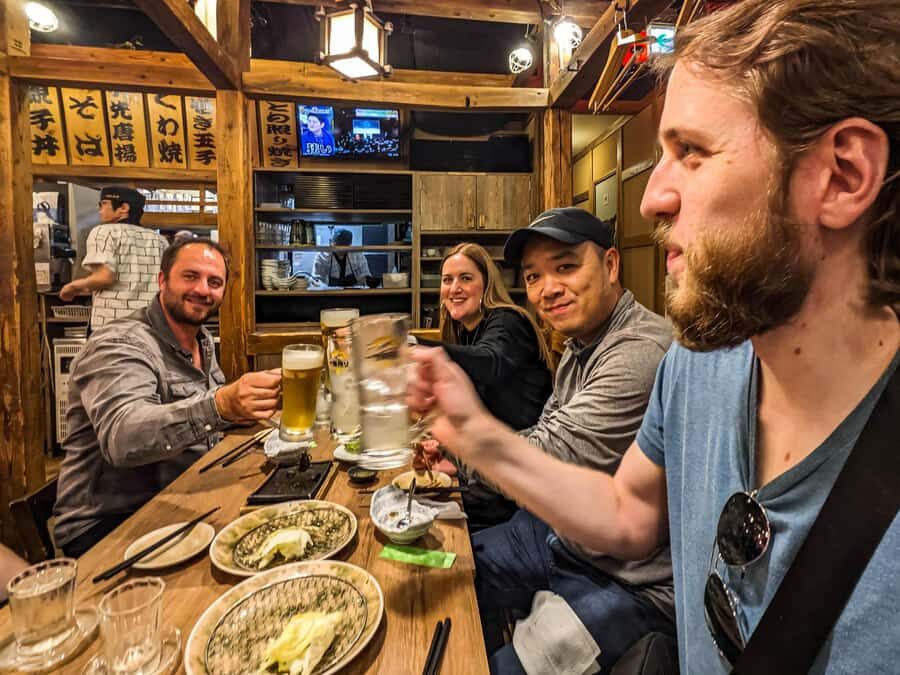
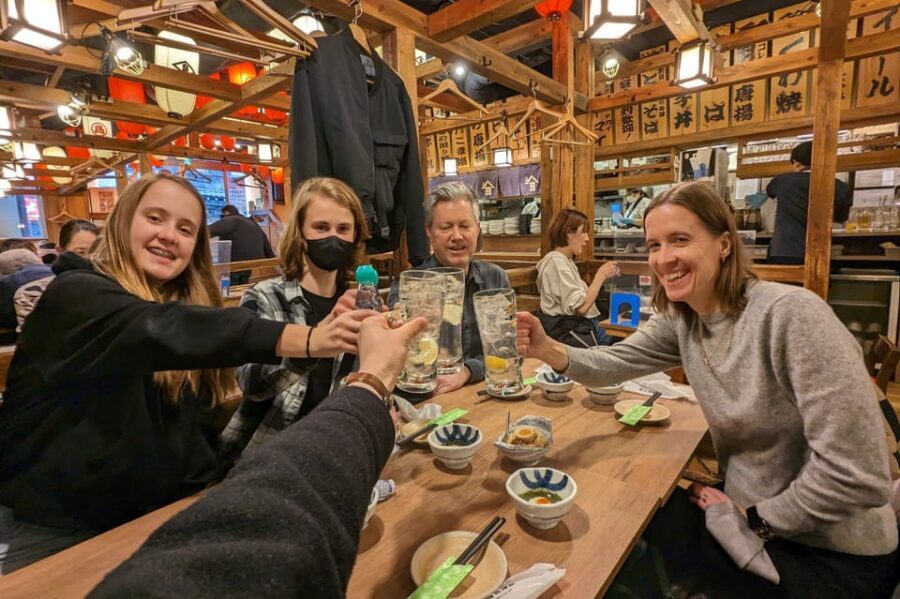
Next comes the present-day angle in Ginza and Yurakucho. This is where the tour leans into everyday Tokyo food. The vibe you’re aiming for is the working-dinner world—people grabbing something satisfying after long days.
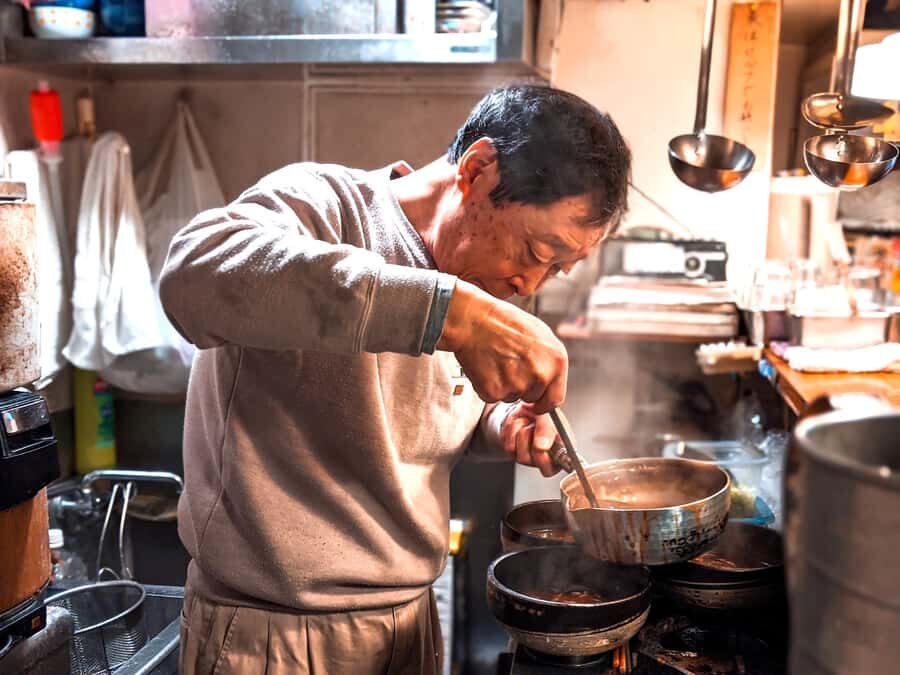
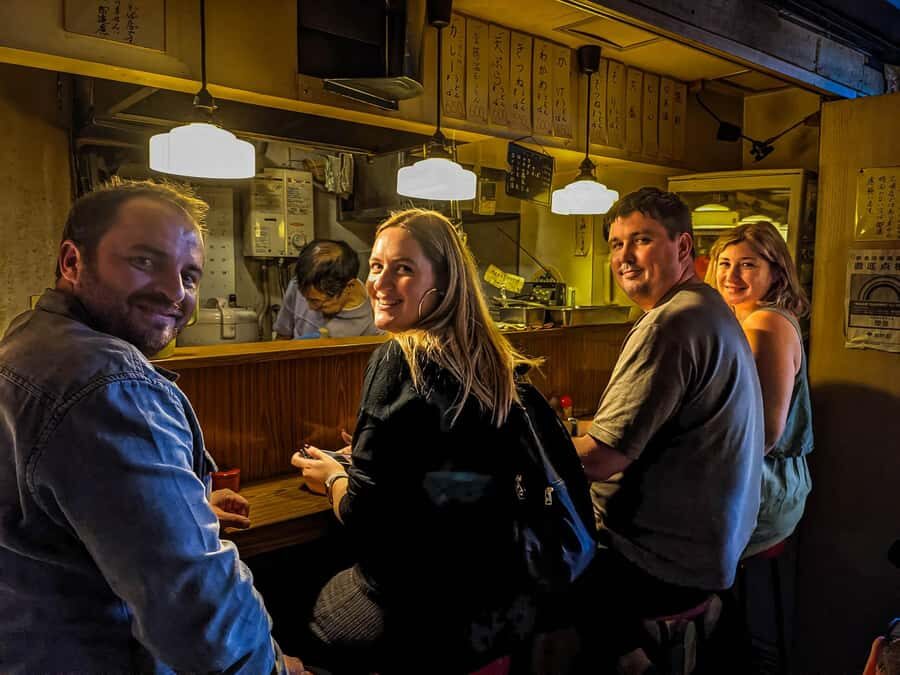
You’ll taste dishes that show up again and again in Japanese daily life, including chicken-based items and curry udon, a noodle soup that reflects modern tastes shaped by Japan’s post-war industrial era. The included drink here is a Japanese sour—often a crowd favorite because it’s refreshing, sharp, and easy to sip between bites.
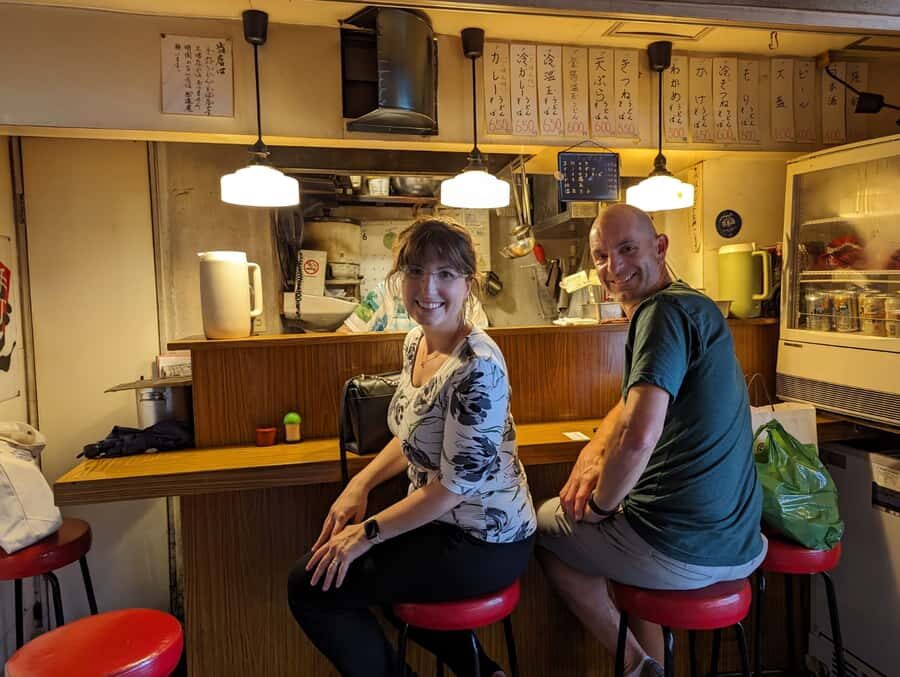
The tour also highlights where this food culture happens: izakayas and noodle stalls tucked under railway tracks. That setting is more than a backdrop. It explains the “compact convenience” of Tokyo eating: fast lines, tight seating, lots of order-in-the-moment energy.
What I like for you: this stop can be the most “I’m really in Tokyo” part of the route. You’ll see and taste how many people eat on regular nights, not just on special occasions.
Possible consideration: this section works best if you’re comfortable eating in lively, crowded settings. If you’re sensitive to noise or close quarters, consider choosing a private tour so you can control timing a bit more.
Tokyo Station: gift culture plus a quick high-speed bite
At Tokyo Station, the tour changes pace in a smart way. You’re not just eating; you’re learning how food ties into the gift-giving culture so common in Japan.
The tasting focus includes Fruits Sando—Japanese milk bread filled with fresh fruit and whipped cream. It’s a small, elegant example of how Tokyo turns simple ingredients into a special product, the kind of thing you might bring back for someone else.
This stop also connects food to Japan’s iconic bullet train world. The point isn’t trains for trains’ sake. It’s about how stations became places to buy memorable, portable treats that fit travel days and family visits. Tokyo Station functions like a food crossroads, and the tour helps you spot that logic instead of just rushing through it.
Why it’s valuable: even if you’ve passed through Tokyo Station before, you’ll usually miss the cultural “reason” behind the food counter choices. This stop gives you a lens you can carry to other stations and department stores.
Worth weighing up alongside this Tokyo pick:


Akihabara: the future of snacks through marketing
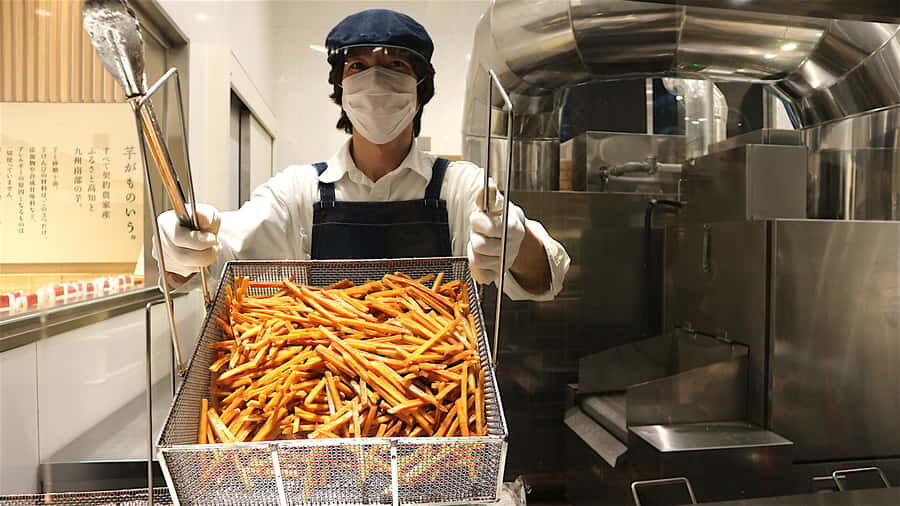
Then you take a short subway ride into Akihabara, Tokyo’s electronics and anime hub. Here the tour shifts from traditional food basics to the way younger generations get pulled into Japanese snack culture.
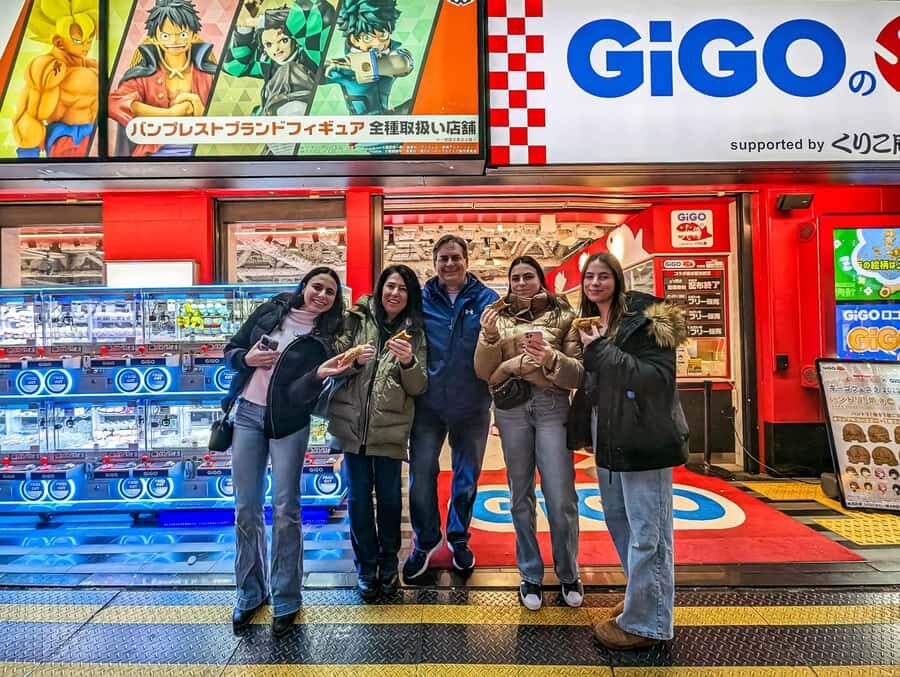
What you’ll focus on is how innovative marketing keeps older snack formats relevant. Traditional treats get repackaged, branded, and promoted in ways that match Akihabara’s tech-and-subculture audience. You’ll taste a selection of snacks tied to that marketing approach and talk through why it works—how the “future” angle is really communication, design, and timing.
You also get the simple benefit of this neighborhood: it’s an easy place to understand modern Tokyo identity. Electronics, street posters, and character-adjacent branding make it obvious how products build communities.
For you: if you like pop culture as more than background noise, Akihabara will click. You’ll leave thinking about food as a product story, not just a flavor story.
What you’re actually buying for the price
The tour costs $164 per person for about 5.5 to 6.5 hours, with 11+ tastings plus an included alcoholic drink. You also get a live guide (English, Japanese, Portuguese) and the choice of a private tour or a small group of up to 8.
Is it a deal? It’s not “cheap.” But it is good value if you think about Tokyo food tours correctly:
- You’re paying for multiple paid tastings, not one sit-down meal.
- You’re paying for a guide who links each bite to the cultural reason behind it.
- You’re paying for smart routing across four distinct areas without having to guess where to go.
Also, organization matters. In the feedback this tour gets, guides like Paiva and Miko are singled out for knowledge and a clear connection between the past, present, and future themes. That’s exactly what you want for a tour built on interpretation, not just eating.
If you’re the kind of traveler who likes to wander without structure, you might spend less on food on your own. But if you want fewer wrong turns and more “oh, that’s why” moments, the price is easier to justify.
Meeting point, timing, and the walking reality
This is a walking tour with real distance. Expect about 6.5 km total, plus stairs in subway stations. The pace is described as moderate, and it runs in rain or shine.
Where to meet
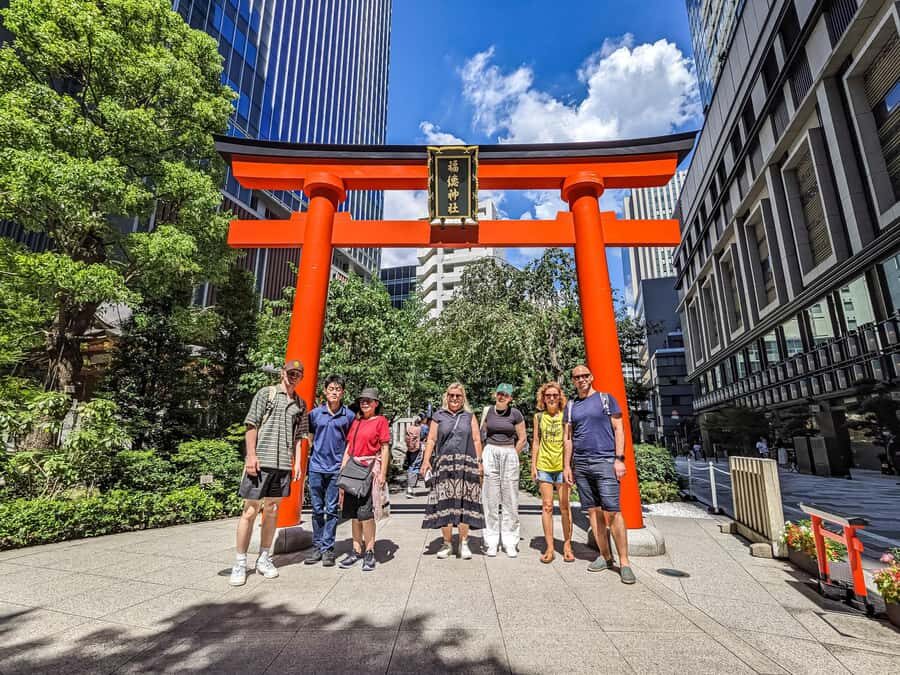
You meet at Nihonbashi Subway Station Exit B12. When you come out of Exit B12, you’ll be in a shopping mall. The meeting spot is a bench on the right—and you should stay on the basement level (don’t exit to street level).
If you’re arriving by taxi, you’re directed to Coredo Nihonbashi (1 Chome-4-1 Nihonbashi). The instructions say to use an elevator down and meet the guide at the bench near the elevator area.
What helps on the ground
Bring comfortable shoes. Bring a towel and a reusable water bottle. Tokyo walking can be deceptively sweaty, and the towel option is the kind of practical detail you’ll appreciate once you’re moving through stations.
Also, note that during the tour you’ll take two short subway rides. Subway tickets are on you.
Who this tour suits best
This experience fits best if:
- You want a themed food education that moves across Tokyo districts
- You like small-group travel and an eating pace that feels social but not rushed
- You’re comfortable eating in busy areas like izakayas and noodle-stall settings
- You enjoy both traditional ingredients (like kombu and dashi components) and modern Tokyo snack packaging
It’s not suitable for wheelchair users and not suitable for vegans or vegetarians based on the tour’s food selection.
If you need a lower-stress route due to mobility or pace, a private tour is the more sensible choice.
Should you book this Tokyo Food Tour?
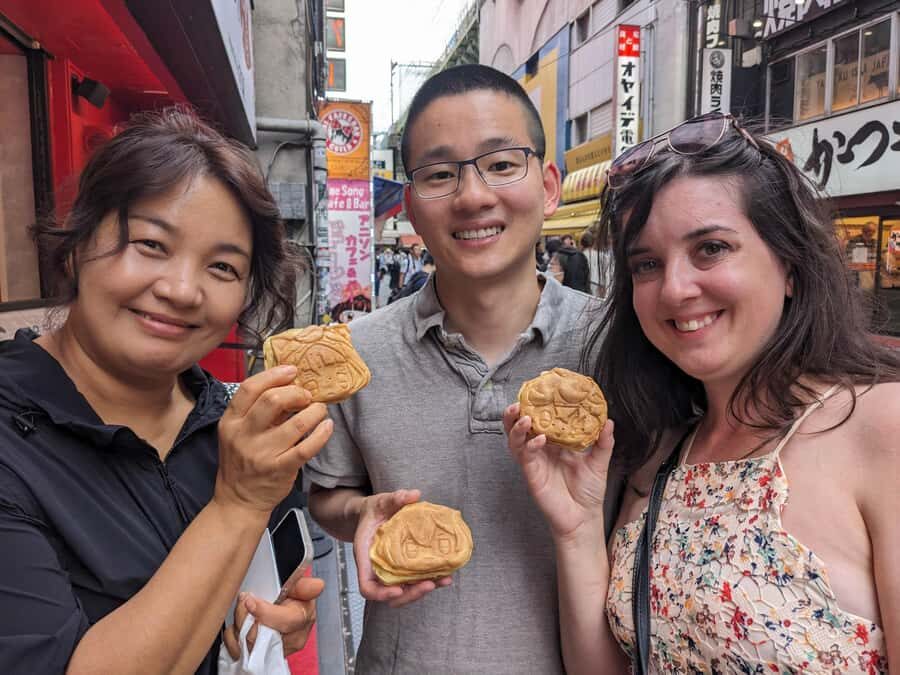
Yes, I’d book it if you want Tokyo food to make sense fast. The strongest reason to choose it is the way the tour builds a story from ingredient basics in Nihonbashi, to salaryman dining energy in Ginza, to station gift culture at Tokyo Station, and finally to Akihabara’s marketing logic.
Skip it if you:
- Can’t handle a 6.5 km walk with lots of stairs
- Need vegan or vegetarian meals (the tour isn’t set for those diets)
- Prefer to avoid subway transfers and crowded food areas
If those points don’t block you, this is the kind of tour that can change how you look at every convenience store snack and every food counter you see afterward.
FAQ
How many tastings are included?
The tour includes 11+ food tastings.
What food and drink rules should I know?
You’ll have one alcoholic drink included. The tour is not suitable for vegans or vegetarians.
How long is the tour?
It runs for about 5.5 to 6.5 hours (starting times vary, so check availability).
How far will I walk?
You’ll walk about 6.5 km total, with a moderate walking pace.
Is it wheelchair friendly?
No. It is not wheelchair friendly and not suitable for people with mobility impairments.
Do I need subway tickets during the tour?
Yes. There are two short subway rides, and you’ll need to purchase your own subway ticket.
Where do I meet the guide?
Meet at Nihonbashi Subway Station Exit B12. The guide meets you at a bench on the right in the basement area inside the shopping mall.
What languages are the tours offered in?
Tours are guided in English, Japanese, and Portuguese.
Eat Your Way Round Tokyo

More Tours in Tokyo




More Tour Reviews in Tokyo




Fresh reviews from around Tokyo






Food & Drink, compared.
 ★ 5.0Shinjuku Food Tour (13 Dishes at 4 Local Eateries)From $866,603 reviews
 ★ 5.0Tokyo Tsukiji Fish Market Food and Culture Walking TourFrom $993,184 reviews
 ★ 4.9Shinjuku Food Tour (15 Dishes and 4 Eateries)From $852,033 reviews
 ★ 5.0Tsukiji Fish Market Food and Walking tourFrom $301,724 reviews
 ★ 5.0Eat and Drink Like a Local: Tokyo Ueno Food Tour-Taverns&RamenFrom $95957 reviews
 ★ 5.0Shibuya Food Tour (13 dishes and 4 Eateries)From $77770 reviews
★ 4.7Tsukiji Fish Market Food and Culture Walking TourFrom $96757 reviews
★ 5.0Shibuya Food Tour (13 dishes and 4 Eateries)From $77770 reviews
★ 4.7Tsukiji Fish Market Food and Culture Walking TourFrom $96757 reviews
 ★ 5.0Tsukiji Fish Market: Street Food & Culture Walking TourFrom $33669 reviews
Browse the lists this tour appears in