
Reviewed · PRIVATE
Tokyo Countryside Exploration Private Tour
A small-group day outside Tokyo is a fast way to switch gears. This private countryside tour takes you away from city noise and into a calmer slice of rural Japan, with mountain temples, shrines, and even a few legend-heavy stops that feel far from a standard sightseeing loop. I like that it’s truly small-group (max 5), and you get time to look around instead of rushing between highlights. The other big win is the mix: you’re not only doing temples, you’re driving past rural backdrops and ending with mountain scenery and shrine details that reward slow attention.
One thing to consider: the day moves through several sites with short time slots, so if you want long, lingering hangs at a single place, this may feel a bit brisk. Also, the tour is weather dependent, so plan for a possible change if conditions are poor.
In This Review
- Key points worth knowing before you go
- Tokyo Countryside in One Day, Without the Usual Chaos
- Private, Small-Group Pacing That Lets Temples Feel Like Temples
- Cost and Time: Is $280.94 a Good Value for a Private Day?
- Pickup, Mountain Driving, and How to Make the Most of the Route
- Hanno: The Bamboo Temple (Gozu) and Wildlife That Keeps Its Distance
- Koma Shrine and Ne-no-gongen: Korean Kings, Tang-Era Legends, and a View Reward
- Ogose-machi Rural Japan and the Dragon Taming Temple Carp Pond
- Torii Pagoda in the Mountains and Xuanzang’s Bone Legend
- Arima Dam Drive-by: When Ghibli Roots Appear by the Road
- Who This Tour Is Best For (and Who Should Skip It)
- The Guide Factor: Jeremy Owen and a Day That Stays Engaged
- Should You Book This Tokyo Countryside Private Tour?
- FAQ
- How long is the Tokyo Countryside Exploration private tour?
- How much does it cost per person?
- Is pickup included?
- Is it really private?
- Are tickets required for the stops?
- Does it include a mobile ticket?
- What happens if the weather is bad?
Key points worth knowing before you go
- Max 5 people means a calmer pace and less waiting at each site
- Pickup offered helps you avoid the hassle of getting out to the countryside on your own
- Free admissions at the listed stops keeps costs more predictable during the day
- Mountain shrines with view time give you a payoff beyond photos
- Ghibli-fan friendly drive-by at Arima Dam adds a playful, recognizable moment
- Private tour only for your group keeps the experience personal
More private options with your own guide
- Tokyo 6hr Private Tour with Government-Licensed Guide★ 5.0 · 3,902 reviews
- Private Tour to Mt. Fuji and Hakone (Fully Licenced Operator)★ 5.0 · 1,910 reviews
- Tokyo Customized Private Tour (Must See Places in 1 Day)★ 5.0 · 1,499 reviews
Tokyo Countryside in One Day, Without the Usual Chaos
This is the kind of tour I love for one simple reason: it trims the friction. You leave Tokyo, and instead of stitching together trains and buses to reach a set of scattered rural places, you get a guide, pickup, and a planned route that makes sense for a single day.
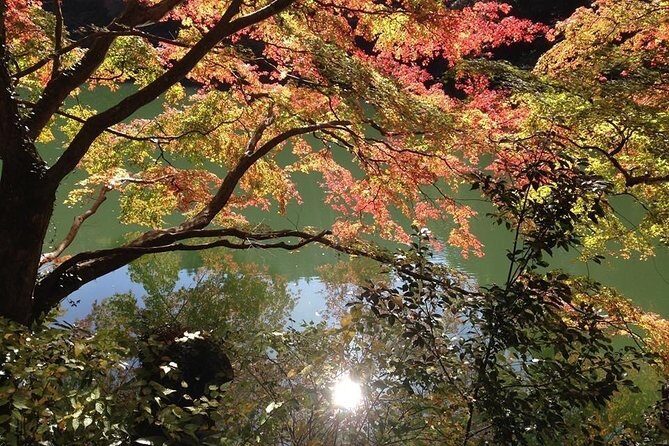
You’re also stepping into a different rhythm of Japan. These stops lean toward quiet shrines and hillside temples rather than the usual check-the-box big-name sights. That matters, because you’ll spend more time noticing details like the way the grounds feel, the smaller statues, and the story behind a temple name. Even the short visits tend to land because you’re not just walking through a place. You have context.
The itinerary is built around religious sites plus mountain views, so you’ll likely feel the day shift from city traffic to cleaner air and slower roads. And when you see how remote some of these places feel, the value of having a local guide becomes obvious. You get a day that reads like rural Japan, not a photo tour with gaps between locations.
Private, Small-Group Pacing That Lets Temples Feel Like Temples
The tour is private, meaning only your group participates. It also keeps the group small, with a maximum of 5 people. For a countryside day, that’s not a luxury detail. It changes everything about your experience: you can ask questions without waiting for a crowd, and you can adjust your pace if a stop is more interesting than expected.
Short time windows are part of the design (most stops are around 30–40 minutes), but a small group makes those windows feel workable. You’re not stuck behind people who are speed-running photos. Instead, you’re able to take a breath, read a plaque if it’s available, and walk the grounds at a human pace.
You also get a real advantage from pickup offered. In practice, it reduces the chance of a stressful start. One review noted a pickup adjustment due to light traffic, with the guide calling ahead. That’s exactly the kind of real-world flexibility you want on a day that depends on road timing.
Cost and Time: Is $280.94 a Good Value for a Private Day?
At $280.94 per person, this isn’t a budget excursion. But it’s not trying to be. You’re paying for a private day with pickup, guided interpretation, and transportation across rural areas that are harder to reach quickly on your own.
The value gets better because the listed stops have admission tickets free for each of the main sites in the plan. That doesn’t mean there are no costs for you during the day, but it keeps the “hidden fees” down and helps you predict what the day will cost overall.
Duration is listed as about 8 to 9 hours, which is right for countryside exploring. It’s enough time to make real changes in scenery and atmosphere, without turning into an all-day ordeal. If you’re traveling with a partner or a small group, private pricing tends to feel more reasonable because you’re sharing the fixed costs of a vehicle and driver.
If you’re the type of traveler who enjoys planning time at places with meaning (shrines, temples, and legends tied to place names), this price can feel like a fair trade. If you mainly want big modern attractions, you might find the day more “quiet and cultural” than “action-packed.”
Pickup, Mountain Driving, and How to Make the Most of the Route
You get a mobile ticket, and confirmation comes at booking. That helps you show up without scrambling. The tour is also noted as being near public transportation, which is useful if you ever need an alternate plan.
The bigger practical factor is the road. This is a countryside day, meaning you’ll be on mountain roads. Expect the drive itself to be part of the experience. Air often feels fresher once you’re away from Tokyo, and the terrain starts shaping your mood.
Plan for flexibility around the start time. One passenger experienced a pickup that shifted earlier than expected after a call from guide Jeremy Owen due to traffic. That’s a good sign operationally. It means you’re not just waiting in the dark hoping someone shows up.
Dress smart for weather. The tour requires good weather, and if it’s canceled due to poor conditions, you’ll be offered a different date or a full refund. On rainy days, the forests and sites can feel moodier and prettier, but rain can also mean slower travel. Either way, have layers and don’t assume you’ll control the day’s timing.





Hanno: The Bamboo Temple (Gozu) and Wildlife That Keeps Its Distance
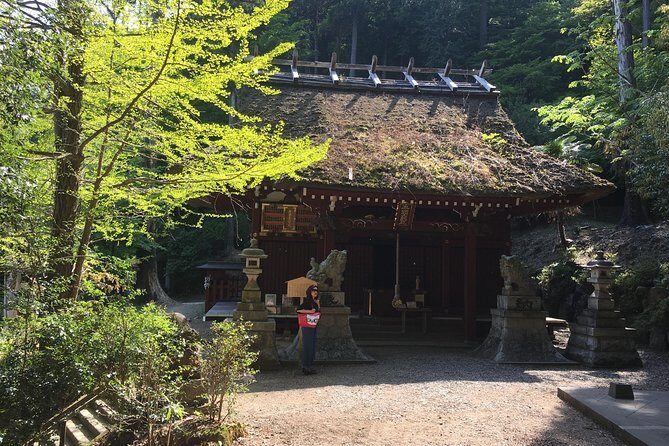
Stop one is Hanno, built around a temple that feels tucked deep into the mountains: the bamboo temple dedicated to the Buddhist king Gozu. The story is unusual and memorable: a king with the head of a cow and the body of a man.
That myth matters because it changes how you experience the grounds. Instead of just seeing buildings and carvings, you’re seeing a place tied to a specific character in Buddhist legend. Temples like this often feel more intimate than major tourist sites because the focus is spiritual, not commercial.
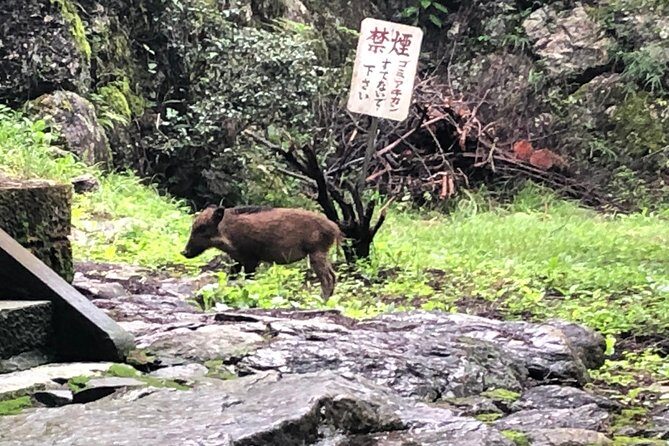
One detail I’d file away before you go: the grounds have very timid wild deer and monkeys. The idea isn’t that they’re tame in a showy way. They’re watching quietly. So act respectfully. Keep distance. Don’t chase for photos. If you stay calm, you’ll likely enjoy that surreal moment when a living forest creature becomes part of the temple setting.
This stop is about 40 minutes and free admission. That’s enough time to walk the complex, take in the bamboo atmosphere, and look around for Gozu-themed elements without feeling rushed.
Koma Shrine and Ne-no-gongen: Korean Kings, Tang-Era Legends, and a View Reward
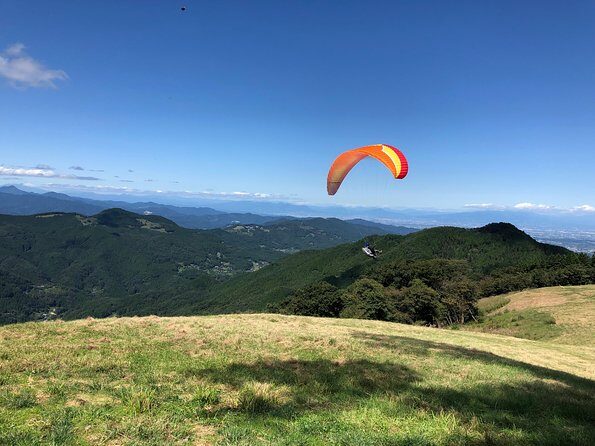
From Hanno, you move toward two mountain shrine experiences that feel different in tone but share a similar vibe: prayer with a strong sense of place.
First up is Koma Shrine in Saitama Prefecture. This shrine is described as connected to Korean kings of the Tang Dynasty. Whether you know the full historical timeline or not, you’ll feel the point. The shrine ties multiple cultural threads together, showing how religious and historical connections traveled through East Asia over time.
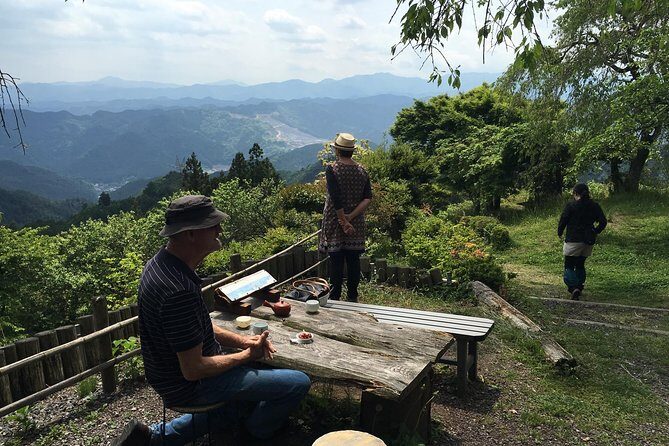
Next you visit Ne-no-gongen, nearby. This one is special for two reasons. It’s at the top of the mountains, so you get beautiful views for hikers. And it’s also very practical in a spiritual way: it’s for praying for healthy legs and backs.
That combination can be surprisingly meaningful during a countryside day. You’re already walking around temples, and then the shrine’s purpose matches what your body is actually doing. It feels like the day is paying attention to your feet and posture, not just your camera.
Both of these stops are around 40 minutes and listed as free admission. If you want the best enjoyment, take your time at Ne-no-gongen. Don’t treat the views as a quick photo moment. Stand still for a minute and let the mountain air settle.
Ogose-machi Rural Japan and the Dragon Taming Temple Carp Pond
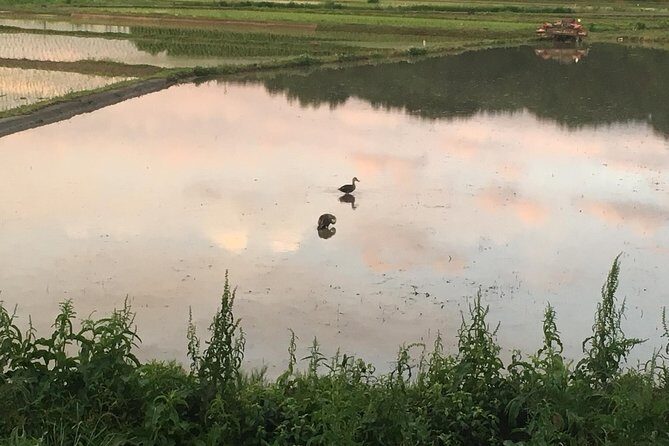
Stop four is Ogose-machi, described as a window into rural Japan with mountains, temples, shrines, and waterfalls. This is where the day starts to feel like more than a collection of religious sites. You’re seeing the setting that supports those sites.
The highlight here is the Dragon Taming Temple, where the plan includes a very specific legend: a monk who has telepathy with the carp in a pond beside the temple.
You don’t need to treat that story as literal to get value from it. Legends like this are a way rural communities explain why water matters, why patience matters, and why certain locations are treated as spiritually powerful. It’s also a good reminder that rural Japan is often a place where storytelling and daily life blend.
Time is about 30 minutes here with free admission. Short stops can feel limiting at big attractions, but with a story-based site, 30 minutes is plenty. You can look at the pond, read the elements tied to the legend, and absorb the feel of the place without feeling you’re racing through.
If it’s raining, this part can be especially atmospheric. Waterfalls and foresty temple grounds often look better when the air is damp and light is softer.
Torii Pagoda in the Mountains and Xuanzang’s Bone Legend
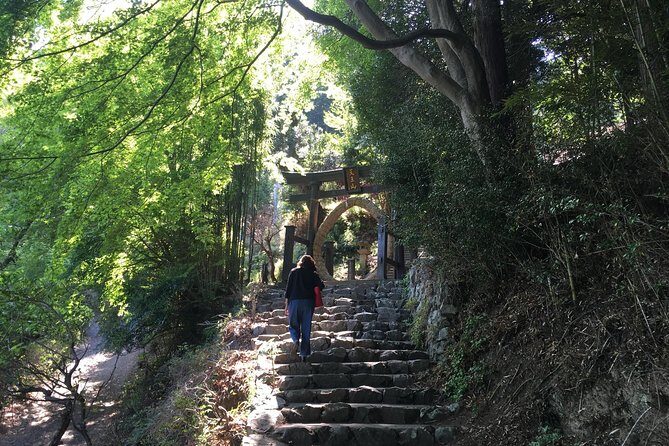
The last major shrine stop is deep in the mountains: the Torii Pagoda. It’s connected to Xuanzang, the Chinese monk who traveled India during the Tang China period. The tour description notes that the pagoda used to hold the bones of Xuanzang.
That’s the kind of detail that gives you a bigger mental map of Asia. Xuanzang’s story is tied to travel, translation, and the spread of ideas. When you stand at a site associated with that journey, it helps you understand how long-distance movement shaped religious life.
The stop is about 40 minutes and listed as free admission. This is also a good moment to slow down, because mountain shrines can be quiet and slightly physically tiring depending on your walking comfort. If you enjoy taking time at fewer sites rather than hitting many fast, this stop supports that style.
Also, keep your expectations realistic. You may not be looking at a grand museum-style complex. Instead, it’s a sacred site connected to legend and place. That’s the point. You’re visiting a living kind of Japan.
Arima Dam Drive-by: When Ghibli Roots Appear by the Road
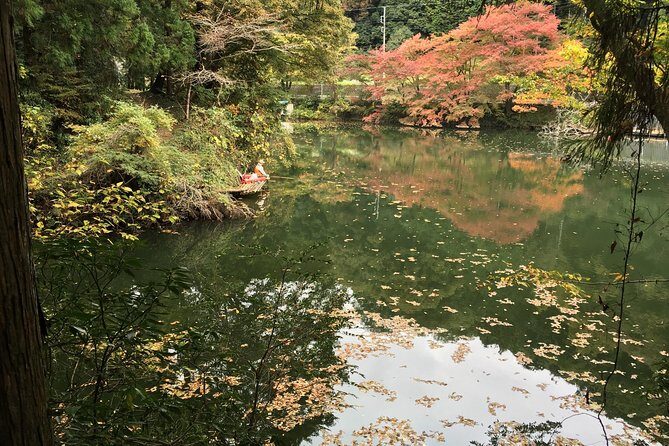
Right near the end, the tour includes a drive past Lake Arima Dam, described as the roots of the film My Neighbor Totoro. This is a fun add-on, especially if you love the way animation captures countryside mood.
This part is not about museum facts. It’s about the vibe. You’re moving through rural scenery and suddenly recognizing it through a pop-culture lens. Even if you’re not a Ghibli fan, this drive can still work as a visual breather between temple stops.
It’s brief and flexible by nature. The value is that it keeps the day from feeling purely solemn. It adds warmth and familiarity, and it’s a reminder that rural landscapes influence art, not just traditions.
Who This Tour Is Best For (and Who Should Skip It)
This tour fits best if you want:
- A countryside day trip from Tokyo that feels calm and off the main tourist circuit
- Shrines and temples with stories, not just photo backdrops
- A private, small-group pace with pickup and a friendly guide
It’s also a solid choice if you travel with someone who enjoys history threads but doesn’t want a lecture-only day. The plan is built around places where history and faith show up in physical form.
You might want to consider alternatives if you:
- Want a big-city style day with constant action and dense sights
- Prefer long time at fewer locations instead of several short stops
- Are traveling during a period when weather is likely to be poor, since the tour is noted as requiring good weather
Good news: the tour says most travelers can participate, and it allows service animals. If you have mobility concerns, you should still ask your provider how much walking is involved at each stop before booking, since temple grounds can vary.
The Guide Factor: Jeremy Owen and a Day That Stays Engaged
A huge part of this experience is the human layer. The tour provider is Jeremy Owen, and the itinerary is clearly shaped by someone who likes finding meaningful places and explaining them in plain language.
One of the most practical benefits of a guide like this is how the day stays coherent. You’re not just hopping between sites. You’re getting cultural context that helps each stop click. Even during a long day, that can make the difference between remembering locations and remembering how the places connect.
The timing also matters. A countryside day requires driver attention and route planning. Mountain roads can change everything when traffic or weather shifts. Jeremy’s role as both guide and driver is part of why the tour tends to work as a single flowing experience.
Should You Book This Tokyo Countryside Private Tour?
If you’re looking for a day that trades Tokyo crowds for quiet mountains, I’d say this is a strong choice. The small-group size, private format, pickup, and the fact that listed stops are free admission make the plan feel thoughtfully put together for a one-day countryside escape. Add in the stories behind Gozu, the Tang-era connections at Koma Shrine, and the Xuanzang bond at the Torii Pagoda, and you get a day that feels more like traveling through Japan than checking boxes.
I’d book it if you enjoy temples, shrines, legends tied to place, and you’re okay with several short visits. I’d pause if you need a very flexible schedule due to uncertain weather, or if you prefer longer stays at fewer stops.
If you do book, I’d pack for wet conditions (just in case), plan to move at a gentle pace, and keep your expectations tuned to rural mood: quieter, more spiritual, and more about noticing than collecting.
FAQ
How long is the Tokyo Countryside Exploration private tour?
The tour runs about 8 to 9 hours.
How much does it cost per person?
The price is $280.94 per person.
Is pickup included?
Yes, pickup is offered.
Is it really private?
Yes. It’s a private tour/activity, so only your group will participate. The group size is capped at a maximum of 5.
Are tickets required for the stops?
The itinerary lists admission as free for each of the main stops.
Does it include a mobile ticket?
Yes, it uses a mobile ticket.
What happens if the weather is bad?
The experience requires good weather. If it’s canceled due to poor weather, you’ll be offered a different date or a full refund.
Just Your Group: Private Options


More Tours in Tokyo


More Tour Reviews in Tokyo



Fresh reviews from around Tokyo






Private, compared.
 ★ 5.0Tokyo 6hr Private Tour with Government-Licensed GuideFrom $1553,902 reviews
 ★ 5.0Private Tour to Mt. Fuji and Hakone (Fully Licenced Operator)From $4971,910 reviews
 ★ 5.0Tokyo Customized Private Tour (Must See Places in 1 Day)From $1451,499 reviews
 ★ 4.9Mount Fuji Full-Day Private Tour from Tokyo (Customizable)From $3931,470 reviews
 ★ 4.8Private City Highlights Tour with Local GuideFrom $1061,433 reviews
 ★ 5.0Private Custom Tour: Tokyo in a DayFrom $1591,432 reviews
 ★ 5.0Tokyo 4hr Private Tour with Government-Licensed GuideFrom $1091,394 reviews
 ★ 5.0Tokyo Customized Private Tour: See Top Attractions in 1 DayFrom $1451,351 reviews