
Reviewed · GUIDED
Tailored Tokyo private Tour with a Local Guide (10:00〜)
Tokyo can feel like a maze at first. This private, tailored tour is a smart way to get your bearings fast while riding public transport and learning what to notice in Ueno. I particularly like the custom planning with your interests and the guided etiquette/context at shrines and temples. One consideration: parts of the route involve walking and some sites have stairs, so mobility matters.
What makes this experience feel different from a standard group loop is your guide’s attention and pacing. In my notes from past participants, Itsuko-style communication starts before you even meet, and the guide prepares a tour pamphlet made for your day. You’ll get a local’s eye for route flow, timing, and what to skip when you want a calmer visit.
The pricing is also worth thinking about: $48.77 per person for about 2.5–3 hours of a private guide plus a pamphlet, with pickup offered. You can also add lunch with your guide and there’s an option to tack on a half-day Kamakura trip. If you’re hoping to do everything quickly with minimal walking, this isn’t the tour type for that.
In This Review
- Key highlights worth centering your planning
- Why Ueno and Ameyoko make a great first Tokyo plan
- Getting around Tokyo by train without second-guessing
- Stop-by-stop: Ueno Toshogu Shrine and proper manners
- Ueno Daibutsu and Hanazono Inari: quick hits with big photo payoff
- Kiyomizu-style Kannon-dō: a Kyoto echo in Tokyo
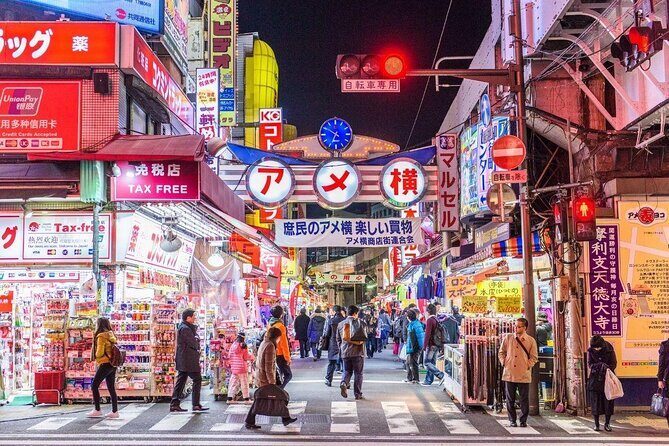
- Ameyoko Shopping Street: street food decisions, made easier
- Lunch with your guide and the Kamakura half-day option
- Price, timing, and value for a private 2.5–3 hour intro
- Practical tips to make this tour work for you
- When this tour may not be the right fit
- Should you book this Ueno and Ameyoko private intro tour?
- FAQ
- How long is the private Tokyo tour?
- What’s included in the price?
- Is lunch included?
- Can the itinerary be tailored to my interests?
- Is a Kamakura add-on available?
- Are there stairs or accessibility concerns?
Key highlights worth centering your planning
- Personalized pre-trip coordination so the day matches your interests, not a fixed script
- Ueno-to-Ameyoko flow that mixes major landmarks with street-life food options in one session
- Shrink-the-stress public transport help so you feel confident using trains/buses afterward
- Temple and shrine manners explained so you know what you’re looking at and how to behave
- A guide-made pamphlet that adds structure (and can be especially fun for kids)
- Optional add-ons like lunch and a possible half-day Kamakura extension
More days made easy by a guide
- Tokyo 6hr Private Tour with Government-Licensed Guide★ 5.0 · 3,902 reviews
- Tokyo: Shinjuku Local Bar and Izakaya Guided Walking Tour★ 4.9 · 1,794 reviews
- Tokyo: Private City Highlights Tour with Local Guide★ 4.8 · 1,433 reviews
Why Ueno and Ameyoko make a great first Tokyo plan
Ueno is a smart “start here” neighborhood. You get a mix of religious sites and lively street energy without having to jump across half the city just to see a couple of highlights.
Then Ameyoko adds the payoff. It’s a street-food and shopping area where you can choose your own style of eating and walking—snacks if you want light, or a more relaxed lunch if that’s your rhythm.
This matters because a first Tokyo day is usually when you’re most tired from jet lag and most unsure about transport. A route like this helps you build confidence early, instead of spending your afternoon figuring out trains like a part-time job.
Getting around Tokyo by train without second-guessing
The core value here is not just seeing places. It’s learning how to move through Tokyo’s public transport system with confidence, at a relaxed pace.
A private guide means you’re not stuck following other people who drag the group tempo. You can ask questions in real time: what line to take, how to read station signage, when to walk, and how to manage transfers without feeling rushed.
Also, pickup is offered. Even if it’s not door-to-door in the way you’d get from a taxi, having that first leg handled can reduce the anxiety of the day start.
And since the tour uses a mobile ticket, it’s usually straightforward to check in and keep things moving. That helps when you’re on foot, in temples, and trying not to waste time hunting for paperwork.
Stop-by-stop: Ueno Toshogu Shrine and proper manners
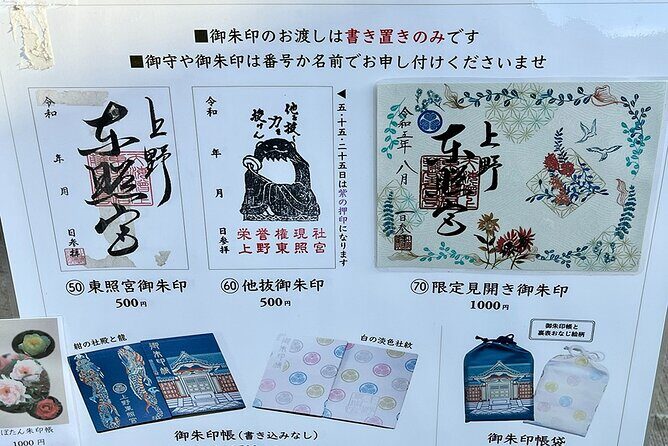
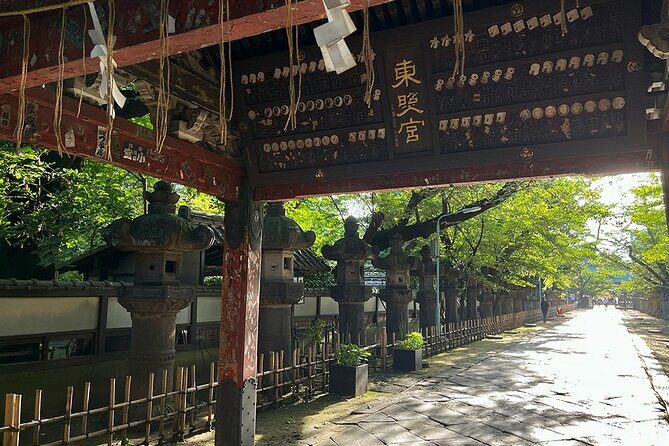
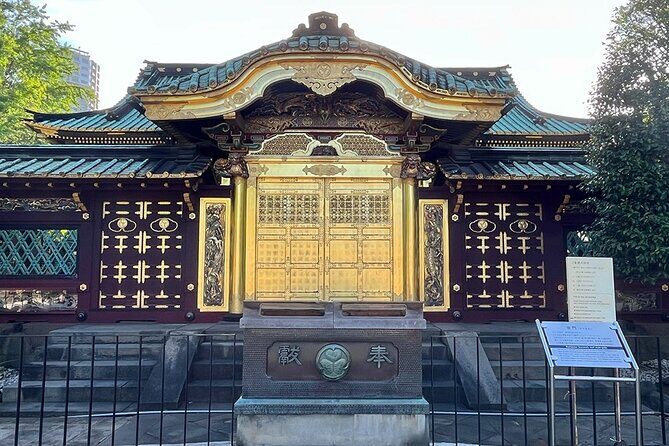
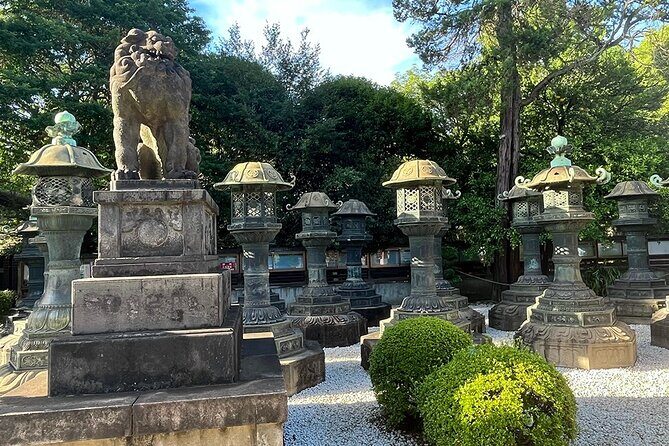
Your day starts at Ueno Toshogu Shrine, a gorgeously decorated shrine connected to Shinto. The big win isn’t just the architecture—it’s that your guide explains temple/shrine manners at the beginning.
That kind of guidance changes how you experience the space. You’re more likely to notice the details because you know what the rituals are, where to stand, and what to do before you take photos.
The stop itself is about 20 minutes and admission is free. That time is long enough to understand what you’re looking at without turning your day into a museum endurance test.
One practical note: shrines and temples often have uneven ground and sometimes stairs nearby. Even if the main path is manageable, it’s worth wearing shoes you can move in comfortably.
Ueno Daibutsu and Hanazono Inari: quick hits with big photo payoff
Next comes a shorter stop around the Ueno area, often focused on the Great Buddha (Ueno Daibutsu). This is a “blink and you’ll miss it” kind of site if you’re wandering alone, but with a guide you get context quickly.
You’re also looking at unusual preservation details, which is exactly the sort of thing that makes a brief stop feel meaningful. The duration is around 10 minutes, so it’s paced to keep your energy up for what comes next.
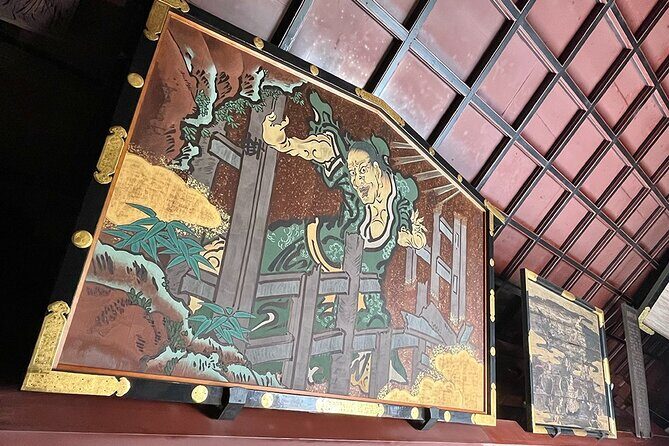
Then the tour heads to Hanazono Inari Shrine. This is where the red torii gate becomes the star. It’s a popular photo spot, but the guide’s presence helps you avoid wasting time if the area is crowded.
That little “10-minute stop with a purpose” design works well for first-timers. You get a signature sight without burning your whole tour budget of time and steps.
More private options with your own guide


Kiyomizu-style Kannon-dō: a Kyoto echo in Tokyo
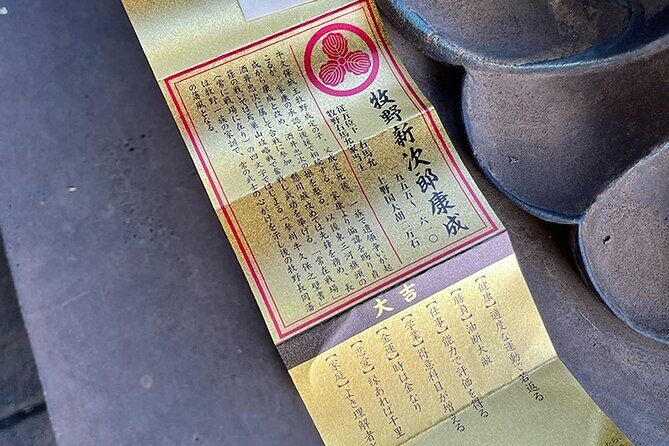
At Kiyomizu Kannon-dō Temple, you’ll see something that feels familiar if you’ve ever been to Kyoto. The temple includes a stage-like structure similar to Kiyomizu in Kyoto, which gives you a quick way to connect the dots between regions.
The stop is short, about 10 minutes, but that’s intentional. You’re not here to sit through a long ceremony. You’re here to understand the setting and recognize why people seek out this kind of viewpoint and layout.
If you like spiritual architecture and small storytelling moments, this stop hits the right tone. It’s also a nice break from shopping street crowds later in the tour.
Ameyoko Shopping Street: street food decisions, made easier
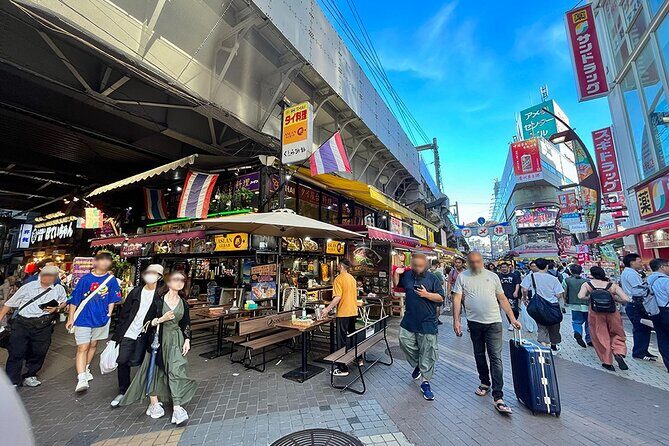
The long stretch is Ameyoko Shopping Street, about 1 hour 40 minutes of walking. This is the part where you shift from landmark mode into appetite mode.
Your guide brings the practical options: you can eat various street foods, and there’s even mention of kebabu as part of the choices. The point isn’t to force one menu. It’s to keep you from freezing when you’re standing in front of a dozen tempting stalls with no plan.
There’s also a helpful fork in the road. If everyone prefers it, the guide can take you to casual restaurants for lunch instead. That flexibility matters because street-food style eating isn’t everyone’s comfort zone.
One warning to keep in mind: credit cards may be difficult in some Ueno Park facilities and shops. You don’t need to panic, but it’s smart to bring enough cash so you can say yes to the foods you actually want.
If it’s hot or crowded, your guide can also adjust pacing. One earlier experience highlighted that route choices can help you avoid the worst heat—exactly the kind of “local thinking” that turns a walking tour into a pleasant one.
Lunch with your guide and the Kamakura half-day option
Lunch isn’t automatically included. It’s an optional add-on, and you’d pay food and drinks yourself.
I like that approach because it gives you control. You can go for light snacks and keep moving, or slow down with a proper meal if that’s what your body needs that day.
There’s also an option to add a half-day trip to Kamakura if you wish. If you’re the type who wants more than just Tokyo in a short trip, this is a clean way to expand your day without organizing everything alone.
Just remember: adding Kamakura changes your energy plan. The tour is already a walking-focused route in Ueno, so make sure the day can handle extra transit and sightseeing.
Price, timing, and value for a private 2.5–3 hour intro
At $48.77 per person, this tour sits in a very reasonable zone for a private guide in Tokyo—especially when you’re starting from day one.
Here’s why it can feel like good value:
- You’re buying less stress as much as sightseeing. Getting transport and etiquette right saves time and confusion.
- You’re paying for customization, not a generic checklist.
- You get a tour pamphlet made by the guide, which helps you remember what you saw and where to go next.
It runs about 2 hours 30 minutes to 3 hours. That duration is long enough to cover several sites and a real street-food window, but not so long you’ll be wishing for a nap at every station.
It’s also booked roughly 8 days in advance on average. Translation: if your dates are fixed around a holiday or busy season, don’t wait until the last week to lock in your preferred time.
Practical tips to make this tour work for you
To get the best day, come with a clear sense of what you want and what you’d rather not do.
- If you love food: tell your guide. Ameyoko is built for that, and your choices will shape the pace.
- If you’re history/architecture curious: ask your guide to explain what you should look for at each religious site.
- If you have kids: this is a format that can be especially friendly because the guide’s pamphlet is made for the group. One participant also referenced stamp-like fun in the pamphlet.
For comfort:
- Wear walking shoes. Even short stops can add up.
- If stairs are an issue for you, say so early. Some facilities have stairs, and Ueno is not perfectly flat in every direction.
For spending:
- Bring cash for street stalls and smaller shops in the area where card use might be limited.
When this tour may not be the right fit
This is a walking tour, so it’s not ideal if you need zero stairs and minimal walking.
Some sites have stairs, and the Ueno area includes ups-and-downs because of its terrain. One earlier experience included a mobility situation where stairs were a problem, and the guide suggested a route adjustment near a hotel—but it also showed the limitation of changing plans at the last minute.
Weather is another factor. The experience requires good weather, so if you’re traveling during a rainy period, have a flexible mindset.
If you’re expecting a car-and-driver sightseeing bubble with very little walking, you’ll likely want a different style of Tokyo tour.
Should you book this Ueno and Ameyoko private intro tour?
Book it if you’re in Tokyo for the first time and want a guided way to learn transport, shrine/temple manners, and a strong intro to Ueno and Ameyoko in one go.
Skip it (or ask hard questions before booking) if stairs and uneven walking are a deal-breaker for you, or if you prefer a mostly indoor, sit-down type of tour.
This is the kind of private experience that helps you leave Tokyo feeling less lost. You get landmarks, you get practical transit confidence, and you get a food street where your guide can help you eat smart instead of eating random.
FAQ
How long is the private Tokyo tour?
It lasts about 2 hours 30 minutes to 3 hours.
What’s included in the price?
You get a private tour, a local guide for the area, and a tour pamphlet made by the guide. Pickup is offered, and you’ll receive a mobile ticket.
Is lunch included?
Lunch is not included. You can include lunch with your guide, but all food and drink costs are not included.
Can the itinerary be tailored to my interests?
Yes. The tour is designed to be tailored to your interests, and the guide provides a more relaxed pace than larger group tours.
Is a Kamakura add-on available?
Yes. There’s an option to add a half-day trip to Kamakura if you wish.
Are there stairs or accessibility concerns?
Some facilities have stairs. While most travelers can participate and the meeting area is near public transportation, the route does include walking and sites that may be challenging if you have limited mobility.
Easier with a Guide

More Tours in Tokyo




More Tour Reviews in Tokyo




Fresh reviews from around Tokyo






Guided, compared.
 ★ 5.0Tokyo 6hr Private Tour with Government-Licensed GuideFrom $1553,902 reviews
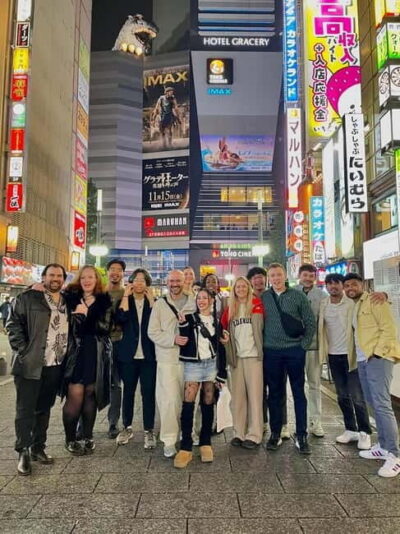 ★ 4.9Shinjuku Local Bar and Izakaya Guided Walking TourFrom $341,794 reviews
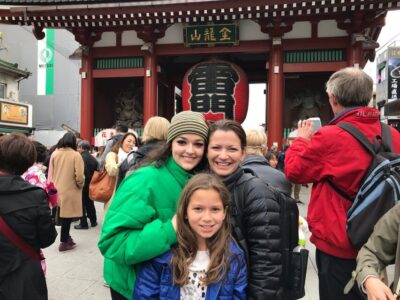 ★ 4.8Private City Highlights Tour with Local GuideFrom $1061,433 reviews
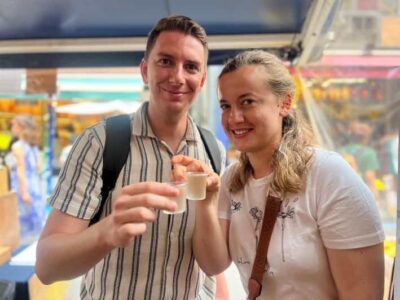 ★ 4.9Tsukiji Fish Market Guided Walking TourFrom $221,397 reviews
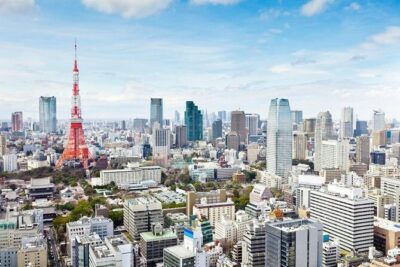 ★ 5.0Tokyo 4hr Private Tour with Government-Licensed GuideFrom $1091,394 reviews
 ★ 5.0Tokyo Guided Small-Group Biking TourFrom $1061,250 reviews
 ★ 4.6Samurai Ninja Museum Guided tour and ExperienceFrom $271,010 reviews
 ★ 5.0Tsukiji Fish Market Guided Tour and Sushi Making with Pro ChefFrom $104775 reviews