
Reviewed · SAMURAI & NINJA EXPERIENCES
Samurai Experience Mugai Ryu Iaido in Tokyo
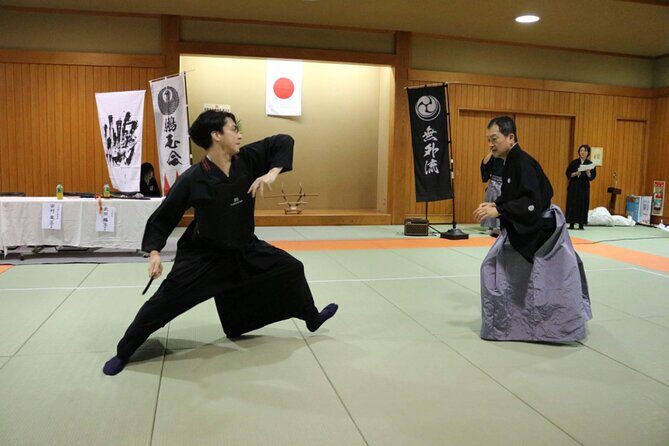
Hakama first, sword second. This is a tight, small-group Mugai-ryū iaido lesson led by Master Takeda Hougyoku, head of the International Iaido Organization Hougyoku-kai, with clear English-speaking instruction and a lot of hands-on time. I also like that they build in photo opportunities while you learn, so you can capture the experience without turning it into a museum stop. One possible drawback: the session is about one hour, so it’s foundations, not full mastery.
You meet in Kuramae, a straightforward part of Taito City that’s near public transport. The best part for peace of mind is that you practice with mock katanas, even when the session mentions tameshigiri, so you can focus on technique and safety instead of worrying about a real blade.
In This Review
- Key things I’d zero in on
- Master Takeda and Mugai-ryū Iaido, in 60 Minutes
- What makes Mugai-ryū feel practical
- Kuramae Meeting Point: Easy to Find, Not a Big Production
- What Happens When You Arrive: Hakama, Mock Katanas, and Safety Talk
- The instructor attention is part of the value
- The 60-Minute Breakdown: From Grip to Draw and Sheath
- Why the basics matter more than you think
- Tameshigiri Practice: Where the Theory Gets Physical
- What you should expect during tameshigiri
- A quick reality check
- Seeing Mugai-ryū Kata Up Close: Predetermined Patterns, Real Meaning
- Why the demonstration is not just a show
- Price and Value: How $151.92 Makes Sense for This Format
- My “worth it” test for you
- Who This Samurai Experience Suits Best in Tokyo
- Should You Book Samurai Experience Mugai Ryu Iaido?
- FAQ
- What is the duration of the Samurai Experience Mugai Ryu Iaido lesson?
- What’s included in the price?
- Are real swords used?
- What do I do during the 60-minute lesson?
- How many people are in the group?
- Where does the experience start and end?
Key things I’d zero in on
- Master-led details: You’re taught under Master Takeda Hougyoku’s instruction and presence.
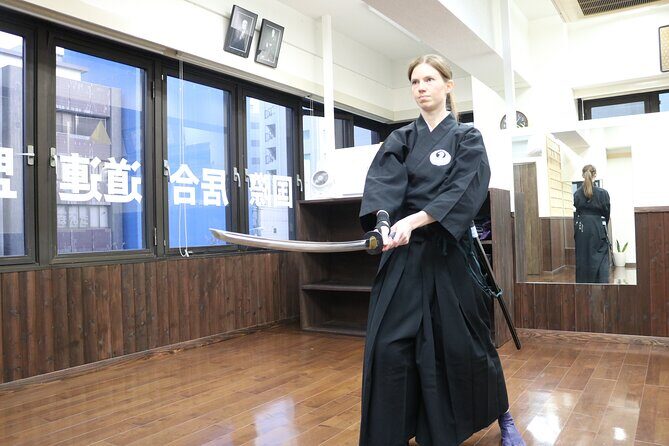
- Beginner-friendly structure: You change into hakama and get step-by-step guidance on draw, sheath, and grip.
- Real technique focus: Mugai-ryū is described as practical martial arts, not just fancy poses.
- Safe tameshigiri practice: You try tameshigiri in a controlled format with imitation swords.
- Kata demonstration at the end: You finish by seeing Iaido kata up close, right in front of you.
More blades, bows and dojo hours
- Tokyo: Samurai Ninja Museum Guided tour and Experience★ 4.6 · 1,010 reviews
- Tokyo: Samurai Sword & Archery Class from Samurai Descendant★ 5.0 · 603 reviews
- Best Samurai Experience in Tokyo★ 5.0 · 458 reviews
Master Takeda and Mugai-ryū Iaido, in 60 Minutes
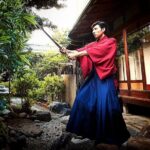
If you want a Tokyo experience that feels authentically Japanese and not just “look at this, take a photo,” this one hits the mark. You’re not watching from behind glass. You’re learning the basics of iaido—drawing, controlling, and using a katana-style sword through set patterns.
The tone here is very intentional. In 60 minutes, the lesson moves from clothing and safety to basic handling, then toward the signature Mugai-ryū focus on kata structure. You get to do the motions, get corrected, and then end with a demonstration so the steps make more sense.
What makes Mugai-ryū feel practical
Iaido isn’t about swinging wildly. It’s about control—how you move the blade, how you transition, and how your stance supports every action. Mugai-ryū is described as a practical martial art, and that comes through in the way the session is framed: it’s not only “look dramatic,” it’s “learn a usable sequence.”
That matters for you if you’re a first-time visitor. Tokyo can overwhelm you with information. This is one clear skill taught in a short block of time.
Kuramae Meeting Point: Easy to Find, Not a Big Production
You start at 4-chōme-20-10 Kuramae, Taito City. The activity ends right back at the same meeting point, so there’s no complicated route planning afterward.
Two practical benefits:
- It’s near public transportation, so you can slot this into your day without a long commute.
- There’s no hotel or attraction pickup, which keeps the timing predictable (and avoids the classic Tokyo time-sink of waiting around for vans).
Bring yourself, your curiosity, and comfortable clothing. You’ll be changing into the hakama provided as part of the experience, so you don’t need to show up already dressed for samurai cosplay.
What Happens When You Arrive: Hakama, Mock Katanas, and Safety Talk
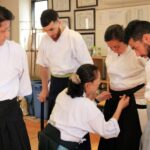
Right when you get there, the session begins with changing clothes. You’ll be given a rental hakama (that pleated samurai garment that immediately changes your posture and your sense of “this is real”).
Then the instructors explain what iaido is. This isn’t vague history talk. You get a guided overview of the flow and the basic rules for handling the sword safely.
Here’s what I think you’ll appreciate: they’re upfront that swords are imitations of the katana. The session also notes that only mock katanas are used for safety. That single detail lowers the intimidation factor a lot. You can focus on learning the sequence without second-guessing every step.





The instructor attention is part of the value
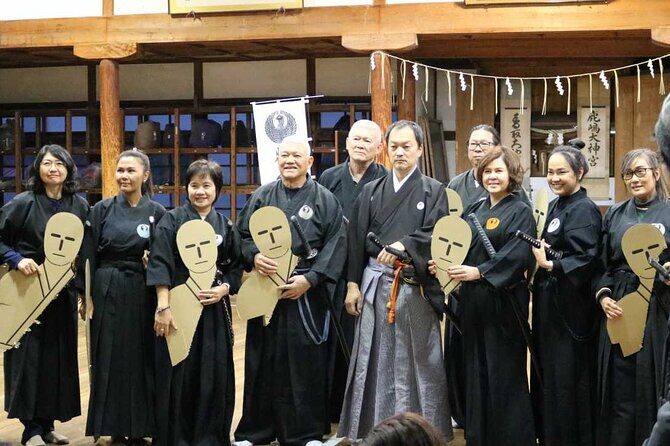
This is a maximum of 8 travelers. That group size changes everything. In a big crowd, you might learn one move and then wait for your turn. Here, you’re more likely to get direct feedback and quick corrections.
It’s also an English-speaking instructor team, which matters because sword technique has a lot of small cues. You want the cues explained in a way you can actually apply right away.
The 60-Minute Breakdown: From Grip to Draw and Sheath
Your lesson is built around a clear progression. You’ll go through:
- How to safely handle the sword imitation
- How to draw and sheath the sword
- How to hold it correctly
- Basic patterns and practice sequences
Even if you’ve never trained with a sword before, the structure is designed to be teachable. First you learn the mechanics and safety. Then you practice the body positions and movements that make the sequence work.
Why the basics matter more than you think
In sword arts, people often chase the dramatic part first. But the “wow” moments depend on the boring bits—grip, alignment, and timing. You’ll see that in real time during the lesson.
You’ll also notice how controlled movement changes the whole feel of the practice. The goal isn’t speed or force. It’s clean transitions. If you take mental notes, you’ll leave with a better understanding of what kata actually trains.
Tameshigiri Practice: Where the Theory Gets Physical
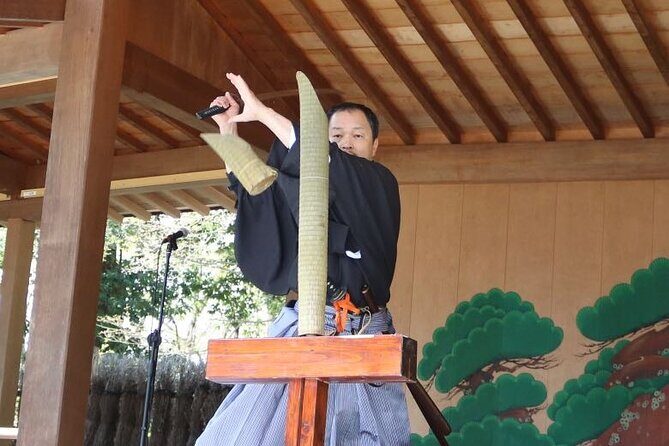
Then comes tameshigiri. This is when a samurai practices using the sword to actually cut something.
In this experience, you try it as part of your guided session. The important nuance is safety: the lesson uses mock swords. So you can treat it as a hands-on practice moment without the pressure of handling a real blade.
What you should expect during tameshigiri
You’re not just handed a sword and told to go. You’ll receive instruction as part of the overall flow. The point is to connect what you’ve practiced—draw, control, positioning—with the end action.
For many people, this is the emotional peak of the session. It’s one thing to move your arms and feet through steps. It’s another to see how the sequence feels when it ends with a cut practice moment.
A quick reality check
Tameshigiri in one hour is not about becoming a cutter. It’s about understanding the mechanics and what the kata-ready form is trying to do. If you come with beginner expectations, you’ll likely get the most out of the experience.
Seeing Mugai-ryū Kata Up Close: Predetermined Patterns, Real Meaning
The final section of the lesson includes a demonstration of Iaido kata—predetermined patterns of attack and technique.
This is where you usually get clarity. When you’re practicing the basic patterns, it can feel like a list of moves. Seeing the kata performed helps you understand the relationship between posture, timing, and blade control.
And since the experience includes a master-led element—Master Takeda Hougyoku and the instructors—you’re watching technique taught the way it’s meant to be taught.
Why the demonstration is not just a show
Kata sounds formal, even rigid, if you’re new to martial arts. But kata is usually where training becomes transferable. It’s the “script” that forces repeated precision.
So if you’re the kind of traveler who likes to understand what you’re looking at, this ending matters. You’ll leave with a mental picture of how the foundations you practiced connect to a full sequence.
Price and Value: How $151.92 Makes Sense for This Format
At $151.92 per person for roughly 1 hour, this isn’t a cheap impulse activity. But it also isn’t trying to be. You’re paying for:
- A small maximum group size (up to 8)
- Instruction in English
- Rental hakama and Japanese sword rental included
- Direct teaching from Master Takeda Hougyoku
- A structured lesson that includes both practice and a kata demonstration
When you compare it to longer classes, the price is easier to justify. You’re not buying a multi-session ticket. You’re buying a focused crash-course in Mugai-ryū iaido with master-level leadership and hands-on guidance.
My “worth it” test for you
This is likely worth it if:
- You want something hands-on, not passive
- You’re curious about Japanese martial arts beyond stereotypes
- You want safety built in through mock swords and guided instruction
- You’ll actually practice the sequence, not just watch
If you want a long training plan or repeated practice over days, you might prefer a longer course elsewhere. This one is designed for a short visit window.
Who This Samurai Experience Suits Best in Tokyo
This fits a lot of travelers because the experience is explained as suitable for most people, and the session focuses on safe, guided basics.
It’s a strong choice for:
- First-time visitors who want a culture-and-history experience that feels real and active
- Frequent Tokyo travelers looking for something different from the typical sightseeing circuit
- People who like classes with a clear start-to-finish structure
- Anyone who’s nervous about sword training but still wants to try something authentic
It may be less ideal if you’re looking for a deep dive into Japanese martial arts theory or a full multi-hour workout. The hour goes fast, by design.
Should You Book Samurai Experience Mugai Ryu Iaido?
Book it if you want a well-structured, safety-conscious, hands-on introduction to Mugai-ryū iaido taught by Master Takeda Hougyoku, with rental gear included and a small-group format that supports real learning.
Skip it only if you’re expecting a long training immersion or you mainly want sightseeing. This is about doing. You’ll get a kata demonstration and a short taste of tameshigiri practice, but the experience is fundamentally a lesson.
FAQ
What is the duration of the Samurai Experience Mugai Ryu Iaido lesson?
The lesson is about 1 hour.
What’s included in the price?
It includes rental hakama, an English-speaking instructor, and Japanese sword rental.
Are real swords used?
The experience uses mock katanas. Swords are imitations of the katana, for safety.
What do I do during the 60-minute lesson?
You change clothes, get an explanation of iaido and the flow of the experience, learn safe sword handling basics (including drawing and sheathing), try tameshigiri, and then watch a Mugai-ryū iaido kata demonstration.
How many people are in the group?
The experience has a maximum of 8 travelers.
Where does the experience start and end?
It starts at 4-chōme-20-10 Kuramae, Taito City, Tokyo 111-0051, Japan, and ends back at the meeting point.
More Tour Reviews in Tokyo



The Way of the Sword, Continued


Fresh reviews from around Tokyo






Samurai & Ninja Experiences, compared.
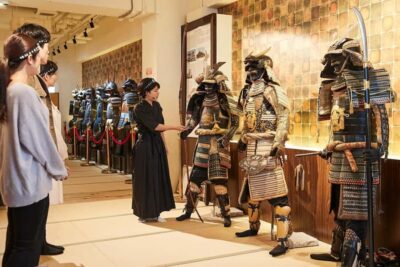 ★ 4.6Samurai Ninja Museum Guided tour and ExperienceFrom $271,010 reviews
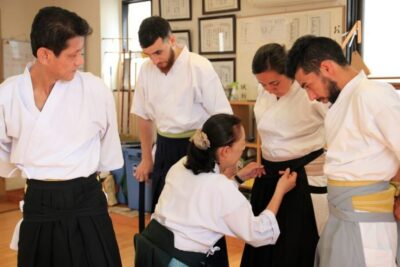 ★ 5.0Samurai Sword & Archery Class from Samurai DescendantFrom $193603 reviews
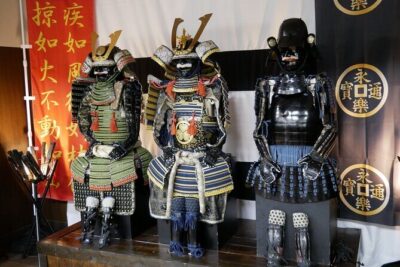 ★ 5.0Best Samurai Experience in TokyoFrom $65458 reviews
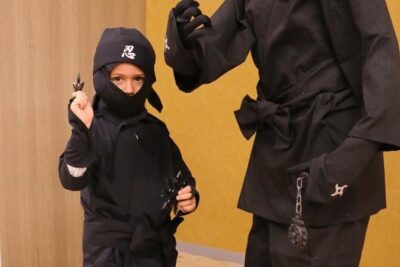 ★ 5.0Ninja Experience (Family Friendly) at Samurai Ninja Museum TOKYOFrom $47441 reviews
 ★ 4.6Samurai Entertainment Night Show in Kanda ShrineFrom $41417 reviews
 ★ 5.0Tokyo Sword Experience – includes Museum Ticket/Ninja ExperienceFrom $84314 reviews
 ★ 4.8Samurai Ninja Museum Asakusa: Samurai Sword Lesson & TourFrom $63306 reviews
 ★ 5.0Samurai Sword Experience (Family Friendly)at SAMURAI MUSEUM TOKYOFrom $65168 reviews
Browse the lists this tour appears in