
Reviewed · HARAJUKU TOURS
Private Harajuku Omotesando Architecture Walking Tour
Tokyo teaches architecture fast.
I love how the walk pairs big-name modern design with street-level fashion storefronts, so you see how Tokyo sells style and science at the same time. I also like the photo-and-examples style guiding, with guides like Yoshi and Yoko (and others) using prepared visuals and clear comparisons between architects and designs. One thing to consider: you will do a lot of walking, and some parts are easier to enjoy when your English is comfortable, since a few guests noted difficulty understanding one guide’s explanations.
This is built as a private experience, tailored to what you want to focus on. In my eyes, that customization is the real value: you can lean more into the Olympics-era story, more into the high-end shopping architecture, or more into quieter backstreet detours and indoor stops when the weather turns.
At $132.14 per person for about 3 hours 30 minutes, it’s not the cheapest walk in Tokyo. Still, you’re paying for a licensed local guide, a planned architecture route, and time to step inside or closely examine select buildings—plus a cozy drink break along the way.
In This Review
- Key Highlights You’ll Care About
- Why Harajuku to Omotesando Works So Well for Architecture
- Starting at Meiji Jingu and Framing Yoyogi Gymnasium
- A small watch-out here
- Designer Streets Meet Modern Design Logic on Omotesando
- Tokyo Plaza Harakado: A Rooftop Vertical-Garden Surprise
- Prada’s Convex-Concave Glass: When Architecture Controls Your Walk
- Practical tip
- Tadao Ando’s Collezione: The Building That Plays With Depth
- The Cozy Break: Drinks While You Re-Load Your Brain
- Customization Is Where the Tour Gets Real
- Language note (the only real downside I’d plan around)
- What You’ll Get (and What You Won’t)
- Meeting Point and End Point: Where the Walk Starts and Finishes
- Is $132.14 Worth It for a 3.5-Hour Private Walk?
- Who Should Book This (and Who Might Not Love It)
- Should You Book This Harajuku Omotesando Architecture Walking Tour?
- FAQ
- How long is the Harajuku and Omotesando architecture walking tour?
- Where does the tour start and end?
- Is this tour private?
- What’s included in the price?
- Is hotel pickup or drop-off included?
- Can I customize what I do on the tour?
- What is the cancellation policy?
Key Highlights You’ll Care About
- Private guide, private pace: your group sets the rhythm, including indoor time when it’s hot.
- Olympics-to-today design thread: you start with Meiji Jingu, then connect the dots to Yoyogi Gymnasium by Kenzo Tange.
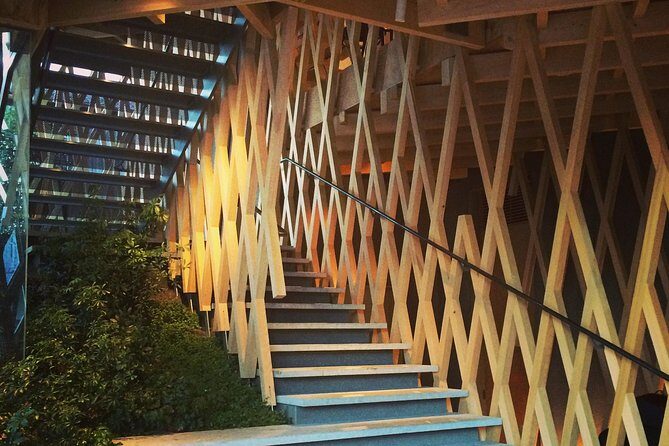
- Fashion streets, architecture details: stops near landmarks like The Iceberg, Dior, Louis Vuitton, Tod’s, Sunny hills, and Prada.
- Prada’s convex/concave glass close-up: you’ll see how shape controls light and movement.
- Tokyo Plaza Harakado rooftop planting: street-level design with a vertical-garden twist.
- Tadao Ando’s Collezione underground idea: a building where “outside” and “inside” trade places.
More colour: other Harajuku wanders
- Tokyo Go-Kart Tour Shibuya-Harajuku-Shinjuku (*IDP Required)★ 5.0 · 217 reviews
- Tokyo: Guided Go Kart Tour from Harajuku to Shibuya Crossing★ 4.5 · 166 reviews
- Shibuya & Harajuku: Hidden Gems & Highlights Private Tour★ 4.7 · 139 reviews
Why Harajuku to Omotesando Works So Well for Architecture
Harajuku to Omotesando is Tokyo’s shortcut to modern design thinking. You get high-design facades, yes, but more importantly you see how architects handle tight streets, crowds, and commercial needs without making everything look the same.
This tour also keeps you from doing the typical tourist loop. Instead of only posing in front of famous buildings, you learn how designers use geometry, light, and even entry sequence to make you feel something before you ever read a sign.
Starting at Meiji Jingu and Framing Yoyogi Gymnasium
Most walking tours start with a street. This one starts with a shrine mood—Meiji Jingu—so you get a mental reset before the architecture sprint.
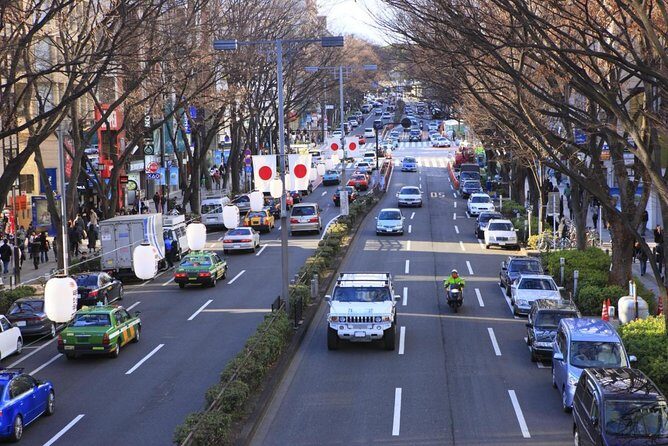
Right away, your guide points you toward one of Tokyo’s most important modern sports landmarks: Yoyogi Gymnasium by Kenzo Tange. You’ll admire it from a distance first, which matters. From the right angle, you can see how the building’s structure reads against the surrounding city, not as a postcard object.
Then the tour swings into fashion architecture along the nearby designer cluster. You may stop at recognizable storefronts and design-heavy brands such as The Iceberg, Dior, Louis Vuitton, Tod’s, Sunny hills, and Prada. Even when you’re not shopping, the value is in noticing how each brand treats frontage: glass, openings, signage placement, and how the entrance pulls you in.
A small watch-out here
You’re mixing calm shrine space with fast city movement. If you’re sensitive to crowds, plan to keep your pace steady and follow your guide’s positioning for the best views without getting stuck in foot traffic.
Designer Streets Meet Modern Design Logic on Omotesando
Omotesando often gets described as Tokyo’s fashion runway, but for you as an architecture fan, the bigger story is how buildings behave at street level. This stretch is where you learn that modern design isn’t only about famous names—it’s about circulation, sightlines, and what happens at the sidewalk edge.
Your guide’s explanations usually connect the fashion strip to the larger Tokyo growth story. A common thread in the way guides have described this area: Harajuku’s shift from older patterns into modern commercial design has created a playground for architects who are asked to solve real constraints—space, visibility, and brand identity—at once.
Also, because the tour is private and customizable, you can ask for more time on particular streetscapes instead of watching a one-size-fits-all script. That’s where a prepared guide helps; examples shown with photos can make it easier to understand the design choices while you’re still standing in front of the building.
Tokyo at walking pace, a few more ways

Tokyo Plaza Harakado: A Rooftop Vertical-Garden Surprise
At Tokyo Plaza Harakado, you’re not just looking at a facade. You’re learning how a building can layer the city experience—ground floor activity, mid-level sightlines, and then a rooftop moment that changes the vibe.
In the course of the walk, you’ll hear the design connected to Akinisa Hirata and notice the planted rooftop vertical garden concept. The point isn’t only that it looks cool. It’s that this kind of planting turns architecture into something that interacts with light and air movement, not just surfaces.
This stop is great if you like design that feels slightly unexpected. It gives you a quick lesson in how contemporary Tokyo treats “green” as architecture detail rather than only parkland.
Prada’s Convex-Concave Glass: When Architecture Controls Your Walk
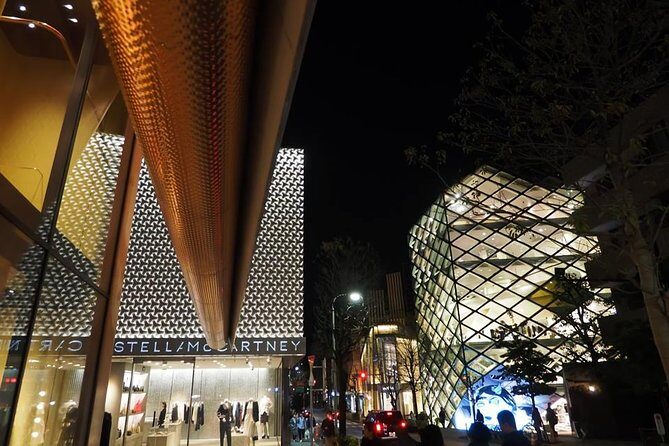
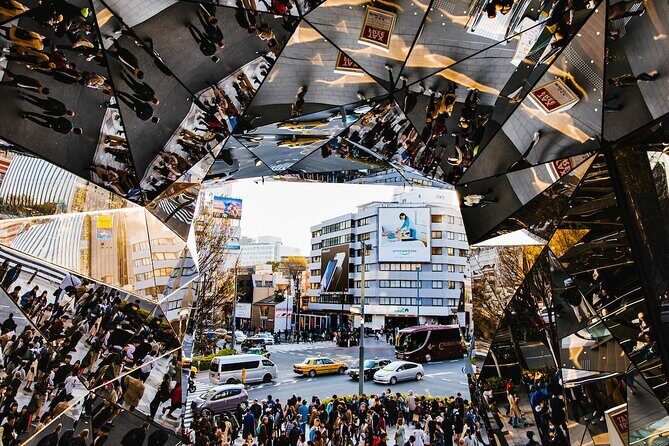
One of the strongest moments on the route is the Prada store on Omotesando, linked to Jacques Herzog and Pierre de Meuron. Here you’ll focus on form—specifically the store’s convex and concave glass behavior.
Why this matters for you: curved and contoured facades don’t just look different in photos. They change how people see each other, how light spreads across the sidewalk, and how the building seems to stretch or squeeze as you move.
In past tours, guides have also taken visitors to see both outside and interior spaces, which is the key. If you only look at the exterior, you miss how the design language continues inside. When you can step in (when allowed), you get a better sense of how the layout and reflections shape your path.
Practical tip
Bring your phone camera, but don’t only chase angles. Use the building’s shape as your guide: walk a few steps left and right and watch how the glass changes what you see.
Tadao Ando’s Collezione: The Building That Plays With Depth
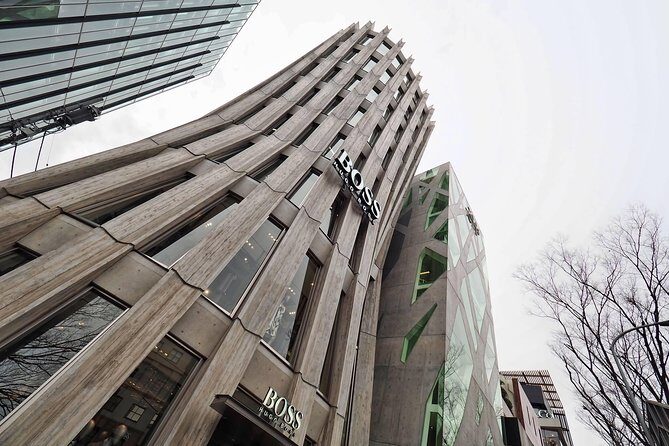
Next comes a real mind-bender: Tadao Ando’s Collezione, where half the building sits underground. This kind of design is why I like architecture walking tours so much. You can’t fully understand this idea from a single distant view.
As you approach, your guide’s job is to help you read the structure. What feels like a normal shopping stop becomes a lesson in how architects handle gravity, light entry, and transitions between exterior and interior.
Ando’s style often mixes sharp geometry with calm spatial control, and this stop gives you a chance to experience that “contrast” in a very Tokyo way: modern commercial architecture that isn’t afraid to be quiet and technical.
The Cozy Break: Drinks While You Re-Load Your Brain
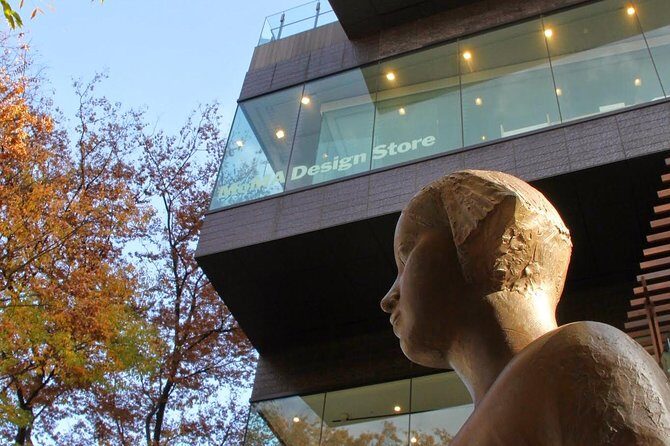
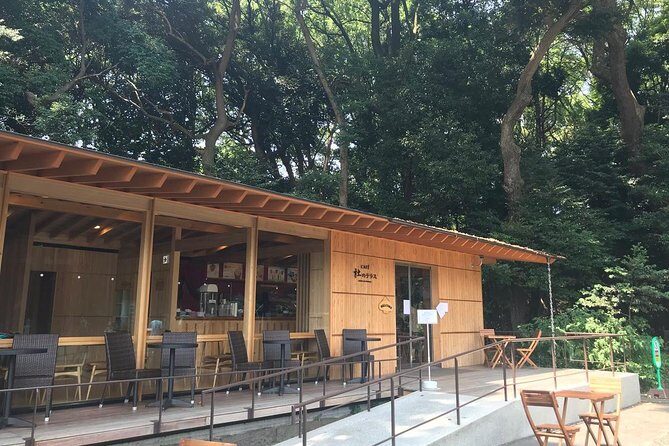
The tour includes a cozy pause with drinks along the way. This isn’t just a snack stop. It’s timed for a reason: after you’ve spent time scanning shapes, materials, and facade logic, a brief break helps you actually absorb the differences you’ve been learning.
I like that the tour doesn’t treat this as a random cafe detour. It’s built into the flow, often connected to small side streets where you can catch your breath and talk with your guide.
If it’s hot, this break becomes even more useful. Guides on this route have adjusted the plan to include more indoor time when the weather gets harsh, which helps keep the tour enjoyable instead of turning it into a sweat test.
Customization Is Where the Tour Gets Real
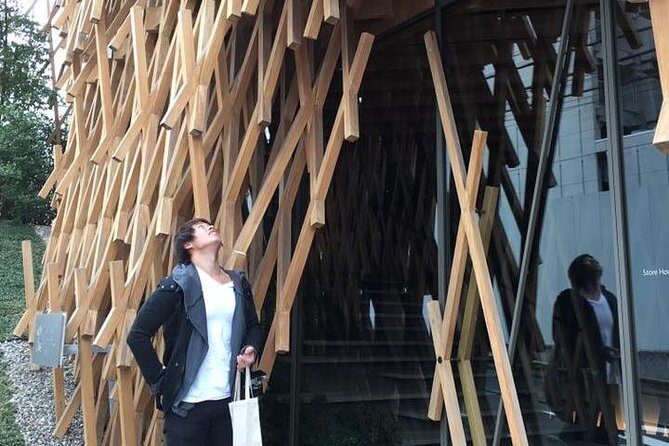
This experience is explicitly customizable. That means you’re not stuck with a rigid “see these exact ten buildings no matter what” structure.
Here’s how that helps you in plain terms: if you’re obsessed with a specific architect (like Tange, Herzog & de Meuron, or Ando), you can ask for more context and more attention to that designer’s approach. If you care more about how Harajuku evolved into its modern identity, your guide can spend more time on the streets and the small buildings that usually get skipped.
Guides have also shown flexibility in how they pace indoor versus outdoor sections. One reason many people rate this tour highly is that it doesn’t feel like a script reading contest. You can steer it.
Language note (the only real downside I’d plan around)
One set of comments mentioned difficulty understanding one guide. If English clarity is a big requirement for you, consider messaging ahead with your preferences, or be ready to ask follow-up questions more actively.
What You’ll Get (and What You Won’t)
Included:
- Local licensed tour guide
- Cozy pause with drinks
Not included:
- Hotel pickup and drop-off
You’ll be walking through areas that are near public transportation, but you should still plan to arrive at the start point under your own steam. For many people, that’s fine—because it keeps the tour from wasting time on logistics and lets the architecture part start quickly.
Also, because this is a private tour, only your group participates. That matters if you want questions answered without feeling rushed.
Meeting Point and End Point: Where the Walk Starts and Finishes
You start in front of Meiji Jingu (Harajuku Eki), at 1 Yoyogikamizonocho, Shibuya, Tokyo 151-0052.
The walk concludes at Omotesando and Aoyama-dori intersection, in front of Mizuho bank (listed as 5-chōme-1-27 Minamiaoyama, Minato City, Tokyo 107-0062).
That finish location is useful: it’s in the middle of things, so you can hop onto the subway or continue exploring without a long return trip.
Is $132.14 Worth It for a 3.5-Hour Private Walk?
For $132.14 per person, you’re buying three things: a trained guide, a structured route, and time spent close to buildings where you’d otherwise just pass by.
If your interest is architecture, it can feel worth it because:
- You get guided interpretation of design choices, not just photos.
- You’re in the right places for Olympic-era context (Yoyogi Gymnasium by Kenzo Tange) and later modern design (Prada/Herzog & de Meuron; Ando’s underground concept).
- The tour includes a drink pause, and it’s private, so you’re not stuck with the slowest walker.
If you mostly want shopping time or photo stops, it might feel pricey for what you get. But if you like learning how cities are built—how facades work, how buildings shape movement, how architects respond to commercial life—this price starts to make sense fast.
Who Should Book This (and Who Might Not Love It)
Book this if you:
- Love modern architecture and want to see it in real street context.
- Prefer small, focused learning over museum reading.
- Enjoy asking questions and getting answers while you’re standing next to the design.
- Want a structured way to explore Harajuku and Omotesando beyond brand-name browsing.
You might skip it if:
- You dislike walking for about 3.5 hours.
- You want a mostly sit-down sightseeing style.
- You’re not interested in architectural design details, not just famous names.
Should You Book This Harajuku Omotesando Architecture Walking Tour?
Yes—if you care about architecture and want a guided route that connects the dots from Meiji Jingu’s calm start to Tange’s Yoyogi Gymnasium, then into the modern commercial architecture of Prada and Ando’s Collezione. It’s the kind of tour where the guide’s prepared visuals and on-the-spot explanations make a real difference, not just for one stop, but for how you understand the whole area.
If you’re fit for walking and you want to learn while you move, this is a strong pick. If not, choose a lighter option and come back to Omotesando on your own when you feel ready to slow down.
FAQ
How long is the Harajuku and Omotesando architecture walking tour?
It’s about 3 hours 30 minutes.
Where does the tour start and end?
It starts at Meiji Jingu (Harajuku Eki) and ends at Omotesando and Aoyama-dori intersection, in front of Mizuho bank.
Is this tour private?
Yes. It’s a private tour/activity, so only your group participates.
What’s included in the price?
The tour includes a local licensed tour guide and a cozy pause with drinks.
Is hotel pickup or drop-off included?
No. Hotel pickup and drop-off are not included.
Can I customize what I do on the tour?
Yes. The walking tour is fully customizable, allowing a mix of top attractions and under-the-radar sites, with an Olympics history angle included.
What is the cancellation policy?
You can cancel for a full refund if you cancel at least 24 hours in advance of the experience’s start time.
More Tours in Tokyo





More Tour Reviews in Tokyo




More Harajuku to Wander



Fresh reviews from around Tokyo






Harajuku Tours, compared.
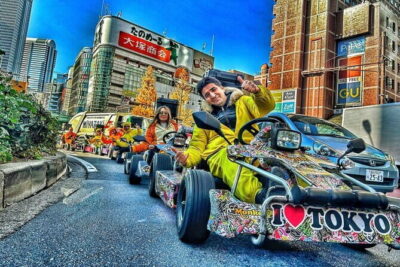 ★ 5.0Tokyo Go-Kart Tour Shibuya-Harajuku-Shinjuku (*IDP Required)From $88217 reviews
 ★ 4.5Guided Go Kart Tour from Harajuku to Shibuya CrossingFrom $103166 reviews
 ★ 4.7Shibuya & Harajuku: Hidden Gems & Highlights Private TourFrom $64139 reviews
Harajuku Kawaii Fashion and Pop-Culture TourFrom $7994 reviews
Harajuku Private Tour: Kawaii Fashion & Animal Cafe IncludedFrom $11869 reviews
★ 4.7Shibuya & Harajuku: Hidden Gems & Highlights Private TourFrom $64139 reviews
Harajuku Kawaii Fashion and Pop-Culture TourFrom $7994 reviews
Harajuku Private Tour: Kawaii Fashion & Animal Cafe IncludedFrom $11869 reviews
 ★ 5.0Harajuku Meiji Shrine Walking Tour in TokyoFrom $2561 reviews
 ★ 5.0Kawaii Food Tour of Harajuku TokyoFrom $20949 reviews
 ★ 4.7Meiji Jingu, Harajuku, Shibuya, and Shijuku TourFrom $10342 reviews
Browse the lists this tour appears in