
Reviewed · MEIJI SHRINE TOURS
Personal prayer at Meiji Shrine!
Want a real Shinto moment, not just photos? This private prayer experience at Meiji Jingu helps you go beyond the postcard view and understand what you’re doing step by step. You’ll get guided etiquette, a personal prayer setting, and then a ceremony featuring priest purification, UNESCO gagaku, and a miko dance.
I especially like that the tour translates what matters into action: cleansing at the fountain, then the standard worship pattern (coin offering, two bows, two claps, one final bow). You’ll also love having help with the prayer application, so your intentions (health, safe travel, marriage, academic success, and more) are clear and correctly submitted.
One possible drawback: the main prayer fee is separate (starting from 5,000 yen), and the ritual involves sitting. If you have pain when sitting straight, this may not be a comfortable fit.
In This Review
- Key points you’ll feel during the experience
- Why this Meiji Jingu prayer is more than a sightseeing stop
- Meeting under the second torii gate: fast orientation, good photos
- Walking the approach properly: torii etiquette you can actually use
- Purification at the fountain: cleansing before you pray
- Kagura Hall prayer: your intentions on paper, then in ceremony
- The ceremony sounds and looks formal for a reason
- What you receive at the end: shinsen and omiki explained
- Price and value: why $98 can make sense here
- Timing, comfort, and where most people get tripped up
- Is this private prayer at Meiji Shrine right for you?
- Should you book this Meiji Shrine prayer tour?
Key points you’ll feel during the experience
- Meet under the second torii gate and get photo-friendly context before the ceremony starts
- Learn torii and approach etiquette so you walk and worship in the respectful way locals do
- Do the purification routine correctly at the fountain before you reach the worship area
- Your Kagura Hall prayer is personal with a Japanese application form and translation help
- Watch gagaku and a miko dance as part of the guided ceremony
- Receive shinsen and omiki and learn what they mean once the ritual ends
More forest calm at Meiji Shrine
- Tokyo: Meiji Shrine Walking Tour — Shinto & Imperial System★ 4.9 · 266 reviews
- Tokyo: Meiji Jingu Shrine and Shinto Culture Walking Tour★ 5.0 · 245 reviews
- Tokyo: Meiji Shrine and Shinto Culture Walking Tour★ 5.0 · 225 reviews
Why this Meiji Jingu prayer is more than a sightseeing stop
Meiji Jingu can feel strangely peaceful even when the grounds are full of people. That’s the point of the place. The torii gates, the approach path, and the rituals all work together to slow you down and set your mind on gratitude and intention.
The big value here is guidance. Shinto isn’t hard, but it is specific, and foreigners often guess wrong. This experience helps you avoid those awkward missteps and actually understand the why behind the motions.
You’re also not doing a generic group blessing. You’re given time in the Kaguraden for an individual prayer setup, then you watch the ceremonial elements that make Meiji Jingu feel authentic, formal, and alive.
Meeting under the second torii gate: fast orientation, good photos
You start at the Big Torii area in Shibuya, then your group meets under the second torii gate. Right away, your guide talks you through what you’re looking at, including the waka poem displayed nearby and the presence of sake barrels and wine barrels. It’s the kind of detail you’d miss if you just follow the crowd.
This is also a smart moment to take photos. The second torii gate area is an easy checkpoint, and your guide can help you frame shots so you’re not constantly turning around.
The tour is timed to keep you moving, so I’d treat this first stop like a quick briefing, not a long hangout.
Walking the approach properly: torii etiquette you can actually use
Next, you walk from the second torii gate toward the third. Along the way, you learn how to move along the approach and how to pass through the torii gates with correct etiquette. This matters because in Shinto practice, these are not just decorative gates.
Your guide also points out waka poems and buildings you’ll pass on the approach. These are small things, but they add layers to what you’re seeing, like reading subtitles for a place you’ve only seen as a background.
Practical note: take photos when you’re allowed. The etiquette here is about respect first, photos second. Your guide will steer you if something is off-limits.
Purification at the fountain: cleansing before you pray
At the purification fountain, you’ll cleanse your hands and mouth before entering the main worship area. If you’ve never done this, having someone show you what to do is worth its weight in calm. It’s one of those rituals where doing it slightly wrong can feel confusing, even if no one is angry with you.
Then comes the standard worship pattern. You’ll offer a coin, then perform two bows, two claps, and one final bow. It’s simple, but it’s also structured. The rhythm helps your mind stop spinning and start focusing.
Some areas will have no photography. Your guide tells you where to pause the camera so you don’t accidentally step into a restricted zone.





Kagura Hall prayer: your intentions on paper, then in ceremony
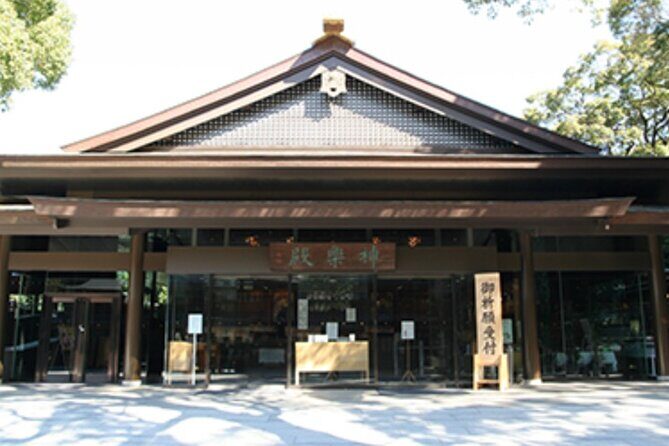
The experience shifts to the Kaguraden, where you do the heart of your personal prayer setup. You start by filling out an application form at the entrance. On it, you list your prayer intentions, such as world peace, household safety, travel safety, recovery from illness, business success, finding a good match, safe childbirth, or academic achievement. You also include your name and address.
Here’s the key practical point: the forms are in Japanese, but you get help. This is one of the reasons this tour feels more reassuring than trying to do everything on your own. You’re not just guessing what to write, and you’re not trying to translate in your head while priests are waiting for the next step.
The offering fee is required as part of the process, starting from 5,000 yen for personal prayer. You submit the form along with the fee to the shrine priest to complete the registration. After that, the group proceeds to the altar area in the Kagura Hall.
The ceremony sounds and looks formal for a reason
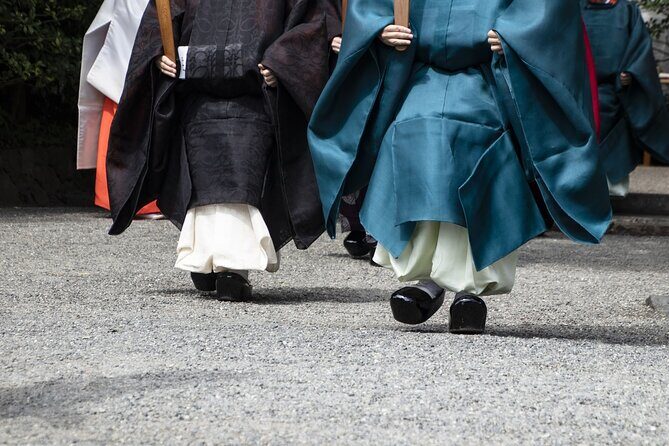
Once you’re in the altar area, you’ll experience a purification ritual led by priests using sacred tools, accompanied by a drum. The sound is part of the focus. It’s meant to mark a transition from casual wandering to intentional worship.
Then you’ll see gagaku performed, along with dance by miko (shrine maidens). Gagaku is ancient court music, played on decorated instruments and flutes, and it’s recognized as a UNESCO Intangible Cultural Heritage tradition. Watching it in the shrine setting is a different feeling than hearing it on a playlist. The acoustics and stillness make it land.
The miko dance comes after the music. It’s graceful and formal, and it helps complete the ceremonial flow. Even if you don’t know the meaning behind every movement, the structure is clear: purification first, music and dance next, then the closing parts of the ritual.
What you receive at the end: shinsen and omiki explained
After the ceremony concludes, the ritual continues with sacred offerings and a drinking element.
You’ll receive shinsen, which are offerings presented to the deities during the ceremony and then shared as a souvenir. In this experience, shinsen is often in the form of nori (seaweed). The idea is that items offered to the deities carry spiritual power, and receiving them becomes another way of continuing your prayer at home.
Then you drink omiki, sacred sake. You’ll get a small cup, and a shrine maiden pours the sake for you at the exit. A portion of the omiki is shared with participants, and it’s believed to support good health.
If you’re picky about food or drink, it’s worth considering your comfort level. The tour does not give an option mentioned in the provided info, so plan as if you’ll be offered the omiki as part of the experience.
Price and value: why $98 can make sense here
At $98 per person, you’re paying for a guided, structured ritual—not just entry. The included part is translation for the application form process. That matters because the Japanese form is central to making your intentions official in the ceremony.
What’s not included is the prayer fee paid to the shrine (starting from 5,000 yen). So your real total depends on what the shrine fee comes out to at the time you participate, plus any extra purchases you make.
Still, I think the value comes from three things:
- You get step-by-step etiquette so you don’t guess at worship rules
- You get language help when the form and submission matter
- You get ceremony access and guided interpretation for gagaku and miko performance in the Kaguraden setting
Also, this is a timed experience that’s typically booked about 65 days in advance on average. That’s a hint that people like this format: not a long tour, but a meaningful one.
Timing, comfort, and where most people get tripped up
This experience runs about 1 hour 30 minutes. That sounds short, but it fits the flow: walk from torii to torii, purification, worship steps, application process, ceremony watching, and the final offering/sake parts.
Comfort is the biggest practical consideration. It’s not recommended for anyone with pain when sitting straight. Even if you’re generally fine in Japan for walking days, remember that shrine ceremonies often include seated moments that can last longer than you expect.
Also, this is a private tour/activity, meaning it’s for your group only. That can be great for personal attention, but it also means punctuality matters more. If you’re running late, you’ll want to communicate early so the schedule doesn’t get thrown off.
Is this private prayer at Meiji Shrine right for you?
You’ll likely enjoy this if you want a respectful Shinto experience without feeling lost. It’s also a good fit if you care about details like torii etiquette and purification steps, and you want an interpreter’s help when you submit your prayer intentions.
It may not be ideal if you’re looking for a flexible, roam-anywhere style walk. This is structured for the ceremony, with guided stops and parts where photography is limited.
If you love cultural traditions, the gagaku and miko dance are a major payoff. If you’re more spiritually curious than photo-focused, you’ll probably get more out of the “how to pray” coaching than the landmark views.
Should you book this Meiji Shrine prayer tour?
I’d book it if you want a guided way to participate in Shinto at Meiji Jingu with less uncertainty and better context. The translation help for the application form is the kind of small thing that prevents big frustration, especially when you’re trying to express specific intentions like health, safe travel, marriage, or academic success.
I’d think twice if you have trouble sitting straight, since the ceremony involves that posture. And I’d also be mindful of timing because this is a ritual flow, not a casual stroll.
If you want your Meiji Jingu visit to feel personal, not just famous, this is one of the most direct ways to do it.
More Tour Reviews in Tokyo



More Time at Meiji Shrine


Fresh reviews from around Tokyo






Meiji Shrine Tours, compared.
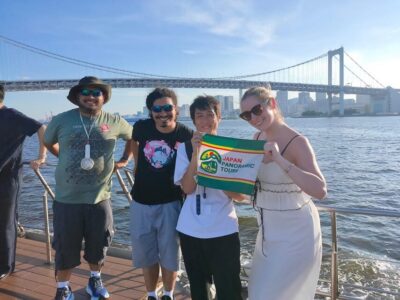 ★ 4.7Meiji Shrine, Asakusa, Skytree Bus Tour and CruiseFrom $1221,986 reviews
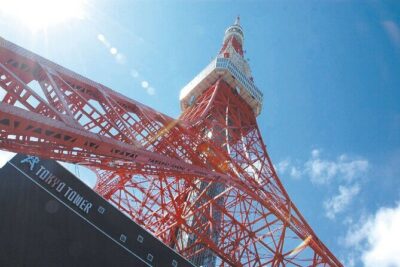 ★ 4.5Tokyo Panoramic 1 Day: Meiji Shrine, Asakusa, Odaiba and SKYTREE®From $851,222 reviews
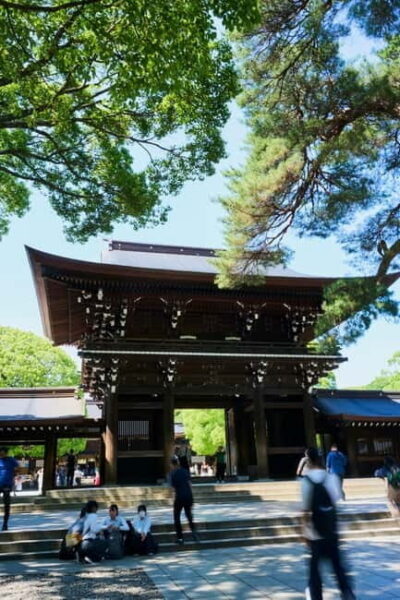 ★ 4.9Meiji Shrine Walking Tour — Shinto & Imperial SystemFrom $23266 reviews
 ★ 5.0Meiji Jingu Shrine and Shinto Culture Walking TourFrom $19245 reviews
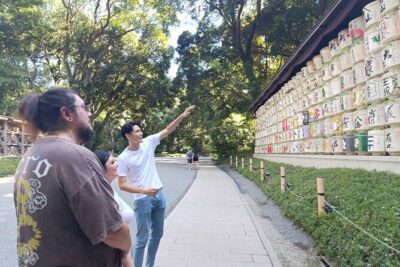 ★ 5.0Meiji Shrine and Shinto Culture Walking TourFrom $18225 reviews
 ★ 5.0Meiji Shrine Walking Tour — Shintoism & Imperial SystemFrom $21209 reviews
 ★ 4.61 Day Bus Tour with Meiji-Jingu,Odaiba,lunch&SkytreeFrom $83156 reviews
 ★ 5.0Tokyo Morning Tour : Meiji Shrine, Asakusa and Fish MarketFrom $72102 reviews
Browse the lists this tour appears in