
Reviewed · MT FUJI DAY TRIPS
MT FUJI with Private Tour
A Fuji day with zero hassle. This private-style tour strings together Mt. Fuji viewpoints and classic spots in the Fuji Five Lakes area, with pickup and drop-off built in. I like the small group feel (priced per group up to 4, capped at 6) because you can actually enjoy the scenery instead of watching a schedule get chewed up. One heads-up: lunch and several entrance tickets (plus optional activities like lake cruise and ropeway) are not included, so you’ll want to budget a bit on top.
From the moment you roll out of Tokyo at 8:00 am, the comfort side is handled. You’ll be in an air-conditioned vehicle, with WiFi on board and bottled water, and you get a mobile ticket for easier day-of check-in. Still, that early start matters if you want good views, because weather and visibility around Mt. Fuji can change quickly.
What really makes this kind of trip work is the driver. In this case, the driver Hamza is called out as helpful and flexible, including when plans need adjusting. That flexibility is great, but it also means you should be ready with a few top preferences so any changes actually match your style.
In This Review
- Key highlights at a glance
- A Mt. Fuji day trip that actually fits Tokyo life
- Private pickup and Hamza-style flexibility (why it matters)
- Stop 1: Mt. Fuji 5th Station for the classic high-altitude look
- Stop 2: Oshino Hakkai springs that are free and very Fuji
- Stop 3: Arakurayama Sengen Park and the observation deck postcard angle
- Stop 4: Lake Yamanaka for wide-open Fuji calm (and free entry)
- Stop 5: Yamanakako Hananomiyako Flower Park for seasonal color by the water
- Stop 6: Narusawa Ice Cave for a volcanic walk-in cold spot
- Optional stop: Oishi Park when you want lavender views by Lake Kawaguchi
- Optional stop: Gotemba Premium Outlets for a quick break and shopping time
- What’s included, and what you’ll pay for separately
- How to time your day for better Fuji photos
- Is it worth $654.01 per group?
- Who this tour suits best (and who should skip)
- FAQ
- FAQ
- What time does the Mt. Fuji with Private Tour start?
- How long is the tour?
- Is pickup from my Tokyo accommodation included?
- What’s included in the price?
- Are entrance tickets included for the stops?
- Do I need to budget for lunch and optional activities?
- Should you book this private Mt. Fuji day trip?
Key highlights at a glance
- Mt. Fuji 5th Station views with enough time to take photos and soak in the altitude feel
- Oshino Hakkai eight springs fed by Fuji snowmelt, and it’s free to enter
- Arakurayama Sengen Park and the famous observation deck view
- Narusawa Ice Cave created by volcanic activity, with cooler temps as you walk in
- Optional Oishi Park and Gotemba Premium Outlets when you want either scenery or shopping
- Driver flexibility noted by the team, including plan adjustments
Other routes to the mountain, compared
- Mt Fuji & Hakone Cruise, Drum Show Bullet Train 1 Day from Tokyo★ 4.0 · 7,413 reviews
- Tokyo Mt Fuji 5th St & Hakone Cruise Bus Tour w/Bullet Train★ 4.4 · 5,024 reviews
- From Tokyo: Mount Fuji Full-Day Sightseeing Trip★ 4.5 · 4,970 reviews
A Mt. Fuji day trip that actually fits Tokyo life
Tokyo is huge, and getting out to Mt. Fuji can be a pain if you do it on your own. This plan solves that by starting early (8:00 am) and running about 10 hours, with pickup from your accommodation and returning you back to the meeting point.
The small group size is a big deal for comfort and control. With a max of 6 (and pricing designed for up to 4 people), you’re not stuck in a big shuttle where everyone has to wait for everyone else. You still get a guided flow through the stops, but you also keep the chance to move efficiently.
I also like that the tour is built around “see it, then move” places. You’re not spending the whole day stuck in one line. Instead, you rotate through viewpoints, springs, a park with classic views, a lake area, and a volcanic ice cave—so the day feels like a tour of the Fuji region, not a single-site mission.
If you want a quiet, flexible day with minimal decision fatigue, this kind of private tour is a strong match.
Private pickup and Hamza-style flexibility (why it matters)
One review detail really stood out: Hamza. The driver is described as very helpful and flexible, including helping with requests to change plans.
Here’s why that matters in real life. Around Mt. Fuji, conditions can be unpredictable. Visibility might be better at one spot than another, or you might want a little extra time for photos at a viewpoint and slightly less time at a photo stop. When your driver can adapt, you’re not powerless to the day’s weather and crowds.
Also, you’re dealing with multiple areas that aren’t all right next to each other. Even when the distances aren’t extreme, timing can still get tight. A driver who can adjust the flow helps you keep the day smooth instead of stressful.
Just do yourself a favor: decide what’s non-negotiable for you (for example, 5th Station or Narusawa Ice Cave), and let the rest be flexible. That way, any changes actually improve your trip.
Stop 1: Mt. Fuji 5th Station for the classic high-altitude look
This is the headliner stop: Mt. Fuji 5th Station. You get about 1 hour here, and admission is not included.
What makes this stop special is simple: you feel like you’re closer to the mountain. You’re standing at an elevation where views open up across valleys and peaks, and the whole scene shifts from “Mt. Fuji in the distance” to “Mt. Fuji is right there.”
Practical tip: wear layers. Even if Tokyo feels mild, mountain viewpoints can feel cooler. And if you’re serious about photos, give yourself the full hour instead of rushing through. You’ll often find the light changes enough to make you want a second round of pictures.
The only real consideration is logistics and cost. Since admission isn’t included, you’ll want to factor in the ticket price on top of the $654.01 group price.
Stop 2: Oshino Hakkai springs that are free and very Fuji
Next up is Oshino Hakkai, a collection of eight springs formed by snow water from Mount Fuji flowing through the ground. This stop also takes about 1 hour, and admission is free.
This is one of those places that quietly steals the show. Instead of dramatic mountain views only, you get a water story: snowmelt making its way underground and returning as springs. The area is built for walking and looking, and you can slow down here.
Why it’s valuable on a day trip: it breaks up the viewpoint-heavy schedule. You’re not just “looking at Fuji.” You’re seeing how the environment around Fuji works—right down to water coming from Mt. Fuji itself.
It’s also easy on your budget because it’s free. Just plan for a bit of walking and take shoes you’re comfortable in.
More private options with your own guide

Stop 3: Arakurayama Sengen Park and the observation deck postcard angle
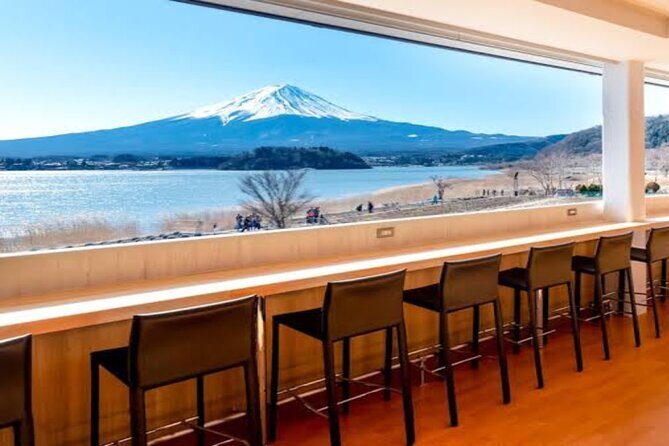
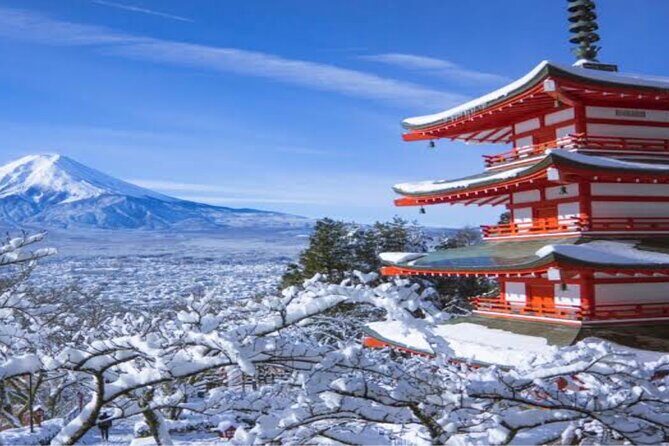
Arakurayama Sengen Park is the kind of place you’ll recognize instantly. It has shrines and pagodas, and the famous Mount Fuji observation deck is located partway up the mountain. You’ll have about 1 hour, and admission is not included.
This stop is basically a photo magnet. The deck is known for the classic brochure view of Mt. Fuji framed by the scenery below. Even if you don’t care about postcards, it’s a great “reset moment” where you switch from spring/water vibes to shrine-and-view vibes.
Two practical considerations:
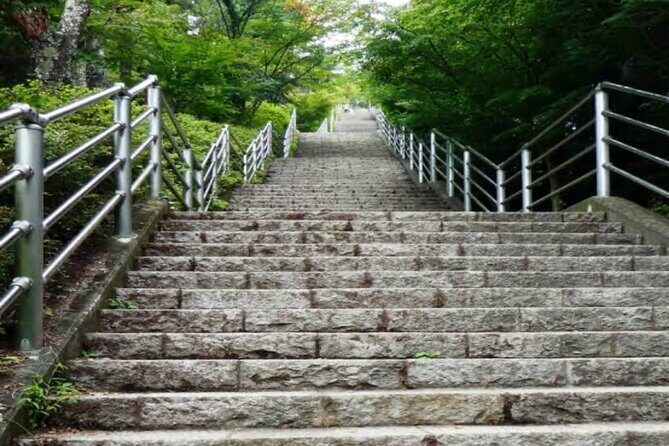
- Bring some patience for steps and paths. Even if the walk is short, you’re on a park route with elevation.
- Admission isn’t included, so budget for tickets here too.
If you want the classic Mt. Fuji framing, this is one of the most efficient stops on the whole route.
Stop 4: Lake Yamanaka for wide-open Fuji calm (and free entry)
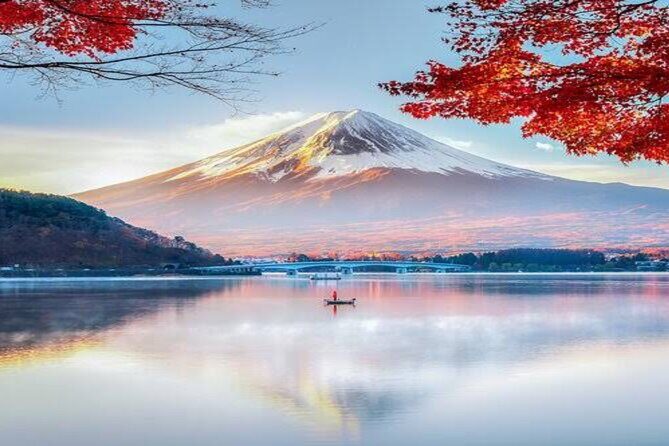
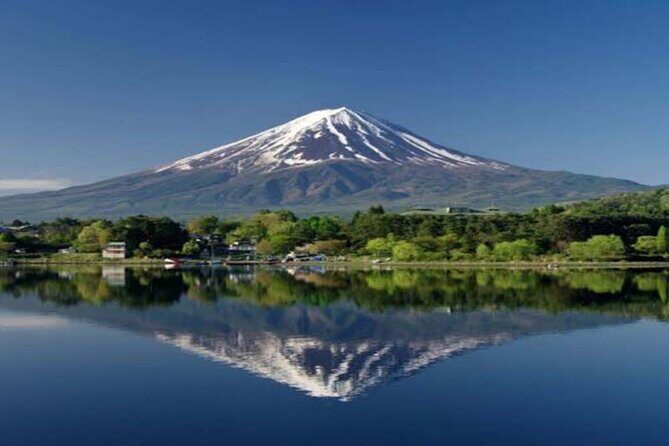
Then you move to Lake Yamanaka (near Yamanakako). It’s the largest of the Fuji Five Lakes by surface area and sits at a higher elevation than the others. You’ll spend about 1 hour here, and admission is free.
What I like about Lake Yamanaka is that it shifts the day from “spot photos” to “horizon views.” You get space. That matters when the rest of the day is temples, caves, and stations.
This stop also gives you a different perspective of Mt. Fuji compared with the deck and the 5th Station. If clouds are playing games with you, sometimes one lake viewpoint gives a better chance at a clear shot than another.
Since it’s free, you can use this hour just for enjoying the air and taking it slow.
Stop 5: Yamanakako Hananomiyako Flower Park for seasonal color by the water
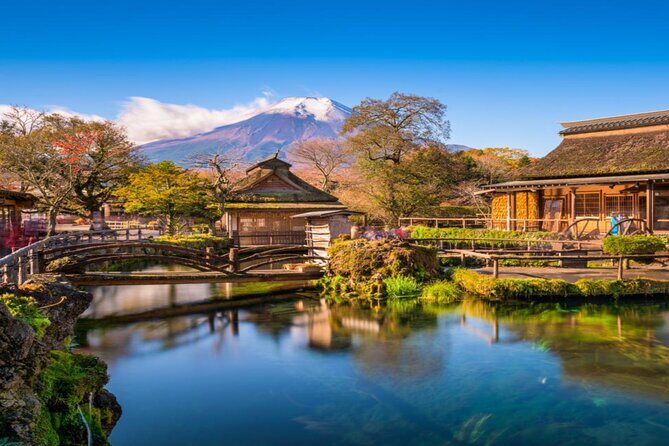
Next is Yamanakako Hananomiyako Park (Flower Park), also about 1 hour. Admission is not included.
The name tells you the point. The park fills the lakebank area nearest Mt. Fuji and focuses on seasonal flowers. The description also notes the altitude (around 1,000 meters above sea level) and emphasizes bright color and rich nature.
This stop works well if you like scenery that’s not just mountain-shaped. The flowers and lake setting can make the Fuji view feel more layered—less like a single subject, more like a full postcard scene.
The key planning note: it’s not admission-free, so budget extra. Also, it’s a good idea to bring a light rain layer or umbrella cover if the forecast looks shaky, since outdoor color stops depend on the weather.
Stop 6: Narusawa Ice Cave for a volcanic walk-in cold spot
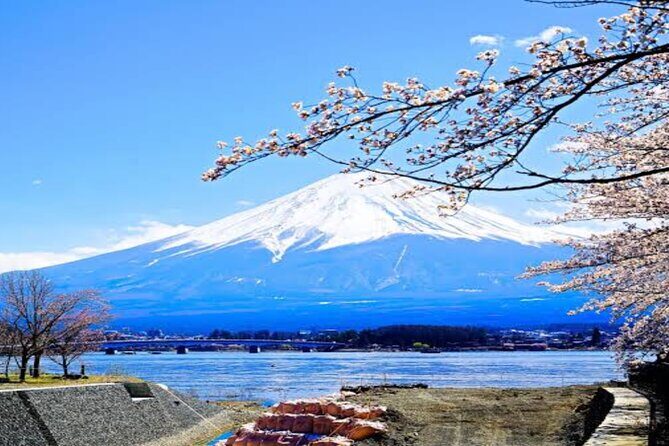
After the lakes and flowers, you get a real geology stop: Narusawa Ice Cave. You’ll have about 50 minutes, and admission is not included.
Here’s what makes it different: the ice cave was created after Mt. Nagao erupted violently in 864. Lava hollowed out a vast underground cave, and temperatures drop steadily as you make your way through.
In practical terms, that means you’ll feel cooler inside than outside. Wear shoes with good grip, and don’t plan to dress too lightly. Even if you’re warm on the drive, you’ll likely feel the temperature change once you start walking through the cave.
This is also where the day gets memorable because it’s not a typical “Fuji viewpoint.” It’s a physical, underground experience, tied directly to volcanic history.
Optional stop: Oishi Park when you want lavender views by Lake Kawaguchi
You may have the chance to add Oishi Park as an optional stop. It runs about 30 minutes, and admission is free.
Oishi Park is known for panoramic views of Lake Kawaguchi plus lavender fields by the water. If that kind of color-by-the-lake scene appeals to you, this is a strong use of time.
The trade-off is simple: optional means it can come at the cost of another moment—either time for photos earlier or a relaxed pace later. I’d choose it if you’re specifically drawn to flower fields and wide panoramas.
Optional stop: Gotemba Premium Outlets for a quick break and shopping time
Another optional add-on is Gotemba Premium Outlets, also about 30 minutes and free to enter.
This is the right choice if you want a practical break during a long day: snacks, shopping, and getting out of sightseeing mode for a bit. The outlets are described as one of the largest centers in Japan and positioned within view of a World Cultural Heritage site, Mt. Fuji.
If shopping isn’t your thing, skip this. A cave and multiple Fuji viewpoints already give you plenty to see.
What’s included, and what you’ll pay for separately
Let’s talk value with clear eyes.
Included:
- bottled water
- air-conditioned vehicle
- WiFi on board
Not included:
- lunch
- juice coffee
- cruise on Lake Kawaguchiko
- Kuchikuchi Ropeway
- Mt. Fuji admission ticket
Also, several stops explicitly say admission is not included, including:
- Mt. Fuji 5th Station
- Arakurayama Sengen Park
- Yamanakako Hananomiyako Park
- Narusawa Ice Cave
(Meanwhile, Oshino Hakkai, Lake Yamanaka, Oishi Park, and Gotemba Premium Outlets are listed as free.)
So what does that mean for your budget? The tour price is $654.01 per group (up to 4), and that covers the transportation, your day schedule, and the ride comforts. But you should still plan for additional spending on entrance tickets, plus your meals.
If you’re traveling as a group of four, this can feel very fair because the cost spreads out. If you’re just one or two, it may feel like a premium because the price is set per group.
How to time your day for better Fuji photos
This route has multiple viewpoints, which helps you deal with changing weather. Still, you can improve your odds.
Start strong: the day begins at 8:00 am. Early can mean more stable light and calmer conditions. If you care about capturing Mt. Fuji with clarity, treat the first big viewpoint (5th Station) as your prime shot.
Then use the “different angles” strategy:
- Observation deck view at Arakurayama gives a classic framing
- Lake Yamanaka gives wide, horizon-type scenery
- Flower park adds color and layered composition
- Narusawa Ice Cave gives the non-viewpoint wow factor
You’ll also appreciate having WiFi on board. If you want to check quick weather changes before you commit to optional stops, it’s helpful.
Is it worth $654.01 per group?
For me, the value comes from two places: coverage and convenience.
Coverage: You’re hitting a “Fuji essentials” mix in roughly 10 hours. That’s not just one viewpoint—it’s a full day that includes springs, a shrine park view, a lake, a flower park, and an ice cave.
Convenience: Pickup and drop-off from your accommodation means you’re not stitching together trains and buses with transfers.
Then there’s the human factor. The driver, Hamza, is described as flexible and helpful with plan changes. That’s the kind of advantage you can’t always get with rigid tours.
So is it worth it? If you want a smooth Fuji day with minimal planning and you’re traveling in a small group, it’s a solid way to spend the time. If you’re the type who loves independent travel and already knows the local routes, you might be able to DIY. But for most people, the “show up and go” value is the point.
Who this tour suits best (and who should skip)
This tour fits best if you:
- want Mt. Fuji without arranging transport all day
- like having a set flow but still value a little flexibility (that driver support helps)
- enjoy a mix of viewpoints and nature stops, plus one “wow” geology site
- are okay paying for some entrance tickets and meals separately
It may be less ideal if:
- you only care about one single Fuji photo and would rather spend the day elsewhere
- you dislike walking around parks and cave paths
- you’re on a strict budget that can’t handle additional ticket costs
Good note: service animals are allowed, and the tour lists most travelers as able to participate.
FAQ
FAQ
What time does the Mt. Fuji with Private Tour start?
The tour starts at 8:00 am.
How long is the tour?
It runs for about 10 hours.
Is pickup from my Tokyo accommodation included?
Yes. Pickup is offered, and the tour ends back at the meeting point.
What’s included in the price?
Included items are bottled water, an air-conditioned vehicle, and WiFi on board.
Are entrance tickets included for the stops?
Some are free, but several are not included. For example, Oshino Hakkai and Lake Yamanaka are free, while Mt. Fuji 5th Station, Arakurayama Sengen Park, Yamanakako Hananomiyako Park, and Narusawa Ice Cave list admission as not included.
Do I need to budget for lunch and optional activities?
Yes. Lunch is not provided, and juice/coffee are not included. Optional activities mentioned in the details, like the Lake Kawaguchiko cruise and the Kuchikuchi Ropeway, are also not included.
Should you book this private Mt. Fuji day trip?
If you want a Fuji day that feels organized but not rigid, I’d book it. The biggest wins are the Tokyo pickup/drop-off, the mix of stops (views, springs, lake area, and the ice cave), and the small-group vibe with driver support like Hamza’s flexibility.
Do it especially if you’re traveling with up to a couple of people and you don’t want to spend your morning solving transit. And if you do book, plan to bring extra cash or card for the stops that charge admission and for your meals. Also, since cancellation is free up to 24 hours in advance, you can book with some confidence while watching the forecast.
More Tours in Tokyo




More Tour Reviews in Tokyo




The Fuji Shortlist: Other Days Out to the Mountain

Fresh reviews from around Tokyo






Mt Fuji Day Trips, compared.
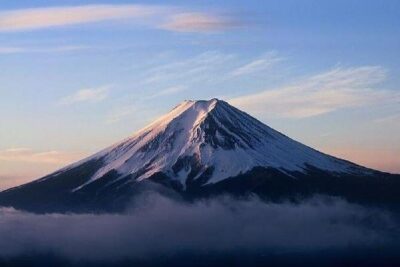 ★ 4.0Mt Fuji & Hakone Cruise, Drum Show Bullet Train 1 Day from TokyoFrom $1497,413 reviews
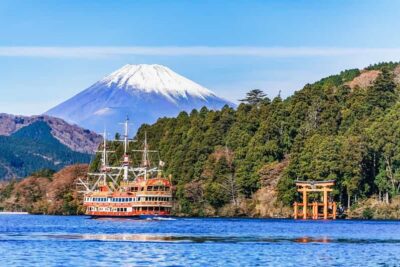 ★ 4.4Tokyo Mt Fuji 5th St & Hakone Cruise Bus Tour w/Bullet TrainFrom $1545,024 reviews
 ★ 4.5From Tokyo: Mount Fuji Full-Day Sightseeing TripFrom $684,970 reviews
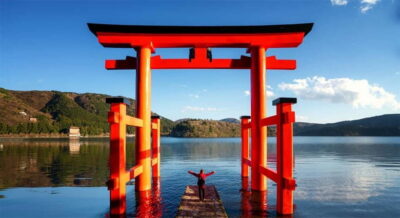 ★ 4.7Mt. Fuji Tour, Hakone Ropeway, Owakudani, Lake AshiFrom $544,002 reviews
 ★ 5.0Private Tour to Mt. Fuji and Hakone (Fully Licenced Operator)From $4971,910 reviews
 ★ 4.9Mount Fuji Full-Day Private Tour from Tokyo (Customizable)From $3931,470 reviews
 ★ 4.0Mt Fuji & Hakone Cruise, Drum Show Bus 1 Day from TokyoFrom $1221,287 reviews
 ★ 4.2From Tokyo: Mt. Fuji & Hakone Tour w/ Return by Bullet TrainFrom $1171,278 reviews
Browse the lists this tour appears in