
Reviewed · TOKYO
Mount Fuji (Mt. fuji) private tour by car with pickup from Tokyo
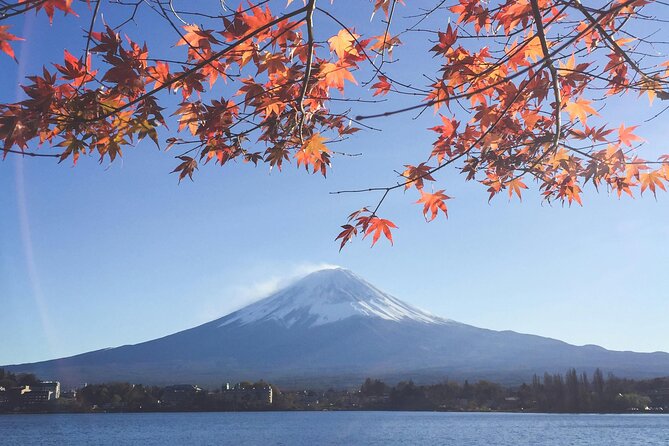
Fuji days go fast, and this one is yours. With a private Tokyo pickup and an English-speaking driver, you spend the day building your own Mount Fuji route, with classic photo stops and calmer side trips when the timing is right. I like that the itinerary is customizable, so you can lean nature, culture, or shopping without fighting for a seat on a bus.
Two other things I really like: you get a clean, air-conditioned car (not a sweaty endurance test), and the stops are well chosen for getting multiple chances at clear views. One drawback to keep in mind: Mt. Fuji visibility depends on weather, and some optional sites cost extra or may be skipped if clouds roll in.
Key Points I’d Book This For
- Private pickup in Tokyo so you start moving early and avoid transfer stress
- Custom stop planning means you can prioritize Fuji views (or swap in caves/onsen)
- Free highlights first like Chureito Pagoda, Oshino Hakkai, and Lake Kawaguchiko base time
- Fugaku Wind Cave details include a cool 3°C average and lava-cave sights without echo
- Your timing matters: plan to leave earlier to reduce traffic headaches later in the day
- Guides with a track record (names like Attary, Faisal, Ali, Umar show up in past days) and they adjust to preferences
In This Review
- Private Tokyo Pickup and an English Driver: How the Day Stays Flexible
- Chureito Pagoda and Arakura Sengen Shrine: The Classic Fuji Frame
- Oshino Hakkai: Clear Ponds, Snowmelt Physics, and a Very Fuji Mood
- Kitaguchi Hongu Fuji Sengen Jinja: Fuji Worship That’s Not Just a Pretty Sign
- Lake Kawaguchiko: Lunch Options and the Real-World Fuji Area
- Oishi Park and Saiko Iyashi no Sato Nemba: Two Ways to Slow Down
- Lava Caves at Aokigahara: Fugaku Wind Cave (Cool) and Narusawa Ice Cave (Cold)
- The 5th Station and Tenku no Torii: Big Atmosphere, Variable Visibility
- Onsen and Shopping Options: Where the Day Becomes Comfortable
- Timing Tip: How to Schedule Your Departures to Beat Traffic
- Cost and Value: Is $465 for Up to 3 Fair?
- Who This Tour Fits Best (and Who Might Want a Different Plan)
- Should You Book This Mount Fuji Private Car Tour?
- FAQ
- How long is the Mount Fuji private car tour from Tokyo?
- How many people can be in the group, and what is the price?
- Where does the pickup happen?
- What’s included in the tour price?
- Are tickets to the stops included?
- Is there a mobile ticket?
- What happens if the weather is bad?
Private Tokyo Pickup and an English Driver: How the Day Stays Flexible
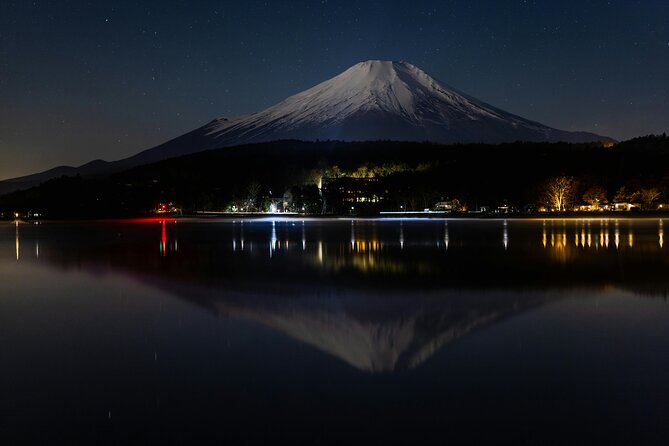
This tour works because it’s simple: you’re picked up from your Tokyo hotel or apartment, then you go. No waiting around for other groups, no deciding which train line you should bet on, no guessing if your photos will line up between bus arrivals. With a private car and an English-speaking driver, you can make small course corrections as you go.
What really makes it valuable is the flexibility in your 8 to 10 hours. You’re not locked into one fixed “see everything” route. Instead, you choose from a stack of options—some famous, some quieter, some very practical (like viewpoints plus a place to sit down for lunch). That matters because Fuji-area weather can change hour by hour. If you get a clear window, you’ll want to spend time where you can actually see the mountain.
I also like that the transport side is handled for you. Highway tolls are included, the car is described as modern and clean with air-conditioning, and fuel is covered. That’s one less pile of small logistics that can turn a nice day trip into a budgeting puzzle.
Before you commit, see how this one stacks up against a few Tokyo favourites:
- Mt Fuji and Hakone 1-Day Bus Tour Return by Bullet Train★ 5.0 · 26,383 reviews
- 1-Day Tokyo Bus Tour★ 5.0 · 14,250 reviews
- Tokyo: teamLab Planets TOKYO Digital Art Museum Entry Ticket★ 4.6 · 9,779 reviews
Chureito Pagoda and Arakura Sengen Shrine: The Classic Fuji Frame
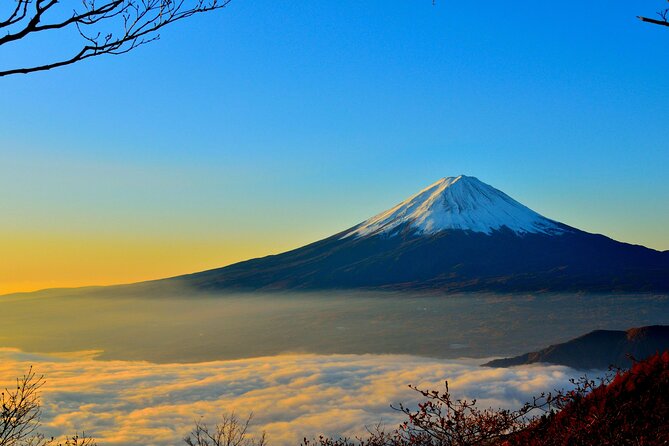
The day often starts with Chureito Pagoda, and for good reason. It’s a five-storied pagoda on the mountainside, overlooking Fujiyoshida City with Mount Fuji in the distance. This is the postcard shape most people recognize. You’re also at Arakura Sengen Shrine, and the pagoda was built as a peace memorial in 1963. The approach involves a steep climb—nearly 400 steps up from the shrine’s main buildings.
Plan for comfort here. If you’re not a fan of stairs, you’ll want to treat this stop as a quick viewpoint mission rather than a long hike day. You’ll get around an hour, and admission at this stop is listed as free, which helps keep the “optional” part of the day optional.
Why it’s a strong first stop: it’s a high-impact view that tends to work even if you don’t catch perfect weather everywhere else. If Fuji is visible early, you’ll feel like you won the day.
Oshino Hakkai: Clear Ponds, Snowmelt Physics, and a Very Fuji Mood
Next up is Oshino Hakkai, a set of eight ponds in a small village in the Fuji Five Lakes region. The big idea here is water—very clean, very clear water fed by snowmelt. The snowmelt filters down through porous lava layers for over 80 years before reaching the ponds.
This stop is about 30 minutes, and it’s listed as free. In the best weather, you can get a close view of Mount Fuji from here. That’s the payoff: the ponds act like a natural mirror when conditions cooperate.
Possible trade-off: Oshino Hakkai is a popular tourist area, so the vibe can be busier than some of the other options later in the route. Still, if you want a classic “Fuji reflected in still water” moment, this is one of the most straightforward places to chase it.
Kitaguchi Hongu Fuji Sengen Jinja: Fuji Worship That’s Not Just a Pretty Sign
Then comes a shrine stop: Kitaguchi Hongu Fuji Sengen Jinja (also called Fujiyoshida Sengen Shrine). This is the main Sengen Shrine on the north side of Mount Fuji. It’s dedicated to Konohanasakuya-hime, the Shinto goddess of Mount Fuji, and the shrine’s origins are said to go back to CE 100.
You’ll spend about an hour, and admission is listed as free. If you like traveling by meaning—not just by photos—this is a good pacing break. Mount Fuji is treated here as something sacred and alive, not just a mountain to climb.
Why it’s worth your time: it gives context to all those “Fuji views” you’re going after. Without it, the mountain can feel like a backdrop. With it, the mountain has a role.
Lake Kawaguchiko: Lunch Options and the Real-World Fuji Area
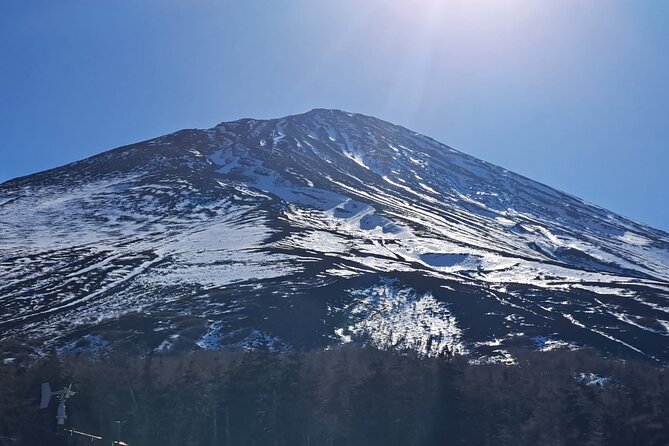
Lake Kawaguchiko is where the day starts to feel more like a proper getaway than a strict sightseeing checklist. You get about one hour here. Admission time is listed as free, and there are lots of restaurant options if you want to handle lunch on your schedule.
A detail I found useful: Lake Kawaguchiko sits at about 830 meters above sea level. That helps explain why summers can feel cooler and winters can feel icy in comparison to Tokyo. If you’re sensitive to temperature swings, plan layers.
You’ll also find extra activities around the lake, but they cost separately. The tour notes ship cruises and a ropeway cable car, priced at 1000¥ per person for the rides. If you’re trying to fit everything into one day, you can use this time as either:
- a scenic walk and lunch window, or
- a viewpoint + paid ride option if the weather is excellent.
Tip: If Fuji is clearly visible, don’t spend your entire Lake Kawaguchiko hour trying to decide. Do the viewpoint first. Then lunch. If visibility fades, at least you banked the view.





Oishi Park and Saiko Iyashi no Sato Nemba: Two Ways to Slow Down
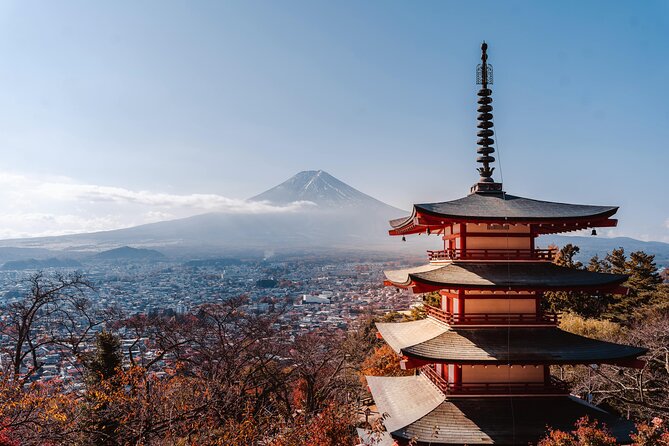
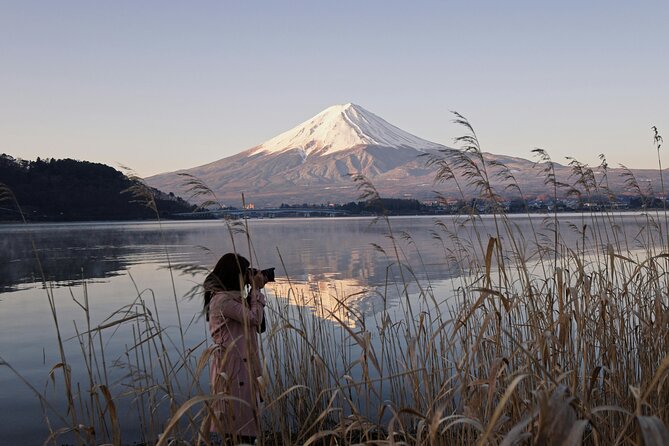
Oishi Park is an optional 30-minute stop. It’s on the north shore of Kawaguchiko and known for giving you a view of the lake and Mount Fuji at once. If your goal is “maximum Fuji with minimal fuss,” Oishi is usually an easy win.
Then you have Saiko Iyashi no Sato Nemba, also optional, around 30 minutes. This one feels different. It’s a preserved old-village style area with traditional houses and straw roofs (you’ll notice the focus on the look and craft side). The tour info also mentions meeting local artists, plus rental kimonos and samurai armor.
One caution: admission isn’t included for Saiko Iyashi no Sato Nemba, so this can affect how many optional stops you can comfortably add without stretching your budget. Still, it’s a nice contrast to the water-and-view rhythm of earlier stops.
Lava Caves at Aokigahara: Fugaku Wind Cave (Cool) and Narusawa Ice Cave (Cold)
If you add caves, you’ll get a very different Mount Fuji flavor. The two featured options here are Narusawa Ice Cave and Fugaku Wind Cave, and both are optional.
Fugaku Wind Cave is about 45 minutes and costs extra (admission not included). It’s in the Aokigahara Jukai forest area, and it’s described as pleasantly cool even in summer. The average temperature is around 3℃. It was used as a refrigerator in the past to store silkworm eggs. The cave is also designated as a natural monument.
One of the best practical details: the cave has a weird acoustic property—it doesn’t produce an audible echo because of its basaltic walls absorbing sound. During a sightseeing route (not super long), you can expect to see lava shelves, rope-like lava, and ice pillars that reportedly don’t melt even in summer.
Narusawa Ice Cave is also optional, about 45 minutes, and admission isn’t included. It’s a lava tube in the Aokigahara forest area, noted as one of the larger lava tubes at the northern foot of Mount Fuji (with two other lava caves mentioned as comparisons).
Which cave should you choose? If you want a cold, explained experience with a lot of “why it works this way” details, Fugaku Wind Cave is the one. If you simply want to tick off “lava cave + ice theme” and see another cave form, Narusawa fits the role.
The 5th Station and Tenku no Torii: Big Atmosphere, Variable Visibility
Two more optional stops show up for different reasons: the Mt. Fuji 5th Station Monument and Tenku no Torii.
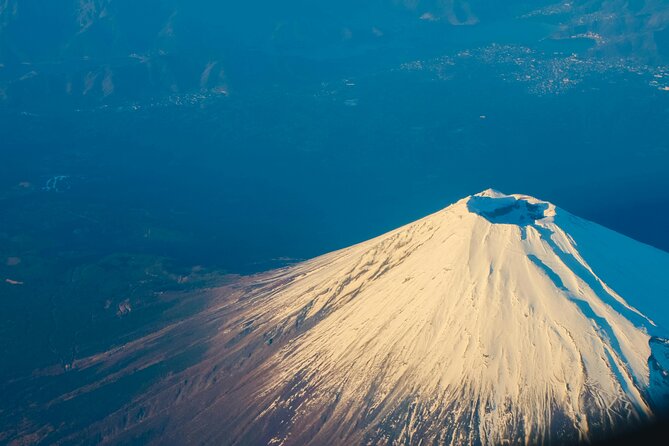
The Mt. Fuji 5th Station area is around 2,300 meters above sea level and is a popular starting point for climbers. It also offers shops, restaurants, and a Shinto shrine. In this tour, you’ll get about 30 minutes, and admission isn’t included.
Even if you’re not climbing, this is where the mountain starts to feel closer and more intense. Just keep expectations realistic. Depending on cloud cover and the day’s conditions, “breathtaking” can shift quickly to “where is it?” You can’t force weather.
Tenku no Torii (“Torii in the Sky”) is another optional photo stop, around 30 minutes. It’s a torii gate placed on a hillside and framed so you can see Mount Fuji unobstructed from that angle. It’s especially popular for sunrise and sunset, but the tour info doesn’t guarantee timing for those moments.
If you’re hoping to photograph the red gate framing Fuji, don’t treat it as guaranteed. Treat it as a high-reward option if the sky looks good.
Onsen and Shopping Options: Where the Day Becomes Comfortable
Not every add-on is about views. Some are about making the day more human.
You may see Fuji Chobo-no-yu Yurari Onsen listed as an optional stop (about 30 minutes, admission not included). This onsen is described as having multiple indoor and outdoor baths, including open-air rotenburo baths with panoramic Fuji views. It also mentions private baths and a sauna, plus a restaurant. If you’ve had a long day of driving and walking, this is the kind of stop that turns “tiring” into “worth it.”
Shopping is another common add-on. Gotemba Premium Outlets is optional for about 30 minutes, admission not included, and it’s described as one of Japan’s largest outlets near Mount Fuji with over 200 stores. If you want something concrete to do besides waiting for Fuji clouds to clear, shopping gives you a guaranteed activity block.
There’s also Fuji-Q Highland listed as optional, but the info states it is permanently closed. So if that was on your wish list, this is a “don’t rely on it” item. Ask the driver to swap in another view or culture stop if you’re interested in adding a theme-park style break.
Timing Tip: How to Schedule Your Departures to Beat Traffic
This tour is distance-sensitive. Tokyo-to-Fuji travel can eat time if you leave too late, especially during busy periods. One practical tip I’d take seriously: plan your start so you can leave early enough to beat traffic jams. A past day described leaving before 15:30 as a key move, and it also suggested that getting to the first spot from central Tokyo can take about 1 hour 40 minutes depending on conditions.
In plain terms: if you start after the morning rush, you may still have a great day, but you might lose options. With a private car, you won’t be stuck in crowds like mass transit riders. But you still face road delays.
If you’re aiming for multiple optional sites (caves + 5th station + onsen), be strict about prioritizing. You can’t “do everything” in one 10-hour window.
Cost and Value: Is $465 for Up to 3 Fair?
At $465 per group (up to 3), this is not a budget day trip. But it can be good value if you’re comparing it to the real cost of convenience: taxi time, train transfers, and the opportunity cost of losing half your day to logistics.
Here’s how I judge the price:
- If you’re traveling as a couple or trio, the per-person cost becomes more reasonable quickly.
- You’re paying for private transportation, highway tolls, an English-speaking driver, fuel, and the air-conditioned car.
- You also get a flexible plan. In a place where weather changes fast, flexibility isn’t a luxury. It’s how you protect your best viewing window.
Lunch isn’t included. That’s a normal expectation for Japan day trips, but it’s worth budgeting for. Also, several optional stops have admission not included. So your final “all-in” cost depends on what you add.
My bottom-line take: this works best when you want control. If you’re the type who hates watching a timetable and likes making the day match the weather, this price starts to make sense fast.
Who This Tour Fits Best (and Who Might Want a Different Plan)
This private car tour is perfect for:
- couples and small groups who want one car, one plan, no shuffling
- first-timers who want the key Fuji-area highlights without wrestling with transit
- people who care about comfort (air-conditioning and an English-speaking driver help a lot)
- visitors who want to mix viewpoints with culture (pagoda + shrine + cave options)
It’s less ideal if:
- you only want one or two viewpoints and you’re comfortable with public transport
- you’re trying to do every optional stop possible
- you need a very tight, guaranteed schedule (weather can change what’s visible and what makes sense to prioritize)
Should You Book This Mount Fuji Private Car Tour?
If you want the simplest way to get from Tokyo to Mount Fuji with high odds of seeing it clearly—plus the freedom to adjust when the sky cooperates—this is a strong pick. The big reason is the private structure: you get to choose from a menu of stops instead of treating the day like a race.
My advice: book with a plan, but keep a “weather plan” too. Start early if you can, prioritize the view stops when clouds break, and pick one or two optional extras (caves or onsen or shopping) rather than trying to stack everything.
If your heart is set on a specific optional site, tell the driver early. The tour’s whole point is that your day can bend around your interests.
FAQ
How long is the Mount Fuji private car tour from Tokyo?
The duration is listed as approximately 8 to 10 hours.
How many people can be in the group, and what is the price?
The price is $465 per group, for up to 3 people.
Where does the pickup happen?
Pickup is offered from your Tokyo hotel or apartment.
What’s included in the tour price?
Included items are an air-conditioned vehicle, private transportation, highway tolls, an English-speaking driver, modern and clean vehicles, and petrol/gas.
Are tickets to the stops included?
Some stops are listed as free, and others are optional with admission not included. Lunch is not included.
Is there a mobile ticket?
Yes, the tour notes that a mobile ticket is provided.
What happens if the weather is bad?
The experience requires good weather. If it’s canceled due to poor weather, you’ll be offered a different date or a full refund.
More Tour Reviews in Tokyo



Fresh reviews from around Tokyo






Tokyo, compared.
 ★ 5.0Mt Fuji and Hakone 1-Day Bus Tour Return by Bullet TrainFrom $16326,383 reviews
 ★ 5.01-Day Tokyo Bus TourFrom $12914,250 reviews
 ★ 4.6teamLab Planets TOKYO Digital Art Museum Entry TicketFrom $259,779 reviews
 ★ 4.0Mt Fuji & Hakone Cruise, Drum Show Bullet Train 1 Day from TokyoFrom $1497,413 reviews
 ★ 5.0Shinjuku Food Tour (13 Dishes at 4 Local Eateries)From $866,603 reviews
 ★ 4.4Tokyo Mt Fuji 5th St & Hakone Cruise Bus Tour w/Bullet TrainFrom $1545,024 reviews
 ★ 5.0Flagship 2-Hours Official Street Go-Kart Tour – Tokyo Bay ShopFrom $644,974 reviews
 ★ 4.5From Tokyo: Mount Fuji Full-Day Sightseeing TripFrom $684,970 reviews