
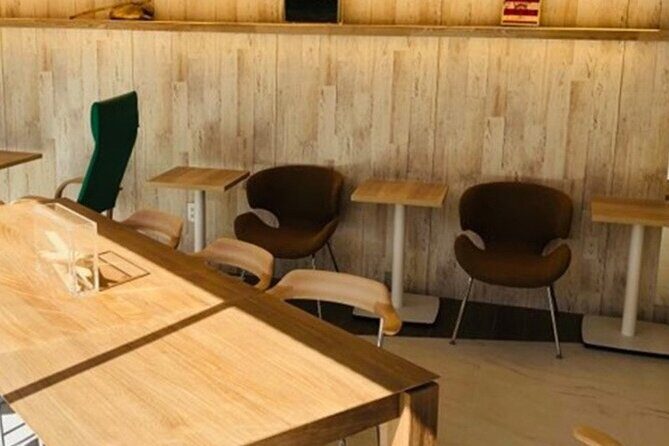
Reviewed · TEA CEREMONY EXPERIENCES
Matcha table tea ceremony experience in Tokyo
Tea ceremony, but practical.
This matcha table tea ceremony in Meguro-ku is a smart way to experience Japanese tea culture without the usual floor-sitting hassle. I love the hands-on matcha whisk instruction and the relaxed, small-group atmosphere that makes it easy to ask questions. You get served matcha with seasonal wagashi first, then you learn how to make and serve your own.
One consideration: at about $65.04 per person for a roughly 2-hour session, it’s a focused cultural lesson, not a full-day sightseeing block. If you want lots of wandering time, pair it with a nearby neighborhood walk afterward.
In This Review
- Key things to know before you go
- A Tokyo table ceremony, minus the floor-sitting
- Meet Masumi Matsumoto in Meguro-ku
- First half: matcha tasting and seasonal wagashi
- Second half: learning the whisk and making your own tea
- What you’ll actually take home (beyond matcha)
- Price and timing: is $65.04 good value?
- Where to fit it in your Tokyo day
- Should you book this matcha table tea ceremony in Tokyo?
- FAQ
- How long is the matcha table tea ceremony experience?
- What is the seating style for this tea ceremony?
- Who teaches the ceremony?
- What happens during the session?
- Where does the experience take place?
- Is there free cancellation?
Key things to know before you go
- Master instructor, Japan Table Tea Ceremony Association: You’ll learn from Masumi Matsumoto, a true credentialed teacher.
- Small group size (up to 5): More time for questions and personal feedback.
- Chair-based table format: Table Tea Ceremony style means you sit comfortably at a chair, not on the floor.
- You do the whisking: It’s not just watching—your second half includes making and serving tea.
- Seasonal wagashi with matcha: Sweets change with the seasons, and you’ll start by tasting what the instructor prepares.
Quieter hours: more tea rooms and ceremonies
- Tokyo: Traditional Tea Ceremony with a Tea Master★ 5.0 · 528 reviews
- Tea Ceremony Workshop in Tokyo by the Experienced Instrucor★ 5.0 · 189 reviews
- Tea Ceremony Experience in a Private Tea Room in Shibuya★ 4.9 · 125 reviews
A Tokyo table ceremony, minus the floor-sitting
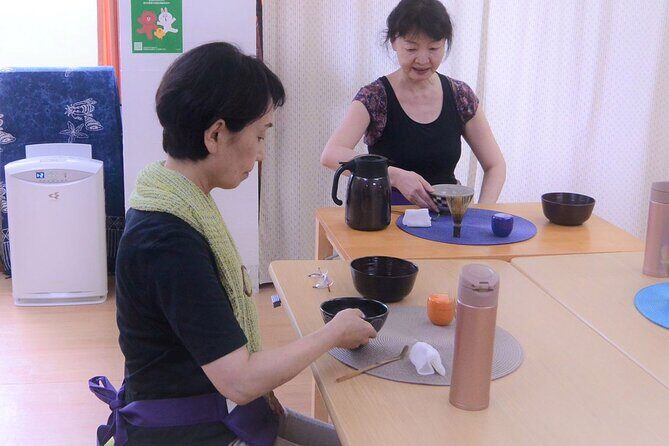
Matcha tea ceremonies in Japan can look intimidating from the outside—lots of precise movements, formal manners, and that floor-sitting image. This Table Tea Ceremony format solves a big problem for many people: you sit at a table, on a chair. That matters more than you might think. You can focus on the process and etiquette instead of fighting your knees or legs.
You also get the “real” feeling of a tea room experience: calm pacing, attention to aroma and preparation, and a structured flow. The session is designed so beginners don’t feel lost. The instructor’s job is to explain clearly, then guide you as you try your own tea-making.
The vibe can be casual in a good way. You’re learning hospitality and respect, not performing for a crowd. The small group size helps here; you feel like you’re part of a lesson, not trapped in a show.
Meet Masumi Matsumoto in Meguro-ku
This ceremony takes place in Meguro-ku, Tokyo, and the location is easy to reach: it’s about a 2-minute walk from Toritsudaigaku Station. Your meeting point is 1-chōme-9-1 Nakane, Meguro City, Tokyo 152-0031, Japan, and the activity ends back at the same place.
Why I like this neighborhood setup: Meguro is the kind of area where it’s pleasant to tack on a pre- or post-lesson stroll. The tour info points to nearby highlights like the Meguro River, a sweets theme park in Jiyugaoka, and Nakameguro Park. So you can do the ceremony, then go enjoy the area without overcomplicating your schedule.
The instructor, Masumi Matsumoto, is listed as a Master Instructor of the Japan Table Tea Ceremony Association. That’s not just a title on paper. It usually means the lesson is built around correct forms, clear teaching, and a focus on meaning—not only technique.
Also, with a maximum group size of 5 travelers, you’re unlikely to get rushed. You’ll likely have time to ask basic questions and fix common mistakes as you whisk and serve.
First half: matcha tasting and seasonal wagashi
The ceremony starts with the instructor explaining how to enjoy tea. Expect a practical introduction first, then you’ll taste what’s been prepared. This is where the experience starts feeling more than educational.
You’ll enjoy matcha green tea along with seasonal Japanese sweets (wagashi) prepared by the instructor. The sweets change with the seasons, so don’t expect the same menu every time. That’s part of the cultural idea: tea and sweets respond to the time of year, not just to personal taste.
This first half is valuable even if you already know what matcha is. You’ll learn what to pay attention to: the aroma, the feel of the tea, and how etiquette shapes the tasting moment. In many tea experiences, the tasting phase helps you understand what the rest of the lesson is trying to teach.
A practical tip: treat the wagashi and matcha like a paired experience. Take a breath before you start sipping. Go slow enough to notice how the sweetness and the tea interact. When you rush, you miss the point.
If you’re traveling with kids or you’re worried about whether everyone will stay interested, this starting phase is a good sign. The session is structured, and the tasting part gives an immediate payoff before anyone has to concentrate on technique.
Second half: learning the whisk and making your own tea
After the tasting, the ceremony shifts into hands-on mode. This is the part you’ll remember most, because you’re not just observing.
You’ll make and serve your tea using a special matcha tea whisk. The core lesson is learning how to use the whisk correctly and confidently. Even if your first try isn’t perfect, you’ll get guidance as you go. That’s the sweet spot of a good lesson: you’re practicing, and the instructor is watching closely enough to steer you.
Serving is part of the lesson too. In tea culture, how you present the tea signals respect. So you’re learning a small set of movements and manners that connect the room’s calm feeling to real behavior. You’ll come out with something usable, not just a story you heard.
Here’s a real-world reason I think this format works: once you whisk and serve yourself, matcha stops being a background ingredient and becomes an activity. That changes your relationship with it. You’ll likely start making matcha at home more than once, because you understand what you’re trying to achieve with the tools and technique.
If you’re the type who learns best by doing, this ceremony nails it. You get a clear structure—tasting first, then practice—so your brain isn’t scrambling between theory and action.
One more consideration: since it’s a short session (about 2 hours), you won’t be there long enough to perfect everything. That’s okay. The goal isn’t mastery in one go. It’s learning the right fundamentals and leaving with confidence.





What you’ll actually take home (beyond matcha)
The best part of a tea ceremony lesson is that it teaches habits, not just steps. This one focuses on etiquette, manners, and the spirit behind serving tea—especially in a way that beginners can grasp.
You’ll likely hear about the history and mindset of matcha tea and the tea ceremony’s focus on hospitality and respect. Even if you only catch parts of it, you’ll feel the structure of the moment: calm pacing, attention to the tea room, and a mindful approach to tasting and serving.
From the way the instructor teaches, the lesson is designed to be comfortable for people who are nervous at first. The instruction is clear, and the overall atmosphere helps you relax into the experience instead of worrying about doing it wrong. People in English-speaking groups tend to feel supported because the teaching is delivered in an easy-to-follow way.
So what should you do after the ceremony? Try the basics you learned:
- Recreate the whisking step carefully
- Slow down your tasting at home
- Serve with intention, even if it’s just for yourself
You can keep it simple. The point is to carry over the mindset: tea as a pause, not a task.
Also, remember that wagashi is part of what you’re learning. If you want to recreate the feeling, look for seasonal wagashi styles when you can, and treat the pairing as part of the ritual.
Price and timing: is $65.04 good value?
This experience costs $65.04 per person and runs for about 2 hours. It’s booked on average 98 days in advance, which tells you it’s popular enough that you should plan ahead if your dates are fixed.
Is it worth it? For me, the value is in the mix:
- A master instructor teaching the Table Tea Ceremony style
- Small group size (up to 5) for real interaction
- Hands-on whisking and serving, not just a demonstration
- Tea and wagashi included, with sweets that shift by season
If you compare this to other cultural workshops in Tokyo, the price lands in the “serious lesson” category, not the “quick photo stop” category. That fits the format here. You’re paying for a short, high-quality coaching session.
Timing matters too. Since it’s roughly 2 hours, it fits neatly into a day that already includes neighborhood exploration. The ceremony returns you back to the meeting point, so it’s easy to plan dinner or a walk after.
If you’re traveling as a couple or with family, the chair-based format is especially practical. No one should have to choose between cultural experiences and comfort.
Where to fit it in your Tokyo day
Because the meeting point is near Toritsudaigaku Station, you can slot this into a simple plan:
- Morning or afternoon: do the ceremony
- Then: wander Meguro-area sights like the Meguro River, Jiyugaoka, or Nakameguro Park
Even if you’re only able to do one neighborhood activity after, the ceremony still pays off. You’ll come out calmer and more focused, which pairs well with Tokyo walking.
One logistical note: you’ll start at the address in Meguro City and end back at the same spot. Plan for a short, clean transition—no complicated transfers right at the end if you can help it.
If you’re traveling with kids, or anyone who doesn’t want the stress of floor seating, this table-chair format helps a lot. It’s also a good “structured cultural day” choice when you want the lesson to steer the schedule.
Should you book this matcha table tea ceremony in Tokyo?
Book it if you want:
- A master-taught matcha experience with clear guidance
- A hands-on lesson (whisking and serving), not a passive show
- A chair-based format that makes tea ceremony culture more accessible
Skip it (or rethink) if:
- You’re looking for a long, independent activity with lots of free time
- You’d rather watch from the sidelines than practice
If you’re on the fence, here’s the simplest decision rule: if you enjoy learning skills you can repeat at home, this is the kind of Tokyo experience that sticks. The lesson ends with something practical—how to whisk and serve—plus the manners and pacing that make matcha feel like more than a drink.
FAQ
How long is the matcha table tea ceremony experience?
It lasts about 2 hours.
What is the seating style for this tea ceremony?
It’s a Table Tea Ceremony, so you sit on a chair at a table instead of sitting on the floor.
Who teaches the ceremony?
The provider lists Masumi Matsumoto as a Master Instructor of the Japan Table Tea Ceremony Association.
What happens during the session?
You’ll enjoy matcha and seasonal Japanese sweets in the first half, then you’ll make and serve tea yourself in the second half using a tea whisk.
Where does the experience take place?
It’s in Meguro-ku, Tokyo, and the meeting point is 1-chōme-9-1 Nakane, Meguro City, Tokyo 152-0031, Japan. It’s about a 2-minute walk from Toritsudaigaku Station.
Is there free cancellation?
Yes. You can cancel for a full refund up to 24 hours in advance of the experience start time.
More Tour Reviews in Tokyo



More Tea Rooms Worth Booking



Fresh reviews from around Tokyo






Tea Ceremony Experiences, compared.
 ★ 5.0Traditional Tea Ceremony with a Tea MasterFrom $38528 reviews
 ★ 5.0Tea Ceremony Workshop in Tokyo by the Experienced InstrucorFrom $38189 reviews
 ★ 4.9Tea Ceremony Experience in a Private Tea Room in ShibuyaFrom $30125 reviews
 ★ 5.0Matcha Kimono Tea Ceremony in TokyoFrom $59104 reviews
 ★ 4.9Tea ceremony experience in Japanese-style room 60minFrom $4586 reviews
 ★ 5.0Casual Japanese Tea Ceremony ExperienceFrom $2574 reviews
 ★ 5.0Shibuya Authentic Tea Ceremony with experienced instructorFrom $2554 reviews
 ★ 4.9Tea Ceremony Experience in a small tea roomFrom $5153 reviews
Browse the lists this tour appears in