
Reviewed · CYCLING TOURS
Little Adventure with Cycling in Tokyo No. 1 Crystal Clear River
Tokyo’s river side is a reset button. This day trip turns up the dial on Tokyo by sending you into the Akigawa Valley with electric bicycles, then topping it off with a waterfall walk and hot-spring footbath. I love how the ride covers real ground without feeling like a workout contest, and I love the mix of temples, river time, and good food that doesn’t feel staged.
One thing to plan for: this experience is weather dependent, so if conditions aren’t great the route may adjust, and you’ll want to be ready for the wet side of river trekking.
In This Review
- Tokyo to Akigawa Valley: a quick train start that feels like a reset
- What you’ll do on the electric bikes (and why it’s so worth it)
- Kotokuji Temple: the thatched gate and the giant ginkgo pause
- Kurochaya: your first valley hour of bridges, gardens, and cafes
- Akigawa Valley lunch by the river and the 2-hour trek
- Lunch: chairs by the water and a special lunchbox
- River trekking: 13:00–14:00
- 秋川溪谷瀨音之湯: suspension bridge, hot-spring footbath, and souvenirs
- Food and pace: what a 6-hour day in this area really feels like
- Price and value: why $143.34 can feel fair here
- Weather and gear: the day can shift, and that’s normal
- Who should book Little Adventure with Cycling in Tokyo No. 1: Crystal Clear River?
- Should you book this tour?
- FAQ
- How much does the tour cost?
- What’s the duration?
- What time does the tour start?
- Where is the meeting point?
- What’s the group size limit?
- Is this tour suitable for most people?
- What kind of ticket do I get?
- What’s included for lunch?
- Does the tour require good weather?
- Can I cancel for a full refund?
- Are admission tickets required for the stops?
Tokyo to Akigawa Valley: a quick train start that feels like a reset
I like trips that make you feel like you changed towns, not just attractions. This one does that fast. You start from central Tokyo and go about an hour by train, then connect to the cycling base at 東京裏山ベース (Tokyo Urayama Base) in Akiruno. Once you’re there, the day has the relaxed logic of the countryside: ride, pause at meaningful places, eat like locals do, then spend the afternoon moving with the river.
The group size is small (up to 6 travelers), which matters more than you might think. Smaller groups tend to stay calmer on bridges, at temple entrances, and during the river walk—so you don’t spend the day waiting for people to catch up.
Before you commit, see how this one stacks up against a few Tokyo Prefecture favourites:
- Vegan/Vegetarian Ramen and Gyoza by Bentoya cooking★ 5.0 · 59 reviews
- Tokyo: Samurai Sword Academy in the Hometown of the Last Samurai★ 5.0 · 24 reviews
- (Private car)Fake It Then Taste It:Japan’s Quirky Cuisine Journey★ 5.0 · 8 reviews
What you’ll do on the electric bikes (and why it’s so worth it)
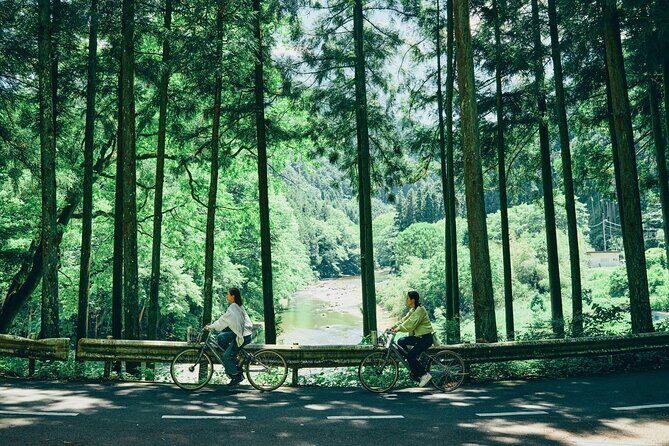
The heart of the day is an electric bike ride that’s designed for comfort and control. You won’t be thrown into a fitness test. The tour has a guide with you for at least the first part, and the bike time is split into two main chunks—so you get movement without burning out early.
In practice, the bikes do two big things for you:
- They let you see more valley scenery than a walking-only day trip would.
- They make the day friendly even if your cycling skills are rusty.
A nice touch from what I’ve learned from past participants: the guide support is easy and clear. One guide you may meet is Kenji, and the vibe described is warm and accommodating—exactly what you want when you’re figuring out how to ride smoothly on a countryside route.
Kotokuji Temple: the thatched gate and the giant ginkgo pause
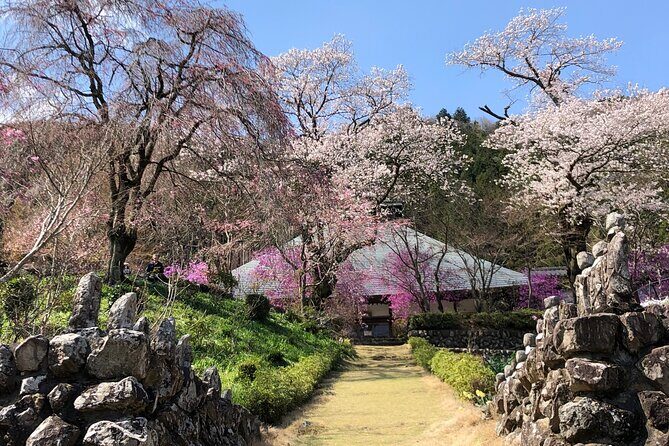
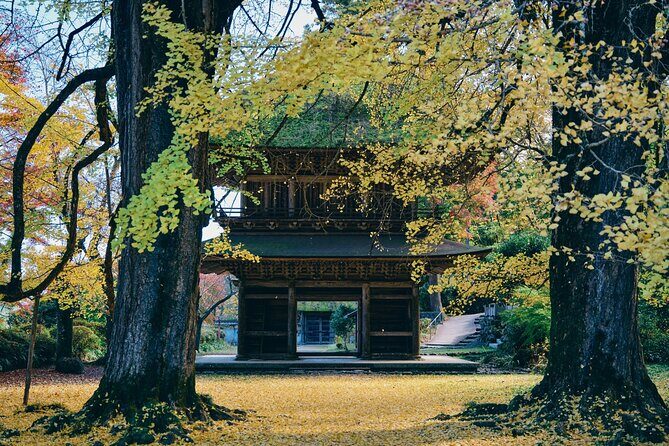
Stop one is Kotokuji Temple, with about 30 minutes on the agenda. This is a simple start, and that’s the point. You’re not rushed. You can pass through the splendid thatched gate, then slow down around the highlights the guide points out—especially the giant ginkgo tree and the temple’s story.
What I like about this stop is the tone. It’s not a checklist temple stop. It’s an early reminder that this area isn’t just scenery—it’s part of how Tokyo’s past connects to the countryside. The tour frames the broader region’s historical link to Edo through things like charcoal burning and forestry, so the temple explanations help you understand why people valued these hills and river valleys long before modern tourism.
Consideration: Kotokuji is brief. If you’re the type who loves long temple wandering and quiet photo time, you may wish you had 45 to 60 minutes instead of 30.
Kurochaya: your first valley hour of bridges, gardens, and cafes
Next comes Kurochaya. This is where the tour feels like it’s finding its rhythm. Before you ride further, there’s a prep moment, then you head out on electric bicycles with your guide for the first half of the outing.
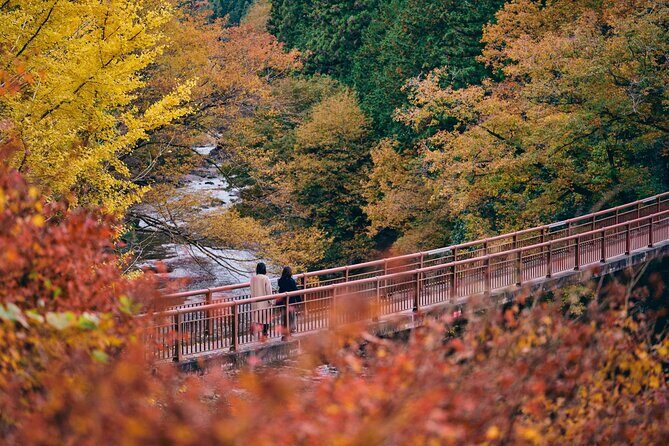
You’ll stop along the way at scenic bridges, old temples, and Japanese gardens, plus you may have time around cafes with terrace views over the valley. Even if you don’t linger in every spot, these are the kinds of pauses that give shape to the ride. You’re not just traveling through the valley—you’re getting little chapters of it.
The practical value: these stops break up the bike time, so you don’t spend the whole ride thinking only about speed or balance. Your brain gets a “reset” at each location.
Akigawa Valley lunch by the river and the 2-hour trek
By late morning you move into Akigawa Valley, where the day shifts gears from cycling to eating and walking.
Lunch: chairs by the water and a special lunchbox
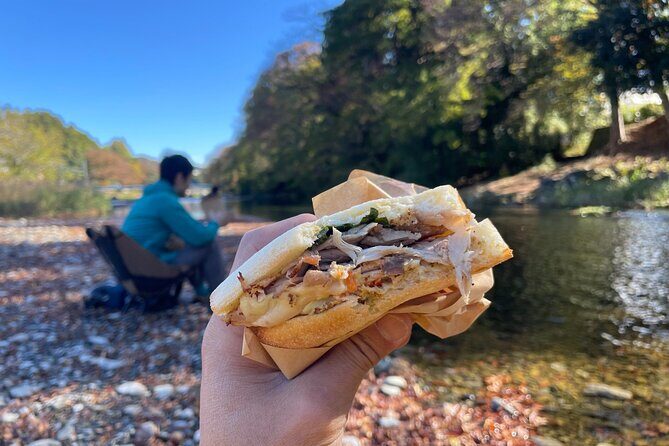
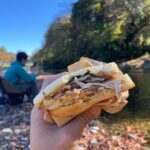
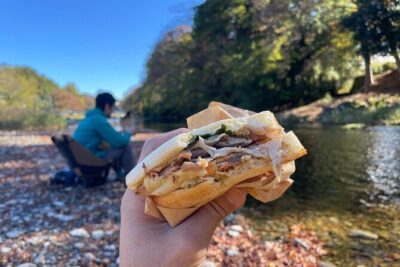
Lunch is 12:00–13:00 and it’s not a food court situation. You place outdoor chairs at a special riverside spot, then enjoy a special Cuba sandwich lunchbox. This is the kind of lunch that feels like the countryside’s version of a picnic—basic, comfortable, and perfectly timed for refueling.
I like that it’s scheduled right before the trekking. You’re not eating after you’re tired; you’re eating before you go earn your next views.
River trekking: 13:00–14:00
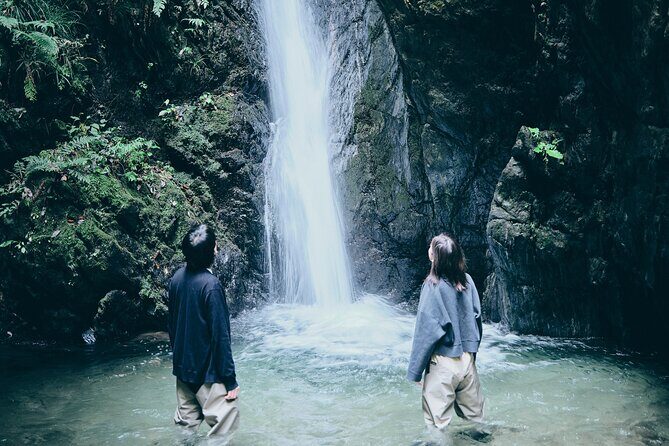
Then it’s 2 hours for the river trek. The highlight is a walk through the river using waterproof gear, leading you toward a hidden waterfall. This is the moment that makes the whole tour feel different from a standard sightseeing day.
What to expect emotionally: the walk makes you slow down naturally. You can’t rush the river. Your attention goes to footing, sound, and the feel of moving with the water rather than around it.
Consideration: if you’re expecting a dry, city-style “stroll,” this part won’t match that. This is fun water time, not a museum walk.
秋川溪谷瀨音之湯: suspension bridge, hot-spring footbath, and souvenirs
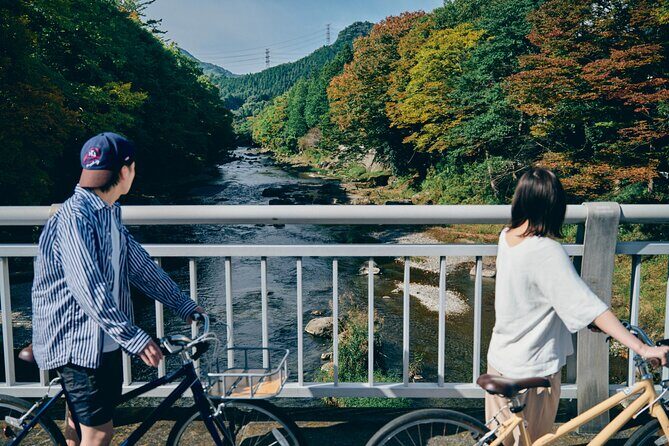
After trekking, you return to cycling for the second half: 14:00–14:40 on electric bicycles. The day keeps moving, but the energy changes again—more “transition” than “push.”
Then comes the hot-spring stop at 秋川溪谷瀨音之湯. You cross a suspension bridge and visit the hot spring for a relaxing footbath, with time for souvenir shopping. The footbath is a smart payoff after the wet trek. It turns the end of the day into a recovery moment, not a scramble.
This stop is also where you get a final look at the valley’s river-meets-hills vibe from a new angle—especially during the suspension bridge crossing, when you’re suspended between banks and the water keeps doing its thing below.
Food and pace: what a 6-hour day in this area really feels like
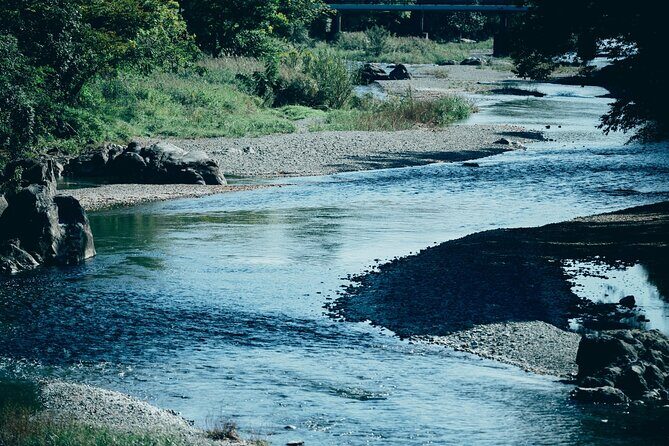
The whole tour is about 6 hours from start to finish and includes a full sequence: temple, bike riding, valley lunch, river trekking, more cycling, then the hot-spring footbath. That structure is why it works.
Here’s the pace logic you’ll feel:
- Morning starts with history and easy riding
- Midday becomes grounded in food and the river
- Afternoon ends with a relax-and-recover flow
Also, the tour’s design helps with energy management. You’re not cycling nonstop. You cycle in two halves, with breaks that give your body time to recover and your eyes time to reset.
In terms of guidance, it’s clear the tour tries to keep communication simple and supportive. Past participants called out how easy it is to talk with the guide—again, Kenji is named by some. That matters because in countryside routes, little timing adjustments can happen.
Price and value: why $143.34 can feel fair here
The price is $143.34 per person for a 6-hour small-group day. On paper, that’s not “budget Japan.” But the value here isn’t only the scenery.
You’re paying for:
- Electric bikes and guided riding time
- A multi-stop itinerary that mixes temples, river trekking, and a hot-spring footbath
- A guided river walk experience with waterproof gear and a waterfall goal
- A planned riverside lunch setup with a specific lunchbox
For a day trip, this is one of those situations where the cost is really buying structure and access. Instead of figuring out routes, transport connections, and finding the right place for a safe water walk, the tour gives you a ready-made plan in a part of Tokyo most people don’t see.
One caution: if you’re traveling on a tight schedule and already have limited time, you’ll want to make sure you’re excited about at least two of the three big elements: electric biking, river trekking, and hot-spring recovery.
Weather and gear: the day can shift, and that’s normal
This experience requires good weather. That matters because part of the fun is the waterproof river walk. If it’s canceled due to poor weather, you’ll be offered a different date or a full refund.
Even when weather isn’t ideal, the tour may adjust the itinerary. One past experience mentioned the plan being adjusted due to rain and still delivering a distinct autumn mountain-village atmosphere. That’s believable: in countryside areas, the guide’s job is adapting safely while keeping the spirit of the day.
What you should do practically:
- Plan for the chance you’ll get damp during the river trekking section.
- Bring something you don’t mind drying or wearing again later.
- If you’re sensitive to cold, pack a bit of extra warmth for the end of the day footbath period.
Who should book Little Adventure with Cycling in Tokyo No. 1: Crystal Clear River?
This is a great fit if you want:
- A Tokyo countryside day trip that doesn’t feel like a rush-through tour
- Electric biking that helps you go farther without turning the day into a cycling grind
- Real activities: temple pause, river trekking to a waterfall, then a hot-spring footbath
It’s less ideal if you need a fully dry, fully calm itinerary, or if you want hours and hours of independent wandering. This tour is guided and structured on purpose, so you’ll be moving with the schedule.
It’s also worth booking with the mindset that it’s small-group. With a maximum of 6, you’ll likely get a more personal flow, and the guide can spend more time making sure everyone’s okay on the ride and during the river walk.
Should you book this tour?
If your idea of a great Tokyo day includes more nature than crowds, plus at least one hands-on moment (the waterproof waterfall trek), then I’d say yes. The combination of electric bikes, a meaningful temple start at Kotokuji, riverside lunch in Akigawa Valley, and the relaxing footbath ending creates a day that feels like it changed your pace.
Skip it only if you dislike getting wet at all, or if you’re traveling during a time when you expect many weather disruptions and don’t want any chance of schedule changes.
If you want my simple booking rule: book it if you’re excited for countryside time with a guide, not if you just want a quick photo tour in and out.
FAQ
How much does the tour cost?
It costs $143.34 per person.
What’s the duration?
The tour runs about 6 hours.
What time does the tour start?
The start time is 10:00 am.
Where is the meeting point?
The meeting point is 東京裏山ベース219-7 Tateya, Akiruno, Tokyo 190-0163, Japan.
What’s the group size limit?
The tour has a maximum of 6 travelers.
Is this tour suitable for most people?
Most travelers can participate.
What kind of ticket do I get?
You get a mobile ticket.
What’s included for lunch?
Lunch is served from outdoor chairs placed at a special riverside, with a special Cuba sandwich lunchbox.
Does the tour require good weather?
Yes. The experience requires good weather. If it’s canceled due to poor weather, you’ll be offered a different date or a full refund.
Can I cancel for a full refund?
Yes. You can cancel up to 24 hours in advance for a full refund.
Are admission tickets required for the stops?
Admission tickets are listed as free for the stops included in the itinerary.
More Tour Reviews in Tokyo Prefecture
Fresh reviews from around Tokyo Prefecture
Cycling Tours, compared.
 ★ 5.0Tokyo Guided Small-Group Biking TourFrom $1061,250 reviews
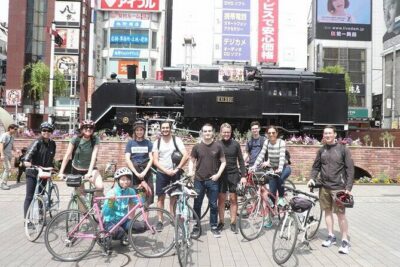 ★ 5.0Tokyo Great Cycling TourFrom $99811 reviews
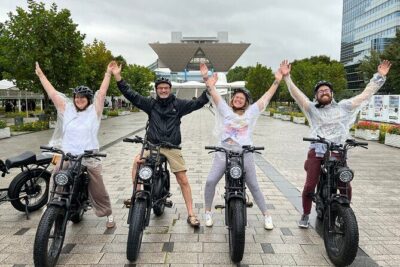 ★ 5.0Tokyo Top Highlights 3h Guided E-bike TourFrom $63714 reviews
3-Hour Bike or E-Bike City Highlights TourFrom $45435 reviews
★ 5.0Tokyo Top Highlights 3h Guided E-bike TourFrom $63714 reviews
3-Hour Bike or E-Bike City Highlights TourFrom $45435 reviews
 ★ 5.0Tokyo West-Side Cycling & Food TourFrom $99214 reviews
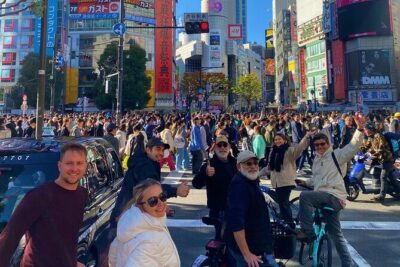 ★ 5.03-Hour Bike/E-Bike Tour of the City’s HighlightsFrom $63209 reviews
 ★ 5.0Small Group Cycling Tour in TokyoFrom $66184 reviews
 ★ 5.03-Hour Tokyo Private E-Bike Tour Starting from Your HotelFrom $145117 reviews
Browse the lists this tour appears in