
Reviewed · GUIDED
Kawagoe 6hr Private Tour with Licensed Guide (Tokyo/Kawagoe dep)
Little Edo moves fast. And it doesn’t have to.
This private Kawagoe tour is built for people who want Edo-period sights without the stress of figuring out trains and translations on the fly. I like that you choose 3-4 must-see stops, so the day fits your pace and interests. I also like the meet-up style: your guide coordinates a hassle-free start from a Tokyo/Kawagoe location you pick, then guides you through town. One drawback to plan for: it’s a walking tour, and many museum/temple admissions and onsen fees are not included in the price.
Kawagoe is about half-day discovery—old streets, shrines, temples, castle remnants, and that classic warehouse-town vibe. It’s the kind of place where small details matter, like how a time bell tower set the rhythm of daily life before everyone had a phone clock. If you’re deciding between DIY and guided, this tour’s real value is simple: you get an English-speaking guide handling navigation and interpretation, while you focus on enjoying the sights.
In This Review
- Key points before you go
- Why Kawagoe Feels Like Little Edo in Just Six Hours
- Price and What You Actually Get for $153.11
- Private-Group Freedom: How You Pick 3–4 Stops
- Walking the Core Stops: Toki no Kane to Koedo Yokocho
- Castle Remains and Sacred Stops: Hikawa Shrine and Kitain
- Museums, Palaces, and Festival Culture: Kurazukuri Museum, City Museum, Honmaru Palace, Matsuri Kaikan
- Taking a Break at Kawagoe Onsen (Wood and Stone Baths)
- Tips for Your Best Day: Timing, Crowd Pressure, and What to Bring
- Should You Book This Kawagoe Private Tour?
- FAQ
- What is the duration of the Kawagoe private tour?
- Can I choose which sites to visit?
- Is pickup included, and where do we meet the guide?
- Is this tour walk-heavy?
- Are entrance fees included in the tour price?
- Is private transportation included?
- Can I combine this tour with another group?
Key points before you go
- Licensed English guide, private group only: you don’t get lost in a big crowd schedule.
- Customize 3-4 stops from a solid list, including temples, shrine time, and local food districts.
- Meet-up is flexible and low friction: you link up with your guide within a chosen Tokyo/Kawagoe area and start by walking.
- A mix of free and paid sights: several stops have free admission, while others may require your own tickets.
- Onsens are part of the plan options: Kawagoe Onsen offers both wood and stone bath styles.
- Good for avoiding transport headaches: you skip confusing train schedules and language barriers when moving between sites.
More days made easy by a guide
- Tokyo 6hr Private Tour with Government-Licensed Guide★ 5.0 · 3,902 reviews
- Tokyo: Shinjuku Local Bar and Izakaya Guided Walking Tour★ 4.9 · 1,794 reviews
- Tokyo: Private City Highlights Tour with Local Guide★ 4.8 · 1,433 reviews
Why Kawagoe Feels Like Little Edo in Just Six Hours
Kawagoe is close enough to Tokyo for a calm half-day escape, yet it feels like a different chapter of Japan. When you only have a few hours, that matters. You want the highlights, but you also want the “how it worked” feeling—old town rhythms, incense-and-stone atmosphere, and the warehouse town look you recognize from Edo-era stories.
What makes this tour work is the pacing logic. Your guide helps you choose a small set of stops, so you’re not constantly moving from place to place just to check boxes. Instead, you can linger where the details pay off—like the bell tower that once told time to people who didn’t have personal clocks.
It also helps that the experience is designed for real-world navigation. The tour is near public transportation, but it doesn’t rely on you figuring everything out alone. That’s a big deal in Japan if your Japanese is limited and you’re trying to keep the day smooth.
Price and What You Actually Get for $153.11
At about $153.11 per person for roughly 6 hours, you’re paying for three main things: a licensed local English-speaking guide, a private format, and planning support to select 3-4 sites from the list. That’s what you’re really buying—time, guidance, and less friction.
Here’s what’s not bundled: transportation fees, entrance fees, lunch, and other personal expenses. Also, this does not include a private vehicle. In practice, that means you’ll likely use public transport between Tokyo and Kawagoe (or between Kawagoe spots if you choose farther stops), and you’ll cover entry costs for sights where tickets apply.
So is it “worth it”? For most people, it is if at least one of these is true:
- You want a calmer schedule than DIY.
- You’re interested in multiple types of stops (shrines + temples + food streets + possible onsen).
- You’d rather pay for direction than spend your limited time solving transit and ticket questions.
If you’re traveling with a group that benefits from private attention and you’ll actually use the customized stop selection, the value adds up fast.
Private-Group Freedom: How You Pick 3–4 Stops
This tour is flexible by design. You choose 3-4 sites from the included options, and your guide builds the route so the day makes sense. That’s especially helpful in Kawagoe because the “Edo feeling” is spread across a few different zones: the time-bell area, warehouse streets, sacred sites, and the onsen/festival-related spots.
You also get a guided interpretation layer. Instead of wandering a shrine or museum wondering what you’re looking at, the guide helps you understand why a place matters—like the love-success stone concept connected with Hikawa Shrine, or what “castle town” life looked like through what remains today.
One practical consideration: some admission costs are not included. So if you’re the type who wants to avoid spending once you arrive, double-check which stops you plan to include. The good news is that several major stops are listed with free admission, so you can balance the paid ones.
Walking the Core Stops: Toki no Kane to Koedo Yokocho
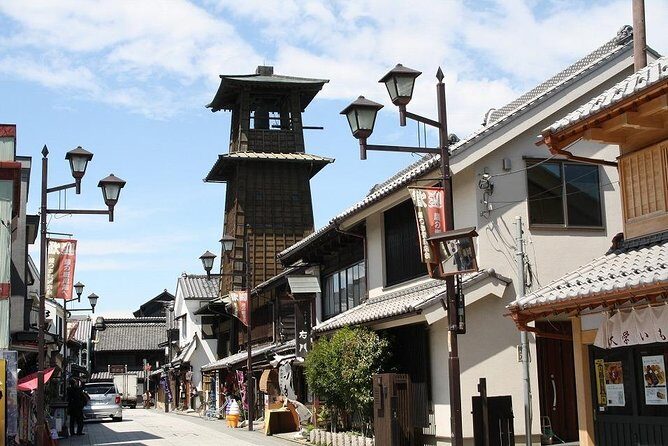
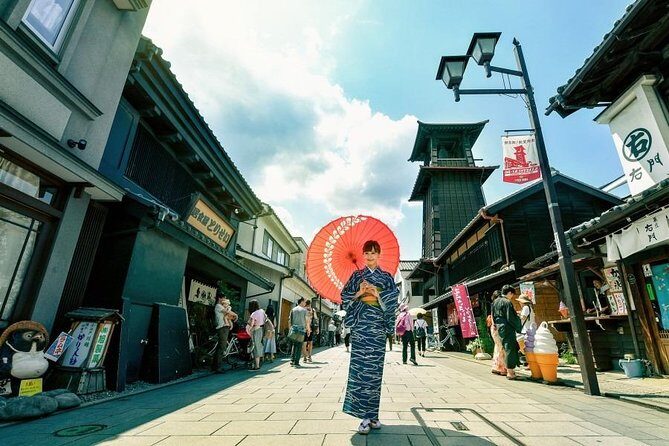
Start your day with a landmark that anchors Kawagoe in the Edo-period rhythm: Toki no Kane. This bell tower symbolizes how people once tracked time. The bell has been heard at set times such as 6 a.m. and noon, and the idea is simple: before everyone carried personal timepieces, the town had a shared clock.
This is the kind of stop that takes five minutes but sticks in your memory. You’ll probably notice small details—how the tower functions as a symbol, not just an object—because your guide connects it to daily life, not only to “a nice photo spot.”
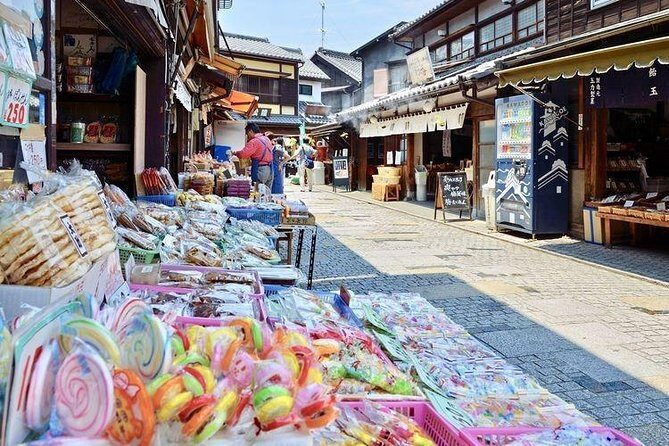
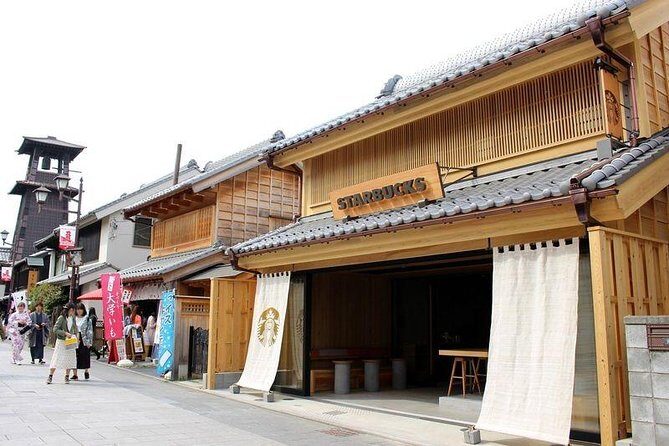
Next, move into the warehouse-town style of Koedo Yokocho. This is a compact restaurant street housed in warehouse-style buildings, and it’s a great place to snack or go for a casual meal plan if your schedule allows. You can find things like kamameshi (rice with meat and vegetables served in a small pot) and ramen. There’s also a free rest area, which matters if you want to keep your energy steady for the rest of the day.
The drawback here is crowding. If you’re traveling on a Saturday, expect it to feel busy. The town’s popularity can turn the streets into a slow-moving watch-and-wait experience, especially around food areas. If you’re sensitive to crowds, plan your most time-sensitive moments for earlier in the day.
More private options with your own guide


Castle Remains and Sacred Stops: Hikawa Shrine and Kitain
Kawagoe’s “castle town” identity is part fact, part atmosphere. You’ll see that clearly when you visit the Kawagoe Castle Naka no Mon Remain area. Most of the original castle is gone, but some parts—including an entrance and a few rooms—are open to the public. This is a good choice if you like history that doesn’t feel like a textbook: you can see what remains and understand the shape of what used to be there.
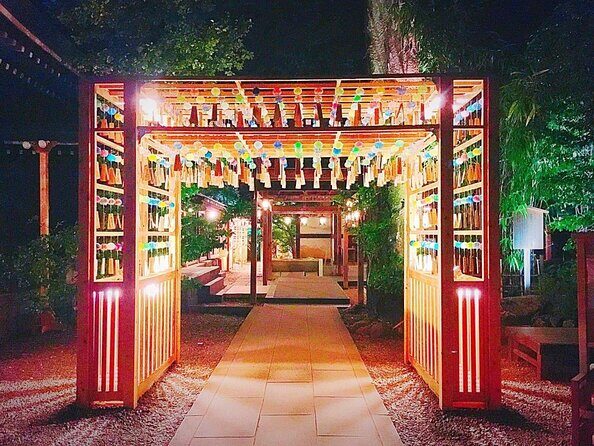
After that, shift from stone and structure to spirituality at Kawagoe Hikawa Shrine. This shrine is especially known for love and for something called an Enmusubi dama, often described as a love-success stone/amulet. Even if you don’t plan to buy anything, it’s worth visiting because the guide can explain the tradition so you don’t treat it like a random stop on a list.
Then add Kitain, a Buddhist temple that has been standing for about 1,200 years. This is where you’ll feel the age in the air. Temples like this often work best on a guided route because it’s easy to miss meaning if you’re only scanning for sights. A guide helps you notice what to look at and why it’s there.
These sacred stops also help you pace the day. When your schedule includes markets and food streets earlier, then shrine-temple moments in the middle give your feet and mind a reset.
Museums, Palaces, and Festival Culture: Kurazukuri Museum, City Museum, Honmaru Palace, Matsuri Kaikan
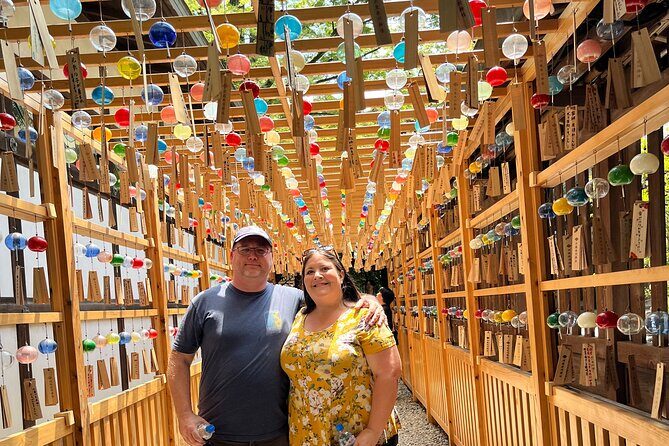
If you want the story behind the streets, consider the museums and palace-related stops on the list.
Kawagoe Kurazukuri Museum fits that role. It focuses on the warehouse-style merchant architecture that shaped Kawagoe’s look and prosperity as a castle town. If you’re the type who enjoys “why the buildings look like this,” this is a strong add.
Next, there’s the Kawagoe City Museum. The theme is the town’s historical buildings and the idea of Koedo, meaning little Edo. Again, the museum value isn’t just inside exhibits—it’s that the exterior and setting help you connect the town’s layout with its past.
Then you can include Kawagoejyo Honmaru Palace if you want a stronger castle angle. Like other castle-tied stops, the emphasis is on what you can still access and how the spaces communicate history. If you’ve ever wanted to understand Japanese castles without trying to read everything at once, a guided visit helps you focus on the points that matter.
To close the culture loop, you can add Kawagoe Matsuri Kaikan. This spot is linked to local festivals. Even if you’re not attending a live festival day, it’s a way to understand the cultural calendar and the pride behind the celebrations. It’s also a useful option if the weather turns or you want a more indoor break.
A practical note: many of these stops may have admissions that aren’t included. If you’re building your ideal mix, choose one paid cultural stop and one paid special-interest stop (like palace or festival), then balance the rest with free sights.
Taking a Break at Kawagoe Onsen (Wood and Stone Baths)
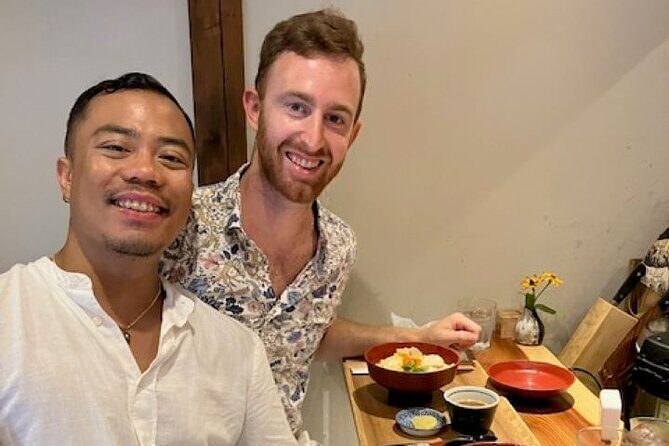
A good tour isn’t only about seeing. It’s also about having a reset built in. Kawagoe Onsen is the onsen option on this route, and it can be a satisfying finale if you pick it as one of your 3–4 stops.
What you can expect from Kawagoe Onsen is straightforward: it’s a hot spring facility with different bath styles, including wood-made baths and stone-made baths. The onsen stop tends to work best for two reasons:
- It gives your legs a real break after walking between historic areas.
- It adds a distinctly Japanese, non-museum kind of culture experience.
Because onsen admission is not included, budget for that extra cost. But if you’re already thinking about adding an onsen anyway, this tour is a convenient way to do it without turning your day into a logistics project.
Tips for Your Best Day: Timing, Crowd Pressure, and What to Bring
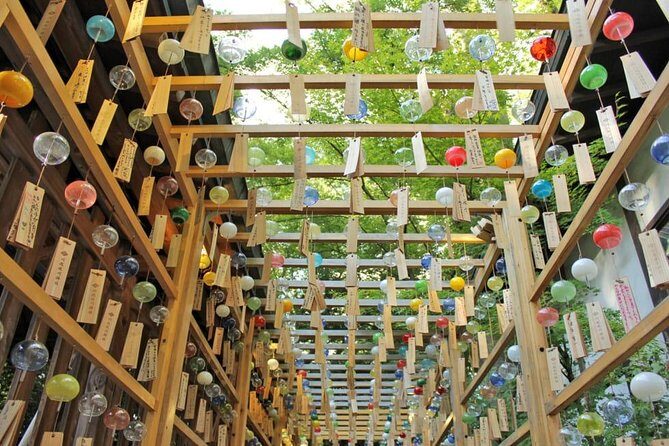
This tour is built for a smooth flow, but you can make it even better with a few smart choices.
First: think about your day type. If you’re going on a weekend, especially Saturday, plan for crowd pressure in the warehouse-food area. That doesn’t ruin the trip—it just changes your rhythm. If you want photos or a slower snack, aim to start earlier in the day.
Second: decide what kind of souvenirs you want. This route includes multiple free photo-friendly landmarks and optional ticketed museums/palaces. If you’re the type who buys small things at shrines or local spots, build a little time buffer so it doesn’t cut into the next stop.
Third: wear shoes you can trust. The tour is explicitly a walking tour, and your guide will meet you on foot in your chosen area. Comfortable footwear helps you enjoy the day instead of counting steps.
Fourth: bring a plan for personal meals. Lunch is not included, and the tour can include a food street stop. That’s good, because you can choose what fits your taste and budget. If you’d rather eat a set meal, you can use Koedo Yokocho as your anchor.
Finally: book timing matters. On average, this experience is booked about 50 days in advance, which is a hint that popular time slots and prime days can fill up.
Should You Book This Kawagoe Private Tour?
I think this is a great booking if you want an easy, guided half-day outside Tokyo and you care about understanding what you’re seeing. The value is strongest when you:
- want private flexibility to pick 3–4 stops that fit you,
- would rather pay for navigation and interpretation than DIY,
- like a mix of landmarks, food areas, and at least one deeper cultural stop (museum/shrine/temple), with onsen as a bonus option.
I’d consider skipping or modifying your expectations if you:
- hate walking and know you’ll need lots of breaks,
- want an all-in price with no extra tickets beyond the tour price,
- are trying to do everything with zero flexibility (because the schedule depends on your chosen site mix).
If you want a simpler day with fewer unknowns, this tour is a very practical way to experience Kawagoe’s Edo-style atmosphere without turning your trip into a map-reading contest.
FAQ
What is the duration of the Kawagoe private tour?
The tour lasts about 6 hours.
Can I choose which sites to visit?
Yes. You can customize the day by choosing 3–4 sites from the tour’s list of options.
Is pickup included, and where do we meet the guide?
Pickup is offered in the sense that the guide meets you on foot within a designated Tokyo or Kawagoe location of your choice.
Is this tour walk-heavy?
Yes. It’s a walking tour, and the pickup/meet-up is on foot.
Are entrance fees included in the tour price?
No. Entrance fees are not included, although some specific stops are listed with free admission.
Is private transportation included?
No. The tour does not include a private vehicle, and transportation fees are not included.
Can I combine this tour with another group?
No. You cannot combine multiple tour groups.
Easier with a Guide



More Tours in Tokyo




More Tour Reviews in Tokyo




Fresh reviews from around Tokyo






Guided, compared.
 ★ 5.0Tokyo 6hr Private Tour with Government-Licensed GuideFrom $1553,902 reviews
 ★ 4.9Shinjuku Local Bar and Izakaya Guided Walking TourFrom $341,794 reviews
 ★ 4.8Private City Highlights Tour with Local GuideFrom $1061,433 reviews
 ★ 4.9Tsukiji Fish Market Guided Walking TourFrom $221,397 reviews
 ★ 5.0Tokyo 4hr Private Tour with Government-Licensed GuideFrom $1091,394 reviews
 ★ 5.0Tokyo Guided Small-Group Biking TourFrom $1061,250 reviews
 ★ 4.6Samurai Ninja Museum Guided tour and ExperienceFrom $271,010 reviews
 ★ 5.0Tsukiji Fish Market Guided Tour and Sushi Making with Pro ChefFrom $104775 reviews