
Reviewed · KAMAKURA DAY TRIPS
When Emperors Reigned and Shoguns Ruled
Kamakura has a way of sticking in your head. This 4-hour private stroll pairs big historical themes from the Kamakura Period (1185–1333) with real-world sights you can feel today. I love that you get a professional photographer guide who helps you plan shots on the move, and I also like the small-group feel (up to eight) that keeps you from feeling herded. You’ll walk the main stretch, then see why shoguns, samurai culture, and Zen Buddhism left fingerprints all over this town.
One thing to consider: two major temple stops cost extra, since admission for Kotoku-in and Hasedera Temple is not included.
In This Review
- Key things to know before you go
- A practical private walk through Kamakura’s Kamakura Period
- Wakamiya Main Street: the easy shrine-walk warm-up
- Tsurugaoka Hachimangu: Minamoto Yoritomo’s influence in plain sight
- Kamakura’s Komachidori: where history meets sweets and souvenir hunting
- Kotoku-in (Great Buddha): big scale, old craftsmanship
- Hasedera Temple: layered grounds, gardens, ponds, and Kannon
- Photographer-guide advantage: better photos without awkwardness
- English (and Spanish) help, plus real-world guide energy
- Who this tour is best for
- The main tradeoffs (so you can decide fast)
- Price and value: what you’re paying for
- Should you book When Emperors Reigned and Shoguns Ruled?
- FAQ
- How long is the tour?
- Where does the tour start and end?
- Is this tour private?
- How much does it cost?
- What’s included in the price?
- Are admissions included for all stops?
- Is food or lunch included?
- How big is the group?
- Can I choose my start time?
- What is the cancellation policy?
Key things to know before you go
- Photo help, not just sightseeing: Your guide works like a photographer, so you’re not stuck asking strangers to take your picture.
- A tight route with big context: You cover Kamakura’s headline sites while the story stays focused on the Kamakura Period.
- Free entry for several stops: Wakamiya Main Street, Tsurugaoka Hachimangu, and Komachidori are free, so you’re not paying at every stop.
- Flexible pace for questions: You can ask lots of questions and move at your own rhythm during the tour.
- Easy end point for onward travel: The tour finishes at Hase Station on the Enoden line.
A practical private walk through Kamakura’s Kamakura Period
Kamakura isn’t just “temples and vibes.” It’s where Japan’s power shifted, where samurai culture grew up in public, and where Zen Buddhism helped shape what people valued. This tour is built to help you connect the dots without turning every stop into a boring lecture.
You’ll meet at Kamakura Station and spend about four hours moving through the town’s most recognizable areas. The style is simple: walk, pause, look closer, then understand what you’re seeing. If you enjoy travel days where your feet do the work and your guide turns the lights on upstairs, this fits well.
Price matters here, so let’s talk value. At $108.99 per person, you’re paying for a private-group experience with a local guide plus a professional photographer guide and a tour escort/host. You’re not just buying access to monuments—you’re buying interpretation and photo support on-site, which is usually what turns a good visit into a memorable one.
Wakamiya Main Street: the easy shrine-walk warm-up
Your route starts with Wakamiya Main Street, a scenic walk to the main shrine. This part is more than a warm-up. It helps you get your bearings fast—this is the main area, so you’ll feel the rhythm of Kamakura right away.
Why I like this start: it gets you walking early while you’re still fresh. Also, Wakamiya’s “main street” energy is a good bridge between modern life and the older layers of the city. Even if you only spend a short amount of time here, you’ll see how the town is set up for visitors and locals moving through the same streets.
Good news: admission for this stop is free, so you can focus on the scenery and photos rather than worrying about tickets right away.
Tsurugaoka Hachimangu: Minamoto Yoritomo’s influence in plain sight
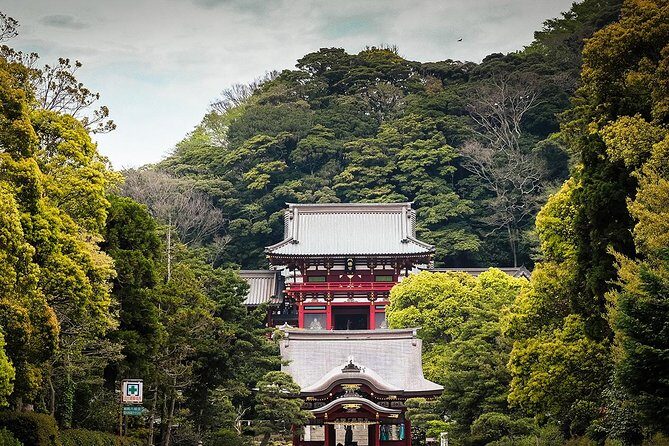
Next up is Tsurugaoka Hachimangu Shrine, one of Japan’s three most important Shinto shrines. The key detail is the founding connection: it was built by the first shogun, Minamoto Yoritomo, in the 12th century.
This matters because the shrine isn’t just pretty. It’s tied to how political authority becomes public ceremony. When you’re standing there, it’s easier to understand why later shogunate rule looked the way it did—where power needed symbols, rituals, and legitimacy.
A practical note: plan for a longer stop than you might expect if you like to take photos and ask questions. You’ll spend about 50 minutes here, which gives you time to pause, read the atmosphere, and learn what to look for.
Kamakura’s Komachidori: where history meets sweets and souvenir hunting
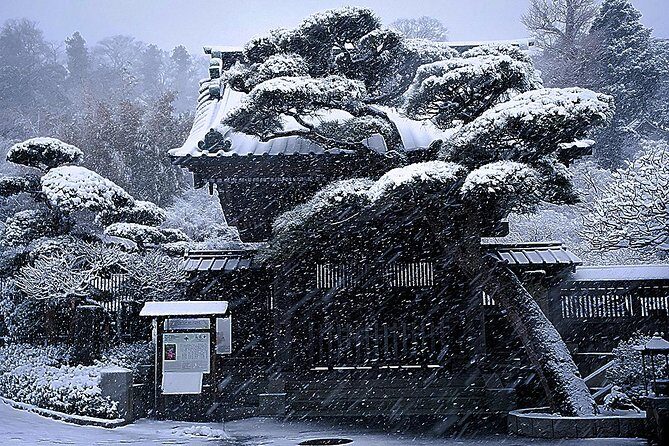
After the shrine, you shift gears to Kamakura Komachidori, one of the area’s famous shopping streets. This is where the tour becomes more everyday and fun: you’ll see shops and stalls selling snacks, sweets, and souvenirs on both sides of the street.
This stop is a smart inclusion for two reasons. First, it breaks up the temple intensity with something lighter. Second, it shows how Kamakura blends old and new—people still come here to walk, buy small treats, and wander.
Admission is free here, but treat it like part of your experience rather than “just a break.” If you want a small snack, this is your moment. The tour doesn’t include food and drinks, so you’ll be responsible for anything you buy, but your guide can help you decide what’s worth trying based on what you like.
Kotoku-in (Great Buddha): big scale, old craftsmanship
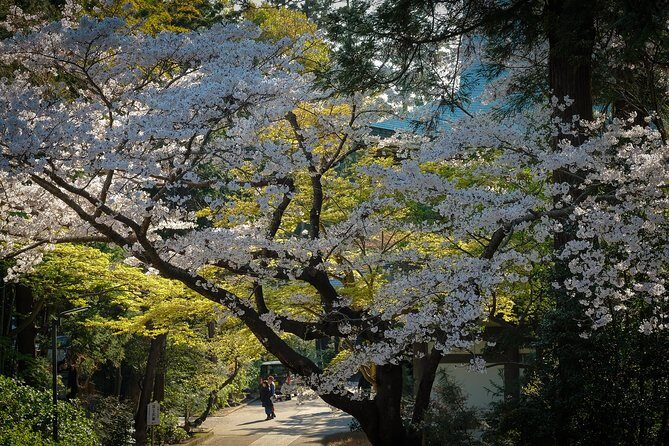
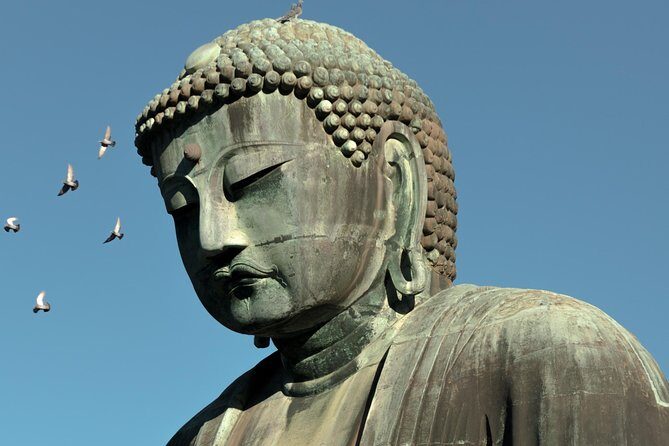
Then you reach Kotoku-in, home to the Great Buddha of Kamakura. The centerpiece is a giant bronze statue of the Amida Buddha, dating back to the 13th century.
This is the kind of stop where your brain automatically starts comparing “museum size” to “human size.” Up close, the bronze doesn’t feel like a replica—it feels like something that has been weathered by centuries and still holds attention. The site gives you a clear reason why Kamakura is linked so strongly to Buddhist development after the rise of the warrior class.
Plan for about 40 minutes. The time is enough to see the statue, get decent photos, and still keep the day from dragging. The only caution: admission here is not included, so budget for an extra ticket cost during the tour.
Hasedera Temple: layered grounds, gardens, ponds, and Kannon
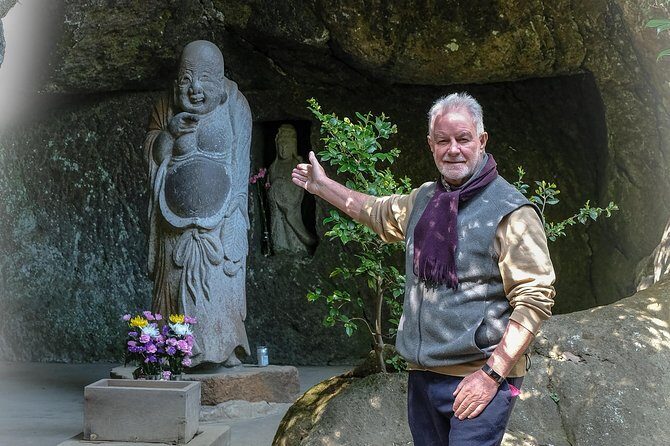
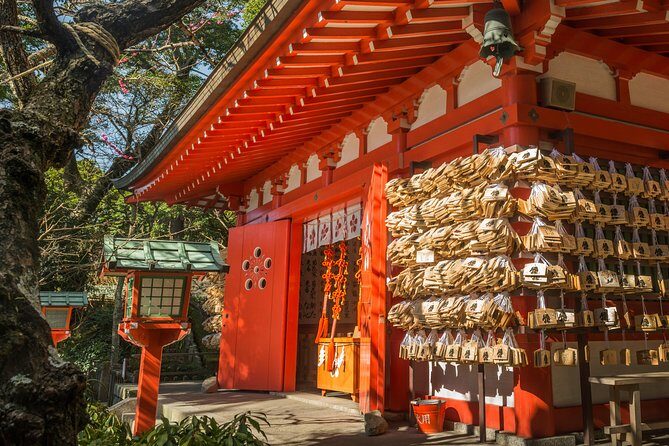
Your final major stop is Hasedera Temple, which spreads out across multiple levels. This is where you slow down a bit. The temple setting is known for gardens, ponds, caves, and an ancient statue of Kannon, the Goddess of Mercy—with 11 heads.
What makes Hasedera worth your time is how it rewards moving. Instead of “one courtyard and you’re done,” the grounds encourage you to walk through different viewpoints. The caves and multi-level layout also help you understand why temples often felt like whole ecosystems, not just individual buildings.
You’ll have about 1 hour 20 minutes here, which is generous. That extra time matters because if you’re the type who stops for details—like carvings, pond reflections, or the way paths slope—you’ll want more than the usual rushed temple visit.
Again, admission is not included for Hasedera, so expect to pay on-site. If you’re traveling with limited cash, it’s worth having some yen ready.
Photographer-guide advantage: better photos without awkwardness
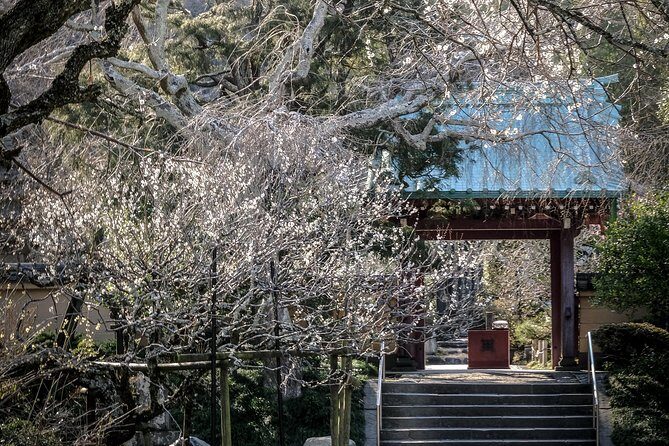
A lot of “photo tours” end up being a checklist: smile here, move on, done. This one feels different because the photographer guide is part of the experience, not an add-on.
You can see the effect in how guests describe the tour: the guide is ready to take pictures, and the day doesn’t turn into you constantly juggling a camera while trying to listen. That’s a big deal if you’re traveling solo, as this tour is a good fit for solo travelers and groups of up to eight.
From the reviews, I’d also expect the guide to be patient—especially if you’re slow-walking, asking questions, or getting temporarily stuck because of rain or crowds. One rainy afternoon still hit every planned stop, and that’s exactly what you want from a guide: calm, flexible, and focused on getting you what you came for.
English (and Spanish) help, plus real-world guide energy
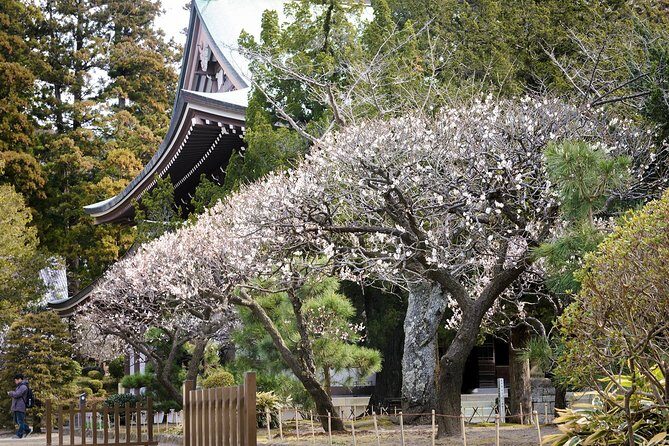
One practical win: the guide’s language skills. Based on guest feedback, the guide speaks English very well, and also Spanish. That can make a big difference in how much you actually take away—history is easier to understand when the guide can match your pace and answer your follow-ups clearly.
You’ll also notice the tone described by many guests: friendly, patient, and the kind of person who likes questions. If you like learning facts, this is built for that. If you like stories and context, it works for that too.
Who this tour is best for
This is a strong choice if:
- You want a focused route in about four hours rather than a loose self-guided day.
- You care about the Kamakura Period and want the shogunate/samurai/Zen connections explained where you stand.
- You’re traveling solo and want the reassurance of a small group.
It can also be a nice fit if you’re with teenagers or young adults who prefer doing something structured but still flexible. Several reviews highlighted that families enjoyed it, even when questions were coming nonstop.
The main tradeoffs (so you can decide fast)
This tour is very “watch and learn,” but it does come with the usual tradeoffs of a tight schedule and extra temple tickets.
1) Two paid admissions: Kotoku-in and Hasedera aren’t included.
2) No food included: You’ll need to handle snacks or lunch on your own.
3) Walking is real: It’s not a sit-and-smile tour. You’ll cover multiple stops, including a multi-level temple.
If you’re the type who gets tired easily on travel days, consider building in breaks at your own pace during the 4 hours.
Price and value: what you’re paying for
Let’s make the math make sense. At $108.99, you’re not paying “just for entry tickets,” since several key areas are free. You’re paying for:
- A local guide who can connect what you see to the bigger story of the Kamakura Period.
- A professional photographer guide who helps with pictures while you walk.
- A tour escort/host who keeps the experience running smoothly.
- A route with a clear flow from Kamakura Station to Hase Station.
In practice, that means fewer awkward moments (like figuring out where to stand for photos) and more time spent understanding. For many visitors, that’s what makes the price feel fair—especially if you want photos you’ll actually use later.
Should you book When Emperors Reigned and Shoguns Ruled?
Yes—if you want Kamakura’s top sites in a smart order and you care about the story behind them. The best sign is the combination: photography support plus history told in a way that fits a walking tour. The route also gives you a smooth transit plan: start at Kamakura Station and end at Hase Station (handy if you’re continuing around the area).
I’d skip it only if you strongly prefer fully self-guided travel, you hate walking on a tight timeline, or you don’t want to pay extra temple admissions at Kotoku-in and Hasedera. Otherwise, this is the kind of tour that turns a few familiar landmarks into a coherent day you’ll remember.
FAQ
How long is the tour?
It’s about 4 hours (approx.).
Where does the tour start and end?
It starts at Kamakura Station (1-chōme-1-15 Onarimachi, Kamakura) and ends at Hase Station on the Enoden line (2 Chome-14 Hase, Kamakura).
Is this tour private?
Yes. It’s listed as a private tour/activity, so only your group participates.
How much does it cost?
The price is $108.99 per person.
What’s included in the price?
A local guide, a professional photographer guide, and a tour escort/host are included.
Are admissions included for all stops?
Some are free (Wakamiya Main Street, Tsurugaoka Hachimangu Shrine, and Komachidori). Admission for Kotoku-in and Hasedera Temple is not included.
Is food or lunch included?
No. Food and drinks (including lunch) are not included.
How big is the group?
It’s described as suitable for groups up to eight people.
Can I choose my start time?
Yes. You can choose your preferred start time from several available options.
What is the cancellation policy?
Free cancellation is available up to 24 hours in advance for a full refund. If you cancel less than 24 hours before the start time, the amount paid is not refunded.
More Tour Reviews in Kamakura
More Days by the Great Buddha
Kamakura Day Trips, compared.
 ★ 4.5Kamakura & Enoshima Day Trip including Temple TicketsFrom $581,375 reviews
 ★ 4.5From Tokyo: Kamakura & Enoshima 1-Day Bus TourFrom $66189 reviews
 ★ 5.0Kamakura Historical Walking Tour with the Great BuddhaFrom $98129 reviews
Kamakura Private Tour: Temples, Nature, and the Great BuddhaFrom $98121 reviews
Kamakura Walking Tour – The City of ShogunFrom $35100 reviews
★ 5.0Kamakura Historical Walking Tour with the Great BuddhaFrom $98129 reviews
Kamakura Private Tour: Temples, Nature, and the Great BuddhaFrom $98121 reviews
Kamakura Walking Tour – The City of ShogunFrom $35100 reviews
 ★ 5.0Kamakura 8 hr Private Walking Tour with Licensed Guide from TokyoFrom $20180 reviews
 ★ 4.1Kamakura & Enoshima Day Tour with Pickup & Train RideFrom $1361 reviews
 ★ 4.8Kamakura: Private Guided Walking Tour with Local GuideFrom $10660 reviews
Browse the lists this tour appears in