
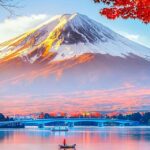
Fuji looks different from every angle, and this day tries them all. I like the format: a private group (up to 6) with a National Government Licensed English-speaking guide, plus a comfortable car that keeps the day moving. I also love the pace of the scenery stops, especially the Lake Ashi cruise, which breaks up the day with something easy and scenic.
One thing to plan around: Mt. Fuji visibility is not guaranteed. Weather can shut down views, and the tour notes that an alternative route may be offered if conditions are poor.
In This Review
- Key highlights at a glance
- How the private car and licensed guide make this day work
- Mt. Fuji 5th Station and Mt. Komagatake views without the headache
- Oshino Hakkai: the short stop that adds a calm Fuji feeling
- Chureito Pagoda and the Arakura Shrine viewpoint circuit
- Lake Kawaguchi and Oishi Park: where the day turns scenic and self-guided
- Hakone National Park: Owakudani Valley and the Open-Air Museum
- Lake Ashi cruise and the late-day Hakone look
- Gotemba Premium Outlets: useful downtime or wasted time
- Price value: what $321 per group buys you (and when it’s worth it)
- Who should book, and who should reconsider
- Should you book this Mt. Fuji and Hakone private day trip?
- FAQ
- How long is the Mt. Fuji and Hakone tour?
- Where can the tour pick me up and drop me off?
- Does the tour include Lake Ashi and a boat cruise?
- Do I visit Mt. Fuji 5th Station and ride the Mt. Komagatake ropeway?
- Is lunch included?
- Will I definitely see Mount Fuji clearly?
- What should I bring, and how much walking is involved?
- Who is the tour not suitable for?
Key highlights at a glance
- Private, small-group pace with pickup/drop-off options across Tokyo, Shinjuku City, Chiba, and Fujikawaguchiko
- Mt. Fuji 5th Station plus Mt. Komagatake ropeway for big views over the Hakone area
- Lake Ashi boat cruise that adds a calm, low-effort scenic moment
- Oshino Hakkai and Fuji shrines for the classic cultural side of the day
- Owakudani Valley and Hakone Open-Air Museum for variety beyond just Fuji photo spots
- English, Hindi, and Arabic support via the driver, with an English-speaking guide for your sightseeing
Other routes to the mountain, compared
- Mt Fuji & Hakone Cruise, Drum Show Bullet Train 1 Day from Tokyo★ 4.0 · 7,413 reviews
- Tokyo Mt Fuji 5th St & Hakone Cruise Bus Tour w/Bullet Train★ 4.4 · 5,024 reviews
- From Tokyo: Mount Fuji Full-Day Sightseeing Trip★ 4.5 · 4,970 reviews
How the private car and licensed guide make this day work
A Mt. Fuji day trip can be stressful if you’re hopping between trains, buses, and timed ticket windows. This tour is built around the simple idea that you’ll spend more hours looking out the window and less time planning your next connection. You’re in a private car with a guide who’s described as National Government Licensed and English-speaking, which matters when you want more than a checklist of stops.
The best practical win is flexibility. You get multiple pickup locations (Tokyo, Fujikawaguchiko, Chiba, and Shinjuku City) and multiple drop-off locations (Shinjuku City, Tokyo, Fujikawaguchiko, and Chiba). That means you can pick the option that matches your hotel area, not the company’s office address.
You’ll also get short safety briefings at key points during the day. That doesn’t sound romantic, but it’s useful when you’re near viewpoints, taking in views, and doing moderate walking in changing weather. And yes, the tour advertises a skip-the-ticket-line benefit, which can help when you’re dealing with crowds at popular sites.
Mt. Fuji 5th Station and Mt. Komagatake views without the headache
This is the core of the experience: you’re set up to see Mount Fuji from one of its most famous viewpoint areas, then continue toward Mt. Komagatake by ropeway. The promise here is not just a single photo stop. It’s the idea of stacking viewpoints—seeing Fuji up close at the 5th Station, then shifting your perspective toward Hakone’s volcanic-geography vibe from the Komagatake area.
Keep your expectations realistic. The tour is clear that Mt. Fuji visibility depends on weather, and sightings can’t be guaranteed. On the bright side, when conditions are good, this segment is exactly the kind of day payoff you can feel. Even when visibility is partly blocked, the day isn’t only about “getting the perfect shot.” You’re still moving through viewpoints that are designed for big sightlines.
A practical tip: plan your layers. The tour asks you to bring warm clothing and comfortable shoes. Even in warmer months, mountain areas can feel cooler, and ropeway viewpoints tend to involve standing around for photos.
Oshino Hakkai: the short stop that adds a calm Fuji feeling
After the first Fuji viewing time, you move into the classic “Fuji water and culture” zone. Oshino Hakkai gets about 30 minutes. In plain terms, it’s a compact pause that helps the day feel more grounded than just scenic lookouts.
This stop is a good match for a private day because you’re not rushed by a tight group schedule. You can slow down, read signs, and take in the small-scale details without worrying about being swept along. If you’re traveling with kids, one group described an extra family-friendly element in the same overall Fuji region earlier in the day, so your guide may be able to adjust timing if your group needs a break.
The trade-off is time. Thirty minutes is enough for a quick loop and photos, not enough to turn it into a half-day “slow travel” experience. If you love water features and quiet walking, you’ll enjoy the stop; if you only care about wide views of Fuji, you may want to treat it as a brief cultural detour.
Chureito Pagoda and the Arakura Shrine viewpoint circuit
Next comes the kind of scenery that people build whole photo sessions around. Chureito Pagoda has about 45 minutes, followed by visits that include Arakura Fuji Sengen Shrine and other shrine stops tied to Fuji worship.
Here’s what makes this part valuable: it’s where Fuji often looks like a graphic symbol in the middle of a scene. That’s not an insult—it’s exactly why these spots are popular. The day is basically giving you repeated chances to catch Fuji’s shape and its relationship to local architecture and hills.
There’s also a real rhythm to how it’s set up for a private group. You’re not just dropped somewhere chaotic. The guide helps with timing and safety briefings, and you get enough time to move around at your own pace. Still, you’ll be doing some walking, and you’ll likely be standing and waiting for the best light.
If weather is decent, this is a strong “next best thing” even before you hit the ropeway segment later. If the weather is hazy, you may get misty partial views, and the day can feel more atmospheric than dramatic.
More private options with your own guide

Lake Kawaguchi and Oishi Park: where the day turns scenic and self-guided
Once you’re past the early Fuji icons, the day shifts into a longer scenic stretch around Lake Kawaguchi, Oishi Park, and nearby streets and shrines.
You’ll spend about an hour at Lake Kawaguchi and another hour at Oishi Park, and you’ll also get self-guided time at several stops. The mix is smart. A guide-led discussion helps you understand what you’re seeing. Then self-guided time lets you wander at the pace your group needs—especially if you want to pause for photos without feeling rushed.
A few extra stops fill in the texture:
- Lawson Kawaguchiko Station (about 30 minutes): useful as a simple break point for snacks or bathrooms
- Shimoyoshida Honcho Street (about 30 minutes): an easy stroll to get a local-feeling break between scenic zones
- Kitaguchi-hongu Fuji Sengen Shrine (about 1 hour): another chance to see Fuji-focused spiritual sites beyond the “single postcard” viewpoints
If you’re trying to make this day work for a mixed group—some people want photos, others want calm—it’s a decent solution. Just remember: “self-guided” still means you’re moving. The tour notes moderate walking, so pack for it.
Hakone National Park: Owakudani Valley and the Open-Air Museum
Hakone changes the vibe quickly. Instead of the classic Fuji-and-lake scenery, you get the Hakone National Park side of the region, where volcanic activity and arts show up side by side.
You’ll visit Hakone (about 30 minutes), then Owakudani Valley (about 1 hour) with time for shopping and sightseeing, and later the Hakone Open-Air Museum (about 1 hour). That combination is the sweet spot for a full-day plan: you get nature drama and then a slower cultural stop.
Owakudani is a practical must-do in this kind of day. It’s one of those places where you can’t really “fake it” from a distance—you want to see the terrain up close and feel the location’s energy. The tour’s structure also helps because you’re not trying to squeeze it in on your own transportation schedule.
The Open-Air Museum adds a different kind of payoff. It’s a way to cool down mentally after volcanic sightseeing, and it gives you a walkable indoor/outdoor mix. If you’ve got multiple interests in your group—views plus something calmer—you’ll appreciate this built-in variety.
Lake Ashi cruise and the late-day Hakone look
Then comes the big scenic release: Lake Ashi. You’ll spend about 30 minutes here, and the highlights call out a laid-back boat cruise. This is one of the smartest inclusions in a long day because it lowers the physical load. After walking around viewpoints, the cruise lets you sit back and watch the shoreline come toward you instead of searching for your next photo spot.
This segment also ties together the day’s geography. Earlier you focused on Fuji-specific views. Here you’re in the Hakone zone, and the cruise gives you that “this is the region people actually come for” feeling.
Timing matters with weather, but the cruise helps either way. In clear weather you can see more. In cloudy conditions you still get movement, changing reflections, and a different mood than a land-based viewpoint.
Gotemba Premium Outlets: useful downtime or wasted time
At the end of the day you’ll stop at Gotemba Premium Outlets for about an hour. This is the kind of stop that splits groups into two camps: people who love last-minute shopping and people who would rather spend that hour more time on sights.
If you’re traveling with family or you want an easy way to pick up souvenirs without hunting across town, it’s a practical addition. If your group is photo-obsessed or museum-leaning, you might treat this hour as optional unless you truly want outlet browsing.
One thing I like about having a shopping stop here: it gives you a predictable place where everyone can reset their energy—snack, rest, and regroup—before you head back to your drop-off location.
Price value: what $321 per group buys you (and when it’s worth it)
The price is $321 per group up to 6 for about 10 hours. That’s about the cleanest pricing model for a private day trip: you’re not paying per person for the full experience. If you fill the group cap, the effective cost per person drops fast, and you’re paying mostly for comfort, guide time, and the logistics of getting around the Fuji-Hakone loop.
Here’s what you’re really buying:
- a private car and route planning for a long day
- a licensed English-speaking guide to explain what you’re seeing
- time savings like skip-the-ticket-line help
- a full mix of Fuji viewpoints, shrine stops, Hakone nature, and museum time
When it’s worth it: if you care about seeing a lot of the region in one day, hate transit stress, and want your schedule to be guided. It’s also a good fit for small groups (up to 6) where splitting a private day trip actually makes financial sense.
When to think twice: if your priority is only one or two sites, you might find cheaper group tours. But if you’re trying to pack Fuji 5th Station + Komagatake + Hakone + Lake Ashi into one day, this private structure is built for that workload.
Also, one quick note from the information provided: there’s moderate walking, and it’s not set up for everyone.
Who should book, and who should reconsider
This tour involves moderate walking, viewpoints, and time outdoors. You’re advised to wear comfortable shoes and bring warm clothing and a camera.
It also lists people for whom it’s not suitable: pregnant women, people with back problems, and wheelchair users. That’s important. There’s also a mismatch in the info where wheelchair accessibility is listed as a feature, so if mobility is an issue for you, you should confirm details before booking.
This day fits best if you:
- want a full-day Fuji + Hakone mix without public-transport planning
- enjoy guided context but still want freedom during self-guided stops
- are okay with a full schedule and some walking
You’ll also appreciate the cultural texture. The day isn’t just scenic driving. It includes Fuji-related shrines and time around classic local areas like Oshino Hakkai and the Lake Kawaguchi zone.
And finally, a balanced reality check: in the review notes I saw, most experiences were highly rated, including praise for guides such as Malik and a driver named Ali. There is at least one report that a guide did not arrive as expected, so it’s smart to confirm pickup details ahead of time and make sure your contact info is correct.
Should you book this Mt. Fuji and Hakone private day trip?
I’d book it if your goal is one high-effort day that covers the big hits: Mt. Fuji 5th Station, Mt. Komagatake ropeway, Lake Ashi cruise, plus Hakone’s Owakudani and the Open-Air Museum. The private setup with flexible pickup and drop-off is exactly what makes the schedule feel manageable.
Don’t book if your group can’t handle moderate walking, or if you need a fully mobility-adapted plan. And go into it knowing Fuji visibility depends on weather—so you’re not just purchasing photos, you’re buying access to a full region experience even when conditions are mixed.
If you want a smooth day, do one homework task: pack for cold and changing conditions, and bring a camera—but also bring patience. With that mindset, this is the kind of trip where the time actually adds up.
FAQ
How long is the Mt. Fuji and Hakone tour?
The tour runs for 10 hours.
Where can the tour pick me up and drop me off?
Pickup options include Tokyo, Fujikawaguchiko, Chiba, and Shinjuku City. Drop-off options include Shinjuku City, Tokyo, Fujikawaguchiko, and Chiba.
Does the tour include Lake Ashi and a boat cruise?
Yes. The experience includes a sightseeing visit to Lake Ashi and a boat cruise is part of the highlights.
Do I visit Mt. Fuji 5th Station and ride the Mt. Komagatake ropeway?
Yes. The tour includes a stop at Mt. Fuji’s 5th Station and also includes the ropeway to the summit of Mt. Komagatake.
Is lunch included?
There is an option for a Japanese-style lunch at a local restaurant if you select it.
Will I definitely see Mount Fuji clearly?
No. The tour notes that Mt. Fuji visibility can be affected by weather conditions, and sightings cannot be guaranteed. If conditions are poor, an alternative itinerary may be provided.
What should I bring, and how much walking is involved?
You should bring comfortable shoes, warm clothing, and a camera. The tour involves a moderate amount of walking.
Who is the tour not suitable for?
It lists as not suitable for pregnant women, people with back problems, and wheelchair users.
More Tours in Tokyo




More Tour Reviews in Tokyo




The Fuji Shortlist: Other Days Out to the Mountain

Fresh reviews from around Tokyo






Mt Fuji Day Trips, compared.
 ★ 4.0Mt Fuji & Hakone Cruise, Drum Show Bullet Train 1 Day from TokyoFrom $1497,413 reviews
 ★ 4.4Tokyo Mt Fuji 5th St & Hakone Cruise Bus Tour w/Bullet TrainFrom $1545,024 reviews
 ★ 4.5From Tokyo: Mount Fuji Full-Day Sightseeing TripFrom $684,970 reviews
 ★ 4.7Mt. Fuji Tour, Hakone Ropeway, Owakudani, Lake AshiFrom $544,002 reviews
 ★ 5.0Private Tour to Mt. Fuji and Hakone (Fully Licenced Operator)From $4971,910 reviews
 ★ 4.9Mount Fuji Full-Day Private Tour from Tokyo (Customizable)From $3931,470 reviews
 ★ 4.0Mt Fuji & Hakone Cruise, Drum Show Bus 1 Day from TokyoFrom $1221,287 reviews
 ★ 4.2From Tokyo: Mt. Fuji & Hakone Tour w/ Return by Bullet TrainFrom $1171,278 reviews
Browse the lists this tour appears in