
Reviewed · GUIDED
Discover the hidden gems of Tokyo:Private Tour with a Local Guide
East Tokyo can feel like a maze. This private tour is a smart way to turn it into a plan, with a guide meeting you near Kaminarimon and shaping the day around what you actually care about. You pick three must-visit spots from a menu of neighborhoods, then your guide stitches them together with the local context that makes Tokyo feel less like a postcard and more like a living place.
Two things I’d bet on right away: I like how the tour’s anchor points help you understand Tokyo’s traditions fast, especially around Senso-ji and the Asakusa area. I also like that the options aren’t just sightseeing—food and craft show up too, from a sukiyaki stop at Imahan Honten to a knife-focused visit at Tsubaya.
One consideration: many of the most tempting upgrades cost extra, including meals and major attractions like Tokyo Skytree. Since it’s a walking tour with stops around an hour each, you’ll want to be ready for steady pace and extra ticketing where offered.
In This Review
- Key highlights at a glance
- A Private East Tokyo Walk Built Around Your Interests
- Meeting at Kaminarimon and First Stops in Asakusa
- Nakamise Shopping Street
- Senso-ji Temple
- Asakusa Shrine (Senso-ji’s neighbor in spirit)
- Suikiyaki Breaks and Tsubaya Knives in the Same Walking Flow
- Imahan Honten (Sukiyaki)
- Tsubaya Knives
- Choosing Between Skytree Views or Ueno Park Calm
- Tokyo Skytree
- Ueno Park (plus museums nearby)
- Shrines Like Imado and Yushima Tenmangu for a More Personal Tokyo
- Imado Shrine and the maneki-neko connection
- Yushima Tenmangu for learning and exams
- Ameyoko to Akihabara: Markets, Manga, and Electronics Reality
- Ameyoko Shopping Street
- Mimeguri Shrine
- Akihabara and the backstreets
- Yodobashi Akiba (Yodobashi Camera)
- Nihonbashi and Ginza: Department Store History Meets Modern Shopping
- COREDO Muromachi 1
- Nihombashi Mitsukoshi Main Store
- Ginza and Ginza Itoya
- The East Gardens of the Imperial Palace
- Tsukiji Outer Market and Sushi Dai When You Want Food That’s Part of the Plan
- Tsukiji Jogai Market (Outer Market)
- Sushi Dai
- Kabukiza, Uniqlo Ginza, and Seiko House Ginza for Modern Culture Notes
- Kabukiza Theater
- Uniqlo Ginza
- Seiko House Ginza (Wako Main Building)
- Price and Time: Getting Value From a 2-Hour to 1-Day Private Guide
- Should You Book This Tokyo East Tour?
- FAQ
- What’s the meeting point for the tour?
- How long is the tour?
- Is this tour private?
- What’s included in the tour price?
- What isn’t included?
- Where does the tour end?
- Can I cancel for a refund?
Key highlights at a glance
- Choose your 3 stops so you don’t waste time in places you don’t care about
- Start at Kaminarimon and work outward from Asakusa’s classic approach streets
- Mix tradition + tech with options from shrines to Akihabara’s electronics lanes
- Food is optional, but built-in through stops like Imahan Honten and Sushi Dai
- Ginza and Imperial East Gardens balance shopping with quieter historical space
- Your guide can adjust the route on the fly, with guides like Kazuo Hirose noted for adapting smoothly
More days made easy by a guide
- Tokyo 6hr Private Tour with Government-Licensed Guide★ 5.0 · 3,902 reviews
- Tokyo: Shinjuku Local Bar and Izakaya Guided Walking Tour★ 4.9 · 1,794 reviews
- Tokyo: Private City Highlights Tour with Local Guide★ 4.8 · 1,433 reviews
A Private East Tokyo Walk Built Around Your Interests
This tour is basically a tailor-made “day flow” for East Tokyo. Instead of marching you through a fixed script, you choose three key stops from a set list, and your guide works out the route and pacing. That matters because Tokyo is huge, and your limited time is better spent where your curiosity lives—old Tokyo, food Tokyo, or tech Tokyo.
You’ll meet near Kaminarimon in Asakusa, and the experience runs from about 2 hours up to a full day depending on how your guide plans the route and how many additions you want. You’re also not stuck with only one kind of sightseeing. The tour includes walking in classic areas (Asakusa, Ueno, Akihabara, Nihonbashi, Ginza), but the selection options let you steer the vibe toward culture, shopping, manga-and-anime, learning-focused shrines, or markets and street food.
If you’re booking ahead, note that this is often scheduled roughly a couple months out. That’s not shocking for a private guide with a flexible route, so I’d treat it like you’d treat a good restaurant reservation: pick your preferred time window and lock it in.
Meeting at Kaminarimon and First Stops in Asakusa
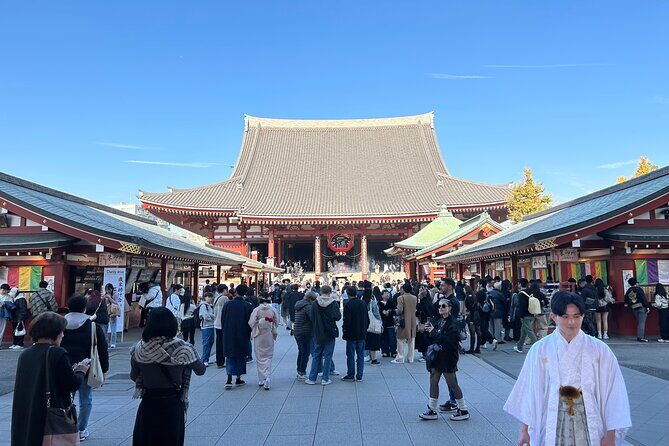
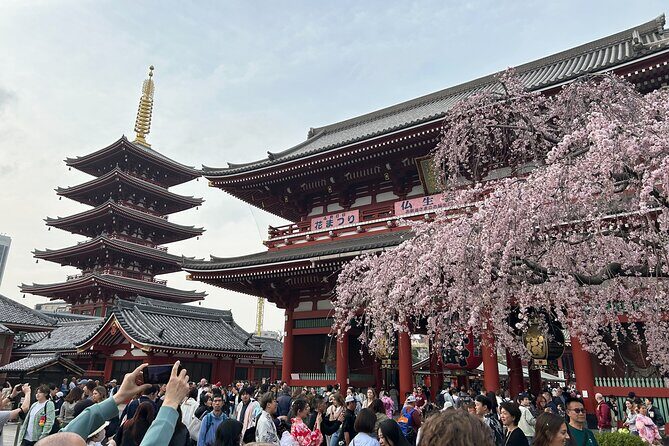
Starting at Kaminarimon is a smart move because it’s a clean gateway into Asakusa. From there, your tour can head straight into the Senso-ji orbit, where Tokyo’s older identity shows up in a way that feels immediate and understandable.
Nakamise Shopping Street
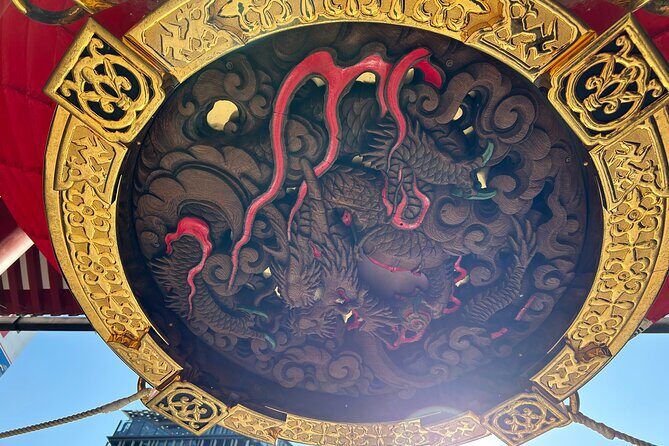
A big early moment is Nakamise Shopping Street, the approach lane running alongside Senso-ji. Even if you’re not a shopper, it’s useful because it’s your first “Tokyo in miniature.” You get the rhythm of the area—people flowing toward the temple, snacks and traditional items lining the path, and that steady sense that this is a daily-life corridor, not just a set built for tourists.
Senso-ji Temple
At Senso-ji, the story angle matters. You’re not just looking at buildings. Your guide shares how Asakusa developed, including references tied to the Asakusa Sanja Festival and the origin story behind it. That sort of background changes how you read what’s in front of you. Details like festival legends and local history help you connect the temple to the neighborhood around it.
Admission is free for Senso-ji, so you can enjoy the main experience without budgeting for tickets.
More private options with your own guide

Asakusa Shrine (Senso-ji’s neighbor in spirit)
Then you can step into Asakusa Shrine, described as a guardian deity for the Asakusa area. It’s a Shinto setting with the tone of reverence that you feel right away—especially if you’ve been in Tokyo long enough to notice how many shrines pop up in ordinary city life.
Admission is free here too, so you can keep costs predictable while still getting a full cultural hit.
How I’d use this part of the tour: If you’re new to Tokyo, this is where you get oriented. If you’re returning, this is where you slow down and notice patterns instead of trying to “collect” landmarks.
Suikiyaki Breaks and Tsubaya Knives in the Same Walking Flow
One of the most appealing qualities of this tour is that it lets “Tokyo culture” mean more than temples and photos.
Imahan Honten (Sukiyaki)
You may stop at Imahan Honten for a sukiyaki meal. This is positioned as an established, high-end restaurant in Asakusa Kaminarimon’s area, tied to Kuroge Wagyu beef. Since admission isn’t included, this is a choice rather than a freebie, but it’s also one of the better ways to turn your visit into something you can taste.
If you pick this stop, plan to treat it like lunch (or a late meal) and don’t try to cram extra add-ons right after. A good meal is a schedule anchor.
Tsubaya Knives
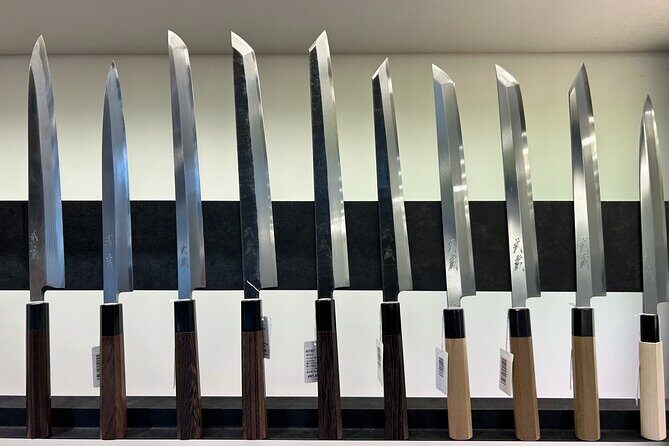
From food to craft: Tsubaya Knives focuses on Japanese knife-making traditions, including references to sword techniques that were passed down. The stop is especially interesting if you like the idea that Tokyo carries working trades—not just souvenir shops.
Admission is listed as free, which makes it a strong “value stop” if you want something memorable without paying an extra entry fee. Still, watch your pacing: a one-hour stop can feel short once you start reading and watching what’s going on.
Potential drawback of this segment: If you’re the kind of person who likes to window-shop and chat, both a meal stop and a craft stop can stretch your day. That’s where the private nature helps—you can slow down or skip without ruining the whole itinerary.
Choosing Between Skytree Views or Ueno Park Calm
Not every stop will be in your final route, but the choices matter because they represent two different Tokyo moods.
Tokyo Skytree
If you choose it, Tokyo Skytree gives you downtown Tokyo from observation decks. It’s a big skyline moment, and the tour lists the admission as not included, so you’ll want to budget for the view.
This is the classic option when you want a sense of scale. Tokyo is hard to mentally map without an overview, and Skytree is one of the most straightforward ways to get that.
Ueno Park (plus museums nearby)
Ueno Park shifts the mood from “viewpoint” to “wander.” The tour notes that Ueno is large and also home to Tokyo National Museum, the National Museum of Western Art, and Ueno Zoo. Admission for the park itself is free, but museums and zoo entries would be separate if you choose to go inside.
I like Ueno for visitors who want Tokyo that feels less about screens and more about people moving through outdoor space. It’s also a handy hub if you’re trying to connect culture with everyday life.
Practical tip: If your goal is a broad Tokyo first impression, Skytree can do the heavy lifting. If your goal is atmosphere and strolling, Ueno is the better match.
Shrines Like Imado and Yushima Tenmangu for a More Personal Tokyo
East Tokyo has a lot of shrines, but two of the tour options lean into specific meanings.
Imado Shrine and the maneki-neko connection
Imado Shrine is described as a birthplace of the maneki-neko, the beckoning cat. That’s a fun detail because it links a popular cultural icon to a real place in Tokyo. The grounds also feature maneki-neko scattered around, so you’re not just hearing a legend—you can literally see the iconography in context.
Admission is free, so it’s a low-cost, high-charm stop.
Yushima Tenmangu for learning and exams
Yushima Tenmangu is centered on Sugawara no Michizane, often associated with learning. The tour notes its popularity with students preparing for exams, but it also frames the blessings more broadly as gaining qualifications.
Even if exams aren’t your thing, this shrine is useful because it shows how Tokyo’s belief systems show up in daily ambition. It’s not only tourism—it’s part of how people plan their lives.
Admission is free here as well.
Why these two work on the same kind of tour: They’re both religious places, but they feel different. One is tied to a beloved everyday symbol, and one is tied to education. Your guide can help you match your interest.
Ameyoko to Akihabara: Markets, Manga, and Electronics Reality
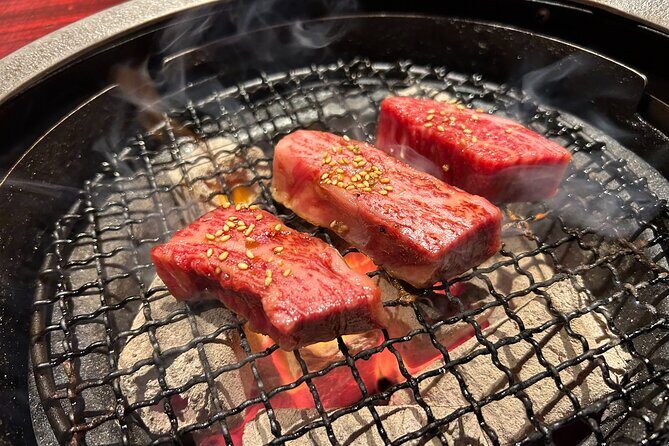
This is where your choice can shift from “old Tokyo” to “modern obsession,” and it can still feel coherent on foot.
Ameyoko Shopping Street
Ameyoko is described as a famous shopping street with appeal rooted in value—good prices for food and products. It’s the kind of place where you can snack as you walk, check out casual goods, and feel the market energy.
Admission is free, so you can roam without tickets.
Mimeguri Shrine
The tour includes Mimeguri Shrine, also mentioned as Miwa Shrine in Sumida Ward, tied to the Sumida River Seven Lucky Gods tour. It’s described as a power spot for financial and business luck.
Power spots can feel a little abstract until you’re standing in the space. This is one of those stops that works well if you like symbolic travel—seeing a place that locals connect to luck and effort.
Admission is free.
Akihabara and the backstreets
Then you roll into Akihabara, including a stop described as Akihabara Junk Street: backstreet electronics stores selling PC peripherals. The tour also references Akihabara as a major center for manga and anime, plus things like maid cafes and large electronics retailers.
Admission is free for the shopping streets and areas, so this tends to be a “spend if you want” zone rather than a fixed-cost experience.
Yodobashi Akiba (Yodobashi Camera)
If you choose this, Yodobashi Akiba is listed as a major consumer electronics retailer with large sales floors. It’s a practical add-on if you want to compare brands, see gadgets, or just understand the scale of Tokyo’s tech retail world.
Admission is free.
A small caution: Akihabara can eat time. If you’re trying to fit other neighborhoods into a short day, pick your tech moments carefully and keep one eye on meeting points and return logistics.
Nihonbashi and Ginza: Department Store History Meets Modern Shopping
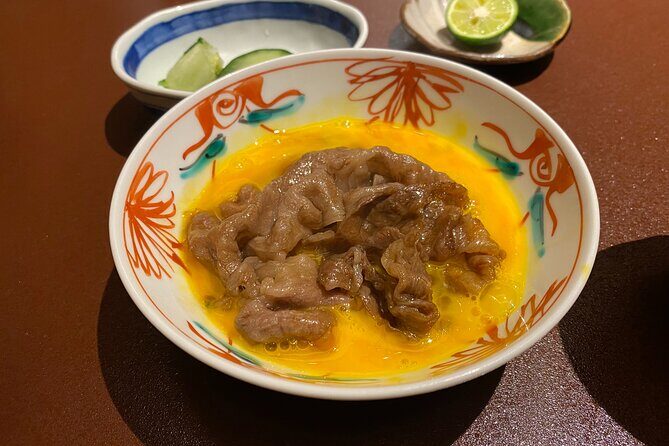
A nice feature of the tour is that it doesn’t stop at “cool markets.” It goes into Tokyo’s refined shopping spine.
COREDO Muromachi 1
COREDO Muromachi 1 is a commercial complex in Nihonbashi with long-established stores and a movie theater mentioned as part of the area mix. It’s an in-between space: not as street-market chaotic, but not sterile either.
Admission is listed as free for the stop area.
Nihombashi Mitsukoshi Main Store
Nihombashi Mitsukoshi Main Store is described as the oldest department store in Japan, with a basement level listing lots of shops selling foods and bento boxes. If you like the idea of one-stop sampling, this is the kind of place that can quietly take over your afternoon.
The stop itself is free, but what you buy isn’t.
Ginza and Ginza Itoya
Ginza is framed with history tied to the Edo-period silver coin foundry. The vibe is polished, and the shopping is a real part of the experience rather than an afterthought.
The tour also mentions Ginza Itoya Hontren, a stationery specialist founded in 1904 and marked by a red paperclip-shaped sign. For people who like paper goods, pens, and giftable details, Itoya is the kind of place where you can wander without it feeling pointless.
Admission is free for the stop areas.
The East Gardens of the Imperial Palace
Then you get a breather: the East Gardens of the Imperial Palace (Edo Castle ruins) are described as a tranquil oasis. Even if you’re not a history nerd, this segment is valuable because it changes the pace of your day.
Admission is listed as free for this stop.
My take: Ginza is often seen as expensive. On this tour, it feels more like a place to walk, compare, and learn how Tokyo keeps old and new side by side.
Tsukiji Outer Market and Sushi Dai When You Want Food That’s Part of the Plan
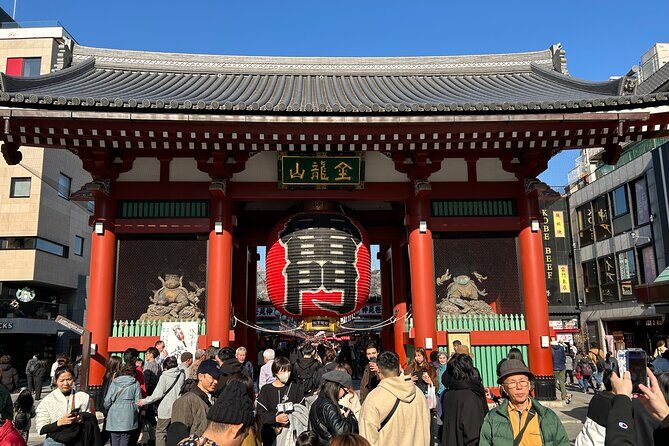
If food is one of your main interests, the tour’s Tsukiji segment is the most straightforward way to make it happen without building your own route from scratch.
Tsukiji Jogai Market (Outer Market)
Tsukiji Outer Market is described as popular with foreign tourists and known for connecting through food and sushi. The tour highlights that a large share of visitors are international, and that the market’s appeal is the way it turns eating into a shared experience.
Admission is listed as free.
Sushi Dai
Then there’s Sushi Dai, where the tour description emphasizes daily ingredient selection and sushi topping preparation, with rice described as warm to the touch and sizing noted as filling.
Admission is not included for this stop. Still, it’s one of the most direct “pay for the experience” moments in the list.
Practical advice: If you plan to do Tsukiji + another food stop like Imahan, consider how your stomach handles multiple big meals. The best day plans leave breathing room between food highlights.
Kabukiza, Uniqlo Ginza, and Seiko House Ginza for Modern Culture Notes
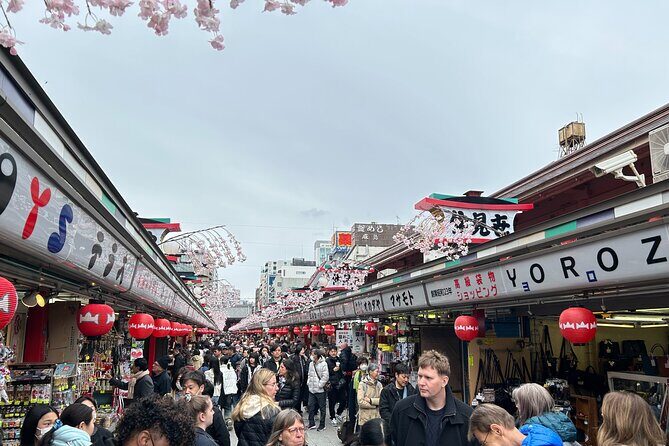
This is the stretch that works best if you want Japan’s everyday modern culture alongside its traditional arts.
Kabukiza Theater
Kabukiza Theater is tied to kabuki, a traditional performing art with over 400 years of history and UNESCO intangible cultural heritage status. It’s a big cultural stop, but the tour lists admission as not included.
If you’re curious and want a real performance angle, this is the kind of optional ticket that can turn a walk into a full cultural event.
Uniqlo Ginza
Uniqlo Ginza is the global flagship store, described as the largest store in the world with multiple floors and lots of selection. Admission is free for the stop.
This won’t be for everyone, but it’s a strong choice for people who want to understand how modern Tokyo brands operate in a major public space.
Seiko House Ginza (Wako Main Building)
The tour also references the Wako Main Building as a clock tower symbol of Ginza, noted to be renamed Seiko House Ginza in 2022. This is a “look up” moment, good for photography and for understanding Ginza’s identity through landmarks.
Admission is listed as free.
Why I’d include this in a private tour: The balance makes sense only if someone can help you decide what fits your energy level. A private guide makes it easier to keep your day from turning into a list of places you walked past.
Price and Time: Getting Value From a 2-Hour to 1-Day Private Guide
At $65.15 per person, what you’re buying is time with a local guide and the flexibility to shape your route around your interests. Since it’s a private tour, you’re not dividing attention across a large crowd. That matters in Tokyo, where it’s easy to lose momentum if you’re relying on guesswork.
The tour runs from about 2 hours up to 1 day. If you pick three stops wisely, you can cover a lot without doing that exhausting Tokyo thing where your legs carry you but your brain is too tired to notice anything.
What’s included is the walking tour and guide time, including visits in the broad areas of Asakusa, Ueno, Akihabara, Nihonbashi, and Ginza. What’s not included tends to be the parts you’d likely pay for anyway: meals (like Imahan and Sushi Dai), shopping, private transport, and entrance fees for add-ons such as Tokyo Skytree and Kabukiza.
So here’s the real value question: Does your plan include at least one paid upgrade you care about, plus a couple free cultural stops? If yes, the guide time often feels worth it because you’re not just consuming sites—you’re getting help choosing what to skip.
Should You Book This Tokyo East Tour?
Book it if you want a Tokyo day that matches your interests instead of forcing you into someone else’s idea of perfect. I’d especially recommend it if you like mixing classic Asakusa culture with modern areas like Akihabara and Ginza, and you’re the type who wants context, not just photos.
Skip it (or shorten your expectations) if you want a long list of ticketed attractions packed into every hour. The tour is built to let you choose your big three, and some famous add-ons cost extra. Also, since it’s a walking tour with moderate physical fitness noted, plan to keep your pace realistic.
If you’re traveling as a pair or small group and want the day to feel personal—like guides such as Kazuo Hirose adjusting the flow to your likes—this is a strong pick. You’ll end the afternoon with Tokyo mapped in your head, not just memories on your phone.
FAQ
What’s the meeting point for the tour?
The tour starts at Kaminarimon 2-chōme-3-1, Asakusa, Taito City, Tokyo 111-0032, Japan.
How long is the tour?
It’s listed as approximately 2 hours to 1 day.
Is this tour private?
Yes. It’s a private tour/activity, and only your group participates.
What’s included in the tour price?
The included items are the tour guide and a walking tour that visits Asakusa, Ueno, Akihabara, Nihonbashi, and Ginza.
What isn’t included?
Entrance fees for you, transportation fee(s) for you (private transportation), lunch (for yourself), shopping costs, and private transportation are not included.
Where does the tour end?
This activity ends in a different location. Exact end details are provided in the booking information.
Can I cancel for a refund?
Yes, you can cancel up to 24 hours in advance for a full refund. If you cancel less than 24 hours before the start time, the amount paid is not refunded.
Easier with a Guide

More Tours in Tokyo




More Tour Reviews in Tokyo




Fresh reviews from around Tokyo






Guided, compared.
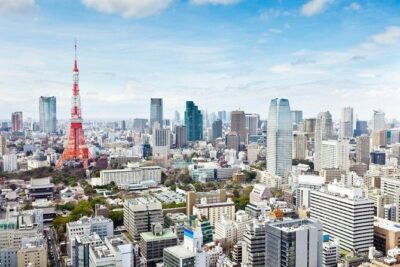 ★ 5.0Tokyo 6hr Private Tour with Government-Licensed GuideFrom $1553,902 reviews
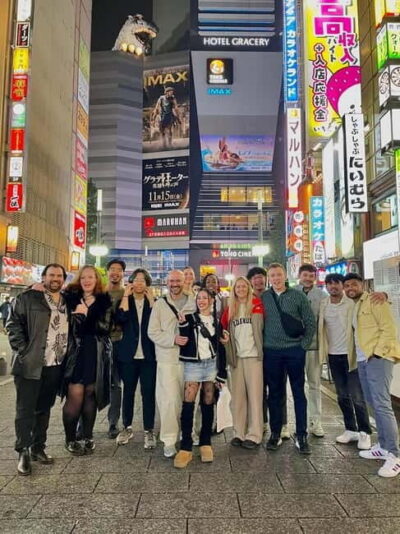 ★ 4.9Shinjuku Local Bar and Izakaya Guided Walking TourFrom $341,794 reviews
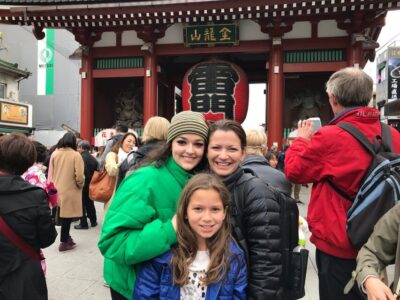 ★ 4.8Private City Highlights Tour with Local GuideFrom $1061,433 reviews
 ★ 4.9Tsukiji Fish Market Guided Walking TourFrom $221,397 reviews
 ★ 5.0Tokyo 4hr Private Tour with Government-Licensed GuideFrom $1091,394 reviews
 ★ 5.0Tokyo Guided Small-Group Biking TourFrom $1061,250 reviews
 ★ 4.6Samurai Ninja Museum Guided tour and ExperienceFrom $271,010 reviews
 ★ 5.0Tsukiji Fish Market Guided Tour and Sushi Making with Pro ChefFrom $104775 reviews