
Reviewed · ASAKUSA TOURS
Cherry Blossom Highlights, Asakusa, Ueno, Imperial Palace Garden
Tokyo cherry blossoms, planned for you.
This private tour is a smart way to hit several top spots without worrying about timing or transit. I like the Imperial Palace East Gardens start for that calm, historical mood, and I like the Asakusa/Senso-ji stop for the classic temple-and-street vibe. One thing to keep in mind: cherry blossoms move fast, so the exact views (and even where you go next) can shift if bloom timing is earlier or later than expected.
You’ll also get food built into the route: Tsukiji is a full stop, and you’ll have a chance to handle lunch on your own with sushi options. Your guide helps you use public transportation, and the “private” part means your day can flex to your pace instead of running on autopilot with strangers.
In This Review
- Key Highlights You’ll Actually Feel
- The Cherry Blossom Route That Links Imperial Palace to Ueno
- Imperial Palace East Gardens: Edo Castle Ruins and a Gentle Opening
- Tsukiji Fish Market: A Market Stop Made for Real Sushi Decisions
- Senso-ji Temple in Asakusa: Cherry Blossoms + Nakamise Street
- Ueno Park: Thousand-Tree Viewing With Shinobazu Pond
- Ameyoko Shopping Street: The Local Tokyo Mood After the Gardens
- Price and Value: What You’re Paying For at $221.12
- How the Guide Helps You Use Public Transit (Without Stress)
- When Blossoms Are Early: The Seasonal Shift That Saves the Day
- Who Should Book This Tour (And Who Might Skip)
- Should You Book This Cherry Blossom Highlights Tour?
- FAQ
- How long is the tour?
- What time does the tour start?
- Is it a private tour?
- Does the tour include lunch?
- Are admission tickets included?
- Is pickup offered?
- What happens if the weather is bad?
Key Highlights You’ll Actually Feel
- A morning loop that makes sense: Imperial Palace first, then Tsukiji, then Asakusa, then Ueno. Less backtracking, fewer time traps.
- Cherry blossoms with a backup plan: if peak is early, your guide may steer you toward later-blooming options like Hama-Rikyu-type swaps.
- Tsukiji’s food energy in an organized hour: enough time to understand the market flow and still eat.
- Senso-ji + Nakamise Street timing: you get the temple area and the shopping street feel, not just a photo stop.
- Ueno Park’s cherry tree concentration: you’re walking among major viewing zones like Shinobazu pond and Tokugawa-family temple sites.
- Ameyoko for local Tokyo flavor: a classic shopping arcade where eating and browsing happen right on the street.
More mornings around Senso-ji and the old town
- Tokyo: Japanese Dance Cabaret Theater Asakusa-Kaguwa Ticket★ 4.8 · 2,270 reviews
- Tokyo: Asakusa Walking Tour with Sensoji Temple Visit★ 4.8 · 1,583 reviews
- Tokyo Asakusa Rickshaw Tour★ 5.0 · 1,375 reviews
The Cherry Blossom Route That Links Imperial Palace to Ueno
The best cherry blossom days in Tokyo are the ones where you can walk from view to view without feeling rushed. This tour is built around a logical geographic loop, starting at the old castle area of the Imperial Palace and ending in the Ueno/Ameyoko zone.
Even the timing works for photos. You’re out early enough to enjoy lighter crowds at the first parks, then you move into temple and market areas where energy rises. It’s also a good format if you want structure but still like to stop and stare at trees for a few extra minutes.
Because blooms can peak at different times from one neighborhood to another, your guide may adjust the precise plan based on what’s actually in bloom. That flexibility is a real value in March and early April.
Imperial Palace East Gardens: Edo Castle Ruins and a Gentle Opening
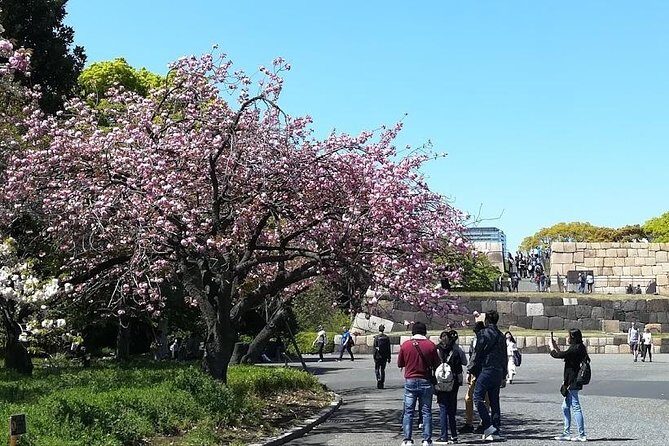
Your day begins with the East Gardens of the Imperial Palace on the grounds of the old Edo Castle ruin site. It’s not just a pretty park. You’re walking through a landscape of moats and stone walls—an easy way to understand how Tokyo’s center evolved.
This stop also includes a “lung of the metropolis” style of feel. The palace grounds cover about 90 hectares of forested space, so even when the city is loud elsewhere, this area reads calmer. You get a full hour here, and that’s enough time to do a slow stroll without turning the rest of the day into a sprint.
The trade-off is that the cherry timing here can be unpredictable. If blossoms are already past their best, the guide may steer you toward another location with later blooms. That’s not a problem if you show up ready for an adaptable plan.
Tsukiji Fish Market: A Market Stop Made for Real Sushi Decisions
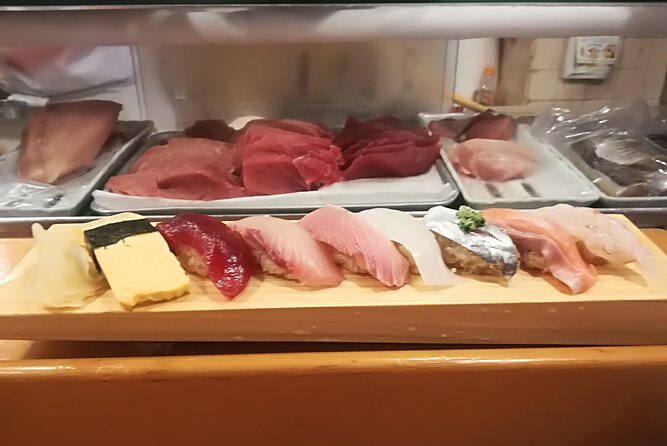
Next comes Tsukiji, and the tour frames it as a lively food place rather than a museum-style visit. At about noon, the outer market streets can feel like a scent and sound track—grilled items, seafood chatter, and lines for quick bites.
This is your chance to understand what Tsukiji is best at: grabbing small food on the go while watching how people move through the lanes. You’ll likely notice stalls with egg rolls and grilled seafood choices, plus lots of tuna and scallop-related signage around the area.
Because lunch is not included, you control what you order. That can be a drawback if you’re hoping for a fully paid meal, but it’s often a plus for value. You can pick what looks best that day and match your budget.
The other practical advantage: you’re not trying to figure out market chaos alone. With a guide, you can spend that hour focusing on what you want to eat, not on guessing where to stand and when to move.
Senso-ji Temple in Asakusa: Cherry Blossoms + Nakamise Street
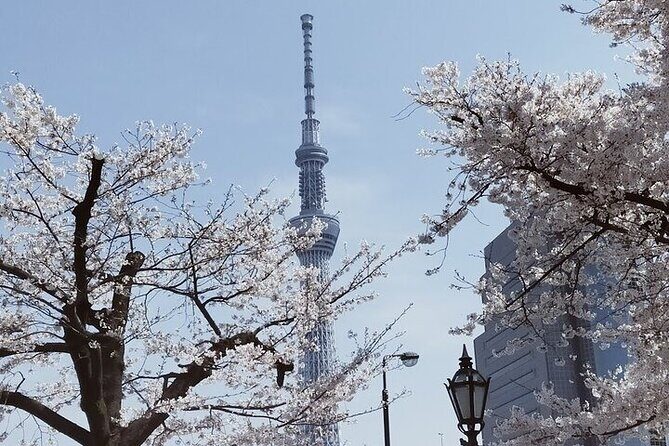
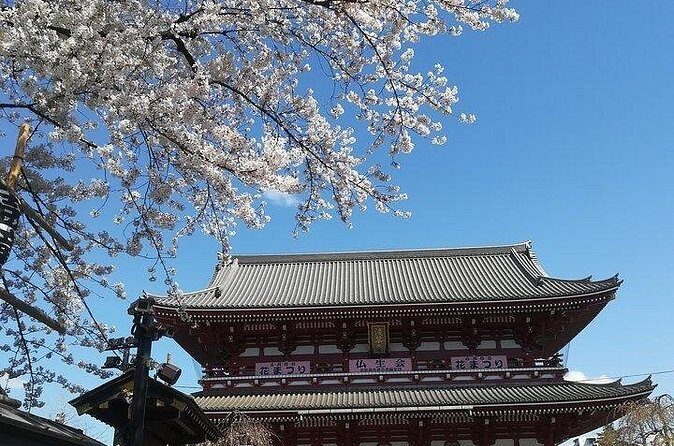
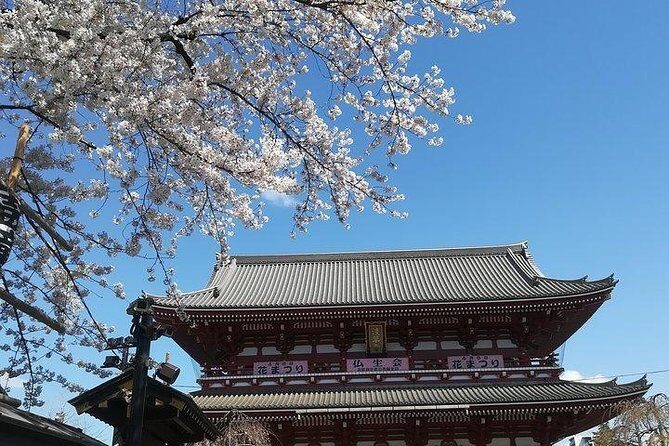
Then you head into Asakusa for Senso-ji—one of Tokyo’s older and most famous temples. This stop is built for that classic cherry blossom postcard: temple grounds, flower views, and an atmosphere that feels “Tokyo in one place.”
You’ll also walk down Nakamise Street, the shopping stretch that runs from the Thunder Gate toward the inner temple approach. This is the part where you see traditional souvenir style shops and street snacks that are part of the experience, not just an add-on.
The cherry blossom factor is important here. Senso-ji’s areas can create a “layered” feel: bright steps and pathways with trees around the edges. It’s usually a place where you’ll want to slow down, because the best photos come from small changes in angle, not from one perfect spot.
A consideration: this area can draw heavy crowds in peak season. The guide’s job here is to help you move with less guesswork, so you can enjoy the walk without feeling like you’re constantly fighting foot traffic.





Ueno Park: Thousand-Tree Viewing With Shinobazu Pond
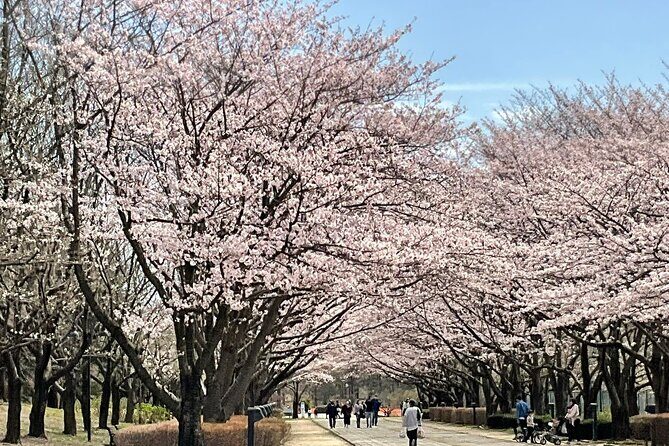
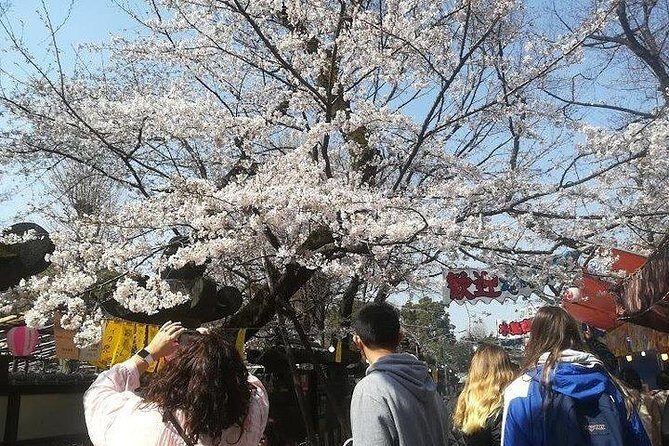
After Asakusa, you shift to Ueno Park, which is one of the marquee cherry viewing zones in Tokyo. The tour’s Ueno stop is about an hour, and in that time you can cover the big viewing areas rather than only seeing one corner.
This is where you’ll find more than a thousand cherry trees and a sense of “park as a destination.” Ueno also has major religious landmarks from the Tokugawa family, including Ueno Toshogu and Kiyomizu Kannnon temple. Seeing those structures near the blossoms helps the whole thing feel historical and not just decorative.
You’ll also be near Shinobazu pond, which adds a second visual layer for photos. Water reflections are often what make cherry blossom images feel extra cinematic. Even if you don’t get perfect reflections, the pond area gives your eyes a place to rest between tree clusters.
One more practical note: Ueno Park is outdoors and you’ll be walking. If you have a tight schedule or you tire easily, this is the part of the day where wearing comfortable shoes matters most.
Ameyoko Shopping Street: The Local Tokyo Mood After the Gardens
To close out the day, you go to Ameyoko, also known as Ameya Yokocho. This is a shopping arcade where the street itself feels like the main attraction—shops, food stands, and browsing happening side-by-side.
What makes this stop work after cherry blossom sightseeing is contrast. Parks and temples are visual and slow. Ameyoko is sensory and practical. You’ll see fresh seafood focus around the arcade, plus daily goods and souvenirs.
The best way to use this hour is to treat it like a snack-and-walk section, not a full shopping spree. If you want gifts, you’ll be able to look around. If you just want to taste the city, you’ll also find food stand options.
It’s also a good moment to ask your guide how to continue after the tour. A flexible end point in a transit-friendly neighborhood helps you avoid an awkward scramble when you’re tired.
Price and Value: What You’re Paying For at $221.12
At $221.12 per person, this tour isn’t aimed at the cheapest end of Tokyo sightseeing. It is aimed at value through time saved and guidance provided.
Here’s what you’re getting that usually costs money if you try DIY:
- A licensed guide through several major areas in one day
- Help using public transportation so you don’t waste your energy figuring routes
- Private tour format, meaning only your group participates
- Mobile ticket support for smoother entry and coordination
What you’re not getting:
- Lunch is not included
- Private transportation is not included
That sounds basic, but it actually matters for your budget. Your big “extra” costs will be what you eat, plus any small shopping you choose to do. If you’re planning sushi at Tsukiji anyway, you can control your spend by picking simpler bites or a bigger meal, depending on your mood.
Also, several stops have free admission tickets in the tour plan. That keeps your day from turning into surprise entry fees. The guide’s value shows up most in how you move between those free/low-fee zones without wasting time.
If you’re a couple, a family, or a small group, the private setup can feel like a smart trade: you pay more than a group bus, but you gain a calmer day.
How the Guide Helps You Use Public Transit (Without Stress)
One of the most useful parts of this experience is the learning angle around public transportation. You’re not only being driven from place to place. You’re guided through how Tokyo transit works in real life—walk, board, and transfer with a plan.
That’s especially valuable on a day like this, because you’re combining parks, a famous temple area, and market streets. Each location has its own crowd rhythm and walking pattern. A guide helps you avoid getting turned around, which can happen fast when you’re trying to read signs while also looking for blossoms.
There’s also a “private tour” practical benefit: your pace can be yours. If you want extra time near one tree cluster at Ueno, your guide can often adjust within the day’s flow.
A small caution from past experiences: not all guides communicate equally in English. The tour still focuses on delivering the day, but clarity can affect how much you absorb. If language comfort is a top priority for you, plan to ask questions early and keep your expectations flexible.
When Blossoms Are Early: The Seasonal Shift That Saves the Day
Cherry blossom tours live and die by timing. Even if you’re there during the classic season window, the bloom peak can land a little earlier than expected.
In at least one past scenario, blossoms were almost over at the Imperial Palace area on a given date. The guide responded by steering the day toward a later-blooming garden option—Hama-Rikyu was mentioned as a solution when the first stop was past peak.
This is why I like the tone of this tour: it’s not pretending every tree will be perfect. It’s designed to keep the experience enjoyable even when the season runs ahead. If you’re the type who wants guaranteed peak-perfect petals, no Tokyo cherry tour can fully promise that. But a flexible guide can still help you get great views.
If you’re going in early spring, I suggest you treat this as a day of prime cherry blossom atmosphere, not a single-tree lottery ticket.
Who Should Book This Tour (And Who Might Skip)
This tour fits you if you want a guided plan that hits Imperial Palace, Asakusa/Senso-ji, and Ueno Park in one day, with food time added through Tsukiji. It’s also a good pick if you’re new to Tokyo and want help using public transportation without feeling lost.
It’s less ideal if you only want one area—like just Ueno—or if you dislike market environments. Tsukiji and Ameyoko are active and crowded in peak season. If you prefer quiet parks and slow museums only, your energy might be better spent elsewhere.
It also helps if you’re okay with moderate walking. The tour is listed for moderate physical fitness, which matches the rhythm of parks plus temple streets plus a shopping arcade.
Should You Book This Cherry Blossom Highlights Tour?
I’d book it if you’re trying to get a lot of Tokyo character into one cherry blossom day, and you value a guide who helps you move and make choices. The best part is the blend: temple and park scenery plus a food stop you can actually use for lunch.
I’d think twice if you’re traveling for one specific must-see blossom location and you’re not interested in adapting the route if bloom timing is off. Also, if language clarity is a big priority for you, start by confirming communication expectations at booking.
If you want a practical way to see cherry blossoms across Tokyo’s most famous neighborhoods—without spending your whole vacation comparing maps and transit routes—this is a strong option.
FAQ
How long is the tour?
It runs about 6 to 7 hours.
What time does the tour start?
The start time is 9:00 am.
Is it a private tour?
Yes. It’s private, and only your group participates.
Does the tour include lunch?
No. Lunch is not included. Tsukiji is a stop where you can enjoy sushi options you purchase yourself.
Are admission tickets included?
Admission tickets for the listed stops are free in the tour plan.
Is pickup offered?
Pickup is listed as offered.
What happens if the weather is bad?
The experience requires good weather. If it’s canceled due to poor weather, you’ll be offered a different date or a full refund.
More Tour Reviews in Tokyo



Around Senso-ji: More Asakusa Picks
Fresh reviews from around Tokyo






Asakusa Tours, compared.
 ★ 4.8Japanese Dance Cabaret Theater Asakusa-Kaguwa TicketFrom $492,270 reviews
 ★ 4.7Meiji Shrine, Asakusa, Skytree Bus Tour and CruiseFrom $1221,986 reviews
 ★ 4.8Asakusa Walking Tour with Sensoji Temple VisitFrom $221,583 reviews
 ★ 5.0Tokyo Asakusa Rickshaw TourFrom $421,375 reviews
 ★ 4.5Tokyo Panoramic 1 Day: Meiji Shrine, Asakusa, Odaiba and SKYTREE®From $851,222 reviews
 ★ 4.8Samurai Ninja Museum Asakusa: Samurai Sword Lesson & TourFrom $63306 reviews
Asakusa Sightseeing Tour by RickshawFrom $35195 reviews
Asakusa Kimono Dressing and Matcha ExperienceFrom $56173 reviews
★ 4.8Samurai Ninja Museum Asakusa: Samurai Sword Lesson & TourFrom $63306 reviews
Asakusa Sightseeing Tour by RickshawFrom $35195 reviews
Asakusa Kimono Dressing and Matcha ExperienceFrom $56173 reviews
Browse the lists this tour appears in