
Reviewed · TOKYO
25-Min Downtown Helicopter Tour : Tokyo Skytree and Tokyo Tower
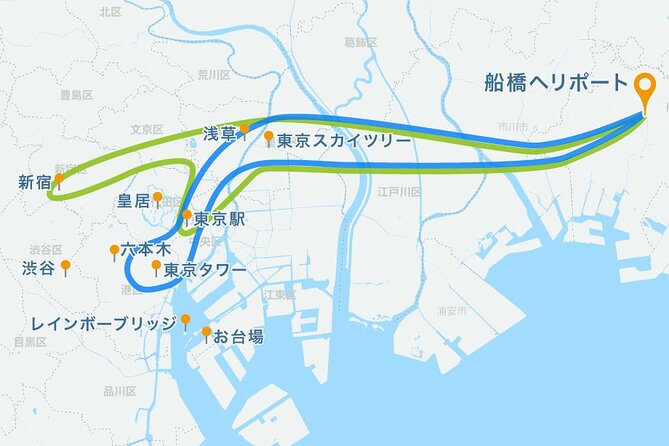
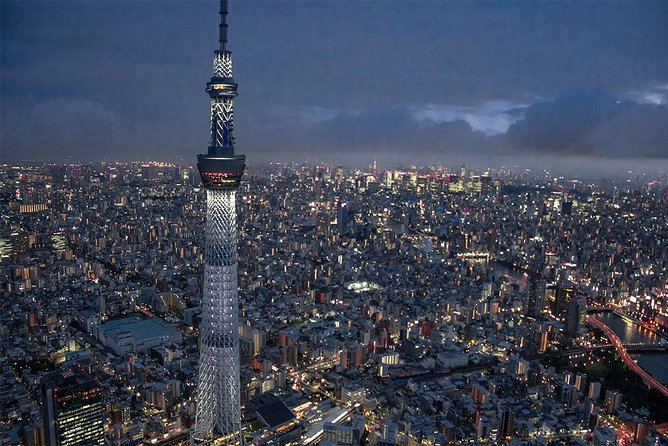
Tokyo looks different from above. This private downtown-style helicopter tour gives you a compressed view of Tokyo’s big-name sights in about 25 minutes of flight—with a route you can tailor to your interests. Expect passes over Tokyo Tower, Odaiba, Shibuya, and more, without spending the day hopping between neighborhoods.
I also like the format for a practical reason: it’s built for a small group (up to 3), so the experience feels focused instead of crowded. The one real consideration is that it’s weather-dependent, so if conditions are poor, your flight can be canceled or rescheduled, and the tour still has strict weight limits to follow.
In This Review
- Key takeaways
- Why a 25-minute Tokyo helicopter tour beats a full day of sightseeing
- Getting to the Funabashi meeting point and what private means for you
- Flying over Tokyo Tower: getting your bearings fast
- Odaiba from above: the harbor-and-future Tokyo angle
- Shibuya in the air: speed, geometry, and people-free views
- Romance and night skies: when the Tokyo lights payoff is biggest
- Price value for groups up to 3: what you really pay for
- Practical tips to make the flight smoother (and photos worth it)
- Should You book this 25-minute downtown Tokyo helicopter tour?
- FAQ
- How long is the helicopter tour?
- How much does the tour cost, and how many people can book together?
- Is this a private tour?
- Which landmarks will we fly over?
- Where does the tour start, and does it return there?
- Are there weight limits?
- What happens if the weather is bad?
- Can I cancel for a full refund?
Key takeaways
- 25 minutes in the air for big-sight views without the walking grind
- Small private group (up to 3) for a calmer, more personal ride
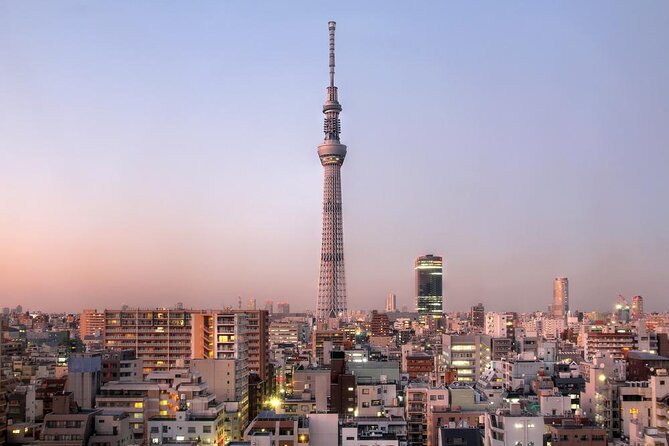
- Tokyo Tower, Odaiba, and Shibuya are the main headline flyovers
- Romantic timing works well, especially if you aim for night city lights
- Weather matters since poor conditions can cancel flights
- Strict weight limits are part of the deal, so check early
Before you commit, see how this one stacks up against a few Tokyo favourites:
- Mt Fuji and Hakone 1-Day Bus Tour Return by Bullet Train★ 5.0 · 26,383 reviews
- 1-Day Tokyo Bus Tour★ 5.0 · 14,250 reviews
- Tokyo: teamLab Planets TOKYO Digital Art Museum Entry Ticket★ 4.6 · 9,779 reviews
Why a 25-minute Tokyo helicopter tour beats a full day of sightseeing
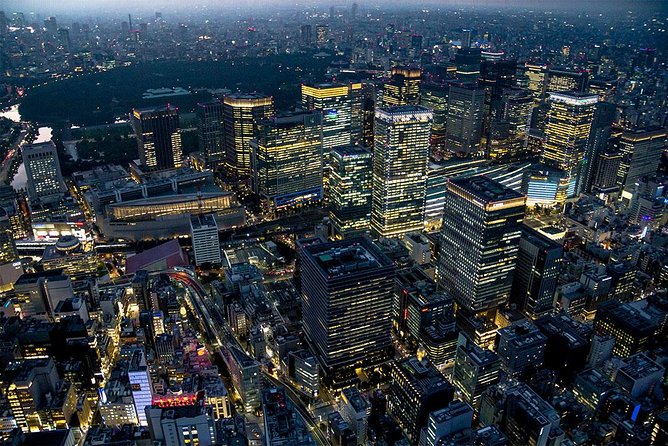
Tokyo is huge. By the time you’ve mapped trains, timed transfers, and walked from station to sight, the day can feel like logistics instead of magic. A short helicopter flight flips that. You spend your time looking down instead of moving around. For a first visit, it helps you get your bearings fast. For a return trip, it’s a fresh angle on places you already know.
What makes this tour especially attractive is the time promise: the flight itself is 25 minutes, and the activity duration is listed at about the same. That matters because it keeps expectations realistic. You’re not trying to replace a whole travel day—you’re buying a concentrated hit of perspective. From above, Tokyo’s major landmarks and waterways read instantly, and you can see how areas connect in a way streets-level sightseeing can’t.
The other big win is that you’re not in a crowd. This is a private tour, capped at a maximum of 3 people per booking. That size tends to feel more like a shared moment than a group scramble, which is why it fits couples so well.
Getting to the Funabashi meeting point and what private means for you
This tour meets at 1 Chome-44 Kanasugi, Funabashi, Chiba 273-0853, Japan, and it ends back at the meeting point. Being “near public transportation” helps here, because you’re not forced into a complicated private transfer plan just to start the experience.
You’ll also want to plan around the tour’s confirmation rhythm. Confirmation is provided within 48 hours of booking, subject to availability. In practice, that means it’s smart to finalize your schedule but also stay flexible enough to handle the weather reality (more on that later).
The private nature is more than a label. With only your group in the helicopter, you avoid the awkwardness of squeezing in with strangers while trying to focus on the views. It’s also how the tour can feel customizable to your interests—so if you’re more excited about skyline photos than about landmarks at street level, you’re not stuck in a rigid script.
Finally, you’ll carry a mobile ticket, which is convenient for Tokyo travel where paper tickets can become an extra hassle.
Flying over Tokyo Tower: getting your bearings fast
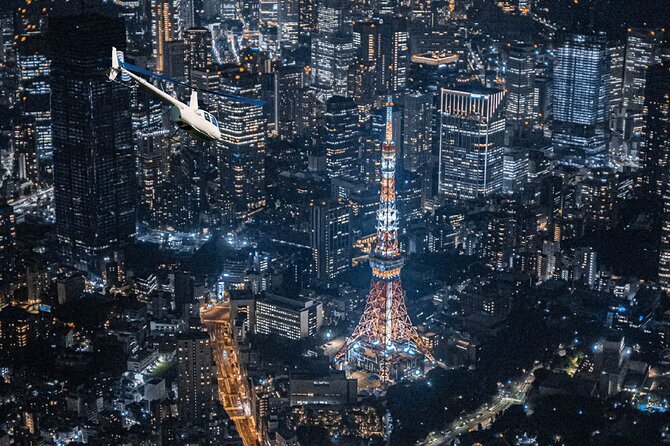
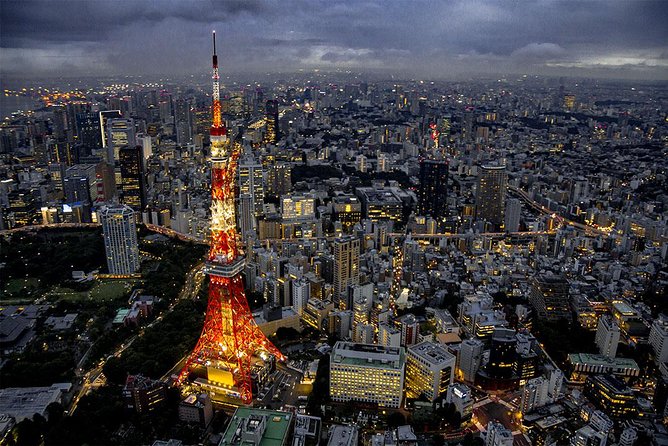
Tokyo Tower is one of those landmarks where, from the street, you can miss the scale. From the air, it’s a navigation cheat code. You see the tower as a point of reference, and suddenly the surrounding neighborhoods make more sense—what’s close, what’s far, and how the city layers itself.
What I like about a flyover like this is the speed of understanding. In a few minutes overhead, you learn the skyline logic that takes hours to build by train. Even if you’ve walked around the broader area before, a high-angle view helps you place what you’ve seen into a wider map.
There’s also a practical advantage for photography. A helicopter view can give you wide-angle compositions that would be harder to recreate on the ground without changing viewpoints repeatedly. You’re not trying to chase perfect sightlines; you’re watching them unfold.
The only drawback to keep in mind: a helicopter flight is short. So while you’ll likely get clear, recognizable views, you won’t have long stretches to linger on just one subject. Think “overview first,” then decide what you want to explore later on foot.
Odaiba from above: the harbor-and-future Tokyo angle
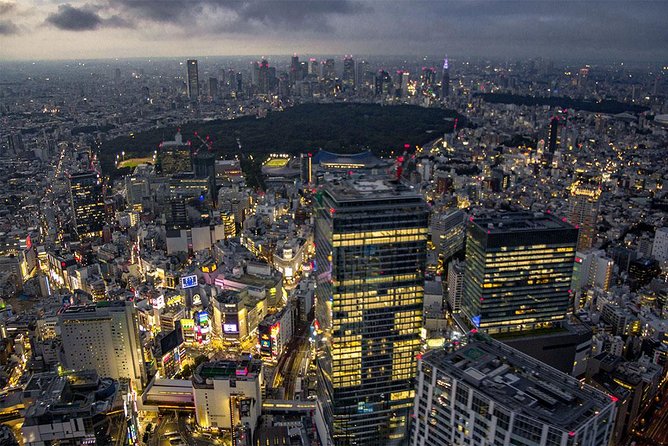
Odaiba is a great example of why helicopter time can feel like value. From streets, the area can read like a set of attractions and waterfront promenades. From above, it becomes a shape: shoreline curves, bridges, and the way built-up sections sit beside the water.
That’s useful if you want one of the quick “big picture” moments Tokyo can offer. You’ll be able to see how Odaiba connects visually to central Tokyo and how water and transport routes slice through the city grid. If your trip includes a lot of walking and transit already, this kind of overhead view gives your brain a rest while still feeding your curiosity.
It also helps with planning. Once you understand where the waterfront sits relative to other landmarks, you can pick a follow-up day with fewer wrong turns and less guesswork. A lot of people underestimate how much time street-level sightseeing can lose to route planning; a brief overhead view can cut that waste.
As for limitations, the same rule applies: the flight is 25 minutes. So the Odaiba moment is likely a “see it, recognize it, move on” kind of experience, not a slow sightseeing tour with extended time over any single area.





Shibuya in the air: speed, geometry, and people-free views
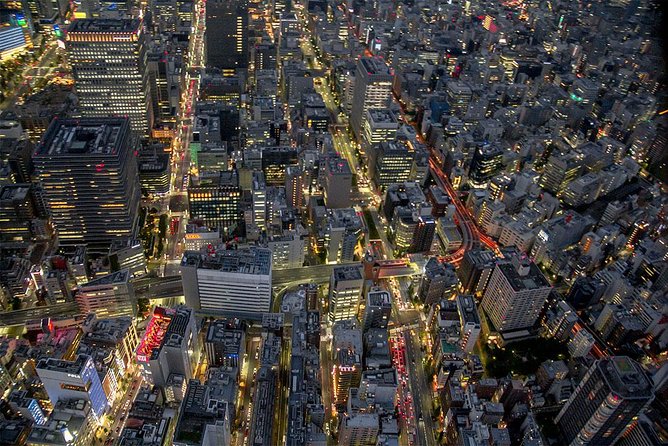
Shibuya is famous for energy. You see crowds and street-level motion, but from above, the story changes. You notice geometry: the intersection patterns, the density, and the way different blocks layer together. It’s almost like watching the city’s machine parts work.
I like this overhead perspective for one simple reason: it makes scale obvious. Streets can trick you into thinking you’re focused on one district. From the helicopter, you see the bigger network around it—the connections, the spacing, and how Shibuya fits into a larger urban web. That context is hard to replicate quickly using only trains and walking.
There’s also a calmer vibe from the air. No stopping for signals, no crowds to work around, no trying to find a viewpoint that’s already packed. You’re watching from inside the helicopter, so the view feels continuous.
The consideration here is again time. Shibuya is complex and visually rich, but you’re not going to get a long, slow tour of every detail. You’ll get recognizable “Shibuya-from-above” impressions that are ideal for memories and photos, then you can go deeper later if you want.
Romance and night skies: when the Tokyo lights payoff is biggest
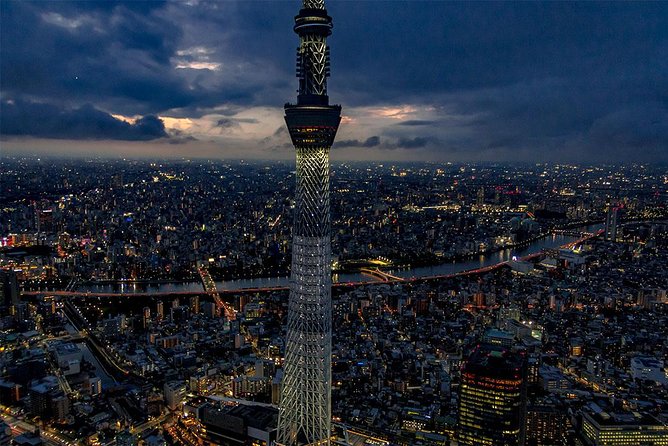
This tour is clearly positioned for couples. The highlight list calls out romantic occasions, and the review summary backs it up with a strong recommendation to do it at night to admire Tokyo’s lights. If your idea of romance includes atmosphere, not just scenery, that matters.
Night flights can turn the city into a glowing pattern. Instead of daylight structure—roads, bridges, and landmarks—you get light density. Tokyo’s electric look is one of its signature traits, and a helicopter perspective can turn that into a dramatic, city-wide visual instead of a few lit streets you pass by.
If you’re planning a proposal, anniversary, or just a special date, the small group size is a bonus. Up to 3 people means fewer awkward moments and more space for your own experience. And because you’re flying over major sights like Tokyo Tower and Shibuya, it’s not just a generic “seeing Tokyo at night” moment—it’s tied to iconic references.
The main caveat is still weather. Night plans are especially tempting, but helicopter flights depend on good conditions. If visibility or weather isn’t right, expect the provider to handle it by offering a different date or a full refund, rather than pushing through.
Price value for groups up to 3: what you really pay for
The price is $1,100.93 per group (up to 3). That’s not cheap on a per-person basis if you’re traveling solo or as a duo. But the value shifts quickly when you spread it.
- If 3 people go, you’re effectively looking at about $367 per person.
- If 2 people go, it’s roughly $550 per person.
So the question isn’t only cost—it’s what you’re buying. You’re paying for three things you can’t easily recreate: a 25-minute flight, a private experience, and a high-level view of multiple Tokyo icons in one go. Most land-based sightseeing can cover multiple areas too, but it takes time, walking, and transit. This is about trading logistics for perspective.
Also consider timing. The tour is commonly booked about 37 days in advance on average, which is a clue that good dates (and especially good weather windows) don’t always hang around. If you have a specific day in mind—like a birthday or a night plan—I’d treat it as something to secure earlier rather than hoping it works out at the last minute.
And if you compare it to other “wow factor” experiences in major cities, this is one of the rare ones where the “wow” is built into the core format. You’re not waiting for a museum ticket to be amazing—you’re already in the air.
Practical tips to make the flight smoother (and photos worth it)
Keep your expectations tuned to the format. The flight time is 25 minutes, so you want to decide ahead of time what matters most to you. If it’s photos, be ready to shoot quickly when the big landmarks come into view. If it’s sightseeing, focus on recognition—Tokyo Tower, Odaiba, Shibuya—then let the rest be bonus.
Weather is the big operational factor. The tour requires good weather, and the data specifically notes that if you want to fly in about 5 days, you should check the forecast because bad weather will cancel the tour. Plan your trip so you’re not locked into a tight itinerary where you’d be left disappointed if the flight shifts.
Also, check the weight rules early. The info lists 265 lbs (per passenger) and also states a weight limit of 220kg per flight / 120kg per passenger. Those numbers matter for safety, so don’t assume they’re flexible.
Two more practical wins:
- The tour uses a mobile ticket, which usually simplifies things in a city that runs on transit schedules and quick check-ins.
- It’s described as near public transportation, which can make that first step less stressful.
Should You book this 25-minute downtown Tokyo helicopter tour?
If you want a fast, high-impact way to see major Tokyo icons from above, this tour is a strong yes. It’s private, built for small groups, and it’s explicitly a great fit for romantic occasions. The standout praise centers on the “unique experience” feeling and the incredible views, with a clear nod to night flights for seeing Tokyo’s lights.
Book it if:
- You’re traveling with a partner (or small group) and want a special, not-too-long experience
- You care more about big-picture views than walking tours
- You’re aiming for a night plan and are ready to pivot if weather changes
- You’re comfortable with the reality that helicopter time is short and weather-dependent
Skip it (or at least think twice) if:
- You’re on a solo budget and paying the full group rate would feel steep
- Your schedule can’t handle a weather-driven change
- You fall near the listed weight limits and don’t want the risk of not being able to fly
If you can align those pieces, the math often works out in your favor: you’re buying a rare perspective on Tokyo in one compact, memorable session.
FAQ
How long is the helicopter tour?
The duration is listed as about 25 minutes, with flight time also stated as 25 minutes.
How much does the tour cost, and how many people can book together?
It’s $1,100.93 per group, and each booking allows a maximum of 3 people.
Is this a private tour?
Yes. This is listed as a private tour/activity, meaning only your group participates.
Which landmarks will we fly over?
The recommended flight plan includes flying over Tokyo Tower, Odaiba, Shibuya, and more.
Where does the tour start, and does it return there?
It starts at 1 Chome-44 Kanasugi, Funabashi, Chiba 273-0853, Japan, and it ends back at the meeting point.
Are there weight limits?
Yes. The info lists 265 lbs total weight per passenger and also a 220kg per flight / 120kg per passenger weight limit.
What happens if the weather is bad?
This experience requires good weather. If it’s canceled due to poor weather, you’ll be offered an alternative date or a full refund.
Can I cancel for a full refund?
Yes. You can cancel up to 24 hours in advance for a full refund, and changes made within 24 hours of the start time aren’t accepted.
More Tour Reviews in Tokyo



Fresh reviews from around Tokyo






Tokyo, compared.
 ★ 5.0Mt Fuji and Hakone 1-Day Bus Tour Return by Bullet TrainFrom $16326,383 reviews
 ★ 5.01-Day Tokyo Bus TourFrom $12914,250 reviews
 ★ 4.6teamLab Planets TOKYO Digital Art Museum Entry TicketFrom $259,779 reviews
 ★ 4.0Mt Fuji & Hakone Cruise, Drum Show Bullet Train 1 Day from TokyoFrom $1497,413 reviews
 ★ 5.0Shinjuku Food Tour (13 Dishes at 4 Local Eateries)From $866,603 reviews
 ★ 4.4Tokyo Mt Fuji 5th St & Hakone Cruise Bus Tour w/Bullet TrainFrom $1545,024 reviews
 ★ 5.0Flagship 2-Hours Official Street Go-Kart Tour – Tokyo Bay ShopFrom $644,974 reviews
 ★ 4.5From Tokyo: Mount Fuji Full-Day Sightseeing TripFrom $684,970 reviews