
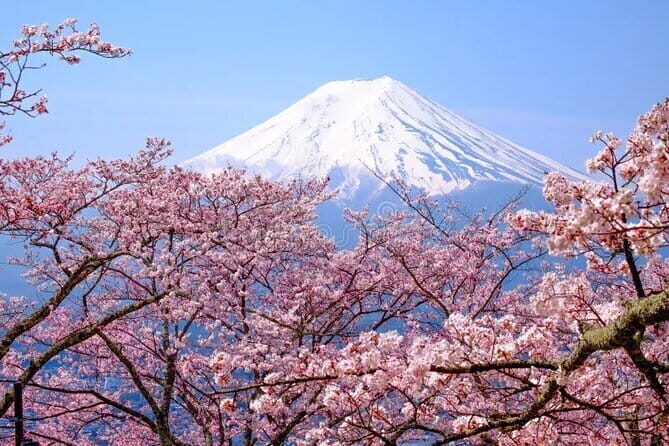
Reviewed · MT FUJI DAY TRIPS
Wonderful Peaks & Peace: Mt. Fuji, Fuji Stupa & Hakone Tour
Mount Fuji hits hard.
This private day tour strings together the most classic Mt. Fuji stops with a few calm, nature-heavy pauses: Mt. Fuji 5th station, peace-focused Chureito Pagoda, UNESCO-area shrines, and the ice wonder of Narusawa Ice Cave. I especially like the pacing for a single day (lots of icons, but not one rushed photo sprint) and the small-group feel (up to 5 in your own vehicle). One consideration: some major sights have optional entry fees, so your day can cost a bit more than the base price.
You start with pickup and roll out in an air-conditioned vehicle with WiFi onboard, so Tokyo logistics don’t eat your whole day. The route is built for visitors who want both the spiritual and scenic side of the Fuji region, plus a stop in the Aokigahara Sea of Trees area for a very different kind of Fuji-adjacent experience.
In This Review
- Key things I’d mark on your planning map
- A smart 10-hour route: why this one-day loop feels doable
- Mt. Fuji 5th station at 3,776 meters: your high-altitude centerpiece
- Chureito Pagoda in Arakurayama Sengen Park: free, famous, and quietly meaningful
- Kitaguchi Hongu Fuji Sengen Jinja: the shrine layer most people skip
- Oshino Hakkai springs: eight sources of Fuji water
- Kawaguchi, Oishi Park, and Lake Yamanaka: the lakeside trio
- Narusawa Ice Cave in Aokigahara: ice pillars year-round
- How guides can make the difference on a tight day
- Price and value: what $370 per group really gets you
- What to expect if the day turns tricky
- Who this tour is best for
- Should you book this Mt. Fuji and Hakone Tour?
- FAQ
- What is the duration of this Mt. Fuji tour?
- How many people are in a group?
- Is pickup and drop included?
- Is there WiFi on the vehicle?
- Do I need to pay for Mount Fuji 5th station?
- Is Chureito Pagoda included in the cost?
- Do I pay for Narusawa Ice Cave?
- Which lakes are included?
- What does the price include?
Key things I’d mark on your planning map
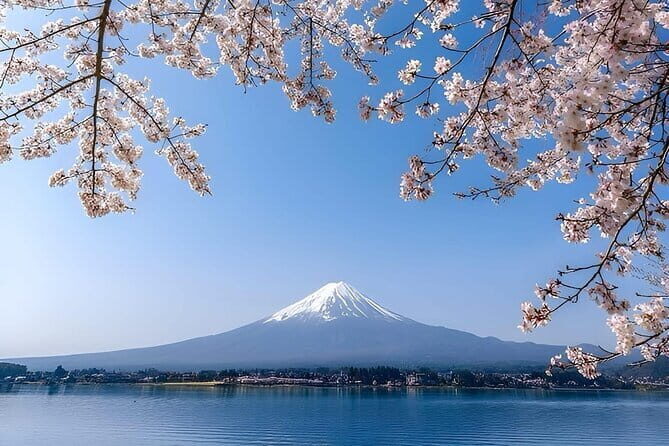
- Mt. Fuji 5th station at 3,776 meters for that high-altitude “this is really Japan” moment
- Chureito Pagoda peace memorial history (added in 1963) with free entry and big photo payoff
- Oshino Hakkai’s eight springs as natural monuments fed by Mt. Fuji aquifers
- Fuji Five Lakes sampling with Kawaguchi, Oishi Park, and Lake Yamanaka in one trip
- Narusawa Ice Cave in Aokigahara with ice pillars and an ice wall visible year-round
- Guides who help you stay on track, including attentive drivers like Prem and Rana and itinerary planners like Puskal
Other routes to the mountain, compared
- Mt Fuji & Hakone Cruise, Drum Show Bullet Train 1 Day from Tokyo★ 4.0 · 7,413 reviews
- Tokyo Mt Fuji 5th St & Hakone Cruise Bus Tour w/Bullet Train★ 4.4 · 5,024 reviews
- From Tokyo: Mount Fuji Full-Day Sightseeing Trip★ 4.5 · 4,970 reviews
A smart 10-hour route: why this one-day loop feels doable
This tour is designed around the idea that “Mt. Fuji day trip” usually means chaos if you DIY it. Here, you get a private group (up to 5) with pickup and drop, highway fees handled, and a guide to keep the day smooth. It runs about 10 hours, so you’ll be out long enough to see multiple parts of the region, but not so long that you’re dragging yourself back to Tokyo like a zombie.
What makes this route work is the mix of stop types. You get:
- big icon viewpoints (like Mt. Fuji 5th station and Chureito Pagoda),
- cultural sites tied to Mt. Fuji worship,
- natural water features (Oshino Hakkai),
- and lakeside breaks (Kawaguchi and Yamanaka),
before ending with the odd-but-amazing Narusawa Ice Cave inside the Aokigahara “Sea of Trees” area.
In plain terms: even if weather changes how Mt. Fuji looks at certain points, you’re still moving through places with their own identity.
Mt. Fuji 5th station at 3,776 meters: your high-altitude centerpiece
Your day starts with Mt. Fuji 5th station, sitting at 3,776 meters. This is one of the most important stops because it puts you close to the vertical scale people come to Japan for. Mt. Fuji is the tallest peak in Japan and is volcanic in origin, with activity that began roughly 100,000 years ago.
A practical note: the tour lists optional admission for Mt. Fuji 5th station. So budget for that if you plan to go all the way in at the station.
Also, plan for a change in how you feel at altitude. Even without predicting exact conditions, going from Tokyo lowlands to 3,776 meters can mean cooler air and a different kind of breathing. Bring a layer you can add or remove and keep an easy pace.
Chureito Pagoda in Arakurayama Sengen Park: free, famous, and quietly meaningful
Next up is the Chureito Pagoda, a five-story structure on a hill in Arakurayama Sengen Park. It’s part of the Arakura Fuji Sengen Shrine complex, and what I like about it is that it’s not only a photospot—it has a peace memorial role. The pagoda was added in 1963 as a peace memorial.
This stop is free, which matters because it keeps your day’s costs under control while still giving you a classic Mt. Fuji composition. Even if you’ve seen pictures online, seeing the pagoda in person tends to feel different because you’re standing in the same framing space visitors used for decades.
Kitaguchi Hongu Fuji Sengen Jinja: the shrine layer most people skip
Then you step into the spiritual side with Kitaguchi Hongu Fuji Sengen Jinja. This is one of about 1,300 Asama shrines in Japan that enshrine the deity of volcanoes in general and Mount Fuji in particular. The tour notes it as part of the Mt. Fuji UNESCO context, which helps you understand why Mt. Fuji isn’t only “a mountain.” It’s treated as a sacred presence.
This is another free stop, and it adds depth fast. If your Mt. Fuji day is otherwise heavy on views and photos, this shrine stop balances the day with a sense of place—how people relate to the mountain culturally and spiritually.
I also like that this isn’t an “hour of lectures.” A shrine visit works best when you slow down a bit, look at details, and let the quiet do the talking.
More Hakone loops, ropeways and lake crossings
Oshino Hakkai springs: eight sources of Fuji water
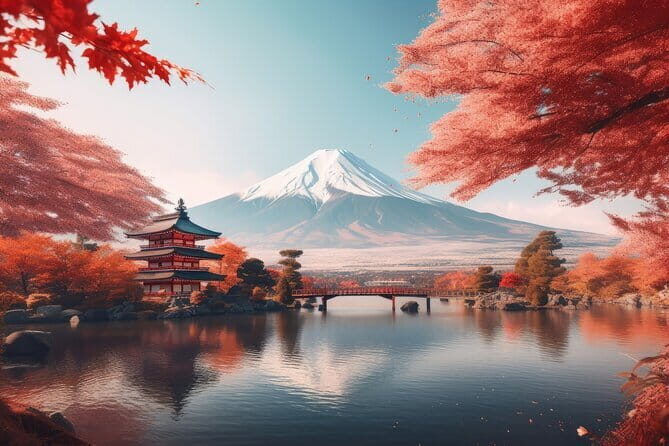
After the pagoda and shrine, the itinerary turns to water with Oshino Hakkai—eight springs in Oshino, Yamanashi. The tour describes these as fed by the aquifer water from Mt. Fuji coming to the ground, forming the springs.
This is free and can feel like a reset button. You trade big mountain views for something more tactile and grounded: clear spring water, small natural channels, and the calm rhythm of a place that’s been visited for a long time.
If you like nature that doesn’t require climbing, Oshino Hakkai is a strong mid-day choice. You’ll get a different kind of “Fuji” rather than a second round of mountain angles.
Kawaguchi, Oishi Park, and Lake Yamanaka: the lakeside trio
The tour then moves into the Fuji Lakes area, starting with Lake Kawaguchi. It’s described as the second largest of the Fuji Five Lakes by surface area and located at the lowest elevation among them. That combination often means easier access and a lakeside vibe that feels relaxed compared with higher lakes.
You also stop at Oishi Park on the north shore of Kawaguchiko. This park is known for a view of lake and Mt. Fuji at once. The promenade along the lakeside has flowers that bloom by season, so depending on timing, you might get extra color around your photos.
Then you finish with Lake Yamanaka (Lake Yamanakako), the largest of the Fuji Five Lakes. The tour notes it has a “whale” shape when viewed from the air. It also mentions that because of its altitude and relatively shallow water depth, it freezes completely in winter.
This lakes trio gives you variety without turning the day into a travel marathon. If your group wants time to breathe—walk a bit, take photos, and enjoy a slower pace—this part delivers.
Narusawa Ice Cave in Aokigahara: ice pillars year-round
The late-stage stop is Narusawa Ice Cave, located within the Aokigahara forest (the Sea of Trees). This is not the typical Mt. Fuji souvenir stop. The tour describes mesmerizing ice pillars and an ice wall that’s visible throughout the year.
The setting matters because the Aokigahara area is described as a dense, mysterious forest with hiking trails and caves formed by ancient lava flows. So Narusawa Ice Cave feels like a strange cousin to the mountain itself: still volcanic in origin, but showing its effects in an icy, otherworldly way.
Admission for Narusawa Ice Cave is listed as not included, so treat it as a “choose this if you really want the wow-factor” type of add-on.
How guides can make the difference on a tight day
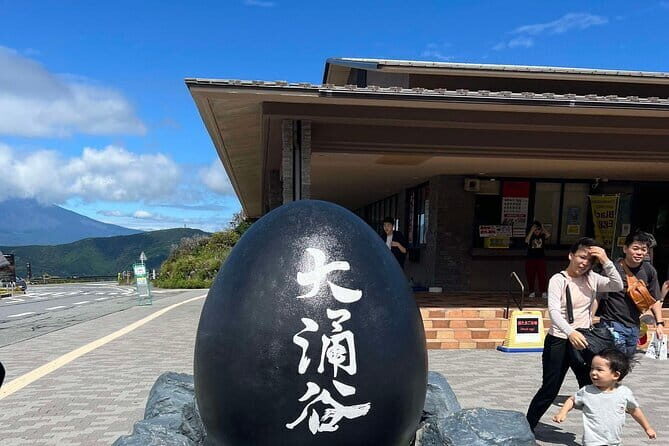
On a day this packed, the guide matters as much as the sights. The experience information highlights guides who actively shape the day to fit your pace.
I love the practical approach shown by guides like Prem, who checks the itinerary with the group before moving on and stays patient when shopping runs long or traffic slows things down. That kind of flexibility is gold when you’re trying to keep the day calm.
I also like the way Rana focuses on ease—especially when kids are part of the group—by making it simpler to know where to go and by sharing helpful tips. For families, that reduces stress more than people expect.
Then there’s Puskal, whose style shows up as attentive guidance and smart planning around time limits. If you’re the type who wants to hit the right angles for photos or you have a small set of must-sees, a guide who can adjust the flow keeps your time from feeling wasted.
Price and value: what $370 per group really gets you
The price is $370 per group (up to 5). That’s the big value lever here: it’s not a per-person price that climbs fast if you travel with family or friends.
If your group is full (5 people), you’re effectively paying about $74 per person for a private 10-hour day with:
- air-conditioned vehicle,
- WiFi onboard,
- an included guide,
- highway fees,
- pickup and drop.
That’s why this tour often makes sense versus trying to DIY the whole loop. Fuel, parking headaches, ticket lines, and the time cost of figuring out transit add up quickly. Even with optional fees at a couple stops, this structure tends to keep the day efficient.
One more value note: several key sights on the route are free (like Chureito Pagoda and major shrine/spring stops). So a decent chunk of what you’re paying for is access, timing, and local guidance—not only entrance tickets.
What to expect if the day turns tricky
Mt. Fuji visibility can be inconsistent, and weather can change your photo plans. The good news here is that the itinerary doesn’t hinge on one single perfect view.
You still have:
- Chureito Pagoda (a classic view setup),
- shrine spaces that feel meaningful even without a postcard sky,
- Oshino Hakkai’s spring water and calm paths,
- and an ice cave experience that’s its own draw.
So you’re less likely to feel like the whole day depends on one moment.
Who this tour is best for
This is a great fit if you want:
- a private day trip without juggling transit,
- a mix of Mt. Fuji icons and quieter stops,
- and a plan that works for groups up to 5.
It’s also a strong choice for families and mixed-age groups, since the route includes multiple short-to-medium stops rather than one long, strenuous hike.
What it’s less ideal for: if you’re chasing only one thing (like long Hakone hot spring time), this particular route is more focused on the Fuji Five Lakes side and the Aokigahara ice cave.
Should you book this Mt. Fuji and Hakone Tour?
Book it if you want a high-efficiency private day that covers the most recognizable Mt. Fuji area highlights plus nature surprises, all while keeping Tokyo-to-region logistics off your plate. The combination of free sights and optional add-ons helps you control costs without sacrificing the “must-see” feel.
Skip it (or at least set expectations) if you only care about one specific style of Mt. Fuji experience, like hours of hot spring time in Hakone, or if you prefer a fully self-paced route where you can wander longer between stops. This is a guided loop, built to work on a schedule.
If your goal is simple—see the icons, learn the meanings, and come away with photos and stories—this tour is a solid call.
FAQ
What is the duration of this Mt. Fuji tour?
It runs about 10 hours.
How many people are in a group?
This is a private tour/activity, and your group can include up to 5 people.
Is pickup and drop included?
Yes, pickup and drop are included.
Is there WiFi on the vehicle?
Yes, WiFi on board is included.
Do I need to pay for Mount Fuji 5th station?
The optional admission for Mt. Fuji 5th station is not included, so you may need to pay there.
Is Chureito Pagoda included in the cost?
Chureito Pagoda entry is listed as free.
Do I pay for Narusawa Ice Cave?
Optional admission for Narusawa Ice Cave is not included.
Which lakes are included?
Lake Kawaguchi, Oishi Park, and Lake Yamanaka are included.
What does the price include?
It includes an air-conditioned vehicle, WiFi on board, a guide, highway fees, and pickup/drop.
More Tour Reviews in Tokyo






Hakone, Three More Ways
The Fuji Shortlist: Other Days Out to the Mountain

Fresh reviews from around Tokyo






Mt Fuji Day Trips, compared.
 ★ 4.0Mt Fuji & Hakone Cruise, Drum Show Bullet Train 1 Day from TokyoFrom $1497,413 reviews
 ★ 4.4Tokyo Mt Fuji 5th St & Hakone Cruise Bus Tour w/Bullet TrainFrom $1545,024 reviews
 ★ 4.5From Tokyo: Mount Fuji Full-Day Sightseeing TripFrom $684,970 reviews
 ★ 4.7Mt. Fuji Tour, Hakone Ropeway, Owakudani, Lake AshiFrom $544,002 reviews
 ★ 5.0Private Tour to Mt. Fuji and Hakone (Fully Licenced Operator)From $4971,910 reviews
 ★ 4.9Mount Fuji Full-Day Private Tour from Tokyo (Customizable)From $3931,470 reviews
 ★ 4.0Mt Fuji & Hakone Cruise, Drum Show Bus 1 Day from TokyoFrom $1221,287 reviews
 ★ 4.2From Tokyo: Mt. Fuji & Hakone Tour w/ Return by Bullet TrainFrom $1171,278 reviews
Browse the lists this tour appears in