
Reviewed · KIMONO PHOTO EXPERIENCES
Turn Antique Kimono into Take-Home Interior Art
Your wall gets a story.
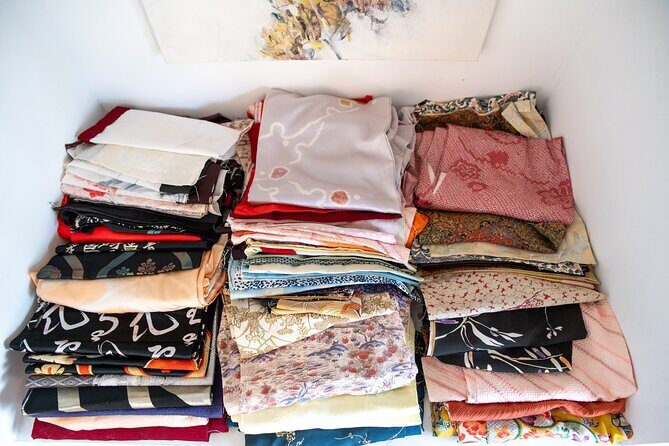
This hands-on class helps you turn antique kimono fabric into a take-home piece of interior art using ichigo ichie (一期一会), the idea of cherishing a one-time encounter. I like that you choose from 200+ kimonos and that Lena-san guides you step by step in a small, cozy art-gallery studio.
What really sells the experience is the meaning behind the fabric, not just the craft. You’ll learn about the pattern symbolism and the seasonal ideas tied to Japanese motifs, so your final artwork feels personal and specific rather than random décor.
One practical consideration: the workshop includes the materials and finished product, but transportation to and from the venue isn’t included, so plan how you’ll get to Meguro on your own.
In This Review
- Key highlights at a glance
- A cozy Meguro studio where craft feels personal
- Choosing your ichigo-ichie kimono: color, pattern, and meaning
- From antique techniques to your finished panel
- What you take home, and how to display it without overthinking
- Price and value: why $97.73 can make sense
- Logistics that matter in Tokyo: where you go and how you plan
- Who this workshop suits best (and who might want a different day)
- Should you book it?
- FAQ
- How long is the kimono-to-interior-art workshop?
- Where does the class meet in Tokyo?
- What do I create during the workshop?
- Can I choose the kimono design and colors?
- Do I choose the shape or style of the finished piece?
- Is transportation included?
- What’s included in the ticket price?
- Can I bring a service animal?
- Is there free cancellation?
Key highlights at a glance
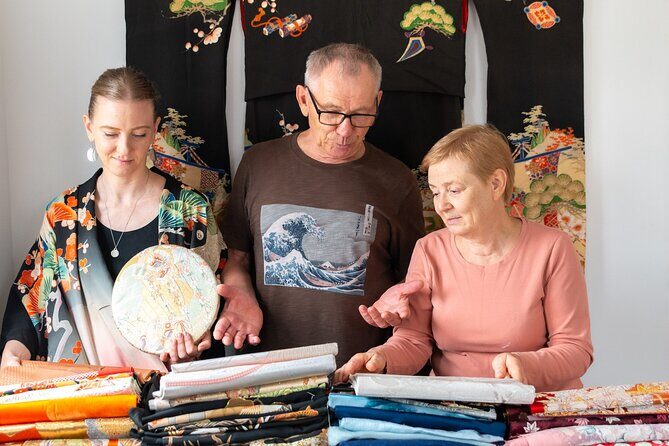
- Pick your fabric from 200+ antique kimonos, then choose the colors and patterns that call to you
- Learn motif and seasonal meaning, so your design has context, not just good looks
- Create a framed panel in the style you choose (rectangle or round canvas)
- Work hands-on with traditional backing techniques, with clear tips from Lena-san
- Go home with a finished interior artwork, ready to display in your home or office
- Small group size (max 5) keeps the class personal and un-rushed
Before you commit, see how this one stacks up against a few Tokyo favourites:
- Mt Fuji and Hakone 1-Day Bus Tour Return by Bullet Train★ 5.0 · 26,383 reviews
- 1-Day Tokyo Bus Tour★ 5.0 · 14,250 reviews
- Tokyo: teamLab Planets TOKYO Digital Art Museum Entry Ticket★ 4.6 · 9,779 reviews
A cozy Meguro studio where craft feels personal
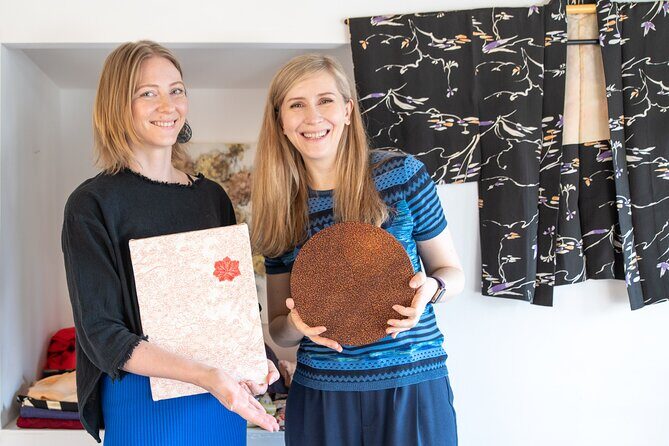
This class takes place at Atelier + Gallery QUADRO on Meguro Interior Street in Tokyo. If you’re the type who likes Tokyo outside the main checklist neighborhoods, this area is a fun detour: it’s known for interior design folks, not just tourist souvenir shopping.
The setting matters. This is not a big factory-style workshop with a single assembly step. It’s an art gallery space, which means you’re surrounded by creative work while you make your own. The group is capped at 5 people, and that size affects everything: you get time to ask questions, you get design advice that actually fits your choices, and the 90 minutes doesn’t feel like you’re being pushed through.
You’ll also have a simple check-in experience. You get a mobile ticket, and you’ll receive confirmation when you book. Then you just show up at the meeting point: Atelier + Gallery QUADRO, 153-0064 Tokyo, Meguro City, Shimomeguro, 6-chōme 16-13 1F. From there, the day runs like a focused workshop rather than a sightseeing tour.
Choosing your ichigo-ichie kimono: color, pattern, and meaning
Here’s what I like about the structure: you don’t start with a blank canvas and guess. You start with antique kimono fabric, and you choose what speaks to you.
The experience is built around selecting from more than 200 antique kimonos. You look through fabrics, then decide on the colors and patterns you want to build into your own interior art. This is where the ichigo ichie (一期一会) idea becomes real. It’s not just a slogan about being present. It’s a practical decision moment: the kimono you pick is the one that shapes the entire outcome.
And you’re not just picking for aesthetics. The class explains the historical background and the symbolic meaning behind your chosen pattern, plus the Japanese seasonal meanings connected to motifs. That’s a big value-add because patterns in kimono aren’t usually decoration-for-decoration’s-sake. They often carry references—seasonal timing, wishes, and identity signals—so knowing the story changes how you see the fabric.
If you tend to buy souvenirs that look nice but disappear into a drawer later, this approach usually fixes that. The finished artwork isn’t only pretty. It’s anchored in a story you learned in the room, tied directly to the specific kimono piece you selected.
From antique techniques to your finished panel
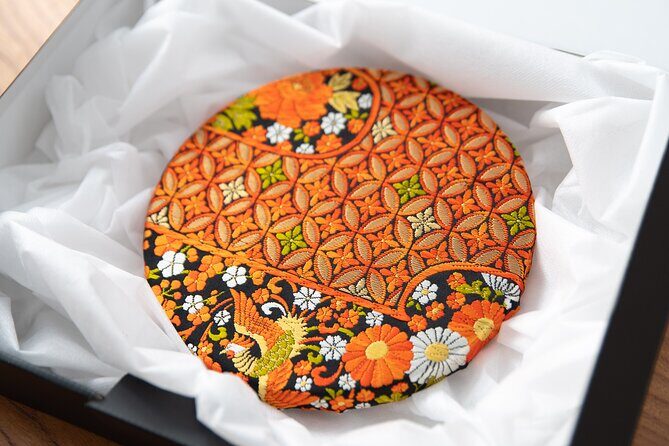
Once you’ve chosen the fabric, the workshop shifts into making mode. You’ll learn about traditional kimono methods like dyeing, weaving, and hand-painting techniques. Even if you don’t remember every term later, this sets you up to understand why antique kimono cloth looks the way it does: the texture, the layering of color, and the time that clearly went into the original creation.
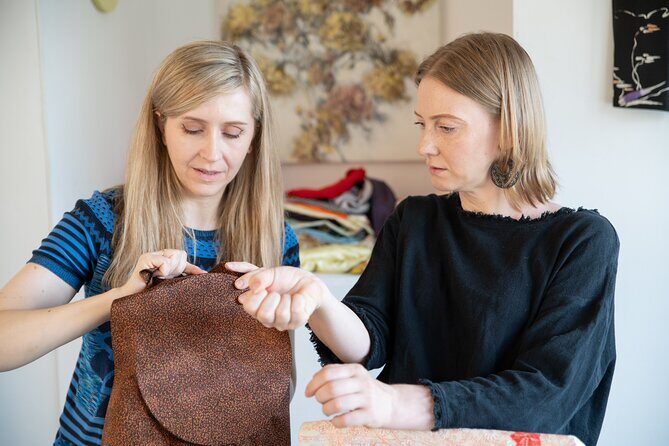
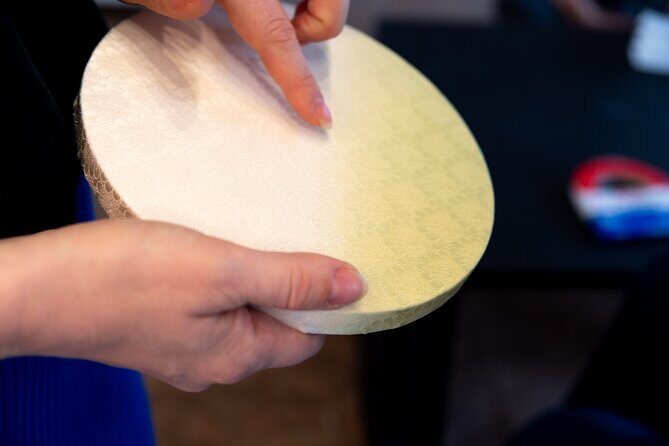
Then comes the hands-on part: using traditional Japanese backing techniques, you’ll attach your selected fabric to a panel. You’re not left to figure it out alone. You’ll get tips for each step, and the workshop rhythm is collaborative. You’re doing the crafting, but you’re also being coached so your design stays crisp and intentional.
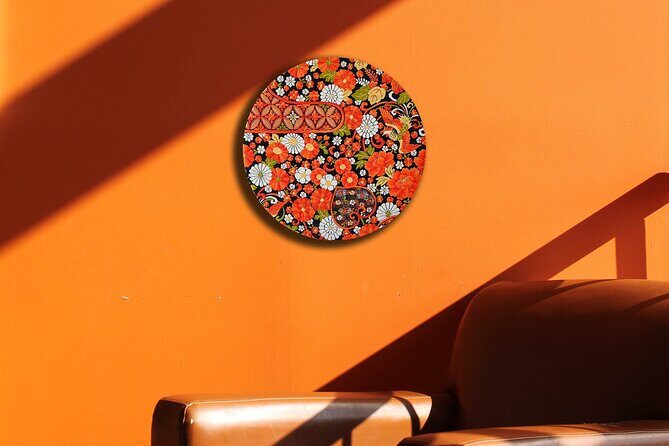
One useful detail: you’ll choose your display format. Based on the workshop experience described, you select a frame style such as rectangle or round canvas after choosing your pattern. That means your artwork can fit your space and taste. A round format can feel softer and more decorative, while a rectangle is easier to line up on a wall like standard art.
By the time you finish, you end up with a single, coherent piece of interior art made from fabric that has its own history. The class also leans into sustainability: you’re repurposing kimono you no longer wear into something you’ll live with.
What you take home, and how to display it without overthinking
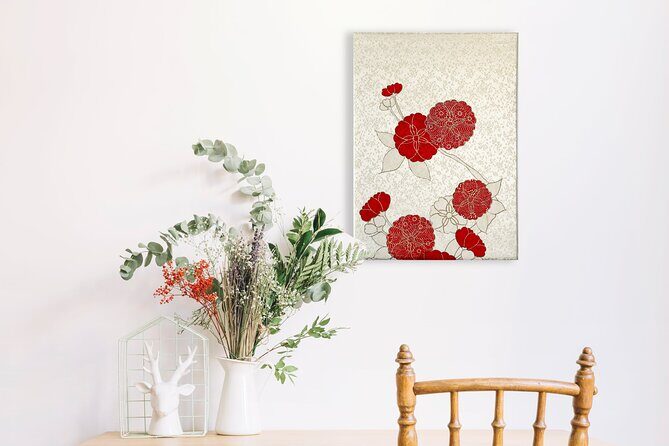
Your finished product is included, and the workshop provides the tools and materials you need (kimonos, panels, and the rest of the supplies). That’s important for planning because it removes a hassle: you don’t need to buy craft supplies, and you don’t have to worry about how you’ll pack a kit.
What you’ll take home is designed to work as interior décor—something you can use in your home or office for a long time, not just a once-in-a-photo souvenir. If you’re trying to bring Japan home in a way that feels more meaningful than a magnet, this usually lands well.
How to decide where to put it?
- If you picked a pattern tied to seasons or a specific motif, place it where you’ll see it often enough to notice the story you learned.
- If you want an easy win, choose a spot with plain background walls, so the fabric texture can do the talking.
- If you’re bringing it back to a smaller apartment, the framed panel format (rectangle or round) is typically easier to work with than oversized art.
One more small tip: because you’re using antique textile, treat your finished piece like textile-based art. Don’t blast it with direct sun all day, and avoid high-moisture spots. That’s not a complaint; it’s basic care that helps the colors look good for years.





Price and value: why $97.73 can make sense
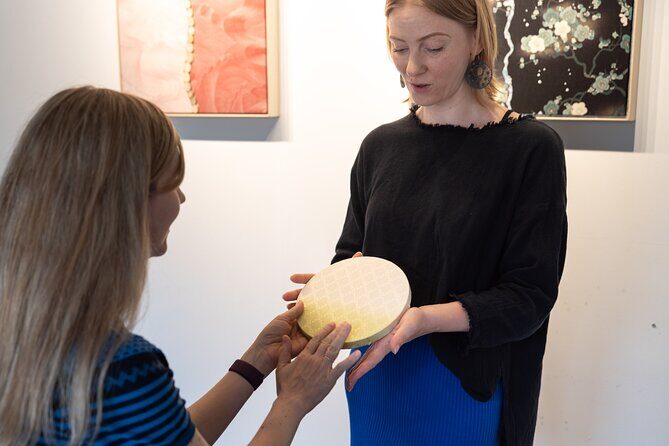
At $97.73 per person for about 90 minutes, you might wonder how much you’re really getting. Here’s the practical angle: this price covers the materials and a finished take-home artwork. In many Tokyo experiences, you pay a similar amount for a class where the materials aren’t really included, or where you make something small and generic.
This one gives you:
- A real creative outcome you keep
- Access to 200+ antique kimono fabrics to choose from
- Guidance from Lena-san, including design advice while you work
- Meaning behind the motif and Japanese seasonal symbolism
- A small group setting (max 5), which changes the quality of help you receive
Also, the experience is built around a concept that can’t be replicated easily on your own: selecting antique kimono fabric and translating it into interior art in a guided way. You could buy kimono fabric in Tokyo, sure. You could also try to sew or mount it yourself. But you’d still be missing the context and the structured traditional backing approach that shapes the final look.
So for the time, the materials, and the story, it’s often good value—especially if you’re already thinking about one or two “one-and-done” experiences that should feel memorable after the trip.
Logistics that matter in Tokyo: where you go and how you plan
The biggest practical thing is simple: you handle transportation. The workshop doesn’t include private transit. So you’ll want to map your route to Meguro and give yourself a little buffer for transfers, especially if you’re coming from another neighborhood.
The good news: it’s near public transportation, so you’re not stuck with a taxi-only plan. It’s also located in a popular interior-design area, so it’s easy to turn the workshop into part of your day rather than a lonely detour.
Booking is typically done ahead of time. On average, it’s reserved about 17 days in advance, so if this is a “must-do,” don’t wait until you’re already in Tokyo. The workshop also has max 5 travelers, which naturally limits availability.
Once you finish, the activity ends back at the meeting point. In other words, you can plan dinner nearby without having to change neighborhoods at the last minute.
Who this workshop suits best (and who might want a different day)
This is a strong fit if you:
- Like crafts but want something with context and meaning, not just technique
- Want a take-home item that won’t look like every other souvenir
- Prefer small, calm settings over big group tours
- Enjoy design-oriented neighborhoods like Meguro Interior Street
It may feel less ideal if you:
- Want a long sightseeing day with lots of walking and external attractions
- Are expecting a purely passive experience with photos and minimal making
- Need a fully guided, high-speed itinerary with multiple stops—this is focused and single-purpose
Think of it as a creative appointment. You’re there to make one personal piece of art, learn what it represents, and walk out with something you can live with.
Should you book it?
I’d book it if you want a Tokyo experience that’s hands-on, small-group, and genuinely keepsake-worthy. The combo of choosing from 200+ antique kimonos, learning motif and seasonal meaning, and then turning that choice into a framed interior panel is exactly the kind of activity that feels personal instead of transactional.
If your trip is tight and you’re picking just one creative workshop, this is a smart contender. It’s also a great choice for travelers who love cultural details but don’t want a museum lecture—because you learn those details while you’re physically working with the fabric.
FAQ
How long is the kimono-to-interior-art workshop?
The experience lasts about 1 hour 30 minutes.
Where does the class meet in Tokyo?
It meets at Atelier + Gallery QUADRO, 153-0064 Tokyo, Meguro City, Shimomeguro, 6-chōme 16-13 1F.
What do I create during the workshop?
You turn selected antique kimono fabric into a take-home interior art piece using a panel and traditional backing techniques.
Can I choose the kimono design and colors?
Yes. You select your favorite colors and patterns from more than 200 antique kimonos.
Do I choose the shape or style of the finished piece?
Yes. You choose a frame style such as a rectangle or a round canvas.
Is transportation included?
No. Transportation to and from the workshop venue is not included.
What’s included in the ticket price?
Tools and materials are included, such as the kimonos and panel supplies, plus the finished product.
Can I bring a service animal?
Yes, service animals are allowed.
Is there free cancellation?
Yes. You can cancel for a full refund up to 24 hours before the experience’s start time.
More Tour Reviews in Tokyo



Fresh reviews from around Tokyo






Kimono Photo Experiences, compared.
 ★ 4.7Matcha and Kimono ExperienceFrom $57219 reviews
Asakusa Kimono Dressing and Matcha ExperienceFrom $56173 reviews
★ 4.7Matcha and Kimono ExperienceFrom $57219 reviews
Asakusa Kimono Dressing and Matcha ExperienceFrom $56173 reviews
 ★ 5.0Matcha Kimono Tea Ceremony in TokyoFrom $59104 reviews
Tokyo Asakusa: Traditional Kimono Rental Experience at WargoFrom $3387 reviews
Tokyo Asakusa: Miu Kimono Rental and Optional PhotoshootFrom $3254 reviews
★ 5.0Matcha Kimono Tea Ceremony in TokyoFrom $59104 reviews
Tokyo Asakusa: Traditional Kimono Rental Experience at WargoFrom $3387 reviews
Tokyo Asakusa: Miu Kimono Rental and Optional PhotoshootFrom $3254 reviews
 ★ 5.0Tokyo Authentic Kimono Rental in Asakusa with Photography OptionFrom $4546 reviews
Asakusa Kimono Rental ExperienceFrom $4730 reviews
★ 5.0Tokyo Authentic Kimono Rental in Asakusa with Photography OptionFrom $4546 reviews
Asakusa Kimono Rental ExperienceFrom $4730 reviews
 ★ 5.0Studio Kimono PhotoFrom $6529 reviews
Browse the lists this tour appears in