
Reviewed · TAITO & YANAKA TOURS
Tokyo:Stroll in Old traditional culture towns~Yanaka & Nezu
Old Tokyo is still here.
This 3.5-hour walk through Yanaka and Nezu lets you trade Shibuya energy for quiet lanes, older homes, and places of worship that feel part of everyday life. You’ll follow a local guide through narrow streets, meet people in neighborhood shops, and pause at calmer temples where you can actually hear yourself think.
I really like two things. First, you get a strong sense of day-to-day Tokyo—kid energy, older residents, and small businesses that look like they’ve been serving neighbors forever. Second, Sui connects the dots between religion, architecture, and neighborhood routines, so the torii gates and temple steps feel meaningful, not just pretty.
One consideration: it’s a walking tour with staircases, and it’s not designed for wheelchair users. If you hate hills, steps, or long stretches on foot, plan carefully.
In This Review
- Key highlights worth penciling in
- Old Tokyo is easier to find than you think in Yanaka & Nezu
- Setting out from Nippori: a practical start you can handle
- Walking with Sui: how the guide turns streets into stories
- Nezu Shrine: torii gates you can walk through slowly
- Tennoji Temple: bronze Buddha and a peaceful Japanese garden
- Yanaka Cemetery: a scenic walk that changes your perspective
- Meiji to Showa streets: seeing history in buildings, not museums
- Yanaka Ginza and Yoshida Liquor Store: food, souvenirs, and a sake legacy
- The quiet neighborhood experience: meeting locals and watching daily life
- Sunset staircase: a local photo spot that feels more than staged
- Seasonal perks: sakura mochi and summer cafe breaks
- Is it worth $29? The value comes from guide time and local texture
- Who this walk fits best
- My call: should you book the Yanaka & Nezu walk with Sui?
- FAQ
- How long is the Tokyo Yanaka & Nezu tour?
- Where do I meet the guide?
- What areas and places will I see?
- Where does the tour end?
- Is it a solo tour or group tour?
- What’s included in spring or sakura season?
- What’s included in summer?
- What should I bring?
- FAQ
- Do I need to cancel far in advance?
- Is the tour in English?
- Is the walking tour suitable for wheelchair users?
- What if some shops are closed?
- Are there any special rules for booking?
- How important is being on time?
- Can the tour be private?
- Do I need to bring food or drinks?
Key highlights worth penciling in
- Yanaka and Nezu in one relaxed route that feels local, not tour-bus predictable
- Nezu Shrine’s torii-lined approach and temple stops that are easier to enjoy calmly
- Yanaka Cemetery with scenic tree rows and a different kind of Tokyo quiet
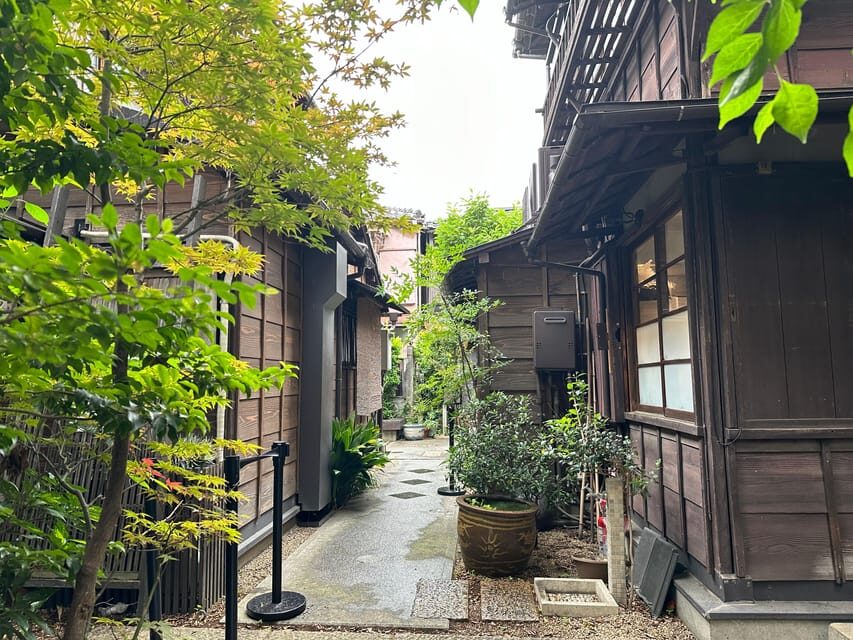
- Meiji-to-Showa era streets and buildings you can actually see with your own eyes
- Traditional food and shop time at Yanaka Ginza and a classic sake stop at Yoshida
- Sunset staircase photo spot that locals use, not just Instagram land
Before you commit, see how this one stacks up against a few Tokyo favourites:
- Mt Fuji and Hakone 1-Day Bus Tour Return by Bullet Train★ 5.0 · 26,383 reviews
- 1-Day Tokyo Bus Tour★ 5.0 · 14,250 reviews
- Tokyo: teamLab Planets TOKYO Digital Art Museum Entry Ticket★ 4.6 · 9,779 reviews
Old Tokyo is easier to find than you think in Yanaka & Nezu
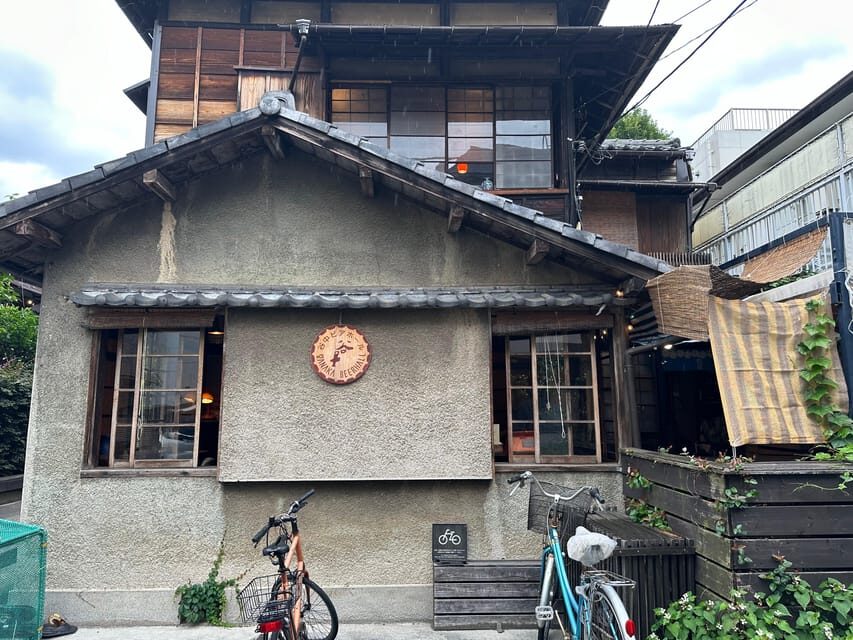
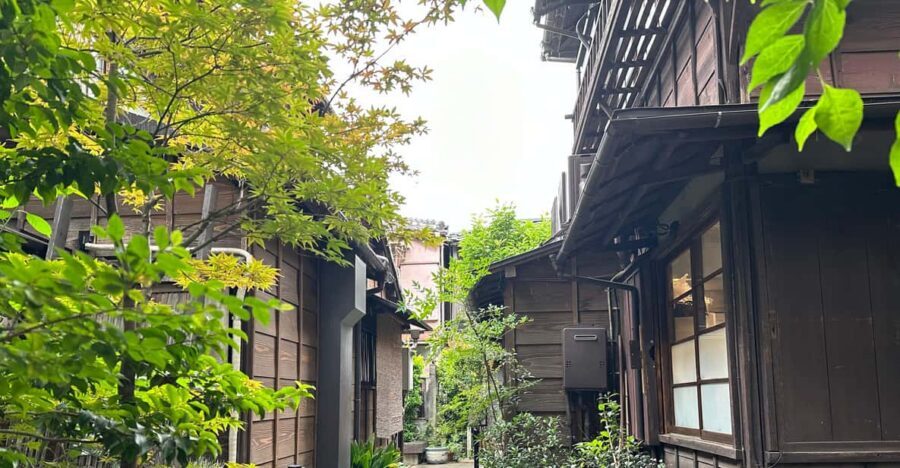
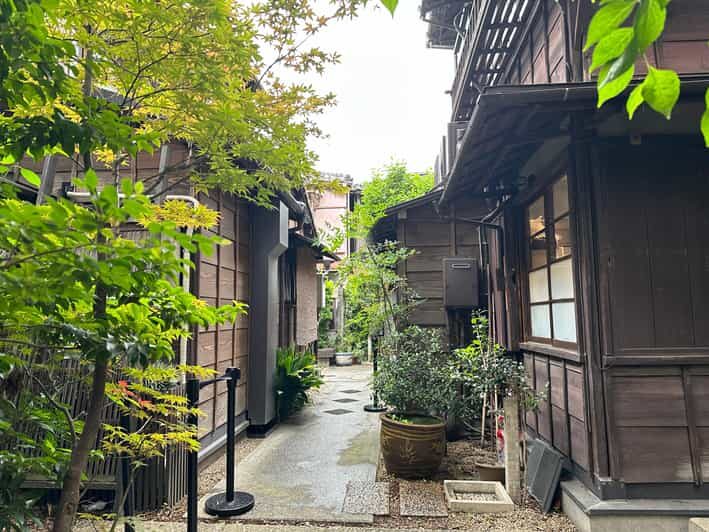
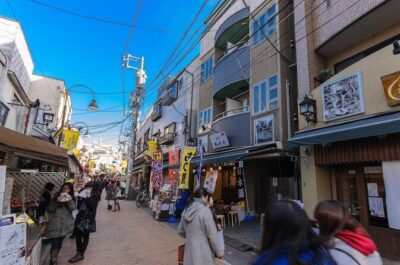
Tokyo can feel like a lights-and-lines machine. Yanaka and Nezu break that spell. Here, the pace slows down fast: you’re in residential streets, beside small shops, and near shrines and temples that don’t need a crowd to feel alive. It’s the kind of neighborhood where you notice details—wooden facades, modest gates, the rhythm of people going about their day.
This tour is built around that feeling. It’s not a rushed checklist. You move through the area at a stroll pace, with time to look closely, ask questions, and chat with your guide. The small-group format also matters. You get space to ask for clarification when you want it, instead of nodding politely and hoping the moment comes back later.
And then there’s the contrast. Yanaka and Nezu sit in the same city as skyscrapers and neon, but they don’t behave like it. You get a side of Tokyo where the past is visible in ordinary places: homes, lanes, and older places of worship.
Setting out from Nippori: a practical start you can handle
The meeting point is Nippori Station (West Exit), specifically the waiting area just outside. This is a good choice because Nippori is close enough to mainstream Tokyo transit that you won’t feel stranded, but it still puts you on the path toward quieter neighborhoods.
Tip: wear comfortable shoes and bring some cash. You’ll want flexibility for small purchases at older shops and snacks along the way. Also, arrive on time. This is a start-on-schedule kind of tour, and the guide starts walking when the clock says go.
You’ll be on foot for a solid stretch, and staircases are part of the route. That’s not a warning meant to scare you. It’s just reality in older Tokyo neighborhoods. If you treat it like a gentle workout rather than a stroll on flat ground, you’ll enjoy it more.
Walking with Sui: how the guide turns streets into stories
The star here is Sui. Based on the way the tour is described, Sui isn’t running a script and disappearing. She’s guiding you through neighborhoods she knows well, then pausing for conversation, questions, and small moments that make the places stick.
In practice, this means you won’t just see a torii gate and move on. You’ll learn what the place of worship represents and how people interact with it. You also get help reading the neighborhood: which streets feel more local, where to slow down for photo angles, and how to shop like a neighbor rather than a visitor.
What I like about this approach is that it makes Tokyo’s big themes feel personal. Religion isn’t treated like trivia. It becomes part of daily behavior, built into the rhythm of the streets you’re walking.
Nezu Shrine: torii gates you can walk through slowly
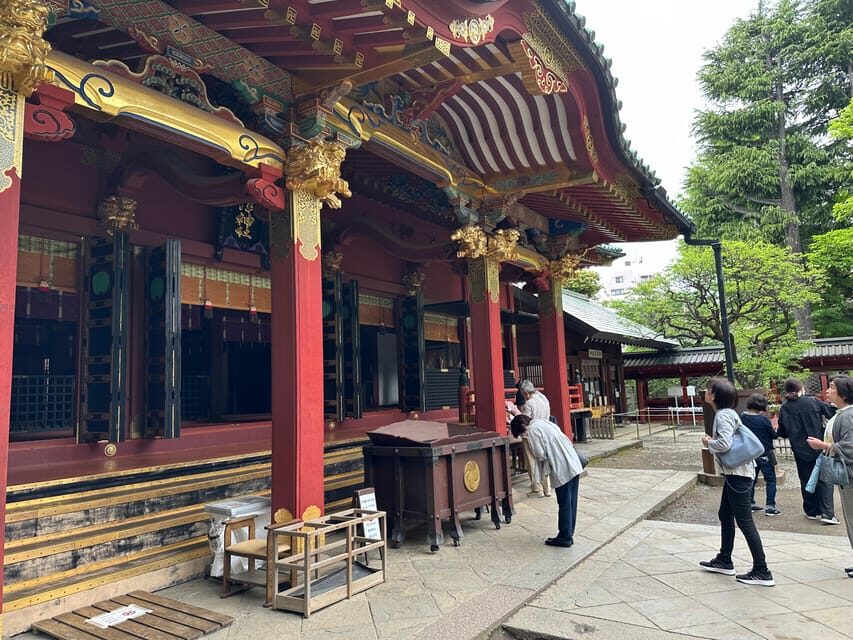
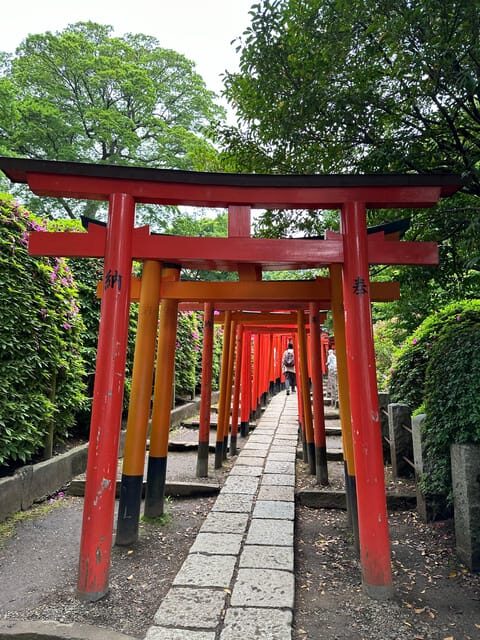
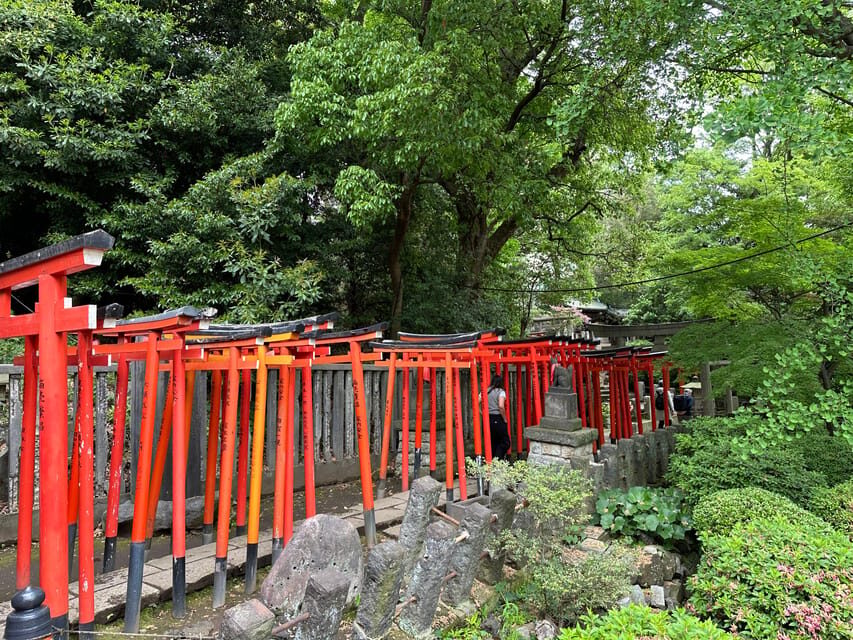
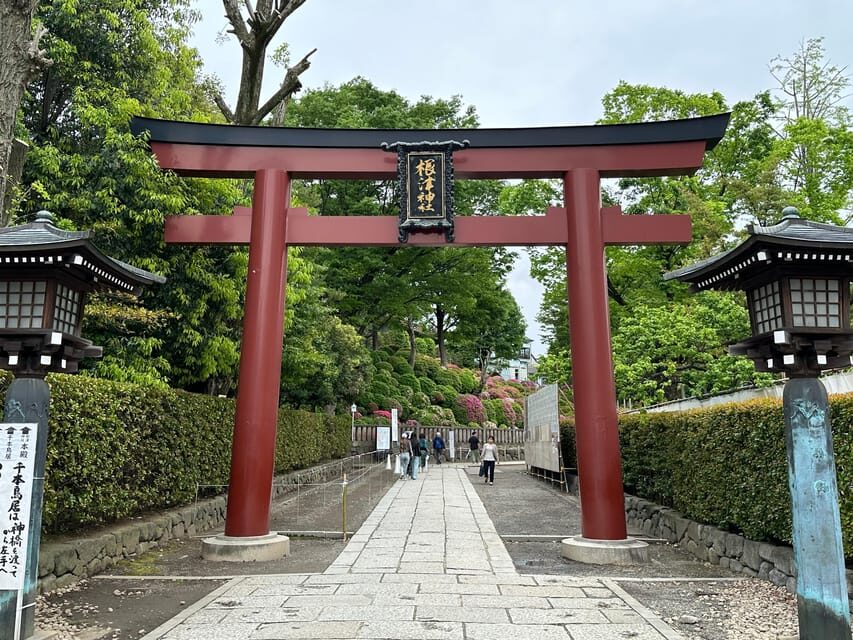
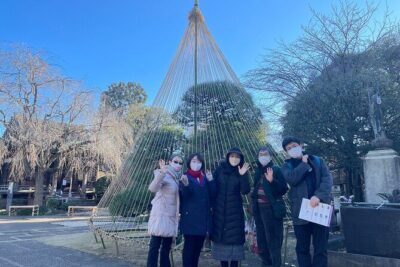
Your Nezu stop includes Nezu Shrine, one of Tokyo’s older worship sites. The highlight is the picturesque torii-lined pathway, which gives you that classic sense of moving from everyday noise into a sacred zone.
What makes this stop work on foot is the approach itself. You’re walking through the sequence of gates, not just standing in front of them. It helps you feel the geometry of the place and the transition in atmosphere.
At a calmer shrine, you can do something many people forget to do: slow down your pace on purpose. Take a minute, look around, and notice how visitors behave. This is one of those moments where the tour’s small-group format helps, because you’re not constantly threading through a crowd.





Tennoji Temple: bronze Buddha and a peaceful Japanese garden
Next comes Tennoji Temple, known for a large bronze seated image of Buddha plus a beautiful Japanese garden. This stop is a good balance after shrine time. If Nezu feels like a classic gate-and-path experience, Tennoji gives you atmosphere that lingers.
The garden matters. It’s not just scenery; it’s a built-in pause. Even if you’re not a garden person, you’ll benefit from the reset. The tour is designed to include these calmer breaks, not just photo stops.
One more practical note: gardens and temple grounds often mean you’ll move around at varied speeds. If you’re the type who likes to ask questions, this is a great moment to do it. Your guide can explain why certain spaces feel the way they do and how visitors understand the setting.
Yanaka Cemetery: a scenic walk that changes your perspective
Yanaka Cemetery is described as one of the largest and most scenic cemetery areas in Tokyo, with a beautiful row of trees. This is one of the most thought-provoking stops on the whole route.
Cemeteries in Japan aren’t just backdrops. They can be places of remembrance with visible care and ongoing relevance. Walking through with context from Sui helps you avoid treating it like an odd tourist detour. Instead, it becomes part of the neighborhood’s story—life, memory, and place all woven together.
If you’re sensitive to solemn settings, you’ll still be okay. The tour is paced to allow calming moments rather than rushing through. Bring your respect, lower your voice, and let the quiet do its work.
Meiji to Showa streets: seeing history in buildings, not museums
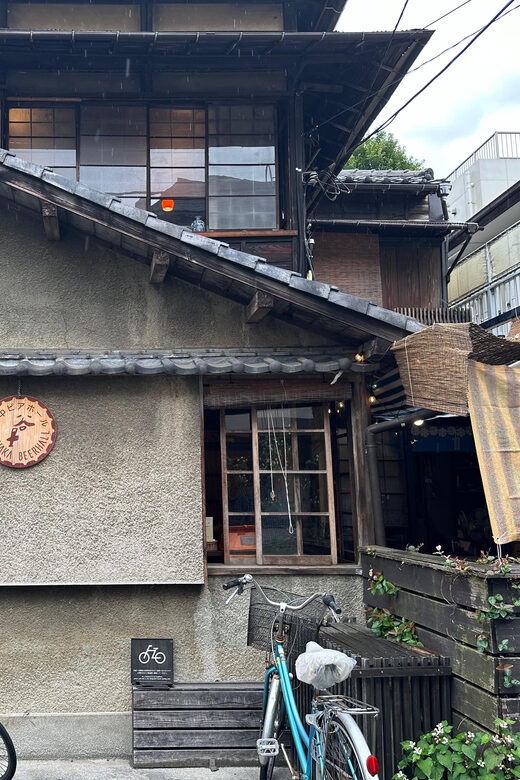
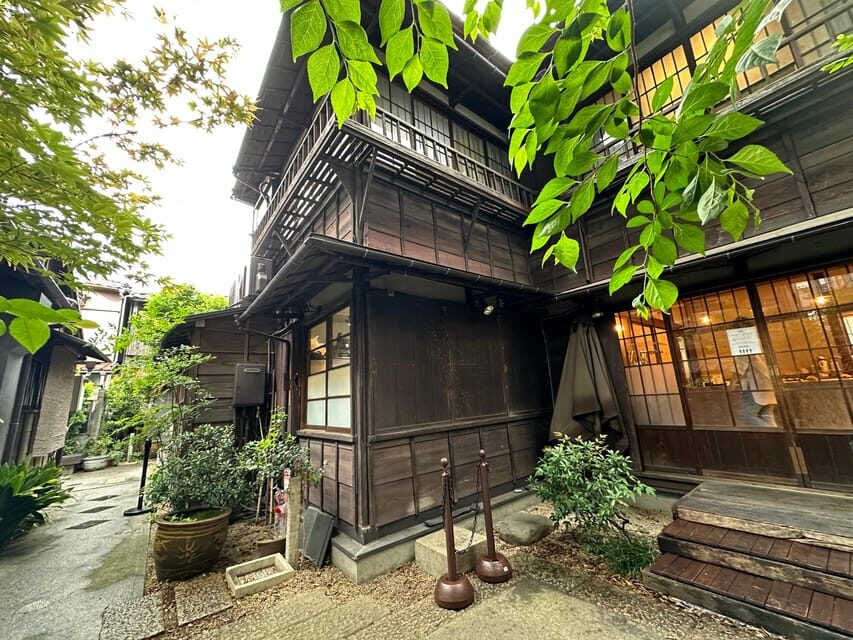
One of the best parts of the route is the emphasis on traditional buildings from the Meiji period (1868 to 1912) to the Showa period (1926 to 1989). You don’t have to imagine what the area used to be. You see it in structures and street scale.
This is history you can walk around. And because you’re in residential streets, it also shows you something many museum tours miss: the way old buildings keep living. People still use these streets. Shops still sit in them. The neighborhood isn’t frozen in time; it’s layered.
For me, this is where the tour becomes more than sightseeing. It teaches you to look at Tokyo with better eyes:
- building age shows up in textures and layout
- street narrowness affects how people move
- neighborhood design shapes daily behavior
Even if you don’t know architecture terms, you’ll feel the difference.
Yanaka Ginza and Yoshida Liquor Store: food, souvenirs, and a sake legacy
When the walk reaches Yanaka Ginza, you get a traditional shopping street where your guide introduces local street foods, Japanese food, and souvenir shops. This is one of the easiest parts of the tour to enjoy with your senses. You’ll see what people actually buy, and you’ll learn what to look for instead of buying the first thing with packaging that matches your selfie.
This is also where you benefit from having Sui along. Older neighborhoods can feel confusing if you’re scanning menus and signs in fast-forward mode. A local guide can point you toward places worth stopping, and help you understand what you’re seeing.
You’ll also visit Yoshida Liquor Store, a traditional Japanese sake store. Even if you don’t drink sake, it’s a strong example of what “passed down” can mean in real life. It’s not just a shop; it’s part of the neighborhood’s identity.
And yes, there’s shopping time. You’ll likely find small treats and souvenirs you can’t get at the big, generic retail spots.
The quiet neighborhood experience: meeting locals and watching daily life
A big part of why this tour works is the neighborhood pacing. You’re shown quiet areas where you can see local old and new houses and shops together. You’ll often catch sight of nursery kids during the stroll and older residents doing ordinary daily things.
This matters more than you’d think. Tokyo can feel like a place where everyone is rushing. Here, you see a different truth: routine is its own culture.
Your guide also encourages interaction. You’ll talk with locals you meet at older shops, not just hover near a storefront like a polite ghost. The goal is simple: learn how people live and what daily life looks like when tourists aren’t the main audience.
Sunset staircase: a local photo spot that feels more than staged
You’ll end up at the sunset staircase area, listed as a popular photo spot among locals. That phrasing is important. It’s not introduced as a must-do landmark for visitors. It’s treated like a place people naturally use.
This part of the tour is a nice finishing rhythm: after temples, trees, and older streets, you get a visual moment that connects to the day. If the light cooperates, it’s a good place to pause, take pictures, and just enjoy being in the neighborhood instead of trying to beat the crowd somewhere else.
Seasonal perks: sakura mochi and summer cafe breaks
Spring and summer versions of this tour add small touches that can make your day feel extra special.
Spring (25 March to 10 April 2026): you get free sakura mochi for everyone. If sakura mochi isn’t available, it’s replaced with other surprised traditional Japanese sweets or food stuffs. This is a fun way to tie the season to the neighborhood.
Summer (1 June to 11 September 2026): because Tokyo heat can be intense, the tour includes a stop in a cafe transformed from an old traditional building, with one drink of your choice included. One more change: in summer, the route does not go to Yanaka Ginza, and the tour ends at Nezu Station.
So your planning should adjust. If you love shopping streets, spring or cooler months may feel more satisfying. If you hate heat stress, summer’s cafe stop is a real practical advantage.
Is it worth $29? The value comes from guide time and local texture
$29 for about 210 minutes sounds like a deal because it is a deal—if you care about what the tour is actually selling: guide time and neighborhood access.
You’re not paying mainly for a list of landmarks. You’re paying for:
- a guide who knows how to read the area
- context for shrines, temples, and old streets
- time to talk with people and ask questions
- stops designed for calmer viewing, not crowd dodging
That’s why the “small group” aspect matters. It makes the $29 feel closer to guided mentorship than just a walk with directions.
If you were going to self-tour Yanaka and Nezu alone, you could do it—but you’d miss the meaning behind what you’re seeing. The guide’s explanations help you turn what could be pretty streets into a coherent understanding of local life.
Who this walk fits best
This tour is a great fit if you:
- want quiet Tokyo instead of constant neon
- like neighborhoods where daily life still plays out in storefronts
- enjoy religion and culture when it’s explained in plain, practical terms
- want a manageable duration with stops that reset your energy
It’s also a good choice for visitors who feel “museum fatigue.” You’re outside, walking, and learning through real space.
If you have limited mobility or can’t do stairs, skip this one. It’s not set up for wheelchair users.
My call: should you book the Yanaka & Nezu walk with Sui?
Yes, if you want Tokyo that feels like Tokyo rather than a postcard. This is the kind of walk where you leave with specific memories: the torii-lined approach, the bronze Buddha and garden pause, the tree rows at Yanaka Cemetery, and the older shopfronts you might otherwise walk past.
If you can handle steps, wear comfy shoes, and like slowing down, this tour is a smart way to spend half a day. The small-group pace and Sui’s guiding style are what make it worth it.
FAQ
How long is the Tokyo Yanaka & Nezu tour?
The duration is about 210 minutes, or roughly 3.5 hours. The tour may end a little earlier or later than the stated duration.
Where do I meet the guide?
Meet at Nippori Station, West Exit (for Yanaka). The guide waits at the waiting area after you come out.
What areas and places will I see?
You’ll stroll through Yanaka and Nezu and visit key places such as Nezu Shrine, Tennoji Temple, Yanaka Cemetery, Yanaka Ginza, and Yoshida Liquor Store. A sunset staircase photo spot is also included.
Where does the tour end?
Drop-off locations include Nippori Station, Yanaka Ginza, and Nezu Station. In summer season, the tour ends at Nezu Station.
Is it a solo tour or group tour?
It’s a live English tour with private or small group options available.
What’s included in spring or sakura season?
For spring season (25 March to 25 April 2026), you get free sakura mochi for everyone. If sakura mochi is not available, it’s replaced with other traditional sweets or food.
What’s included in summer?
For summer season (1 June to 11 September 2026), the tour includes one drink of your choice at a cafe transformed from an old traditional building. Yanaka Ginza is not included.
What should I bring?
Wear comfortable shoes and bring cash. Expect staircases during the tour, and shops may have closures depending on the day.
FAQ
Do I need to cancel far in advance?
Free cancellation is offered up to 24 hours in advance for a full refund.
Is the tour in English?
Yes, it’s an English live tour guide.
Is the walking tour suitable for wheelchair users?
No, it is not suitable for wheelchair users.
What if some shops are closed?
Some shops may be closed depending on the day or time of visit, and many shops close on Monday. You can still enjoy the stroll.
Are there any special rules for booking?
PLEASE DO NOT BOOK THIS TOUR IF YOU ARE A TOUR GUIDE FROM OTHER TOUR COMPANY.
How important is being on time?
Be punctual. The tour starts on time.
Can the tour be private?
Private or small groups are available.
Do I need to bring food or drinks?
It doesn’t state that drinks are included outside summer. The tour includes multiple stops and may go over lunchtime, so having something small to eat can help you stay comfortable.
More Tour Reviews in Tokyo



Fresh reviews from around Tokyo






Taito & Yanaka Tours, compared.
 ★ 4.5The Old Quarter of Tokyo – Yanaka Walking TourFrom $40590 reviews
 ★ 4.8Old Quarter Yanaka Walking TourFrom $32406 reviews
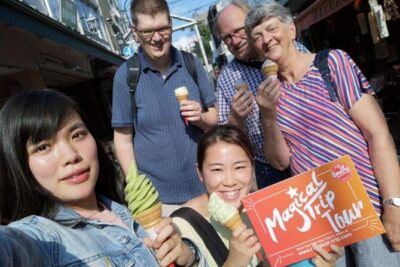 ★ 5.0Yanaka Historical Walking Tour in Tokyo’s Old TownFrom $81182 reviews
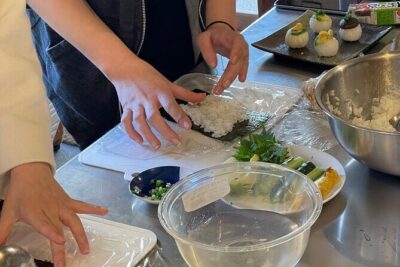 ★ 5.0Private Home Cooking in Yanaka – Local Flavors in a Warm SettingFrom $122173 reviews
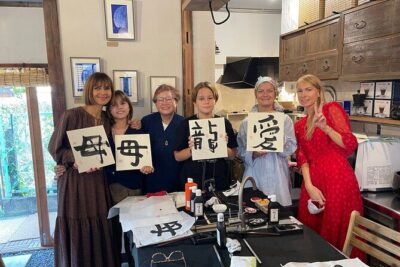 ★ 5.0Let’s experience calligraphy in YANAKA, Taito-ku, TOKYO !!From $75127 reviews
 ★ 4.8Yanaka District: Historical Walking Tour in Tokyo’s Old TownFrom $79117 reviews
 ★ 5.0Discover the Art of Ikebana in Tokyo’s Historic Yanaka DistrictFrom $10860 reviews
 ★ 5.0Yanaka and Asakusa Walk around DOWNTOWN TOKYO like a localFrom $9836 reviews
Browse the lists this tour appears in