
Reviewed · MT FUJI DAY TRIPS
Tokyo:Sea of Mount Fuji, Hakone Ropeway, Ōwakudani, Enoshima
If you love scenic variety, this day hits. It strings together Lake Ashi, Hakone Ropeway, Owakudani, and Enoshima in one smooth loop, giving you Mt. Fuji angles from volcano, lake, and ocean. I like that you get timed stops plus a guide who keeps everyone moving, and I especially like the pirate-ship cruise vibe on Lake Ashi. One heads-up: Mount Fuji depends on weather, and the schedule is fast, so Enoshima time can feel short if you want to wander slowly.
You’ll ride in a comfortable A/C vehicle with a professional English or Chinese-speaking guide, and the pacing is designed for photos and key sights rather than long stays. On NY-day tours, guides like Brewski have added extra touches like Hatsumode temple time for some groups, and on clear days people come back with that “how is this real?” Fuji view from multiple points. If your trip is sensitive to crowds or you need lots of walking pauses, plan your expectations around a busy, scenic day.
In This Review
- Key things to know before you go
- Why this route feels like a best-of Japan day
- The Tokyo start: getting on the bus without losing the day
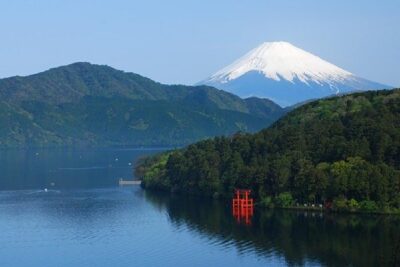
- Lake Ashi: the torii-and-Fuji postcard moment
- Pirate ship on Lake Ashi: fun first, then surprisingly beautiful
- Hakone Ropeway over volcanic steam: a view from the middle of the story
- Owakudani: sulfur air, steam vents, and the kuro-tamago you’ll remember
- Enoshima island: shrine steps, Nakamise snacks, and the Sea-Mount Fuji view
- Sagami Bay: the ocean finish that turns the day into a story
- Price and logistics: why $50 can work (and when it won’t)
- Guides, pacing, and why the day usually runs smoothly
- Weather and Mount Fuji: the one variable you can’t control
- Who should book this, and who should pass
- Small rules and practical tips that make a difference
- Should you book this Tokyo-to-Hakone-to-Enoshima day trip?
- FAQ
- How long is the tour?
- How much does it cost?
- What places are included in the day?
- Is admission to the cruise and ropeway included?
- What language is the guide?
- Is Mount Fuji guaranteed?
- What should I bring for the day?
- Is this tour suitable for everyone?
- Are there rules about food or smoking?
Key things to know before you go
- Mt. Fuji chances from three angles: from the volcanic zone, then across Lake Ashi, then out toward Sagami Bay and Enoshima’s famed viewpoint.
- A pirate ship on Lake Ashi: open-deck lake air plus classic Hakone torii views.
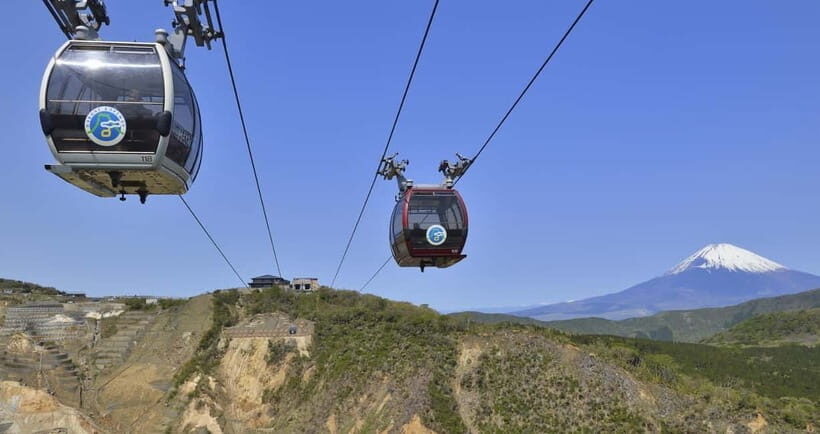
- Hakone Ropeway above Owakudani: steam, geothermal textures, and Fuji sightings when the sky cooperates.
- Owakudani black eggs (kuro-tamago): sulfur-spring eggs that locals link with longevity.
- Enoshima shrine circuit + Nakamise street: steps, gates, and local snacks in one island block.
- A tight but workable 10 hours: great value, but not much time for detours.
Other routes to the mountain, compared
- Mt Fuji & Hakone Cruise, Drum Show Bullet Train 1 Day from Tokyo★ 4.0 · 7,413 reviews
- Tokyo Mt Fuji 5th St & Hakone Cruise Bus Tour w/Bullet Train★ 4.4 · 5,024 reviews
- From Tokyo: Mount Fuji Full-Day Sightseeing Trip★ 4.5 · 4,970 reviews
Why this route feels like a best-of Japan day
This is one of those days that makes sense if you only have a single day to spare near Hakone. You’re not just ticking attractions—you’re moving through environments that are all part of the same Mount Fuji story.
First you get volcanic Hakone at Owakudani, then you shift to the calm mirror-lake mood of Lake Ashi, then you end on the ocean side of Enoshima and Sagami Bay. If you like travel days that feel efficient and visually different, this works.
The value angle matters too. For about $50 per person for a guided, round-trip day from central Tokyo, you’re paying for transportation and someone else managing the timing while you focus on views, photos, and food stops.
The Tokyo start: getting on the bus without losing the day
Meet-up can vary based on what option you booked, but one common starting point is Tokyo Mode Gakuen, 1F, 1-chōme-5-1 Marunouchi, STAND T. The big win here is that you don’t have to plan train transfers, figure out where the ropeway queue starts, or worry about catching connections.
You’ll likely spend a good chunk of the day on the road, and that’s normal for Hakone from Tokyo—especially weekends and peak seasons. I recommend you treat this like a “transport day plus scenic blocks.” Bring small snacks and plan to stay flexible. Even when everything runs well, traffic can shift minutes around.
Lake Ashi: the torii-and-Fuji postcard moment
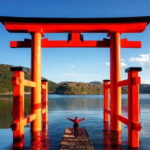
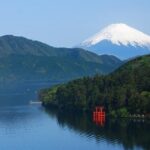
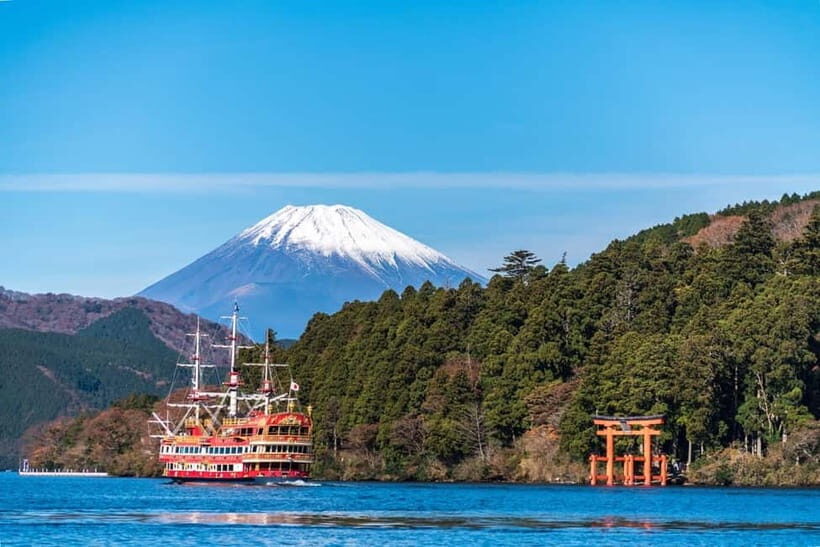
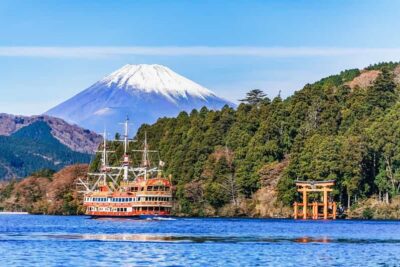
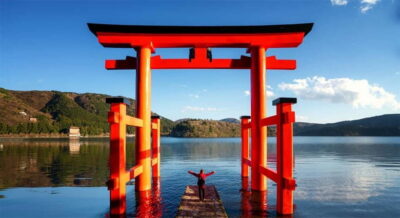
You start with a Lake Ashi photo stop (about 20 minutes). This is where Lake Ashi shows off what makes Hakone famous: big mountain framing, bright water, and often Mount Fuji in the distance when visibility is good.
Lake Ashi sits in a volcanic landscape, and that origin shows up in the atmosphere—cooler air, clearer-looking water, and an almost postcard-clean horizon on good days. The torii gate rising from the shallows is the classic touch, because it turns a lake view into a scene with a story.
Photo tip: if you want the famous Fuji-and-torii look, aim for the earlier portion of the day. Light can change fast, and weather can soften contrast later.
Pirate ship on Lake Ashi: fun first, then surprisingly beautiful
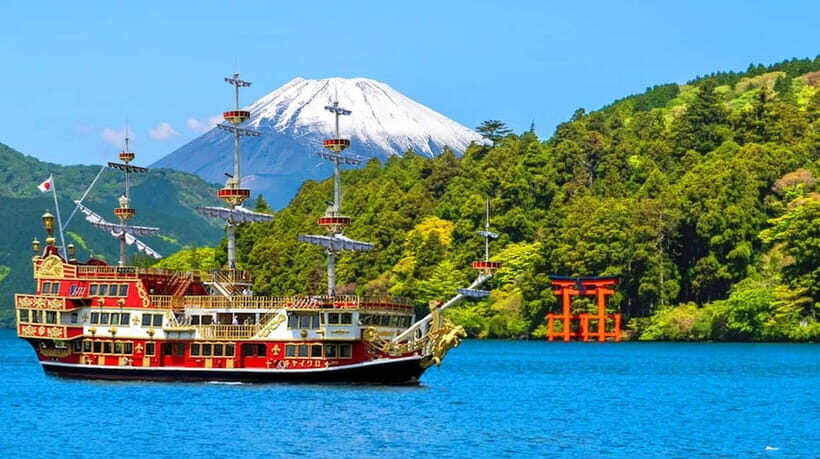
Next comes the Hakone sightseeing cruise (about 25 minutes) aboard a vintage pirate ship. The deck is where the experience hits: you’ll feel the lake breeze, and you’ll get wider water views than any station stop.
This cruise matters because it changes your perspective. The same Fuji-and-torii composition you see from shore becomes more layered out on the water. When conditions are clear, the water can look close to mirror-like, making Mount Fuji and the mountains feel more “stacked” in the frame.
Also, the vibe is light. People who take this tour as a bucket-list day often say the cruise is the most memorable part, not just because it’s themed, but because it’s a real moving viewpoint. If you prefer calm scenic moments over theme parks, this is a friendly compromise.
Potential drawback: the cruise portion is short. You’ll enjoy it, but you won’t have time to drift and wander around like you would on a longer boat ride.
More Hakone loops, ropeways and lake crossings
Hakone Ropeway over volcanic steam: a view from the middle of the story
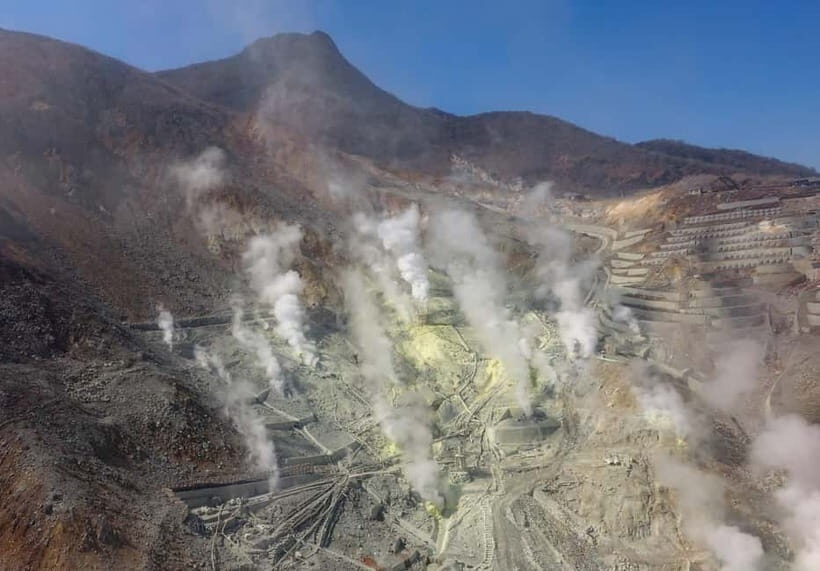
After the lake, you ride the Hakone Ropeway (about 25 minutes). This is your aerial bridge from the lake to the geothermal chaos below.
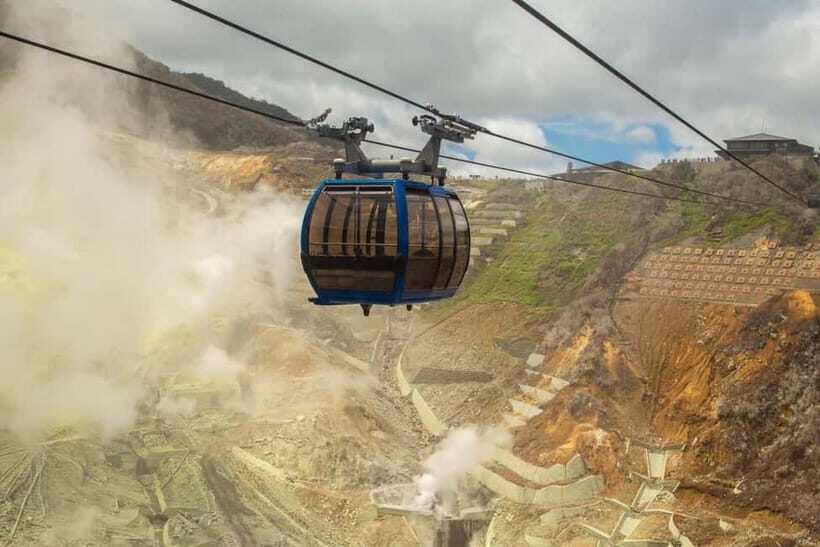
From the ropeway, you’re looking across Owakudani’s active volcanic zone, with steam rising from cracks in the earth. The colors—ochre, rust tones, and gray rock—don’t look like anything else in Tokyo. That’s why this stop lands. You’re not just traveling to a viewpoint; you’re passing through a different kind of terrain.
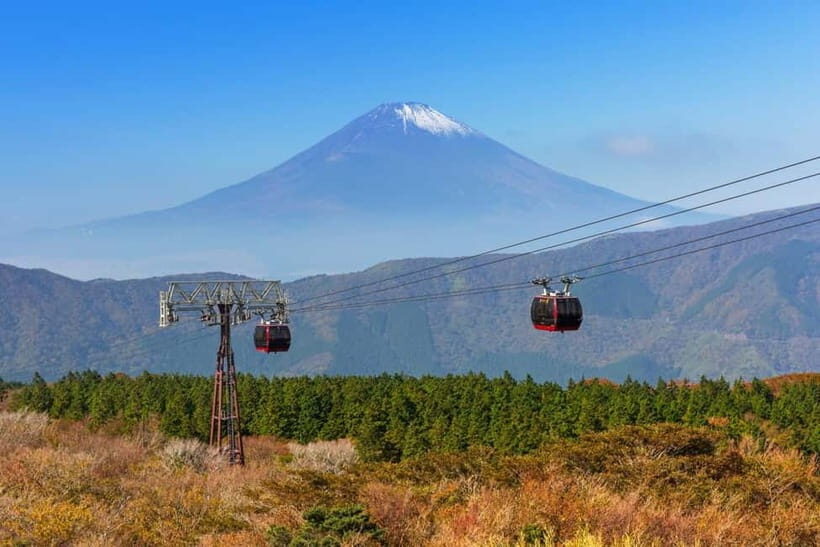
Then, if the sky cooperates, you may spot Mount Fuji again on the horizon. It’s a nice trick of geography: you’re moving above a volcanic valley while Fuji remains in the distance.
Consideration: visibility is everything. If you go on a foggy or rainy day, you may still enjoy the ropeway textures, but Fuji might be a blur or a no-show.
Owakudani: sulfur air, steam vents, and the kuro-tamago you’ll remember
Your Owakudani photo stop and sightseeing is around 30 minutes. This is where the tour goes from pretty views to raw earth power.
You’ll smell sulfur in the air, see steam rising from geothermal cracks, and feel how active this area still is. Even if you’re not a geology nerd, it’s one of those places that makes you stop and look longer than planned.
Then there’s the main edible reason people come: kuro-tamago, the famous black eggs. These are hard-boiled in sulfur springs, turning the shells black. Local lore says eating one adds seven years to your life—so yes, people line up for the ritual.
Two practical notes:
- The eggs are a quick hit, but plan your energy around a later lunch, because the day keeps moving.
- If you’re sensitive to strong smells, take it in small doses. Owakudani can feel intense.
Enoshima island: shrine steps, Nakamise snacks, and the Sea-Mount Fuji view
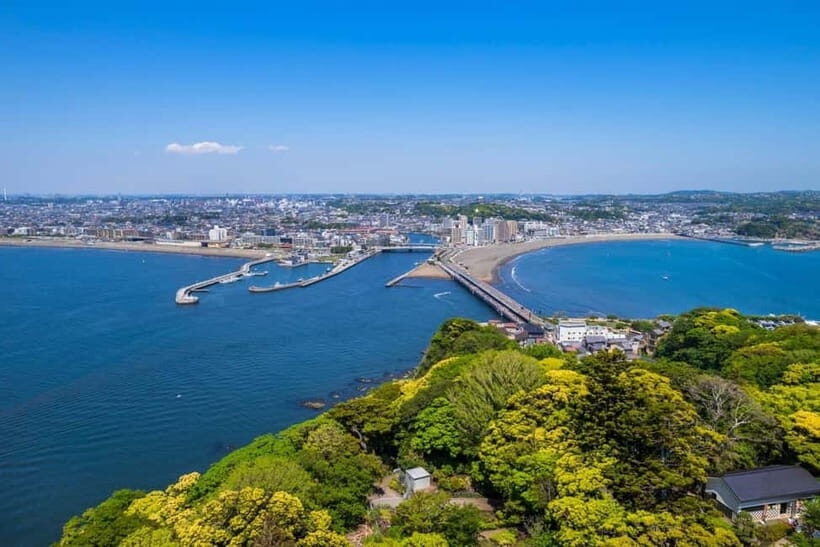
Enoshima is the curveball that makes this tour feel more than just a Fuji day trip. You’ll have a free time/photo block of about 30 minutes on the island, plus a structured shrine-and-street segment afterward.
Start with the island’s vibe: blue sea views, sea breeze, greenery, and those stone steps leading up toward lookouts. On a clear day, Mt. Fuji can appear on the horizon, creating the well-known Sea-Mount Fuji composition. Even when Fuji isn’t visible, Enoshima’s sea air and shoreline angles still make it feel special.
Then you’ll shift into the shrine route:
- Enoshima Shrine – Hetsunomiya (about 20 minutes): a calm, solemn start that sets the tone.
- Enoshima Benzaiten Nakamise Dori (about 30 minutes): this is where you can snack. Expect stalls and local treats like seaweed rolls, freshly caught anchovy items, and Shonan milk ice cream.
- Bronze Torii (about 10 minutes): iconic photo time.
- Zuishinmon Gate (about 10 minutes): another quick “stop and look” moment.
Time balance note: Enoshima is popular, and some people wish they had more wandering time. If you’re the type who wants to slow down, eat without rushing, and explore side alleys, you’ll want to treat the island free time as your main chance to do that.
Sagami Bay: the ocean finish that turns the day into a story
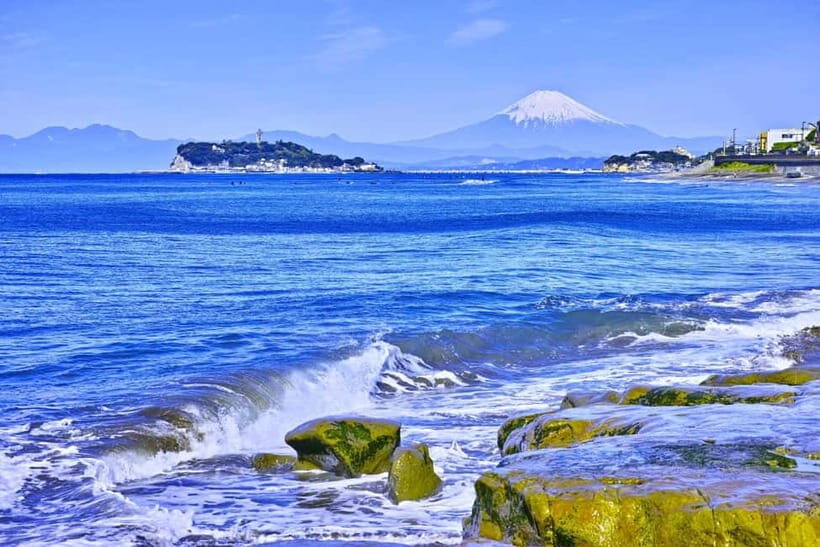
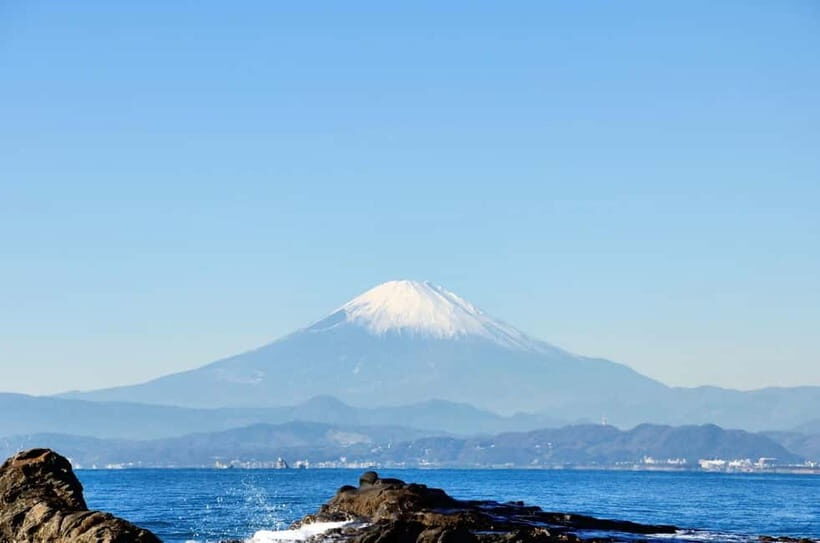
Your final scenic moment is a Sagami Bay photo stop (about 20 minutes). This is where you feel the day’s arc change.
After steam vents and ropeway views, Sagami Bay gives you wide, open ocean energy. It’s also a good reminder that Fuji isn’t just a mountain to photograph—it’s a landmark that shapes how people live and travel from inland volcanic zones to the coast.
Practical tip: if you care about photos, bring a fully charged phone/camera and keep your outer layer handy. Coastal wind can pick up quickly.
Price and logistics: why $50 can work (and when it won’t)
At around $50 per person for a 10-hour guided day with round-trip transfers, the value comes from three places.
First, you’re paying for transportation plus coordination. Hakone routes are easier when someone else handles timing, meeting points, and keeping your group together.
Second, you’re paying for the guide. English and Chinese speaking guides can help you understand what you’re seeing—plus they can assist if you need ticket help for places like the pirate cruise or ropeway.
Third, you’re getting multiple “big moments” packed in:
- pirate ship cruise,
- ropeway ride,
- Owakudani geothermal stop with black eggs,
- Enoshima shrine and Nakamise street time.
What’s not included can affect final cost. Meals aren’t included, and admission to the pirate cruise and the ropeway may depend on the option you select. Before you book, check whether your chosen package includes those tickets.
If you’re someone who already has Hakone transit planned with train tickets and self-guided shopping stops, you might compare costs. But if you want low-stress planning, the package can feel fair.
Guides, pacing, and why the day usually runs smoothly
This tour leans on organization. People often praise how smoothly the timing works and how clear instructions are.
Names that popped up in past guides include Kishida, Pin, Joey, Kyo, Aki, Belle, Jimmy, and Nakajima. The pattern you’ll notice is the same: they keep the group together and give practical info at each stop, including tips for photos.
There’s also a “keep it moving” rhythm. You won’t have long unstructured blocks at every location. That’s the trade: the schedule packs in highlights, but you’re choosing efficiency over lingering.
Weather and Mount Fuji: the one variable you can’t control
Mount Fuji visibility is tied to weather. The tour can’t force clear skies, and on cloudy days you may miss the iconic mountain sightline even from places people normally associate with Fuji views.
The best strategy is to dress for the full range of conditions and keep your expectations flexible. Even without Fuji, Lake Ashi, ropeway views of steam, Owakudani’s geothermal atmosphere, and Enoshima’s ocean setting still make for a strong day.
If Fuji is your #1 goal, aim for a day when the forecast looks promising. If it’s not, take the view that the tour still gives you multiple memorable environments.
Who should book this, and who should pass
This day trip is a good fit if you want:
- a one-day Hakone and Enoshima hit,
- plenty of scenic variety,
- clear structure so you don’t waste time figuring things out.
It may not be for you if you:
- need wheelchair access (not suitable),
- are pregnant (not suitable),
- deal with altitude sickness concerns (not suitable),
- or are over 70 (not suitable; a waiver is also mentioned for 70+).
If you love a relaxed pace and want hours of wandering in one place, this tour might feel rushed. You’re getting “highlights,” not a deep, slow travel day.
Small rules and practical tips that make a difference
A few details matter more than you’d think:
- No smoking during the experience.
- No food in the vehicle. You can eat at stops, just not onboard.
- Many local shops may not accept credit cards, so bring some cash. Your guide can help with purchasing tickets for the pirate cruise and ropeway if you need it.
- If you’re traveling with strollers or large luggage, indicate it when booking.
Also, during peak dates, traffic can happen. Keep your evening plans flexible. This kind of day runs on timing, so you want buffer time afterward.
Should you book this Tokyo-to-Hakone-to-Enoshima day trip?
If you want an organized, scenic Fuji-from-three-ways day and you’re okay with a packed schedule, I’d say yes—especially for first-timers. The pirate ship cruise and Hakone Ropeway are the two “wow” anchors, and Owakudani’s black eggs add a memorable, very Hakone flavor.
If your goal is only Mount Fuji and you’re traveling during a weather-risk window, you might feel disappointed by the chance of haze or cloud. But even then, the volcanic textures at Owakudani and Enoshima’s shrine-and-sea vibe are still worth the trip.
For my kind of traveler—someone who likes structure, wants photos without stress, and enjoys variety—this is a strong value day.
FAQ
How long is the tour?
The tour duration is about 10 hours.
How much does it cost?
The price is listed as $50 per person.
What places are included in the day?
You’ll visit Lake Ashi, go on the Hakone sightseeing cruise, ride the Hakone Ropeway, visit Owakudani, and explore Enoshima including Enoshima Shrine areas, Nakamise Dori, and a bronze torii viewpoint, plus a Sagami Bay photo stop.
Is admission to the cruise and ropeway included?
Admission to the Hakone sightseeing cruise and the Hakone Ropeway may depend on the option you choose. The tour guide can also help you buy tickets if needed.
What language is the guide?
The tour includes live guides speaking English and Chinese.
Is Mount Fuji guaranteed?
No. Visibility can be affected by weather, so Mount Fuji may be visible or not depending on conditions.
What should I bring for the day?
Bring some cash since many local shops may not accept credit cards. Also bring appropriate layers, since it can be chilly and you’ll be outdoors at several stops.
Is this tour suitable for everyone?
It is not suitable for pregnant women, wheelchair users, people with altitude sickness, and people over 70.
Are there rules about food or smoking?
Smoking is not allowed, and food is not allowed in the vehicle. Meals and beverages are not included in the tour price.
More Tour Reviews in Tokyo






Hakone, Three More Ways
The Fuji Shortlist: Other Days Out to the Mountain

Fresh reviews from around Tokyo






Mt Fuji Day Trips, compared.
 ★ 4.0Mt Fuji & Hakone Cruise, Drum Show Bullet Train 1 Day from TokyoFrom $1497,413 reviews
 ★ 4.4Tokyo Mt Fuji 5th St & Hakone Cruise Bus Tour w/Bullet TrainFrom $1545,024 reviews
 ★ 4.5From Tokyo: Mount Fuji Full-Day Sightseeing TripFrom $684,970 reviews
 ★ 4.7Mt. Fuji Tour, Hakone Ropeway, Owakudani, Lake AshiFrom $544,002 reviews
 ★ 5.0Private Tour to Mt. Fuji and Hakone (Fully Licenced Operator)From $4971,910 reviews
 ★ 4.9Mount Fuji Full-Day Private Tour from Tokyo (Customizable)From $3931,470 reviews
 ★ 4.0Mt Fuji & Hakone Cruise, Drum Show Bus 1 Day from TokyoFrom $1221,287 reviews
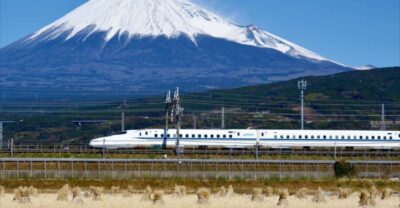 ★ 4.2From Tokyo: Mt. Fuji & Hakone Tour w/ Return by Bullet TrainFrom $1171,278 reviews
Browse the lists this tour appears in