
Reviewed · PRIVATE
Tokyo Zen Meditation at Private Temple with Monk
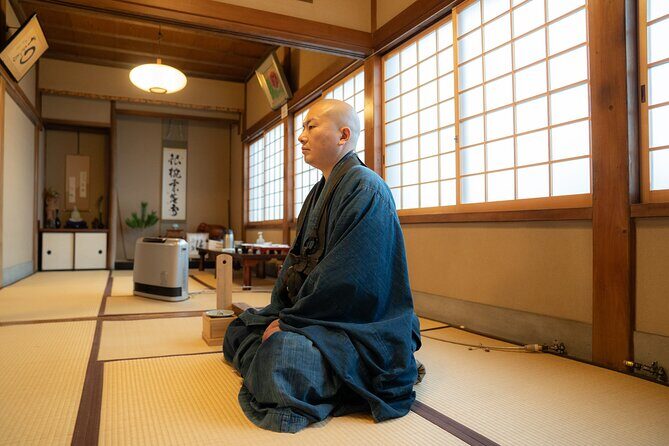
A quiet 90 minutes can change your pace. This private Tokyo Zen meditation happens at a temple in Asakusa that is not open to the general public, and you get real access to a monk for explanations and questions. I especially like the English support (so you are not stuck guessing), and the chance to pair meditation with hands-on temple arts like calligraphy and sutra-style practice. One thing to consider: you’ll be sitting and participating in a structured ritual, so if you want something purely sightseeing-focused, this may feel slower than you expect.
You also walk away with memories you can actually use on your trip. You’ll have time for photos with the monk and inside the temple, and the experience typically ends with a matcha tea ceremony and a free talk/Q&A. If you go, do it with an open, respectful mindset and plan to follow the guide’s directions closely so the atmosphere stays calm for everyone.
In This Review
- Key highlights to look for
- Why this Asakusa Zen session feels different
- The 90-minute flow: from meeting to Zazen practice
- Writing sutras and doing calligraphy as meditation
- Matcha tea ceremony and Q&A with the monk
- Meeting your guide and the monk (names you might hear)
- Photos inside the temple: memorable and respectful
- Price and value: what $56.16 really buys
- Getting there smoothly: the Asakusa meeting point
- Who this experience suits best
- Should you book this monk-led Zen meditation?
- FAQ
- How long is the Tokyo Zen Meditation with a monk?
- Where do we meet for the tour?
- Is the temple open to the general public?
- Is there English support if I don’t speak Japanese?
- What’s included in the experience?
- Can I cancel for free?
Key highlights to look for
- A private temple setting in Asakusa, with a long lineage dating back 400+ years
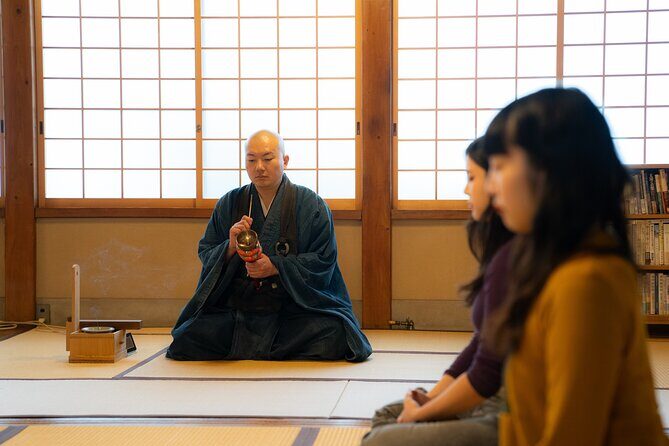
- Zazen instruction and practice led personally by a monk
- Calligraphy / sutra-style writing as part of the meditation flow
- Matcha tea + sweets to round out the session
- English-speaking guidance that keeps you included
- Photo time with the monk and temple spaces
More private options with your own guide
- Tokyo 6hr Private Tour with Government-Licensed Guide★ 5.0 · 3,902 reviews
- Private Tour to Mt. Fuji and Hakone (Fully Licenced Operator)★ 5.0 · 1,910 reviews
- Tokyo Customized Private Tour (Must See Places in 1 Day)★ 5.0 · 1,499 reviews
Why this Asakusa Zen session feels different
Most Tokyo tours give you a photo and a fast explanation. This one is built around time, attention, and conversation, inside a temple space you normally can’t just wander into. The location is in Asakusa, and the temple’s story goes back over 400 years, which helps you understand that Zen here is not a costume. It is a lived practice.
The big value is the monk connection. You are not just watching from the edge. You get guided learning, then your own time to sit. And when you have questions, the monk is presented as approachable, not distant or scripted.
The second thing I like for first-timers: you do not need to know Japanese or anything about Buddhism to follow along. The English-speaking guide helps translate the “why” as much as the “how,” so you can participate without feeling lost.
The 90-minute flow: from meeting to Zazen practice
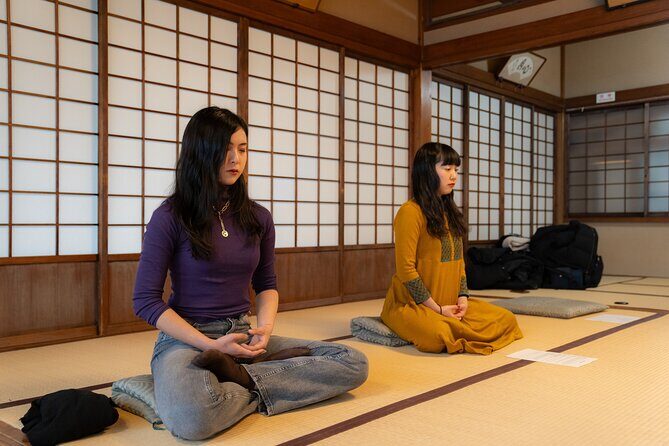
You start at the temple area in Asakusa (the session runs about 1 hour 30 minutes). You’ll be briefed first, and then the monk provides a personal lecture on Zazen, or seated meditation. Think of this as a hands-on lesson, not a lecture you listen to from a distance.
Zazen typically includes practical guidance on posture and attention. In the experience format, you’ll learn the basic technique, then practice it. You might also hear gentle explanations that connect breathing and focus to what Zen is trying to train: awareness you can carry off the mat.
Then the program shifts into more ritual structure. A few sessions include calligraphy-style work and temple prayer moments, which gives your mind something concrete to do while you stay present. It’s a smart design choice for people who find silence tough at first.
Writing sutras and doing calligraphy as meditation
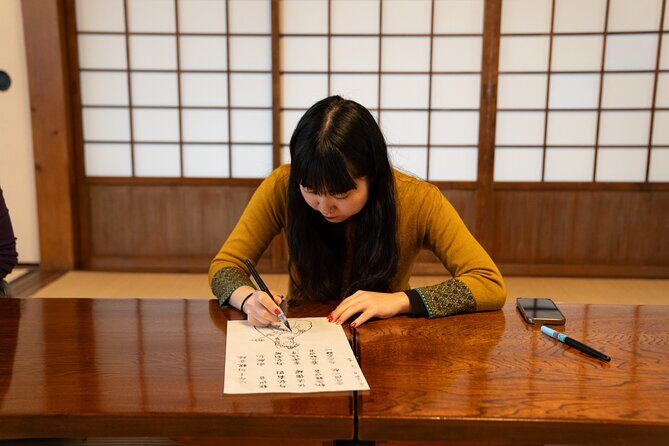
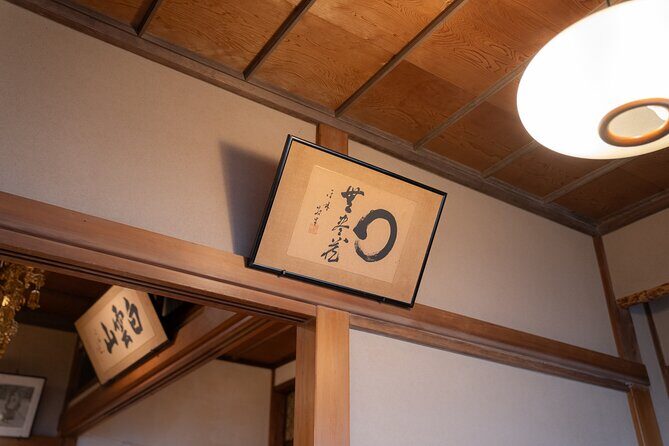
One of the most praised parts is the transition from sitting to writing. Instead of treating calligraphy as a souvenir craft, the program frames it as part of meditation practice. You may copy sutras as a meditative activity, and then you may do calligraphy with guidance.
Here’s why that matters for you: writing slows you down in a good way. You can’t rush a brushstroke. You have to watch, steady your hand, and commit your attention. It’s a very physical kind of mindfulness, and it helps if you’re not sure you can “do meditation” yet.
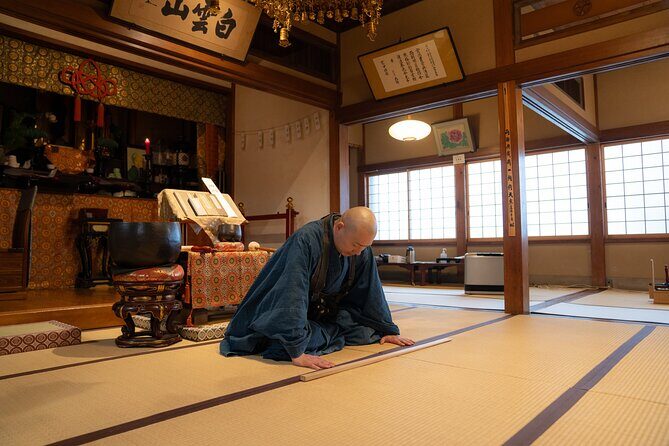
Some sessions also include a formal prayer step inside the hall. If you are comfortable participating, it’s a respectful way to understand how the space functions for practitioners. If you are nervous, the guide’s job is to keep you moving correctly—so you won’t be left guessing.
Matcha tea ceremony and Q&A with the monk
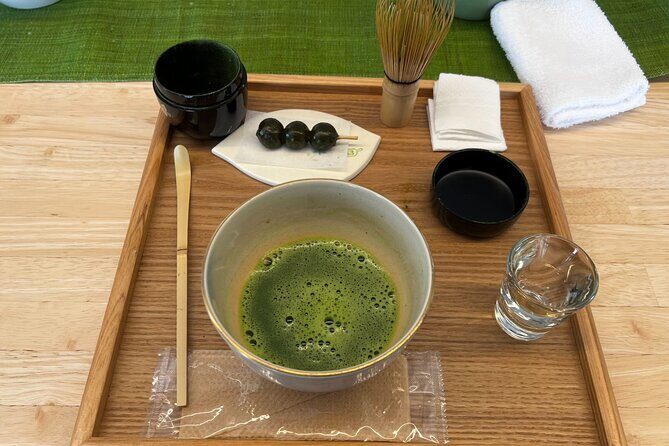
After meditation and writing, the mood shifts into hospitality. You’ll have matcha tea and snacks/sweets, and the tea moment is not just a break—it’s part of the ritual tone. Matcha in Japan often comes with careful pacing, and even if you don’t catch every word, you’ll feel the rhythm of the exchange.
The best added value here is the free talk/Q&A. You get to ask questions, not just about Zen in general, but about the principles and how people practice. Many people love that the monk and/or guide keep questions welcome, including non-technical ones.
If you like learning through dialogue, this part is where you feel the “private temple” difference. It turns the experience from a class into a conversation. And when you can ask why something is done a certain way, the whole practice makes more sense on your way back to Tokyo streets.




Meeting your guide and the monk (names you might hear)
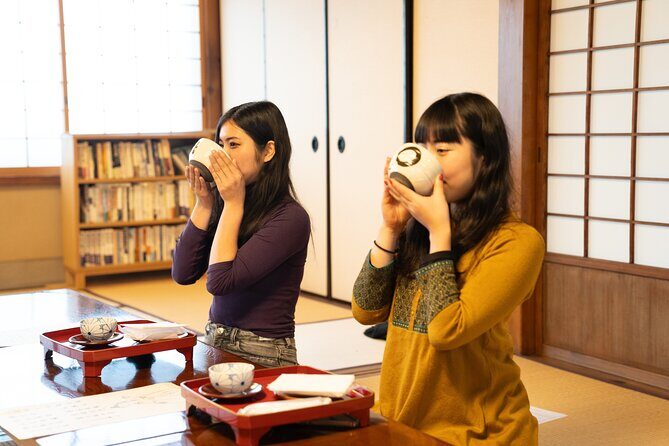
The experience is led by an English-speaking guide and a monk from the temple. In past sessions, guides have included Tamami and Kazu, and monks have been described as friendly and open—one example name that came up is Namiki.
A quick practical note: you should treat the names as examples, not guarantees. The key point is that you’re not on your own. The guide acts as the bridge between Zen practice and your questions, and the monk is presented as approachable enough to respond with real thought.
That approach is why this feels special for many people who are new to meditation. You can ask about posture, intention, or what to do when your mind wanders, and you’ll get an answer rather than a shrug.
Photos inside the temple: memorable and respectful
You can take photographs inside the temple and with the monk. That is a huge perk because Zen spaces tend to be visually striking, and your photos will capture the quiet atmosphere that you can’t fully explain later.
Still, treat it like a respectful moment, not a photo shoot. Follow the guide’s cues on timing and where to stand. If you see prayer or practice moments happening, pause and let the group move first. This keeps the atmosphere intact and helps you avoid that awkward feeling of being in the way.
If you care about photos, this experience is a good match because it builds photo time into the flow, instead of forcing you to squeeze pictures between steps.
Price and value: what $56.16 really buys
At $56.16 per person (with a mobile ticket option), the price can look “reasonable” until you break down what’s included. You’re paying for more than entry. You’re paying for:
- Entrance ticket to the temple setting used for the session
- English speaking guide for explanation and translation support
- Zen meditation instruction + practice led with monk-led lecturing
- Pictures with the monk
- Matcha tea and snacks/sweets
- A structured program that usually includes writing/calligraphy-style practice
Add it up and it’s closer to a guided private cultural workshop than a quick attraction. The group size is also capped at 15 travelers, which matters. Smaller groups make it easier for the monk and guide to address questions and keep you from drifting into the back row for the whole session.
If you enjoy experiences that slow you down and you like structured cultural learning, this is solid value. If you only want a broad overview of Tokyo temples, you might find this pricier than a general sightseeing visit. But if your goal is the monk connection and participation, the cost aligns with what you actually get.
Getting there smoothly: the Asakusa meeting point
The meeting point is listed as 111-0042 Tokyo, Taito City, Kotobuki, 2-chōme 113 偕楽ビルディング. It is noted as being near public transportation, so you should be able to reach it without complicated planning.
One practical tip: arrive early and double-check you’re at the exact spot. There’s a note from a past experience where an address pointed people to the wrong Family Mart, so confirming the exact meeting location in advance is worth your time. When you’re heading to a temple session, being five to ten minutes early is not overkill—it saves stress.
Wear shoes you can stand and sit in comfortably. Temple halls typically mean you are moving with intention, and you’ll want to focus on the session, not your feet.
Who this experience suits best
This is a great fit if you want a calm, structured moment in the middle of Tokyo. It also works well for people who are curious about Zen but don’t speak Japanese, since the guide’s English support is a core feature.
It’s also a good pick if you like learning by doing—sitting meditation, calligraphy-style practice, and tea. You’ll come away with a clearer sense of what Zen training is trying to build: attention, patience, and a steady mind.
This might be less ideal if you:
- Want a long sightseeing route with lots of walking between attractions
- Hate sitting still for about 90 minutes
- Expect a fast, casual “try it and go” experience
Should you book this monk-led Zen meditation?
Yes, book it if your idea of a great Tokyo day includes silence, respectful participation, and the chance to ask real questions in English. The combination of private temple access, monk-led guidance, meditation practice, and a finish with matcha and Q&A makes this more than a standard cultural stop.
I’d skip it only if you want big-ticket temple sightseeing or you’re not ready for a structured, seated session. Otherwise, this is exactly the kind of Tokyo experience that gives you depth instead of just more photos.
FAQ
How long is the Tokyo Zen Meditation with a monk?
The experience runs about 1 hour 30 minutes.
Where do we meet for the tour?
The meeting point is in Taito City, Kotobuki: 111-0042 Tokyo, Taito City, Kotobuki, 2-chōme 113 偕楽ビルディング. The activity ends back at the meeting point.
Is the temple open to the general public?
No. This temple is described as not open to the general public, which is part of what makes the experience special.
Is there English support if I don’t speak Japanese?
Yes. An English-speaking guide is included to explain Zen principles and help you participate during the monk’s lecture and Q&A.
What’s included in the experience?
Included are the Zen experience, an entrance ticket, matcha tea (with snacks/sweets), Zen-related activities such as seated meditation and writing/calligraphy-style practice, pictures with the monk, and an English-speaking guide.
Can I cancel for free?
Yes. Free cancellation is available if you cancel at least 24 hours in advance for a full refund.
Just Your Group: Private Options

More Tour Reviews in Tokyo



Fresh reviews from around Tokyo






Private, compared.
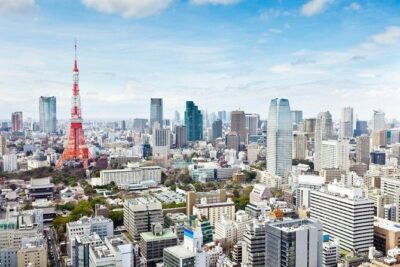 ★ 5.0Tokyo 6hr Private Tour with Government-Licensed GuideFrom $1553,902 reviews
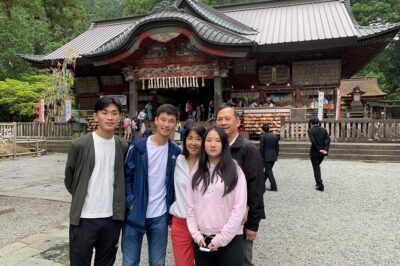 ★ 5.0Private Tour to Mt. Fuji and Hakone (Fully Licenced Operator)From $4971,910 reviews
 ★ 5.0Tokyo Customized Private Tour (Must See Places in 1 Day)From $1451,499 reviews
 ★ 4.9Mount Fuji Full-Day Private Tour from Tokyo (Customizable)From $3931,470 reviews
 ★ 4.8Private City Highlights Tour with Local GuideFrom $1061,433 reviews
 ★ 5.0Private Custom Tour: Tokyo in a DayFrom $1591,432 reviews
 ★ 5.0Tokyo 4hr Private Tour with Government-Licensed GuideFrom $1091,394 reviews
 ★ 5.0Tokyo Customized Private Tour: See Top Attractions in 1 DayFrom $1451,351 reviews