
Reviewed · SAMURAI & NINJA EXPERIENCES
Tokyo: Samurai Adventure! Authentic Sword Action Experience
Want to swing a samurai sword in Tokyo? In this hands-on workshop, you train safely with training swords while Dai and Kume (former action actor instructors) show you what daily samurai-style practice looks like up close. It’s not a museum stop. It’s a class where you watch, learn, and try.
I love that the lesson starts from the ground up: gripping, holding, and swinging, with clear guidance for beginners. I also like the ending rhythm—there’s a powerful demonstration, then you pair up for an action-style scene and finish with a photo session with the samurai.
One thing to consider: it’s about technique and movement in a short time window (about 1 hour), and it’s not a full experience with meals or kimono dressing. If you want more downtime or a longer story-based production, this may feel fast.
In This Review
- Key highlights you’ll care about
- Samurai Training in Central Tokyo, Built for Beginners
- What Happens During the 1-Hour Workshop: Warm-ups to a Scene
- 1) Warm-ups and initial coaching
- 2) Basic technique: grip, hold, and swing
- 3) Watching live training demonstrations up close
- 4) Pairing up for an action-packed scene
- 5) A powerful demonstration and photos to finish
- Group Class vs Private Lesson: Pick Your Style of Learning
- Group class: training alongside students
- Private lesson: more direct attention
- Dai and Kume’s Teaching Style: Professional, Friendly, and Clearly Passionate
- Safety and Technique: Training Swords, Not Real Fighting
- Price and Value: What $32.84 Buys You in Tokyo
- Where to Meet in Chuo City (and How to Plan Your Timing)
- What’s Included and What Isn’t (So You Don’t Get Surprised)
- Who This Experience Fits Best (and Who Should Skip It)
- Great fit for you if:
- Consider skipping if:
- Should You Book the Tokyo Samurai Adventure?
- FAQ
- How long is the samurai workshop?
- Where is the meeting point?
- Do I get to practice, or do I just watch?
- Are real swords used?
- Can beginners participate?
- Is there a private option?
- How big are the groups?
- Is kimono dressing included?
- Are meals included?
- Is it easy to reach from central Tokyo?
- What happens after I book?
Key highlights you’ll care about
- Action-actor instructors, not random showmanship: Dai and Kume teach with professional precision and calm coaching.
- Real sword forms, practiced safely: you use wooden training swords, not live blades.
- Learn first, then do scenes: after basics, you pair up for a more action-packed moment.
- Small groups (max 15): easier to get attention and actually practice.
- Photos with the samurai: you leave with proof you didn’t just watch from the sidelines.
- Centrally located near Tokyo Station/Ginza/Tsukiji: convenient meeting point in Chuo City.
More blades, bows and dojo hours
- Tokyo: Samurai Ninja Museum Guided tour and Experience★ 4.6 · 1,010 reviews
- Tokyo: Samurai Sword & Archery Class from Samurai Descendant★ 5.0 · 603 reviews
- Best Samurai Experience in Tokyo★ 5.0 · 458 reviews
Samurai Training in Central Tokyo, Built for Beginners
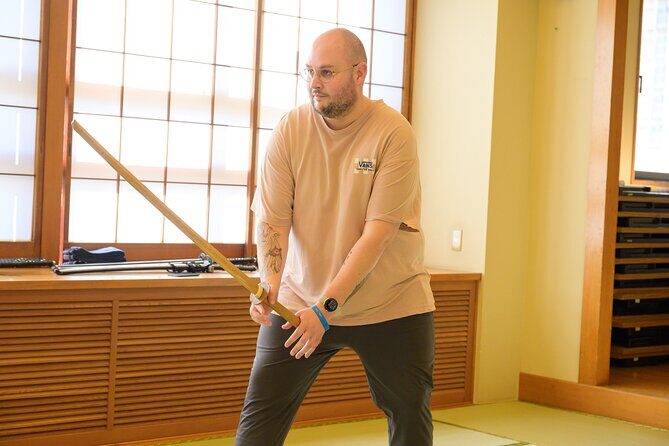
Tokyo does theatrical things well, but this experience is more “hands-on training” than “watch a performance.” You’ll start with warm-ups, then learn the fundamentals of sword movement—grip, posture, holding, and swinging—while instructors guide you step by step.
The instructors, Dai and Kume, are former action actors, and you feel that in the way they teach. They’re not just storytellers. They help you get your body in the right positions so the movements look correct and feel safer. That’s the big value for most first-timers: you’re not guessing what to do, and you’re not stuck as an observer.
At the end, you’re not left with only a demo in your memory. You get a photo session, and there’s also a paired, action-style moment where you practice with a professional samurai. Even if you’re not the “fight” type, seeing how the technique turns into performance is a big part of what makes it memorable.
What Happens During the 1-Hour Workshop: Warm-ups to a Scene
Think of this class as a mini training cycle. You won’t spend the whole time walking around or waiting your turn. The flow stays active.
1) Warm-ups and initial coaching
The workshop begins with warm-ups led by the instructors. This matters because you’ll be practicing grips, controlled swings, and partner work. You’ll also get your first look at the training rhythm—how they correct posture and movement so the technique stays consistent.
2) Basic technique: grip, hold, and swing
Next come the core fundamentals. You’ll practice the mechanics that make a sword movement look like a trained form rather than an arm wave. Expect drills focused on:
- How you hold the training sword
- How you keep the blade aligned during movement
- How you swing with control instead of speed
Beginners are welcome, and the workshop is designed so you can participate even if you’ve never done anything like this before. The goal is clean technique, not athletic heroics.





3) Watching live training demonstrations up close
You’ll also watch skilled training demonstrations nearby. This isn’t a distant stage view. The point is for you to see the details—the timing, the posture, the way the sword path stays disciplined. When you then practice those basics yourself, the movement makes more sense.
4) Pairing up for an action-packed scene
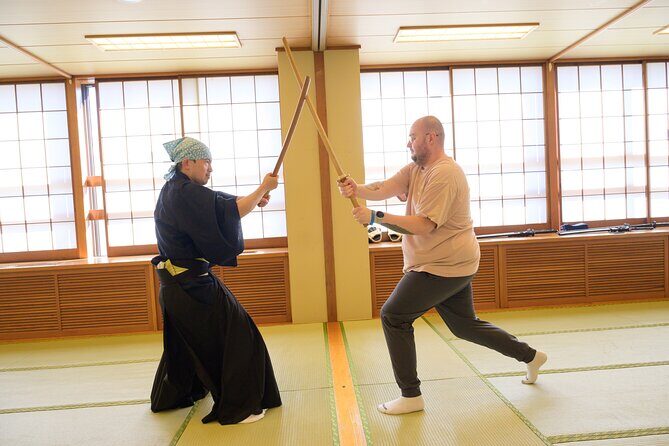
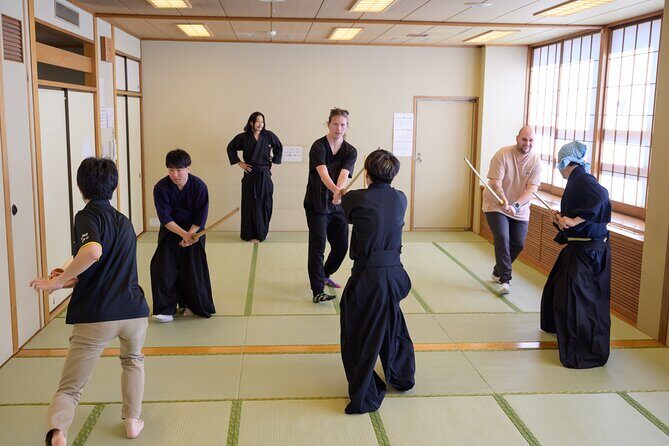
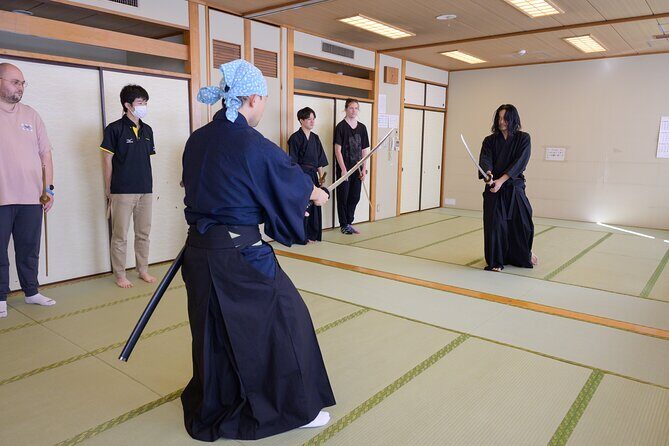
Once the basics click, you pair up with a professional samurai for an action-style scene. You’re not doing real combat. It’s staged practice that turns technique into something you can feel and perform with confidence.
If you chose the group class, you’ll also join aspiring Japanese actors learning samurai action. That adds an extra layer: you’re training alongside people who are actively studying the performance side of samurai-style movement, not only the history side.
5) A powerful demonstration and photos to finish
Finally, there’s a powerful samurai demonstration up close. You get to take in the performance side of the training, then wrap it with a photo session. It’s a practical way to end: you leave with a keepsake that doesn’t rely on imagination.
Group Class vs Private Lesson: Pick Your Style of Learning
You can choose between a private and a group experience, and that choice changes the vibe.
Group class: training alongside students
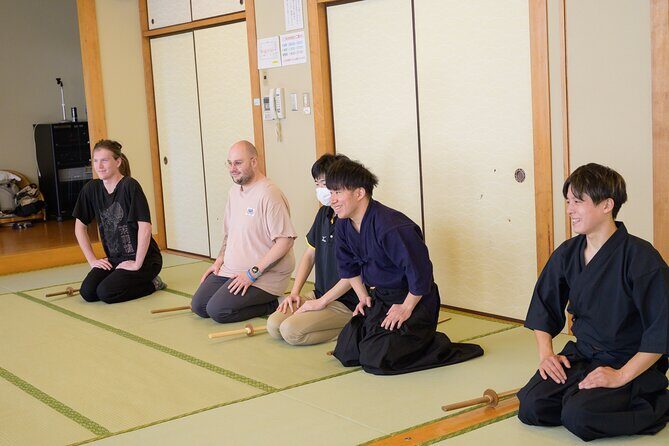
In the group session, you’ll share the lesson with other participants and aspiring Japanese actors learning samurai action. This tends to make the workshop feel lively and communal. You watch, practice, and you’ll likely feel the energy of a class environment where everyone is actively trying.
This also works well if you enjoy meeting people and don’t mind a little more variation in the group’s pace.
Private lesson: more direct attention
If you want extra coaching time, choose private. The data doesn’t list exactly how much personalized technique breakdown you’ll get, but the structure is still the same: warm-ups, fundamentals, and practice with an instructor/professional. The difference is mainly that you’re less likely to wait for your turn and more likely to get corrections tailored to your movement.
If you’re traveling as a couple or want a quieter, more focused session, private is often the better fit.
Dai and Kume’s Teaching Style: Professional, Friendly, and Clearly Passionate
The reviews put a consistent spotlight on the instructors. Dai and Kume come across as professional and friendly, and that combination matters for a skills-based experience like this. You’re holding a sword-shaped object and practicing controlled movement—so you want calm instruction, not chaos.
From the feedback, here’s what shines:
- They coach with confidence, which helps first-timers relax
- They keep the training engaging, so you actually enjoy practicing
- They’re passionate about what they do, and that shows in the attention to technique
One review also mentioned that Japanese language was included for someone who had strong interest, which tells you the instructors read the room and can adjust the lesson tone. Another review described a post-class walk where Dai and Kume pointed out traditional places to eat and even had the group try melon bread. That’s not guaranteed, but it does reflect the kind of local, human touch they bring beyond the formal training block.
Safety and Technique: Training Swords, Not Real Fighting
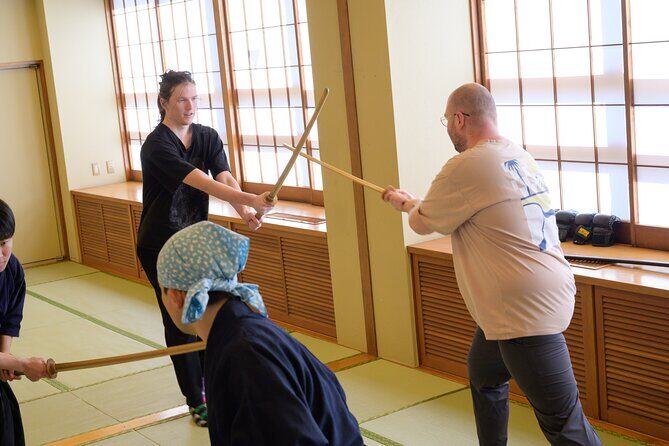
This is a big point, and it’s good you’re told clearly: instead of real sword fighting, you safely practice samurai movements using training swords. That makes the class appropriate for most people who can participate in basic movement and coordination.
You’ll learn grips and controlled swings, plus a staged paired moment with a professional. It’s performance training and form practice, not gladiator combat. If you’re looking for “real battle,” you may feel the difference. If you’re looking to understand the shape of the technique and feel confident copying the motions, this structure is exactly the right kind of safe.
Price and Value: What $32.84 Buys You in Tokyo
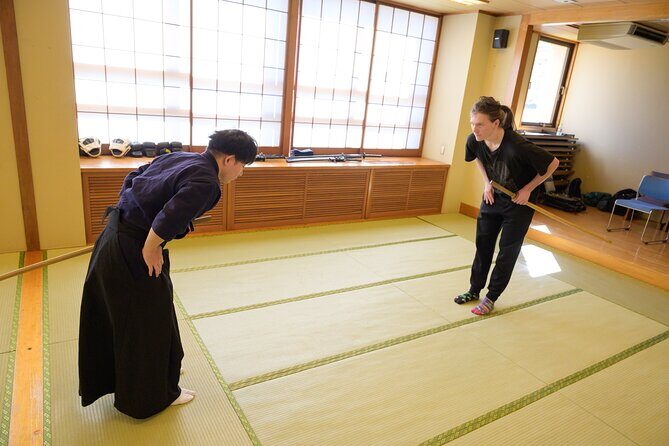
$32.84 for about an hour is not a bargain in a generic sense. But in Tokyo, you’re paying for three things that travel prices usually separate:
1) Hands-on instruction from professional instructors
2) Live training demonstrations you can observe up close
3) A photo session that gives you a concrete souvenir
Add in that the max group size is 15, and it makes the price easier to justify. If you had to pay separately for a class plus a guided local experience and keep dealing with crowded tours, the cost would likely climb fast.
Also, this is central Tokyo, near major areas like Tokyo Station, Ginza, and Tsukiji. That convenience saves time, and time is money when you’re moving around Japan.
Where to Meet in Chuo City (and How to Plan Your Timing)
You’ll meet at 2-chōme-15-3 Tsukuda, Chuo City, Tokyo 104-0051, Japan. The session ends back at the meeting point, so you can build the rest of your day without worrying about complex end-location logistics.
The workshop is described as easily accessible from Tokyo Station, Ginza, and Tsukiji, which is great if you’re basing yourself in those neighborhoods. You’ll want to arrive a bit early so you can find the exact spot and settle in before warm-ups start.
Because the whole experience is about 1 hour, plan your schedule like you would for a movie with strict start times. If you stack tight reservations right after, you’ll feel rushed. If you leave a little breathing room, you’ll enjoy the photo moment and any instructor extras without stress.
What’s Included and What Isn’t (So You Don’t Get Surprised)
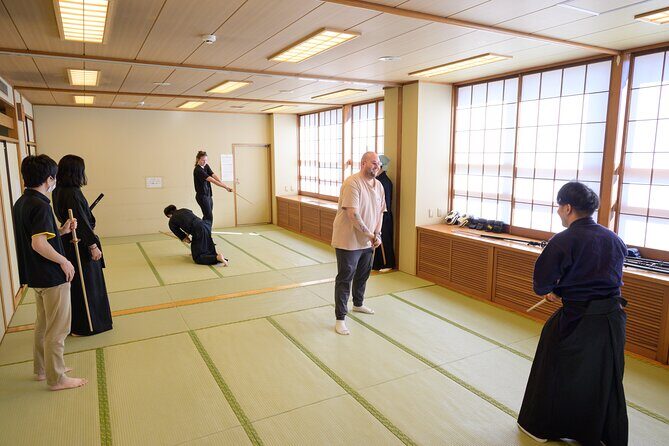
Included:
- Introduction to samurai history
- Live training demonstrations
- Hands-on swordsmanship practice
- Practice with wooden swords provided
- Photo session with the samurai
Not included:
- Meals and beverages
- Transportation to and from the workshop
- Kimono dressing
That “not included” list is normal for Tokyo activities, but it matters for planning. Since there’s no kimono dressing, you shouldn’t expect a full costume-and-photoshoot production. Instead, the focus stays on movement, technique, and an authentic training feel.
If you want something to pair afterward, one of the best parts is that you’re in a part of Tokyo where food is easy to find. And in at least one recent experience, Dai and Kume helped participants connect with traditional snack stops during a short walk.
Who This Experience Fits Best (and Who Should Skip It)
Great fit for you if:
- You want a hands-on Tokyo experience, not just a sightseeing photo
- You’re curious about samurai movement and how it translates into performance
- You like structured training that starts from beginner basics
- You want something short, focused, and easy to fit into a travel schedule
Consider skipping if:
- You’re hoping for real sword combat or live-blade sparring (this is not that)
- You want a long, multi-hour immersive production with costume, meal, and lots of free time
- You dislike any kind of physical movement, even if it’s controlled and guided
Should You Book the Tokyo Samurai Adventure?
If you’re deciding between another “watch and walk” activity and something you’ll actually do with your own body, book this. Dai and Kume have a track record of making first-timers feel comfortable while still teaching serious technique. The training-sword setup keeps it safe, and the end photo moment gives you something tangible to remember.
I’d book it especially if you:
- are in central Tokyo already and want a high-value, short commitment, and
- like learning skills you can talk about afterward, not just passively see.
If that sounds like you, this is one of the smarter choices in Tokyo for an authentic, hands-on slice of samurai action.
FAQ
How long is the samurai workshop?
It runs about 1 hour.
Where is the meeting point?
The meeting point is 2-chōme-15-3 Tsukuda, Chuo City, Tokyo 104-0051, Japan. The activity ends back at the meeting point.
Do I get to practice, or do I just watch?
You’ll do both. You watch live training demonstrations and you also practice sword movements yourself with wooden training swords provided.
Are real swords used?
No. You safely practice samurai movements using training swords instead of real sword fighting.
Can beginners participate?
Yes. Most travelers can participate, and beginners are welcome.
Is there a private option?
Yes. You can choose between a group class and private lessons.
How big are the groups?
The maximum group size is 15 travelers.
Is kimono dressing included?
No. Kimono dressing is not included.
Are meals included?
No. Meals and beverages are not included.
Is it easy to reach from central Tokyo?
The workshop is described as central Tokyo and easily accessible from Tokyo Station, Ginza, and Tsukiji, and it’s near public transportation.
What happens after I book?
You receive confirmation at the time of booking, and the tour uses a mobile ticket.
More Tour Reviews in Tokyo



The Way of the Sword, Continued
Fresh reviews from around Tokyo






Samurai & Ninja Experiences, compared.
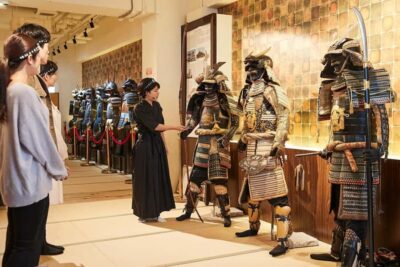 ★ 4.6Samurai Ninja Museum Guided tour and ExperienceFrom $271,010 reviews
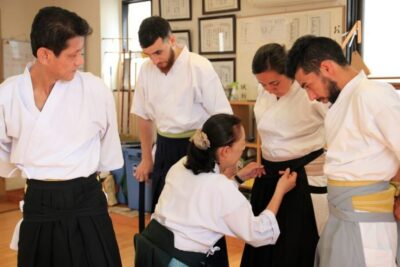 ★ 5.0Samurai Sword & Archery Class from Samurai DescendantFrom $193603 reviews
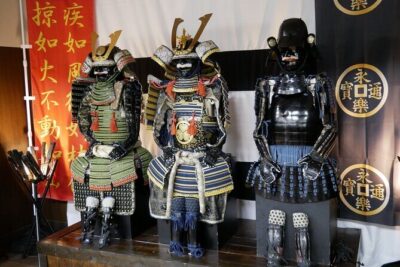 ★ 5.0Best Samurai Experience in TokyoFrom $65458 reviews
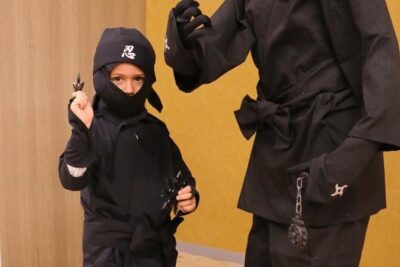 ★ 5.0Ninja Experience (Family Friendly) at Samurai Ninja Museum TOKYOFrom $47441 reviews
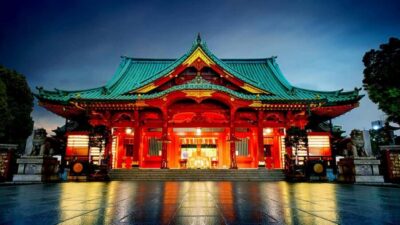 ★ 4.6Samurai Entertainment Night Show in Kanda ShrineFrom $41417 reviews
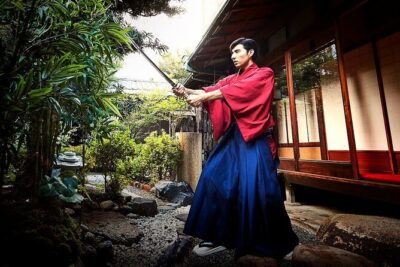 ★ 5.0Tokyo Sword Experience – includes Museum Ticket/Ninja ExperienceFrom $84314 reviews
 ★ 4.8Samurai Ninja Museum Asakusa: Samurai Sword Lesson & TourFrom $63306 reviews
 ★ 5.0Samurai Sword Experience (Family Friendly)at SAMURAI MUSEUM TOKYOFrom $65168 reviews
Browse the lists this tour appears in