
Reviewed · TOKYO
Tokyo: Roll and Authentic Sushi Making Class in Asakusa
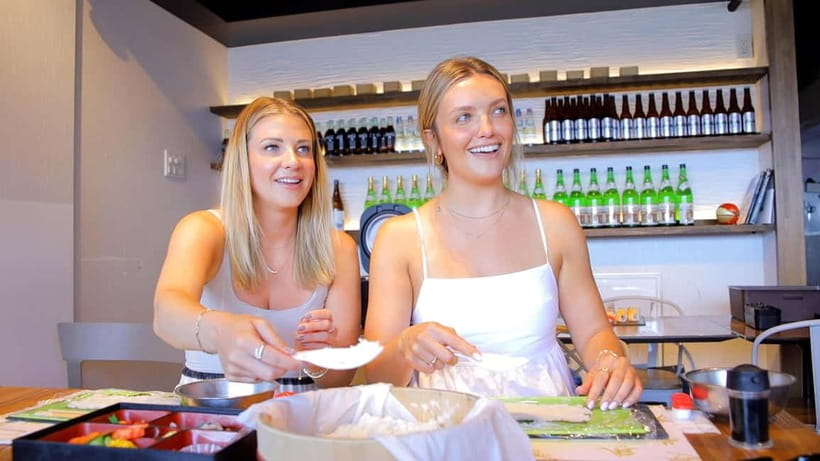
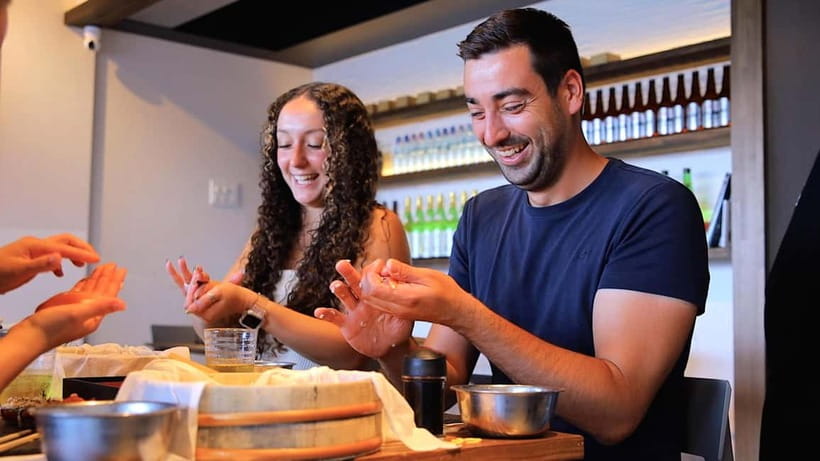
Sushi making in Asakusa feels surprisingly fun. This 100-minute class near Asakusa Station mixes a short, light quiz on sushi history with hands-on work, so it ends with you eating your own handiwork. I love the step-by-step teaching (often with guides like Hitomi and Tomona) and the English support that keeps beginners from getting lost.
My only real caution is timing. A few people felt the session could run a bit longer, and you may not get unlimited rice, even though there’s plenty of sushi to eat.
In This Review
- Quick highlights
- Asakusa sushi making: why this part of Tokyo is special
- The 100-minute rhythm: quiz, prep, roll, then authentic sushi
- What you actually make: roll sushi plus a more traditional style
- English-speaking teaching that actually keeps you on track
- Ingredients and dietary options: what’s covered, what has limits
- Price and value: does $58 make sense in Tokyo?
- Where to meet and how to pair it with your Asakusa day
- Who this class is best for (and who might want a different style)
- Tips so your sushi session stays smooth
- Should you book this Asakusa sushi making class?
- FAQ
- How long is the sushi making class in Asakusa?
- Where do I meet for the class?
- What types of sushi will I make?
- Do I need any previous experience?
- Are there vegan, vegetarian, or gluten-free options?
- Is hotel pickup included?
Quick highlights
- Interactive sushi history quiz keeps the class moving and makes the food feel less mysterious
- Roll + authentic Japanese sushi so you’re not doing the same thing twice
- English-speaking team that teaches with patience and humor (names you might hear include Jun, Kaori, and Hide)
- Fresh, quality ingredients that make your finished sushi taste like something you’d actually order
- Dietary options available such as vegan, vegetarian, gluten-free, and halal (with limits on substitutions)
- Asakusa location puts you close to Sensoji and the Tokyo Skytree area
Before you commit, see how this one stacks up against a few Tokyo favourites:
- Mt Fuji and Hakone 1-Day Bus Tour Return by Bullet Train★ 5.0 · 26,383 reviews
- 1-Day Tokyo Bus Tour★ 5.0 · 14,250 reviews
- Tokyo: teamLab Planets TOKYO Digital Art Museum Entry Ticket★ 4.6 · 9,779 reviews
Asakusa sushi making: why this part of Tokyo is special
Asakusa is one of those neighborhoods where Tokyo still feels like Tokyo. You’re close to classic sights, and that matters because sushi is more than just food here—it’s culture, manners, and craft.
This class is centered in historic Asakusa, and the meeting point is just about 3 minutes from Asakusa Station. That makes it easy to fit between temple wandering and street-snack breaks without burning half your day on transit.
You also get a practical bonus: you learn by doing. Watching sushi videos is one thing, but rolling, shaping, and tasting what you make is a whole different kind of souvenir.
The 100-minute rhythm: quiz, prep, roll, then authentic sushi
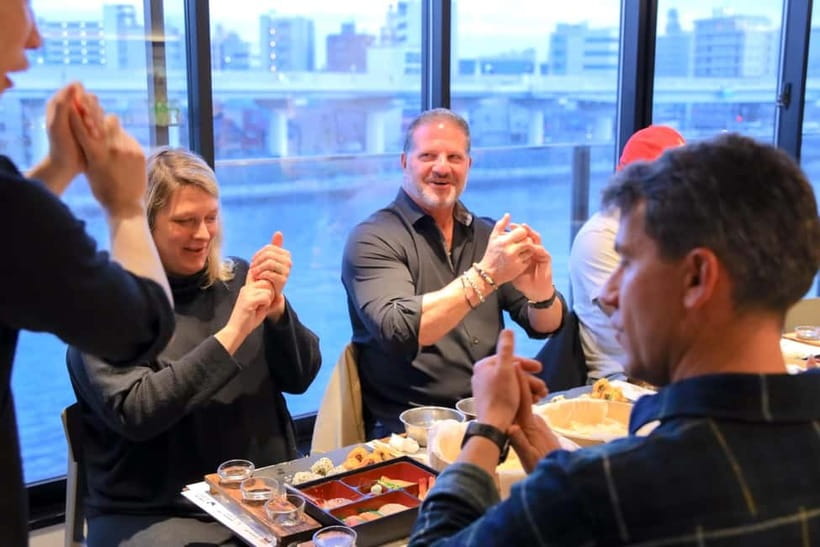
The session is designed to feel like a guided workshop, not a lecture. You start with a quick, interactive way to learn sushi basics, including how sushi developed and how different styles relate to each other.
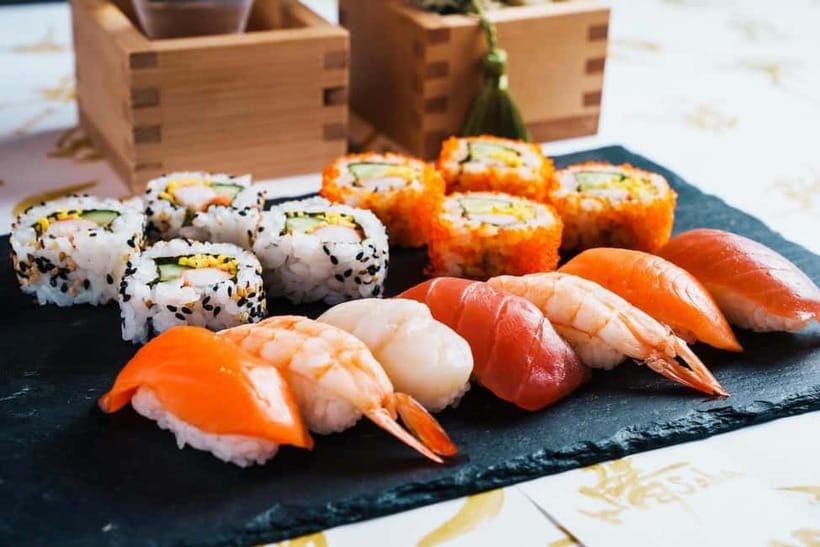
Then you move into the hands-on part. You’ll make two types of sushi: one is a roll (maki-style), and the other is described as authentic Japanese sushi (nigiri-style in the class setup). It’s not just assembly—your guide walks you through the steps while the group keeps working.
The best part is the payoff. Once you’ve made it, you eat it right there. That keeps motivation high and makes the learning stick, because you can connect technique to taste immediately.
What you actually make: roll sushi plus a more traditional style
The class isn’t trying to be complicated. The plan is simple: you make a roll and you also make a more traditional style sushi.
For the roll, you practice the mechanics of keeping everything neat while you shape it. For the second dish, the class focuses on the more “Japanese” approach to sushi (the kind you’ll often see in casual, everyday form), so you’re not leaving with only one technique.
The result is that your finished plate gives you range. A roll teaches texture and balance across the whole bite. The second style teaches presentation and how the topping and base work together.
And yes, you’ll eat what you make. That’s not a small detail—if you’re paying for a class, the value comes from walking out full and knowing you can repeat at least the core steps later.
English-speaking teaching that actually keeps you on track
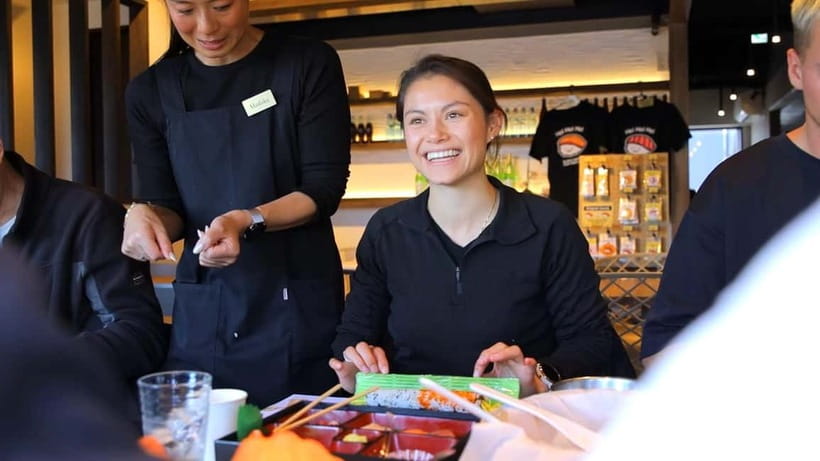
This is an English-taught class, and the teaching style shows up in the reviews in a consistent way: friendly, patient, and lightly humorous. Staff members are the difference between a “fun activity” and a real learning experience, and this team is built for groups and solo guests.
You might meet guides such as Hitomi, Tomona, or Jun, and you may also see helpers like Hide working closely at the stations. The pattern is the same: clear instructions, encouragement when things get sticky or awkward, and help when your roll looks less like Instagram and more like edible art.
One practical detail I really like: the class uses both video/visuals and hands-on examples. That’s important because sushi-making has muscle-memory moments. If you only get words, beginners stall out. If you only get visuals, you still have to do it.





Ingredients and dietary options: what’s covered, what has limits
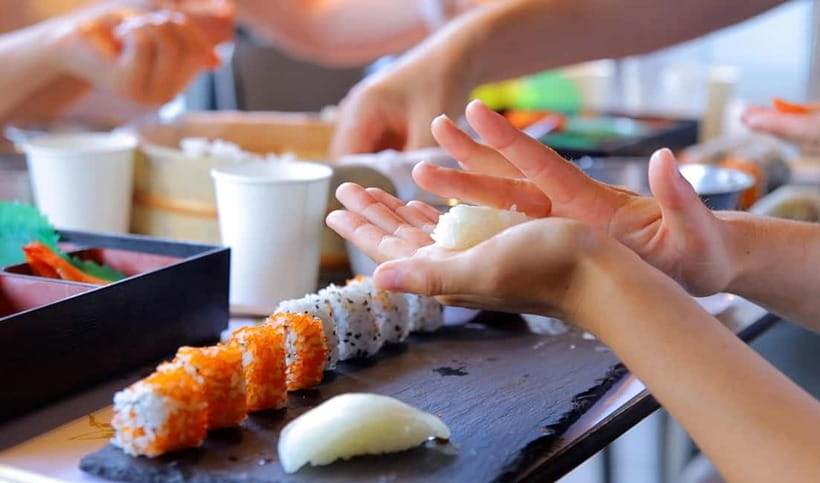
Sushi lives or dies by ingredients, and this class emphasizes quality. People consistently describe the ingredients as fresh and “high quality,” and the finished sushi tastes like it was built to be eaten—not just displayed.
There’s also a clear approach to dietary needs:
- Vegan and vegetarian options are available
- Gluten-free is listed as available
- Halal is listed as available
The details do include limits. The class notes that certain ingredients are not used: meat, nuts, fruits, dairy. Also, for allergies, they say you should contact them when you reserve, and they state they do not accept ingredient specifications.
So here’s the smart way to think about it: if your needs fit one of the listed categories, you’re in good shape. If you have a very specific allergy puzzle, plan early and message ahead so you’re not guessing at the last minute.
Price and value: does $58 make sense in Tokyo?
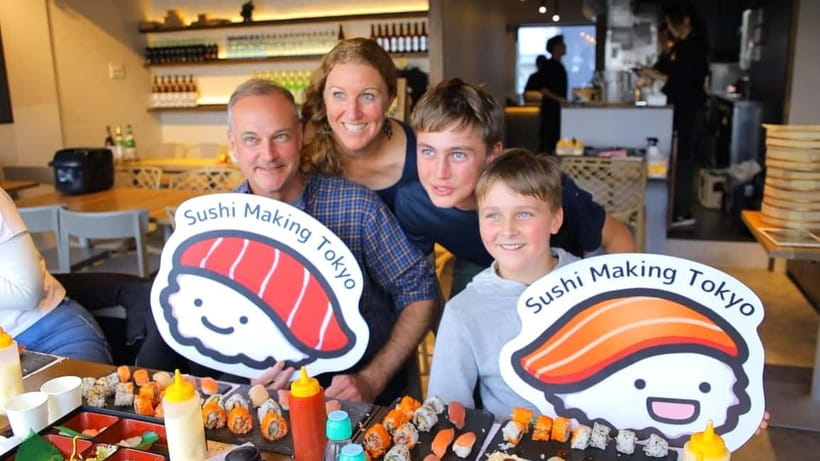
At $58 per person for 100 minutes, this isn’t a casual “just watch and snack” activity. You’re paying for instructor time, the ingredient set, and the structure that lets you go home feeling competent.
In Tokyo, that kind of value is usually only good when the experience is hands-on. Here, the class is built around making two styles and then eating them. You’re essentially getting both the lesson and a meal-like outcome.
The only value trade-off is that the class time is fixed. If you’re the type who wants to linger over technique (or you eat at full speed), you might feel the session moves quickly. One person even said the class felt slightly rushed and suggested it could use more time.
Still, for most people, the math works because you’re not paying extra for materials, and you’re leaving with a genuine Tokyo food skill—not just a photo.
Where to meet and how to pair it with your Asakusa day
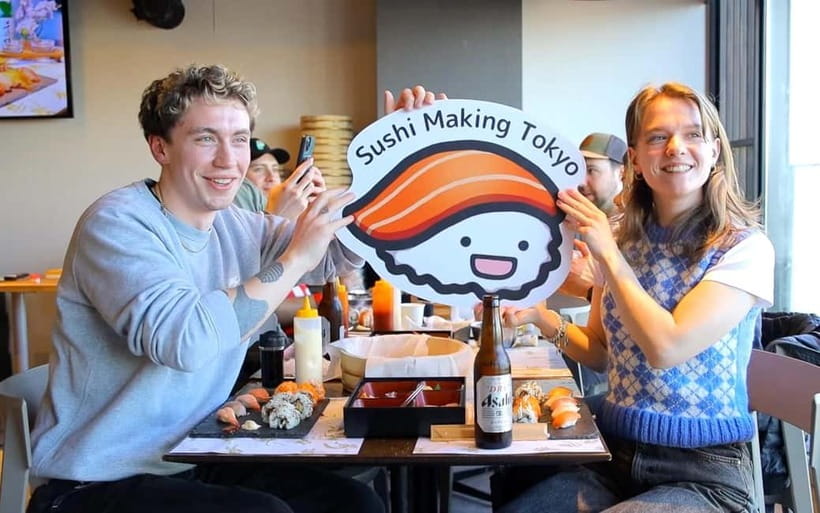
Meeting is straightforward: about 3 minutes from Asakusa Station. That short walk matters because you’ll arrive hungry and ready, not flustered.
You can also plan your day around the location. Asakusa is the kind of area where it’s easy to wander between temples, streets, and shop windows. This class is convenient enough that you can do it after you’ve gotten your bearings, then come back out to explore with a full stomach.
A nice scheduling trick: if you want a more personal feel, consider booking an earlier slot. One account mentioned that an earlier time meant fewer people and extra attention from the staff.
Who this class is best for (and who might want a different style)
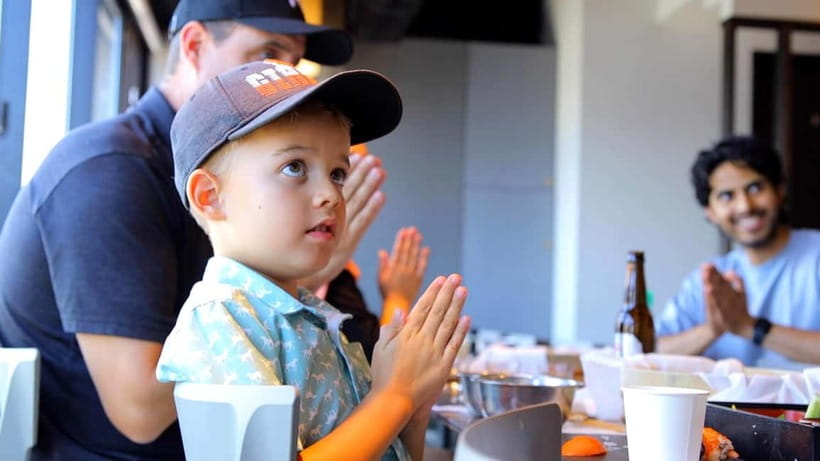
This works especially well if you’re:
- New to sushi and want a beginner-friendly guide
- Traveling solo and want an activity with real interaction
- Visiting with kids or teens, since the format is playful and hands-on
- Interested in sushi beyond the basics and want to learn how different styles connect
It may be less perfect if you:
- Want a super long, slow, detail-obsessed workshop
- Have very specific ingredient needs that don’t match the listed options
- Expect a fully private class every time slot (the class is set up for groups, even if smaller groups can feel closer to private)
But if you want a memorable, practical Tokyo experience that ends with a meal you made yourself, it hits the sweet spot.
Tips so your sushi session stays smooth
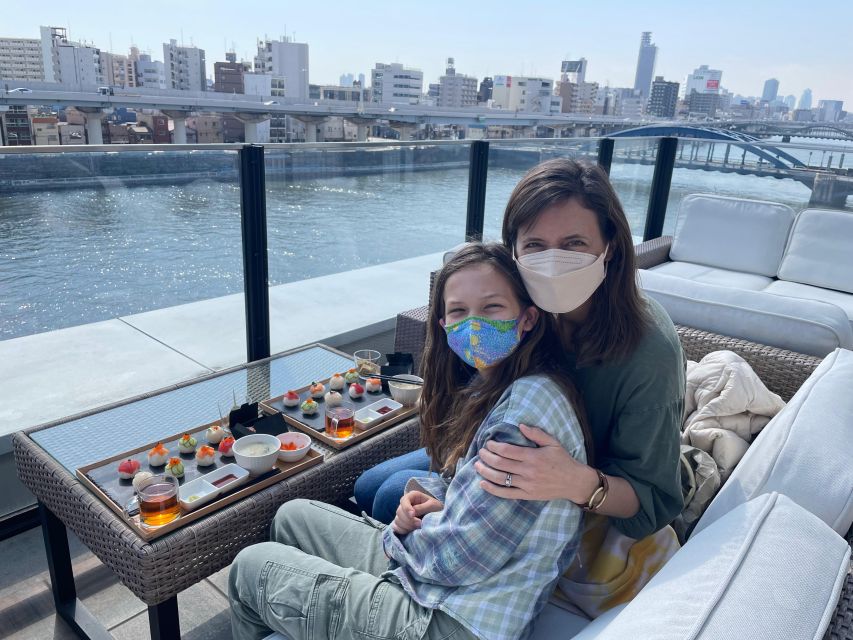
You don’t need experience, but you do need the right mindset: this is about learning fast, not perfection. Sushi rice and shaping take a minute to get comfortable with, so lean into the mess phase.
I’d also show up with an appetite. The class includes ingredients and you eat your sushi at the end, and people commonly describe leaving full. That said, one person wished for a bit more rice, so if you’re a big eater, consider doing it as your main lunch and not your light snack.
Finally, pay attention early. When guides like Kaori or Jun explain the steps, the class is set up so you build each part in order. Missing a small instruction early can make the rest feel harder than it is.
Should you book this Asakusa sushi making class?
I’d book it if you want a Tokyo activity that’s hands-on, structured, and delicious—without needing any background. The English instruction, the chance to make roll + traditional sushi, and the fact that you eat what you make make the experience feel complete.
I’d hesitate only if you’re extremely time-sensitive or you need ingredient accommodations that don’t fit the listed dietary categories. Otherwise, this is one of those classes that turns a famous local food into a real skill you can carry home.
FAQ
How long is the sushi making class in Asakusa?
The class lasts 100 minutes.
Where do I meet for the class?
You meet at a location that is about 3 minutes from Asakusa Station.
What types of sushi will I make?
You’ll make two types of sushi: a roll and authentic Japanese sushi.
Do I need any previous experience?
No experience is needed. The staff will guide you in English.
Are there vegan, vegetarian, or gluten-free options?
Yes. The menu lists vegan, vegetarian, gluten-free, and halal options, and the class notes ingredients not used include meat, nuts, fruits, and dairy. For changes, you must contact them when you reserve.
Is hotel pickup included?
No. Hotel pickup and drop-off are not included.
More Tour Reviews in Tokyo



Fresh reviews from around Tokyo






Tokyo, compared.
 ★ 5.0Mt Fuji and Hakone 1-Day Bus Tour Return by Bullet TrainFrom $16326,383 reviews
 ★ 5.01-Day Tokyo Bus TourFrom $12914,250 reviews
 ★ 4.6teamLab Planets TOKYO Digital Art Museum Entry TicketFrom $259,779 reviews
 ★ 4.0Mt Fuji & Hakone Cruise, Drum Show Bullet Train 1 Day from TokyoFrom $1497,413 reviews
 ★ 5.0Shinjuku Food Tour (13 Dishes at 4 Local Eateries)From $866,603 reviews
 ★ 4.4Tokyo Mt Fuji 5th St & Hakone Cruise Bus Tour w/Bullet TrainFrom $1545,024 reviews
 ★ 5.0Flagship 2-Hours Official Street Go-Kart Tour – Tokyo Bay ShopFrom $644,974 reviews
 ★ 4.5From Tokyo: Mount Fuji Full-Day Sightseeing TripFrom $684,970 reviews