
Reviewed · SAMURAI & NINJA EXPERIENCES
Tokyo: Ninja Sword Fighting Experience
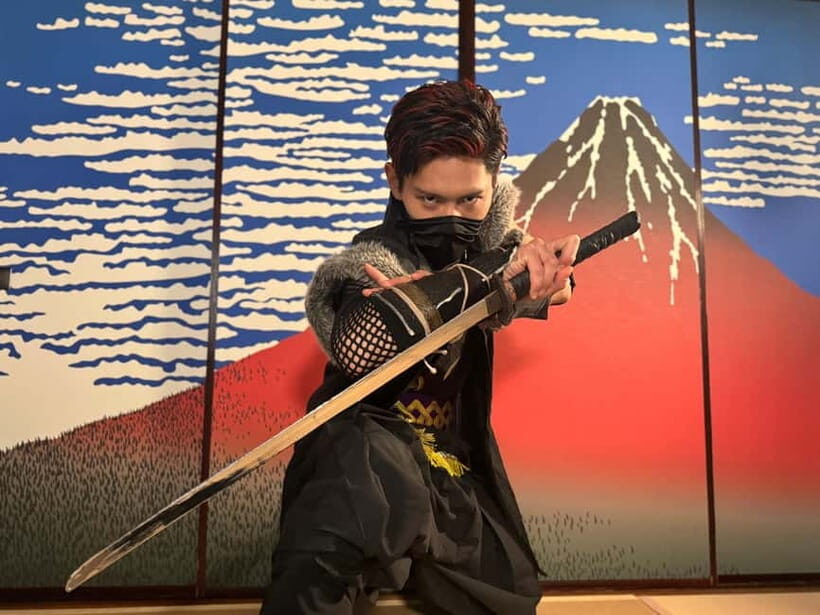
Sword fights in Tokyo, minus the chaos. In this Tokyo ninja sword workshop, you practice basic ninja sword moves with professional instructors and watch real training up close. Two things I really like: the step-by-step coaching that works even if it’s your first try, and the hands-on action that ends with training moments you can actually remember on camera. One possible drawback: it’s only 1 hour, so you won’t leave ready to run an actual battle solo—you’re here to learn the basics and the performance side.
You meet in central Tokyo at Samurai Experience Photo Studio ICHI, easy to reach from Tokyo Station, Ginza, and Tsukiji. The instructor team can handle both English and Japanese, and the group is capped at 6 participants, so you’re not lost in a crowd. If you’re planning to wear your prettiest shoes or you want a full-day martial arts class, adjust expectations now.
In This Review
- Key Things You’ll Remember From This Ninja Sword Workshop
- A 60-Minute Ninja Sword Session in Central Tokyo
- Where the Workshop Starts: Welcome, Warm-Up, and Ninja Context
- Learning the Basics: How to Hold, Pose, and Strike With a Ninja Sword
- Watching Real Training: What the Pro Instructors Show You
- Paired Ninja Action: Training With a Professional
- The Fun Ending: Photos and Your Mini Ninja Movie
- What’s Included, and What You Should Plan for
- Value Check: Why $22 for 1 Hour Can Still Be a Smart Buy
- Practical Tips: Shoes, Clothing, Timing, and Comfort
- Who This Workshop Suits Best (and Who Might Want to Skip It)
- Timing It With Your Tokyo Day
- Should You Book This Ninja Sword Experience?
- FAQ
- Where is the meeting point for the Tokyo ninja sword workshop?
- How long does the experience last?
- What does the price include?
- Is a ninja costume included?
- Do I need to bring anything?
- What language are the instructors?
- Is this experience suitable for everyone?
Key Things You’ll Remember From This Ninja Sword Workshop
- Small group training (up to 6 people), so you actually get time to practice
- Basic ninja sword technique coaching: how to hold, pose, and strike
- Paired action with a professional ninja, which makes it feel like an action scene
- Live demonstration by a skilled ninja, up close and easy to follow
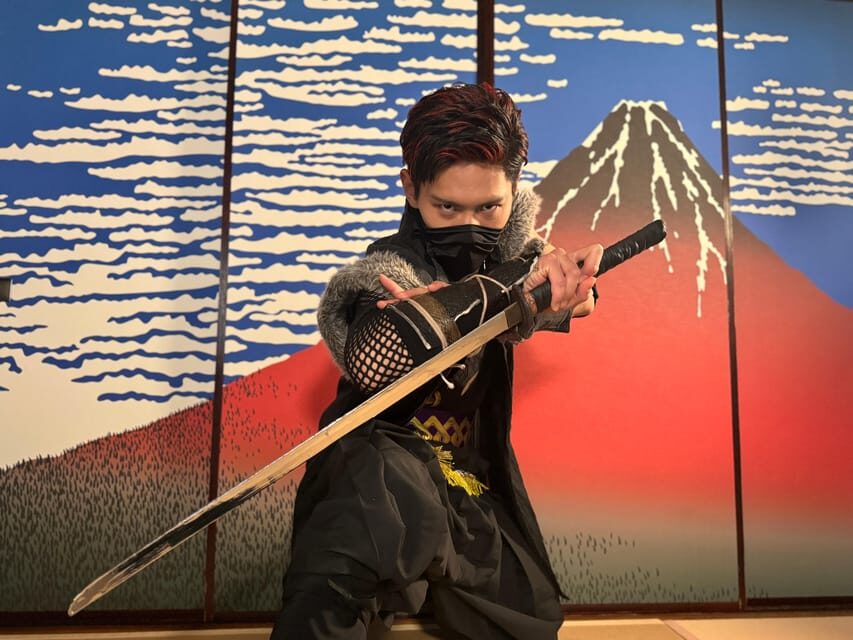
- Photos and video-style moments, including a mini ninja movie at the end
- Central Tokyo location, including easy access from major areas like Tokyo Station
More blades, bows and dojo hours
- Tokyo: Samurai Ninja Museum Guided tour and Experience★ 4.6 · 1,010 reviews
- Tokyo: Samurai Sword & Archery Class from Samurai Descendant★ 5.0 · 603 reviews
- Best Samurai Experience in Tokyo★ 5.0 · 458 reviews
A 60-Minute Ninja Sword Session in Central Tokyo
This is a high-energy, short-format experience built for people who want action without a long commitment. The whole class runs about 1 hour, which is great when your Tokyo schedule is packed and you still want something hands-on and memorable.
The venue is registered on Google Maps as Samurai Experience Photo Studio ICHI. It sits at coordinates 35.6658949, 139.7852608, and you should be able to find it by searching that name. Since it’s central, you’re not forced into extra transit time just to do the activity.
You’ll also get a clear structure: warm-up, basic technique work, paired practice, and a finish with demonstration and photos. That sequence matters because it turns something that could feel random into a real progression.
Where the Workshop Starts: Welcome, Warm-Up, and Ninja Context
Right when you arrive, the instructors greet you and set the tone. You’ll get an intro to the history and culture of ninjas, delivered in a way that supports the action rather than turning it into a lecture marathon.
Then the session moves into warm-up. This is not just a formality. It helps you get comfortable with the movements you’ll need later, especially if you’re not used to quick stance changes, controlled strikes, or posing while holding a sword.
This part is useful even if you’re just watching. It gives you a frame for what you’ll see—why certain forms look the way they do, and how the performance side connects to tradition. It also helps you feel less awkward when it’s your turn to try basics.
Learning the Basics: How to Hold, Pose, and Strike With a Ninja Sword
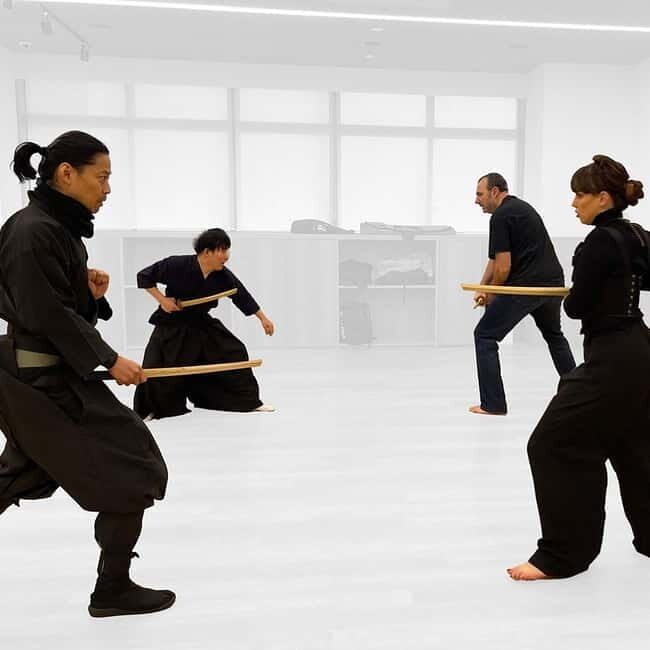
The core of the workshop is learning fundamental ninja movements in a practical sequence. Expect instruction on the basics of handling the sword, including how to hold it correctly and how to set your body for strikes and poses.
If you’ve ever seen action choreography and thought it looked effortless, this is where you learn what it actually takes to make it look clean. You’ll practice the kind of controlled actions that keep your stance steady and your movements intentional.
The important thing here is that you’re not just mimicking. You’re coached step-by-step, which is why this works so well for first-timers. In the feedback, people consistently mention being taught what to do clearly, and that supportive tone matters when you’re in a small group and want to keep your confidence up.
Watching Real Training: What the Pro Instructors Show You
Before you go full “action scene,” you’ll watch trained ninjas work. This is one of the best ways to understand what you’re aiming for without getting overwhelmed by too many cues at once.
The demonstration isn’t just spectacle. It’s designed to show the refined techniques up close, so you can see the details you’d miss from far away. That means you get a better sense of timing, body angles, and how the movement flows.
If you’re the kind of person who likes to know what’s going on, this “watch first” format is a strong match. It keeps the later hands-on section from feeling like you’re flailing in the dark.





Paired Ninja Action: Training With a Professional
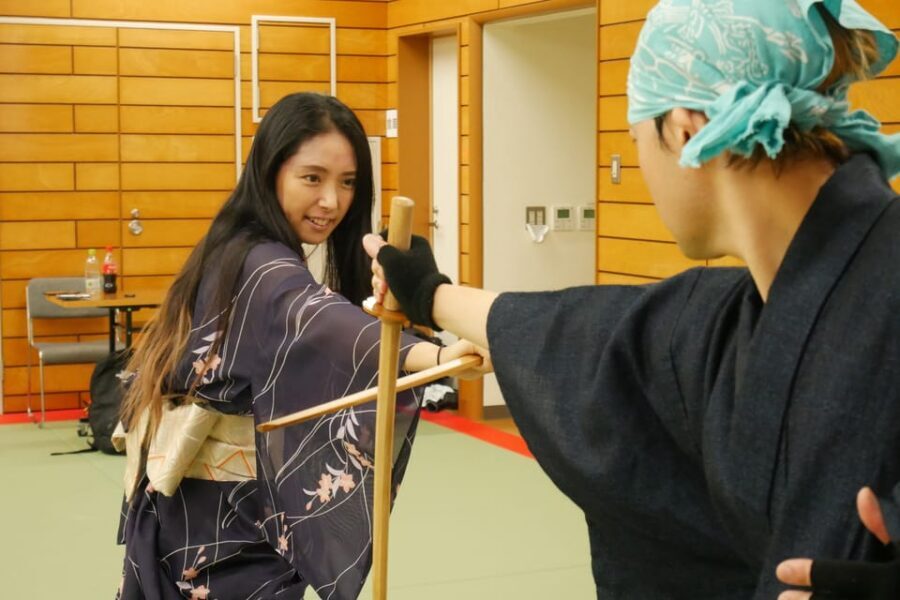
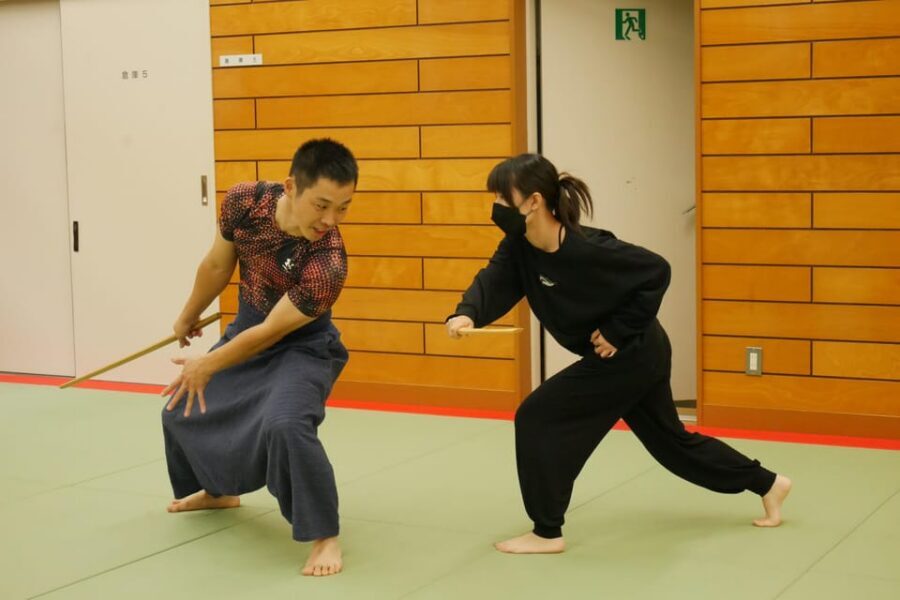
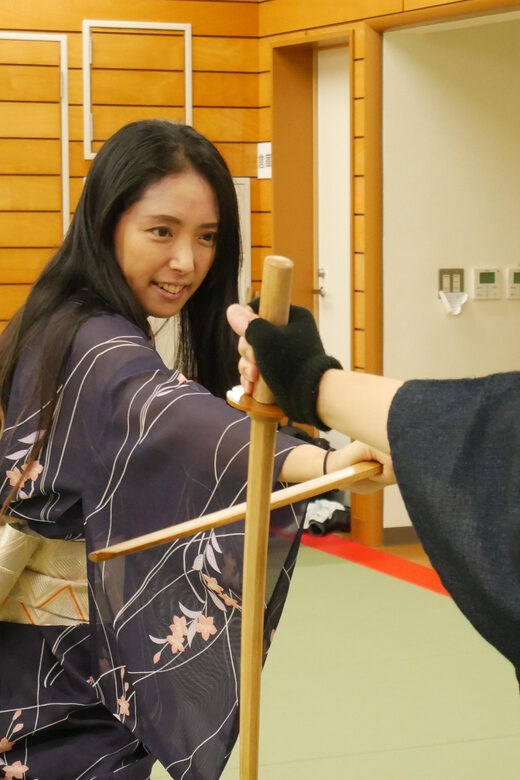
After you learn the basic movements, you’ll pair up with a professional ninja instructor for practice. This is the moment that turns a sword workshop into a real experience that feels like an action movie.
The paired training is exciting, but it’s still a guided activity. You’re not thrown into a free-for-all. Instead, you get a chance to practice the kind of coordinated movement that makes the choreography look believable.
This is also where your body language starts to improve quickly. Even simple stance shifts and controlled strikes look more impressive once someone with real skill is cueing the timing. That’s why the paired stage is often the part people remember most.
The Fun Ending: Photos and Your Mini Ninja Movie
The finish is designed for memories, not just completion. You’ll get a photo opportunity with the ninjas, which is the easy win for most people—grab the shots and capture the mood.
But there’s more than still photos. Some participants also mention creating a little ninja movie at the end. Even if your filming experience is brief, it’s a clever way to turn the class into something you can share later, not just something you did and forgot.
On top of that, feedback highlights that the instructor took nice pictures and videos. That’s valuable because it reduces the pressure to be the world’s best camera operator. You’ll leave with more than your own shaky phone footage.
What’s Included, and What You Should Plan for
The workshop includes:
- Ninja training session
- Hands-on activities
- Practice ninja sword
- Photo opportunity with ninjas
It also comes with a built-in structure for observing and participating, which is important. You’re not paying for a vague “ninja theme.” You’re paying for a coached sequence that gets you doing something physical.
Not included is everything around the edges. There are no meals and drinks, and you’ll need to handle your own transport to and from the venue. Also, a ninja costume isn’t included, so if you want the full look, plan on arriving in comfortable clothes and lean into the classic training vibe rather than costume cosplay.
Value Check: Why $22 for 1 Hour Can Still Be a Smart Buy
At $22 per person for about one hour, the price can feel simple—but the value depends on what you want from Tokyo.
If you’re seeking a calm cultural activity, this might feel too kinetic. But if you want something tactile, staged, and easy to fit into a day, it’s a very reasonable deal. You’re getting professional instruction, sword practice, live demonstration, and photos, all in one session.
The small group size (limited to 6 participants) also matters. In crowded classes, you might get only a few moments to try. Here, the format is built so you can actually participate without feeling like a spectator for most of the hour.
In short: you’re paying for a short, coached, high-impact experience rather than a long training block. For many visitors, that’s exactly what makes it worth it.
Practical Tips: Shoes, Clothing, Timing, and Comfort
Wear comfortable shoes and comfortable clothes suitable for physical activity. This isn’t an event where stiff outfits help. You’ll be moving, shifting your stance, and practicing sword motions that require you to stay stable.
Smoking is not allowed. That’s standard for a workshop environment, but it’s still good to know so you can plan how you’ll handle breaks.
Arrive about 15 minutes before the session starts. This buffer gives you time to get oriented, find the correct spot, and get settled before the warm-up begins.
Also note the instructor languages are English and Japanese. If you’re traveling with someone who speaks either of those, the communication will be smoother. Even without it, the workshop is clearly structured, so you’ll be able to follow along with visual cues.
Who This Workshop Suits Best (and Who Might Want to Skip It)
This is a great fit if you want:
- A beginner-friendly introduction to ninja sword basics
- A fun, guided activity with real action moments
- A chance to take photos and create a short ninja video-style memory
- An activity close to major central areas, without a complicated schedule
It may not be a good match if you’re:
- Pregnant
- Living with mobility impairments
That’s not about attitude. It’s about the physical nature of stance changes and sword practice.
If you’re somewhere in between—healthy, able to stand and move—this class is designed for you. The key is wearing the right clothes and going in with a beginner mindset.
Timing It With Your Tokyo Day
Because it’s one hour, you can slot it into a travel day without needing an entire afternoon. Aim for a time when you won’t be rushing right afterward, since you’ll want to cool down a bit and get your photos sorted.
One useful detail from participant experience: the instructor team was friendly after training, and some people even mention help walking to the train stop afterward. That kind of small courtesy makes a difference when you’re trying to keep your day moving.
If you like to do activities in the morning or early afternoon, this format works well then too. It’s active, but not exhausting for the whole day.
Should You Book This Ninja Sword Experience?
Book it if you want a memorable, coached, hands-on Tokyo experience that fits into a busy schedule. The combination of basic technique practice, paired action with a professional, and a photo/video-style finish is a strong use of your time, especially at a straightforward price point.
Skip it if you’re looking for a long martial arts training journey or a purely historical museum-style visit. This workshop is built to entertain and teach basics quickly, not to replace years of training.
If you’re ready to wear comfortable clothes, learn a few core sword moves, and leave with photos and a mini ninja movie moment, this is the kind of Tokyo activity you’ll actually talk about later.
FAQ
Where is the meeting point for the Tokyo ninja sword workshop?
The meeting point is listed on Google Maps as Samurai Experience Photo Studio ICHI. You can also search it by name, using coordinates 35.6658949, 139.7852608.
How long does the experience last?
The session is about 1 hour.
What does the price include?
The experience includes the ninja training session, hands-on activities, practice with a ninja sword, and a photo opportunity with the ninjas.
Is a ninja costume included?
No. A ninja costume is not included.
Do I need to bring anything?
You should wear comfortable shoes and comfortable clothes suitable for physical activity. Those are the only specific items mentioned as needed.
What language are the instructors?
The instructors speak English and Japanese.
Is this experience suitable for everyone?
It is not suitable for pregnant women or people with mobility impairments. Smoking is also not allowed during the experience.
More Tour Reviews in Tokyo



The Way of the Sword, Continued

Fresh reviews from around Tokyo






Samurai & Ninja Experiences, compared.
 ★ 4.6Samurai Ninja Museum Guided tour and ExperienceFrom $271,010 reviews
 ★ 5.0Samurai Sword & Archery Class from Samurai DescendantFrom $193603 reviews
 ★ 5.0Best Samurai Experience in TokyoFrom $65458 reviews
 ★ 5.0Ninja Experience (Family Friendly) at Samurai Ninja Museum TOKYOFrom $47441 reviews
 ★ 4.6Samurai Entertainment Night Show in Kanda ShrineFrom $41417 reviews
 ★ 5.0Tokyo Sword Experience – includes Museum Ticket/Ninja ExperienceFrom $84314 reviews
 ★ 4.8Samurai Ninja Museum Asakusa: Samurai Sword Lesson & TourFrom $63306 reviews
 ★ 5.0Samurai Sword Experience (Family Friendly)at SAMURAI MUSEUM TOKYOFrom $65168 reviews
Browse the lists this tour appears in