
Reviewed · MT FUJI DAY TRIPS
Tokyo: Mt. Fuji 5th St, Gotemba & Hakone by Luxury Bus
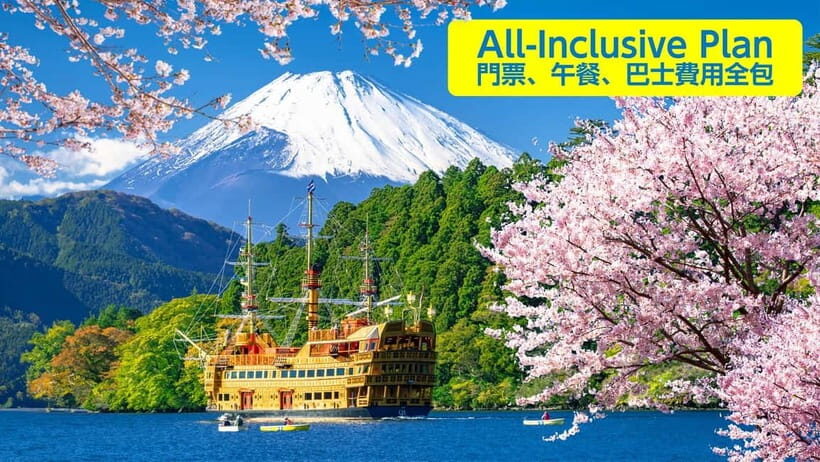
Fuji, Hakone, and lake views in one long day. This Tokyo-to-mountains-and-lake tour is interesting because it stacks several big hitters into a single 12-hour plan: Mt. Fuji at the 5th Station, Ōwakudani’s geothermal views, and a calm cruise on Lake Ashi. I especially like the mix of high-altitude moments (those clouds can roll in fast) plus a proper Hakone postcard payoff from the water. And I really like how the experience is handled by friendly, organized guides such as Yui (and sometimes Ayumi or Yoko) with drivers like Emiko or Naosan who keep the day running. One thing to weigh: Mt. Fuji visibility is weather-dependent, so you might come away with great scenery even if the summit view is limited.
The pacing is built for seeing a lot without turning it into a nonstop sprint. You’ll get a guided intro at the big stops, then pockets of free time for photos, hot-spring area wandering, and shopping at Gotemba Premium Outlets. If you’re picky about time on the Fuji portion, plan for the fact that the Fuji 5th Station stop is only about 40 minutes. It’s usually enough to walk, look, and shoot photos, but if clouds swallow the view, it can feel a bit short.
In This Review
- Key points to know before you go
- Starting at Shinjuku: the day begins earlier than you expect
- Mt. Fuji Fifth Station: clouds, cameras, and a quick walk
- Winter detail that changes the experience
- Gotemba Premium Outlets: shopping with an escape from the coach
- Hakone Ropeway: Ōwakudani from above
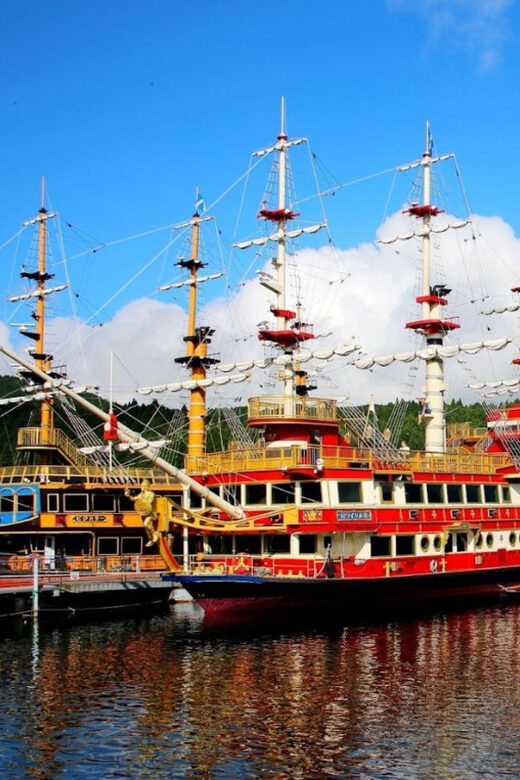
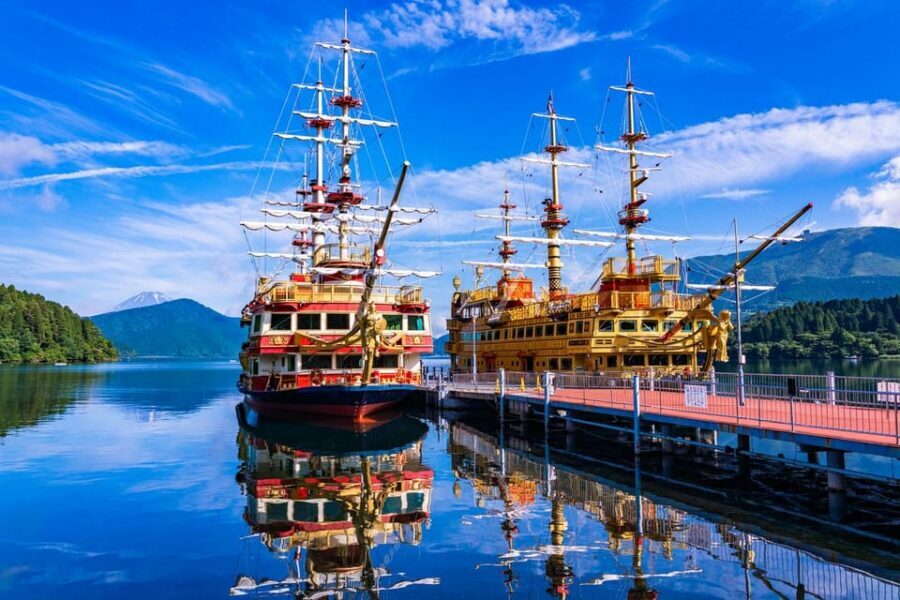
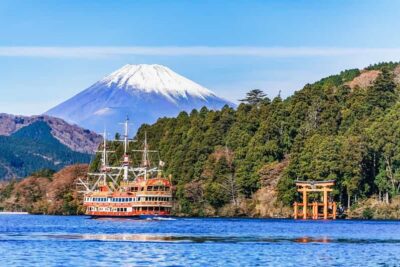
- Lake Ashi on a pirate ship: the calmer half of Hakone
- Timing and pace: where you’ll feel the day
- Price and value: what your $93 actually covers
- Guides and drivers: the human factor that keeps it smooth
- Who should book this Tokyo-to-Fuji-and-Hakone day tour
- Should you book it?
- FAQ
- Where do I meet, and when does the bus leave?
- How long is the tour?
- What’s included for Hakone and the cruise?
- Is there snow sledding in winter?
- What languages are available during the tour?
- Can I get a full refund if plans change?
Key points to know before you go
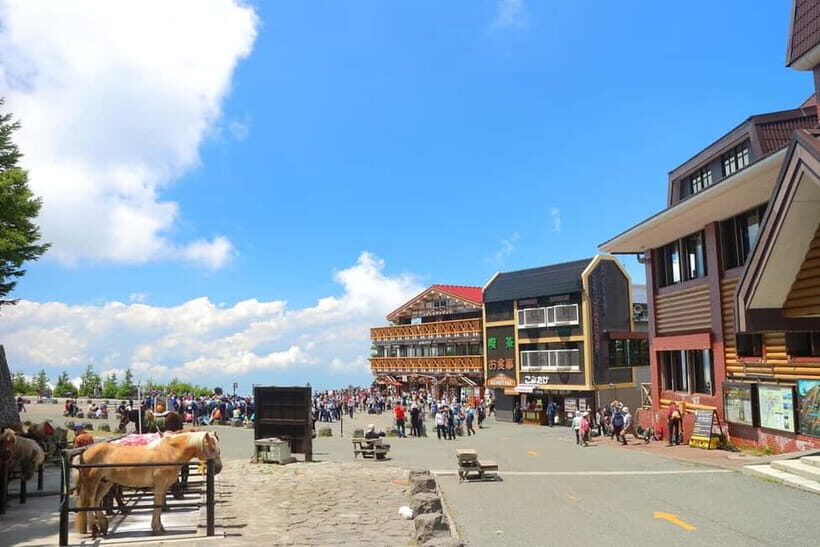
- Fuji Fifth Station timing: about 40 minutes, so bring your camera ready and your warm layers on
- Ōwakudani from above: a quick ropeway ride plus time for geothermal valley views
- Hakone’s calm finale: a pirate ship cruise on Lake Ashi from Ōwakudani’s neighborhood
- Gotemba outlet stop: planned time for lunch on your own and shopping in one burst
- Seasonal snow option: late December through mid-March can include snow sledding at the 2nd Station area
- Language support: guide is English/Japanese, with audio and Chinese/English translation tools, and English may come via an interpreter device
Other routes to the mountain, compared
- Mt Fuji & Hakone Cruise, Drum Show Bullet Train 1 Day from Tokyo★ 4.0 · 7,413 reviews
- Tokyo Mt Fuji 5th St & Hakone Cruise Bus Tour w/Bullet Train★ 4.4 · 5,024 reviews
- From Tokyo: Mount Fuji Full-Day Sightseeing Trip★ 4.5 · 4,970 reviews
Starting at Shinjuku: the day begins earlier than you expect
Most Tokyo day trips feel like you’re being gently herded. This one feels more like you’re getting a well-run transfer with a clear target. You meet at the sidewalk in front of the main entrance of the Shinjuku Center Building. It’s listed as a 7:15 meet-up with a 7:30 departure, so build in buffer time. Latecomers or no-shows can’t be refunded, which is the kind of rule that’s annoying until you’re standing there with everyone else and the bus pulls away on time.
Once you board, you’re on coach for about 2.5 hours toward Mt. Fuji/Gotemba/Hakone. That ride matters because your energy is the real currency on a day like this. Use it to get comfortable, charge devices, and mentally switch from Tokyo pace to countryside pace. If you tend to get motion-sick, you’ll probably want to sit where you feel steadier, but the bigger point is: don’t assume you’ll have time to regroup later.
Mt. Fuji Fifth Station: clouds, cameras, and a quick walk
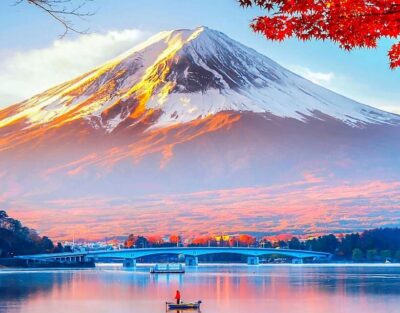
The headline is the Mt. Fuji 5th Station. You’ll have a guided tour plus time to walk and take scenic photos on the way. Expect the stop itself to be around 40 minutes. That’s not “hours on the mountain.” It’s more like: step in, look around, take your photos, and soak up the altitude vibe before the day moves on.
Here’s the practical truth: Mt. Fuji is stunning, but it’s also temperamental. Even in clear seasons, you can lose the view to clouds. One past guest had an unfortunate day where weather blocked the Fuji sight, but they still found the rest of the day enjoyable. That tells you something important: don’t book this only for the summit-perfect photo. Book it because the 5th Station area can still deliver real wow, even when the top is hidden behind clouds.
Bring a fully charged camera and (if you have them) extra batteries. Cloud-light changes fast up there, and it’s worth being ready. Also, plan for cold conditions. The tour’s winter snow option is proof that temperatures can drop noticeably in the Mt. Fuji zone.
Winter detail that changes the experience
If you’re traveling late December to mid-March, the tour notes that the snow sledding experience takes place at the 2nd Station area, not the 5th Station. That seasonal add-on can make the day feel more playful and less strictly scenic. And since snow resort admission is included if any, it’s one of those “value jumps” during winter.
Gotemba Premium Outlets: shopping with an escape from the coach
After Fuji, you head to Gotemba Premium Outlets for about 105 minutes. This stop is a smart rhythm change: you’re off the bus, you can stretch, and you can reset mentally. There’s time for lunch (the schedule leaves room for it), plus guided orientation and free time to shop and sightsee around the outlet area.
A quick reality check: outlets aren’t everyone’s dream destination. But Gotemba is practical. It gives you:
- a chance to buy weather gear or warm layers if you underestimated the temperature
- a place to grab a quick meal without hunting for a “real” restaurant on a strict timetable
- a non-museum kind of souvenir run
In other words, it’s less about cultural depth and more about convenience. If your Tokyo plan is already packed with temples and neighborhoods, this is a clean break.
More Hakone loops, ropeways and lake crossings
Hakone Ropeway: Ōwakudani from above
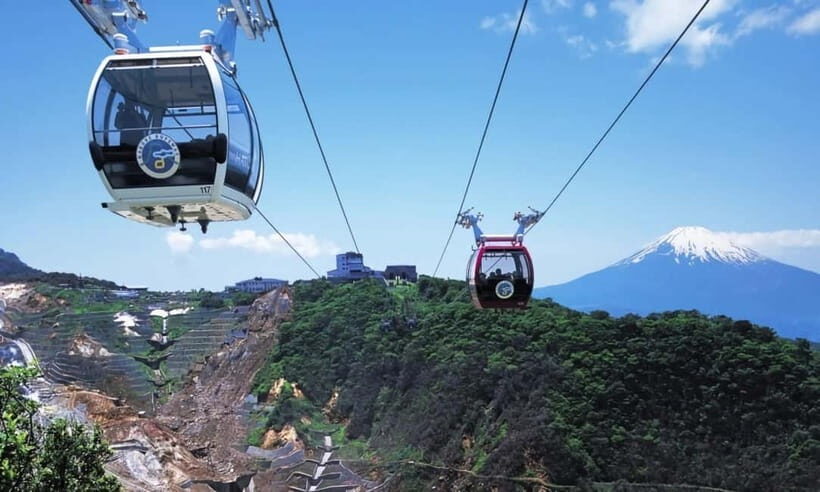
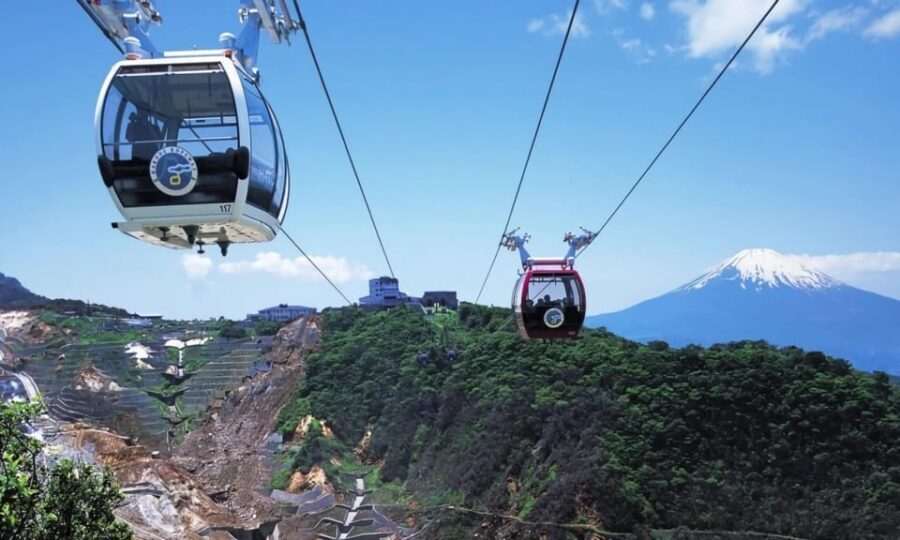
Next comes the geothermal zone. You’ll take the Hakone Ropeway (with admission included), then move into the Ōwakudani Valley area. The ropeway visit is short—about 10 minutes—but it’s positioned as the visual bridge between regular sightseeing and the hot, sulfur-scented reality of Hakone’s volcanic activity.
Then you’ll get about 20 minutes at Ōwakudani itself. This is where the views can feel more dramatic, because you’re looking down at the valley and hot springs. The tour is guided during the stop, with free time built in for wandering and photos.
Two practical things help here:
- Wear grippy shoes. You’ll be walking at several stops that day, and you don’t want slippery footing to steal your time.
- Expect the air and conditions to feel different from Tokyo. This part of Japan can feel colder or sharper, even when Tokyo is mild.
Also, this is one of those areas where the “we’ll see everything” promise isn’t really about quantity. It’s about giving you a strong highlight in a limited window.
Lake Ashi on a pirate ship: the calmer half of Hakone
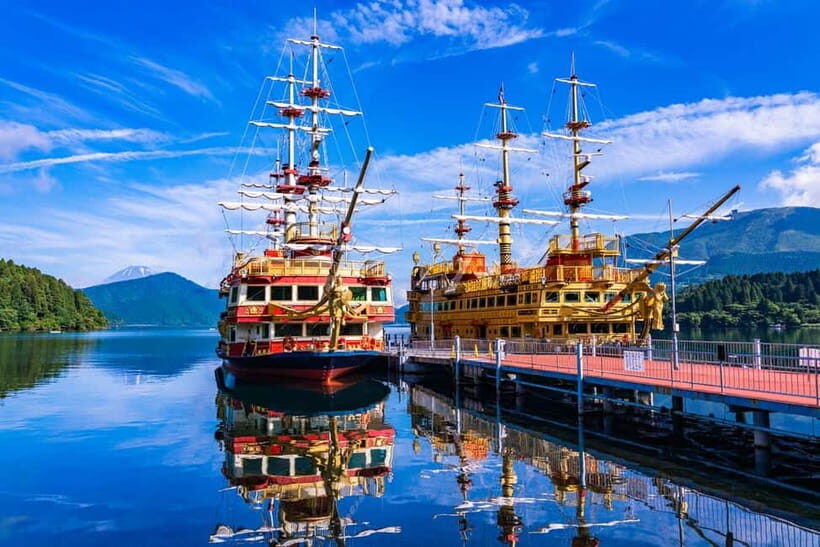
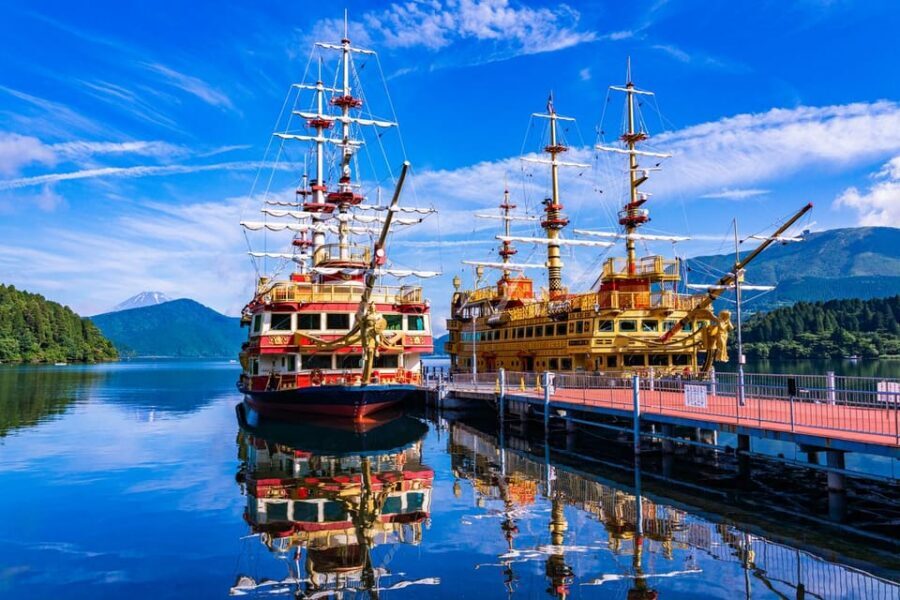
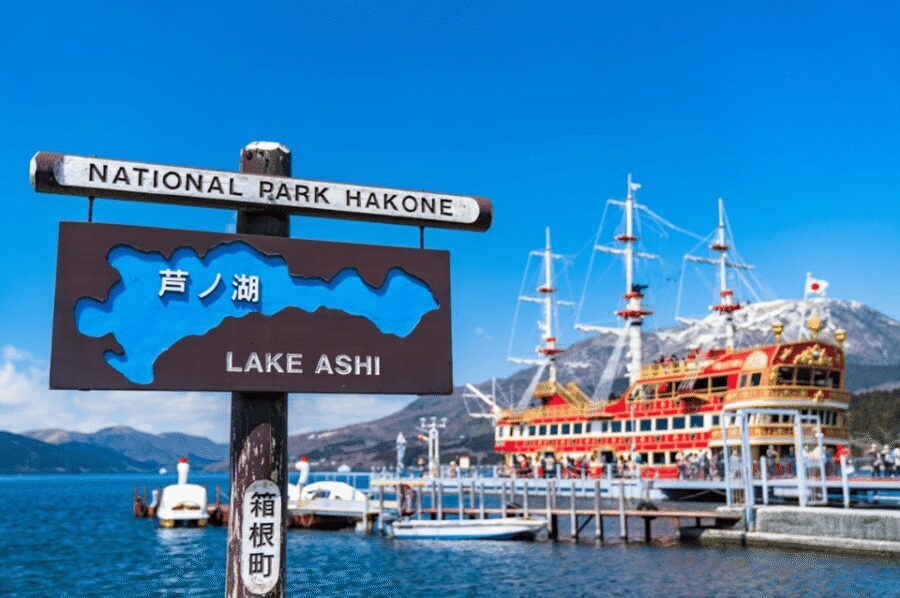
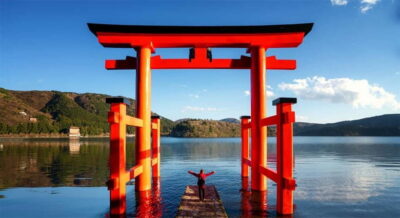
After Ōwakudani, the tour finishes with a cruise on a pirate ship on Lake Ashi, departing from Tōgendai Port. This part runs about 30 minutes, and the tickets are included.
Why does this matter? Because it’s the emotional reset. Hot springs and volcanic valleys are intense in their own way. The cruise is the opposite: slow water, long views, and time to breathe. It’s a chance to look at Hakone’s natural setting without constantly checking the clock.
One nice thing about planning the cruise at the end: you’re less likely to feel rushed by it. And if Fuji was shy behind the clouds earlier, this is a strong way to still end the day with real scenery.
Timing and pace: where you’ll feel the day
This tour works because it’s structured around short, high-impact stops. You’ll spend:
- about 40 minutes at Mt. Fuji 5th Station
- about 105 minutes at Gotemba Premium Outlets
- about 10 minutes on the Hakone Ropeway
- about 20 minutes at Ōwakudani
- about 30 minutes on the pirate ship cruise
Then there are bus rides: roughly 2.5 hours out, and 2.75 hours back, landing you at Shinjuku Center Building again in the evening.
So yes, it’s a long day. The best way to handle it is to treat each stop like a “photo + short walk” mission, not a half-day hangout. If you’re the type who loves to linger, you’ll probably feel the time pressure on the Fuji segment in particular.
Weather can also change the day. Clouds can soften Fuji’s view. Winter snow can add fun and extra cold. Traffic can shorten or rearrange parts of the schedule, since the operator notes the itinerary may be cut or reordered depending on conditions.
Price and value: what your $93 actually covers
At about $93 per person, the price is less about a single attraction and more about bundled logistics. You’re paying for:
- round-trip transfers from Shinjuku Center Building
- admission to the Hakone Ropeway
- admission to the Lake Ashi pirate ship cruise
- insurance provided by the operator
- Chinese/English video translation support
- audio support in English and Japanese
- snow resort admission if any (in the winter season)
That’s the value logic. If you tried to do Mt. Fuji + Hakone + ropeway + cruise on your own, you’d be spending a lot more time coordinating transit, tickets, and timing. Here, you trade some freedom for a smoother day.
What you’ll still pay for: personal expenses, and food based on your own choices. The tour does not include lunch as a guaranteed covered meal in the materials you provided, even though the schedule allows for lunch time at Gotemba. Plan to eat on your own there.
Guides and drivers: the human factor that keeps it smooth
This tour gets high marks for the vibe on the bus. Guides like Yui, Ayumi, and Yoko are repeatedly described as friendly, organized, and helpful with explanations at each stop. Drivers like Emiko and Naosan also come up as professional and steady, especially important on a day that can be affected by traffic.
One helpful nuance from the provided info: even if you select English, the guide may sometimes be in Chinese or Japanese. In that case, English information can be delivered via an interpreter device. Practically, that means you still should be able to follow along, but you might not always hear pure English directly from the guide’s mouth.
If your Japanese is limited, this is a good tour to choose because it has audio translation support and additional language help.
Who should book this Tokyo-to-Fuji-and-Hakone day tour
I think this tour fits best if you:
- want a big highlight day from Tokyo without needing to plan transit
- like the pairing of geothermal Hakone plus a lake cruise
- enjoy shopping once you’ve hit the scenery part of the day
- travel with a camera and want quick, focused photo time at multiple viewpoints
It’s less ideal if you:
- hate time limits and would rather slow travel in fewer places
- are traveling mainly for a “perfect Mt. Fuji summit view” (clouds can steal that moment)
- want a long, unhurried visit at any single stop
Should you book it?
If your goal is to see Mt. Fuji at the 5th Station, experience Ōwakudani by ropeway, and end with a Lake Ashi pirate ship cruise, this is a strong, efficient way to do it from Tokyo. The price feels fair because major admissions and transport are folded in, and the guide/driver team seems to keep things organized even when the day gets busy.
My call: book it if you can handle a fast pace and accept that Fuji might not always show its face. If you go in expecting a full sightseeing menu rather than one guaranteed summit photo, you’ll likely come away feeling like your Tokyo day was well spent.
FAQ
Where do I meet, and when does the bus leave?
You meet on the sidewalk in front of the main entrance of the Shinjuku Center Building, with 7:15 as the meet-up time and 7:30 as the departure time.
How long is the tour?
The total duration is listed as 12 hours.
What’s included for Hakone and the cruise?
Your ticket includes admission to the Hakone Ropeway cable car and admission for the Hakone pirate ship cruise on Lake Ashi.
Is there snow sledding in winter?
Yes. From late December to mid-March, the snow sledding experience takes place at the 2nd station of Mt. Fuji, and snow resort admission is included if it’s available.
What languages are available during the tour?
The live guide is listed as English and Japanese, and the audio guide is also available in English and Japanese. If English isn’t the spoken guide language, English may be provided through an interpreter device, and there is also a Chinese/English video translation service.
Can I get a full refund if plans change?
Yes. You can cancel up to 24 hours in advance for a full refund.
More Tour Reviews in Tokyo






Hakone, Three More Ways
The Fuji Shortlist: Other Days Out to the Mountain

Fresh reviews from around Tokyo






Mt Fuji Day Trips, compared.
 ★ 4.0Mt Fuji & Hakone Cruise, Drum Show Bullet Train 1 Day from TokyoFrom $1497,413 reviews
 ★ 4.4Tokyo Mt Fuji 5th St & Hakone Cruise Bus Tour w/Bullet TrainFrom $1545,024 reviews
 ★ 4.5From Tokyo: Mount Fuji Full-Day Sightseeing TripFrom $684,970 reviews
 ★ 4.7Mt. Fuji Tour, Hakone Ropeway, Owakudani, Lake AshiFrom $544,002 reviews
 ★ 5.0Private Tour to Mt. Fuji and Hakone (Fully Licenced Operator)From $4971,910 reviews
 ★ 4.9Mount Fuji Full-Day Private Tour from Tokyo (Customizable)From $3931,470 reviews
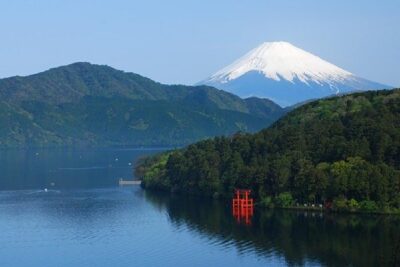 ★ 4.0Mt Fuji & Hakone Cruise, Drum Show Bus 1 Day from TokyoFrom $1221,287 reviews
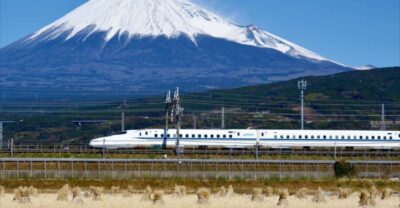 ★ 4.2From Tokyo: Mt. Fuji & Hakone Tour w/ Return by Bullet TrainFrom $1171,278 reviews
Browse the lists this tour appears in