
Reviewed · GUIDED
Tokyo: Guided Helicopter Ride
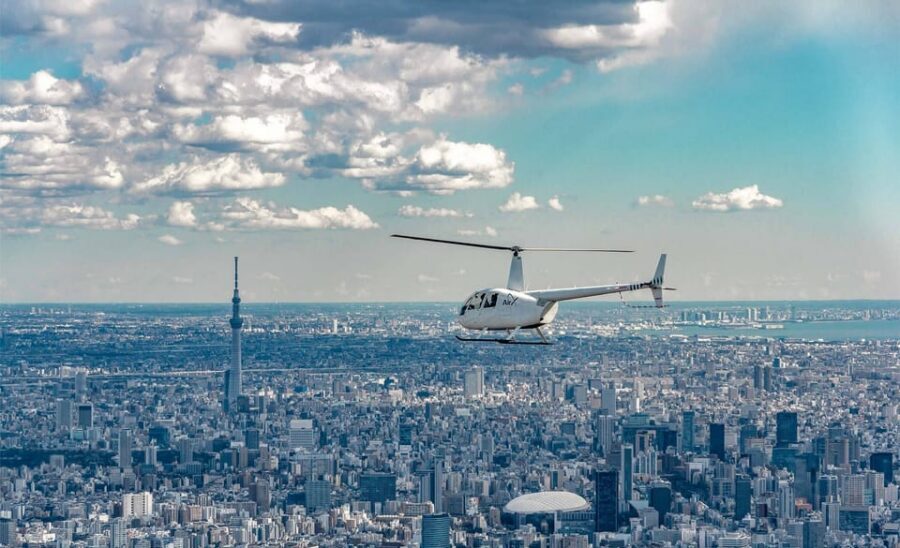
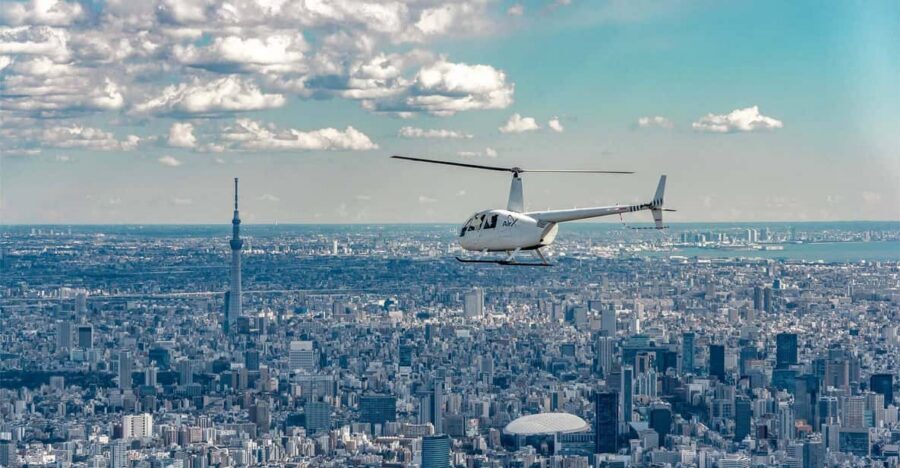
Tokyo looks different from the sky. A private helicopter cruise gives you Tokyo from above in minutes, with a professional English planner guiding you through the flight like it’s a little “sky magic.” I also love how the ride is priced per helicopter group (up to 3), so you’re not paying per person for the same aerial views. One possible drawback: the time can feel short when you book the 20-minute option, even if it’s plenty once you’re actually in the air.
The big decision is choosing the right route length. You can go for a quick landmark loop, a slightly longer skyline + district mix, or a longer outing that reaches beyond Tokyo toward Fuji/Hakone and the coast—assuming weather cooperates. If you’re set on squeezing the most sights into your limited Tokyo days, you’ll want to pick carefully.
In This Review
- Key highlights worth your attention
- How a charter helicopter changes your view of Tokyo
- Choosing the right flight length: 20, 30, or 90 minutes
- The 20-minute loop (Tokyo Tower & Skytree)
- The 30-minute skyline + district mix (Tokyo Tower, Skytree & Shinjuku)
- The 90-minute longer route (Fuji/Hakone, Tokyo Tower, Yokohama & Enoshima)
- What you’ll see over Tokyo Tower, Skytree, and Shinjuku
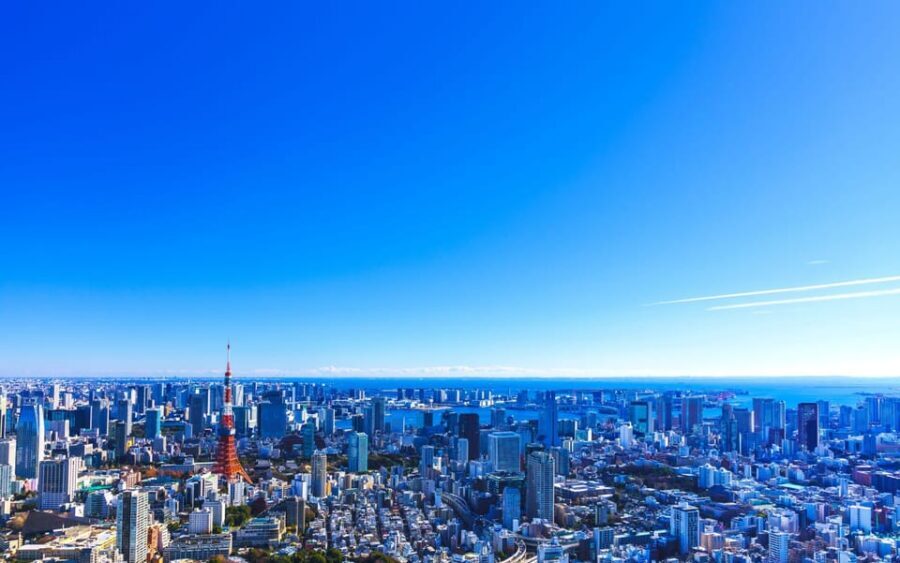
- Tokyo Tower: the classic silhouette from above
- Skytree: bigger, newer, and easier to “read” from altitude
- Shinjuku: density and city structure you can’t fake
- Long routes that reach Fuji/Hakone, Yokohama, and Enoshima
- Fuji/Hakone option: the mountain-and-volcanic-region idea
- Yokohama and Enoshima: the coast shows a different Tokyo
- Your English planner, your private helicopter moment
- Price and value: paying per group, not per person
- Getting to Tokyo Heliport without stress
- Safety and body requirements you should know before booking
- Weather reality: what can change mid-plans
- Who should book this Tokyo helicopter ride
- Should you book this Tokyo helicopter ride?
- FAQ
- How much does the Tokyo helicopter ride cost?
- How long is the helicopter ride?
- What sights are included in the 20-minute option?
- What sights are included in the 30-minute option?
- What sights are included in the 90-minute option?
- Where do we meet for the tour?
- Is there an English guide during the flight?
- How many people can ride, and are there weight limits?
- Are food and drinks allowed on the helicopter?
- What happens if weather cancels the flight?
Key highlights worth your attention
- Price that works for small groups: a flat cost per group up to 3, not per person
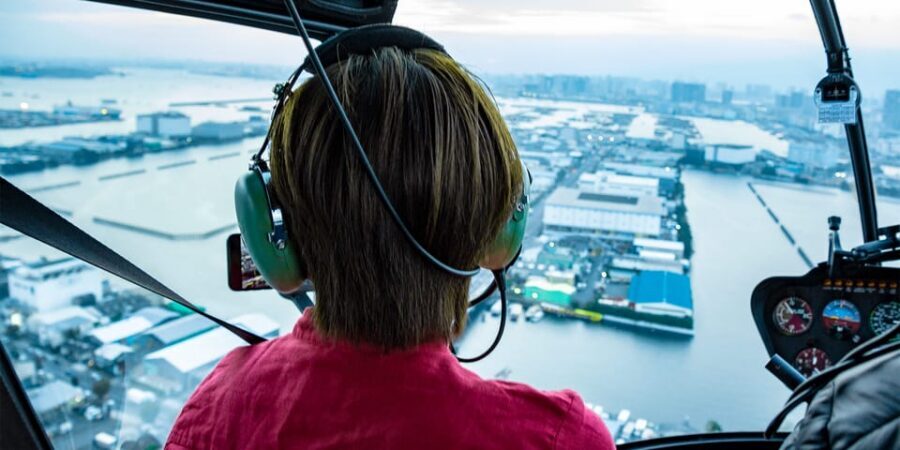
- English live guidance: you’re not staring out the window with zero context
- Landmark-to-landmark views: Tokyo Tower, Skytree, and Shinjuku from above
- Longer routes go farther: options include Fuji/Hakone, Yokohama, and Enoshima
- Tight, satisfying timing: 20 minutes can feel short booking-wise, but it lands well in-flight
More days made easy by a guide
- Tokyo 6hr Private Tour with Government-Licensed Guide★ 5.0 · 3,902 reviews
- Tokyo: Shinjuku Local Bar and Izakaya Guided Walking Tour★ 4.9 · 1,794 reviews
- Tokyo: Private City Highlights Tour with Local Guide★ 4.8 · 1,433 reviews
How a charter helicopter changes your view of Tokyo
Tokyo is one of those cities where the ground is already impressive. But from a helicopter, the city stops being a maze and turns into a map with layers. From altitude, you get quick clarity: how the towers relate to each other, how neighborhoods cluster, and how wide the urban sprawl really is.
That’s the real magic here. The experience isn’t about “one pretty shot.” It’s about the scale—you see the metropolis as a whole in a way street-level tours can’t recreate. Even if you’ve looked at photos of Tokyo Tower or Skytree a hundred times, seeing them from above gives you an immediate sense of distance and shape.
I also like that this is a private group setup. You’re not trying to hear a guide over engine noise with a crowd leaning around you. The vibe is calmer, more personal, and easier to enjoy when you’re trying to take in something this visual.
One more point that matters: this is a charter cruise. That tends to mean your flight experience is more focused on sightseeing routes rather than long, complicated logistics. You’re paying for the ability to get that sky view quickly and confidently.
Choosing the right flight length: 20, 30, or 90 minutes
You’ll choose your route from the available time options, and your decision should match your priorities.
The 20-minute loop (Tokyo Tower & Skytree)
This is the fast hit. You’re focusing on two of Tokyo’s most recognizable landmarks—Tokyo Tower and Skytree—and getting a strong “from-above” payoff without eating up half a day.
A useful reality check: people often assume 20 minutes won’t be enough. Once you’re up there, it usually feels like the perfect length for seeing the big highlights without feeling like you’re rushing through everything.
Who this fits best:
- Couples who want a special moment without a long time commitment
- First-time visitors who mainly want the iconic skyline view
- Anyone who’s trying to keep the rest of the day flexible
The 30-minute skyline + district mix (Tokyo Tower, Skytree & Shinjuku)
If 20 minutes sounds tight, 30 minutes gives you more room for variety. You still get Tokyo’s signature towers, plus Shinjuku, one of the most concentrated parts of the city.
This option tends to work well when you want more than just landmarks. You want districts too—the “how Tokyo is organized” view—without going all the way to the longest route.
Who this fits best:
- People who want more than a simple landmark hop
- Those who want to compare skyline density and layout
- Travelers who like the idea of getting both icons and city structure
Worth weighing up alongside this Tokyo pick:
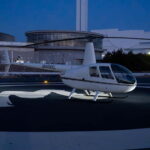
The 90-minute longer route (Fuji/Hakone, Tokyo Tower, Yokohama & Enoshima)
This is the “make it a day” option. The longer itinerary reaches beyond Tokyo, adding Fuji/Hakone and also the coastal region around Yokohama and Enoshima.
Here’s the tradeoff: the farther you go, the more you’ll feel the difference in “time in the air.” If you’re excited by big geographic variety—mountains/volcanic-hills country plus harbor/coast vibes—this can be a fantastic match.
Just keep expectations realistic: longer routes can be more weather-dependent. If conditions are poor, your flight might not happen as planned, and you’ll have a chance to reschedule or get a refund.
Who this fits best:
- You want Tokyo plus surrounding regions
- You’re celebrating something and want the biggest experience possible
- You’re comfortable committing to a longer window
What you’ll see over Tokyo Tower, Skytree, and Shinjuku
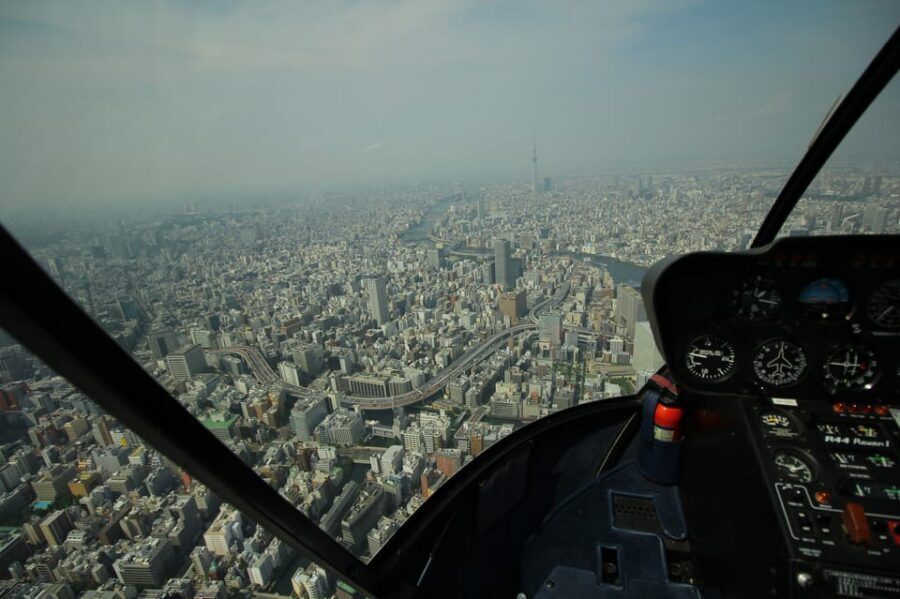
Even without a detailed “minute-by-minute” visual plan, you can count on the route to be built around these names for a reason: they’re visible, distinct, and easy to recognize from the air.
Tokyo Tower: the classic silhouette from above
Tokyo Tower is a high-visibility landmark that gives you a strong sense of orientation. From the sky, it’s not just a tower—it becomes a reference point. That means you can better understand where other city landmarks sit relative to it.
It also creates a nice contrast with modern Tokyo skyline elements. You’re essentially watching Tokyo’s “old-meets-new” skyline geometry from an angle you can’t replicate on foot.
Skytree: bigger, newer, and easier to “read” from altitude
Skytree is built to be visually dominant, and from the air that dominance becomes even more obvious. You’ll likely appreciate how the city bends around these monumental points.
If you like photography, this is where your brain clicks into “pattern recognition.” You’ll understand why people photograph the area from the ground, and then you’ll realize how much more you can see once you’re above it.
Shinjuku: density and city structure you can’t fake
Shinjuku is the kind of district where street-level tours can only show you slices. From above, you start to see the “grid of life”—how roads, blocks, and dense clusters stack and overlap.
This is also where the experience becomes more than just landmarks. It turns into a view of how Tokyo functions spatially. Even if you’re not a map person, you’ll still feel the difference.
Long routes that reach Fuji/Hakone, Yokohama, and Enoshima
The 90-minute option is built for travelers who want more than skyline glamour. It’s about turning your helicopter ride into a broader geographic tour.
Fuji/Hakone option: the mountain-and-volcanic-region idea
Adding Fuji/Hakone signals that the flight aims beyond Tokyo’s built-up core. You’re trading some “towers right now” energy for a wider view category—bigger natural forms in the same trip.
This is where timing and weather matter most. When skies cooperate, you get that sense of Japan’s natural scale meeting major city sprawl. When skies don’t, the experience can shift. The good part: the provider plans to offer a reschedule or refund if safety/weather cancels the flight.
Yokohama and Enoshima: the coast shows a different Tokyo
Yokohama and Enoshima bring water and coastline patterns into the mix. From a height, coastlines read clearly: curves, harbors, and how the city meets the sea.
Even if you don’t have a deep plan for those areas on the ground, it helps to see them from above at least once. It gives you context before you ever go exploring.
Your English planner, your private helicopter moment
One underrated value here is the live English guidance. When the pilot is flying and your brain is scanning the skyline, it helps to have someone interpreting what you’re seeing.
A few things to expect from that kind of guidance:
- You’ll understand what landmarks you’re looking at and why they matter
- The planner can help you follow the route visually without feeling lost
- The experience feels more like a story than a ride
The experience is also private, which changes the emotional tone. Instead of feeling like you’re part of a queue, you’re part of a small group moment. That matters when you’re spending money on something this unique—because you want it to feel personal, not rushed.
And based on the overall feedback rating and repeated themes, professionalism is a standout. The setup is organized, and the flight experience feels carefully handled from start to finish.
Price and value: paying per group, not per person
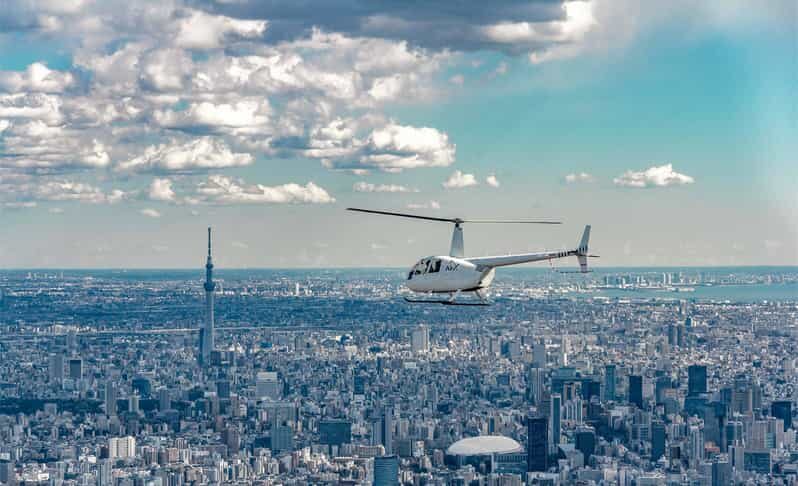
The price is $1,355 per group up to 3. That’s a big deal, because it changes the math.
If you’re traveling solo, the cost is higher per person than it would be if you had two people to share it with. But if you’re a couple, a small family, or two friends traveling together, the per-person cost becomes much more reasonable because you’re splitting the helicopter charter cost.
This is where it tends to feel like good value: you’re paying for a private ride that’s not priced like a standard museum ticket. You’re buying access to a view most people will never get, from the air, on a direct route.
One more practical tip for your planning: if you can align schedules with one or two people, you’ll usually get the best “this was worth it” feeling.
Getting to Tokyo Heliport without stress
The meeting point is straightforward: you meet at the management office reception at the main gate of Tokyo Heliport. If you get turned around on the day, you call the number on your voucher.
That matters because the experience itself is short. When your time in the air is 20–90 minutes, wasting 30–60 minutes on confusion before takeoff is just pain. My advice: build extra cushion on transportation time, and double-check exactly which gate you’re aiming for.
Also plan around the vibe of an airport-like environment. You’ll be in a place where timing is everything. Keep your phone charged and make sure the active number you provide is actually reachable.
Safety and body requirements you should know before booking
This isn’t a “free-for-all.” The ride has clear limits, and knowing them early can save frustration later.
- The plane capacity is 3 people
- There’s a weight limit of 120 kilograms (264 pounds) per seat
- For the 3-seater aircraft fuselage, the limit is 220 kilograms (485 pounds) total
- One child under 3 can ride on a parent’s lap for free and isn’t counted as a passenger
You’ll need to provide ages, full names, and weights for all participants when booking, plus an active phone number for the day. If you’re traveling with kids, it’s smart to confirm how your child fits the under-3 lap policy so you don’t get surprised.
One more small but real detail: no food or drinks are allowed. If you’re sensitive to hunger, eat before you go. Once you’re in the moment, you’ll want to focus on the view, not on snacks.
Weather reality: what can change mid-plans
This helicopter experience depends on safe flying conditions. The provider notes that flights may be canceled due to weather conditions or other safety reasons. If that happens, you’ll be offered either a reschedule to an alternative date or a refund.
So, how should you plan around that? Don’t stack this as the one activity that must happen no matter what. If you can choose a date with some flexibility, you’ll feel better. If it’s tied to a specific event, have a backup plan for what you’ll do if the skies aren’t cooperating.
Who should book this Tokyo helicopter ride
This is a great match if:
- You want a skyline view that looks like a map (not just a city street)
- You’re traveling as a couple or small group where splitting the charter cost makes sense
- You love landmarks and want them in a single shot from altitude
- You want a short, high-impact experience rather than a full day tour
It may not be the best fit if:
- You hate the idea of weather-related schedule changes
- You’re looking for a slow-paced, ground-based cultural tour (this is all about aerial sight)
- You need food/drink options during the flight (they aren’t allowed)
Should you book this Tokyo helicopter ride?
If your goal is a serious wow-factor with clear value for small groups, I think it’s an easy yes. The pricing works especially well when you have 2 or 3 people, because you’re booking the charter for the group, not buying separate tickets for each seat. Add in the English live guidance and the consistently praised professionalism, and it’s the kind of splurge that feels less like gambling and more like a smart purchase for your itinerary.
My final advice: pick the route length that matches what you want most—fast landmark satisfaction (20 minutes), a wider Tokyo mix (30 minutes), or a bigger geographic spread (90 minutes). Then keep your date choice flexible enough for weather. Do that, and you’ll end up with a Tokyo memory you can’t get any other way.
FAQ
How much does the Tokyo helicopter ride cost?
The price is $1,355 per group, up to 3 people.
How long is the helicopter ride?
Options are available for 20 minutes, 30 minutes, and 90 minutes, depending on booking availability.
What sights are included in the 20-minute option?
The 20-minute cruise focuses on Tokyo Tower & Skytree.
What sights are included in the 30-minute option?
The 30-minute cruise covers Tokyo Tower, Skytree, and Shinjuku.
What sights are included in the 90-minute option?
The 90-minute option includes Fuji/Hakone, Tokyo Tower, Yokohama, and Enoshima.
Where do we meet for the tour?
Meet at the reception at the management office located at the main gate of Tokyo Heliport. If you get lost, call the number on your voucher.
Is there an English guide during the flight?
Yes. There is a live tour guide in English.
How many people can ride, and are there weight limits?
The capacity is 3 people. Weight limits are 120 kilograms (264 pounds) per seat and 220 kilograms (485 pounds) for the 3-seater aircraft fuselage.
Are food and drinks allowed on the helicopter?
No, food and drinks are not allowed.
What happens if weather cancels the flight?
If the activity is canceled due to weather or other safety reasons, you’ll be offered a reschedule to an alternative date or a refund.
More Helicopter Tours in Tokyo
Easier with a Guide

More Tour Reviews in Tokyo






Fresh reviews from around Tokyo






Guided, compared.
 ★ 5.0Tokyo 6hr Private Tour with Government-Licensed GuideFrom $1553,902 reviews
 ★ 4.9Shinjuku Local Bar and Izakaya Guided Walking TourFrom $341,794 reviews
 ★ 4.8Private City Highlights Tour with Local GuideFrom $1061,433 reviews
 ★ 4.9Tsukiji Fish Market Guided Walking TourFrom $221,397 reviews
 ★ 5.0Tokyo 4hr Private Tour with Government-Licensed GuideFrom $1091,394 reviews
 ★ 5.0Tokyo Guided Small-Group Biking TourFrom $1061,250 reviews
 ★ 4.6Samurai Ninja Museum Guided tour and ExperienceFrom $271,010 reviews
 ★ 5.0Tsukiji Fish Market Guided Tour and Sushi Making with Pro ChefFrom $104775 reviews