
Reviewed · SAITAMA PREFECTURE
Ecotourism and Woodcraft with a Mountain Artist Near Tokyo
If you like your souvenirs with a story, this one fits. Near Tokyo, you step into a certified private forest and get a rare look at how Nishikawa timber connects to the wood used in Tokyo’s past architecture. You’ll hear the work explained by a mountain artist from the forestry side, not just a tour script.
Two things I really love here are the hands-on log cutting (with safety gear) and the calm payoff of your own wood craft: you pyrograph a kanji of your choice onto a wooden piece shaped like Edo Castle, and it becomes a smartphone stand. One possible drawback to think about: this is an outdoor, working-craft experience, so you’ll want decent weather and you should be ready for some light physical effort and tool time.
In This Review
- Forest Lessons You Can Smell and Hold
- From Higashi-Agano Station to the Kirari Wood Studio
- Inside an Internationally Certified Private Forest
- Cutting Your Own Log: The Fun Part (With Real Safety)
- Pyrography on an Edo Castle Shape: Your Kanji Souvenir
- How Long It Takes, What You Really Get for $93.93
- Best Match: Who This Tour Suits
- Handy Planning Tips Before You Go
- Should You Book This Woodcraft-and-Forest Experience?
- FAQ
- How long is this experience?
- Where do I meet the guide?
- Is lunch included?
- How large are the groups?
- Is transportation included?
- What will I make and take home?
- What if the weather is bad?
Forest Lessons You Can Smell and Hold
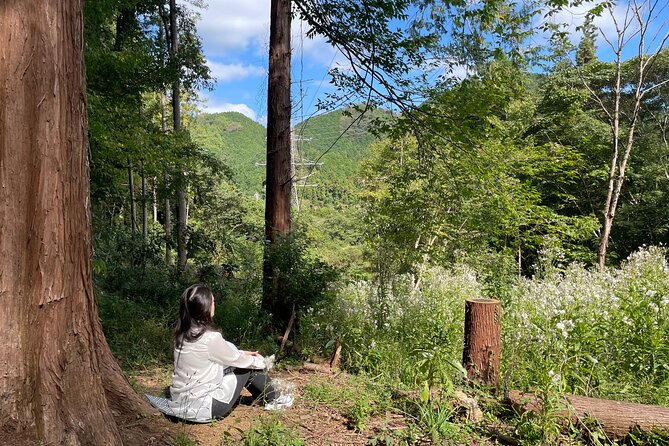
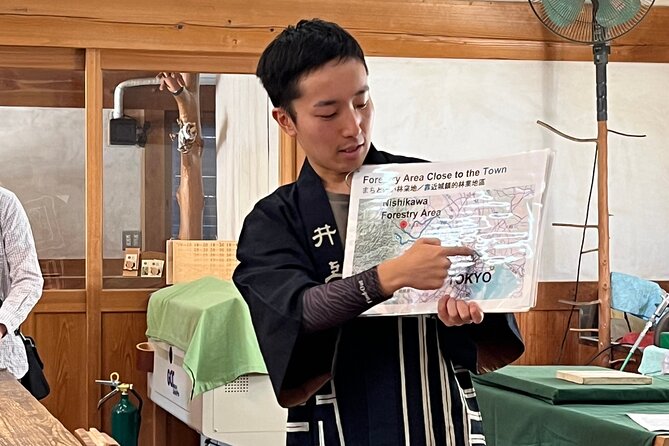
This tour near Hanno turns “forestry” from a lecture topic into something you can actually feel. The forest is a private one—normally closed to the public—so the mood is different right away. You’re not just walking through trees; you’re learning why certain trees are tended, thinned, and protected over long stretches of time.
A big part of the draw is the Nishikawa timber story. Its name traces back west of Tokyo, and the wood became premium material for Tokyo’s architecture. Here, that connection stops being trivia and becomes practical knowledge. You’ll learn how caring for old trees and managing forests can happen without treating the forest like a warehouse.
And because you’re guided by people tied to the forest—foresters who are described as mountain artists—the explanations land with real purpose. One guide I saw described the practice as honoring the mountain and the work itself, down to the mindset before entering the trees. That spiritual-cultural frame might not be your thing, but it helps explain why the session feels careful, not chaotic.
Before you commit, see how this one stacks up against a few Saitama Prefecture favourites:
- Mt. Fuji and Hakone Private Tour with English Speaking Driver★ 5.0 · 22 reviews
- Ecotourism and Woodcraft with a Mountain Artist Near Tokyo★ 4.5 · 21 reviews
- Unique Brewery Tour and One-of-a-Kind Sake Tasting Near Tokyo★ 5.0 · 17 reviews
From Higashi-Agano Station to the Kirari Wood Studio
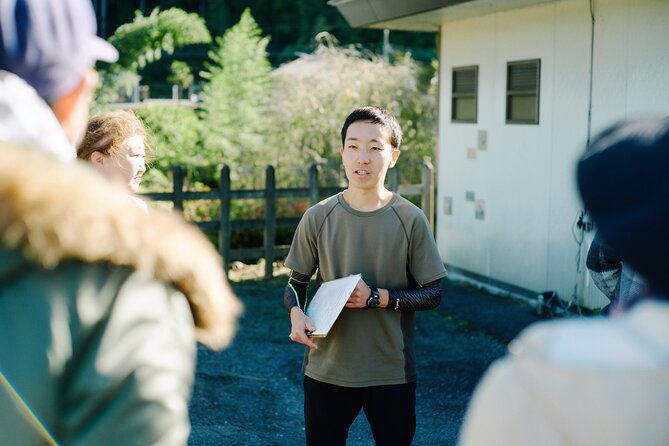
You start at Higashi-Agano Station, and the meeting moment is simple: exit the ticket gate and look for your guide holding a tour placard. From there, the group heads to the activity site in an air-conditioned vehicle, and you’ll be kept together with a max group size of 8 travelers. That small number matters. You get real attention during the safer parts of the activities, and questions don’t get swallowed by a big crowd.
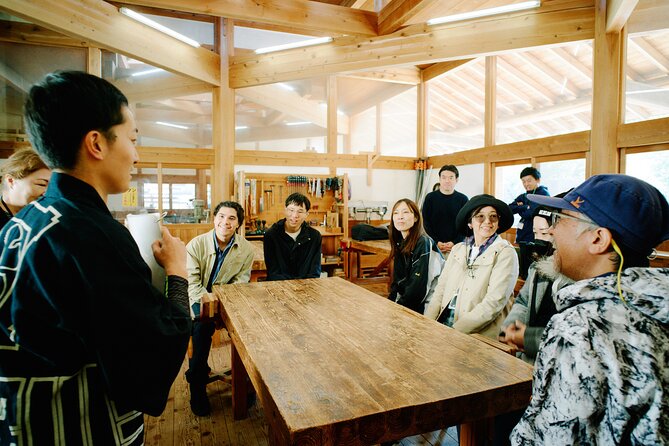
The main craft location is the Kirari woodworking studio. This is where you receive the lecture from the forestry master (the mountain artist concept is central here). It’s also where you get the grounding you’ll need before you start cutting and carving. If you’ve never handled real lumber before, this is the moment where things click: what species you’re working with, why thickness and spacing matter, and how forestry decisions affect the final wood you’ll use later.
A practical note: lunch isn’t included, so plan to eat after the return to the station. On this kind of half-day tour, you’ll probably want something nearby for an easy post-forest meal.
Inside an Internationally Certified Private Forest
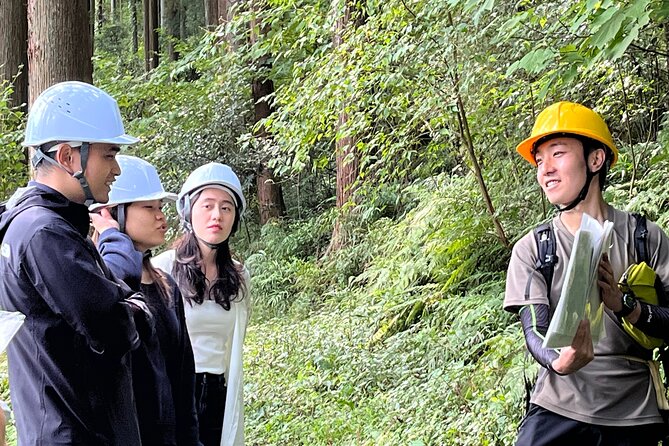
Once you’re at the forest, the tour becomes more than a craft class. It turns into a lesson in forest health you can read with your hands. You’ll experience the aromas of three types of wood, which sounds like a small detail until you realize how often wood selection gets skipped in typical woodworking tourism.
You’ll learn about thinning, which is one of the most important forestry practices for keeping forests healthy. Instead of letting everything grow too dense (where trees compete and quality drops), thinning improves airflow, supports healthier growth, and helps maintain the forest over time. It’s the kind of concept that’s easy to forget once you leave the forest—so I like that you get it while you’re standing where the thinning matters.
You also get hands-on guidance for the forest work portion. You’ll hear ideas like finding a tree that feels right to you, then slowing down under the canopy and taking a quiet moment. That pause is not just poetic. It’s a useful reset after safety talk and before tool time.
Cutting Your Own Log: The Fun Part (With Real Safety)
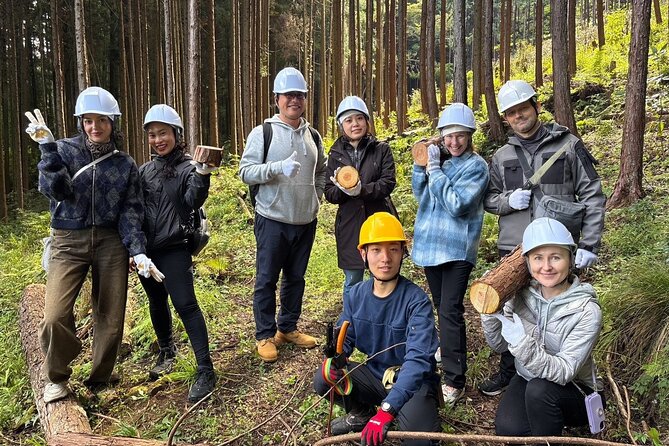
The log cutting section is one of the reasons this experience earns such strong scores. You’re not just watching someone do it. You’re learning the technique and doing the cutting yourself, under guidance.
From the way the experience is described, safety is taken seriously. You’ll be provided with helmets and gloves, and that lets you focus on learning rather than worrying about basics. Expect the saw action to feel different from what you might imagine—wood is stubborn, and your first pass is often more about control and rhythm than speed. The good news is that the instructors are there to help you get past that first awkward moment.
What makes this part valuable for you isn’t only the challenge. It’s the perspective. Cutting a log makes it obvious that wood isn’t “free.” It comes from careful work: forestry planning, long-term tending, and the thinning choices that shape tree growth. When you leave, you’ll look at buildings and wooden objects differently, because you now understand what goes into the raw material.
Pyrography on an Edo Castle Shape: Your Kanji Souvenir
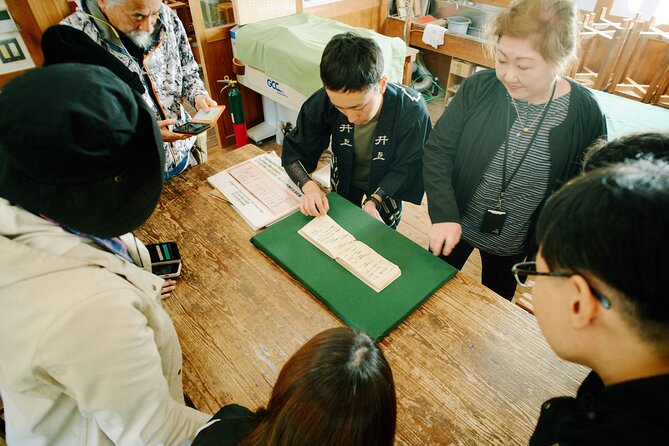
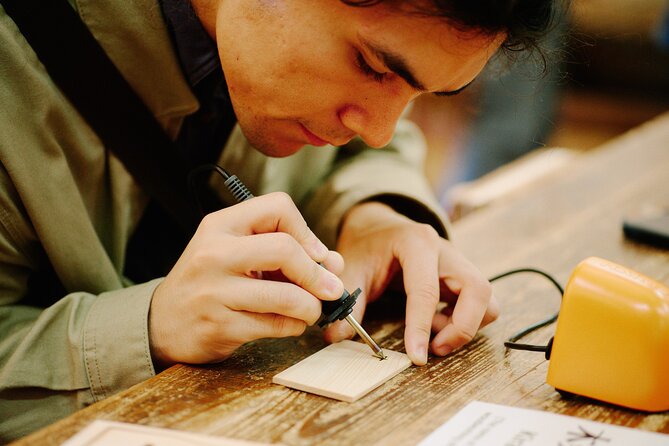
Then comes the craft that’s easy to picture—and hard to mess up. You use a pyrography pen to inscribe a kanji of your choice on a wooden piece shaped like Edo Castle. When you finish, your piece becomes a smartphone stand.
This is the part where the tour shifts from outdoors to a calmer, more personal zone. The pyrography lets you control the outcome. You can put meaning into the choice of kanji, so the souvenir doesn’t feel random. It also tends to work well even if you’re not a “craft person.” Compared with log cutting, it’s more about patience and steady hand than strength.
One thing to consider: pyrography is warm and slow by nature. So if you’re the type who gets bored in quiet, detailed tasks, you might want to mentally prepare. On the flip side, if you like focusing on one thing and getting satisfaction from doing it yourself, you’ll likely find it relaxing.
And yes, it’s a small, practical item. A smartphone stand is easy to justify at home because you’ll actually use it.



How Long It Takes, What You Really Get for $93.93
The total time is about 2 hours 30 minutes, and that short window is part of the value. You’re getting a full package: forest learning, a physical hands-on activity, and a take-home craft.
At $93.93 per person, you’re paying for more than entertainment. You’re paying for trained guidance, provided safety gear, a dedicated site that’s normally closed to the public, and the materials and instruction behind the finished souvenir. For many people, the “aha” is that this isn’t a zoo-style look at nature—it’s a working forestry experience plus woodcraft instruction in one tight block.
Also, because the group is kept small (up to 8), you’re more likely to get individual help during the hands-on parts. That matters when the task involves tools and when your skill level is unknown.
Best Match: Who This Tour Suits
This experience fits best if you want something honest and practical—learning that connects forestry, wood, and craft into one story.
You’ll probably love it if:
- You’re interested in architecture or wood as a material and want the “where it comes from” part explained in person.
- You like nature time that includes real instruction, not only scenic walking.
- You want a take-home craft that’s tied to something you did, not something already finished for you.
You might not love it as much if:
- You dislike outdoor activities or working with tools, even with safety gear provided.
- You’re only looking for a quick sightseeing walk. This is hands-on by design.
Handy Planning Tips Before You Go
Here’s how to set yourself up for a smooth half-day near Tokyo.
Wear practical clothes for the forest and craft. You’ll be outdoors, and you’ll handle equipment during the cutting segment. Comfortable shoes help too.
Because lunch isn’t included, either eat before you go or plan to grab something afterward when you return. The experience ends back at Higashi-Agano Station, and Hannō has plenty of nearby options for an easy meal.
If you want to build a bigger day, keep in mind that Hanno is well placed for other regional activities. Some people pair this kind of forest day with other options in the area, especially when they’re organized through the local tourism network.
Should You Book This Woodcraft-and-Forest Experience?
I think you should book if you want a short, meaningful “near Tokyo” escape that teaches you something real and gives you a souvenir you’ll actually use. The combination—thinning forestry lessons, log cutting with safety gear, and kanji pyrography on an Edo Castle stand—is exactly the kind of hands-on value that’s hard to fake.
Skip it only if you’re mainly after sightseeing and you’d rather not do tool-based activities outdoors. If that’s you, you may prefer a calmer nature walk elsewhere.
If you do book: check the weather forecast, wear gear-ready clothes, and go with the attitude that you’re there to learn by doing. That’s where the experience shines.
FAQ
How long is this experience?
It’s approximately 2 hours 30 minutes.
Where do I meet the guide?
You meet at Higashi-Agano Station in Saitama (Hanno, Hiratto, 平戸220).
Is lunch included?
No. Lunch is not included, so you’ll want to plan a meal after you return to the station around lunchtime.
How large are the groups?
The tour has a maximum of 8 travelers.
Is transportation included?
An air-conditioned vehicle is included, with the guide driving you from Higashi-Agano Station to the activity site. Private transportation costs are not included separately.
What will I make and take home?
You’ll use a pyrography pen to inscribe a kanji of your choice on a wooden piece shaped like Edo Castle. It becomes a smartphone stand.
What if the weather is bad?
This experience requires good weather. If it’s canceled due to poor weather, you’ll be offered a different date or a full refund.
More Tour Reviews in Saitama Prefecture



Fresh reviews from around Saitama Prefecture
Saitama Prefecture, compared.
 ★ 5.0Mt. Fuji and Hakone Private Tour with English Speaking DriverFrom $54022 reviews
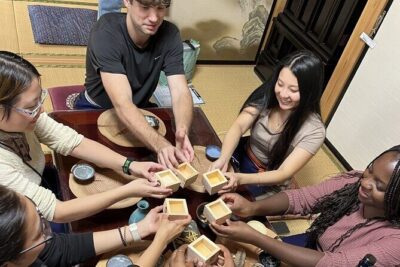 ★ 5.0Unique Brewery Tour and One-of-a-Kind Sake Tasting Near TokyoFrom $10017 reviews
 ★ 5.0Gyoda Tabi Shoes Cultural Walking TourFrom $457 reviews
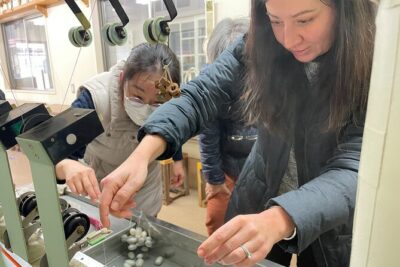 ★ 5.0Chichibu’s Weaving Story: A Journey of Tradition and FestivalFrom $1006 reviews
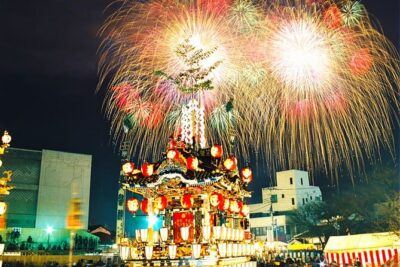 ★ 5.0Let’s enjoy Japanese Festival Music- Chichibu Yatai BayashiFrom $265 reviews
★ 5.0Mt. Fuji and Hakone Private Tour with English Speaking DriverFrom $5404 reviews
★ 5.0Let’s enjoy Japanese Festival Music- Chichibu Yatai BayashiFrom $265 reviews
★ 5.0Mt. Fuji and Hakone Private Tour with English Speaking DriverFrom $5404 reviews
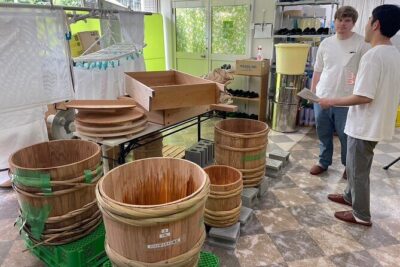 ★ 5.0Cultural Sake Brewery Private Tour & Unlimited Tasting Near TokyoFrom $1054 reviews
 ★ 5.0Experience Seasonal Green Tea Picking in Sayama and Nostalgic Walk in Kawagoe!From $1304 reviews
Browse the lists this tour appears in