
Reviewed · SHIBUYA TOURS
Shibuya and Shinjuku Photography Experience
Tokyo at night hits different.
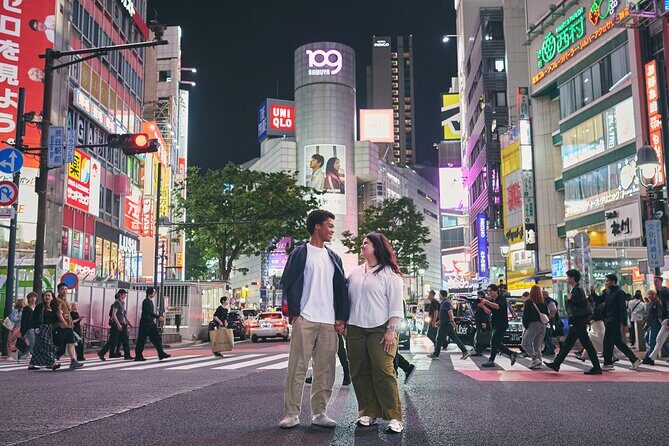
This Shibuya and Shinjuku photo walk is built for the hour when Tokyo turns loud, colorful, and full of moving subjects. You start by meeting Hachiko, then work your way to Shibuya’s famous crossing, the shopping streets around Center-gai, and on into Shinjuku’s neon zones, finishing near Kabukicho.
What I like most is that it’s not just sightseeing with a camera. I’m into the way Kenji (the English-speaking guide/photographer) helps you relax and get shots even if you’re traveling solo, plus you leave with 25–50 color-graded photos to take the pressure off while you’re walking. One thing to consider: it’s scheduled for an 8:00 pm start and the tour starts on time, so being late can cut you out of the experience.
In This Review
- Key highlights you’ll actually feel
- Entering Tokyo’s night mode: why this route works
- Price and photo value: what $62.13 buys you
- Meeting at Hachiko: start strong, then move with purpose
- Hachiko, then Shibuya Scramble: capturing Tokyo’s movement
- Miyashita Park: the breather between neon chaos
- Back alleys near Shibuya Station: texture, narrow space, and character
- Omoide Yokocho and Godzilla Road: finishing with neon intensity
- What Kenji’s guidance does for solo photographers
- Timing, weather, and what to bring so your photos actually happen
- Is this the right night photo tour for you?
- FAQ
- What is the duration of the Shibuya and Shinjuku photography experience?
- How much does the tour cost?
- What time does the tour start?
- How many photos will I receive?
- Is train travel included between Shibuya and Shinjuku?
- What is included in the tour?
- Where do I meet the guide?
- Where does the tour end?
- Is there a limit on group size?
- What if the weather is bad?
Key highlights you’ll actually feel
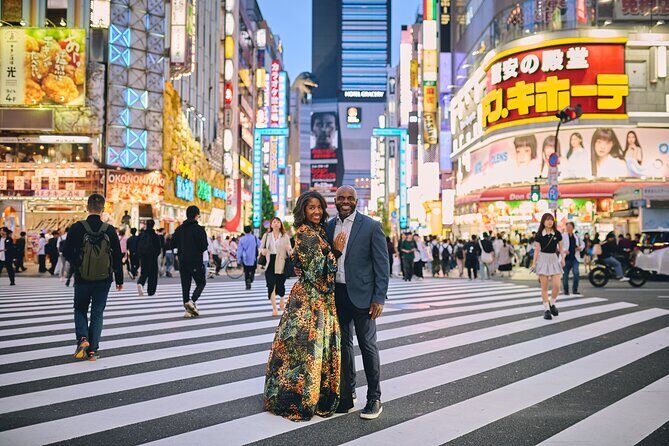
- Small group (max 4), so you’re not lost in the crowd or waiting your turn forever
- Posing help for real people, useful when you’re trying to get photos of yourself
- From Hachiko to Kabukicho, covering both classic landmarks and grittier back-street Tokyo
- Color-graded results (25–50 photos), so you aren’t stuck with a pile of half-OK shots
- Built around night light, meaning you’ll learn what works when streets get brighter and faces move faster
More to do within sight of the Crossing
- Official Street Go-Kart in Shibuya★ 5.0 · 3,435 reviews
- Tokyo: Street Kart Experience in Shibuya★ 4.9 · 1,484 reviews
- Shibuya Meltdown Nightlife Tour: All-You-Can-Drink Bar Hopping★ 5.0 · 1,058 reviews
Entering Tokyo’s night mode: why this route works
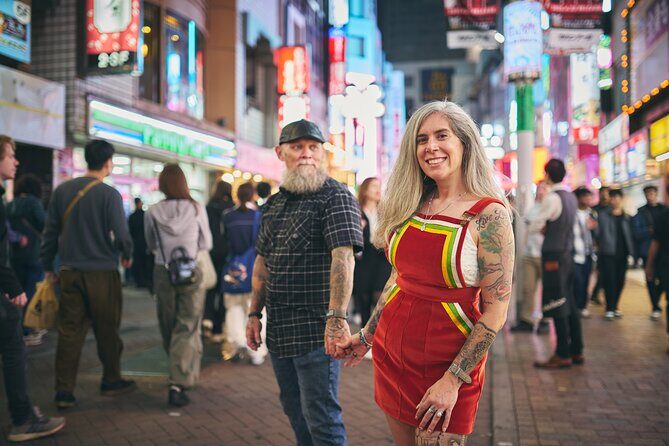
Night photography in Tokyo sounds simple until you’re there. The crowds move. The light shifts. Everyone else is trying to take the same photo at the same time. This tour makes it easier by threading you through areas where night scenes naturally give you strong visuals—big landmarks for your wide shots, then smaller streets where you can slow down, frame details, and shoot texture.
You also get a practical pacing. The overall duration is about 2 hours, and the stops are timed so you can switch gears: quick “everyone knows this spot” shots first, then more personal, street-level scenes afterward. That matters because your camera (and your brain) can only handle so much chaos before you start holding it like a souvenir.
And yes, this is an “after-dark” walk. The experience is set for 8:00 pm, which is late enough for neon and city glow, but not so late that everything feels dead. You’re catching Tokyo at its in-between energy: still active, still photogenic, and still walkable.
Kenji is a big part of why it’s smooth. The reviews highlight that he puts solo visitors at ease, and that tracks with what you want from a night shoot guide: calm instructions, friendly vibe, and enough direction that you’re not constantly asking, Where do I stand?
Price and photo value: what $62.13 buys you
At $62.13 per person, you’re paying for three things: guided navigation, coaching during the shoot, and the output file set (the photos). If you’ve ever done a self-guided photo walk, you know the hidden cost is time and trial-and-error. This tour is basically a shortcut through the hardest part: figuring out when and where to stop, and how to position yourself in-frame.
You get 25–50 color-graded photos. That’s the practical value here. Raw captures are easy to accumulate. Color-graded images give you something you can actually post or print without turning the whole trip into homework.
What’s not included is also important. The train fee from Shibuya to Shinjuku is ¥170 per person. The rest of the sights are streets and public areas, so you’re not paying entry fees to see any of the stops. Water is included, too, and if you need beverages you can tell the guide so you can get pointed the right way.
Group size is capped at 4 travelers. In practice, that makes a difference for photo tours. You’ll likely get more attention and quicker corrections than you would on a larger group walk.
So the value equation looks like this: if you want a guided night shoot with actual deliverables, $62.13 is a fair deal. If you love solo exploration and already know exactly where you want to shoot at 8 pm, you could probably do it cheaper on your own. But most first-timers (especially solo) pay this price because they want their photos to come out better without stress.
Meeting at Hachiko: start strong, then move with purpose
You meet at Hachiko Statue, 2 Chome-1 Dogenzaka, Shibuya. This is a smart starting choice because it’s a well-known landmark with easy local direction. When you show up, you’re not guessing where to begin or trying to interpret a confusing maze of side streets.
The key thing to know is timing. The tour starts on time and they’re strict about it. If you’re more than 5 minutes late, you won’t be able to join, and refunds or rescheduling won’t apply. That sounds harsh, but for a photo walk it’s basically common sense. Once you miss the start, you’re late for the first lighting and crowd window.
This is also where you’ll get the tone for the walk. Since the maximum group size is small, you can ask questions early—how to hold a camera in a crowded spot, how to position yourself, what type of shot Kenji is aiming for. Even if you’re not a pro, you’ll be able to follow along.
Also, you’ll have a mobile ticket, so you’re not juggling paper or printing stuff. Just make sure your phone is charged. At 8 pm, that’s always a good rule anyway.
Hachiko, then Shibuya Scramble: capturing Tokyo’s movement
First stop is the Hachiko Statue. Hachiko is basically Shibuya’s legend in statue form—loyalty and devotion made visible. It’s one of those places where even a quick visit feels like a cultural handshake with the city. You’ll get a classic view and a sense of what kind of Tokyo you’re walking into: modern, busy, and emotionally attached to its symbols.
Then you head toward Shibuya Scramble Crossing. This is the big one: thousands of people crossing when the light changes. For photos, that’s both the fun and the challenge. The fun is motion: you can shoot streaks, silhouettes, and layered crowds. The challenge is you can’t stand in the wrong place and expect a clean frame.
You get about 20 minutes at Shibuya Crossing. That’s enough to try multiple angles. If you’ve only ever seen this crossing from a distance, you’ll appreciate how it looks when you’re close enough to feel it. The crowd energy becomes part of the photo, not just a distraction.
Next, you move to Shibuya Center-gai, a narrow stretch known for youth culture. This is where the camera work shifts from “big iconic scene” to “street-level storytelling.” The buildings and signs compress the space and help your photos feel more layered. Here, small framing choices matter more than people expect.
Potential drawback: Center-gai is full of storefronts and activity, so it can feel chaotic if you’re expecting quiet, controlled compositions. The fix is to listen to Kenji’s guidance and focus on one or two shots at a time instead of trying to cover everything instantly.
Different nights, same neon: more Shinjuku crawls

Miyashita Park: the breather between neon chaos
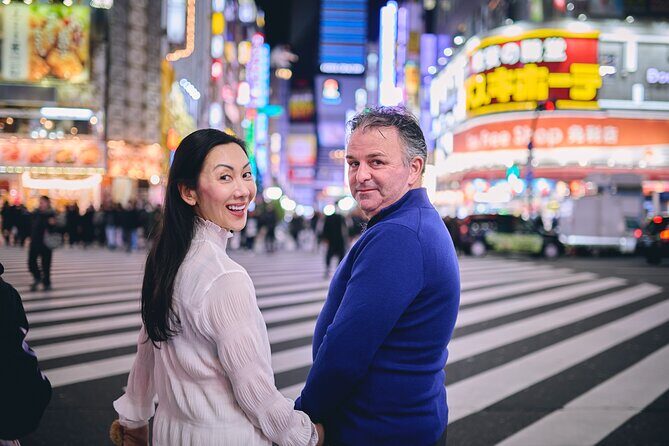
After the crowded lanes, Miyashita Park gives you a modern contrast. It’s a green-space pause with a skate park vibe, plus cafes and a shopping complex nearby. The point for your photos is variety. Without this stop, your entire gallery might look like bright signs and dense crowds.
At Miyashita Park, you can aim for a different mood: cleaner lines, more “open air” framing, and a mix of city elements with a bit of natural texture. It’s also a nice place to reset your energy mid-tour.
The time here is about 20 minutes, which works well because it’s long enough to shoot a few styles and still short enough that you don’t lose the night’s momentum. When the light starts changing, you don’t want to be stuck in a long, slow break.
If you’re someone who only wants classic photos, you might skip this style of stop. But if you want your Tokyo gallery to feel like a story instead of separate postcards, Miyashita Park earns its place.
Back alleys near Shibuya Station: texture, narrow space, and character
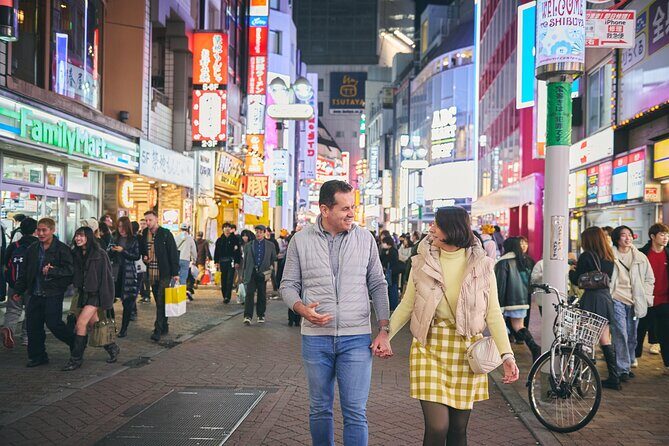
Midway through the Shibuya side, you’ll step into a narrow alley near Shibuya Station with tiny, older-style bars and izakayas. The vibe is post-war Tokyo in spirit—small spaces, close voices, and a feeling that Tokyo’s night life wasn’t built for cameras but for people.
This is where street photography skills start to matter more than gear. You’re dealing with tight width, mixed lighting, and surfaces that look better up close than from a distance. You’ll likely want to shoot details: signage, doorways, reflections, and the way light spills across the pavement.
One practical thing: if you’re short on experience photographing at night, a narrow alley can be tricky. It’s easy to back up into someone else’s space or cut off your own framing. This is where a guide helps. Kenji’s job is basically to keep you from turning your photo walk into an awkward traffic jam.
You won’t be stuck here for ages. The tour keeps moving, so you get the texture without getting overwhelmed. Think of this part as your “Tokyo grit” section.
Omoide Yokocho and Godzilla Road: finishing with neon intensity
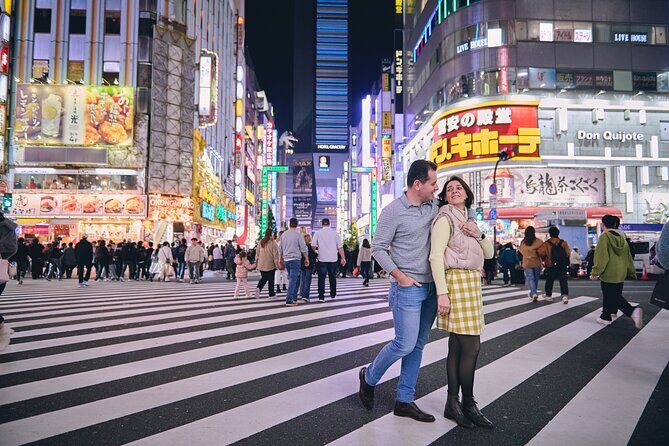
Now you shift into Shinjuku. Two stops capture different flavors of nighttime Shinjuku.
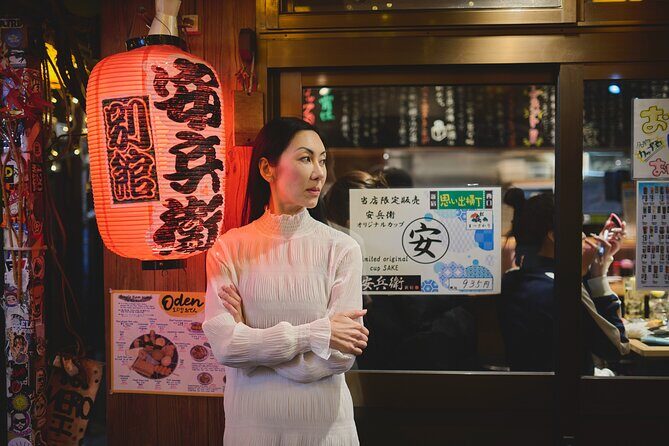
First is Omoide Yokocho (meaning Memory Lane). This area is known for gritty, nostalgic energy—smoky yakitori stalls, cramped bars, and a worn look that still feels very alive. For photos, the win here is atmosphere. You’re shooting the feeling of old Tokyo nightlife rather than only the clean, postcard style.
Expect that this stop leans more toward ambiance than wide landscape shots. Your best results will usually come from positioning: choosing where to stand so you’re capturing stalls and signs without blocking other people.
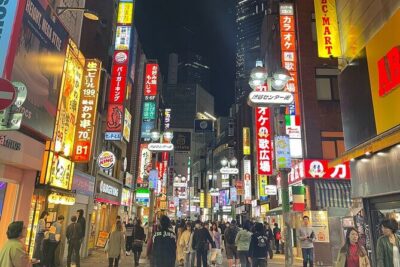
Then you end at Godzilla Road, part of Kabukicho in Shinjuku. Kabukicho is the famous “sleepless town” zone—neon signs, entertainment energy, and constant motion. Your tour ends right near the entrance of Kabukicho, which makes sense because this is where the nightlife visuals peak.
This last stretch is about impact. If you want a finale shot that says Tokyo without needing a caption, Godzilla Road is the place to aim for it. You’ll likely get a mix of people, lighting, and signage that feels distinctly Shinjuku.
Possible drawback: if you hate crowds or noise, the ending district might not be your favorite. But if you’re here for night Tokyo photos, it’s also the most visually dramatic payoff.
What Kenji’s guidance does for solo photographers
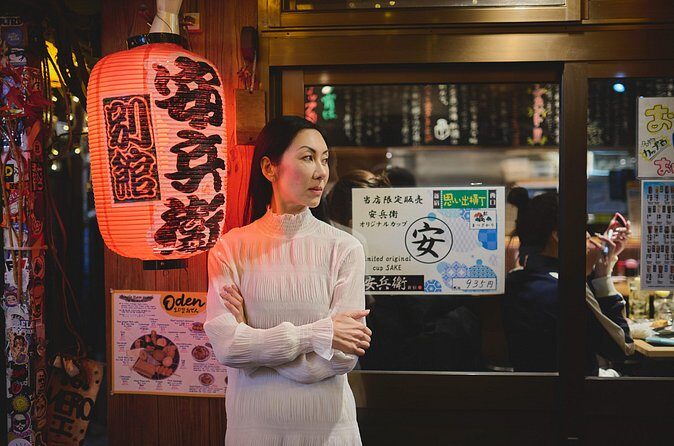
The strongest theme in the feedback is how comfortable Kenji makes first-timers and solo visitors. That matters because one of the hardest parts of street photography is the simplest: how do you get your own photo without turning it into a self-conscious performance?
On this tour, you’re not just roaming. You’re given directions and pose help so you can feel natural in front of the camera. Even if you don’t consider yourself photogenic, you’ll get practical cues—where to stand, how to angle, and how to work with the crowd rather than fighting it.
It’s also a confidence builder in a very real way. When you’re alone in a huge city, you can spend half the time worrying if you’re in the right spot. With a guide, you can spend that time shooting and enjoying the scene.
That’s why the small group size is such a quiet advantage. With just a handful of people, it’s easier to move with the guide’s pace and keep your camera work consistent.
Timing, weather, and what to bring so your photos actually happen
This experience runs about 2 hours, starting at 8:00 pm. That’s a big clue about what to bring.
Bring comfortable shoes. You’ll be walking, and night streets can mean uneven pavement and lots of stops. Also, plan for cold or damp depending on the weather. The tour requires good weather. If it’s canceled due to poor conditions, you’ll be offered a different date or a full refund.
For your gear, keep it realistic. If you’re carrying a huge setup, you’ll tire out faster. The tour includes no mention of equipment limits, so just use common sense: enough to take photos confidently, not so much that you’re struggling.
Since bottled water is included, you don’t need to bring a drink just to satisfy that part. But you should still keep hydration in mind because you’ll be walking and shooting under lights.
Last: have your confirmation and mobile ticket ready, and keep your phone charged. In dense areas, your battery can disappear faster than you expect.
Is this the right night photo tour for you?
Book this tour if:
- You want guided night photography in two of Tokyo’s most recognizable districts, without spending hours figuring out routes and timing
- You’re a solo traveler and you want help getting into photos naturally
- You care about the deliverable: 25–50 color-graded photos, not just “good luck, internet” results
- You like street scenes that mix landmarks with back alleys, not just one “viewpoint” stop
Skip it if:
- You prefer total freedom with zero structure
- You hate crowded areas and don’t want to end in Kabukicho
- You might struggle with an 8:00 pm start time and being punctual (the tour is strict about late arrivals)
My take: this is a good value night shoot for first-timers who want real photos and less stress. You’re paying for direction, pacing, and a set of finished images, and those are exactly what make night street photography easier.
FAQ
What is the duration of the Shibuya and Shinjuku photography experience?
It lasts about 2 hours.
How much does the tour cost?
The price is $62.13 per person.
What time does the tour start?
The start time is 8:00 pm.
How many photos will I receive?
You’ll receive 25–50 color-graded photos per person.
Is train travel included between Shibuya and Shinjuku?
No. The train fee from Shibuya to Shinjuku is ¥170 per person and is not included.
What is included in the tour?
Included items are bottled water, the 25–50 color-graded photos per person, and an English-speaking guide/photographer. Admission tickets for the listed stops are free.
Where do I meet the guide?
You start at the Hachiko Statue, at 2 Chome-1 Dogenzaka, Shibuya, Tokyo 150-0043, Japan.
Where does the tour end?
You end near the entrance of Kabukicho, at Godzilla Road in Shinjuku (1-chōme17 セントラルロード, Japan).
Is there a limit on group size?
Yes. The maximum group size is 4 travelers.
What if the weather is bad?
This experience requires good weather. If it’s canceled due to poor weather, you’ll be offered a different date or a full refund.
More Tour Reviews in Tokyo





Shinjuku After Hours: The Other Crawls
Still in Shibuya? Keep Going


Fresh reviews from around Tokyo






Shibuya Tours, compared.
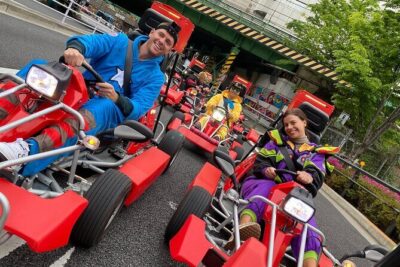 ★ 5.0Official Street Go-Kart in ShibuyaFrom $763,435 reviews
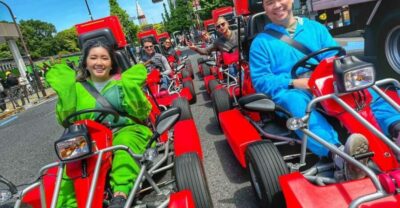 ★ 4.9Street Kart Experience in ShibuyaFrom $741,484 reviews
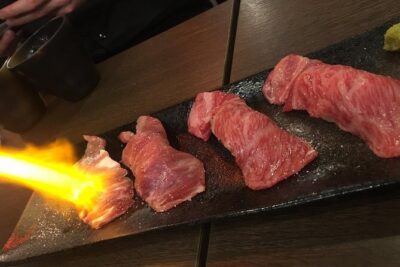 ★ 5.0Shibuya Meltdown Nightlife Tour: All-You-Can-Drink Bar HoppingFrom $1061,058 reviews
 ★ 5.0Shibuya Official Street Go-Kart in Shibuya AnnexFrom $69972 reviews
 ★ 5.0Shibuya Food Tour (13 dishes and 4 Eateries)From $77770 reviews
 ★ 5.0Best of Shibuya Food TourFrom $217612 reviews
 ★ 4.8Shibuya Highlights Walking TourFrom $19601 reviews
 ★ 4.7Premium Go-Kart Tour with Tower & Shibuya CrossingFrom $116528 reviews
Browse the lists this tour appears in