
Reviewed · SAMURAI & NINJA EXPERIENCES
Samurai sword cutting experience
Sword timing feels different here.
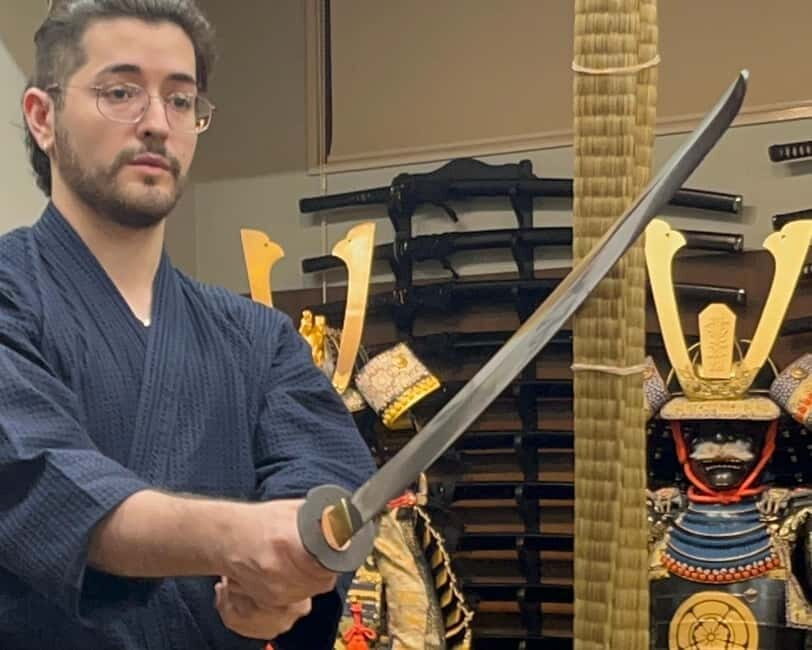
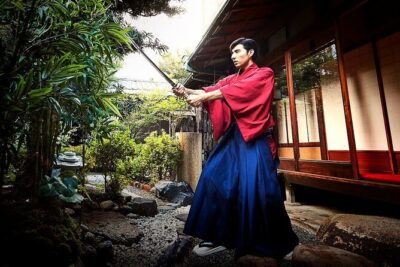
This samurai sword cutting experience brings you into iaido step by step: you change into traditional iai clothing, learn sword basics, practice your swing, then cut rolled tatami mats with guidance. I like the focus on the mental side too—greetings and mental unification make it feel less like a stunt and more like a discipline.
Two things I’d especially plan for: you’ll handle a real Japanese sword (more than 100 years old) and you’ll cut tatami twice, with the chance to choose your timing as you follow the instructor. The one catch is physical: this isn’t a seated, easy activity, and it’s not suitable for wheelchair users or visually impaired people, so you’ll want to be comfortable standing, moving, and focusing closely on instruction.
In This Review
- Key things you will get
- Samurai Theater Tokyo start: turning a lesson into a role
- Step 1: Iaido costume change (yes, it matters)
- Step 2: Greetings, meditation, and mental unity
- Step 3: Sword explanation and swing practice before you cut
- Step 4: Cutting tatami twice, with your timing
- Real swords, armor on display, and why the setting isn’t random
- Language, photo moments, and asking questions
- Price and value: what $93 buys you (and what it doesn’t)
- Who this is best for (and who should skip it)
- Booking with a flexible mind: pay later and timing
- Should you book this samurai sword cutting experience?
- FAQ
- How much does the samurai sword cutting experience cost?
- What happens during the experience?
- Do I use a real Japanese sword?
- Are photos and videos included?
- What languages are available?
- Where do I meet, and where does it end?
- Who is it not suitable for?
- What is the cancellation policy?
Key things you will get
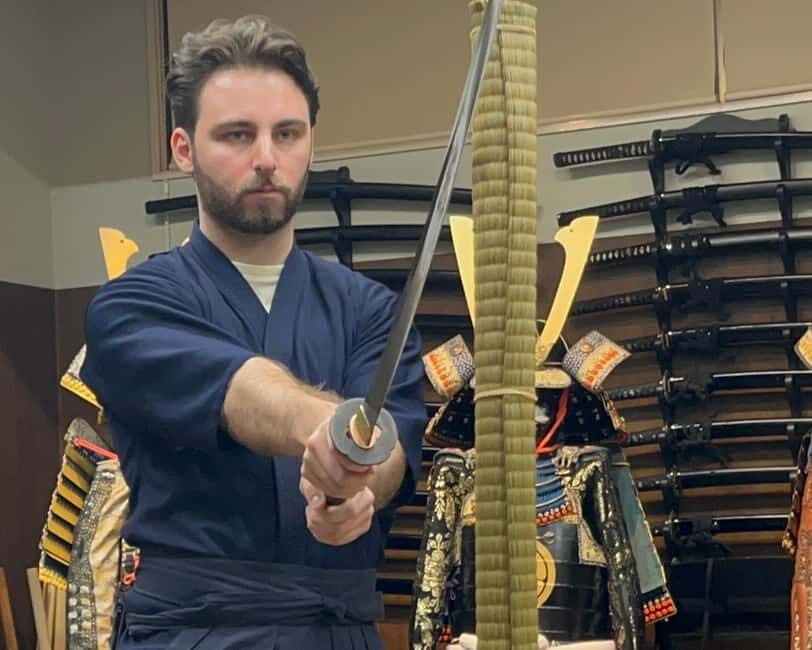
- Iaido costume change before you touch a sword, so you shift into the right mindset fast
- Greetings and meditation-style mental unity guided during the session
- Battoushi Do instruction from a real teacher with an on-site demonstration
- Practice rounds first, including an imitation sword and practice sword before the real blade
- Real swords over 100 years old plus armor on display that visually anchors the history
- Cut tatami twice, with optional photos and videos of your cuts
More blades, bows and dojo hours
- Tokyo: Samurai Ninja Museum Guided tour and Experience★ 4.6 · 1,010 reviews
- Tokyo: Samurai Sword & Archery Class from Samurai Descendant★ 5.0 · 603 reviews
- Best Samurai Experience in Tokyo★ 5.0 · 458 reviews
Samurai Theater Tokyo start: turning a lesson into a role
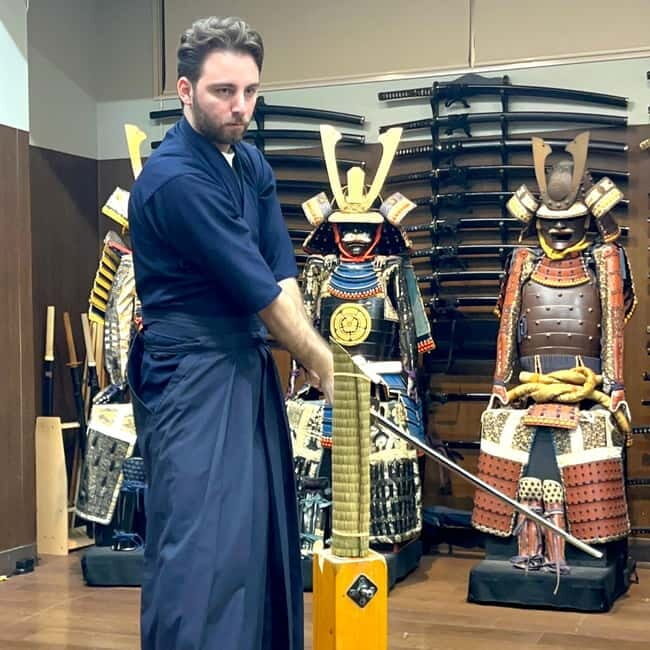
You’ll meet at the spot where it’s easiest to find things in Tokyo: search Google Map for Samurai Theater Tokyo. The experience starts there and ends back at the same meeting point, so you can plan your day without extra transit stress.
The price is $93 per person, and what you’re paying for is not just a quick photo opportunity. You’re getting a full iaido-style practice flow: clothing, instruction, demonstrations, and hands-on cutting with materials like rolled tatami. That’s the value equation. If you only want a casual sword show, this might feel like more work than you expect. If you want a structured way to learn sword control, it makes sense.
The provider is 株式会社テイク, and the session is taught in English and Japanese. That bilingual setup matters because sword technique is the kind of thing you don’t want to guess at from vague directions.
Step 1: Iaido costume change (yes, it matters)
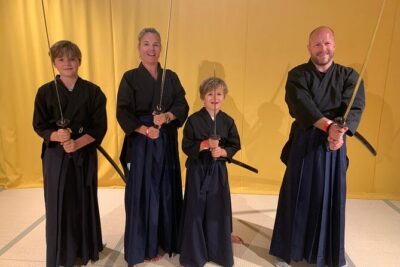
One of the best parts is how early they pull you into the role. Before the sword work, you change into traditional iaido/iai clothing (included as the practice suit).
This isn’t just for looks. In iaido, posture and readiness are part of the method. When you’re in the right clothing, your movement feels different. You’re also more likely to take the training seriously because you’re literally geared for the practice.
You should also expect that this is an activity with rules and pacing. You’ll be guided through what comes next instead of free-form wandering.
Step 2: Greetings, meditation, and mental unity
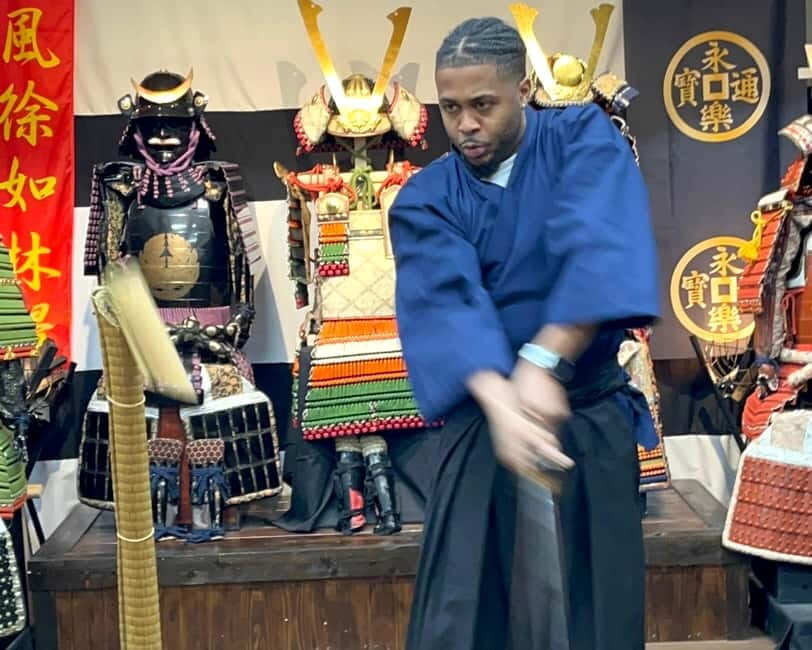
After you’re dressed, the session includes greetings and mental unity. This is where the experience leans into the samurai spirit beyond the blade itself.
Why does this matter for you? Because sword cutting is timing and control. The mental steps are there to help you line up your focus with what the instructor asks for. You’re not just swinging a sword at mats. You’re learning a sequence.
Even the flow later repeats key ideas like greetings and mental unification again, which helps everything feel like one continuous practice rather than random activities. It’s also one of the most memorable parts when you’re done, because it’s the contrast: calm setup, then committed action.
Step 3: Sword explanation and swing practice before you cut
Before you’re cutting tatami, you’ll get a sword explanation. That’s smart. Japanese swords have shape, balance, and motion cues that matter for safe, clean technique. And if you’ve never handled a sword before, your biggest risk is not the weapon—it’s doing the wrong movement at the wrong time.
The session then moves into practice swinging. You’ll use an imitation sword and a practice sword as part of that warm-up. This is exactly what you want if you’re new: learn the motion basics first, then let the real blade come in once you’ve got the sequence.
The instructor doesn’t just tell you what to do. There’s also an instructor demonstration that shows cutting and timing from the teacher’s side before you repeat it. You’ll be able to compare your own motion to what the instructor demonstrates.





Step 4: Cutting tatami twice, with your timing
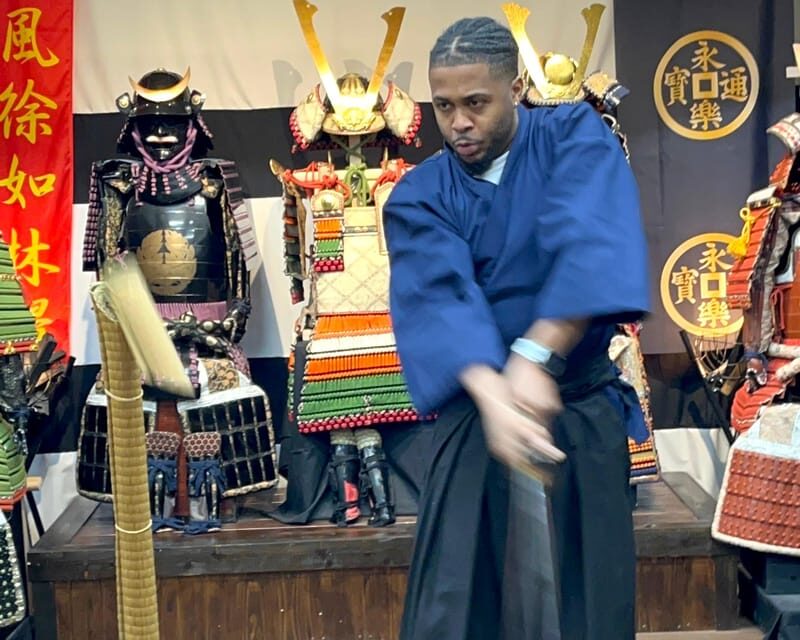
Now for the moment most people book for: cutting rolled tatami mats.
Here’s the structure:
- The instructor follows you through the cutting instruction.
- You cut the tatami twice.
- You’re guided to cut at the timing you want, as long as you follow the instructor’s directions.
That wording is important. You’re not just copying a machine-like motion. You’re learning where timing fits into the technique. For a first-timer, that can feel surprisingly empowering because you’re still participating, not just performing.
You’ll also have the option to take pictures and videos of yourself cutting if you want. That’s helpful because you can watch your own technique afterward and remember what the instructor coached you on.
One more nice touch in the sequence: after your cuts, you’ll get to watch the teacher’s performance. It gives you a clean reference point for what “good” looks like, especially when you’re trying to understand sword motion without getting lost in details.
Real swords, armor on display, and why the setting isn’t random
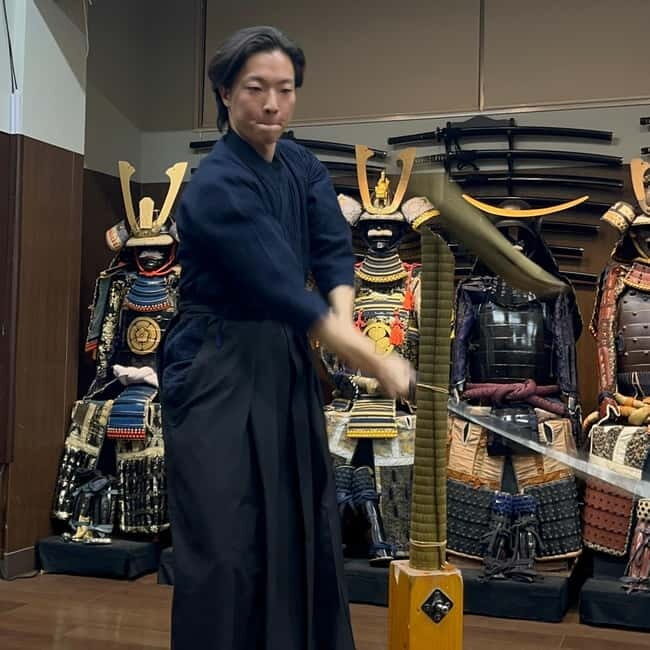
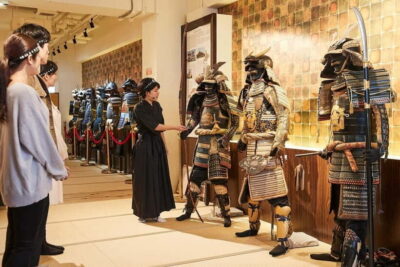
This experience doesn’t just bring you to a training space with a sword. You’ll see a lot of armor on display, and that visual presence changes the tone.
It helps you connect the practice to the era. When you see age in the form of armor, you feel that you’re learning a technique that has been part of a tradition for generations, not just a modern demo.
And the biggest detail: you can use real Japanese swords more than 100 years old. That’s not a gimmick. Handling a real blade—even under instruction—makes you aware of weight, balance, and how your body needs to move with purpose. If you’re a film-and-photo person, this also means your results have a believable look: the sword in your hands is historically consistent with the practice.
Language, photo moments, and asking questions
The session is offered in English and Japanese, which is a big help if you want to understand technique wording instead of only following gestures.
There’s also room to connect with the teacher. After the practice and the second round of greetings/mental unification, you can take a commemorative photo, then ask questions if you want.
That question time is one of the most practical advantages. Sword training has lots of small points, and if you’re only thinking about the cut itself, you might leave without understanding what to focus on next time. Asking questions lets you clarify things you were unsure about during practice.
And yes, your own photos and videos can capture your cuts, but the commemorative photo is the easy way to mark the moment without fiddling with settings mid-session.
Price and value: what $93 buys you (and what it doesn’t)
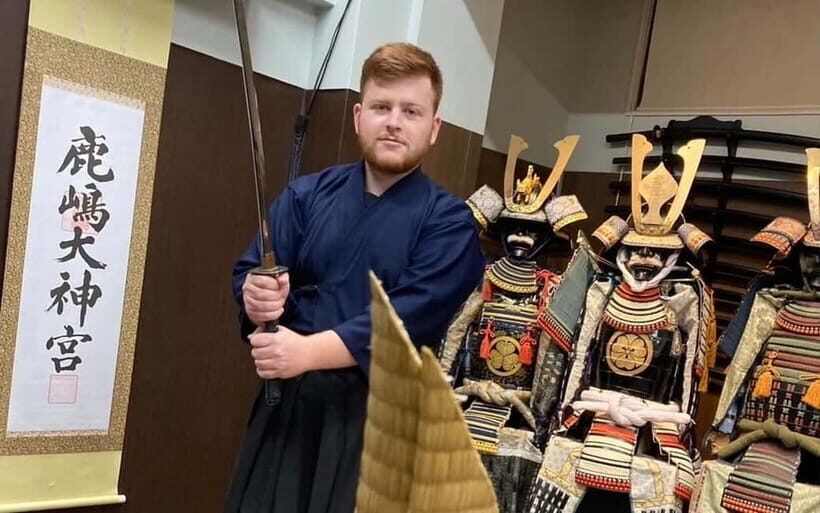
At $93 per person, this is not a budget activity, but it’s also not priced like a private elite coaching session. It sits in the “hands-on experience” category, and the value is tied to the inclusions:
You get:
- Instructor and sword explanation
- Sword practice, including practice suit and practice sword
- Instructor demonstration
- Rolled tatami mats
- Imitation sword plus real sword
- Photography and video recording
And you get the big differentiator:
- A real Japanese sword (more than 100 years old)
- Armor on display, so you’re not detached from the theme
What you should not expect (based on the provided details) is a guided tour of Tokyo’s temples or a long sightseeing route. This is a focused training experience. The payoff is the practice itself: costume, mental steps, instruction, and the tatami cuts.
If you’re the type who enjoys learning by doing, this kind of structured session is a great use of time. If you’re the type who wants a passive show, you might find it more effort than you planned.
Who this is best for (and who should skip it)
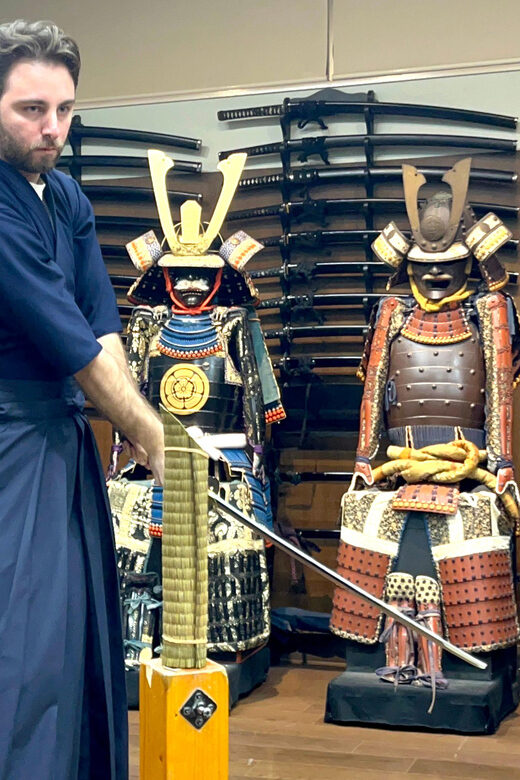
This experience is not suitable for children under 14, pregnant women, wheelchair users, or visually impaired people. That’s a clear planning factor. The activity includes moving, handling equipment, and following close instruction.
It’s a strong fit if you:
- want a true iaido-style experience, not just a stage performance
- enjoy hands-on training with a real teacher
- want optional video and photos tied to your actual cuts
- like the discipline angle: greetings, mental unity, and a structured routine
It may be a weak fit if you:
- need an accessible, seated experience
- prefer sightseeing over skill practice
- get overwhelmed by instruction-heavy activities
Booking with a flexible mind: pay later and timing
You can Reserve & Pay Later, which means you can book your spot and pay nothing today. If your plans shift, there’s also a full refund if you cancel up to 24 hours in advance.
That flexibility helps if you’re building a Tokyo day around weather, jet lag, or the rest of your schedule.
Should you book this samurai sword cutting experience?
Book it if you want a hands-on, structured iaido experience with real instruction, a costume moment, and the chance to cut tatami twice using a real Japanese sword. The biggest draw for me is the mix of mental focus plus physical technique, backed by a teacher’s demonstration and actual practice with tools like imitation and practice swords before the real blade.
Skip it if you fall into any of the stated unsuitability categories, or if you want mostly passive entertainment. This is training. You’ll get more out of it when you’re ready to follow the sequence and focus on timing and control.
If you like learning through action and you want one memorable, authentic Tokyo activity that feels tied to real discipline, this is an easy yes.
FAQ
How much does the samurai sword cutting experience cost?
The price is $93 per person.
What happens during the experience?
You’ll change into traditional iaido clothing, do greetings and mental unity, get an explanation of the Japanese sword, practice swinging, watch the instructor demonstrate cutting, then cut the tatami twice following the instructions (at the timing you want). You can take pictures and videos if you wish, watch the teacher’s performance, do greetings and mental unification again, take a commemorative photo, and ask questions if you want.
Do I use a real Japanese sword?
Yes. The experience includes use of a real Japanese sword, as well as an imitation sword and practice sword for earlier practice.
Are photos and videos included?
Yes. Photography and video recording are included, and you can also take pictures and videos of yourself cutting the tatami if you wish.
What languages are available?
The experience is available in English and Japanese.
Where do I meet, and where does it end?
Meet at Samurai Theater Tokyo (find it by searching on Google Maps). The activity ends back at the meeting point.
Who is it not suitable for?
It is not suitable for children under 14, pregnant women, wheelchair users, or visually impaired people.
What is the cancellation policy?
You can cancel up to 24 hours in advance for a full refund. You can also use Reserve & Pay Later, which means you can book your spot and pay nothing today.
More Tour Reviews in Tokyo



The Way of the Sword, Continued




Fresh reviews from around Tokyo






Samurai & Ninja Experiences, compared.
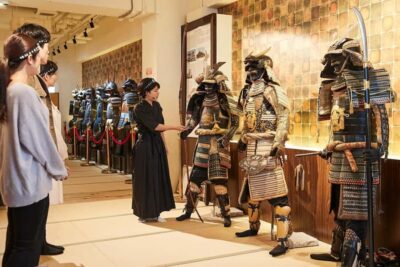 ★ 4.6Samurai Ninja Museum Guided tour and ExperienceFrom $271,010 reviews
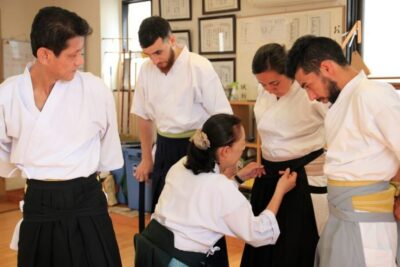 ★ 5.0Samurai Sword & Archery Class from Samurai DescendantFrom $193603 reviews
 ★ 5.0Best Samurai Experience in TokyoFrom $65458 reviews
 ★ 5.0Ninja Experience (Family Friendly) at Samurai Ninja Museum TOKYOFrom $47441 reviews
 ★ 4.6Samurai Entertainment Night Show in Kanda ShrineFrom $41417 reviews
 ★ 5.0Tokyo Sword Experience – includes Museum Ticket/Ninja ExperienceFrom $84314 reviews
 ★ 4.8Samurai Ninja Museum Asakusa: Samurai Sword Lesson & TourFrom $63306 reviews
 ★ 5.0Samurai Sword Experience (Family Friendly)at SAMURAI MUSEUM TOKYOFrom $65168 reviews
Browse the lists this tour appears in