
Reviewed · MT FUJI DAY TRIPS
Private Mt. Fuji Day Trip from Tokyo with English-Speaking Driver
Mount Fuji days go wrong fast.
This private trip keeps it simple, with a dedicated English-speaking driver and a flexible route that lets you hop between classic viewpoints like Oshino Hakkai, Chureito Pagoda, and Lake Kawaguchiko. I especially like that you’re not stuck to one rigid bus schedule. One watch-out: some of the biggest add-on sights (like the 5th Station and the ropeway) require extra tickets and fees.
You’ll start with hotel pickup and roll through the Fuji Five Lakes area for about 10 hours, usually with enough time to see several stops rather than just passing by. The tour also works well even when conditions are less than perfect, since you’ll have multiple chances to catch Fuji from different angles. If you’re flying in for a short stay, double-check pickup timing and any airport transfers, since those come with an extra fee.
In This Review
- Key highlights before you go
- A private Mt. Fuji day trip starts with real Tokyo pickup
- Price and what’s included: where your $332.60 goes
- Oshino Hakkai: the ponds that show why people come to Fuji
- Arakura Fuji Sengen Shrine and the Chureito Pagoda photo zone
- Lake Kawaguchiko: the Fuji Five Lakes main gateway
- The Kachi-Kachi Ropeway and Oishi Park for varied Fuji angles
- Saiko Iyashi no Sato Nenba: thatched-roof quiet on Lake Saiko
- Mt. Fuji 5th Station: worth it if you can handle the extra ticket
- Kitaguchi Hongu Fuji Sengen Jinja: a shrine tied to volcanoes
- Lake Yamanaka: the largest, highest, and often a little calmer
- Gotemba Premium Outlets: turn the ride home into shopping time
- Weather reality check: when Fuji hides, you still get value
- Who this private Fuji tour is perfect for
- Should you book this private Mt. Fuji day trip?
- FAQ
- How long is the Mt. Fuji day trip from Tokyo?
- What is the price for this private tour?
- What does the tour include?
- Are the entrance fees included for everything?
- How much is the Mt. Fuji 5th Station fee?
- How much is the ropeway ticket?
- Is hotel pickup included?
- Does it cost extra for airport pickup or drop-off?
- Is the itinerary fixed?
- Is it a private tour?
Key highlights before you go
- Private car, small group feel: Up to 3 people go together the whole day.
- Custom rhythm: You can adjust the schedule and stops to match what you care about most.
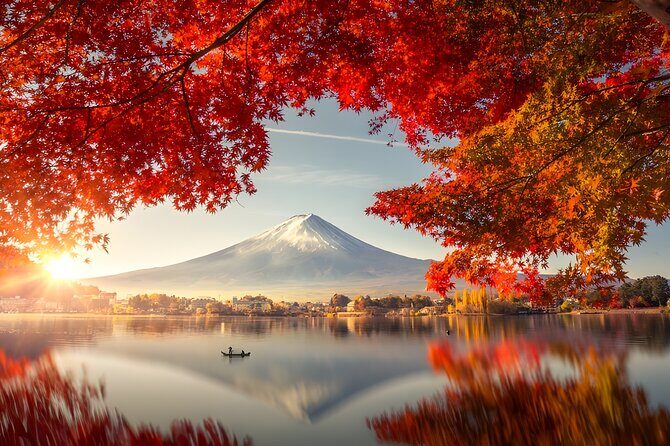
- Fuji views from multiple angles: Ponds, shrines, lakes, parks, and pagoda viewpoints.
- Classic culture plus photos: Arakura Fuji Sengen Shrine (Chureito Pagoda) and several Fuji-related shrines.
- Optional add-ons when you want them: Ropeway and 5th Station tickets are separate.
- Shopping as a finale: Gotemba Premium Outlets helps turn the day into a full outing.
Other routes to the mountain, compared
- Mt Fuji & Hakone Cruise, Drum Show Bullet Train 1 Day from Tokyo★ 4.0 · 7,413 reviews
- Tokyo Mt Fuji 5th St & Hakone Cruise Bus Tour w/Bullet Train★ 4.4 · 5,024 reviews
- From Tokyo: Mount Fuji Full-Day Sightseeing Trip★ 4.5 · 4,970 reviews
A private Mt. Fuji day trip starts with real Tokyo pickup
What makes this tour feel worth it is the door-to-door start. You get pickup from any hotel in Tokyo (about 10 hours total including pickup and drop-off), and you stay in a private, air-conditioned vehicle the entire time.
That matters because Tokyo-to-Fuji travel can be long and a bit stressful. With your driver handling the driving and timing, you can focus on the sights. And if you prefer a slower pace at a photo stop or want to skip something that doesn’t interest you, the private format makes that easier.
A quick note on the human factor: an English-speaking driver like Ken gets called out for doing exactly what you want on a day trip—getting you to the right places, while staying flexible when plans shift.
Price and what’s included: where your $332.60 goes
The price is $332.60 per group for up to 3 people. That’s not cheap on paper, but private Mt. Fuji transportation from Tokyo is expensive for a reason: the distance, parking, and time add up fast.
Here’s what’s included:
- Private English-speaking driver
- Air-conditioned vehicle
- Fuel, parking, and toll fees
- Bottled water
And here’s what is not included:
- Mt. Fuji 5th Station fee: ¥2,100.00 per booking
- Mount Fuji Panoramic Ropeway (Kachi-Kachi) fee: ¥1,000.00 per person
- Pickup/drop at airports: Haneda, Narita, or Yokohama costs an extra ¥10,000.00 per booking
- Walking guide: most insights are given in the car between destinations
So your value comes from not having to think about logistics. You’re paying to avoid the messy parts: getting to the Fuji Five Lakes efficiently, paying for transport costs, and having an English-speaking helper in the car.
If you’re traveling solo or as a couple, the per-person cost rises because the price is grouped. But if you can fill two or three seats, the math starts looking much better.
Oshino Hakkai: the ponds that show why people come to Fuji
Your day begins at Oshino Hakkai, a set of eight clear spring ponds in the village of Oshino in the Fuji Five Lakes area. These ponds sit between Lake Kawaguchiko and Lake Yamanakako, and the water is the point: clear, calm, and visually soothing.
You’ll have about one hour, and admission is free here. It’s a nice “warm-up” stop because it’s not all shopping or photos yet. Instead, it sets the tone for the day: water, Fuji views when weather cooperates, and a peaceful feel that contrasts with busier viewpoints.
Practical tip: because this is a water-and-walk stop, wear shoes you’re comfortable in. You may not have to hike far, but you will move around.
Arakura Fuji Sengen Shrine and the Chureito Pagoda photo zone
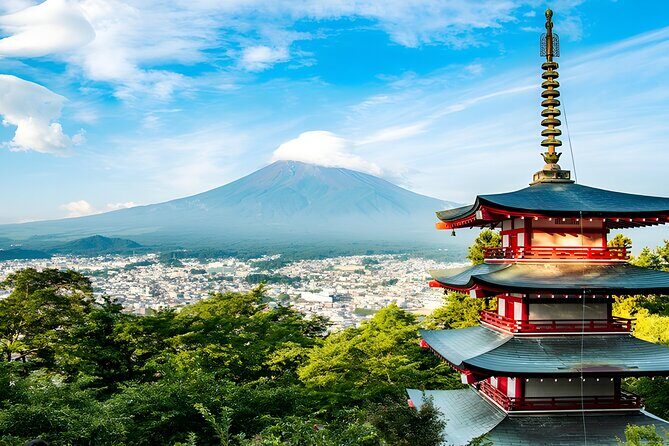
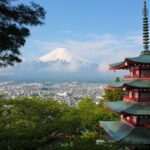
Next comes Arakura Fuji Sengen Shrine, often associated with the Chureito Pagoda view. This is the classic five-story pagoda overlooking Fujiyoshida, with Mount Fuji in the background when visibility is good.
You’ll typically get about one hour, and admission is free. The timing here is good: even if Fuji isn’t perfectly visible, the shrine and pagoda area still deliver strong “Japan travel” visuals.
The main consideration is obvious but important: Fuji visibility varies. If you arrive on a hazy day, you’ll still see a lot, but you may not get that iconic photo where Fuji lines up cleanly behind the pagoda.
More door-to-door days with your own driver

Lake Kawaguchiko: the Fuji Five Lakes main gateway
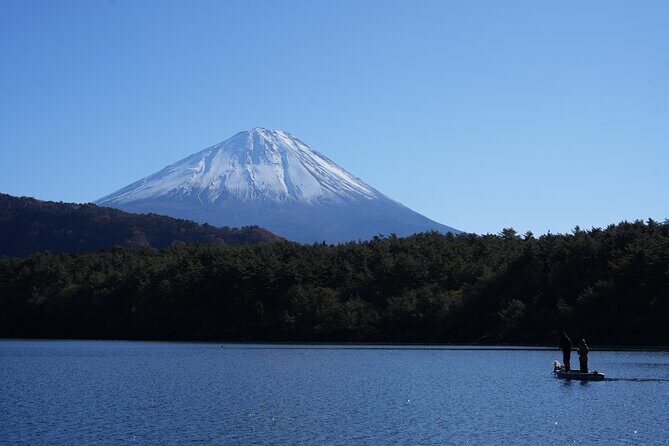
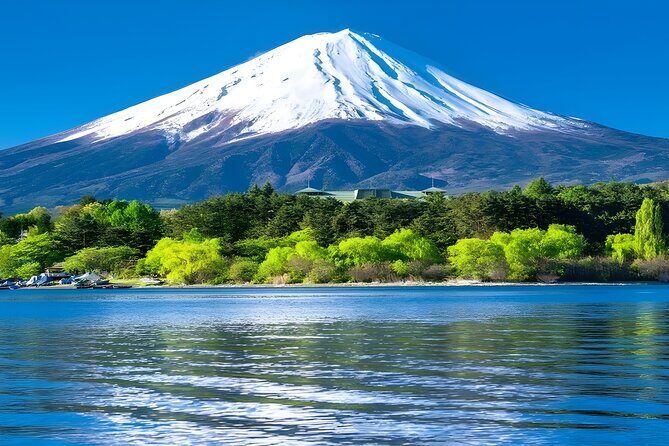
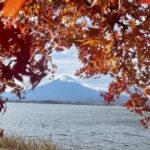
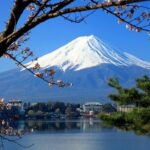
Now you shift from shrines and village ponds to what most people think of as the Fuji region’s centerpiece: Lake Kawaguchiko. It’s the most visited of the Fuji Five Lakes and the second largest by surface area, with a depth of about 14.6 meters.
You’ll get about 30 minutes here, with admission free. That short window is intentional. The tour is built to give you quick orientation moments at multiple lakes, rather than forcing you to spend the whole day in one place.
This is also where you start feeling the rhythm of the trip: drive, stop, walk a bit, photo, and move on. If you want more time at a single lake later, the private format is your friend.
The Kachi-Kachi Ropeway and Oishi Park for varied Fuji angles
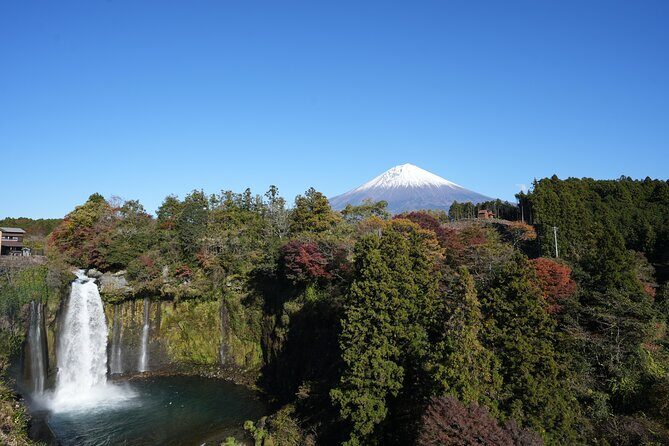
One of the most interesting ways this tour helps you capture Fuji is by giving you options for different viewpoints at Lake Kawaguchiko. You can take the Mt. Fuji Panoramic Ropeway (Kachi-Kachi), which climbs about 400 meters to an observation point near the top.
Ropeway tickets are not included, and cost is ¥1,000 per person. You’ll likely spend about one hour total in this stop block, which includes ticket time and time at the observation point.
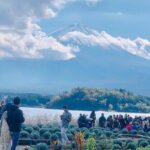
Then it’s Oishi Park on the north shore of the lake for about 30 minutes. Admission is free. This park is known for seasonal flowers—like lavender in summer and red kochia in autumn—which can add color even when Fuji is partially obscured.
Here’s how I’d think about it: the ropeway gives you height and a wide view. Oishi Park gives you a calmer, garden-style view with Fuji as the backdrop when the weather cooperates.
Saiko Iyashi no Sato Nenba: thatched-roof quiet on Lake Saiko
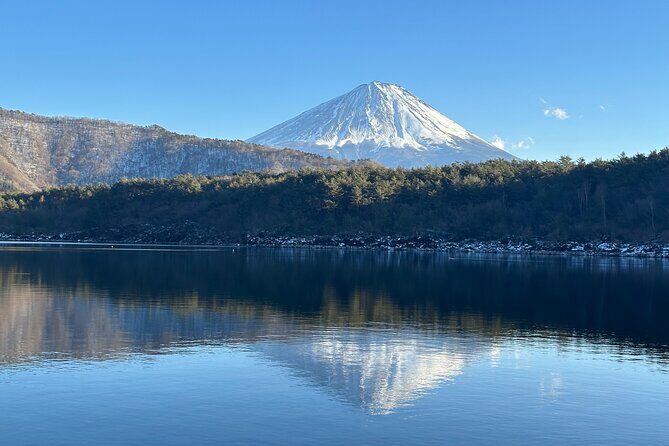
After Kawaguchiko, you’ll head to Saiko Iyashi no Sato Nenba, also called Nenba Village. This is a traditional thatched-roof village on the northwest shore of Lake Saiko, and it’s especially appealing because it feels like you stepped into another tempo.
You’ll have about 30 minutes, and the “not included” status here likely applies to the village entry ticket block. (The itinerary notes that it’s not included, unlike some of the other stops that are explicitly free.)
This stop also gives you a different visual feel than the big-photo spots. Instead of a single “wow” angle, you get a small slice of local cultural architecture and a quieter pace—helpful if you’re traveling with kids or anyone who gets tired of nonstop sightseeing.
Mt. Fuji 5th Station: worth it if you can handle the extra ticket
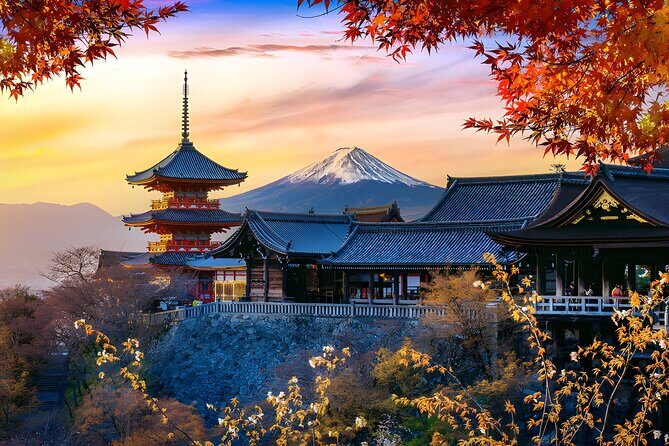
The tour includes a stop at Mt. Fuji 5th Station, located at about 2,300 meters above sea level. It’s popular with both climbers and tourists, and you’ll find shops, food, and plenty of viewing.
You’ll get about one hour, but the admission fee for the Fuji-Subaru line 5th Station is ¥2,100 per booking and is not included.
This is one of those stops where your comfort matters. Being at higher elevation can feel different, and 5th Station is often crowded in peak seasons. Since the tour gives you only about an hour, you’ll want to decide before you arrive how much you want to shop and how much you want to just look.
If Fuji is cloudy, the 5th Station still delivers a big “you are here” sense of place. If visibility is clear, it can be one of the strongest moments of the whole day.
Kitaguchi Hongu Fuji Sengen Jinja: a shrine tied to volcanoes
Then you’ll visit Kitaguchi Hongu Fuji Sengen Jinja, one of about 1,300 Asama shrines in Japan dedicated to the deity of volcanoes, with special focus on Mount Fuji. This shrine is part of the Mount Fuji UNESCO World Cultural Heritage site.
You’ll have about one hour, and admission is free. This stop is valuable because it connects the scenery to the cultural reason Fuji matters. It’s not just a mountain you photograph. It’s also a sacred focus tied to belief, tradition, and the idea of volcanoes.
If you like history and religion sites but don’t want a full museum day, this is a strong middle ground.
Lake Yamanaka: the largest, highest, and often a little calmer
Next is Lake Yamanaka (Lake Yamanakako), the largest and highest of the Fuji Five Lakes, at around 980 meters above sea level. It’s a classic viewing area, and the lake also supports activities like boating, cycling, and hot springs.
You’ll have about 30 minutes and admission is free. This short time makes sense because Yamanaka is another “look-and-reset” stop. It breaks up the day so you’re not just moving from one crowded photo point to another.
If you want a calmer feel at the end of the sightseeing loop, this can be a good choice in the itinerary.
Gotemba Premium Outlets: turn the ride home into shopping time
To finish strong, the tour includes Gotemba Premium Outlets, about one hour. It’s Japan’s largest outlet mall, with over 200 stores, and it’s known for tax-free shopping and discounts.
Admission is listed as free since it’s a shopping mall stop. This part isn’t “Fuji culture,” but it does add practical value: it gives you a place to buy snacks, souvenirs, and clothing you might actually use back home.
This is also a good option for mixed groups. If someone in your party loves Fuji but another person wants something more flexible, a mall stop gives them breathing room.
Weather reality check: when Fuji hides, you still get value
Even with a great route, Fuji visibility depends on atmospheric conditions. One thing that makes this tour practical is that it doesn’t rely on a single miracle photo.
You’ll see multiple Fuji-connected stops: ponds at Oshino Hakkai, a shrine-pagoda viewpoint at Chureito, lake views at Kawaguchiko and Yamanakako, and a cultural shrine at Kitaguchi Hongu. So if clouds or haze soften the mountain, you’re still left with meaningful sights rather than feeling like the day was wasted.
My advice: treat Fuji as the bonus. Plan to enjoy the places around it too.
Who this private Fuji tour is perfect for
This is a great fit if you want:
- A private, small-group day (up to 3) without negotiating trains or buses
- English-speaking help during the drive between stops
- A route built for a mix of culture and viewpoints
- Flexibility to adjust timing and possibly add stops like Shiraito Falls or Fuji Safari Park (depending on your interests)
It also suits families and small groups because the day is broken into manageable chunks, with plenty of stops that don’t require long hikes.
If you’re traveling alone and budget is tight, you might compare this against group bus tours. But if you care about comfort, clarity, and pacing, the private setup often feels like the smarter use of time.
Should you book this private Mt. Fuji day trip?
I’d book it if you want a smooth, driver-led Fuji day with enough variety to stay interesting even if the weather isn’t perfect. The price becomes more reasonable when you share the group cost, and the included perks like the air-conditioned vehicle and bottled water are the kind of small things you appreciate after a long day on the road.
I’d be cautious if you’re hoping for a low-cost trip with no extra spending. The ropeway and 5th Station fees add up, and you should plan for those costs upfront.
Overall, this tour makes Mt. Fuji feel like a real day trip rather than a logistics project.
FAQ
How long is the Mt. Fuji day trip from Tokyo?
It runs for about 10 hours, including hotel pickup and drop-off.
What is the price for this private tour?
The price is $332.60 per group, for up to 3 people.
What does the tour include?
Included are bottled water, an air-conditioned vehicle, a private English-speaking driver, and fuel/parking/toll fees.
Are the entrance fees included for everything?
No. Some fees are not included, including the Mt. Fuji 5th Station fee and the Mt. Fuji Panoramic Ropeway (Kachi-Kachi) ticket.
How much is the Mt. Fuji 5th Station fee?
The 5th Station fee listed is ¥2,100 per booking and it is not included.
How much is the ropeway ticket?
The Mount Fuji Panoramic Ropeway (Kachi-Kachi) costs ¥1,000 per person and is not included.
Is hotel pickup included?
Yes. Pickup is offered from any hotel in Tokyo, and the tour includes drop-off as well.
Does it cost extra for airport pickup or drop-off?
Yes. Pickup or drop-off at Haneda, Narita, or Yokohama costs an extra ¥10,000 per booking.
Is the itinerary fixed?
No. There is a custom itinerary, and you can adjust the schedule and stops to match your interests.
Is it a private tour?
Yes. It is a private tour/activity, and only your group participates.
More Tour Reviews in Tokyo






Your Own Wheels: More Private Driver Days
The Fuji Shortlist: Other Days Out to the Mountain

Fresh reviews from around Tokyo






Mt Fuji Day Trips, compared.
 ★ 4.0Mt Fuji & Hakone Cruise, Drum Show Bullet Train 1 Day from TokyoFrom $1497,413 reviews
 ★ 4.4Tokyo Mt Fuji 5th St & Hakone Cruise Bus Tour w/Bullet TrainFrom $1545,024 reviews
 ★ 4.5From Tokyo: Mount Fuji Full-Day Sightseeing TripFrom $684,970 reviews
 ★ 4.7Mt. Fuji Tour, Hakone Ropeway, Owakudani, Lake AshiFrom $544,002 reviews
 ★ 5.0Private Tour to Mt. Fuji and Hakone (Fully Licenced Operator)From $4971,910 reviews
 ★ 4.9Mount Fuji Full-Day Private Tour from Tokyo (Customizable)From $3931,470 reviews
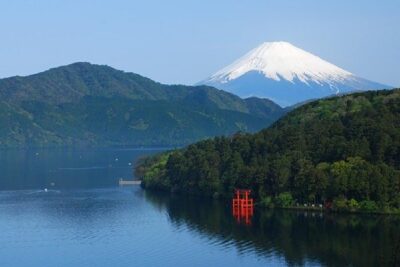 ★ 4.0Mt Fuji & Hakone Cruise, Drum Show Bus 1 Day from TokyoFrom $1221,287 reviews
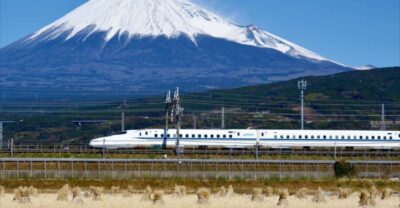 ★ 4.2From Tokyo: Mt. Fuji & Hakone Tour w/ Return by Bullet TrainFrom $1171,278 reviews
Browse the lists this tour appears in