
Reviewed · PRIVATE
Perfect Start for your Japan Trip – Private Tour in Tokyo
Tokyo makes more sense with context.
This private walking tour in Tokyo is built for momentum: you start at Meiji Jingu Ichino Torii, then work your way through Harajuku’s fashion streets to Shibuya Crossing and the neon streets of Shinjuku. I like that the route mixes major landmarks with smaller stops like Miyashita Park for a breather and photos, plus classic street-food energy without turning the whole day into a theme park. One thing to consider: it’s a lot of walking, and it’s not suitable for wheelchair users or people with mobility impairments.
What I like most is the guide’s tone and flexibility.
Jero is specifically praised for warm, professional guidance and for tailoring the tour to your interests, so you’re not just moving from sign to sign. I also like the practical extras—tea and snacks, plus photos at famous spots—so you’re not constantly hunting for basic comfort between neighborhoods. The one drawback? Food and drinks aren’t included, so if you want to eat as you go, keep some extra cash and expect costs to add up.
In This Review
- Key highlights worth marking on your Tokyo map
- Starting at Meiji Jingu Ichino Torii: a calm kickoff in a loud city
- Harajuku on foot: Takeshita Street, Cat Street, and what style says here
- Shibuya Crossing with a Miyashita Park breather
- Shinjuku’s neon side: Omoide Yokocho, Godzilla, and Kubukichō Tower
- The rest of your route: train transitions and time balance
- What’s included (and what you should plan to pay for)
- The guide factor: why a tailored private tour feels different
- Getting the meeting point right: Meiji Jingu entrance tips
- Who this tour is best for
- Should you book the Perfect Start for your Japan Trip in Tokyo?
- FAQ
- How long is the private tour?
- Where does the tour start?
- What neighborhoods are included?
- Is food included?
- What’s included besides the walking tour?
- Is the tour wheelchair accessible?
- What languages is the guide?
Key highlights worth marking on your Tokyo map
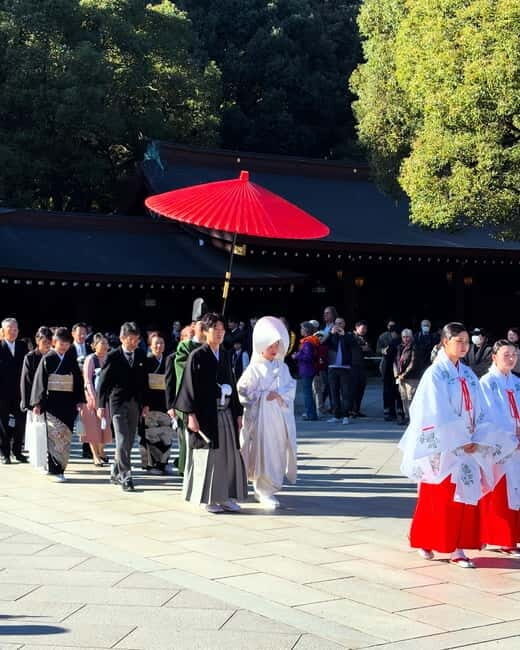
- Meiji Jingu Shrine: start at the iconic torii and learn a few traditional Shinto rituals along the way
- Takeshita Street + Cat Street: street-style shopping and people-watching in Harajuku
- Miyashita Park pause: a practical coffee stop before you hit the huge Shibuya Crossing
- Shibuya Crossing: time it right and walk with the crowd instead of standing outside it
- Shinjuku neon spots: Omoide Yokocho, Godzilla, and Kubukichō Tower for that late-night feel
- Private pacing: your guide can adjust and answer questions without slowing everyone down
More private options with your own guide
- Tokyo 6hr Private Tour with Government-Licensed Guide★ 5.0 · 3,902 reviews
- Private Tour to Mt. Fuji and Hakone (Fully Licenced Operator)★ 5.0 · 1,910 reviews
- Tokyo Customized Private Tour (Must See Places in 1 Day)★ 5.0 · 1,499 reviews
Starting at Meiji Jingu Ichino Torii: a calm kickoff in a loud city
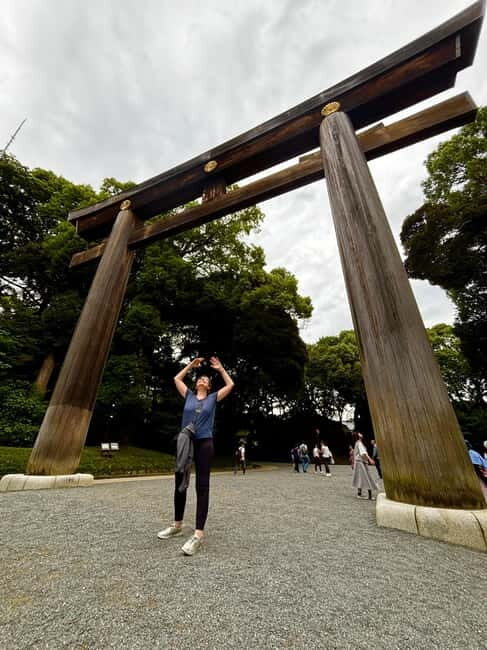
Tokyo can feel like a nonstop stream. That’s exactly why I like tours that start with a reset, and this one does. You begin at Meiji Jingu Ichino Torii, the big entry point that sets the mood fast: a shrine approach is quiet in a way the city usually isn’t. Even if you’ve only seen shrines in photos, walking in and learning what you’re looking at helps your brain switch gears.
Inside Meiji Jingu, you get about 50 minutes of guided time around the shrine area and the main building. This matters because shrines aren’t just pretty architecture. You’ll get context on Shinto culture and a few traditional rituals, which turns the visit from sightseeing into understanding. You don’t need to memorize details; you just need enough background to notice what’s happening when you’re there.
Practical note: the tour asks you to wear comfortable shoes and bring water and an umbrella. That’s not fluff. You’ll spend time outside and walking between neighborhoods later, so starting with a shrine doesn’t mean the day becomes easy.
Harajuku on foot: Takeshita Street, Cat Street, and what style says here
After the shrine calm, the tour moves you to Harajuku, and the contrast is the whole point. First comes Takeshita Street, where the pace jumps immediately. You’ll get around 20 minutes there with a guide, which is just enough time to orient yourself, see the range of fashion and snacks, and pick a couple things to focus on instead of getting lost.
Then you shift into more time in Harajuku—about 40 minutes—including what’s often called the street-style wonderland vibe. The guide helps you look at Harajuku like a culture, not just a shopping corridor. You’ll pass by spots for photos, including Tokyu Plaza and Cat Street, so you’re not only “walking through.” You’re building a visual story of the area.
What makes this section valuable is the mix of structure and freedom:
- Your guide helps you spot key lanes and photo-friendly points.
- You still get time to browse and react to what you like.
Budget tip: the tour includes tea and snacks, but it says food and drinks aren’t included. Harajuku is where you’ll probably want street food or drinks. Keep some cash on hand so you can follow your curiosity without stopping your day to calculate transactions.
Shibuya Crossing with a Miyashita Park breather
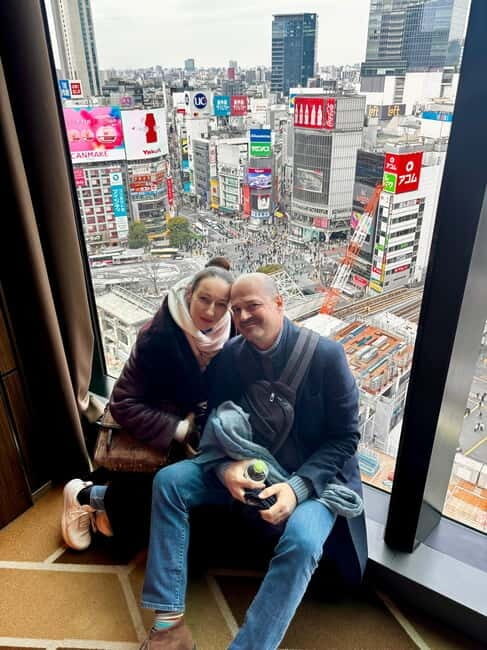
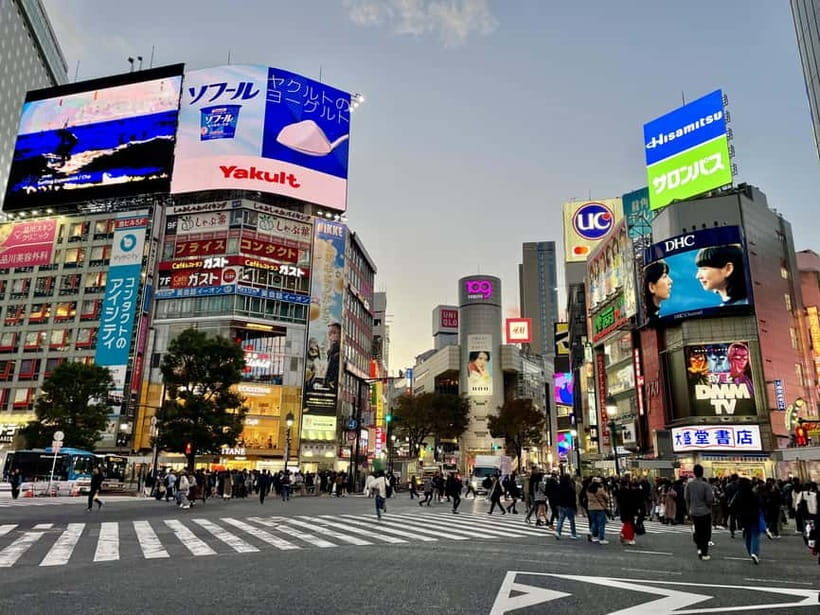
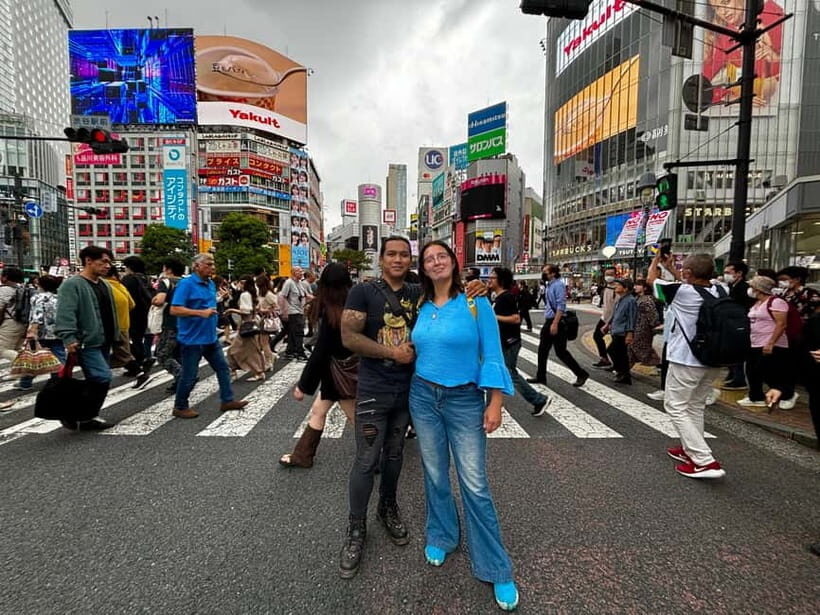
Shibuya is the moment Tokyo often feels most “Tokyo.” You’ll have about 40 minutes focused on Shibuya Crossing, but the smarter part is the lead-in: there’s a brief stop at Miyashita Park before the main crossing.
Why that matters: Shibuya Crossing can be sensory overload. Miyashita Park gives you a chance to regroup—grab a coffee or just take in the rooftop atmosphere—so when you step toward the crossing, you’re not already fried from the day.
From there, you’ll experience the famous intersection in motion. Instead of treating it like a photo-only stop, you get guided help on how to navigate it and what to notice while you’re there. That’s a small thing, but it changes how the moment lands. You’re not just waiting for light signals—you’re watching a whole system of pedestrians and timing in real life.
If you’re a first-time visitor, this is also where your brain starts mapping Tokyo distances. After walking in and around Shibuya with a guide, the city stops feeling like random blocks and starts feeling like neighborhoods with personality.
Shinjuku’s neon side: Omoide Yokocho, Godzilla, and Kubukichō Tower
Next comes Shinjuku, and this is where the tour leans harder into atmosphere. You take the train over, then spend about 50 minutes exploring key stops.
One highlight is Omoide Yokocho, an old-style food alley that feels like a time capsule in the middle of skyscrapers. Even if you don’t eat there immediately, the setting tells you what kind of Tokyo you’re in—smaller lanes, older vibes, and a social street energy that doesn’t rely on big signage.
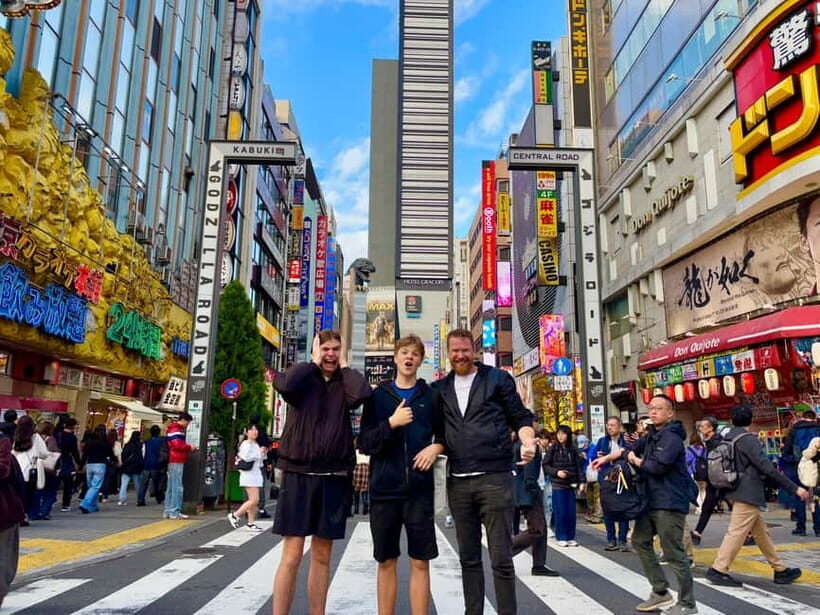
Then there’s Godzilla—yes, that famous icon. It’s a fun anchor point because it signals how pop culture and daily life overlap here. You can snap photos and move on, but it also helps you understand why Shinjuku is such a magnet for visitors: it’s spectacle plus everyday movement.
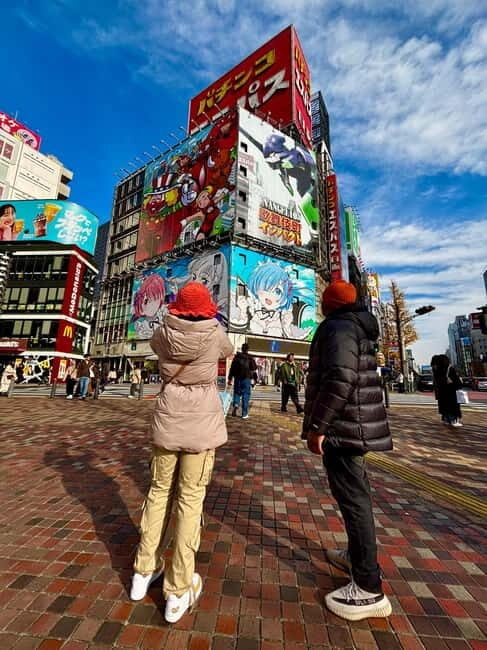
Finally, you finish this Shinjuku stretch at Kubukichō Tower in Shinjuku Kabukichō to see that classic “Neon Tokyo” effect. This is the kind of stop that works best when you slow down for a minute. Look up at the lighting, scan the street activity, and let the area register as more than a backdrop.
Photo support is included in the tour, which is handy here. The lighting in Kabukichō is intense, and it’s easy to miss shots if you’re juggling a camera and a crowd.





The rest of your route: train transitions and time balance
This tour is designed as a 4-hour private walking experience, not a half-day bus tour. That means you get a human pace: you walk enough to feel the neighborhoods, but you also get train segments timed into the plan.
The itinerary includes time on trains (including a transfer to Shinjuku and another train segment later). Those transitions are important because Tokyo distances are real. Without them, you waste energy cross-town instead of seeing multiple districts.
Also, pay attention to the day’s pacing. The tour hits the big three neighborhoods you expect—Harajuku, Shibuya, Shinjuku—but it doesn’t try to overstuff every minute with shopping stops. The guide’s time blocks include guided walking plus time for photo moments and a short pause at Miyashita Park. It’s built to keep the tour fun rather than exhausting.
One more note: the plan includes an Asakusa visit with guided time (~1 hour) after Shinjuku. If Asakusa is on your list, this is a bonus. If you were expecting only the youth-fashion and neon side, treat Asakusa as a change of scenery at the end—something calmer and very different.
What’s included (and what you should plan to pay for)
For $145 per person, you’re not just buying access to landmarks. You’re paying for three kinds of value that add up in Tokyo:
- Local guidance and explanation: culture, rituals, and what you’re seeing through Harajuku and Shibuya
- Comfort support: tea and snacks are included
- Time-saving help: photo opportunities at famous spots and transportation fee to Shinjuku
Not included is the biggest practical cost for most people: food and drinks. Harajuku and Shibuya are where you’ll want to snack. Since the tour already provides tea and snacks, you’re usually not forced into a pricey restaurant plan. You can do small bites as you go.
The tour also asks you to bring: cash, umbrella, water, a camera, and comfortable shoes. That combo is a good hint that you should plan for weather swings and street-level spending.
The guide factor: why a tailored private tour feels different
A private tour only works if your guide makes it feel personal. This one leans heavily on the guide’s presence. Jero is highlighted for warm, professional demeanor and for deep enthusiasm for Tokyo—so the tour doesn’t feel like a script.
What’s especially useful is the tailoring. If your interests skew more toward culture, pop-life, shopping streets, or food alleys, the tour can adjust. You’re also encouraged to ask questions, and the guidance style is described as energetic—stories about everyday things can suddenly become the most memorable part of the day.
That matters because Tokyo can be confusing even when it looks simple. A guide who can connect dots—what a ritual means, why a street looks the way it does, what a neighborhood is known for—makes your photos feel more meaningful later.
Getting the meeting point right: Meiji Jingu entrance tips
You meet next to the big entry gate on the left side at Meiji Jingu (Meiji Jingu Ichino Torii). The instructions also say that if you arrive via the JR Yamanote Line, take the west exit.
This sounds minor, but for Tokyo, it’s worth being picky. Train stations have multiple exits, and a 10-minute mismatch can throw off the whole day. Aim to arrive early so you’re not stressed before the tour begins. If you’re carrying an umbrella, you’ll be glad you started calm.
Who this tour is best for
This private walk is a strong fit if:
- You want a first Tokyo trip and you want the biggest-name neighborhoods without the confusion
- You like contrast: shrine calm → Harajuku street style → Shibuya energy → Shinjuku neon
- You enjoy guided storytelling more than solo wandering
- You want photos taken at key landmarks and don’t want to fight for the best angle alone
It’s less ideal if:
- You need wheelchair access or have mobility limits, since it’s a walking-focused plan
- You’re trying to do Tokyo on a tight food budget, because snacks are included but street eating is still up to you
Should you book the Perfect Start for your Japan Trip in Tokyo?
If your goal is a smart, efficient, start-to-your-trip orientation, I’d lean yes—especially if you value a guide who personalizes the day. The value isn’t only that you see Harajuku, Shibuya, and Shinjuku. It’s that the tour adds context at Meiji Jingu, helps you navigate Shibuya Crossing, and brings you to Shinjuku spots like Omoide Yokocho and Kubukichō Tower for that night-light feeling.
Book it if you want:
- A private pace
- Culture + pop culture in one route
- Built-in comfort (tea and snacks) and photo help
Skip it if you want a mostly do-your-own-thing schedule, or if you can’t manage a walking-heavy itinerary. In that case, you’d probably prefer a shorter or more transit-first plan.
FAQ
How long is the private tour?
The tour duration is 4 hours.
Where does the tour start?
It starts at Meiji Jingu Ichino Torii. You’ll meet your guide next to the big entry gate on the left side (and if you come by JR Yamanote Line, use the west exit).
What neighborhoods are included?
The tour focuses on Harajuku, Shibuya, and Shinjuku, and it also includes an Asakusa visit later in the itinerary.
Is food included?
Tea and snacks are included, but food and drinks are not included.
What’s included besides the walking tour?
In addition to guidance, you’ll get tea and snacks, transportation fee to Shinjuku, and pictures with famous landmarks.
Is the tour wheelchair accessible?
No. It is not suitable for people with mobility impairments or wheelchair users.
What languages is the guide?
The live guide offers English and German.
Just Your Group: Private Options


More Tours in Tokyo

More Tour Reviews in Tokyo



Fresh reviews from around Tokyo






Private, compared.
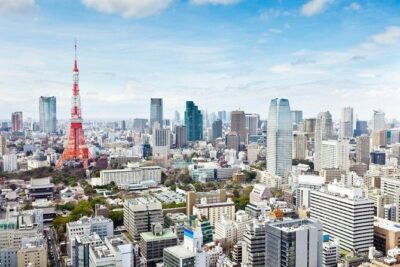 ★ 5.0Tokyo 6hr Private Tour with Government-Licensed GuideFrom $1553,902 reviews
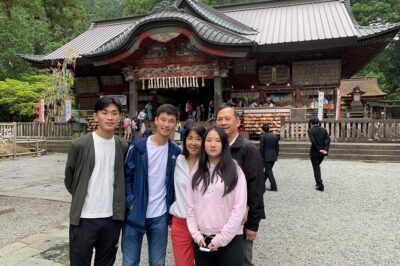 ★ 5.0Private Tour to Mt. Fuji and Hakone (Fully Licenced Operator)From $4971,910 reviews
 ★ 5.0Tokyo Customized Private Tour (Must See Places in 1 Day)From $1451,499 reviews
 ★ 4.9Mount Fuji Full-Day Private Tour from Tokyo (Customizable)From $3931,470 reviews
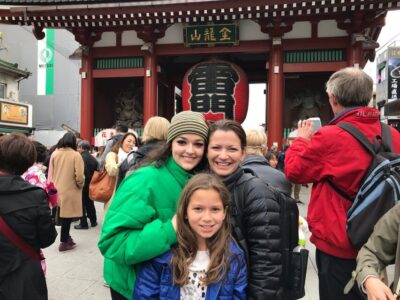 ★ 4.8Private City Highlights Tour with Local GuideFrom $1061,433 reviews
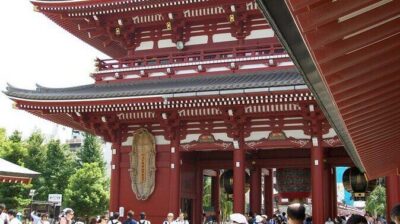 ★ 5.0Private Custom Tour: Tokyo in a DayFrom $1591,432 reviews
 ★ 5.0Tokyo 4hr Private Tour with Government-Licensed GuideFrom $1091,394 reviews
 ★ 5.0Tokyo Customized Private Tour: See Top Attractions in 1 DayFrom $1451,351 reviews