
Reviewed · MT FUJI DAY TRIPS
Mt Fuji Private Day Tour from Tokyo with English Speaking Driver
Mt Fuji day trips feel like magic, but planning matters. This one is built for comfort and control: a private charter with an English-speaking driver, hotel pickup and drop-off, and a routing that hits the big Fuji-view areas without you wrestling trains or buses.
Two things I really like here are door-to-door pickup/drop-off and the way your driver can steer the day based on what you can realistically see. In previous trips, guides such as Zubi and Hayat were praised for being professional, flexible, and for recommending strong Hakone alternatives when weather didn’t cooperate.
The main drawback to keep in mind is that Mt Fuji visibility depends on conditions. If clouds roll in, or if road access changes, you may not get the exact “Fuji postcard” view or the same access to higher areas like the Subaru Line. Also, some language or cultural-depth expectations can vary from driver to driver, even if the English is solid (one guide named Muhammad was noted as helpful, but the experience can still feel more like a driver-plus-tips day than a deep cultural tour).
In This Review
- Key takeaways before you go
- Door-to-door logistics from Tokyo hotel to Fuji viewpoints
- How the route hits Fuji Country without feeling rushed
- Mount Fuji viewing and the Hakone pivot when weather shifts
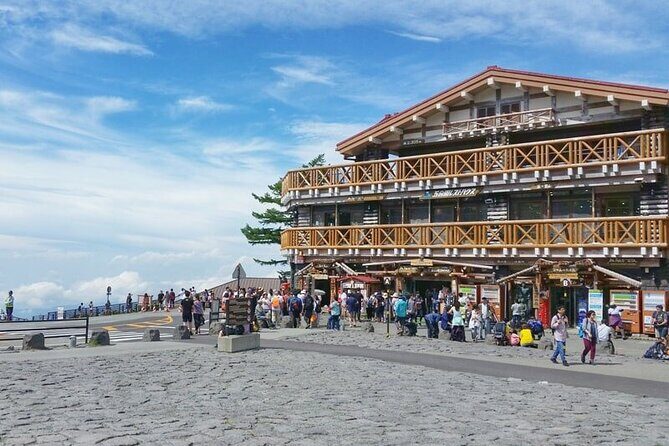
- Mt. Fuji Subaru Line 5th Station: close to the action, with possible extra steps
- Lake Kawaguchi and Oishi Park: where Fuji meets reflections
- Arakurayama Sengen Park, Chureito Pagoda area, Oshino Hakkai, and the shrine stop
- Arakurayama Sengen Park
- Oshino Hakkai
- Kitaguchi Hongu Fuji Sengen Jinja Shrine
- Saiko Iyashi no Sato Nenba: a timed add-on if you have room
- Price and value: is $499 per group fair?
- Getting the most out of a private Fuji day (without wasting time)
- Should you book this Mt. Fuji private day tour?
- FAQ
- How long is the Mt Fuji private day tour from Tokyo?
- What is the price and group size for the tour?
- Is hotel pickup and drop-off included?
- Does the guide speak English?
- Is Mount Fuji viewing guaranteed?
- Can the tour reach the Mt. Fuji Subaru Line 5th Station?
- Are entrance fees included for all stops?
- What is the cancellation policy?
Key takeaways before you go
- Private charter means you set the pace: fewer crowd-pressure moments and more time to stop where the view is best.
- Hotel pickup saves real time: getting out of central Tokyo smoothly is half the battle.
- Weather can reshape the plan: guides use alternatives around Hakone and nearby Fuji areas when visibility changes.
- 5th Station access may require extra time or fees: road rules shift by season and conditions.
- You’ll mostly pay for add-ons, not base sights: many stops are marked as free entry, while optional experiences cost extra.
Other routes to the mountain, compared
- Mt Fuji & Hakone Cruise, Drum Show Bullet Train 1 Day from Tokyo★ 4.0 · 7,413 reviews
- Tokyo Mt Fuji 5th St & Hakone Cruise Bus Tour w/Bullet Train★ 4.4 · 5,024 reviews
- From Tokyo: Mount Fuji Full-Day Sightseeing Trip★ 4.5 · 4,970 reviews
Door-to-door logistics from Tokyo hotel to Fuji viewpoints
This is the kind of day trip that starts with less stress and ends with more photos you actually want. You get an air-conditioned private vehicle and pickup/drop-off from your Tokyo hotel, so you’re not timing transfers, interpreting signs, or making peace with crowded lines for connections.
The price is set per group (up to 5 people) at $499, which is worth thinking about in “what am I saving?” terms. If you’re traveling with 3–5 people, the private setup can work out like a fair splurge instead of a solo-tour luxury. If you’re solo or as a couple, it’s still convenient, but the math shifts more toward paying for simplicity.
Timing-wise, the trip runs about 10 hours. That’s long enough to see multiple Fuji regions in one day, but it’s not a full-on multi-day exploration. The best mindset: treat it like a highlights sampler with smart stop time, not a slow wander.
How the route hits Fuji Country without feeling rushed
The itinerary strings together the classic Fuji Five Lakes area plus a couple of iconic viewpoints and cultural stops. The value is in the sequencing: you’re moving from the Fuji-view zones to lake-side perspective spots, then toward viewpoint/photo stops and shrine areas around Fujiyoshida and nearby.
Here’s the flow you can expect:
- Start with Mount Fuji viewing locations and potentially Hakone in the same day when conditions allow.
- Head to the Mt. Fuji Subaru Line 5th Station area if access works for the day.
- Work through Lake Kawaguchi viewpoints (including bridge and park framing).
- Continue to scenic parks and photo spots like Arakurayama Sengen Park (home of the Chureito Pagoda).
- Finish with Oshino Hakkai ponds and a shrine stop.
- If there’s time, add Saiko Iyashi no Sato Nenba (a traditional village area).
That combination is practical because it gives you multiple “Fuji styles”: distant panorama views, lakeside compositions, and a few cultural landmarks that break up the photo loop.
Mount Fuji viewing and the Hakone pivot when weather shifts
This tour is sold with the idea that if the weather allows it, you’ll get strong views of Mount Fuji. That matters, because Fuji is famous for showing up late, leaving early, and occasionally disappearing into cloud cover without warning.
The best part of having a private English-speaking guide is the adaptation. When clouds or road conditions block your first plan, your driver can redirect you to other viewpoints—often around the Hakone area. In particular, guides like Zubi and Hayat were specifically praised for making smart alternatives on days when Mt Fuji couldn’t be seen well.
What you should do to maximize your odds:
- Bring layers and something warm for wind. Even when Tokyo feels mild, Fuji-country air can feel sharper.
- Keep your expectations flexible. You’re not just chasing a mountain; you’re chasing the moments around it—light, lake reflections, and clear viewpoints.
Mt. Fuji Subaru Line 5th Station: close to the action, with possible extra steps
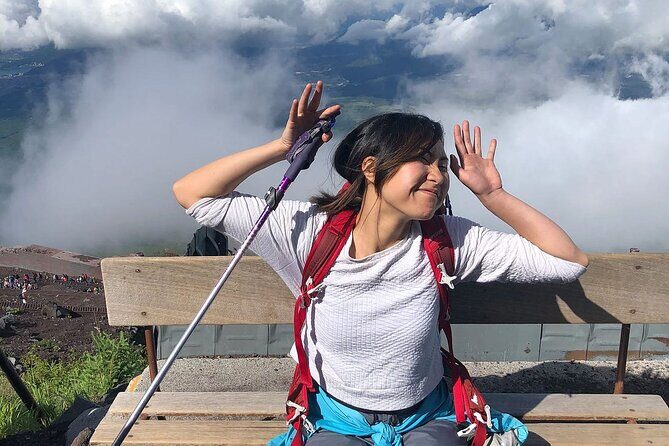
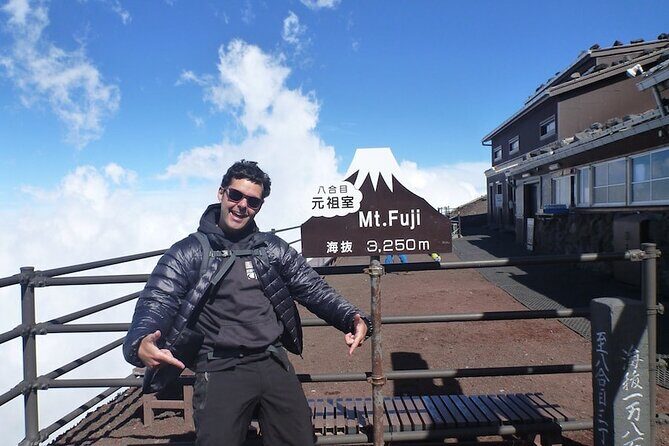
The 5th Station is the “go higher if you can” stop. It’s described as the last point you can reach by car, but access depends on weather conditions. There’s also a seasonal caveat: during hiking season, the tour notes you may not be able to go directly by car, and you might have to use a shuttle with an added cost (the information given points to a 2,100 yen fee).
This is one of those stops that can be spectacular or simply useful, depending on visibility:
- If the skies are clear, it’s a high-altitude perspective and a real wow factor.
- If clouds are present, you still get the “this is Mt Fuji country” feeling, but you might not see the full sweep.
Important practical note: plan for time variability. Even when you’re expecting an hour, conditions can tighten or loosen your schedule. A private driver helps here, because they can adjust the timing of later stops if you lose time up top.
More door-to-door days with your own driver

Lake Kawaguchi and Oishi Park: where Fuji meets reflections
Once you’re in the Lake Kawaguchi region, the day starts to feel like a set of carefully chosen postcards—except you’re doing it in real life, with breathing room to look, pause, and reposition.
Two key stops here are:
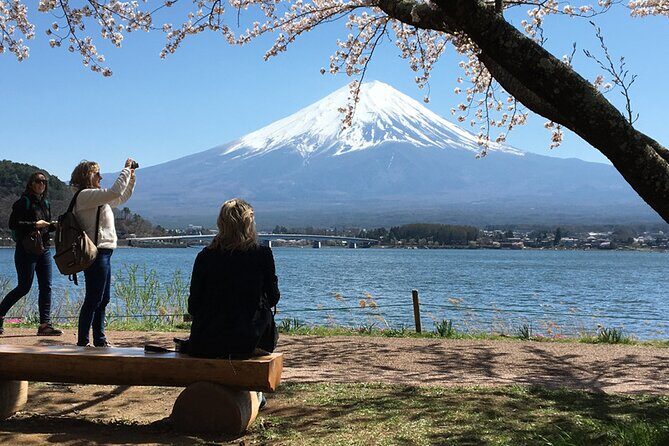
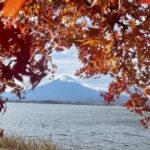
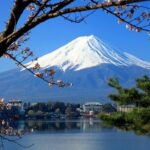
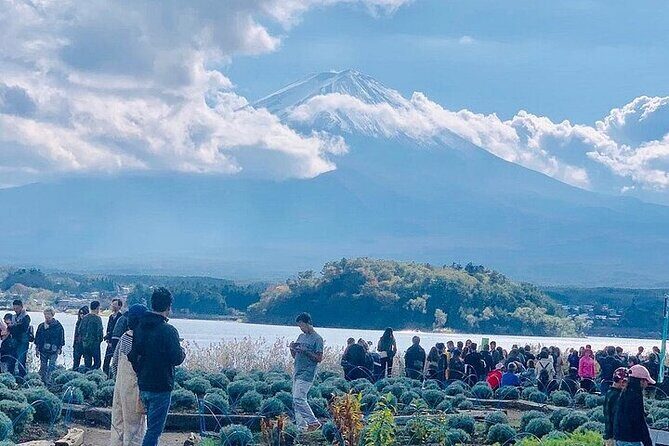
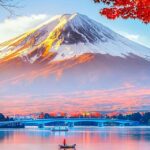
- Lake Kawaguchi Ohashi Bridge: a classic framing point. The idea is to catch views of the lake with Mount Fuji in the background when visibility cooperates.
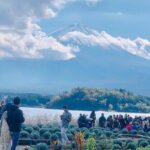
- Oishi Park: a park area designed for lake-and-mountain views. It’s also seasonal, with flowers blooming along the promenade depending on the time of year.
The strength of this portion of the route is variety in composition. Bridges and parks naturally give you different angles without needing complicated planning. You can also use these stops as a weather gauge. If Fuji is visible here, chances are good your other viewpoints will also work better.
One realistic caveat: reflection views can be weather-sensitive. If the wind is up or clouds move fast, you’ll still see the lake and the scenery, but you might not get the mirror-perfect moments.
Arakurayama Sengen Park, Chureito Pagoda area, Oshino Hakkai, and the shrine stop
This is where your day adds “Japan texture” rather than only mountain-lake views.
Arakurayama Sengen Park
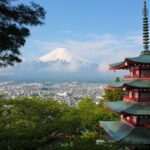
This park area is famous for the Chureito Pagoda, a five-storied pagoda overlooking Fujiyoshida. It’s a photo magnet, and that’s exactly why it’s worth putting into a private-day schedule: your driver can help you time arrival so you’re not stuck in the thickest crush.
Also, the park is described as having views from a mountainside setting. Even if Fuji is partly hidden, the pagoda-and-view dynamic often still delivers.
Oshino Hakkai
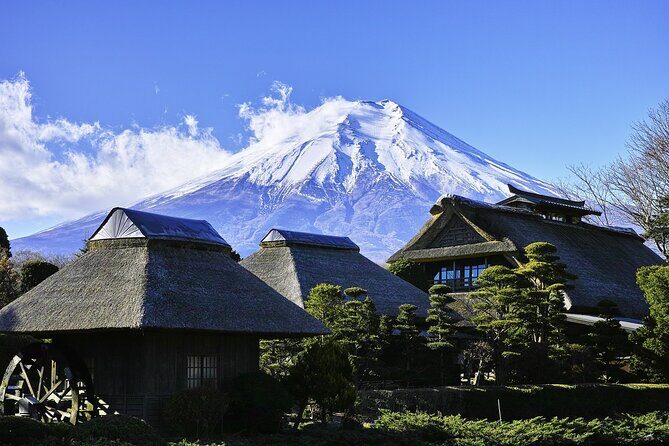
Then you hit Oshino Hakkai, known for eight clear ponds and traditional thatched-roof buildings. This stop adds a calmer, walking-friendly break. It’s also a useful change of pace after parks and viewpoint climbs.
You get that classic “Fuji springs and village atmosphere” vibe—especially if the weather isn’t perfect for distant mountain shots.
Kitaguchi Hongu Fuji Sengen Jinja Shrine
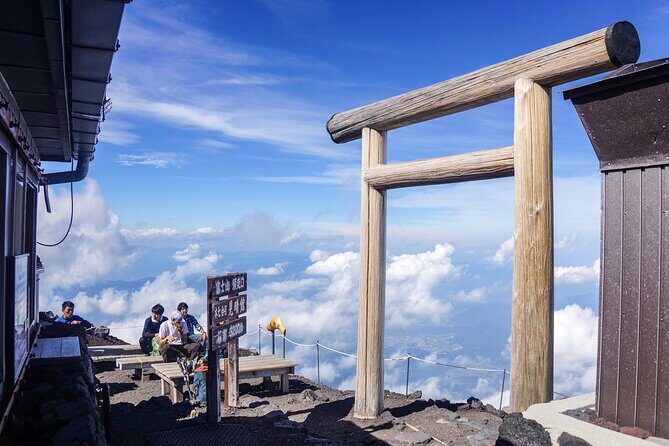
The day also includes a shrine stop: Kitaguchi Hongu Fuji Sengen Jinja (also known as Fujiyoshida Sengen Shrine in the description). This isn’t just a quick photo corner. It gives the day a spiritual and historical flavor tied to Fuji worship traditions, which helps the whole day feel more connected instead of like a moving photo checklist.
Saiko Iyashi no Sato Nenba: a timed add-on if you have room
If there’s time during the roughly 10-hour schedule, your itinerary notes an optional stop: Saiko Iyashi no Sato Nenba, a traditional village area on the western shores of Lake Saiko.
This is not included in the base costs, and it’s listed as an extra paid activity (500 yen per person). I like optional add-ons on private days because they let you match the day to your group’s mood—history and traditional village vibes if you want them, or extra buffer time if you’d rather prioritize views.
Price and value: is $499 per group fair?
Let’s talk money like adults.
You pay $499 per group up to 5 for a 10-hour private day with hotel pickup/drop-off, an English-speaking guide, and transportation including highway tolls and fuel.
What that means in practice:
- You’re paying for time and logistics solved. The trip avoids public-transport stress and reduces connection risk.
- You’re also paying for route control. Your driver can adjust for weather and accessibility on the fly.
- Entry fees are mostly not your problem. Most stops are marked as free admission in the itinerary details, while the major paid extras are specifically called out (like Subaru Line access or optional ropeway/village activities).
Where the cost can feel less “worth it”:
- If you’re traveling only one or two people, you’re paying the private cost without spreading it across a group.
- If you want a very deep cultural lesson at every stop, your experience may vary by driver style. Even when English is available, some guides lean more toward practical navigation and viewpoint tips than big historical narratives.
Getting the most out of a private Fuji day (without wasting time)
Here are the small things that make the biggest difference on a day like this:
Plan for Fuji weather reality. The tour is framed around what weather allows. Don’t treat the mountain view as guaranteed. Treat it as a bonus.
Budget for the add-ons you might skip. Not everything is free. The info you have points to extra costs for:
- Subaru Line/shuttle access around the 5th Station area (not included)
- Ropeway cruise if you choose it (listed at 500 yen per person)
- Saiko Iyashi no Sato Nenba entry (500 yen per person)
Wear for walking and stairs. Parks and viewpoint areas can involve uneven paths and steps. Build comfort into your outfit choices.
Confirm pickup and drop-off points clearly. One issue you want to avoid is a driver arriving at the wrong spot or dropping you somewhere inconvenient. With a private vehicle, you’re not at the mercy of bus stops—so you should make the exact pickup entrance easy.
Should you book this Mt. Fuji private day tour?
Book it if:
- You want hotel pickup/drop-off and a simple day plan out of Tokyo.
- Your group includes people who will value comfort and convenience over DIY transit.
- You care about seeing multiple top Fuji-area locations in one day, including Lake Kawaguchi and Oshino Hakkai.
- You’re flexible about weather and okay with the route adapting, including possible Hakone alternatives.
Skip it (or choose a different style) if:
- You want a highly scripted, deep cultural tour with heavy interpretation at every stop. This can be more “driver who helps you see” than “lecturer on Fuji religion and history.”
- You’re aiming for the 5th Station no matter what. Access can be affected by season and conditions, and you may need shuttle time and extra fees.
If your goal is a smooth, scenic day with minimal planning headaches, this private format is a strong fit—especially for small groups who want Fuji Country without the transit homework.
FAQ
How long is the Mt Fuji private day tour from Tokyo?
The tour runs for about 10 hours (approx.).
What is the price and group size for the tour?
It is $499.00 per group, up to 5 people.
Is hotel pickup and drop-off included?
Yes. Pickup and drop-off from your Tokyo hotel are included.
Does the guide speak English?
Yes. The tour includes an English-speaking guide.
Is Mount Fuji viewing guaranteed?
No. The plan depends on weather conditions. If visibility is limited, the guide may recommend alternative viewpoints.
Can the tour reach the Mt. Fuji Subaru Line 5th Station?
It aims to, but access depends on weather conditions. During hiking season, the tour notes that going to the 5th Station may require a shuttle with an additional fee.
Are entrance fees included for all stops?
Many stops are marked as free admission, but some activities and areas are not included, such as the 5th Station-related fee and optional experiences like the ropeway cruise and Saiko Iyashi no Sato Nenba.
What is the cancellation policy?
Free cancellation is available. You can cancel up to 24 hours in advance for a full refund. Canceling less than 24 hours before the start time is not refundable.
More Tour Reviews in Tokyo






Your Own Wheels: More Private Driver Days
The Fuji Shortlist: Other Days Out to the Mountain

Fresh reviews from around Tokyo






Mt Fuji Day Trips, compared.
 ★ 4.0Mt Fuji & Hakone Cruise, Drum Show Bullet Train 1 Day from TokyoFrom $1497,413 reviews
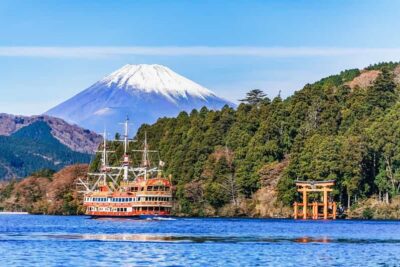 ★ 4.4Tokyo Mt Fuji 5th St & Hakone Cruise Bus Tour w/Bullet TrainFrom $1545,024 reviews
 ★ 4.5From Tokyo: Mount Fuji Full-Day Sightseeing TripFrom $684,970 reviews
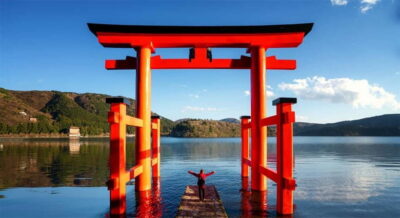 ★ 4.7Mt. Fuji Tour, Hakone Ropeway, Owakudani, Lake AshiFrom $544,002 reviews
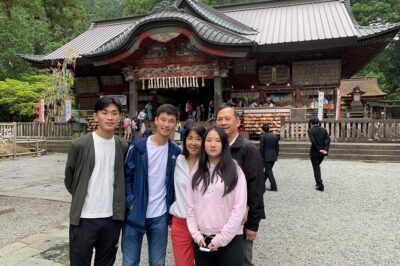 ★ 5.0Private Tour to Mt. Fuji and Hakone (Fully Licenced Operator)From $4971,910 reviews
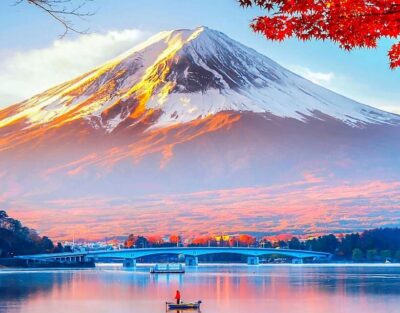 ★ 4.9Mount Fuji Full-Day Private Tour from Tokyo (Customizable)From $3931,470 reviews
 ★ 4.0Mt Fuji & Hakone Cruise, Drum Show Bus 1 Day from TokyoFrom $1221,287 reviews
 ★ 4.2From Tokyo: Mt. Fuji & Hakone Tour w/ Return by Bullet TrainFrom $1171,278 reviews
Browse the lists this tour appears in