

Reviewed · MT FUJI DAY TRIPS
Mt Fuji Exploration Tour with Free Japanese Kusa Mochi from Tokyo
Mt Fuji without the stress is a good day plan. This Tokyo-area tour strings together the classic Fuji-view spots in a single long day, with time set aside for Oshino Hakkai and the Kawaguchiko lakeside parks. You’ll also get a guided story along the way, so the scenery feels like more than just postcard views.
I particularly like two things: the included Kusa Mochi gift (a sweet, plant-based mochi you’ll pick up as part of the experience), and the fact that your guide is set up to explain what you’re seeing at each stop. On at least some departures, the guide named Sia is known for keeping explanations clear and kind, which makes a big difference when you’re moving by bus and trying to get your camera settings right. One consideration: this is a long day on the road, and the vehicle time limit can lead to trimming the route if conditions run tight, so you’ll want realistic expectations about how much you can linger.
In This Review
- Key highlights at a glance
- Why this Mt Fuji day trip works when your Tokyo schedule is tight
- Arakurayama Sengen Park: a short uphill walk for classic lookout views
- Oshino Hakkai: eight Fuji-snowmelt pools you can photograph at close range
- Oishi Park and Kawaguchiko seasonal scenes: when timing matters
- Saiko Iyashi-no-Sato Nenba: a quiet traditional village near Lake Saiko
- The free Kusa Mochi: a small gift with big payoff
- Guide style and group size: what a 48-person cap means for your day
- Photography on this route: how to get more keepers
- Price and value: is $82 a good deal for this Fuji day?
- Weather and timing reality check: what can change during the day
- Who should book this tour
- Should you book this Mt Fuji Exploration Tour from Tokyo?
- FAQ
- FAQ
- How long is the Mt Fuji Exploration Tour from Tokyo?
- How much does the tour cost?
- What languages does the guide speak?
- What stops are included in the tour?
- Is admission included?
- Do you get the Kusa Mochi?
- When is the best seasonal timing for Oishi Park?
- Is the tour dependent on weather?
- Can the itinerary change during the day?
- What’s the maximum group size?
Key highlights at a glance
- Multiple Fuji viewpoints in one day so you’re not relying on just one weather window
- Oshino Hakkai’s eight spring pools for crisp water reflections and photo variety
- Seasonal timing at Oishi Park with maple corridor and cherry blossom festival windows
- Traditional village break at Saiko Iyashi-no-Sato Nenba for quieter, cultural contrast
- Free Japanese Kusa Mochi included as a simple but memorable bonus
- A multi-language guide (Chinese/English/Japanese) to keep things understandable even on busy days
Other routes to the mountain, compared
- Mt Fuji & Hakone Cruise, Drum Show Bullet Train 1 Day from Tokyo★ 4.0 · 7,413 reviews
- Tokyo Mt Fuji 5th St & Hakone Cruise Bus Tour w/Bullet Train★ 4.4 · 5,024 reviews
- From Tokyo: Mount Fuji Full-Day Sightseeing Trip★ 4.5 · 4,970 reviews
Why this Mt Fuji day trip works when your Tokyo schedule is tight
A Mount Fuji trip from Tokyo always sounds simple. The reality is weather, distance, and time all gang up on you. This tour is designed for people who want a solid Fuji hit without turning the whole trip into a logistics project.
What I like about the format is that it gives you more than one chance for views. You start with Arakurayama Sengen Park, then move through Oshino Hakkai and Oishi Park, and finish with Saiko Iyashi-no-Sato Nenba near Lake Saiko. That means if Fuji is partially hidden at one stop, you still have other viewpoints on the schedule.
You should also understand the structure: the total duration is about 8 to 9 hours, and that includes travel time. It’s a day tour, not a slow countryside stay. If you’re hoping to wander at your own pace for hours in one place, plan to keep your expectations aligned with a guided, time-sliced itinerary.
Arakurayama Sengen Park: a short uphill walk for classic lookout views
Your first stop is Arakurayama Sengen Park, reached with enough time to do the main walk and reach the viewpoints. The attraction here is the feel of climbing into better angles—perfect for people who want Fuji in the frame early before the day gets crowded with heat, crowds, or timing pressure.
The key practical detail is that the park visit is about 1 hour 20 minutes, which usually works well for photos. You can take a steady walk up, pause for the best sightlines, and still have time to reposition if clouds drift.
A drawback to keep in mind: early stops can still be affected by visibility. If you get a hazy morning, don’t panic—you’ll have later stops at Kawaguchiko that often give you alternate compositions and better angles depending on wind and cloud movement.
Oshino Hakkai: eight Fuji-snowmelt pools you can photograph at close range
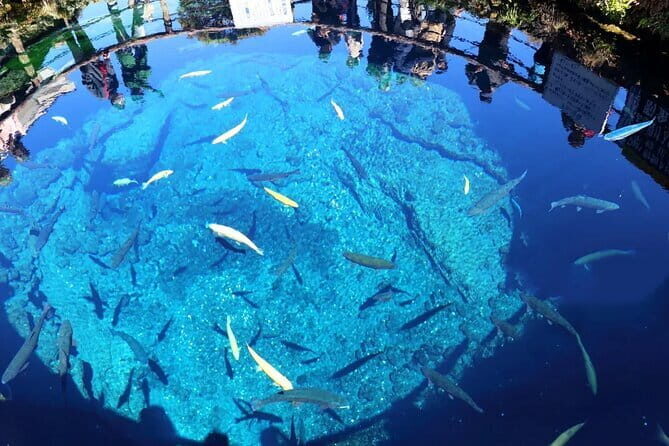
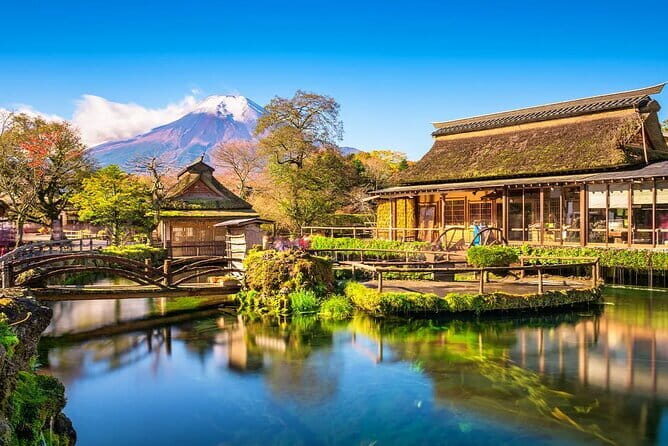
Next comes Oshino Hakkai, one of the most satisfying stops on any Fuji day trip because it gives you something real to look at besides the mountain. Oshino Hakkai is made up of eight crystal-clear spring pools, formed from melted snow from Mount Fuji. The water reflections are the star, and the pools create different visual vibes depending on your angle.
This stop is also about 1 hour 20 minutes. That’s long enough to walk the paths, find a couple of good shooting points, and then slow down for the details—ripples, reflections, and the way underwater life can show through in clear sections. The best photos often come from small adjustments: move a few steps, change height slightly, and check how the Fuji shape lines up in the water.
One honest note: this is not the place to sprint. If you rush, you’ll miss the calm “look closer” effect that makes Oshino Hakkai special. On a packed day, it’s tempting to think only about the view of Fuji, but here the pools are the real subject.
Oishi Park and Kawaguchiko seasonal scenes: when timing matters

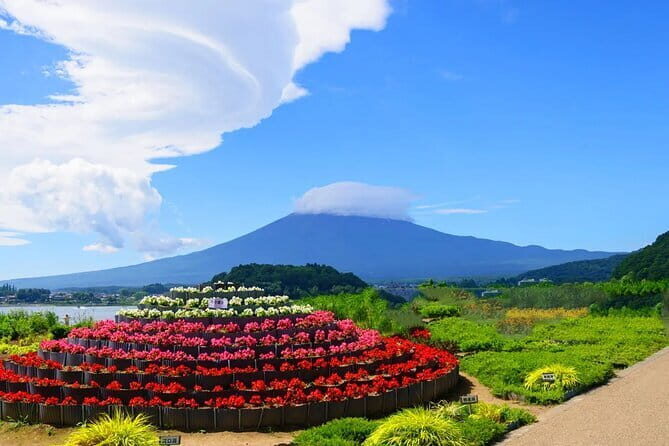
Then you get to Oishi Park in the Kawaguchiko area. This is one of those stops where the mountain-view value is high and the experience stays pretty flexible. You get serene views of Lake Kawaguchi and Mount Fuji, which can look dramatic with clear skies, but also surprisingly atmospheric when the light is soft.
Your time here is about 40 minutes. That can feel short, but it’s often the right amount for this kind of viewpoint stop. The goal is to grab a few strong compositions, enjoy the lake-air calm, and move on before fatigue kicks in.
Here’s the seasonal angle that’s actually useful if your dates are set:
- During the off-season, the area is often peaceful and less crowded.
- The Kawaguchiko Maple Corridor runs from 10/20 to 11/23.
- The Kawaguchiko Cherry Blossom Festival runs from 04/05 to 04/14.
If you’re traveling in those windows, this stop can shift from good views to genuinely seasonal color. Even if the weather isn’t perfect, you’re still likely to come away with images that feel strongly “Japan in that month,” not just Fuji with a generic sky.





Saiko Iyashi-no-Sato Nenba: a quiet traditional village near Lake Saiko
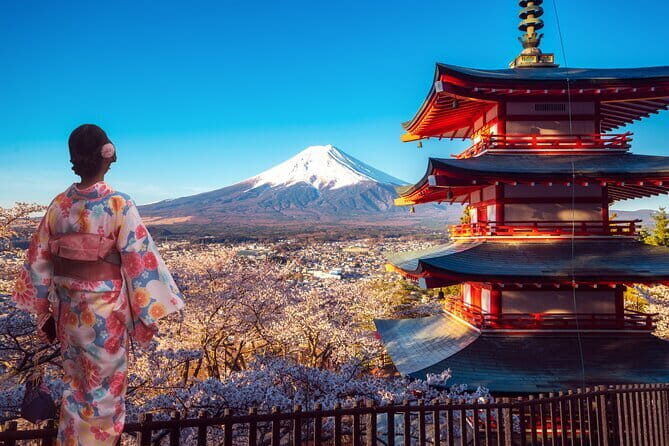
The final nature/culture contrast is Saiko Iyashi-no-Sato Nenba, a traditional Japanese village near Lake Saiko. This is the part of the day that slows the pace a bit emotionally. Instead of chasing the mountain silhouette, you’re looking at thatched-roof houses and a rural feel that makes the whole Fuji region seem more grounded.
You’ll have about 1 hour here, with admission included. With that time, you can wander the village paths, take photos of the architecture, and step back from the constant “mountain hunting” that happens on day trips.
This stop can be a great choice if you’re traveling with people who aren’t obsessed with views. Fuji is the headline, but places like this help the day feel balanced—nature, water, and a slice of everyday cultural scenery.
The free Kusa Mochi: a small gift with big payoff
The tour includes a special gift: Japanese Kusa Mochi. Mochi is easy to overlook when you’re thinking only about sights and photos, but this kind of included snack is a practical perk. It gives you something to experience that’s local and tied to Japan’s food culture, and you don’t have to spend time searching for it later.
I also like that it’s built into the day rather than turning it into extra “where should we eat?” planning. On a long bus schedule, that matters. You’ll already have enough movement; the mochi is a simple moment you can enjoy without adding decisions.
Guide style and group size: what a 48-person cap means for your day
The tour runs with a guide who speaks Chinese, English, and Japanese, which makes the explanations more accessible for mixed groups. The total group size is capped at 48, so it’s not a tiny private excursion, but it’s also not an endless crowd.
On a day like this, the guide’s job is more than facts. It’s timing. It’s helping you understand where to stand for the best view and how to manage the uphill walk, the water reflections, and the quick viewpoint windows without falling behind.
From what I’ve seen people emphasize, the strongest experience factor is the guide’s kindness and clear explanations at each stop—like Sia’s style described for some departures. If you’re the type who likes learning while you walk, that matters. If you don’t care about explanations and only want photos, you can still enjoy the stops, but having a guide who keeps things clear makes the whole day smoother.
Photography on this route: how to get more keepers
If you’re coming for photos, this itinerary is actually built for it. You get varied subjects:
- Arakurayama Sengen Park for early viewpoint angles
- Oshino Hakkai for reflections and close-up water texture
- Oishi Park for lake-and-mountain compositions
- Saiko Iyashi-no-Sato Nenba for architectural frames
A smart strategy is to treat each stop like a separate assignment. Don’t try to force one “perfect Fuji shot” at every location. At Oshino Hakkai, focus on water reflections and small perspective changes. At Oishi Park, focus on the Fuji-to-lake relationship and how the shoreline and trees frame the mountain.
Also, because this is a weather-sensitive activity, you’ll want to be flexible. If Fuji isn’t crisp at one stop, use the time to shoot the environment—trees, pools, village details, and lake light—so the day doesn’t feel wasted when the mountain hides.
Price and value: is $82 a good deal for this Fuji day?
At $82 per person, the value depends on what you’d otherwise pay to assemble the day yourself. Here, you’re getting:
- a guided, multi-stop route
- admission included where listed (including West Lake Healing Reagan Field)
- free admission tickets at the listed parks and sites
- the Kusa Mochi gift
- a guide available in Chinese/English/Japanese
If you tried to plan this on your own, the “hidden costs” would be time and effort: figuring out transport between the Fuji viewpoints and paying separate entrance fees. The included guidance also helps you move efficiently through the day, which is a big deal when your time in Japan is limited.
One tradeoff: you’re not buying leisurely freedom. You’re buying a structured route with time limits. If you’re the kind of traveler who loves to linger until the light changes, you might feel slightly rushed. If you prefer a well-run plan and getting the main sights efficiently, this price is easier to justify.
Weather and timing reality check: what can change during the day
Mt Fuji experiences depend heavily on sky clarity. The tour notes that it requires good weather, and if it’s canceled due to poor weather, you’ll be offered a different date or a full refund.
There’s also an operational detail you should keep in mind: due to Japanese law, the vehicle time will not exceed 10 hours, and the guide may cut the itinerary depending on the day’s situation. That’s not unusual for this kind of bus trip, but it’s worth respecting. You’re going for the “greatest hits” route, not a guaranteed minute-by-minute checklist.
Who should book this tour
This works best for:
- people doing limited-time Japan trips and wanting one efficient Fuji day
- photographers who want multiple subject types (mountain views, water reflections, village photos)
- anyone who appreciates guided explanations rather than guessing on their own
It may not be ideal if you want:
- long, unhurried stays at one site
- total freedom to change plans hour by hour
- a guaranteed Fuji view no matter the weather
If you like structure and you’re happy to move with the day’s flow, you’ll likely feel like it hits the right balance of nature, views, and culture.
Should you book this Mt Fuji Exploration Tour from Tokyo?
I’d book it if you want a strong Fuji day without turning your schedule into a puzzle. The combination of Oshino Hakkai’s spring pools, Kawaguchiko viewpoints at Oishi Park, and a traditional break at Saiko Iyashi-no-Sato Nenba gives you variety, not just one long viewpoint session. Add in the Kusa Mochi gift and a guide who provides clear, kind explanations (including examples like Sia), and the experience feels thoughtfully packaged for $82.
I’d think twice if you’re chasing only one thing: a perfectly clear, uninterrupted mountain view with hours of free wandering. This is a bus-run, time-managed tour. It’s designed to maximize your chances, not to control the sky.
FAQ
FAQ
How long is the Mt Fuji Exploration Tour from Tokyo?
The tour lasts about 8 to 9 hours, and that total includes travel time.
How much does the tour cost?
It costs $82.00 per person.
What languages does the guide speak?
The guide speaks Chinese, English, and Japanese.
What stops are included in the tour?
The main stops are Arakurayama Sengen Park, Oshino Hakkai, Oishi Park, and Saiko Iyashi-no-Sato Nenba.
Is admission included?
Yes. Admission tickets are included for the listed stops, and the tour also includes admission to West Lake Healing Reagan Field.
Do you get the Kusa Mochi?
Yes. A special gift of Japanese Kusa Mochi is included.
When is the best seasonal timing for Oishi Park?
The tour mentions off-season visits for a quieter Oishi Park, plus seasonal options: Kawaguchiko Maple Corridor from 10/20 to 11/23, and Kawaguchiko Cherry Blossom Festival from 04/05 to 04/14.
Is the tour dependent on weather?
Yes. The activity requires good weather. If it’s canceled due to poor weather, you’ll be offered a different date or a full refund.
Can the itinerary change during the day?
Yes. Due to a 10-hour vehicle time limit under Japanese law, the guide will cut the itinerary according to the actual situation that day.
What’s the maximum group size?
The tour has a maximum of 48 people.
More Tours in Tokyo

More Tour Reviews in Tokyo



The Fuji Shortlist: Other Days Out to the Mountain
Fresh reviews from around Tokyo






Mt Fuji Day Trips, compared.
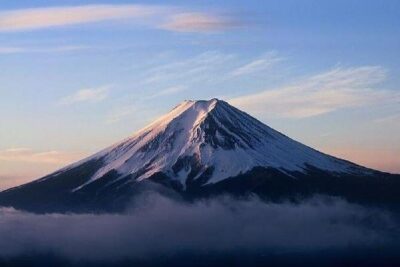 ★ 4.0Mt Fuji & Hakone Cruise, Drum Show Bullet Train 1 Day from TokyoFrom $1497,413 reviews
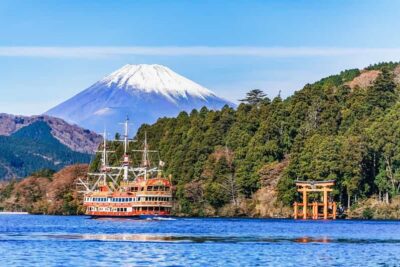 ★ 4.4Tokyo Mt Fuji 5th St & Hakone Cruise Bus Tour w/Bullet TrainFrom $1545,024 reviews
 ★ 4.5From Tokyo: Mount Fuji Full-Day Sightseeing TripFrom $684,970 reviews
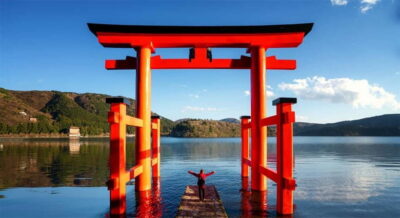 ★ 4.7Mt. Fuji Tour, Hakone Ropeway, Owakudani, Lake AshiFrom $544,002 reviews
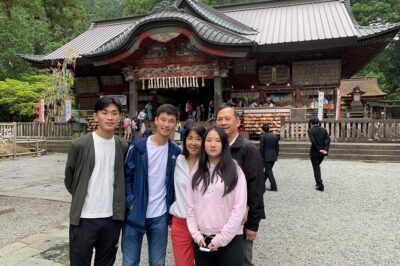 ★ 5.0Private Tour to Mt. Fuji and Hakone (Fully Licenced Operator)From $4971,910 reviews
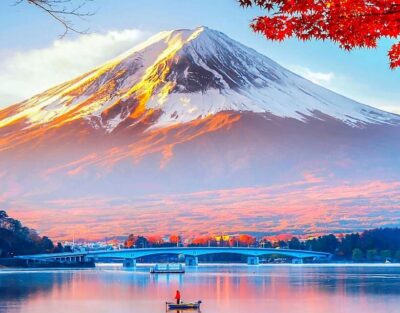 ★ 4.9Mount Fuji Full-Day Private Tour from Tokyo (Customizable)From $3931,470 reviews
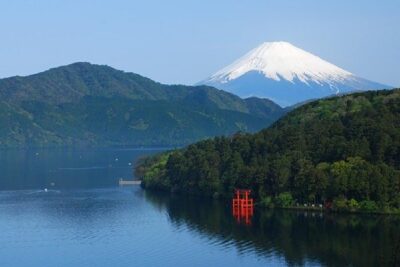 ★ 4.0Mt Fuji & Hakone Cruise, Drum Show Bus 1 Day from TokyoFrom $1221,287 reviews
 ★ 4.2From Tokyo: Mt. Fuji & Hakone Tour w/ Return by Bullet TrainFrom $1171,278 reviews
Browse the lists this tour appears in