
Reviewed · MT FUJI DAY TRIPS
Mt. Fuji and Hakone Private Tour with English Speaking Guide
A single day can feel like two big trips. This private Mt. Fuji and Hakone day tour links classic Fuji lookouts with volcano views in Hakone, and the whole plan is built around flexibility instead of a fixed bus schedule. I like having private round-trip transport from Tokyo with parking, tolls, and gas handled, so you spend more time outside the vehicle. I also like that you get an English-speaking driver/guide, plus a real chance to steer the day toward your priorities. One possible drawback: seeing Mt. Fuji is weather-dependent, and traffic can squeeze your time on popular stops.
If your idea of a great day is fewer crowds and more breathing room, this fits. You’ll move through several iconic areas—Lake Kawaguchiko for Fuji views, then Lake Ashi and Owakudani in Hakone—using included transport, not public transit. The tour is best when you’re ready to be flexible with timing (especially on weekends) and comfortable with moderate walking at parks and viewpoints.
In This Review
- Key Things You’ll Notice
- Private Fuji + Hakone: What You’re Really Buying
- The day’s big tradeoff
- Pricing and Value: $579 for Up to 3 People
- Weather and Mt. Fuji Reality Check
- Driving Beats Transfers: How the Transport Helps
- Stop-by-Stop: What Each Place Offers (and What to Watch For)
- Arakurayama Sengen Park: The Fuji-Pagoda View
- Lake Kawaguchiko: Fuji by Water, Plus a View Ropeway Option
- Oishi Park: Seasonal Flower Color with Fuji in the Frame
- Hakone Shrine / Kuzuryu Shrine: A Shinto Icon by the Lake
- Lake Ashinoko: The Cruise That Turns Transit Into Sightseeing
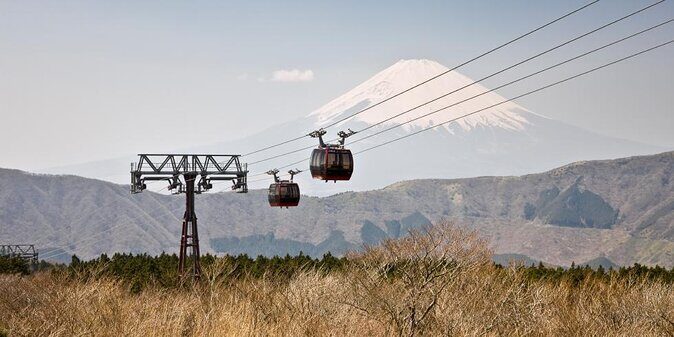
- Hakone Ropeway: The Easy Way to Get High and See Owakudani
- Owakudani Valley: Sulfur Smell, Volcanic Views, and Black Eggs
- English Guide Quality: When Private Really Means Private
- Time Management on a Busy Route: The Most Common Frustration
- Who This Tour Is Best For
- Should You Book It?
- FAQ
- Is pickup from Tokyo included?
- How long is the Mt. Fuji and Hakone private tour?
- How many people can be in a group?
- Is the guide English speaking?
- Are attraction tickets included?
- Does the tour include transport costs like parking and tolls?
- What stops are included in the schedule?
- Are the ropeway and cruise included in the price?
- What fitness level do I need?
- What happens if the weather is bad for Mt. Fuji?
- Can I cancel for a full refund?
Key Things You’ll Notice
- Private door-to-door transport from Tokyo, with parking/tolls/gas included
- English-speaking driver/guide to help you make choices on the fly
- Built around multiple Fuji vantage points, not just one quick photo stop
- Hakone’s volcanic drama at Owakudani plus views from ropeway and lake
- Most major sightseeing is scheduled, but admission rides/ships are extra
- Weather matters a lot for Mt. Fuji clarity and photo odds
Other routes to the mountain, compared
- Mt Fuji & Hakone Cruise, Drum Show Bullet Train 1 Day from Tokyo★ 4.0 · 7,413 reviews
- Tokyo Mt Fuji 5th St & Hakone Cruise Bus Tour w/Bullet Train★ 4.4 · 5,024 reviews
- From Tokyo: Mount Fuji Full-Day Sightseeing Trip★ 4.5 · 4,970 reviews
Private Fuji + Hakone: What You’re Really Buying
You’re paying for three things at once: convenience, flexibility, and a smoother logistics day.
First, the convenience part is real. The tour includes air-conditioned private transportation, plus the usual annoyances—parking fees, highway/tolls, and fuel—so you’re not doing math mid-trip or hunting for tickets at the last second. Pickup is offered, and you’ll get a mobile ticket, which helps if you like keeping your day simple.
Second, flexibility is the secret sauce. The structure is a sequence of major spots, but the day is meant to be adjustable based on your interests and conditions. That matters in this region. In Hakone, cloud cover can wipe out visibility quickly. Around Fuji, traffic can turn your timeline into a guessing game. A private guide gives you a better shot at adapting than a fixed-group plan.
Third, you’re not just buying scenery. You’re buying the ability to move between “scenery zones” efficiently. The Mt. Fuji area and Hakone are connected, but they’re not the kind of places where you want to spend your day transferring trains and buses. With private transport, you can arrive earlier, stay longer where it’s working, and skip what’s not.
The day’s big tradeoff
A private day tour still has physics. The region is busy, and driving time can take a chunk out of your 10 hours. If your heart is set on one single spot at a precise time, you’ll want to set expectations. Some people end up with less time than they hoped when roads are packed or if weather changes quickly.
Pricing and Value: $579 for Up to 3 People
The price is $579 per group (up to 3) for about 10 hours. On paper, that can look high—until you price out what you’re avoiding.
Think about what you’d otherwise pay for:
- A private car from Tokyo to Fuji/Hakone for the full day (with parking and tolls)
- Multiple paid transit tickets, plus the time cost of transfers
- The added cost of a guide who can steer the plan when conditions shift
Because transport fees are included, your “surprise costs” are mostly limited to attractions and food. Entrance passes and rides are not included, so you’ll still budget for things like ropeways and cruise/observations depending on what you choose to do.
Also, private tours become better value when you split the group cost. Up to 3 people is a sweet spot for families or small friend groups who want a shared day without the overhead of larger group tours.
Weather and Mt. Fuji Reality Check
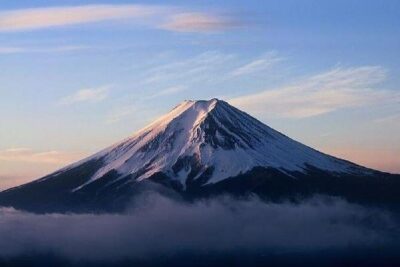
This is a good time to talk honestly about Fuji. Mt. Fuji can be dramatic and crisp, or it can be a pale silhouette—or disappear behind clouds for hours.
The tour is explicitly tied to good weather. If it’s canceled due to poor weather, you’ll be offered a different date or a full refund. If it runs, you should still assume your visibility can vary by stop and time of day.
Here’s how to use that to your advantage:
- Be ready to shift your focus. If Fuji is hidden from one viewpoint, you’ll likely still get value from the lake scenery and Hakone volcanic settings.
- Plan for multiple photo attempts. The itinerary is built around different viewpoints, which improves your odds compared with a single-stop plan.
More Hakone loops, ropeways and lake crossings
Driving Beats Transfers: How the Transport Helps
One reason this tour is so popular is that the ride itself feels part of the experience instead of downtime.
You get:
- Private vehicle with air conditioning
- English-speaking driver/guide
- Parking fees, gas, and highway/tolls included
That means your day is less about logistics and more about choices. You can also ask the driver to adjust the order slightly or spend extra time where the light is good.
A small but meaningful point: your driver/guide can help you navigate the rhythm of sites—when to step out, where to position for photos, and how to keep moving without feeling rushed.
Stop-by-Stop: What Each Place Offers (and What to Watch For)
Arakurayama Sengen Park: The Fuji-Pagoda View
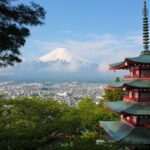
This is the classic “wow” stop: Arakurayama Sengen Park with a famous park viewpoint over Mt. Fuji. You’ll also see the scenery associated with cherry blossoms and a striking crimson pagoda setup when conditions and season align.
Plan for about 45 minutes. Since admission is free, you’re paying mostly in time and effort—getting up to viewpoints, finding a good spot, and taking photos.
What to watch for: this is a photo hotspot. If clouds sit in, the pagoda still looks great, but your Fuji payoff may be limited.
Lake Kawaguchiko: Fuji by Water, Plus a View Ropeway Option
Next is Lake Kawaguchiko, one of the main Fuji-area lakes. You get a solid chunk of time—about 2 hours—to take in lake views and decide how much you want to add beyond walking paths.
The area connects you to observation options such as the Panoramic Ropeway going up toward the Kachi Kachi Mountain viewpoint. Admission for the ropeway is not included, so you’ll need to budget if you want that higher perspective.
Why it’s worth it: seeing Fuji near water has a different feel than seeing it from a mountaintop viewpoint. It’s often calmer visually, which helps if you want photos that look less like crowds and more like atmosphere.
What to watch for: ropeway time can eat into your lake time. If weather is uncertain, consider prioritizing the best view spots first.
Oishi Park: Seasonal Flower Color with Fuji in the Frame
Oishi Park is built for lingering. It sits on the north shore of Lake Kawaguchiko and is known for seasonal blooms with Mt. Fuji in the background.
You’ll get around 30 minutes, and admission is free.
What makes Oishi Park special here is the variety:
- Early April to late May: moss phlox
- Late June to late July: lavender
- Mid to late October: kokia shrubs with red tones
There’s also more of a “local activity” vibe in the area around the Kawaguchiko Natural Living Center, including things like fruit jam making and cherry/blueberry picking courses, plus a café for items like blueberry ice cream. Those activities aren’t spelled out as required for your tour time, but the park area is where that flavor of local life lives.
What to watch for: 30 minutes goes fast. If you’re there for flowers and photos, you’ll want to pick your favorite walkway early.
Hakone Shrine / Kuzuryu Shrine: A Shinto Icon by the Lake
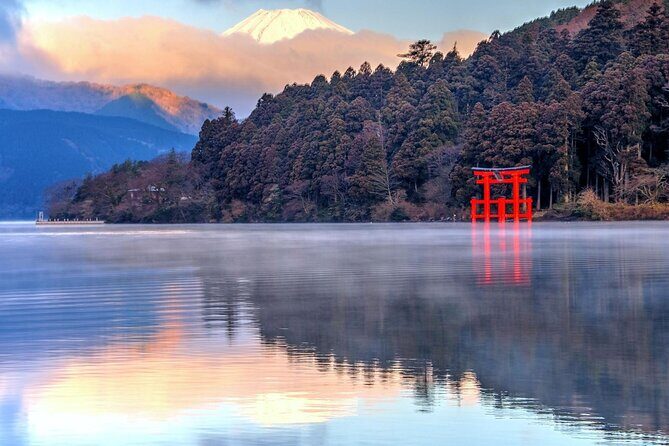
You’ll head toward Hakone Shrine and the related Kuzuryu Shrine Singu area on the shores of Lake Ashi (also called Ashinoko).
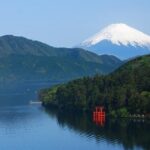
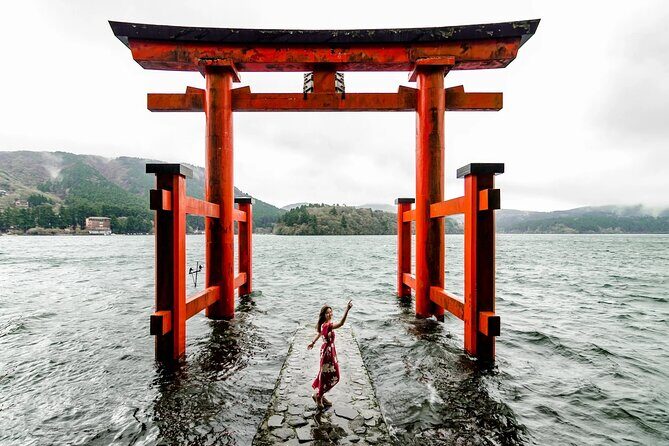
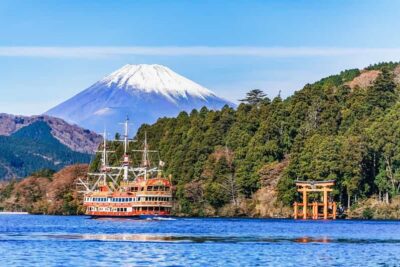
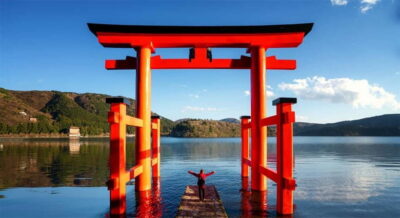
Expect around 30 minutes, and admission is free. The main draw is the shrine’s lakeside setting, including the famous red torii gate on the water often photographed as a “peace” gate (heiwa no torii).
Why it works: it’s a classic, calm-feeling contrast to the more dramatic volcanic theme later in Hakone.
What to watch for: if you’re hoping for Mt. Fuji in this section, remember it’s weather-dependent. Still, the shrine setting is visually rewarding even without Fuji.
Lake Ashinoko: The Cruise That Turns Transit Into Sightseeing
Now you switch from land to water with a sightseeing cruise on Lake Ashinoko.
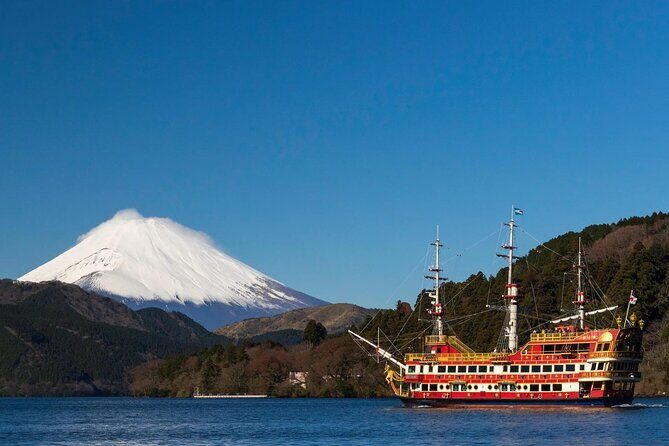
You’ll have about 1 hour for the cruise, traveling on ships that are themed (there are pirate-ship styles). This is where you get a lot of the “Hakone postcard” feeling: lake views, shrine torii landmarks, and the surrounding slopes.
Admission for the cruise is not included.
Pro tip for your timing: if you care about photos, go for the side positions that offer the cleanest view of the water landmarks. Even when Fuji is hidden, the lake angles can still look great.
Hakone Ropeway: The Easy Way to Get High and See Owakudani
Next is the Hakone Ropeway, around 1 hour total time allocated. You’ll travel from Sounzan toward Owakudani and then back toward Togendai (or nearby points depending on scheduling).
The ropeway is your bridge between the calm lake and the volcanic zone. The observation platforms are where you see the valley’s steam and smoke—the scenery that earned the older nickname of Hell Valley.
Admission is not included.
What to watch for: fog can kill visibility fast. If the ropeway is already moving when you arrive, you’ll need to trust the moment—standing around waiting for clear weather can cost you time.
Owakudani Valley: Sulfur Smell, Volcanic Views, and Black Eggs
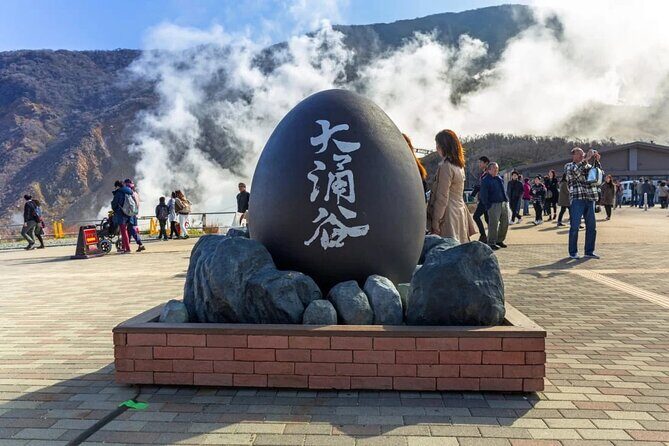
This is the headline in many Hakone itineraries. Owakudani Valley is where you observe intense geothermal activity up close. You’ll notice the sulfur smell, and you’ll see the steam columns over the bare volcanic surface.
You’ll get about 1 hour, and admission is not included.
A local specialty you’ll hear about is the “black eggs.” They turn dark due to a chemical reaction involving geothermal energy and volcanic gas, which is part of the area’s volcanic-food lore.
What to expect: this is not just a viewpoint. It’s an atmospheric stop with a distinct smell, texture, and energy. If you want Japan’s nature-strange side in one day, this is it.
English Guide Quality: When Private Really Means Private
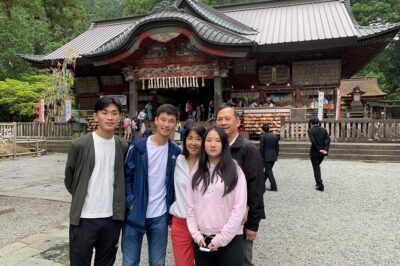
The tour promises an English-speaking driver/guide. Many people highlight that the guide part can be excellent, not just the driving part.
Some names that show up positively include:
- Malik, who was praised for helping ensure Mt. Fuji visibility and adding an extra favorite stop when clouds interfered
- Sakib, noted for giving options based on what you want to see and handling the day accordingly
- Rafat, praised for polite, on-time service and taking people to major spots including Mt. Fuji Station 5 when timing allowed
- Nabeel and Sheikh, highlighted for being kind and helpful, with frequent photo stops even under cloudy conditions
That said, you should know there are also negative experiences in the broader feedback: a couple of cases describe communication that felt more like a driver service than an actual guide, and a few point to scheduling/time issues when traffic hit.
How you protect yourself: before you lock in, decide what you need most from the “guide” role—history stories, practical advice, or pure logistics. Then, on the day, ask early for your must-sees. Private tours succeed when you actively steer.
Time Management on a Busy Route: The Most Common Frustration
The itinerary is ambitious. The day includes multiple big zones: Fuji lakeside viewpoints, then Hakone lake cruising, ropeway time, and the volcanic valley.
The most common issue in real-world days is traffic and timing compression. On busy travel days, you can end up with less time at key stops than you imagined—especially if you’re trying to hit everything on the list.
If you want the best chance at a relaxed day:
- Consider traveling on weekdays when possible
- Give yourself permission to skip one extra add-on if timing gets tight
- Keep your expectations aligned with the fact that driving time is part of the package
Who This Tour Is Best For
This fits best if you want:
- Fewer crowds and less transit hassle
- A day designed around flexible stop choices
- Multiple Mt. Fuji viewpoints and a real Hakone hit (Lake Ashi + Owakudani)
It’s also a strong match for:
- Small groups of up to 3 people who share costs
- Couples who want a more personal pace
- Travelers with luggage who don’t want train transfers
If you’re the type who needs a strict, guaranteed timetable at each stop regardless of traffic, you might prefer a different style of tour or be ready to adapt on the fly.
Should You Book It?
I’d book this tour if your priorities are private convenience, English support, and a full day that covers both Fuji-area lakeside scenes and Hakone’s volcanic highlights without you managing transit.
Skip it (or at least adjust expectations) if:
- You’re arriving with very fixed expectations about exact timing at each stop
- You’re extremely sensitive to losing time due to traffic
- You only want one “perfect Fuji photo moment” and nothing else
If you’re flexible, plan for weather uncertainty, and communicate your must-dos early with your English-speaking driver/guide, this private format is one of the more practical ways to see the region in a single day.
FAQ
Is pickup from Tokyo included?
Pickup is offered, and the tour uses a private vehicle with round-trip transport from Tokyo.
How long is the Mt. Fuji and Hakone private tour?
The total duration is about 10 hours (approx.).
How many people can be in a group?
The price is per group for up to 3 people.
Is the guide English speaking?
Yes, the tour includes an English speaking driver (and guide support as described in the experience).
Are attraction tickets included?
No. Entrance passes or fees are not included, and food and beverage are also not included.
Does the tour include transport costs like parking and tolls?
Yes. The tour includes parking fees, gas/petrol, and highway/tolls.
What stops are included in the schedule?
You’ll visit spots such as Arakurayama Sengen Park, Lake Kawaguchiko, Oishi Park, Hakone Shrine, Lake Ashinoko cruise areas, Hakone Ropeway, and Owakudani Valley.
Are the ropeway and cruise included in the price?
Admission for the ropeway and cruise is not included, based on the tour details for those stops.
What fitness level do I need?
The tour notes that you should have a moderate physical fitness level.
What happens if the weather is bad for Mt. Fuji?
The experience requires good weather. If it’s canceled due to poor weather, you’ll be offered a different date or a full refund.
Can I cancel for a full refund?
Yes. You can cancel up to 24 hours in advance for a full refund, and cancellation is free under that condition.
More Tour Reviews in Tokyo






Hakone, Three More Ways
The Fuji Shortlist: Other Days Out to the Mountain

Fresh reviews from around Tokyo






Mt Fuji Day Trips, compared.
 ★ 4.0Mt Fuji & Hakone Cruise, Drum Show Bullet Train 1 Day from TokyoFrom $1497,413 reviews
 ★ 4.4Tokyo Mt Fuji 5th St & Hakone Cruise Bus Tour w/Bullet TrainFrom $1545,024 reviews
 ★ 4.5From Tokyo: Mount Fuji Full-Day Sightseeing TripFrom $684,970 reviews
 ★ 4.7Mt. Fuji Tour, Hakone Ropeway, Owakudani, Lake AshiFrom $544,002 reviews
 ★ 5.0Private Tour to Mt. Fuji and Hakone (Fully Licenced Operator)From $4971,910 reviews
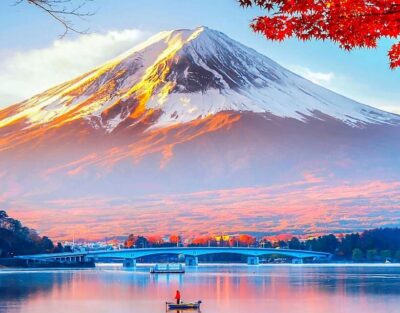 ★ 4.9Mount Fuji Full-Day Private Tour from Tokyo (Customizable)From $3931,470 reviews
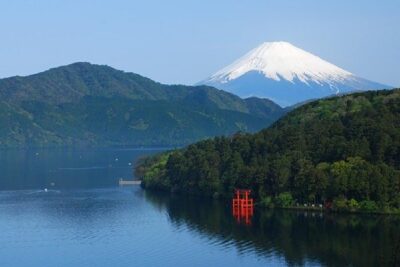 ★ 4.0Mt Fuji & Hakone Cruise, Drum Show Bus 1 Day from TokyoFrom $1221,287 reviews
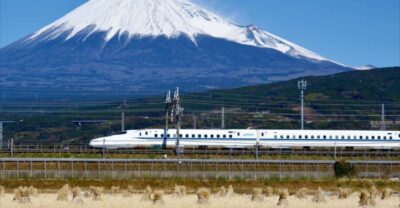 ★ 4.2From Tokyo: Mt. Fuji & Hakone Tour w/ Return by Bullet TrainFrom $1171,278 reviews
Browse the lists this tour appears in