
Reviewed · PHOTOGRAPHY SESSIONS
Kimono Photo Session Experience Japanese Culture Inside a Shrine
A shrine day can be your best photo plan. This experience pairs a professional kimono photo session with real shrine etiquette, plus tea and live Gagaku at a calm Tokyo location. I like that it turns a place with strict rules about photography into a guided, permission-aware photo moment.
Two things I especially like: first, you get step-by-step help with dressing, hair, and posing, so you’re not guessing. Second, the photography doesn’t feel like a quick stop-and-snap; it’s organized around multiple spots on the shrine grounds. One possible drawback: because shrines often restrict photography unless permission is handled, you’ll need to follow staff directions closely and you may not be able to shoot every angle you imagine.
What also helps is the setting—less touristy than the big-name districts, yet still reachable from Shinjuku Station. The group is small (max 6), so you get attention instead of getting treated like a number. I also appreciate the finish: you learn manners for visiting a shrine and then receive a blessing for a safe journey.
In This Review
- Key highlights to know before you go
- A Tokyo shrine experience, not a postcard stop
- Kimono dressing and photo prep: the part that saves you time
- The shrine photo session: how the rules shape your shots
- Tea, sweets, and live Gagaku you can actually hear
- Shrine manners and the blessing for a safe journey
- Price and time: is $858.41 worth it?
- Who this kimono-and-shrine session suits best
- Should you book this kimono photo session?
- FAQ
- How long is the kimono photo session experience?
- What is the meeting point and start time?
- What’s included in the price?
- Is transportation included?
- Does the tour run in bad weather?
- How big are the groups?
- Will I get digital photos?
- Is there a cancellation window?
Key highlights to know before you go
- Professional kimono dressing and hair styling so you look like you belong in the scene
- Guided shrine photo session at several locations within the shrine property
- Live Gagaku performance paired with tea and Japanese sweets
- Shrine manners coaching so you know what to do (and what not to do)
- Blessing included (and admission fees often apply at shrines in Japan)
- Small group size for a calmer pace during the 3.5-hour experience
More frames: other photo sessions in Tokyo
- Tokyo Go-Karting Experience: Shibuya Crossing with Photos★ 4.8 · 190 reviews
- Tokyo Cyberpunk Street Photo Tour★ 5.0 · 165 reviews
- Tokyo by Night Photography Tour (Private Option Available)★ 5.0 · 151 reviews
A Tokyo shrine experience, not a postcard stop
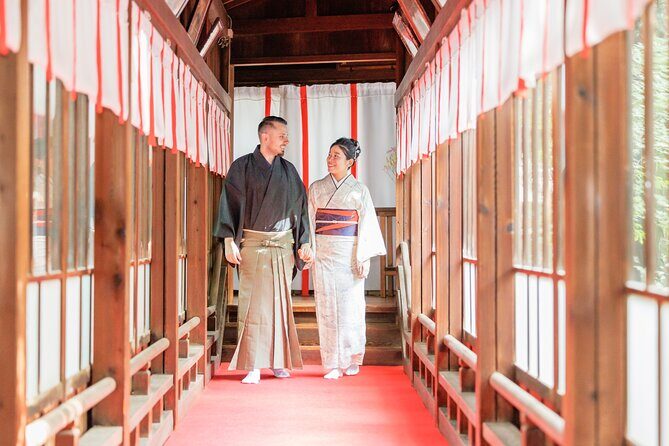
If you want Japan beyond the obvious camera magnets, this format makes a lot of sense. You start at a Shinto shrine in Tokyo’s Kita City area, right near Nishigahara. The vibe is quieter than the headline neighborhoods, which matters because shrine visits reward calm and focus.
You’ll also be near public transportation, and the tour is easy to reach from Shinjuku Station. That combo—easy access plus a more relaxed local feel—is a sweet spot. It’s the kind of setting where you can actually slow down, follow directions, and let the experience do its job.
One more thing I like: the tour keeps moving even if weather isn’t perfect. That doesn’t mean it’s an adventure movie; it just means you’re not left waiting around all afternoon. Bring common-sense weather gear so you can stay comfortable while in a rented kimono.
Kimono dressing and photo prep: the part that saves you time
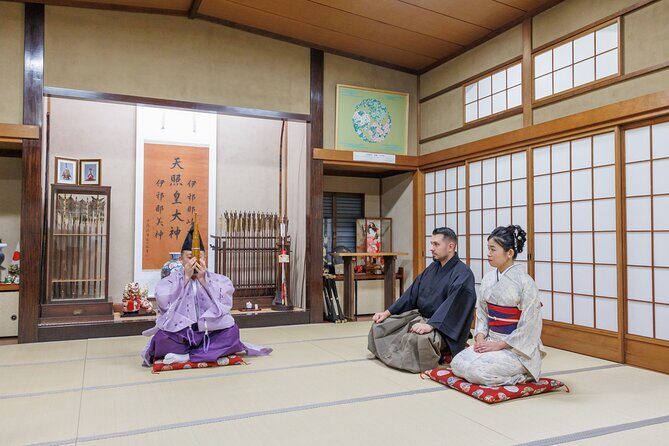
The flow is built so you don’t waste the best lighting and the most special moments. You meet at the shrine first, then you dress in kimono. This is not a DIY situation—there’s professional support for dressing and hair styling, which is a big deal if you’ve never worn one before.
Once you’re dressed, you move into the photo session with a professional photographer. This is where the experience becomes practical, not just pretty. Good kimono photos depend on posture, hand position, and how you angle your body in a way that looks natural, not forced. With guidance, you avoid the common problem of standing there stiff like a tourist in a costume.
From the details provided, the team also offers English interpreting support. In real life, that matters more than people think. When you can understand direction quickly—where to stand, when to turn, how to hold your hands—you get better photos and you feel less stressed.
Also, the tour caps at six travelers, so you aren’t stuck waiting your turn for too long. That keeps the whole session moving at a human pace.
The shrine photo session: how the rules shape your shots
Here’s the big context: without permission, professional photography is generally not allowed at shrines, and many shrines may not grant photography permits. Even for Japanese-style weddings that happen at shrines, there are often restrictions on who can photograph and what kind of shots are allowed.
This matters because your goal is photos, but your location is a shrine, not a studio. The value of booking an organized session is that it handles the reality of shrine rules for overseas visitors. Your photo time is conducted around permission-aware access to various spots within the property.
During the session, you’ll photograph different locations on the shrine grounds. The experience is designed to mix indoor-style and outdoor-style settings within the property, so you’re not stuck with only one background option. That helps you get variety: a tighter, more intimate feel in one area, and a more open shrine atmosphere in another.
A small practical tip: wear shoes you can manage easily with kimono. Your feet will matter more than you expect, especially if you’re moving between spots on uneven ground. If you’re worried about comfort, assume you’ll spend a chunk of time standing and posing.
One caution: because photography restrictions can be strict, you may not be able to roam freely on your own. Go with the plan. The best shots often come from following the recommended routes and timing, not from trying to “explore” mid-session.
Tea, sweets, and live Gagaku you can actually hear
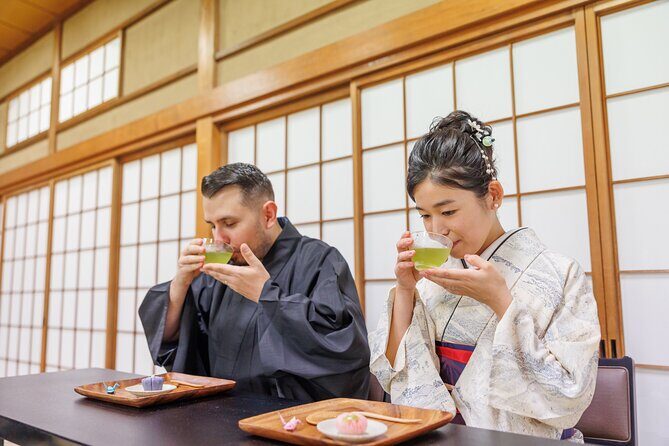
After the photos, the schedule turns gentler. You enjoy tea and Japanese sweets, plus a live Gagaku performance. Gagaku is described as one of the oldest Japanese instruments, and that alone makes this segment more than just a snack break.
Think of it as a cultural reset. You go from posing in traditional attire to sitting down and listening to music that isn’t meant for background noise. It gives you a sense of how older Japanese court and shrine traditions connect through sound and ceremony.
The tea-and-sweets moment also helps you remember what you’re doing. Kimono shoots can sometimes make people rush. Here, you slow down on purpose, with a structured pause that feels respectful of the setting.
One practical plus: since the performance is part of the package, you don’t have to figure out separate tickets or timing. For a 3.5-hour total duration, that coordination is value.





Shrine manners and the blessing for a safe journey
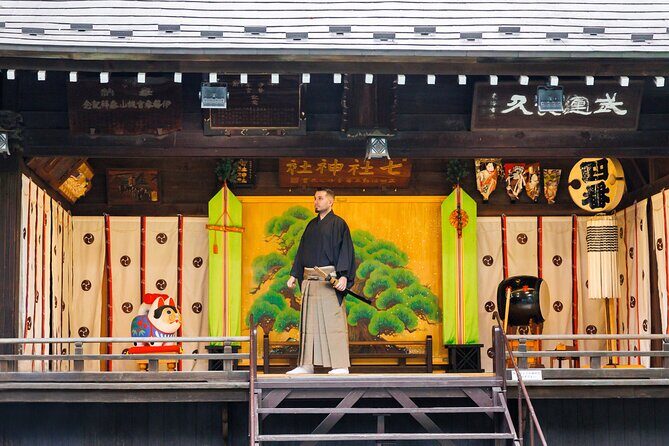
This isn’t just a photo outing; it includes learning. You’ll learn the history and manners when visiting a shrine. That’s the part many people skip when they only chase pictures. Learning shrine etiquette helps you avoid accidental disrespect and it makes your visit more meaningful.
Then you receive a shrine’s blessing for a safe journey. The tour information also notes that there is often a fee for receiving a blessing at shrines in Japan, and that this cost is included. That’s a relief. You won’t have to scramble for change, figure out how blessing fees work, or wonder whether you’re doing the right thing.
What I like about ending this way is psychological. Photos can feel like a performance, but a blessing gives the session closure. It shifts the focus from your camera back to the shrine’s purpose, which is exactly what you want at a place with spiritual rules.
Price and time: is $858.41 worth it?
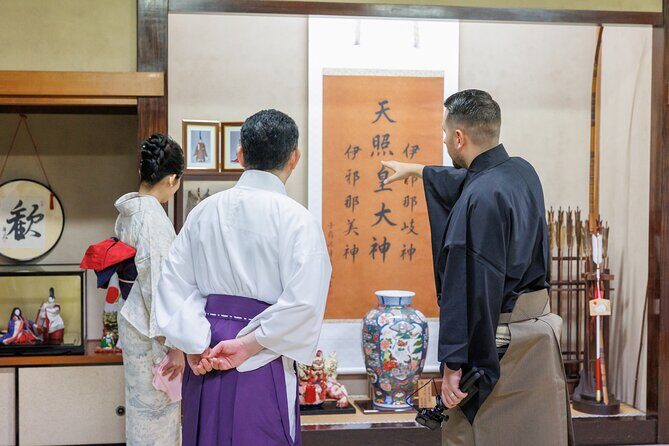
At $858.41 per person for about 3 hours 30 minutes, this isn’t a budget activity. But it also isn’t a simple rental shop situation. You’re paying for a bundle of services that are hard to piece together on your own without creating chaos: kimono rental, photo session with a professional photographer, photo data in digital files, tea and sweets, shrine admission fee (including blessing fee where applicable), and live Gagaku performance.
The best value angle here is the permissions and coordination piece. Since professional photography is often restricted without permission, you’re essentially buying a managed experience where someone has handled the framework. If you try to DIY this—kimono rental, then shrine photography—you may get blocked or forced to change plans. That risk is expensive in time and disappointment.
Also, the max group size of six travelers pushes the experience closer to “guided attention” than “tour conveyor belt.” That matters a lot for posing help, timing, and getting clear direction in English.
The one thing not included is private transportation. If you’re comfortable using public transport and walking the last stretch, that’s fine. If you prefer door-to-door taxis, you’ll need to add that cost yourself.
Who this kimono-and-shrine session suits best
This works best if you want something more structured than wandering and hoping. If you like cultural experiences where you learn manners, not just locations, you’ll probably enjoy the way the day is paced: dress, photo, tea and music, etiquette, then blessing.
It also suits you if you care about photos but hate feeling awkward. The dressing and hair styling help a lot, and professional direction means you’re not stuck figuring out how to stand in kimono. The English interpreting support is a real confidence boost if your Japanese is limited.
You might like this even if you’ve been to big Tokyo sights already. It offers a different kind of Tokyo day: quieter, local, and focused on tradition in a setting where people actually practice it.
Should you book this kimono photo session?
Book it if you want guided shrine photography done respectfully, with kimono dressing and professional results, plus tea, sweets, and live Gagaku in one tidy package. The small group size and English support are strong reasons to choose it, especially if you’re trying to avoid the uncertainty that comes with shrine photography rules.
Skip it (or at least think hard) if you’re looking for a low-cost activity, or if you prefer free-form exploration where you can wander wherever you want on your own schedule. This experience is structured for good reason. You’ll get the best results by staying with the flow.
FAQ
How long is the kimono photo session experience?
It lasts about 3 hours 30 minutes.
What is the meeting point and start time?
You meet at 七社神社 (2-chōme−11−1 Nishigahara, Kita City) in Tokyo. The start time is 1:00 pm, and the tour ends back at the meeting point.
What’s included in the price?
Kimono rental, the photo session, photo data in digital files, tea and Japanese sweets, shrine admission fee (including a fee for receiving a blessing in most shrines), and a live Gagaku performance.
Is transportation included?
No. Private transportation is not included.
Does the tour run in bad weather?
The tour will proceed as scheduled regardless of weather conditions.
How big are the groups?
The maximum group size is 6 travelers.
Will I get digital photos?
Yes. Photo data in digital files are included.
Is there a cancellation window?
Free cancellation is available. You must cancel at least 24 hours before the experience’s start time for a full refund.
If you tell me your travel dates and what kind of photos you want (soft and traditional vs. more posed and dramatic), I can suggest how to prepare clothing-wise and what to prioritize during the photo session time.
Better Photos of Your Trip




More Tour Reviews in Tokyo



Fresh reviews from around Tokyo






Photography Sessions, compared.
 ★ 4.8Tokyo Go-Karting Experience: Shibuya Crossing with PhotosFrom $90190 reviews
 ★ 5.0Tokyo Cyberpunk Street Photo TourFrom $184165 reviews
 ★ 5.0Tokyo by Night Photography Tour (Private Option Available)From $105151 reviews
 ★ 5.0Tokyo Shinjuku Night Photo Tour with Pro GotaFrom $85142 reviews
 ★ 5.0Tour with Pro Tokyo Photographer and take Edgy Unique PortraitsFrom $14580 reviews
 ★ 5.0Tokyo Portrait Tour with a Professional PhotographerFrom $9258 reviews
Tokyo Asakusa: Miu Kimono Rental and Optional PhotoshootFrom $3254 reviews
★ 5.0Tokyo Portrait Tour with a Professional PhotographerFrom $9258 reviews
Tokyo Asakusa: Miu Kimono Rental and Optional PhotoshootFrom $3254 reviews
 ★ 5.0Photo Shoot with a Private Vacation PhotographerFrom $28353 reviews
Browse the lists this tour appears in