
Reviewed · KAMAKURA DAY TRIPS
Kamakura Half Day Walking Tour with Local Experience
Kamakura hits fast when you start by train.
I like how this tour mixes big-name sights with real local rhythm: the Enoden ride along the Pacific coast and then short guided walks through Kamakura’s most meaningful spots. I also love that you get a practical, timed plan without feeling rushed, plus a snack break on Komachi Street. One possible drawback: the whole start depends on finding the meeting point correctly, so you’ll want to be precise about the Suica Penguin Plaza location and any WhatsApp message from your guide.
The flow is built around efficient transportation—Odakyu to Fujisawa, then the Enoden to Kamakura—so you spend more time seeing and less time figuring out routes. Guides speak English or Spanish, and entrances are included for the two temple highlights. Just note that it’s not a “slow sightseeing” day: you’ll walk about 3 km total, and it’s not suitable for low fitness levels.
In This Review
- Key things that make this Kamakura tour work
- Why the Enoden coastal train makes Kamakura feel real
- Getting started in Shinjuku: Suica Penguin Plaza is the anchor
- The ride plan: Odakyu to Fujisawa, then Enoden with a Freepass
- Hase-dera in 45 minutes: flowers, caves, and bay views
- Kotoku-in: the Great Buddha, and how to spend your 20 minutes well
- Komachi Street snack break and the walk to Tsurugaoka Hachiman-gū
- Price and value: is $83 actually a deal?
- Comfort, rules, and season tips that you should actually care about
- What guides do best here (Silvy and Romy as examples)
- Who should book this Kamakura half-day walk
- Should you book this Kamakura tour?
- FAQ
- Where is the meeting point?
- How do you travel from Tokyo to Kamakura?
- Is transportation included in the price?
- Are temple entrances included?
- Does the tour include food and lunch?
- Can I take photos inside temples?
- What should I bring and what’s the walking like?
- Is there cancellation flexibility?
Key things that make this Kamakura tour work
- Enoden coastal train rides with unlimited travel using the Freepass until the tour ends
- Hase-dera in a focused 45 minutes, including gardens, caves, halls, and a bay terrace
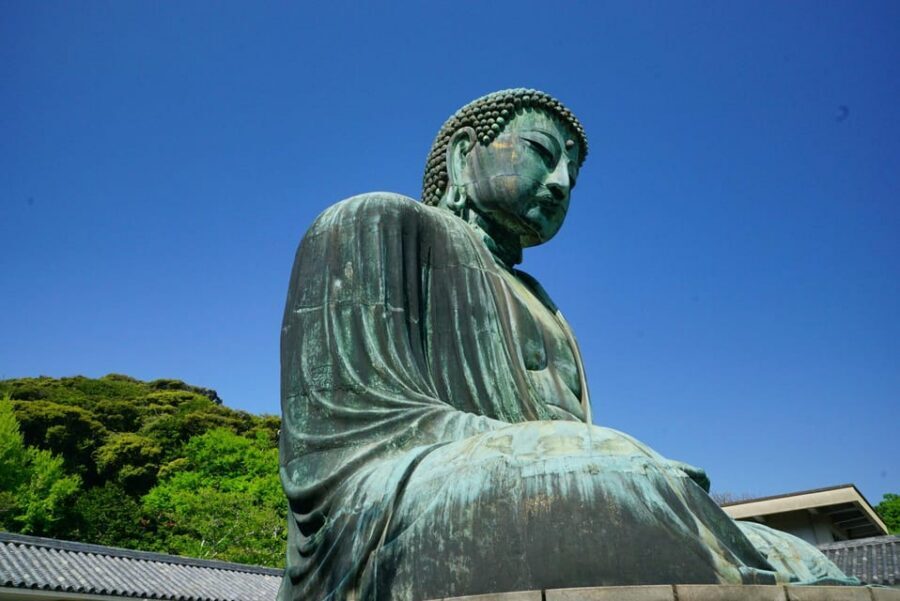
- Kotoku-in Great Buddha time that’s long enough to actually look closely at the statue
- Komachi Street snack break (snack or beverage choice up to 500 JPY)
- Tsurugaoka Hachiman-gū guided time after the walk from Kamakura Station
- Guide support from Tokyo so you’re not managing transfers alone
Why the Enoden coastal train makes Kamakura feel real
Kamakura can be toured in a “check the box” way. This one feels different because you start with the Enoden, the local electric railway that runs right along the coast. That ride matters. It’s not just transport—it’s the vibe. You watch the shoreline and neighborhoods slide by, and it keeps the day from feeling like only temples and monuments.
I also like that the tour doesn’t try to cram in every shrine in town. Instead, it gives you enough structure to see the key icons—Hase-dera, the Great Buddha, then Tsurugaoka Hachiman-gū—while still leaving a chunk of free afternoon time after the tour ends.
And yes, Kamakura has a very tourist-famous loop. But when you’re moving on an Enoden day pass with a guide pacing you, the experience stays grounded and manageable.
Getting started in Shinjuku: Suica Penguin Plaza is the anchor
Your meeting point is Suica Penguin Statue on the second floor of the Shinjuku Expressway Bus Terminal building, attached to JR Shinjuku Station. The wording on maps can be vague, so I’d treat this like a “meet at the exact landmark” day.
Your guide will contact you via WhatsApp before the tour starts (if you have it). If you don’t get a message, you still need to show up and be reachable by phone in case the guide can’t find you quickly. That’s not trivia—it’s the difference between an easy start and a stressful one.
One real caution from a past booking: someone had trouble locating the meeting point because they only knew the broader area, not the specific landmark. So do yourself a favor: screenshot the exact spot and plan to arrive early enough to orient yourself without rushing.
The ride plan: Odakyu to Fujisawa, then Enoden with a Freepass
After a short walk toward the Odakyu area near Shinjuku Station, you take the Odakyu Odawara Line to Fujisawa with your guide. From there, the tour switches to the Enoshima Electric Railway Enoden for the coastal stretch into the Kamakura area.
Here’s the practical value: you’ll use an Enoshima & Kamakura Freepass that allows unlimited Enoden rides until the tour ends. That means you’re not stuck timing every segment perfectly. It’s also a nice bonus if you want to hop off later and use the remaining time well.
The total “train time” on the schedule is about 110 minutes, which is long enough to enjoy the ride, but not so long that you lose the day to transit. It’s a good middle ground for a half-day tour.
Hase-dera in 45 minutes: flowers, caves, and bay views
Hase-dera is often called the temple of flowers, and the reason it fits this tour is that it offers variety in a compact area. You’ll get a guided visit for about 45 minutes, which is enough time to see the major parts without turning it into a sprint.
What to expect as you move through:
- Gardens you can actually enjoy, not just pass through
- Caves and Buddhist halls that add texture beyond the open-air views
- A panoramic terrace facing the bay, where the scenery is part of the payoff
The main drawback is that your pace is guided. If you’re the type who likes to take long breaks in one spot for photos, you might wish you had more time. Also, note the overall walking distance for the tour is around 3 km total, so comfortable shoes are not optional here.
If you want a tip that makes Hase-dera feel more meaningful: pause at viewpoints and look for details in the architecture and setting. With a timed tour, you’ll get the “wow” moments, but only if you give your attention to the stops—not just the route between them.
Kotoku-in: the Great Buddha, and how to spend your 20 minutes well
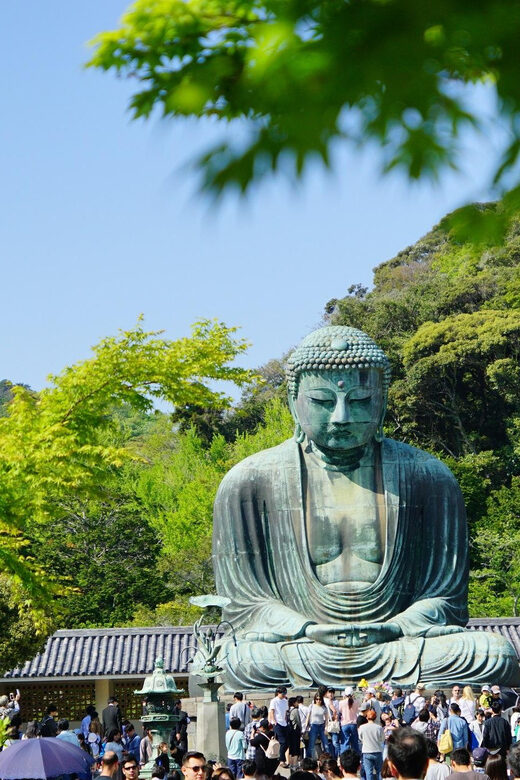
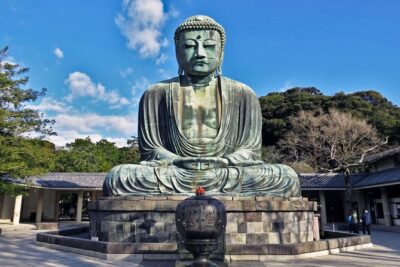
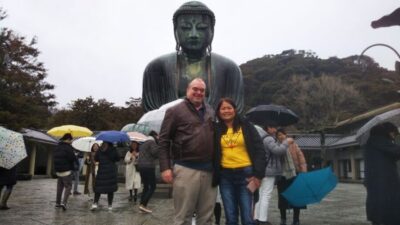
Next up is Kōtoku-in Temple, famous for the Great Buddha statue. Your visit is about 20 minutes, and that’s actually a workable amount of time if you know what you’re looking at.
This is the kind of site where standing still helps. So instead of racing around for angles, I’d focus on:
- The overall scale of the statue from a distance
- The surface details up close (where time lets you slow down)
- Any points where your guide points out meaning or historical context
You’ll stay long enough to be speechless and then recover enough to notice details. That sounds dramatic, but it’s accurate. The Great Buddha has a way of doing that.
Photography inside is listed as not allowed, so plan to enjoy with your eyes. If you’re a heavy photo shooter, you’ll want to be mentally ready for fewer shots than you might expect.
Komachi Street snack break and the walk to Tsurugaoka Hachiman-gū
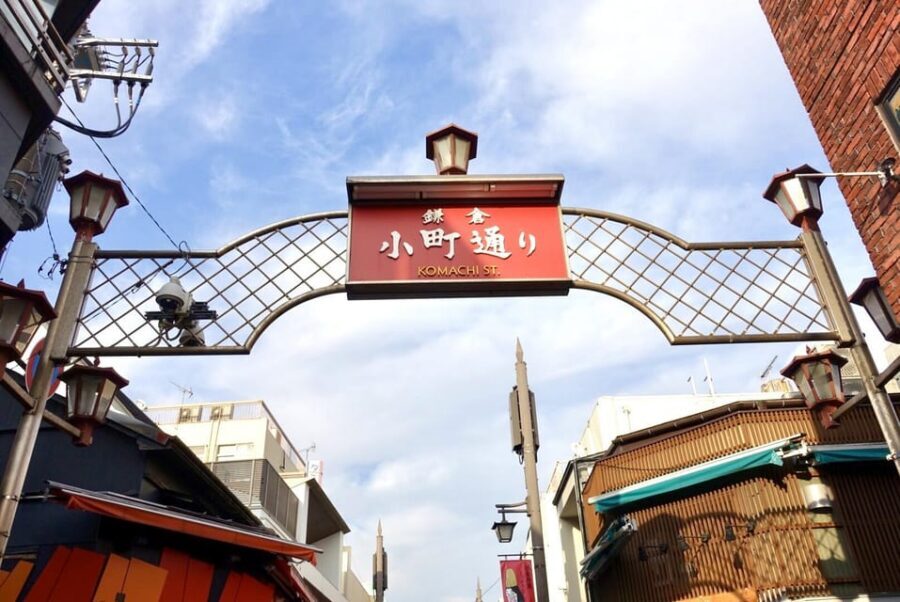
After Kōtoku-in, you ride the Enoden again toward Kamakura Station. Then you walk into town along Komachi Street (Komachi-dori) for about 20 minutes of break time.
This is a smart stop. It gives your legs a reset, and it also puts you in the everyday Kamakura flow where snacks are part of the atmosphere. You’ll get local snacks or a beverage choice up to 500 JPY per person, which is a nice “try something without planning” kind of perk.
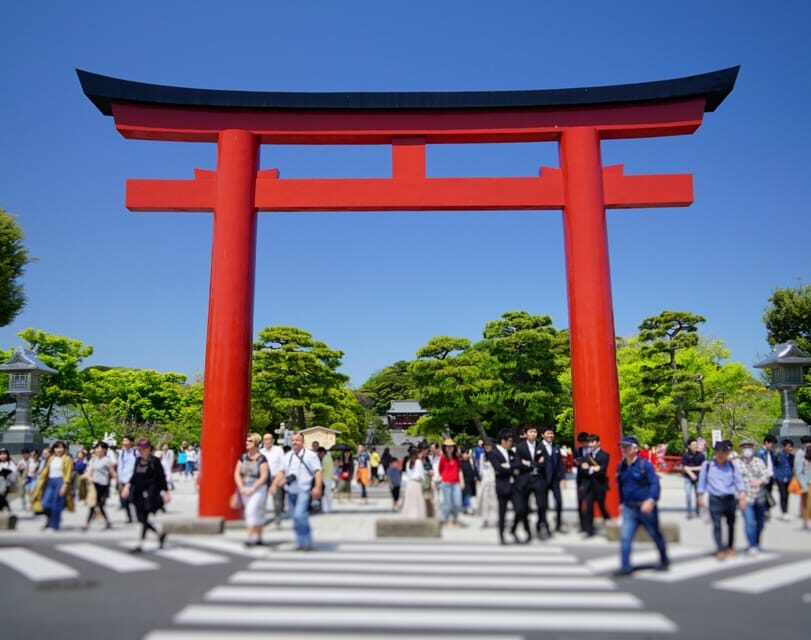
Then you head toward Tsurugaoka Hachiman-gū, where the deity of war is enshrined. You’ll have a guided visit for about 20 minutes. This is where the tour connects Kamakura’s identity to its samurai-era roots. Even if you’re not a deep-history person, the guide’s explanation makes the space feel less like a stop and more like a story.
One consideration: the tour ends at the shrine, and your afternoon is open. If you want to keep going, this is a great base. If you prefer a calmer afternoon, you’ll also be set up to head back easily from the Kamakura area.
Price and value: is $83 actually a deal?
At $83 per person for a roughly 330-minute half-day, the real question is what you’re getting.
Included items:
- An English-speaking guide from Tokyo to Kamakura (also English/Spanish overall)
- Return transportation ticket from Shinjuku, tied to the Enoshima & Kamakura Freepass use
- Entrances to Hase-dera and Kōtoku-in
- A snack or beverage choice up to 500 JPY
Not included:
- Lunch
So the value comes from the “hidden costs” of not having to coordinate transfers, not paying separate entrance fees for the big temples, and not losing time figuring out timing between trains. If you’re comfortable building your own route, you could do Kamakura independently. But if you’d rather spend your energy on the sights and let the guide handle the pacing and transport, $83 starts to look very reasonable for a half-day plan.
My advice: treat the included snack as your flexible fuel, but plan for lunch later on your own if you’re hungry.
Comfort, rules, and season tips that you should actually care about
This tour is built for walking and temple visits, so the small rules matter more than you might expect.
- You’ll walk about 3 km total, and the tour is not suitable for low fitness levels.
- Bring comfortable shoes.
- In summer, bring plenty of water, a wipe, and possibly a change of clothes because it can be very hot and humid.
- You can’t bring luggage or large bags.
- Short skirts and loose clothing are listed as not allowed.
- Photography inside is not allowed.
If you’re traveling light, you’ll feel fine. If you’re carrying a bigger daypack, you’ll want to reconsider what you bring so you don’t get stuck adjusting plans mid-day.
Also, your guide will be contacting you via WhatsApp ahead of time. If you’re the type who turns off phone notifications to save battery, this is the one time you should keep them on or set yourself a reminder.
What guides do best here (Silvy and Romy as examples)
You’re not just buying transport plus entrances. You’re buying a guide who knows how to connect each stop.
In past experiences, guides such as Silvy have been praised for being timely, patient, and for sharing helpful follow-up information after the tour. Another guide, Romy, has been noted for being knowledgeable, adaptable, and great at keeping the experience engaging while still hitting the major sites.
Even if your guide is someone else, the pattern matters: this is a tour where the guide’s pacing and explanations are part of the value, not just a bonus.
Who should book this Kamakura half-day walk
This tour fits best if:
- You want a short, structured day that still includes major highlights
- You like the idea of traveling by Enoden and using the Freepass
- You want temple time with a guide explaining context
- You prefer a guided plan but still want an open afternoon after
It’s less ideal if:
- You need lots of free wandering time inside temples
- You plan to rely heavily on photography inside (not allowed)
- You have limited walking ability (about 3 km total)
If you’re balancing Tokyo already-booked days, this is a good way to get Kamakura without turning it into a whole travel project.
Should you book this Kamakura tour?
Book it if you want Kamakura as a clean half-day experience: train views first, then Hase-dera and the Great Buddha, then street snacks and a shrine finish with time for your own afternoon plans. The included entrances and Freepass help keep it efficient, and the snack perk keeps it practical.
Skip it if you’re already an experienced independent traveler who prefers long temple time at your own pace, or if you’re worried about managing the meeting point. If you do book, solve that risk by arriving early at Suica Penguin Plaza and making sure your phone can receive WhatsApp/calls.
FAQ
Where is the meeting point?
The meeting point is at the Suica Penguin Statue on the second floor of the Shinjuku Expressway Bus Terminal building attached to JR Shinjuku Station. You can also reach it from the new south gate.
How do you travel from Tokyo to Kamakura?
You ride the Odakyu Odawara Line from Shinjuku to Fujisawa, then take the Enoden train (Enoshima Electric Railway) from Fujisawa to the Kamakura area along the coast.
Is transportation included in the price?
Yes. The tour includes return transportation ticket from Shinjuku using the Odakyu Kamakura-Enoshima Pass.
Are temple entrances included?
Yes. Entrances to Hase-dera and Kōtoku-in are included.
Does the tour include food and lunch?
Lunch is not included. You do get local snacks or a beverage of your choice up to 500 JPY per person.
Can I take photos inside temples?
Photography inside is not allowed.
What should I bring and what’s the walking like?
Bring comfortable shoes. You’ll walk approximately 3 km total, and the tour is not suitable for low level of fitness.
Is there cancellation flexibility?
Yes. You can cancel up to 24 hours in advance for a full refund.
More Tours in Kamakura
More Tour Reviews in Kamakura
More Days by the Great Buddha
Kamakura Day Trips, compared.
 ★ 4.5Kamakura & Enoshima Day Trip including Temple TicketsFrom $581,375 reviews
 ★ 4.5From Tokyo: Kamakura & Enoshima 1-Day Bus TourFrom $66189 reviews
 ★ 5.0Kamakura Historical Walking Tour with the Great BuddhaFrom $98129 reviews
Kamakura Private Tour: Temples, Nature, and the Great BuddhaFrom $98121 reviews
Kamakura Walking Tour – The City of ShogunFrom $35100 reviews
★ 5.0Kamakura Historical Walking Tour with the Great BuddhaFrom $98129 reviews
Kamakura Private Tour: Temples, Nature, and the Great BuddhaFrom $98121 reviews
Kamakura Walking Tour – The City of ShogunFrom $35100 reviews
 ★ 5.0Kamakura 8 hr Private Walking Tour with Licensed Guide from TokyoFrom $20180 reviews
 ★ 4.1Kamakura & Enoshima Day Tour with Pickup & Train RideFrom $1361 reviews
 ★ 4.8Kamakura: Private Guided Walking Tour with Local GuideFrom $10660 reviews
Browse the lists this tour appears in