
Reviewed · MT FUJI DAY TRIPS
From Tokyo: Mount Fuji Sightseeing Full Day Trip
Fuji days feel like a magic trick.
This full day trip takes you out of Tokyo to the Mount Fuji World Heritage area, with planned photo-and-walk stops around Lake Kawaguchi. You’ll see the classic Fuji views at places like Chureito Pagoda and Oishi Park, and you’ll also get cultural stops with shrines and historic-style buildings. The route is built to keep things moving, with short, timed visits that still hit the big names.
I especially liked the mix of nature and culture in one loop: thatched-roof village, spring-water ponds at Oshino Hakkai, plus shrine time at Arakura Fuji Sengen Shrine. Another big plus is the on-the-ground pacing with an English-speaking guide (some standouts like Tim, Betty, Joey, Kevin, and guides with names like Kishida Wennie), so you’re not just wandering and guessing.
One consideration: if the weather is bad, your Fuji photos can fall flat. A cloudy, cold, wet day can hide the mountain completely, and you’re also limited by the group schedule—some stops can feel like quick look-then-go.
In This Review
- Key moments that make this trip worth your time
- The real deal: why this Mount Fuji day trip works from Tokyo
- Saiko Iyashi no Sato Nenba: thatched roofs and a samurai-helmet look
- Chureito Pagoda and Arakurayama Sengen Park: the Fuji postcard, timed for photos
- Arakura Fuji Sengen Shrine: a quick step into a very old place
- Oshino Hakkai: eight spring ponds that stay clear
- Lake Kawaguchiko and Oishi Park: Fuji shore views plus flower-season variety
- Kawaguchiko Natural Living Center: the red torii Fuji photo angle
- 10 hours, one group, and how to use the time well
- Guide and driver energy: why names like Tim, Betty, Joey, and Kevin matter
- What you get for $59: value math that actually makes sense
- Who this tour is best for (and who should think twice)
- Should you book this Mount Fuji sightseeing full day trip from Tokyo?
- FAQ
- How long is the Mount Fuji sightseeing day trip from Tokyo?
- What does the price of $59 include?
- Is Mt. Fuji guaranteed to be visible during the tour?
- What are the main stops on the itinerary?
- Are admission tickets included for all stops?
- How many people are on the tour at most?
- Is there a free cancellation option?
Key moments that make this trip worth your time
- Saiko Iyashi-no-Sato Nenba: kabuto-zukuri thatched roofs shaped like samurai helmets
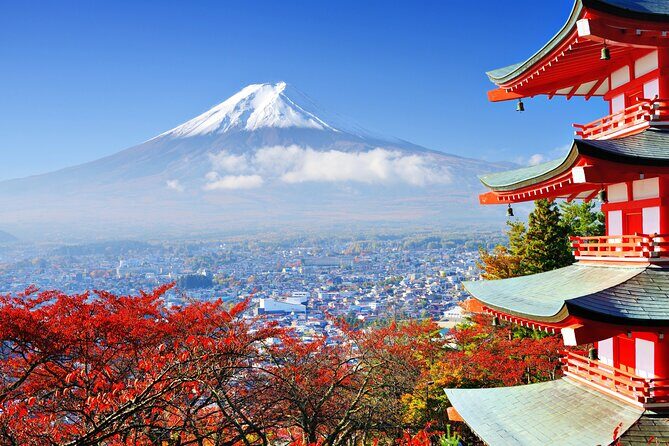
- Chureito Pagoda in Arakurayama Sengen Park: the postcard view of pagoda + Mt. Fuji + city in one frame
- Oshino Hakkai’s eight spring-water ponds: clear ponds recognized as Top 100 Famous Waters of Japan
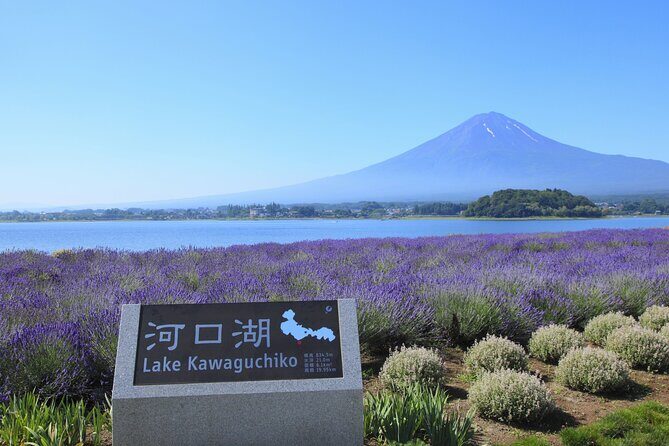
- Lake Kawaguchiko + Oishi Park: calm shore views and flower-season promenades with Fuji in the background
- Kawaguchiko Natural Living Center: a simple, timed stop for the red torii + Fuji photo angle
- Group size capped at 48: enough people for energy, not so many that the day turns into chaos
Other routes to the mountain, compared
- Mt Fuji & Hakone Cruise, Drum Show Bullet Train 1 Day from Tokyo★ 4.0 · 7,413 reviews
- Tokyo Mt Fuji 5th St & Hakone Cruise Bus Tour w/Bullet Train★ 4.4 · 5,024 reviews
- From Tokyo: Mount Fuji Full-Day Sightseeing Trip★ 4.5 · 4,970 reviews
The real deal: why this Mount Fuji day trip works from Tokyo
If you’re doing Tokyo and only have one full day for Fuji, this kind of itinerary is a smart fit. You get the “greatest hits” of the Mount Fuji area without having to plan trains, buses, and transfers on your own.
The trip runs about 10 hours and includes an air-conditioned vehicle, plus “all fees and taxes.” That matters because the Mount Fuji region can add up fast once you start paying for site entries and getting transport sorted.
You’ll also get an important reality check up front. This is a sightseeing loop with short stops (some as brief as 15 minutes). That makes it efficient, but it means you can’t count on slow soaking time at every spot.
Saiko Iyashi no Sato Nenba: thatched roofs and a samurai-helmet look
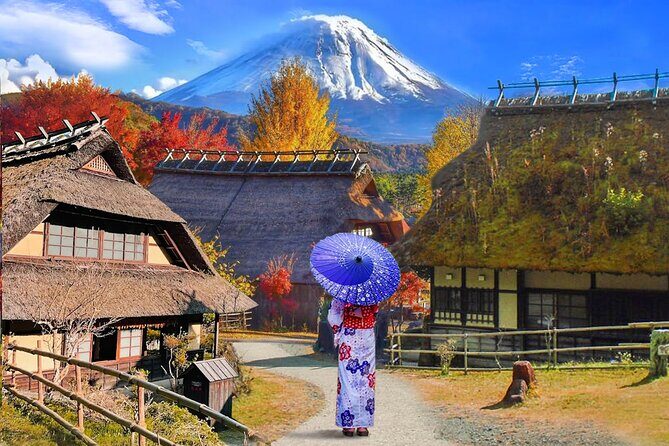
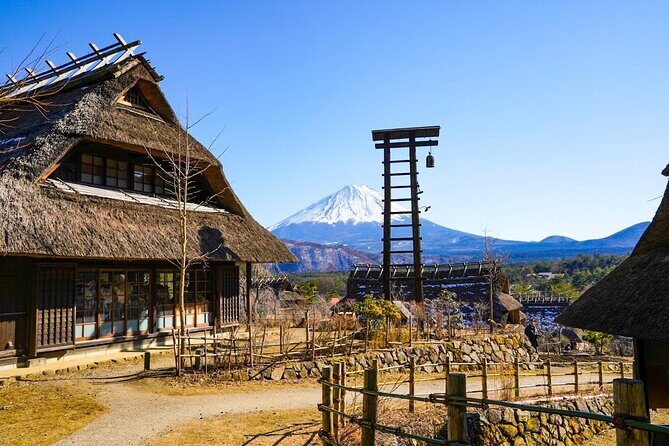
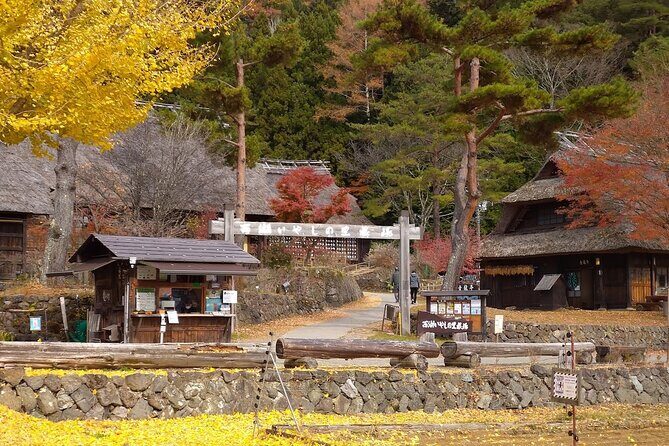
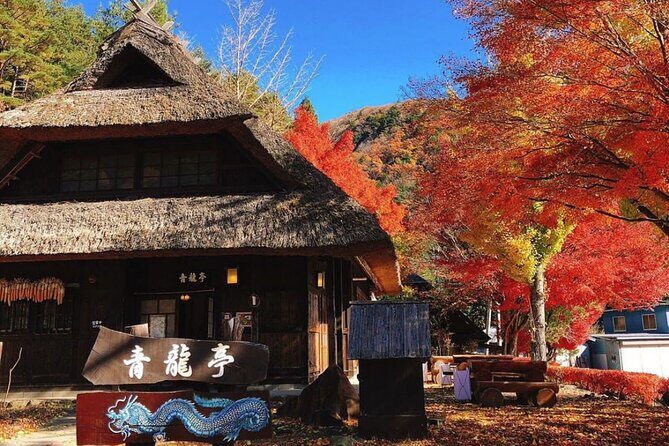
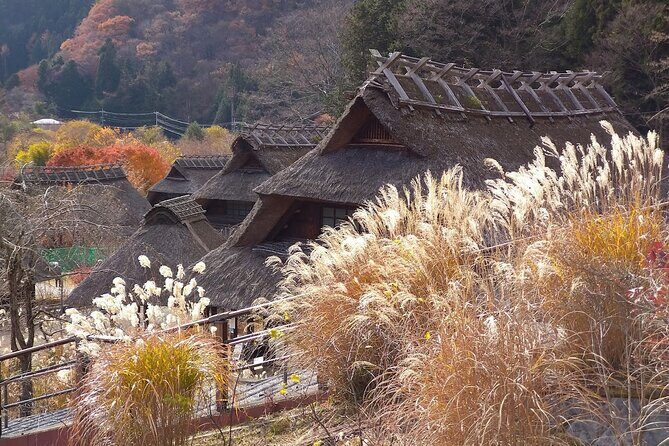
The day starts at Saiko Iyashi-no-Sato Nenba, on the western side of Lake Saiko. The village is known as the most beautiful village in Japan, and the visuals are the main draw: you’re walking through about 20 thatched-roof houses designed in kabuto-zukuri style—roofs that resemble samurai helmets.
Why I like this stop for a first-timer: it slows the pace in a good way. You’re not just taking a Fuji photo. You’re stepping into a preserved, traditional setting that helps the rest of the day feel more grounded.
What to watch for: it’s about a 1-hour stop, and you’ll likely move in a group. If your goal is deep photos or extra time inside, keep your best shots planned early, because the clock is real.
Chureito Pagoda and Arakurayama Sengen Park: the Fuji postcard, timed for photos
Next comes Chureito Pagoda inside Arakurayama Sengen Park. This is one of Japan’s most famous Fuji-photo compositions: a small pagoda with Mt. Fuji behind it, plus the city view at the foot of Fujiyoshida.
The route gives you about an hour here, and that’s enough for the basics: get into position, shoot from the obvious angles, then take a slower look at the park layout.
Here’s the practical part: this is a weather-dependent stop. If Mt. Fuji is hidden, the pagoda still looks great, but your “Fuji moment” may disappear. One past guest had the tough experience of a cloudy day where they couldn’t see Mt. Fuji at all, and the weather turned cold and wet. If you’re sensitive to discomfort, pack for rain and cool air, even if Tokyo feels warm in the morning.
Arakura Fuji Sengen Shrine: a quick step into a very old place
Then you’ll visit Arakura Fuji Sengen Shrine. The shrine was built in 705 and has been tied to Arakura Village for more than 1,300 years, serving as a guardian site for people seeking protection and harmony.
This stop is short—about 15 minutes—so treat it like a moment to reset your brain. You’re switching from postcard photography back to something more spiritual and local.
The risk with short shrine time is information can feel limited. In one experience, the guide’s history sharing wasn’t as deep as hoped. Still, even a brief shrine visit can be worthwhile if you’re there for atmosphere and respectful wandering rather than a lecture.
Worth weighing up alongside this Tokyo pick:



Oshino Hakkai: eight spring ponds that stay clear
Oshino Hakkai is one of the most logical stops on this kind of route. It’s a village known for eight clear spring-water ponds, recognized among Japan’s Top 100 Famous Waters.
Why this matters: these ponds are a direct reminder that Fuji isn’t only a view. It’s a water source and a living system. The clear, calm look is also a nice contrast after the more crowded photo spots.
You get about an hour here. That’s enough time to see the ponds, walk around, and pick your preferred angles without feeling rushed every 30 seconds.
This part is often a little calmer than the big pagoda area, so if you’re tired of crowds, Oshino Hakkai can give you breathing room.
Lake Kawaguchiko and Oishi Park: Fuji shore views plus flower-season variety
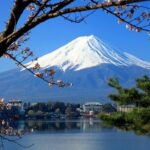
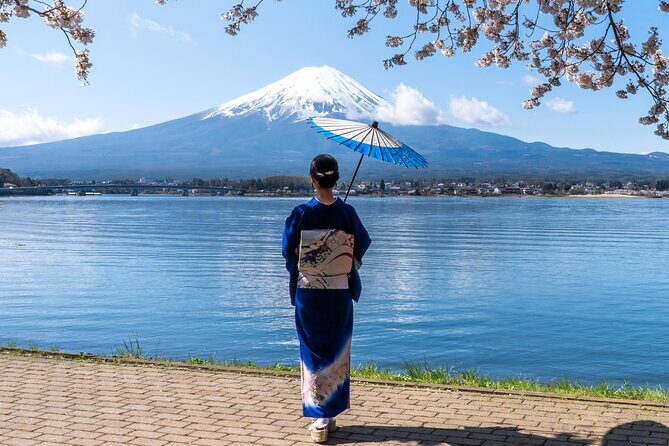
Your next big nature section centers on Lake Kawaguchiko, the most popular of the Fuji Five Lakes and known for panoramic views of Mt. Fuji from the shore. It also has the longest shoreline among the five lakes, which is part of why it works for multiple sight points.
The stop time is short—around 20 minutes. That means this is more about quick scenic viewing and photo grabbing than lingering.
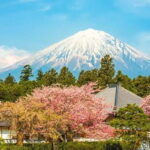
Right after that, you’ll head to Oishi Park, a lakeside area built for the “Fuji in one frame” effect. You get a chance to see flowers blooming in different seasons alongside the lake promenade and the mountain view.
Expect about 30 minutes at Oishi Park. That extra time compared to Lake Kawaguchiko helps. You can usually do a walk plus a couple of photos without feeling like you’re sprinting.
Important tip: if Fuji is visible, these are the moments you’ll remember. If it’s not, you’ll still enjoy the lake and gardens, but the whole tour’s emotional payoff changes. Plan your day with that in mind.
Kawaguchiko Natural Living Center: the red torii Fuji photo angle
The last scenic “signature shot” stop is Kawaguchiko Natural Living Center. The timed highlight is on the second floor, where you can capture the red torii blending with Mt. Fuji.
This is the kind of stop that’s small in time but big in results when the weather cooperates. You get about 15 minutes here, so come ready to take photos quickly, then enjoy what you can without expecting a long wander.
If you’re traveling with a camera, this is a good place to set your tripod strategy or lens choice—because the torii + Fuji composition is the point of the visit.
10 hours, one group, and how to use the time well
This trip is efficient by design. You’ll be moving between multiple areas around Lake Kawaguchi, with scheduled stop durations ranging from 15 minutes to 1 hour.
What that means for you:
- Start each stop with one goal. Pagoda photos. Pond views. Village roof details. Don’t try to do everything at once.
- Keep an eye on clothing comfort. One cloudy-day experience ended with cold and wet conditions. You don’t want to be miserable when you only have 20 minutes at a viewpoint.
- You’ll likely follow a route set by the group. It’s not a free-form adventure, so go with the flow and focus on getting the best shots you can within the time window.
The vehicle ride being air-conditioned helps, especially if you’re coming from central Tokyo in warmer months. Still, bring layers for the higher elevation feel around Fuji when the day turns cooler.
Guide and driver energy: why names like Tim, Betty, Joey, and Kevin matter
The guide can make or break a group day. The best version of this tour is when the guide doesn’t just announce stops, but helps you understand what you’re seeing and keeps everyone moving smoothly.
I saw that pattern in real-world feedback. Names that stood out included Tim, Betty, Joey, and Kevin—people credited with being friendly, punctual, and helpful with meeting points and photo guidance. Some guides also explained history and gave practical expectations so the group knew where to stand and what to look for.
There’s also a realistic side. One experience mentioned the guide was friendly but didn’t share much history of Mount Fuji or the Kawaguchiko area, and there was even a bit of pressure around selling something. If you care a lot about deep background, arrive with questions you can ask directly, and don’t rely on the guide for a full lecture at every stop.
Either way, the day is structured so you’re never completely on your own. The combination of an English-speaking guide and a driver who knows the route keeps the stress low.
What you get for $59: value math that actually makes sense
At $59 per person, the tour sits in a sweet spot for people who want a one-day Fuji hit without going full DIY.
Here’s the value logic:
- Transport is included (air-conditioned vehicle for the day).
- All fees and taxes are included.
- Saiko Iyashi-no-Sato Nenba has admission included (others are listed as free at the stops).
- You get a full structured day around the Mount Fuji area instead of paying for multiple separate tickets and transfers.
Lunch is not included, so you’ll need to budget for food on your own. That’s normal for day trips, but it’s still the one expense that can quietly add up depending on what you choose to eat.
If you’re comparing against booking separate bus tickets, entrance fees, and private guide time, this kind of all-in setup can be a bargain—especially if you’d otherwise spend the day figuring out logistics.
Who this tour is best for (and who should think twice)
This itinerary is best for:
- First-timers who want the major Mount Fuji sights in one day
- People who prefer guided structure over independent routing
- Travelers who like photo-friendly stops with limited walking time
- Anyone who values not planning transport from Tokyo for multiple locations
You might think twice if:
- You need long, slow time at each sight. Stop durations are short.
- You’re unhappy when weather spoils visibility. Fuji can vanish on cloudy days.
- You’re hoping for very deep history at every stop. Some guides focus more on practical viewing than long explanations.
If you’re a “one-and-done Fuji trip” person, this fits. If you’re the type who wants to hike, linger, or explore hidden corners, this is more of a highlight tour than a long-form exploration.
Should you book this Mount Fuji sightseeing full day trip from Tokyo?
Book it if you want a clean, efficient Mount Fuji day with guided help and a lineup of iconic spots: Saiko Iyashi-no-Sato Nenba, Chureito Pagoda, Oshino Hakkai, and the Fuji viewpoints around Lake Kawaguchiko and Oishi Park.
Don’t book it if your travel style demands slow time at each place or you’d be deeply disappointed by Fuji being obscured by clouds. In that case, you might prefer a flexible plan that gives you extra days or more time at fewer stops.
One last practical takeaway: treat this like a photography-and-scenery day with culture sprinkled in. Plan your expectations around time and weather, dress for cool wet conditions just in case, and you’ll get a memorable Fuji-focused day without burning your whole schedule.
FAQ
How long is the Mount Fuji sightseeing day trip from Tokyo?
The tour is about 10 hours.
What does the price of $59 include?
It includes an air-conditioned vehicle and all fees and taxes. Lunch is not included.
Is Mt. Fuji guaranteed to be visible during the tour?
No. If the day is cloudy, you may not be able to see Mt. Fuji clearly.
What are the main stops on the itinerary?
You’ll visit Saiko Iyashi-no-Sato Nenba, Chureito Pagoda in Arakurayama Sengen Park, Arakura Fuji Sengen Shrine, Oshino Hakkai, Lake Kawaguchiko, Oishi Park, and the Kawaguchiko Natural Living Center.
Are admission tickets included for all stops?
Saiko Iyashi-no-Sato Nenba includes admission ticket. Other listed stops are marked as free.
How many people are on the tour at most?
The tour has a maximum of 48 travelers.
Is there a free cancellation option?
Yes. You can cancel for a full refund up to 24 hours in advance.
If you want, tell me what month you’re going and whether you care more about photos or culture, and I’ll help you decide if this schedule matches your expectations.
More Full-Day in Tokyo

More Tour Reviews in Tokyo






The Fuji Shortlist: Other Days Out to the Mountain
Fresh reviews from around Tokyo






Mt Fuji Day Trips, compared.
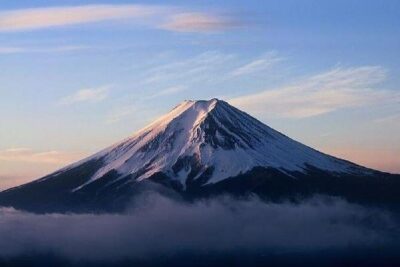 ★ 4.0Mt Fuji & Hakone Cruise, Drum Show Bullet Train 1 Day from TokyoFrom $1497,413 reviews
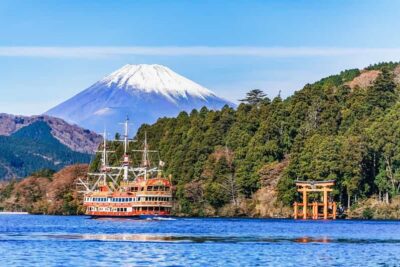 ★ 4.4Tokyo Mt Fuji 5th St & Hakone Cruise Bus Tour w/Bullet TrainFrom $1545,024 reviews
 ★ 4.5From Tokyo: Mount Fuji Full-Day Sightseeing TripFrom $684,970 reviews
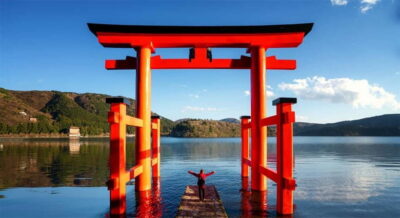 ★ 4.7Mt. Fuji Tour, Hakone Ropeway, Owakudani, Lake AshiFrom $544,002 reviews
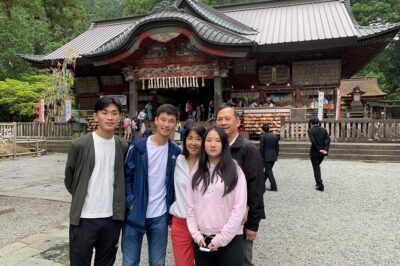 ★ 5.0Private Tour to Mt. Fuji and Hakone (Fully Licenced Operator)From $4971,910 reviews
 ★ 4.9Mount Fuji Full-Day Private Tour from Tokyo (Customizable)From $3931,470 reviews
 ★ 4.0Mt Fuji & Hakone Cruise, Drum Show Bus 1 Day from TokyoFrom $1221,287 reviews
 ★ 4.2From Tokyo: Mt. Fuji & Hakone Tour w/ Return by Bullet TrainFrom $1171,278 reviews
Browse the lists this tour appears in