
Reviewed · PHOTOGRAPHY SESSIONS
Explore Unique Tokyo Streets / Learn with a Pro Photographer
Tokyo nights teach your camera new tricks.
I love how this tour turns a simple evening stroll into real photo practice with personal coaching. You’ll explore Yurakucho and Shinbashi after dark, where the street lights and everyday Tokyo scenes give you plenty to frame and shoot. And it’s led by pro photographer Deniz Demir, so you’re not just walking around—you’re learning how to see and how to improve your results.
Two things I especially like: first, the max group size of 6 means you get feedback you can use immediately. Second, Deniz’s teaching covers both basics and more advanced street-shooting thinking, including topics like lenses, settings, and even specialty ideas such as LEDs and prisms. One possible drawback: the tour is only about 2 hours, so if you’re hoping for a long, leisurely hang in one neighborhood or a deep gear workshop, you may wish it lasted longer.
In This Review
- Key Points You’ll Actually Use
- Yurakucho and Shinbashi After Dark: Why Night Street Photos Work
- Your Guide: Deniz Demir and What You’ll Learn on the Move
- The Coaching Style: From Gear Talk to Street Shooting Philosophy
- A Practical 2-Hour Flow Through Tokyo’s Real Streets
- Framing and Composition in Real Life, Not Theory
- Weekday Evenings and Salaryman Culture: Shooting People Without Getting in the Way
- Tripod Support: When Extra Stability Helps at Night
- What Makes the Price Feel Fair: $128.09 for Pro Coaching
- Who Should Book This Tour (And Who Might Not Love It)
- Should You Book Explore Unique Tokyo Streets / Learn with a Pro Photographer?
- FAQ
- Where do I meet for the tour?
- How long is the experience?
- How many people are in the group?
- Which areas of Tokyo will we explore?
- Is this tour focused on nighttime photography?
- Does the guide offer personalized photography tips?
- Can a tripod be used on the tour?
- What topics will the guide cover?
- Is there a weekday-specific theme?
- What’s the cancellation timeframe?
Key Points You’ll Actually Use
- Max 6 people means you get attention, not a lecture for the crowd
- Evening focus in Yurakucho and Shinbashi gives you high-contrast street scenes to practice
- Personalized photo coaching includes practical settings and framing advice
- Deniz Demir brings the teaching energy of a working pro photographer (and Meetup leader)
- Weekday option includes salaryman culture shots in a respectful, real-world way
- Tripod support if desired helps you steady shots when light gets tricky
More frames: other photo sessions in Tokyo
- Tokyo Go-Karting Experience: Shibuya Crossing with Photos★ 4.8 · 190 reviews
- Tokyo Cyberpunk Street Photo Tour★ 5.0 · 165 reviews
- Tokyo by Night Photography Tour (Private Option Available)★ 5.0 · 151 reviews
Yurakucho and Shinbashi After Dark: Why Night Street Photos Work
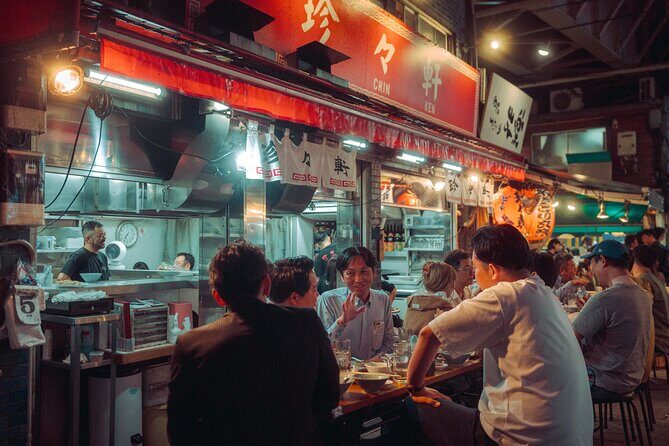
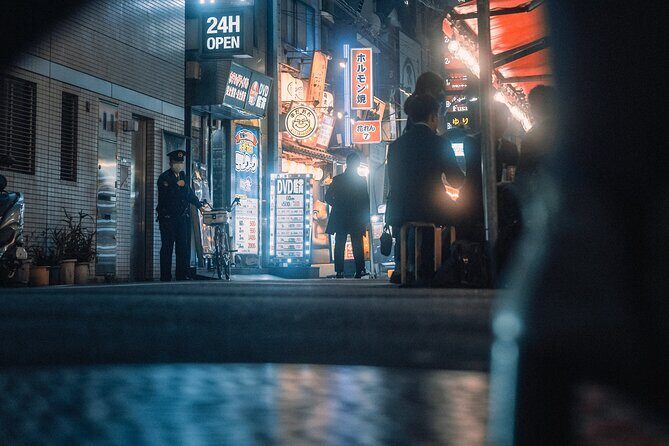
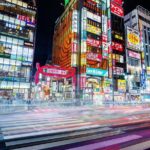
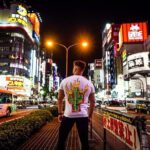
Tokyo at night is where your camera starts paying attention. The streets around Yurakucho and Shinbashi are full of signage, reflections, and the kind of layered scenes that look flat in daylight but pop after dark. That matters because street photography is about relationships—between people, light, storefronts, and lines. An evening walking tour puts you where those relationships show up fast.
I also like that this isn’t just a skyline tour. You’ll be moving through neighborhoods known for everyday city life, so your photos can include more than buildings. Expect plenty of opportunities for close-to-the-sidewalk compositions, long-ish views, and details that feel distinctly Tokyo.
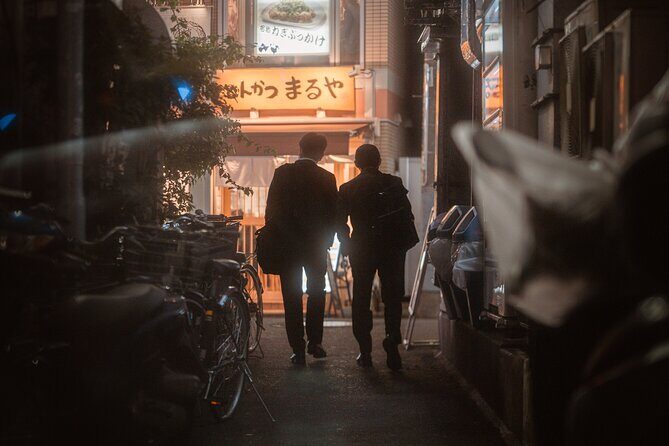
If you choose a weekday evening, you can also get a feel for Japan’s salaryman culture up close. That’s useful if you want photos with context rather than only pretty lights. The key is to watch first, then shoot in a way that doesn’t interrupt real life.
Your Guide: Deniz Demir and What You’ll Learn on the Move
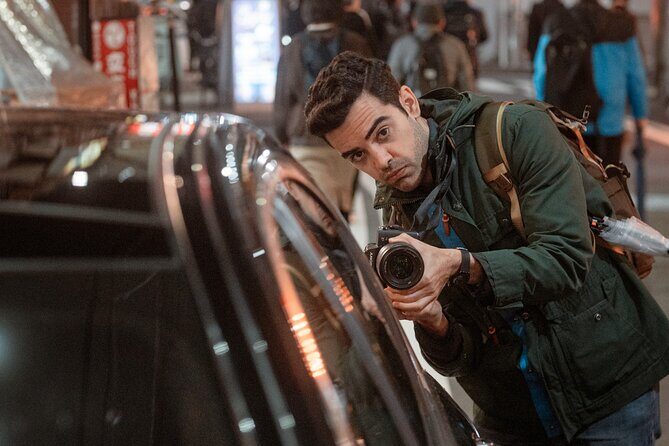
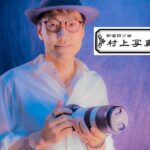
This tour is guided by Deniz Demir, a professional photographer who has been photographing Tokyo for years. He talks about how he became a photographer and how he now works from what he loves, which comes through in the way the session is structured: you’re meant to try ideas as you go.
Because the group is capped at 6 travelers, the teaching style can stay practical. Instead of you guessing whether your settings make sense, you get help tied to what you’re photographing right then. That’s a big deal, especially at night, where one wrong assumption can turn a sharp shot into a blurry mess.
Deniz also runs a large Meetup group for creatives in Tokyo, so the session has that same vibe: people with cameras, real questions, and an emphasis on making images you’re proud of. He’ll cover photo basics like settings, lenses, and other gear, then push into more advanced street-shooting thinking—things like framing and how to use what’s around you to turn an ordinary scene into something art-worthy.
The Coaching Style: From Gear Talk to Street Shooting Philosophy
A lot of photo tours stop at places. This one is different: you’re learning a way to approach street photos. Deniz talks about topics you’d expect—settings and lenses—but he also brings up ideas beyond the typical beginner list, including how to think about LED-style lighting effects and other tools like prisms. You may or may not use those specific items yourself, but the point is the same: learn how light behaves and how to use it creatively.
You’ll also cover street shooting philosophy, which is basically the skill of deciding what matters in a frame. That means you spend less time chasing random shots and more time looking for patterns: leading lines, repeated signage, human gestures, and the geometry of shopfronts.
In practice, this helps you build consistency. When you know what you’re looking for, every street corner becomes a potential photo instead of a “maybe later” situation. Since the whole experience is about improving your shots, even a short 2-hour walk can feel like a real lesson.
A Practical 2-Hour Flow Through Tokyo’s Real Streets
The tour lasts about 2 hours, and it ends back where it starts, at Shimbashi Station. That structure is good for value: you’re not burning time on long transit or complicated logistics. You start with the group together, move through Yurakucho and Shinbashi while learning, shoot, get guidance, and then wrap up.
The exact stop-by-stop rhythm isn’t spelled out here, but the focus is consistent: walk, shoot, refine. You’ll get personalized tips tied to what you’re capturing in the moment, so you can test changes quickly. That’s especially helpful at night, where exposure and stability decisions can be the difference between a keeper and a compromise.
The tour also offers several evening options for flexibility. That’s not just convenience—timing affects your photos. Choose the evening slot that fits your energy and makes you comfortable walking around after dark. In Tokyo, you’ll still find plenty to shoot at different hours, but your approach can change depending on crowd level and light.





Framing and Composition in Real Life, Not Theory
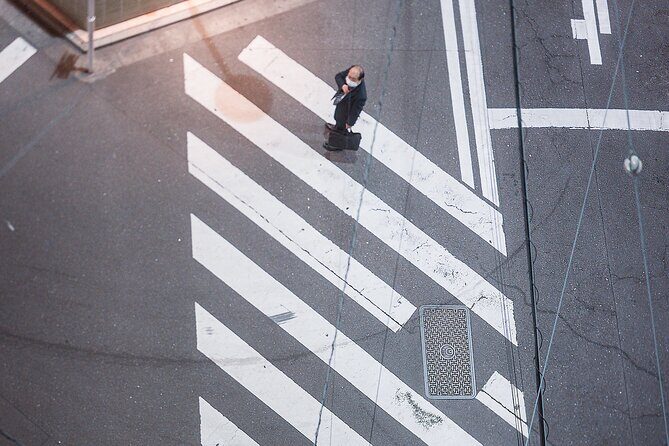
Street photography gets easier when you learn to frame deliberately. Deniz’s approach includes talk about framing and how to use your environment, and you’ll likely connect those ideas to what you see around you in Yurakucho and Shinbashi.
Here’s the practical takeaway: don’t just point your camera and hope. Pick a simple composition goal, then look for proof in the scene. That could be aligning signs with a subject, using reflections as a secondary layer, or letting the street lines guide the eye. At night, those choices get easier because the lights give you strong visual structure.
This is where the small group helps again. You can ask questions about what you’re seeing and why a particular frame works. And since the tour is designed as more than a generic sightseeing walk, the tips aren’t random—they’re tied to the street shooting philosophies you’re hearing.
Weekday Evenings and Salaryman Culture: Shooting People Without Getting in the Way
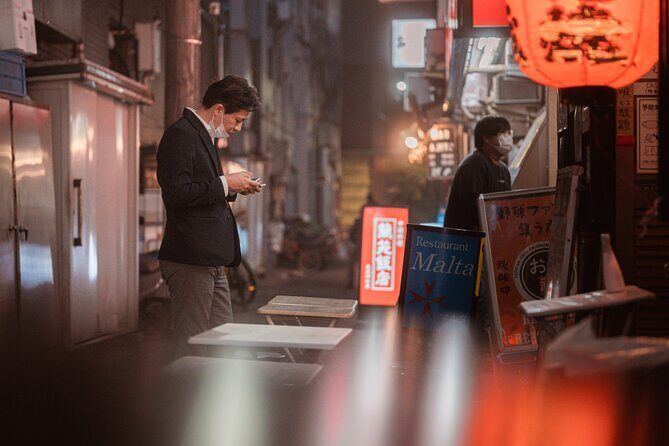
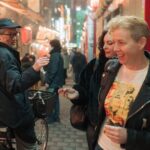
If you book a weekday evening option, you may cover Japan’s unique salaryman culture up close as you take photos. That’s valuable because it can lead to storytelling images: daily routines, commuting moods, and the small human moments that make Tokyo feel specific instead of generic.
The practical challenge with people is always the same: be respectful. You’re going for observation and atmosphere, not confrontation. This kind of cultural context is best handled by standing at a sensible distance, avoiding blocking pathways, and letting your camera choices match the scene.
Deniz’s street shooting philosophy is useful here because it nudges you to look for details instead of forcing a shot. For example, you can frame a person through a sign or storefront light, capture body language, or photograph the scene around them to imply the culture without needing a direct close-up every time.
Tripod Support: When Extra Stability Helps at Night
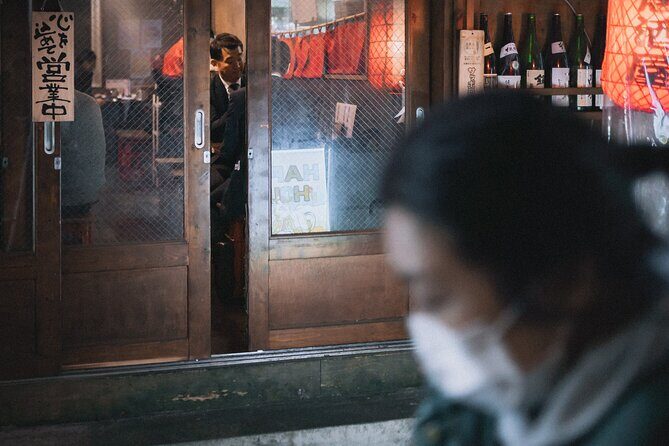
Night photography punishes shaky hands. That’s why it matters that your photographer guide can bring a tripod if desired. If you’re already comfortable using a tripod, great—you’ll likely get sharper results and more freedom to experiment. If you don’t use one often, the tour gives you a real reason to try, at least for certain shots.
Even without getting overly technical, a tripod can help you slow down and compose more carefully. And in street photography, slowing down is good. You notice more. You wait for the right alignment of pedestrians, lights, and your chosen foreground.
One consideration: a tripod adds bulk. If you’re traveling light or dislike carrying extra gear, choose a tripod-assisted moment only when it makes sense. Ask Deniz how he’d approach it for the scenes you’re walking into.
What Makes the Price Feel Fair: $128.09 for Pro Coaching
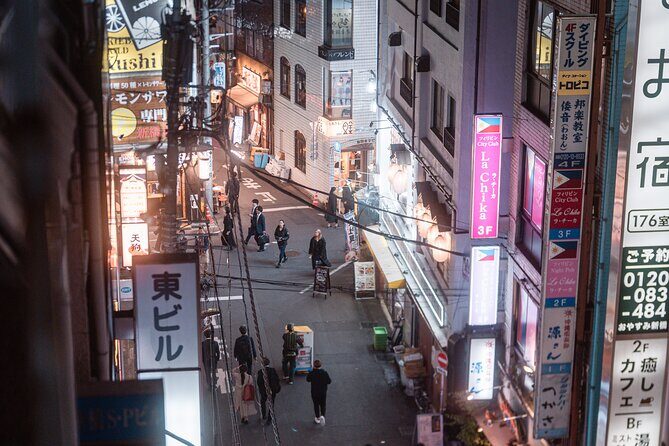
At $128.09 per person for about 2 hours, this tour isn’t priced like a budget “just walk and look” experience. It’s closer to a guided photo lesson—except you’re doing it in real Tokyo streets instead of sitting in a studio.
The value comes from a few things you can’t easily replicate alone. The first is the max group size of 6, which keeps the coaching personal. The second is Deniz’s professional perspective, including guidance that covers both basics and higher-level street thinking. The third is the setting: Yurakucho and Shinbashi at night are naturally photo-friendly, so you’re practicing where photos already happen.
You’ll also get a mobile ticket, and this is the kind of activity that tends to book ahead—on average, it’s booked about 16 days in advance. If you want a specific evening option, plan early so you’re not settling for whatever date remains.
Who Should Book This Tour (And Who Might Not Love It)
This is a strong fit if you:
- Want to improve street photos with hands-on feedback
- Enjoy walking neighborhoods and photographing real daily scenes
- Like having a pro help you connect camera settings to what you’re seeing
- Are comfortable with a moderate amount of physical walking (the tour calls for moderate fitness)
It may be less ideal if you:
- Only want classic sightseeing stops and broad city views
- Prefer a long session in one place rather than a focused evening practice walk
- Expect a full-day gear class or a detailed studio-style workshop
For most people with a camera (phone or interchangeable lens) who want better night images, this kind of coaching is exactly where your time pays off.
Should You Book Explore Unique Tokyo Streets / Learn with a Pro Photographer?
If you want a night photo experience that’s actually about improvement, I’d book it. The combination of small-group teaching, a working professional guide (Deniz Demir), and a setting designed for street photography makes the 2 hours feel efficient rather than rushed.
Book it especially if you’ve ever looked at your photos afterward and thought: I know what I shot, but I don’t really know why it worked (or didn’t). This tour gives you a way to close that gap fast—while you’re still standing in the scene.
FAQ
Where do I meet for the tour?
You meet at Shimbashi Station, 2 Chome-17 Shinbashi, Minato City, Tokyo 105-0004, Japan.
How long is the experience?
The tour is about 2 hours.
How many people are in the group?
The maximum group size is 6 travelers.
Which areas of Tokyo will we explore?
You’ll explore the Yurakucho and Shinbashi areas.
Is this tour focused on nighttime photography?
Yes. It’s an evening photography tour.
Does the guide offer personalized photography tips?
Yes. The tour provides personalized photography tips, supported by the small group size.
Can a tripod be used on the tour?
Your photographer guide can bring a tripod if desired.
What topics will the guide cover?
You can expect discussion of settings, lenses, other gear (including LED-type tools and prisms), plus street shooting philosophies, framing, and using your environment creatively.
Is there a weekday-specific theme?
On evening tours during weekdays, you may learn about Japan’s salaryman culture up close as you take photos.
What’s the cancellation timeframe?
Free cancellation is available up to 24 hours before the experience start time for a full refund.
Better Photos of Your Trip

More Tour Reviews in Tokyo



Fresh reviews from around Tokyo






Photography Sessions, compared.
 ★ 4.8Tokyo Go-Karting Experience: Shibuya Crossing with PhotosFrom $90190 reviews
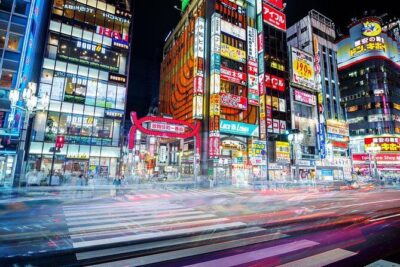 ★ 5.0Tokyo Cyberpunk Street Photo TourFrom $184165 reviews
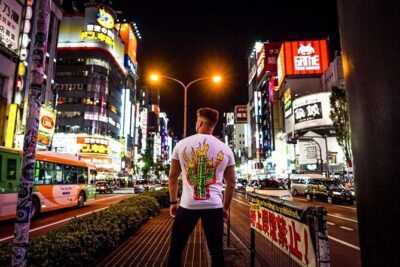 ★ 5.0Tokyo by Night Photography Tour (Private Option Available)From $105151 reviews
 ★ 5.0Tokyo Shinjuku Night Photo Tour with Pro GotaFrom $85142 reviews
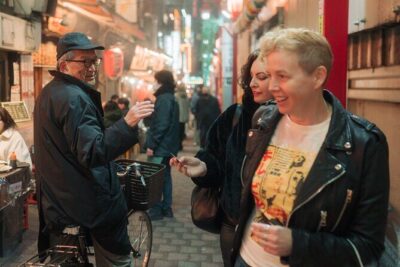 ★ 5.0Tour with Pro Tokyo Photographer and take Edgy Unique PortraitsFrom $14580 reviews
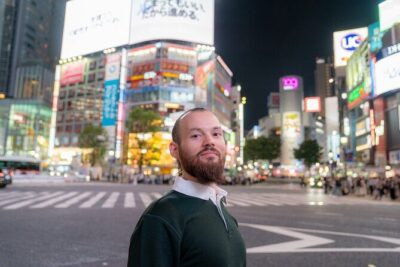 ★ 5.0Tokyo Portrait Tour with a Professional PhotographerFrom $9258 reviews
Tokyo Asakusa: Miu Kimono Rental and Optional PhotoshootFrom $3254 reviews
★ 5.0Tokyo Portrait Tour with a Professional PhotographerFrom $9258 reviews
Tokyo Asakusa: Miu Kimono Rental and Optional PhotoshootFrom $3254 reviews
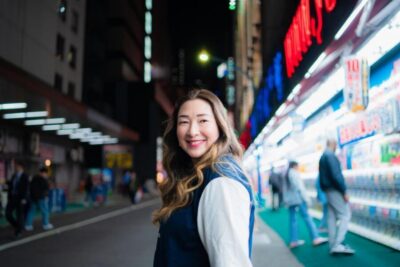 ★ 5.0Photo Shoot with a Private Vacation PhotographerFrom $28353 reviews
Browse the lists this tour appears in