
Reviewed · TOKYO
Best Go Kart Experience in Shibuya Crossing with Iconic Photos
Shibuya looks different from a go-kart seat. On this ride, you follow a guide through central Tokyo and hit the iconic gridlock moment for some very real, very funny photos from behind the wheel. Shibuya Crossing becomes your starting line, not just a landmark you stand in front of.
I especially like the small-group feel. Many departures run with only a handful of drivers, and the guide’s instructions actually land. I also love that a guide helps with photos along the way, with printed photos included in the package, plus costume time before you set off.
One thing to plan for: this is not a casual drive. You need the right hard-copy 1949 Geneva Convention IDP (or an approved substitute), and without it you can lose your spot. Also, the karts are loud, so if you want lots of narration, you may find the ride is more about driving and photo stops than extended commentary.
In This Review
- Key highlights to know before you go
- The 1 hour 20 minutes plan: what you’re really doing
- The driving permit rule that can end your day
- Costumes, photos, and the “iconic” factor that feels real
- Shibuya Crossing: the seat-of-your-pants version of the photo
- Harajuku Station and Omotesando: style streets with practical steering
- Miyashita Park and Yoyogi Park: where the ride breathes
- Night option: when the lights make the ride better
- Safety, instructions, and the “keep it together” factor
- Value check: is $106.12 worth it?
- Where this tour fits best (and where it doesn’t)
- Should you book Monkey Adventure Kart in Shibuya Crossing?
- FAQ
- Do I need an International Driving Permit to drive the go-kart?
- What if my IDP is not the 1949 Geneva Convention type?
- How long is the tour?
- Where do I meet, and where does the tour end?
- Is this tour small group?
- Which areas will we pass during the ride?
- Are costumes and photos included?
- Do they provide lockers and water?
- Is an action camera included?
- What happens if the weather is bad?
Key highlights to know before you go
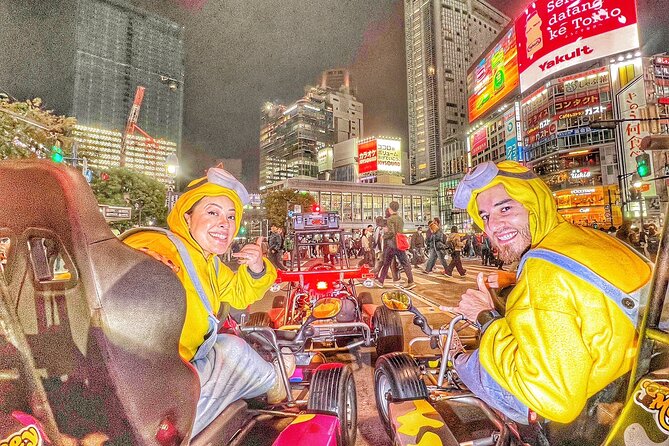
- Costume time included: pick a fun character outfit before you start rolling through the big sights
- Guide-led route: you’re not navigating Tokyo traffic on your own
- Photo stops with guidance: your guide helps capture the iconic moments and you get printed photos
- Shibuya Crossing focus: you’ll time your camera-ready moment for maximum effect
- Parks and shopping streets mix: you get contrast, from style-heavy areas to calmer greenery
Before you commit, see how this one stacks up against a few Tokyo favourites:
- Mt Fuji and Hakone 1-Day Bus Tour Return by Bullet Train★ 5.0 · 26,383 reviews
- 1-Day Tokyo Bus Tour★ 5.0 · 14,250 reviews
- Tokyo: teamLab Planets TOKYO Digital Art Museum Entry Ticket★ 4.6 · 9,779 reviews
The 1 hour 20 minutes plan: what you’re really doing
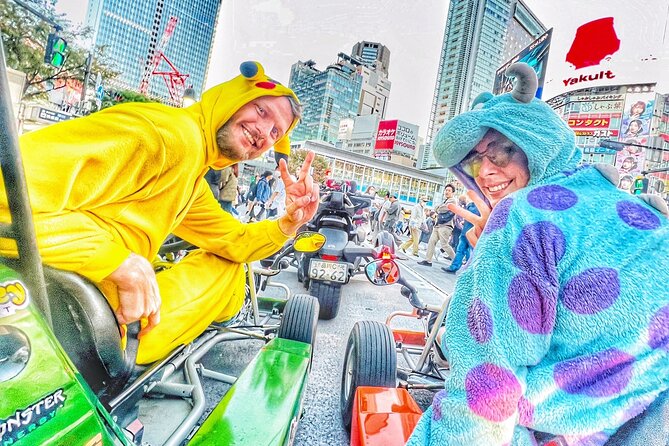
This tour is built for impact over duration. At about 1 hour 20 minutes, you’re getting multiple photo-worthy districts without turning the trip into a half-day transportation problem. The driving is the core activity, but you still get structured stops so you don’t just pedal around and hope you hit the right streets.
The pace also suits people who want Tokyo energy but hate complicated logistics. You’ll show up, get set with your safety routine, choose a costume, store belongings, and then get guided from sight to sight. Stops are quick and purposeful, which helps you spend your time on the part you paid for: steering a go-kart through central Tokyo at real intersections.
If you’re the type who likes to plan outfits for photos, the timing is good. Costume selection is early enough that you’re dressed for your best shots while the route is still fresh and exciting.
The driving permit rule that can end your day
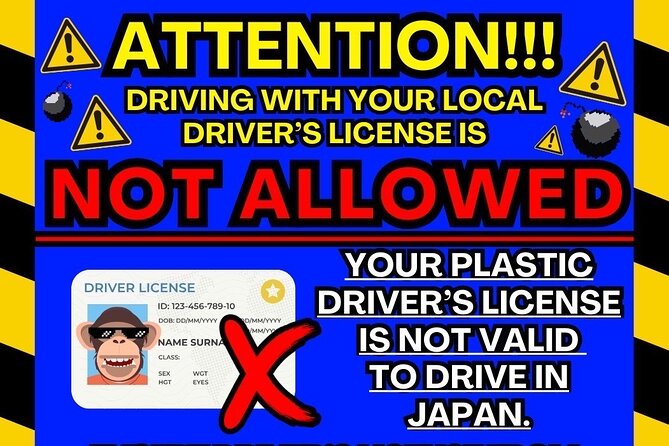
Here’s the key practical detail that matters more than anything else: you must have the correct hard-copy International Driving Permit.
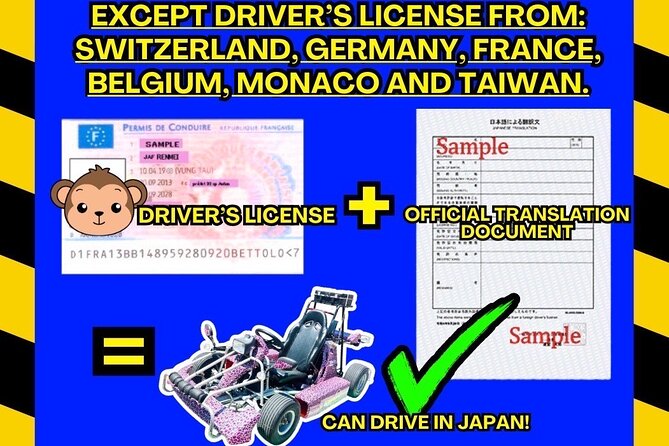
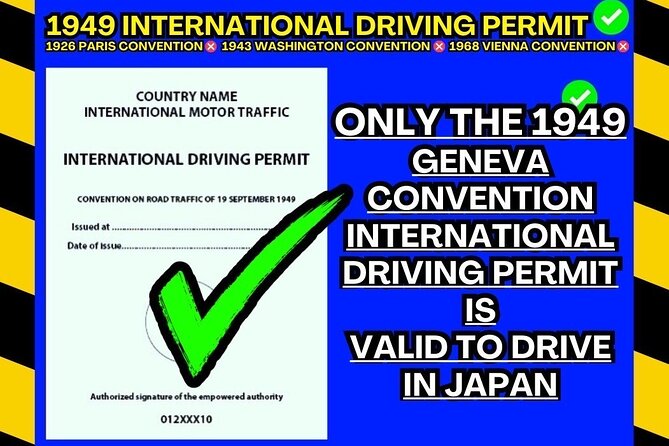
The tour requires a paper booklet IDP issued under the 1949 Geneva Convention by the official agency in your home country (examples listed include AAA, AA, CAA, ATCUAE). Japan does not recognize IDs acquired online under other conventions, and certain countries’ permits are not allowed to drive in Japan.
Some license situations you should double-check before you leave home:
- If your license is from France, Switzerland, Taiwan, Germany, Monaco, or Belgium, you’ll need a Japanese translation of your local license and you may have to obtain the physical copy through the Japan Automobile Federation (JAF).
- Permits from the 1968 Vienna Convention, IDA, IAA, and online-only permits are not recognized.
If you forget or misread this requirement, you could be turned away at the start. I’d treat this as your #1 checklist item, even if everything else looks easy.
Costumes, photos, and the “iconic” factor that feels real
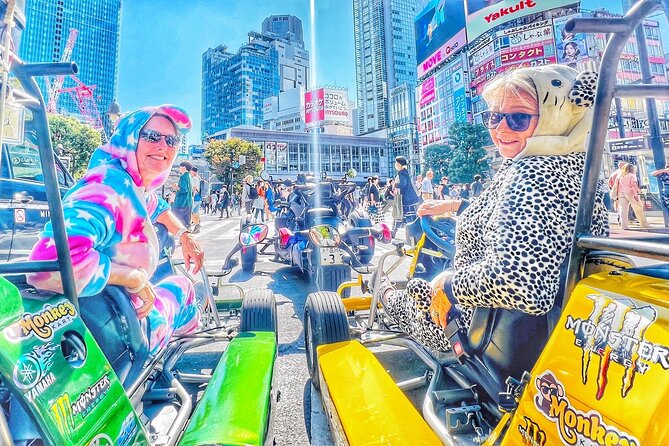
This experience is designed around images, but not the fake kind. You pick from costume options before you ride, and you’ll be dressed for the intersections and shopping streets where Tokyo is instantly recognizable. That costume element turns a normal sightseeing day into something more playful, and it makes your pictures look like a Tokyo memory, not just a traffic snapshot.
Photo handling is another big value point. A guide takes pictures during the ride, and you also receive printed photos. You’ll likely get multiple shots timed around your best stops, which matters because Tokyo intersections and street scenes are busy. Being guided to the right moments helps you avoid the common problem of stopping in the wrong place and missing the shot.
One small planning note: the karts are loud. Even when the guide explains instructions well, the engine noise can make it harder to hear every word while you’re in motion. The solution is simple: listen carefully before you start, ask any confusion points right away, and then focus on driving and hand signals from your guide.
Shibuya Crossing: the seat-of-your-pants version of the photo
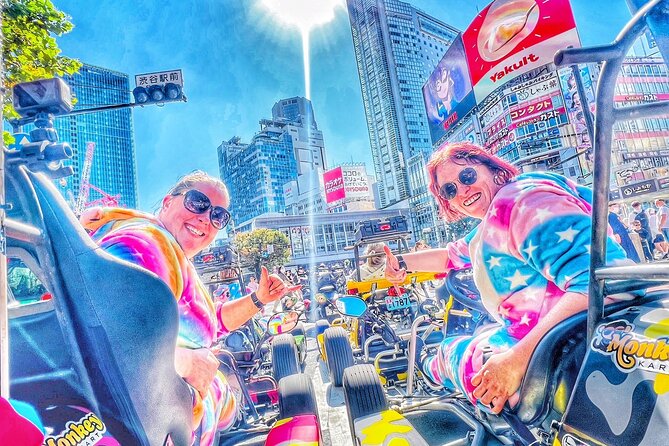
This is the moment most people want, and it’s treated like a highlight stop. You’ll arrive at Shibuya Crossing and get your chance to capture that signature crossing scene from your go-kart position. The fun part is the contrast: Shibuya Crossing is usually viewed on foot, with people streaming in all directions. From the kart, it feels like you’re part of the choreography, not just watching it.
The guide also matters here. In the ride experiences people shared, guides like Lewis and Rakesh were praised for clear instructions and for keeping everyone together. At a place this visually intense, being able to follow a steady lead line is what turns nerves into momentum.
Safety-wise, this is where you’ll feel the most beginner-to-comfort shift. If you’re anxious about driving in a busy area, you’ll probably relax once you see how the route is managed and how the guide spaces karts so you’re not fighting traffic patterns.
Expect lots of photo opportunities and lots of staring. You’ll be surrounded by the kind of Tokyo scene that makes even experienced travelers pause and grin.





Harajuku Station and Omotesando: style streets with practical steering
After Shibuya, you move through areas that feel more “Tokyo shopping and youth culture” and less “big intersection spectacle.” The route includes Harajuku Station and Omotesando, which means you’ll ride past streets associated with fashion, storefront energy, and that very specific Tokyo street-view look.
What you’ll appreciate here is variety in driving feel. Harajuku and Omotesando give you moments where you can focus on smooth control rather than constant stop-start attention. You’re still in central Tokyo, but the streets tend to let the route flow.
If you like photography, these stops are useful because they provide backgrounds beyond just signage and crowds. Omotesando’s streetscape tends to look more composed than the chaos around major crossings, which helps your costume photos look like they belong in a fashion editorial rather than only in a theme-park video.
One drawback to keep in mind: this part can feel more like riding through city scenes than “guided walking commentary.” If you want the deep narrative, this may not be your format. The ride is more about driving, stopping when it’s right, and getting photos.
Miyashita Park and Yoyogi Park: where the ride breathes
Then you get a change of pace with Miyashita Park and Yoyogi Park. This is a welcome contrast in a city day dominated by intersections and storefronts. Even without slowing down the whole experience, parks give your eyes a rest and your camera a different kind of background.
This segment tends to work well if you’re with someone who doesn’t care about go-karts as a thrill-only activity. Parks make it feel less like a single-track action movie and more like a real Tokyo circuit that includes calmer scenery.
Yoyogi Park is especially helpful if you want a finale that doesn’t end on a stressful note. After navigating busy streets, a more open setting makes the whole experience feel easier to digest and remember.
Night option: when the lights make the ride better
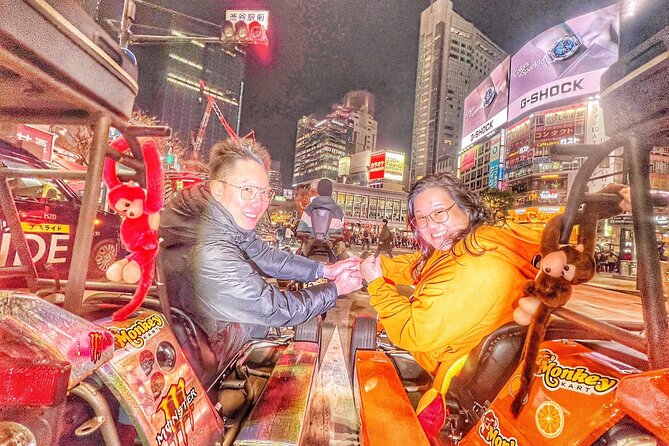
If your schedule allows it, I strongly recommend choosing a night departure. People specifically praised night rides for the lights and the overall look of the city, with one comment calling out that city lights made it better.
Night driving also changes the photo quality. You can get costume shots with neon and street reflections that simply don’t happen the same way in daylight. Plus, the mood is more fun and less tourist-herd, which makes it feel like your costume actually fits the environment.
The downside is comfort planning. Cold weather can sneak up on you, and one reviewer strongly suggested gloves. If you’re going in cooler months, bring thin gloves and a layer that won’t cramp your arms when you’re driving.
Safety, instructions, and the “keep it together” factor
Safety is treated seriously. Guides were repeatedly praised for being clear, professional, and for making riders feel secure. Names that came up in that context include Rafael, Rakesh, Jerome, Luna, and Kazuki, with multiple people highlighting that the guide kept everyone safe and together.
Here’s how to make that work in practice:
- Arrive with your permit sorted and your questions answered before you get on the kart.
- Pay attention during the safety briefing. The ride is short, so you don’t get endless chances to relearn basics.
- Drive smoothly. In dense areas, steady movement is faster than aggressive corrections.
Also, treat the ride like a group activity even though your kart is yours. In reviews, people mentioned that guides timed when to move faster or slow down. If you stick with that rhythm instead of trying to outdrive the plan, your experience stays fun instead of tense.
Value check: is $106.12 worth it?
At $106.12 per person (about 1 hour 20 minutes), the value isn’t just the kart. You’re also paying for:
- A guide-led route through central Tokyo (so you’re not trying to interpret street-level complexity)
- Costumes included, which boosts the “wow” factor for photos
- Photos taken during the ride plus printed photos
- Extras like fuel, locker storage, and bottled water
If you try to DIY this with a rental and self-navigation, the cost can rise fast once you add permits, confusion risk, and time lost getting to the right spots. This tour bundles the logistics into a structured experience where your job is mostly to drive and follow instructions.
The one potential add-on is an action camera, listed as ¥3,500 per person if you want extra footage. If you already plan to shoot on your own device, you can skip that. If you’re aiming for a highlight video, it might be worth it.
Where this tour fits best (and where it doesn’t)
This is a strong fit if you want:
- The photo magnet of Shibuya Crossing without spending your whole day stuck in tourist crowds
- A playful Tokyo day that blends costumes with driving
- A small-group, guide-led structure so you don’t have to solve navigation on the fly
It may be less ideal if you primarily want a long, explanatory walking tour. This ride focuses on steering, safety, and timed stops. The kart noise can make it harder to hear a lot of narration while you’re driving. Think of it as a guided ride with photo moments, not a talky tour where every corner gets a lecture.
Should you book Monkey Adventure Kart in Shibuya Crossing?
I’d book it if you meet the big condition: you have the right hard-copy 1949 Geneva Convention IDP and you’re excited by the idea of dressing up and driving at Tokyo’s most famous intersection. The small-group format and included costume plus photo package are what make it feel like more than a novelty.
Skip it if you don’t want to handle permit requirements or you’re hoping for a quiet, calm sightseeing day with lots of storytelling. The fun here is movement, lights, costume photos, and a guide that keeps the group together.
If you’re planning a Tokyo first-timer day and you want one experience that feels both silly and genuinely memorable, this is the kind of pick that turns into a story you tell later.
FAQ
Do I need an International Driving Permit to drive the go-kart?
Yes. You must have a hard-copy paper booklet IDP issued under the 1949 Geneva Convention (or another approved license) to meet Japanese law requirements.
What if my IDP is not the 1949 Geneva Convention type?
Permits that are not recognized by Japan are not allowed. The information provided says that 1968 Vienna Convention, IDA, IAA, and other online-acquired permits are NOT recognized.
How long is the tour?
The duration is approximately 1 hour 20 minutes.
Where do I meet, and where does the tour end?
Meet at Monkey Adventure Kart SHIBUYA at Monkey Kart Shibuya, 1F, 1-chōme-27-7 Higashi, Shibuya, Tokyo 150-0011, Japan. The tour ends back at the meeting point.
Is this tour small group?
Yes. The tour description says small group size capped at three people, and the provider also lists a maximum of four travelers.
Which areas will we pass during the ride?
You’ll pass or stop at Shibuya Crossing, Harajuku Station, Omotesando, Miyashita Park, and Yoyogi Park.
Are costumes and photos included?
Yes. Costumes are included, and the guide captures photos during the tour. Printed photos are included as well.
Do they provide lockers and water?
Yes. A locker is included and bottled water is included.
Is an action camera included?
No. An action camera is available as an add-on for ¥3,500 per person.
What happens if the weather is bad?
The activity requires good weather. If it’s canceled due to poor weather, you’ll be offered a different date or a full refund.
More Tour Reviews in Tokyo



Fresh reviews from around Tokyo






Tokyo, compared.
 ★ 5.0Mt Fuji and Hakone 1-Day Bus Tour Return by Bullet TrainFrom $16326,383 reviews
 ★ 5.01-Day Tokyo Bus TourFrom $12914,250 reviews
 ★ 4.6teamLab Planets TOKYO Digital Art Museum Entry TicketFrom $259,779 reviews
 ★ 4.0Mt Fuji & Hakone Cruise, Drum Show Bullet Train 1 Day from TokyoFrom $1497,413 reviews
 ★ 5.0Shinjuku Food Tour (13 Dishes at 4 Local Eateries)From $866,603 reviews
 ★ 4.4Tokyo Mt Fuji 5th St & Hakone Cruise Bus Tour w/Bullet TrainFrom $1545,024 reviews
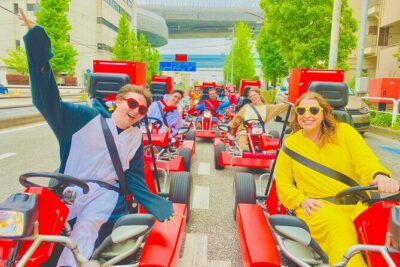 ★ 5.0Flagship 2-Hours Official Street Go-Kart Tour – Tokyo Bay ShopFrom $644,974 reviews
 ★ 4.5From Tokyo: Mount Fuji Full-Day Sightseeing TripFrom $684,970 reviews