
Reviewed · TOURS
Tokyo: True Crime And Ghost Stories Tour
Tokyo gets darker on this walk. I like how the tour pairs real crime locations with ghost storytelling, starting at Hanazono Shrine near Golden Gai and led by John. You get the humor too, not just the grim facts.
Two things I really like are the careful way the guide connects Kabukicho to the real underworld pulse of Shinjuku, and the stop at Aoyama Cemetery, where Japanese ghost lore fits the setting perfectly beside Hachiko’s grave. The route keeps moving, so it feels like a night out with a story engine, not a long lecture.
The one catch: this isn’t for squeamish people. Expect adult language and dirty jokes, with sensitive topics like sex work and murder. If you tire easily or get grossed out fast, skip it.
In This Review
- What Makes This Tour Worth Your $35?
- Entering Tokyo’s After-Dark Mood at Hanazono Shrine
- Shinjuku’s Kabukicho: Crime Stories, Red-Light Reality, and Plenty of Dark Humor
- Golden Gai’s Drinking District Energy (And Why It Belongs in a True Crime Walk)
- Toyama Park and Unit 731: The Hardest Stop on the Route
- Aoyama Cemetery at Night: Ghost Stories, Hachiko, and Tokyo’s Spooky Gravity
- The Role of John the Guide: Acting, Humor, and Staying on Track
- Price and Logistics: Is $35 Good Value?
- Pace, Comfort, and Who Should Really Consider This
- Should You Book This True Crime And Ghost Stories Tour?
- FAQ
- How long is the Tokyo True Crime And Ghost Stories Tour?
- Where do I meet the guide, and where does the tour end?
- How much does the tour cost?
- What’s included in the tour price?
- Are there entry fees for the places you visit?
- Do I need to pay for transportation?
- What language is the tour guide?
- Is the tour suitable for kids or anyone with mobility issues?
- Is there free cancellation, and can I reserve without paying right away?
What Makes This Tour Worth Your $35?
- Kabukicho at night: Japan’s biggest red-light district, explained without turning it into pure shock value.
- Toyama Park’s dark wartime shadow: the tour frames it through Unit 731 and victims’ ghosts.
- Aoyama Cemetery’s ghost-story setting: big Tokyo cemetery energy plus traditional spooky tales.
- Golden Gai nearby: you’ll get context for the city’s famous drinking district atmosphere.
- John the storyteller: acting, pacing, and humor that keep the tone moving even when the topics get heavy.
- Ghost cats (included): a quirky running bit you’ll hear about during the walk.
Before you commit, see how this one stacks up against a few Tokyo favourites:
- Mt Fuji and Hakone 1-Day Bus Tour Return by Bullet Train★ 5.0 · 26,383 reviews
- 1-Day Tokyo Bus Tour★ 5.0 · 14,250 reviews
- Tokyo: teamLab Planets TOKYO Digital Art Museum Entry Ticket★ 4.6 · 9,779 reviews
Entering Tokyo’s After-Dark Mood at Hanazono Shrine
The night starts at Hanazono Shrine, near Golden Gai in Shinjuku. The meeting point is just in front of the stairs leading up to the main shrine building, inside the shrine grounds. That location matters. You’re stepping into a place where Tokyo can still feel old and ritual-driven, even while the streets around it get loud and adult.
From the beginning, the tour sets a clear vibe: educational, but also irreverent. John isn’t doing a sleepy museum voice. He leans into story rhythms—real-world context first, then the spooky layer that makes the city feel like it has secrets folded into its alleys.
Practical note: this is a walking tour, and it’s not built for slow shuffling. If you’ve got limited stamina, plan on taking breaks only when the group pauses, because the tour keeps a steady tempo.
Shinjuku’s Kabukicho: Crime Stories, Red-Light Reality, and Plenty of Dark Humor
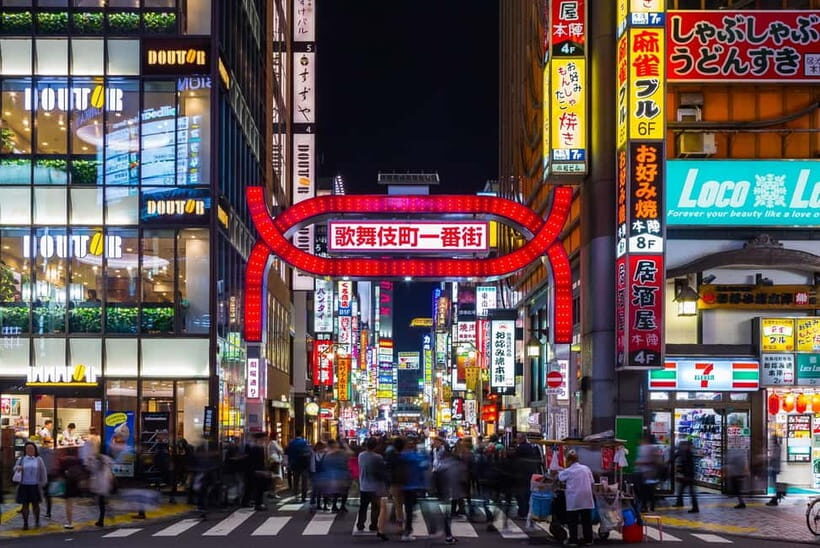
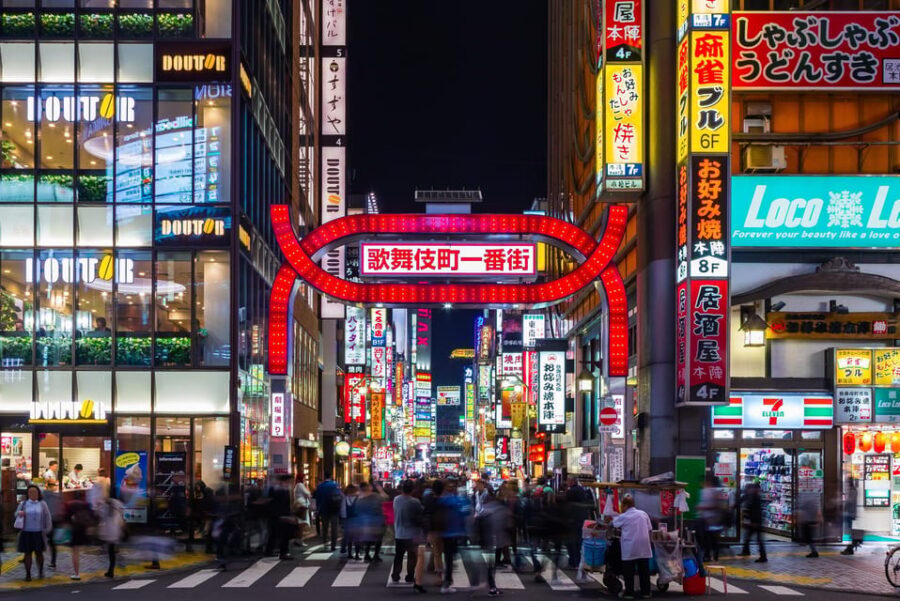
After Hanazono Shrine, the tour heads into Shinjuku’s underbelly with Kabukicho as the anchor. This is Japan’s largest red light district, and the tour uses it as a map for how nightlife, organized crime, and violence became entangled in city life.
What I like here is the framing. John doesn’t just point at street corners and say, that’s where trouble happened. He connects the dots: gang wars, murders, and the way some parts of Tokyo operate in a grey zone—half tolerated, half unspoken. The tone stays irreverent, but it’s not careless.
You’ll also get a look at Tokyo’s adult nightlife machinery in a way that’s blunt about what it is. The tour description calls out a quasi-legal sex industry, and that means the subject matter can feel awkward if you’re expecting only safe, family-friendly sightseeing.
Is it funny? Yes—John mixes in jokes and a wicked sense of humor. But the humor is paired with context, not used to erase what happened.
Golden Gai’s Drinking District Energy (And Why It Belongs in a True Crime Walk)
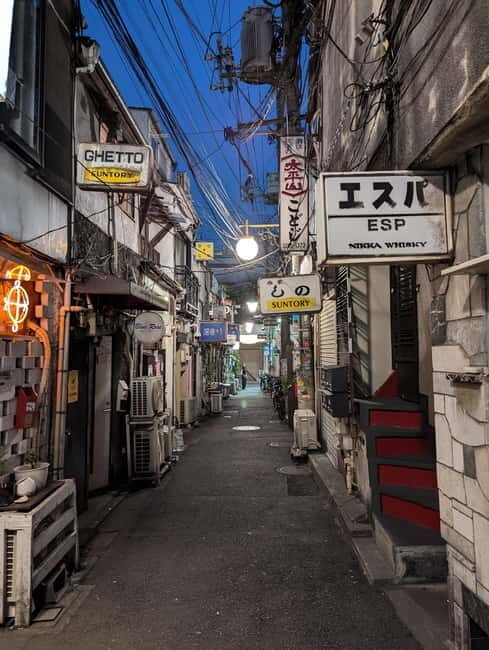
Golden Gai sits close to where you start, and the tour weaves it into the larger atmosphere of the neighborhood. Golden Gai is described as Tokyo’s foremost drinking district, and in practice that means you’re walking through a pocket of tight streets where the city’s social life feels compressed.
In a tour like this, Golden Gai isn’t just a landmark to tick off. It helps explain why certain histories stick in Tokyo’s memory. Alcohol-heavy nightlife zones are where people gather, where deals get made, and where rumors travel fast—perfect fuel for the kinds of stories the tour tells.
You also get a contrast. Shrine quiet at the start, neon and side streets afterward. That push-pull is part of the experience: Tokyo can hold devotion and wrongdoing in the same night.
If you’re sensitive to adult talk, keep in mind the tour may reference prostitution and sex work. John does sometimes censor himself, but the topic still comes up.
Toyama Park and Unit 731: The Hardest Stop on the Route
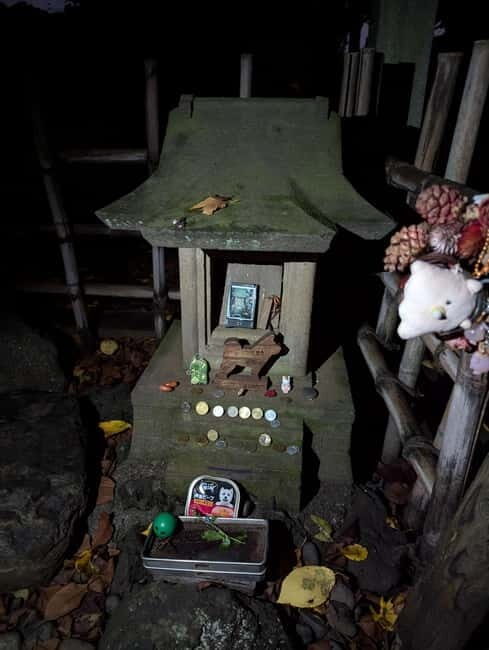
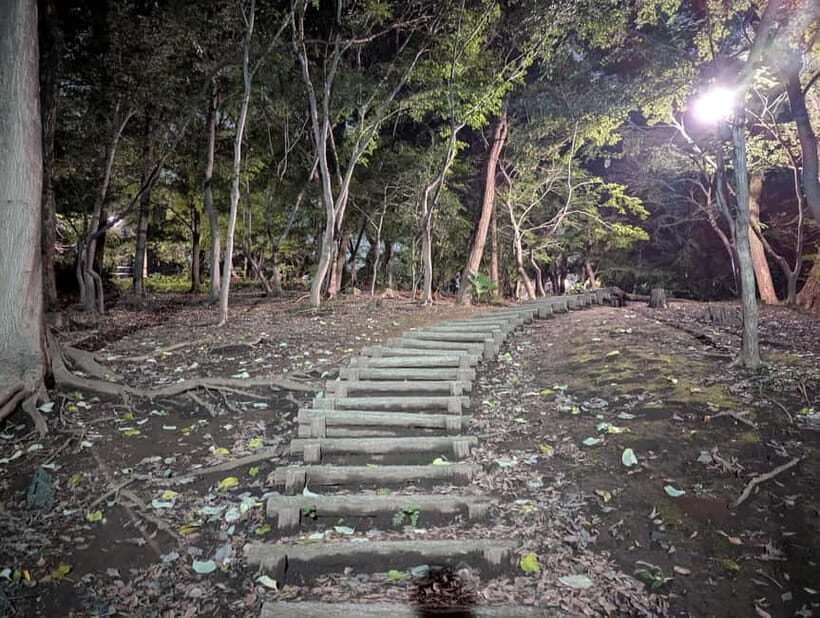
Then you reach Toyama Park, flagged as a site tied to terrible crimes against humanity. The tour treats it like a local moral wound—mysterious, heavy, and connected in the story to Unit 731 and human experimentation.
The tour doesn’t frame this lightly. The description calls it Tokyo’s mini-Auschwitz and references the kind of crimes that could land people before a war crimes tribunal. That’s not ghost-story fluff; it’s the real weight of wartime atrocities—handled with a spooky lens so the places feel haunted, not sanitized.
What makes this stop valuable is the way it turns history into a physical walk. You’re not reading about it in a book and moving on. You’re seeing the city hold layers: everyday streets over painful pasts.
Also, this is where the tour is most likely to test your comfort level. The tour is described as not recommended if you get grossed out easily. Even if you’re fine with true crime, keep your expectations realistic: this section is designed to feel darker than the rest.





Aoyama Cemetery at Night: Ghost Stories, Hachiko, and Tokyo’s Spooky Gravity
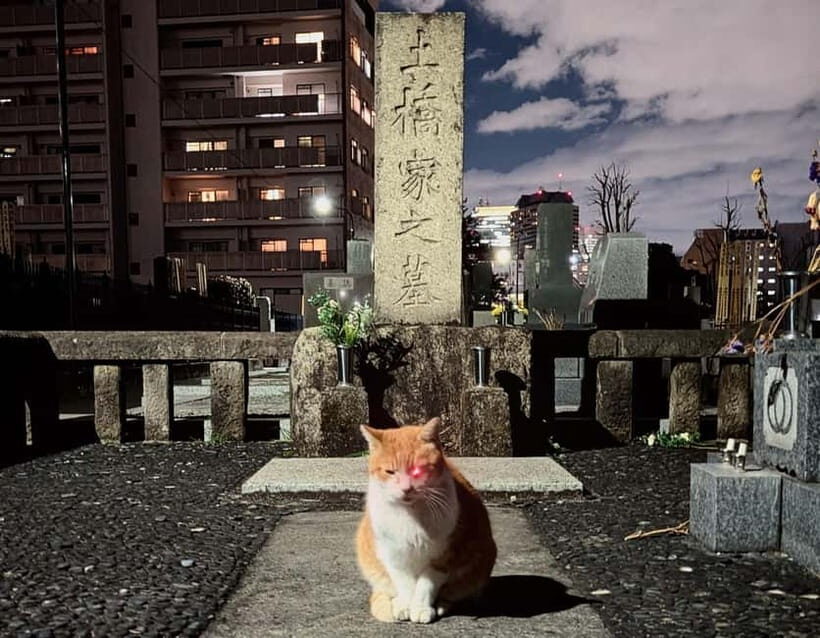
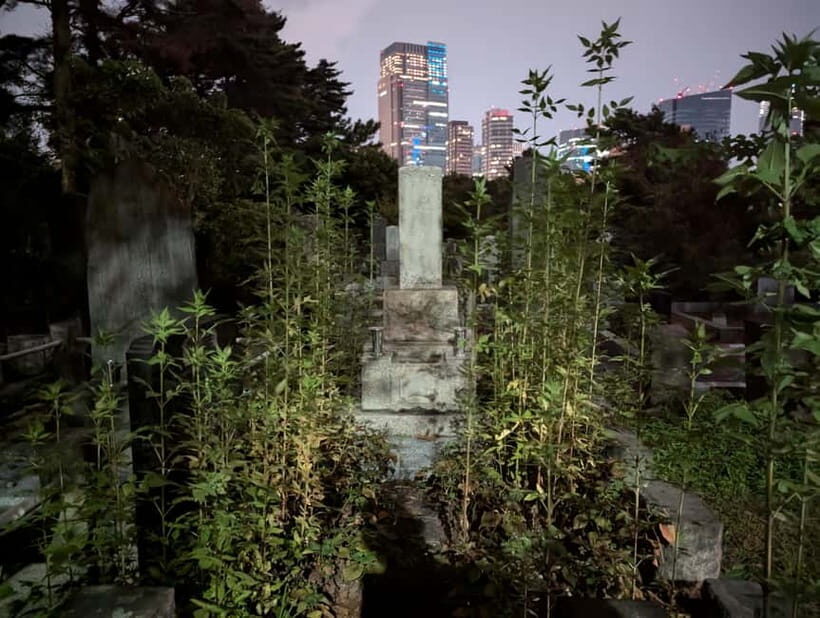
The final big portion is Aoyama Cemetery, described as the largest cemetery in Tokyo. The setting helps. Cemeteries are already emotional places; Aoyama adds that classic Tokyo mix of quiet order and strange stillness.
Here, the tour shifts more clearly into Japanese ghost stories. This is the part where your night becomes more supernatural, with the atmosphere doing half the work. John’s spooky storytelling style fits the space—he can act the story beats, and he’ll lean into dramatic pauses when the tone needs to feel like a campfire tale.
You’ll also visit the grave of Hachiko, Japan’s most loyal dog. That detail is important for emotional balance. The tour doesn’t only do dread. Hachiko’s story gives you a human scale to what you’ve been hearing, a reminder that Japan’s famous loyalties and sorrows exist alongside its darkest chapters.
A practical heads-up: this is after a chunk of walking, and cemeteries can feel cold or windy at night depending on conditions. Wear shoes you trust, and don’t count on being able to rush through if you’re tired.
The Role of John the Guide: Acting, Humor, and Staying on Track
John is the guide you’re looking for at the start: a thin, bald white man. In the tour description, he’s described as friendly and very spoooooky, and the wider experience is clearly shaped around his storytelling.
What I like is how he blends three modes:
- True crime context (so you understand what you’re seeing)
- Ghost-story performance (so it lands emotionally)
- Humor (so the night doesn’t become one long grim page)
John also answers questions during the walk. That matters because Tokyo’s dark history can be confusing if you only hear headlines. When you ask, you get explanations that match the real neighborhood context you’re standing in.
There’s also a helpful practical side that shows up near the end. Since the tour finishes at Aoyama-Itchome Station, you’re not stuck guessing your route home. John can help you get pointed in the right direction, which is a real win after a night tour.
Price and Logistics: Is $35 Good Value?
At $35 per person, this tour is priced for what it delivers: a guided 3-hour walk through multiple major areas, with a guide who does more than list facts. You’re paying for storytelling craft plus historical framing plus the walk connecting very different parts of Tokyo’s night-life history.
Here’s the value math:
- The tour includes the guide fee and the tour itself.
- You’re not paying separate entry fees for the stops on the route.
- Dinner isn’t part of the tour, so you’ll need to plan your meal before or after.
- Transportation fees are not included, listed as 200 yen. That’s small, but it’s still real cost.
So the cost isn’t “cheap,” but it’s also not trying to be a full-day premium production. If you like true crime documentaries and Japanese ghost lore, this is a reasonably priced way to experience the themes in their actual street setting.
One more factor: the tour is not a sit-and-stare experience. If you struggle with stairs or walking distance, the $35 might feel like less of a bargain because you’ll be counting your discomfort instead of enjoying the stories.
Pace, Comfort, and Who Should Really Consider This
This is a 3-hour walking experience. The “know before you go” note is clear: you will be walking quite a bit, and you’ll be talking about sensitive subjects. If you tire easily, get grossed out easily, or want a calm evening, this isn’t the right fit.
The tour also lists limits:
- Not suitable for children under 14
- Not suitable for wheelchair users
- Not suitable for people with low level of fitness
- Not suitable for people over 300 lbs (136 kg)
If that describes you, don’t force it. The story tone is also adult, with dirty humor and adult language used occasionally. Even if you handle scary topics fine, the humor style may not match your comfort level.
If you do fit the profile, you’ll likely love it. This is the kind of tour that gives you a Tokyo you can’t get from daytime highlights: the neighborhoods where history, crime, and rumor became part of everyday geography.
Should You Book This True Crime And Ghost Stories Tour?
Book it if you want a night-walk Tokyo experience with strong storytelling. You’re getting Kabukicho’s red-light context, Toyama Park’s wartime moral weight through Unit 731, and Aoyama Cemetery’s ghost-story setting—plus Hachiko to keep emotions grounded. The guide, John, seems built for this format: acting-style performance, humor that keeps pacing moving, and enough historical context to make the places mean something.
Skip it if you’re easily grossed out, don’t like adult language, or you want “spooky” without heavy real-world crime themes. And if walking is tough for you, the tour’s format will likely feel stressful instead of fun.
FAQ
How long is the Tokyo True Crime And Ghost Stories Tour?
It lasts 3 hours.
Where do I meet the guide, and where does the tour end?
Meet just in front of the stairs leading up to the main shrine building inside Hanazono Shrine in Shinjuku near Golden Gai. The tour finishes at Aoyama-Itchome Station.
How much does the tour cost?
The price is $35 per person.
What’s included in the tour price?
The included items are the guide fee, one friendly and knowledgeable (and very spoooooky) guide, and ghost cats.
Are there entry fees for the places you visit?
No entry fees are listed for anything along the route.
Do I need to pay for transportation?
Yes. Transportation fees are listed as 200 yen, and they are not included.
What language is the tour guide?
The tour is in English.
Is the tour suitable for kids or anyone with mobility issues?
It’s not suitable for children under 14, wheelchair users, people with low fitness, or people over 300 lbs (136 kg).
Is there free cancellation, and can I reserve without paying right away?
Yes. Free cancellation is available up to 24 hours in advance for a full refund, and you can reserve now and pay later.
More Tours in Tokyo

More Tour Reviews in Tokyo



Fresh reviews from around Tokyo






Tours, compared.
 ★ 5.0Shinjuku Food Tour (13 Dishes at 4 Local Eateries)From $866,603 reviews
 ★ 4.4Tokyo Mt Fuji 5th St & Hakone Cruise Bus Tour w/Bullet TrainFrom $1545,024 reviews
 ★ 5.0Flagship 2-Hours Official Street Go-Kart Tour – Tokyo Bay ShopFrom $644,974 reviews
 ★ 4.7Mt. Fuji Tour, Hakone Ropeway, Owakudani, Lake AshiFrom $544,002 reviews
 ★ 5.0Tokyo 6hr Private Tour with Government-Licensed GuideFrom $1553,902 reviews
 ★ 5.0Tokyo Bar Hopping Tour in Shinjuku (All-You-Can-Drink + Dinner)From $1063,587 reviews
 ★ 5.0Tokyo Tsukiji Fish Market Food and Culture Walking TourFrom $993,184 reviews
 ★ 4.9Shinjuku Food Tour (15 Dishes and 4 Eateries)From $852,033 reviews