
Reviewed · SHIBUYA TOURS
Tokyo Shibuya and Harajuku Walking Tour With A Guide
Neon Tokyo, paced for real walking. This Shibuya and Harajuku tour hits the big-name sights fast, but the payoff is the fashion-focused local guide who keeps it moving and adjusts to what you care about. I especially liked the way you get both sides of the street-fashion story: high-energy Shibuya and the Harajuku fashion grid, from Takeshita Street to the alternative lanes of Ura-Harajuku. You also get a built-in route across key landmarks like Shibuya Scramble Crossing and the famous Hachiko meeting point, without fumbling trains and exits all day.
The one possible drawback is simple: this is a walking-heavy city tour. If you hate crowds or long distances on foot, you might feel it after a couple of hours, even at a reasonable pace.
In This Review
- Key highlights worth circling
- Shibuya Scramble and Harajuku in one clean 3-hour flow
- Price and value: what $48.21 really buys you
- Where you meet (and why it matters): Sakuragaokachō in Shibuya
- Stop-by-stop: Shibuya Station to the Hachiko reset point
- Shibuya Center-gai and Shibuya 109: youth culture with shopping energy
- Harajuku Station, Takeshita Street, and the people-watching plan
- Omotesando for the sleek contrast you didn’t know you needed
- Meiji Shrine Imperial Garden: the calm finale that keeps your day on track
- Why the guides here make the difference (and who you might get)
- Walking logistics: crowds, comfort, and what to budget for
- How to get the most out of the tour (simple moves that help)
- Should you book this Shibuya and Harajuku walking tour?
- FAQ
- How long is the Shibuya and Harajuku walking tour?
- How much does the tour cost?
- Where do I meet, and where does the tour end?
- Is this a private tour?
- What languages are the guides available in?
- What’s included in the price?
- Are food and drinks included?
- Do I have to pay entry fees for sights on the route?
- Is transport during the tour included?
- Can I cancel for a full refund?
Key highlights worth circling
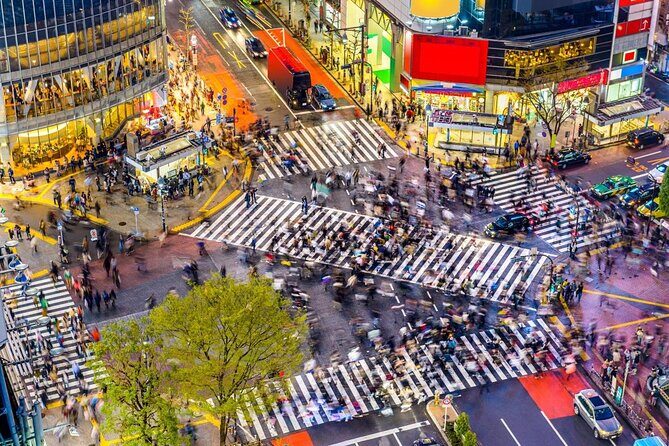
- Shibuya Scramble Crossing orientation at the Shibuya Station Tourist Center so you know where you are fast
- Hachiko as a quick, iconic reset point outside Shibuya Station
- Shibuya Center-gai and Shibuya 109 for youth culture and fashion browsing
- Takeshita Street plus Ura-Harajuku so you see both mainstream and alternative styles
- Omotesando contrast with sleek modern shopping streets
- Meiji Shrine Imperial Garden as your decompression stop after the neon
More to do within sight of the Crossing
- Official Street Go-Kart in Shibuya★ 5.0 · 3,435 reviews
- Tokyo: Street Kart Experience in Shibuya★ 4.9 · 1,484 reviews
- Shibuya Meltdown Nightlife Tour: All-You-Can-Drink Bar Hopping★ 5.0 · 1,058 reviews
Shibuya Scramble and Harajuku in one clean 3-hour flow
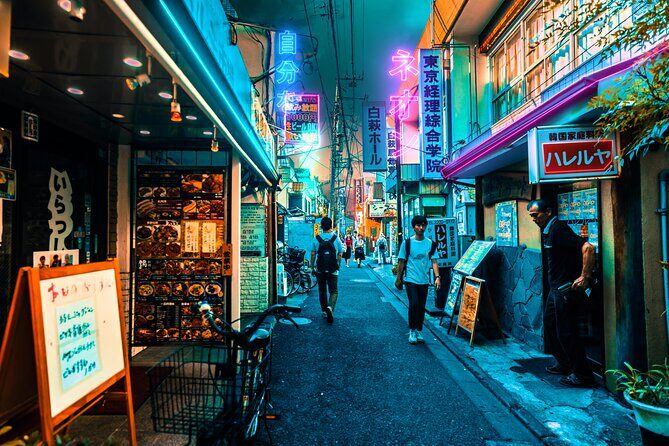
Tokyo can feel like a maze until you get your bearings. This tour gives you that early win. In about three hours, you move through the areas that define modern Tokyo—Shibuya’s grid of crossings and shopping, then Harajuku’s street-fashion culture—without making you play transit Tetris.
The route also has a smart rhythm. You start in Shibuya, where everything funnels through Shibuya Station and the Scramble Crossing energy, then you drift into Harajuku’s shopping streets and back lanes. Finally, you finish with a calmer note at Meiji Shrine Imperial Garden, which helps your brain stop buzzing for a minute.
And since it’s a guided experience, you’re not just walking past names on a map. The guides in this program have a track record of sharing practical life-in-Tokyo context, not just what something is called. People have specifically highlighted guides who knew Tokyo’s day-to-day culture and tailored stops to their interests—whether that meant leaning more fashion, more food recommendations, or more history.
Price and value: what $48.21 really buys you
At $48.21 per person for roughly 3 hours, the math works best if you value a guide who helps you decide what to do next. You’re paying for the route, timing, and in-person interpretation—plus the convenience features that make Tokyo less stressful.
Here’s what you’re getting for the price:
- A walking tour through the core Shibuya and Harajuku zones
- A guide in English, Spanish, French, or Italian (in-person)
- Tour customization, so the guide can steer you toward what fits you
- Mobile ticket convenience
- Help from the team to book tickets for visits you want outside this walk
What you’re not getting:
- Food and drinks
- Tips (optional)
- Entry to monuments and museums
- Transport during the tour (you pay your way to/from the meeting area as needed)
That’s why this can feel like a good deal: the included content is the walk itself plus local context. If you were trying to DIY this, you’d still pay for transit, and you’d lose the “what matters here and why” piece that makes the places click.
Where you meet (and why it matters): Sakuragaokachō in Shibuya
The tour meets at 24-2 Sakuragaokachō, Shibuya, Tokyo and ends back at the meeting point. Because it’s set up this way, you don’t have to plan how to get back to your starting area.
It also helps that the meeting point is described as being near public transportation. In practice, that means you can plug the tour into the rest of your day without turning the first hour into a scavenger hunt for station exits.
Tip for your planning: since the average booking window is about 30 days in advance, it’s smart to lock this in early if your dates are busy. Popular Japan itineraries have a habit of selling out during prime travel windows.
Stop-by-stop: Shibuya Station to the Hachiko reset point
You start at the Tokyu Tokyo Metro Shibuya Station Tourist Center for an orientation moment. Shibuya Station is huge, and the tourist center is the kind of place that helps you stop feeling lost. The tour window is about 20 minutes, with free admission noted for this stop.
From here, Shibuya’s identity comes into focus: the pedestrian chaos around the Scramble Crossing and the nonstop flow of shops and people. This is a good place to learn how Tokyo’s layout works without having to ask every stranger where the exit is.
Next up is Hachiko, located just outside Shibuya Station. You’ll spend around 20 minutes here, and the admission is free. Hachiko matters because it’s more than a statue pose for photos—it’s a symbol of loyalty, and it’s also one of those Tokyo landmarks people use as a meet-up point. That makes it a perfect “reset” stop in a walking tour: you check the vibe, regroup your bearings, and then move on.
If you like structure, this sequence is a win. It’s easier to enjoy Harajuku when you already understand how the Shibuya funnel works.
More colour: other Harajuku wanders


Shibuya Center-gai and Shibuya 109: youth culture with shopping energy
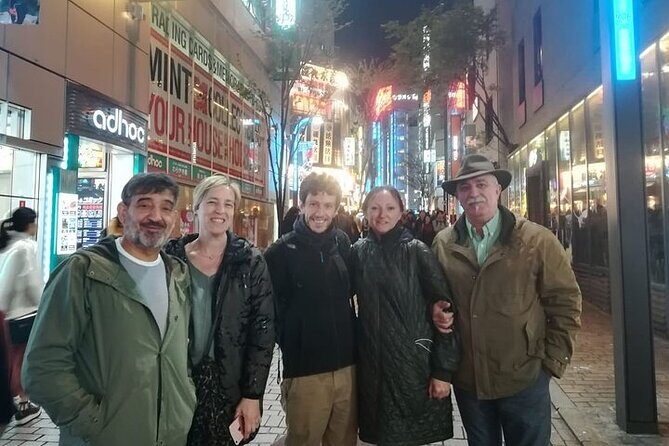
After Hachiko, you hit Shibuya Center-gai. This is a pedestrian street vibe—shops, boutiques, cafés, and food options packed along the corridor. Expect about 20 minutes. It’s free and designed for people-watching and casual browsing.
Then comes Shibuya 109, known as a department store that leans heavily toward fashion aimed at young women. It’s one of those places where the windows and entrances tell you you’re in the fashion lane. You get another 20 minutes here, also free.
What I like about pairing Center-gai with 109: you see the street culture and the department-store culture in one chunk. Shibuya is not just one style—it’s a whole ecosystem of trends. A guide helps you notice patterns fast, like what people are wearing, what kinds of accessories are showing up repeatedly, and what the area’s shopping logic feels like.
One consideration: if you’re not into shopping crowds, you might treat these stops as “look and breathe” segments rather than deep browsing. But even that works, because the value is in learning what to prioritize later.
Harajuku Station, Takeshita Street, and the people-watching plan
Next is Harajuku Station, around 20 minutes with free entry noted. It’s a natural transition point between Shibuya’s mainstream shopping energy and Harajuku’s street-fashion scene.
Then you arrive at Takeshita Street, which is basically Harajuku’s signature. You’ll spend about 20 minutes here, and again the entry is free. Takeshita is where you’ll see colorful storefronts selling fashion, accessories, snacks, and novelty items—plus the kind of street styling that makes Tokyo feel like a fashion magazine you can walk through.
Here’s where a guide changes the experience from chaos to clarity. The best moments aren’t always the loudest shops. Guides help you read the street: where to slow down, what to look at first, and how to spot the difference between impulse buys and style choices you’ll actually remember.
Then you go deeper with Urban Harajuku (Ura-Hara), the backstreets side of the neighborhood. This is where you shift from the main drag to side lanes where you’ll find alternative fashion, independent boutiques, and streetwear that feels more experimental. You get another 20 minutes here, free.
If you’re a style lover, this is the “aha” portion. It’s the segment that helps you understand Harajuku isn’t just Takeshita. It’s also the quieter backroads where you see how trends evolve.
Omotesando for the sleek contrast you didn’t know you needed
From Harajuku’s side lanes, the tour moves to Omotesando. Omotesando Avenue is often compared to a designer shopping boulevard. Think luxury boutiques, flagship stores, and stylish modern architecture.
You get about 20 minutes here, with free admission noted. This stop works as contrast: Harajuku can feel playful and loud, while Omotesando feels cleaner and more polished. If you’ve been photographing street style for hours, Omotesando resets your eyes. It also helps you see that Tokyo fashion isn’t only about streetwear. It’s also about design thinking, architecture, and brand presentation.
I find it useful because it prevents the common “I only saw one kind of Tokyo fashion” feeling. You leave with a broader picture of how different fashion worlds coexist.
Meiji Shrine Imperial Garden: the calm finale that keeps your day on track
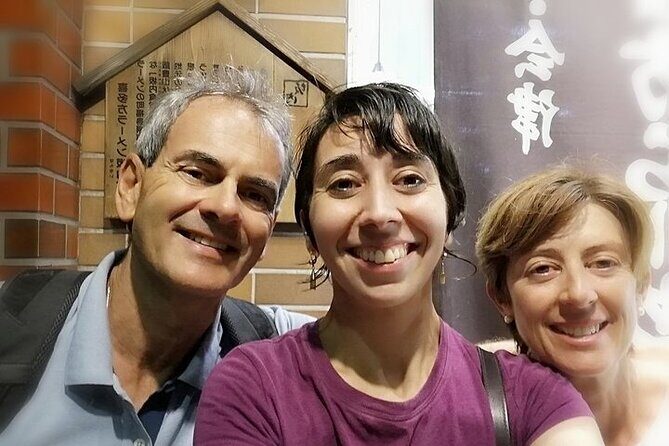
The final stop is Meiji Shrine Imperial Garden in a forested area. You’ll spend around 20 minutes, free entry noted for the stop.
This is the best way to end a fashion-focused walk. After hours of shopping streets and crowds, the shrine grounds give you a mental reset. Even if you’re not super into religious sites, the setting matters: it’s a noticeable change in pace, sound, and density.
One detail worth remembering: this tour is a city tour, not an all-access monument or museum day. So you should expect an outdoor, sightseeing-style stop rather than a deep museum-style visit.
Why the guides here make the difference (and who you might get)
The most praised aspect of this tour is the human factor: the guide. Multiple guides have been described as sharing clear context about Japanese culture and life, and several tours were praised for being tailored to the group’s interests.
For example:
- Riccardo got high marks for being amazing and sharing Japan culture in a way that felt practical, not academic.
- Sébastien was praised for being warm and knowledgeable, and for showing places people likely wouldn’t find alone.
- Sergio stood out for honesty about not being a native while having lived in Japan for over 10 years, plus for extending beyond the scheduled time to show more.
- Francine repeatedly came up for being friendly and customizing the tour, plus offering insider tips for the rest of the trip.
- Joe got praise for mixing quieter back streets with the louder energy, at a reasonable walking pace, and for practical recommendations for eats and visits.
- Jenny was called out for tweaking the itinerary to match what the group wanted to see and do.
That pattern matters for you because it means the tour is not a rigid script. If you care more about fashion, the guide will likely point you toward the right lanes. If you care more about how the city works, you’ll probably get more of that too—like how people navigate meeting points and shopping areas.
Walking logistics: crowds, comfort, and what to budget for
This is a walking tour through dense areas. You should plan around that reality. The time blocks are short at each stop (around 20 minutes), but the whole day still adds up to a solid walk.
I’d pack for comfort:
- Wear shoes that handle lots of pavement.
- Bring a plan for breaks, because you won’t be in one long sit-down stretch.
- Budget for food and drinks separately, since they are explicitly not included.
Transport is also on you during the tour. That usually means you won’t be shuttled around on buses or trains as part of the included cost. The tour is built to reduce transit hassle, but your getting-to-the-meeting-point travel is still your responsibility.
How to get the most out of the tour (simple moves that help)
If you want this to feel like a guide-led win and not just a sightseeing lap, do three things.
First, decide what you want most from Shibuya and Harajuku: fashion brands, street style, or cultural context. The tour supports customization, and the guides seem to use that flexibility well.
Second, use the stops as anchors. Hachiko is an easy photo marker. Takeshita Street is the loud, iconic moment. Ura-Hara is where you learn what’s underneath the hype. Then Omotesando gives you that architecture-and-design contrast before the calm landing at Meiji Shrine.
Third, leave the tour with a short list for later. This is where insider recommendations from a good guide can pay off—especially for where to eat after the walk.
Should you book this Shibuya and Harajuku walking tour?
Book it if:
- You want a guided introduction to Shibuya and Harajuku without spending your day lost in stations
- You care about fashion and street culture, and you like contrast (main streets plus back lanes)
- You’d benefit from a guide who can tailor what you do in real time
Consider skipping or swapping to a different style if:
- You strongly dislike crowds or long walking stretches
- You mainly want museum-style interior time (this is a city tour, not a museum day)
- You’re expecting food or transport to be included in the price (it isn’t)
For the right kind of traveler, this hits a sweet spot: iconic Tokyo landmarks, fashion-forward neighborhood contrast, and a calm end point—all done in the practical, on-foot way that actually makes these areas make sense.
FAQ
How long is the Shibuya and Harajuku walking tour?
It runs for about 3 hours.
How much does the tour cost?
The price is $48.21 per person.
Where do I meet, and where does the tour end?
You meet at 24-2 Sakuragaokachō, Shibuya, Tokyo 150-0031, Japan, and the tour ends back at the meeting point.
Is this a private tour?
Yes. It’s listed as a private tour/activity, and only your group participates. A small-group option is also available.
What languages are the guides available in?
The guide is available in English, Spanish, French, and Italian.
What’s included in the price?
Included are the walking tour, an in-person guide, customization, help from the team to book tickets for desired visits, and a mobile ticket.
Are food and drinks included?
No. Drinks and food are not included.
Do I have to pay entry fees for sights on the route?
The listed stops show free admission for each stop. Entry to monuments and museums is not included.
Is transport during the tour included?
No. Transportation costs during the tour are at your own expense.
Can I cancel for a full refund?
Yes. You can cancel up to 24 hours in advance for a full refund.
More Tour Reviews in Tokyo






More Harajuku to Wander
Still in Shibuya? Keep Going





Fresh reviews from around Tokyo






Shibuya Tours, compared.
 ★ 5.0Official Street Go-Kart in ShibuyaFrom $763,435 reviews
 ★ 4.9Street Kart Experience in ShibuyaFrom $741,484 reviews
 ★ 5.0Shibuya Meltdown Nightlife Tour: All-You-Can-Drink Bar HoppingFrom $1061,058 reviews
 ★ 5.0Shibuya Official Street Go-Kart in Shibuya AnnexFrom $69972 reviews
 ★ 5.0Shibuya Food Tour (13 dishes and 4 Eateries)From $77770 reviews
 ★ 5.0Best of Shibuya Food TourFrom $217612 reviews
 ★ 4.8Shibuya Highlights Walking TourFrom $19601 reviews
 ★ 4.7Premium Go-Kart Tour with Tower & Shibuya CrossingFrom $116528 reviews
Browse the lists this tour appears in